
Sparring Partner
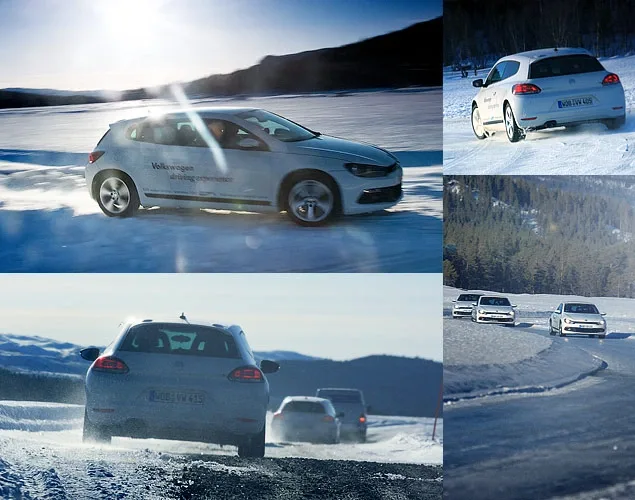
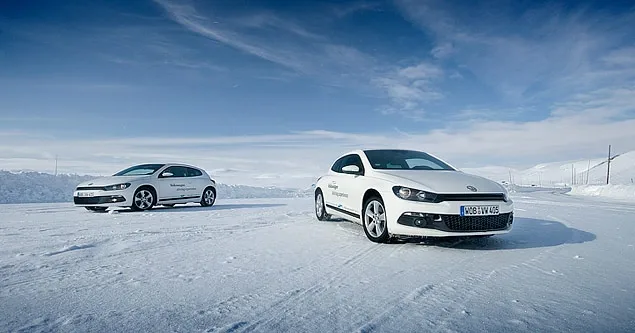
We've been tearing down Norwegian roads in two dazzling white VW Sciroccos for over half an hour now, and this run is as exhausting as a workout. The pace set by the new Volkswagen hatchback makes your palms sweat and your gaze drift far ahead, pre-calculating the next sequence of corners.
Ahead is another deserted straight stretch, followed by a fast right-hand bend with a noticeable crest in the middle. You need to enter it a bit wider so that at the crest itself the wheels are almost straight, and keep the throttle steady. At this speed, a slight bump almost completely unloads the suspension, and the Scirocco seems to hang in weightlessness for a moment—your heart clenches into a knot, but a fraction of a second later the car literally digs its tires into the asphalt again. It doesn't try to fly into a ditch or force the driver to panic-wrestle the wheel to stay on track—it just does its job. Precisely, correctly, and in a Volkswagen way, almost emotionlessly, as if nothing special happened.
the best Volkswagen
of modern times
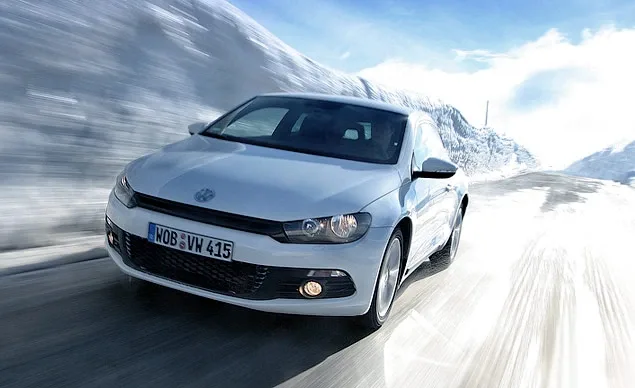
It's precisely for this detachment that I've never particularly favored Volkswagen cars. They are ideal tools for transporting people from point A to point B. Precise and reliable. But soulless. Just cars. Das Auto. However, the Scirocco is a completely different case.
A bit later, having stopped on the roadside to catch my breath after a 40-minute sprint along Norwegian serpentines, I was ready to admit: this hatchback is the most emotional Volkswagen of modern times. And indeed, perhaps the best car I've ever driven.
Heredity
To be fair, the VW Scirocco simply had no right to turn out bad: it's based on one of the most decorated hot hatches on the planet—the VW Golf GTI. But the Scirocco turned out even better—with the same wheelbase (2578 millimeters), the new hatchback got a wider track (35 millimeters wider at the front and 59 millimeters at the rear), became 97 millimeters lower than its predecessor, and 30 kilograms lighter.
longer, and lower
than a regular Golf
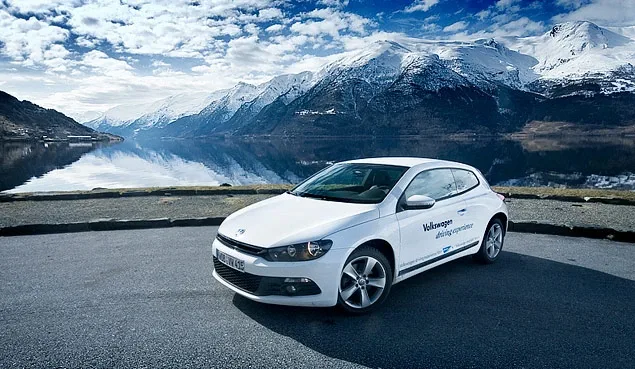
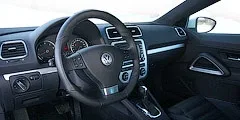
The differences from the Golf don't end there. The new hatchback has a completely different body: a slightly elongated but very aggressive front end, flared rear fenders, and frameless doors. The interior is exclusively four-seater (the rear bench is molded for two), and the front panel has a slightly modified architecture: different ventilation deflectors and an instrument cluster with white backlighting.
Interior
|
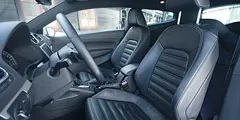
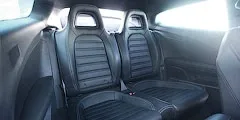
The most powerful two-liter gasoline turbo engine is also its own. It develops 200 horsepower, like the engine on the previous Golf GTI, and has the same torque (280 Nm), but it's built on a new cylinder block (internal designation EA888—the same block is used on the all-Volkswagen 1.8 TSI) and is equipped with more efficient fuel injection and a new turbocharger.
Character
In Russia, the 200-horsepower Scirocco will only be available with a dual-clutch preselective gearbox (DSG)—versions with a six-speed manual, as in Europe, won't be offered here. And that's fine—the duo of the two-liter turbo engine and the six-speed robot works in unison, like a living organism.
In sport mode, the DSG constantly keeps the engine on its toes, and the tachometer needle darts between three and seven thousand rpm. On braking, the smart transmission downshifts one by one, making the engine growl hoarsely, and if you click the left paddle several times, demanding the DSG drop two or three gears at once, it will do so with a spectacular rev-match.
deep slides. But a little mischief
— that's welcome!
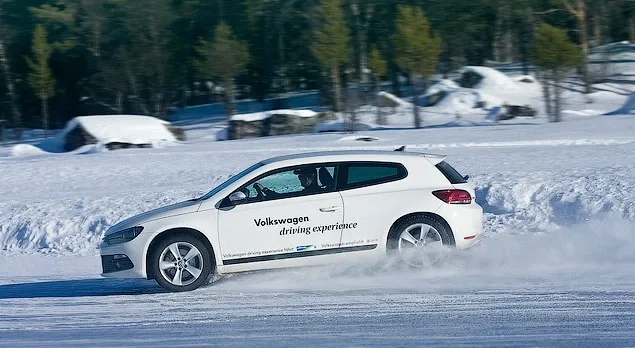
Handling is almost perfectly neutral. This is thanks not only to the wider track but also to the adaptive DCC suspension, which is fitted to top-spec Sciroccos. Unlike the magnetorheological dampers used on Audi cars, the Volkswagen system is purely hydraulic, and the stiffness of the shock absorbers is adjusted via an external electromagnetic valve that changes the cross-section of the fluid passage channel.
The smart dampers have three modes—comfort, normal (also automatic), and sport. In comfort, the Scirocco handles small bumps and cracks in the asphalt well, but on large irregularities, control over unsprung masses seems less effective. In sport, the suspension becomes a bit stiffer, and the algorithm of the electric power steering changes—it doesn't assist the driver as actively, making the steering more informative. However, the optimal mode turned out to be normal, where the chassis remains almost as firm as in sport but better smooths out vertical body oscillations when driving over bumps.
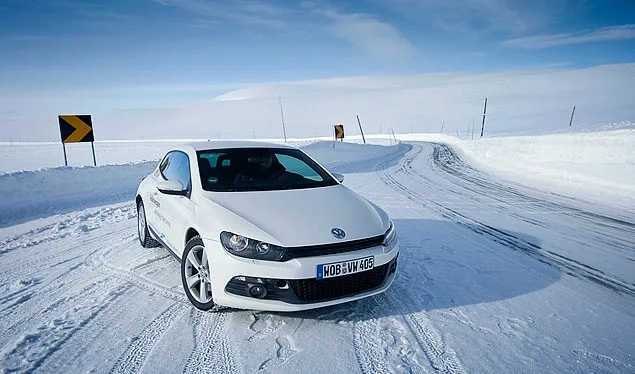
However, there's one catch—cars with DCC won't be delivered to Russia. Instead, we'll get the chassis from the fifth-generation VW Golf GTI, passive and adapted for Russian roads. But, according to knowledgeable people, it doesn't lose much to DCC in driving feel. We'll have to take their word for it…
But the Scirocco with active suspension simply won me over with its balance. In calm driving, it seems a bit relaxed, but as speed increases, it turns into a real bundle of muscles. The steering becomes impeccably precise and very clean, and the chassis responds very lively to the driver's commands. During full-throttle acceleration, when gears change without lifting off the gas, a short burst of noisily vented air is heard from behind—'Grrrhhh…'.
The sound accompaniment here may not be as spectacular as in other hot hatches, but it's precisely what makes the driver's heart beat faster and faster. And the more challenging the road you're driving on, the faster you get into the Scirocco's rhythm and start living in the same tempo: moving, breathing. Acceleration—inhale, braking—exhale, acceleration again—'Grrrhhh…'.
on acceleration—inhale, on braking—exhale...
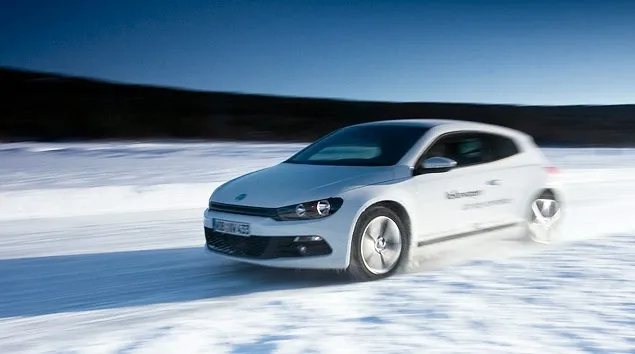
It is noteworthy that despite its outward restraint and correctness, the Scirocco eagerly responds to playing with balance: if you lift off the throttle, the hatchback noticeably loads the front axle, helping the car turn into a corner more precisely, and with a sharper release of the accelerator pedal, the rear willingly steps out into a controlled slide. However, there is no need to fear that the car will spin — the electronic stability control system, which cannot be switched off, will instantly intervene in the handling as soon as the driver starts frantically turning the steering wheel or sharply hits the brakes.
Moreover, the ESP on the Scirocco can dampen not only oversteer but also understeer: it brakes the inner wheel and helps turn the car into the arc. At the same time, the electronics very delicately modulates the throttle, not taking away the driver's joy of an energetic "shot" out of a sequence of corners even on wet asphalt. In most situations, the intervention of the stability control is so subtle and timely that you don't even feel like grumbling about the fact that it cannot be turned off...
even the most tricky road
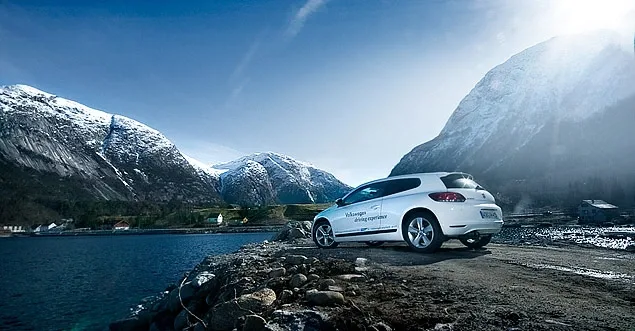
Even if the "Scirocco's" character lacks that frantic obsession with speed, like some "Japanese" cars, or the emotional expressiveness of "Italians" — but why would it need that? Who needs a car today that you have to fight with, forcing it to go or literally breaking it through corners?
The "Scirocco" is not a crazy wrestler, but an ideal sparring partner in the ring. Want a light warm-up — please. Work on a series of punches — with pleasure. Have a full-fledged fight — great! But if the driver loses concentration for a second or, on the contrary, gets too carried away by excitement on a winding road, the Scirocco will not knock him out with an unexpected "lucky punch," but will only encourage him with a friendly jab: "Hey, are we working or sleeping?" "Grrr... What a question? Working, of course!"
Technical specifications
| VW Scirocco 1.4 TSI DSG | VW Scirocco 2.0 TSI DSG | |
| Length, mm | 4256 | 4256 |
| Width, mm | 1810 | 1810 |
| Height, mm | 1404 | 1404 |
| Wheelbase, mm | 2578 | 2578 |
| Ground clearance, mm | 113 | 113 |
| Engine displacement, cm3 | 1390 | 1984 |
| Power, hp/rpm | 160/5800 | 200/5100 |
| Torque, Nm/rpm | 240/1500-4500 | 280/1700-5000 |
| Maximum speed, km/h | 218 | 233 |
| Acceleration from 0 to 100 km/h, s | 8 | 7.2 |
| Base price, rub. | 1 005 638 | 1 148 000 |