
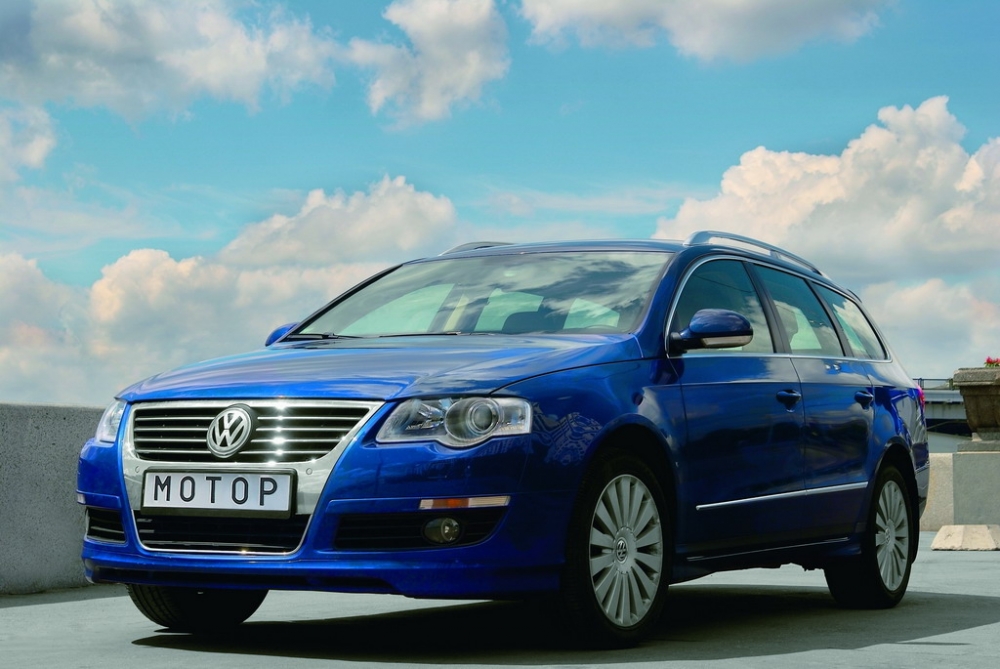
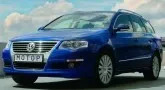
 Why the VW Passat is so popular here needs no explanation: a successful combination of practicality, attractive design, and reasonable prices. In the D-class, it's hard to find a more balanced option with an engine around 2 liters. But the example we got is a completely different story. It sits at the top of the model range, and its price is far from friendly — it approaches $60,000. That's at least $15,000 more than the front-wheel-drive wagon with the 2.0 FSI engine and $10,000 more than a similar car but with the 2-liter turbo engine. So the question is: is such an overpayment justified for the V6 and 4Motion badges? Why the VW Passat is so popular here needs no explanation: a successful combination of practicality, attractive design, and reasonable prices. In the D-class, it's hard to find a more balanced option with an engine around 2 liters. But the example we got is a completely different story. It sits at the top of the model range, and its price is far from friendly — it approaches $60,000. That's at least $15,000 more than the front-wheel-drive wagon with the 2.0 FSI engine and $10,000 more than a similar car but with the 2-liter turbo engine. So the question is: is such an overpayment justified for the V6 and 4Motion badges? |
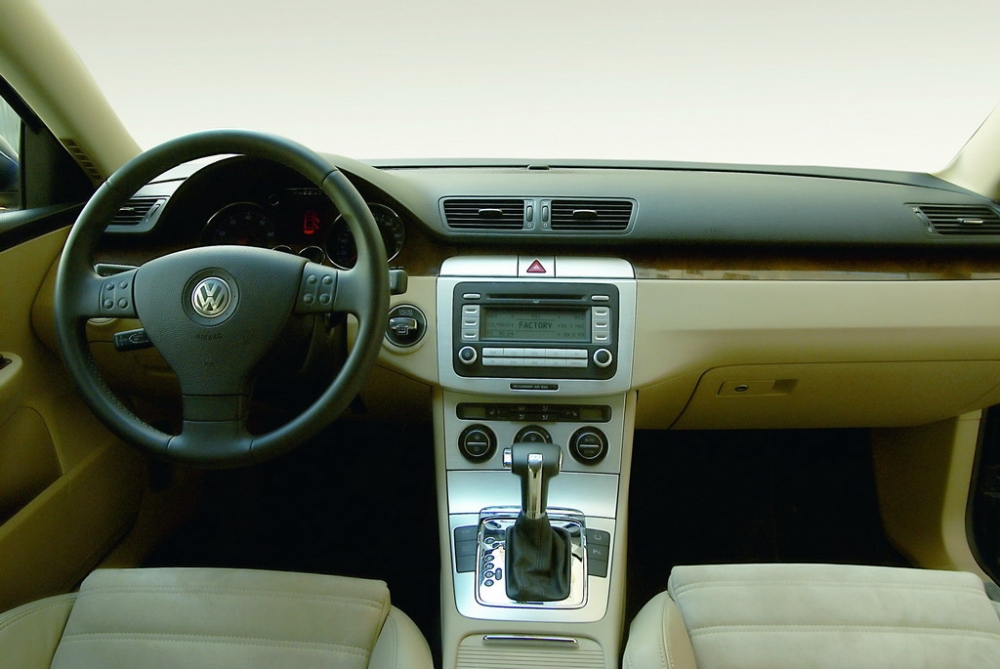
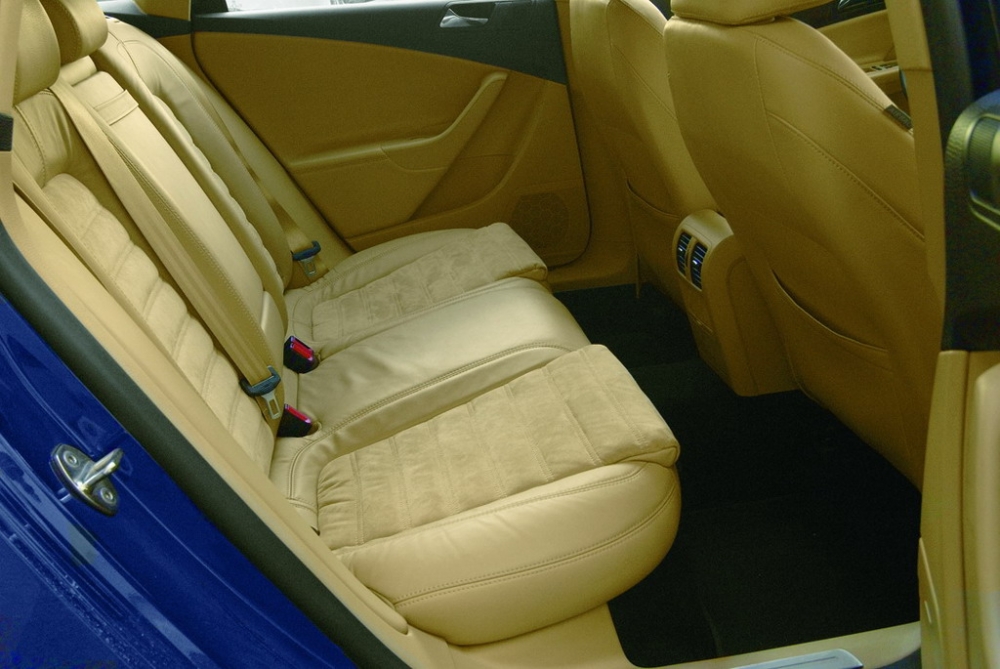
 The interior of the top version is almost indistinguishable from the regular Passat. The same comfortable seats with Alcantara (in Highline trim), the same door trim and instrument cluster. The only unique detail is the DSG inscription on the gear lever. Such a transmission is installed exclusively on cars with the petrol V6 or 2-liter diesel. I adjust the seat and steering wheel to my liking. There are plenty of adjustment ranges — even a very tall driver will find a comfortable position. True, the seating position in any case turns out to be quite high. Some like it, some frown, but the fact remains: visibility benefits from this, while the "feel of the car" — on the contrary, is lost. The interior of the top version is almost indistinguishable from the regular Passat. The same comfortable seats with Alcantara (in Highline trim), the same door trim and instrument cluster. The only unique detail is the DSG inscription on the gear lever. Such a transmission is installed exclusively on cars with the petrol V6 or 2-liter diesel. I adjust the seat and steering wheel to my liking. There are plenty of adjustment ranges — even a very tall driver will find a comfortable position. True, the seating position in any case turns out to be quite high. Some like it, some frown, but the fact remains: visibility benefits from this, while the "feel of the car" — on the contrary, is lost. |
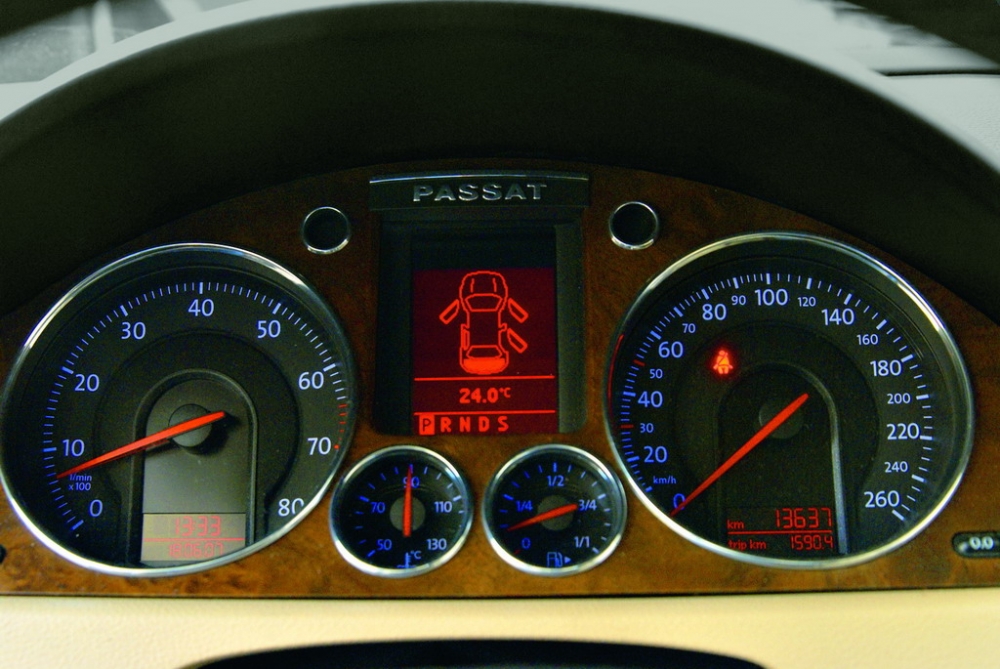
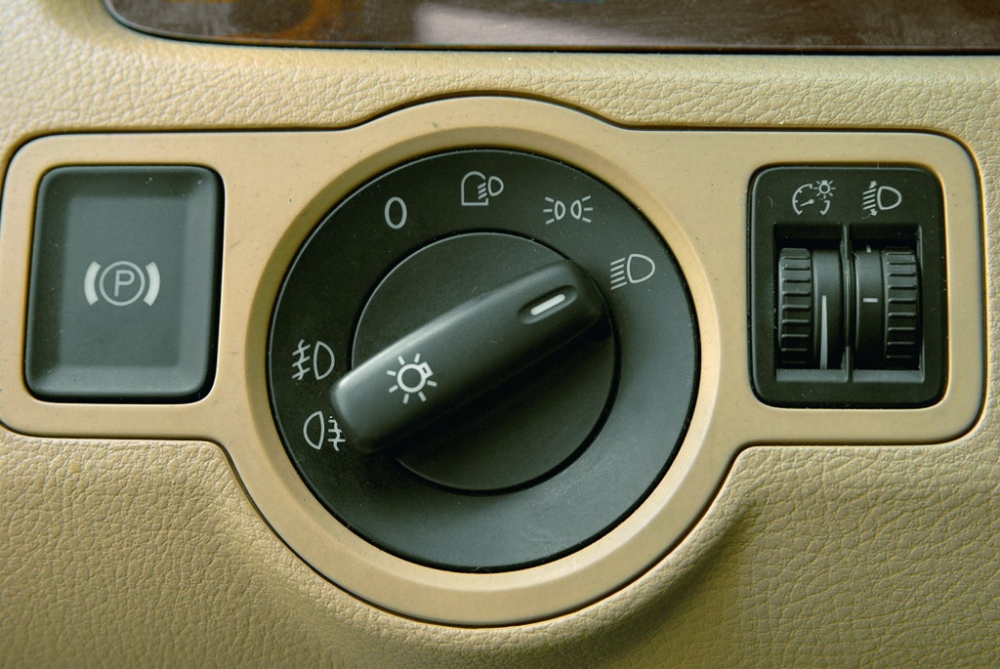
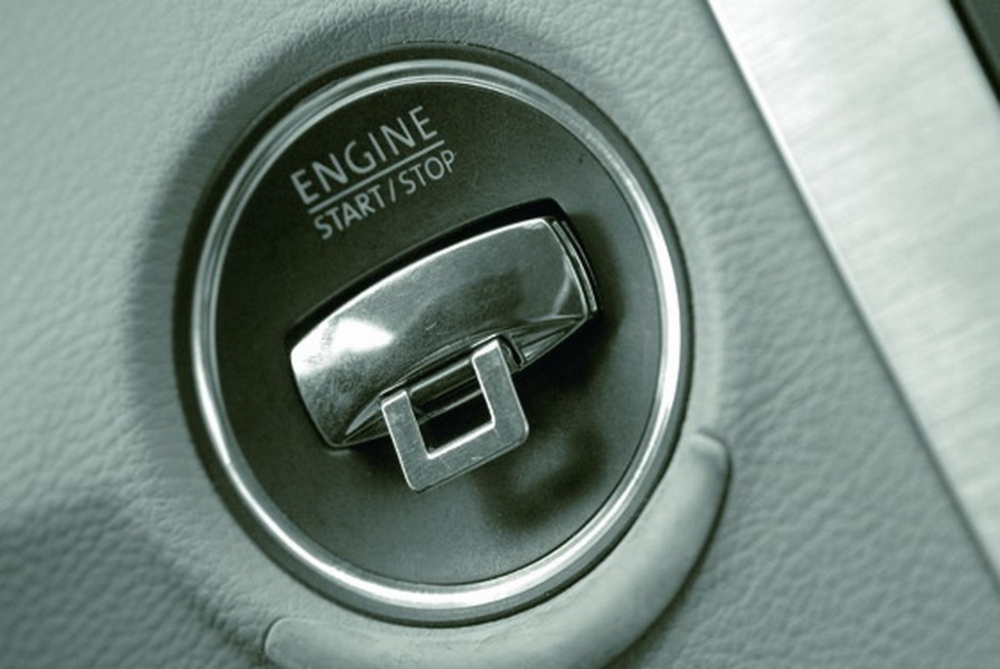
 Starting the engine is the usual press of the key fob. From under the hood comes a thick rumble that only V-shaped "sixes" have. I immediately notice a couple of things. First: the test car pulls away from the electronic "handbrake" noticeably softer than versions with weaker engines and the Tiptronic "automatic". Second — how the tachometer needle behaves during shifts: it doesn't smoothly descend to the desired mark, but jumps to it with a jerk. The ultra-fast DSG is to blame — it has already prepared the needed gear in advance. Starting the engine is the usual press of the key fob. From under the hood comes a thick rumble that only V-shaped "sixes" have. I immediately notice a couple of things. First: the test car pulls away from the electronic "handbrake" noticeably softer than versions with weaker engines and the Tiptronic "automatic". Second — how the tachometer needle behaves during shifts: it doesn't smoothly descend to the desired mark, but jumps to it with a jerk. The ultra-fast DSG is to blame — it has already prepared the needed gear in advance. |
 I try harder acceleration. Pedal to the floor — and... nothing extraordinary. Yes, the car accelerates quite briskly, but without a wow effect. Yes, gears click quickly and almost imperceptibly, but the difference from Tiptronic is not so striking. I switch the DSG selector to S mode. Now it's more fun — the car seems to have awakened, revs rise higher on each gear. Shifts remain fast, but now you feel them, and the harder you press the gas, the more noticeable they are. The Passat understands: if the pedal is floored, you can forget about smoothness. Confident and firm acceleration starts from just above 2000 rpm. I try harder acceleration. Pedal to the floor — and... nothing extraordinary. Yes, the car accelerates quite briskly, but without a wow effect. Yes, gears click quickly and almost imperceptibly, but the difference from Tiptronic is not so striking. I switch the DSG selector to S mode. Now it's more fun — the car seems to have awakened, revs rise higher on each gear. Shifts remain fast, but now you feel them, and the harder you press the gas, the more noticeable they are. The Passat understands: if the pedal is floored, you can forget about smoothness. Confident and firm acceleration starts from just above 2000 rpm. |
 Of course, such dynamics are also the merit of the proprietary 4Motion all-wheel drive. The wheels don't break into wheelspin even with the stability system turned off. And on front-wheel-drive versions, when starting "flat out", the ESP light manages to flash on the dashboard. In corners, all-wheel drive allows you to maintain higher speed, and the electronics intervene less often. But overall, the character of the younger versions hasn't gone anywhere: on corner entry, the same understeer manifests itself, and no "formotion" will hold the heavier front end. When you take a corner at the limit, the steering wheel fills with pleasant heaviness. The leather three-spoke "wheel" is ideal in diameter, thickness, shape, and grip with the palms. The drawback of front-wheel-drive versions — a vague "center" on the high-speed straight — is almost eliminated here. Therefore, driving this Variant at speeds around 200 km/h is a real pleasure. The engine is enough for confident accelerations even after "a hundred", reactions to the steering wheel are quick and precise, noise in the cabin is low — you can talk without raising your voice. Of course, such dynamics are also the merit of the proprietary 4Motion all-wheel drive. The wheels don't break into wheelspin even with the stability system turned off. And on front-wheel-drive versions, when starting "flat out", the ESP light manages to flash on the dashboard. In corners, all-wheel drive allows you to maintain higher speed, and the electronics intervene less often. But overall, the character of the younger versions hasn't gone anywhere: on corner entry, the same understeer manifests itself, and no "formotion" will hold the heavier front end. When you take a corner at the limit, the steering wheel fills with pleasant heaviness. The leather three-spoke "wheel" is ideal in diameter, thickness, shape, and grip with the palms. The drawback of front-wheel-drive versions — a vague "center" on the high-speed straight — is almost eliminated here. Therefore, driving this Variant at speeds around 200 km/h is a real pleasure. The engine is enough for confident accelerations even after "a hundred", reactions to the steering wheel are quick and precise, noise in the cabin is low — you can talk without raising your voice. |
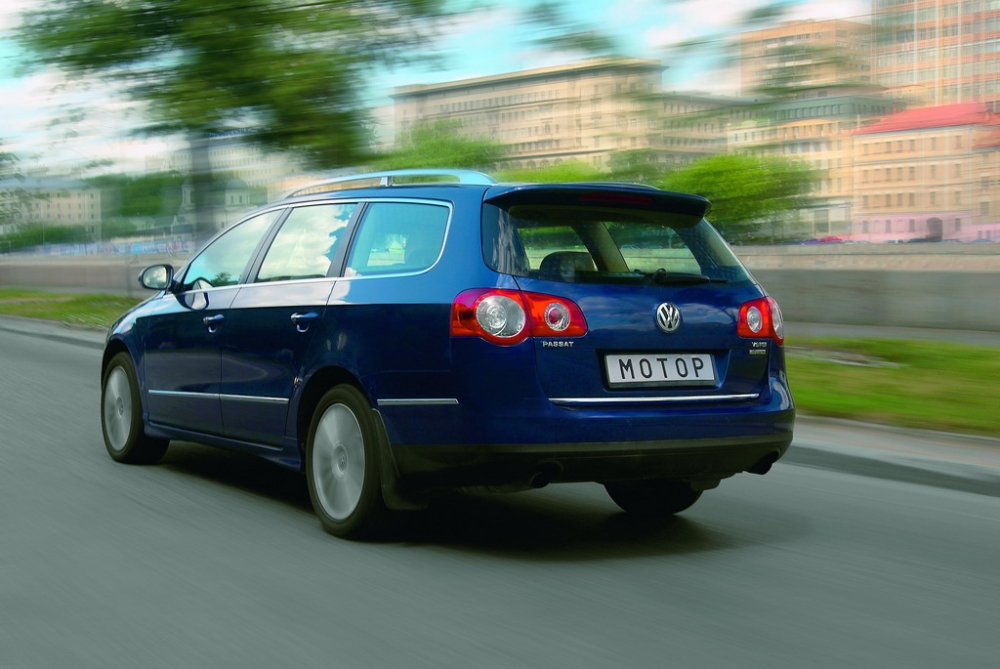
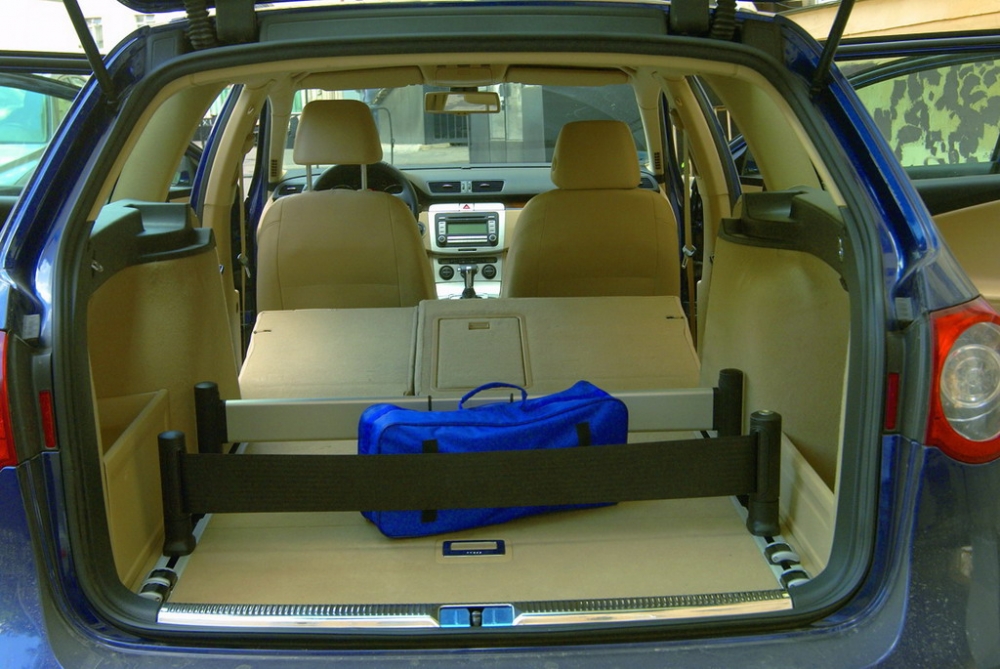
 The suspension, however, disappoints. All the advantages of the top version that inflate the Passat's price — V6, all-wheel drive, DSG, Variant body — add up to a serious drawback in the form of extra weight. And it seems that it is to blame for some looseness of the chassis. Pitching on "waves" at speed, impacts on seemingly minor bumps, increased body roll — all this, apparently, is a consequence of the added weight. Nevertheless, the Passat Variant still handles better and more understandably than many classmates. And the 3.2-liter "variant" is also fast. On straights, 250 "horses" help, in corners — all-wheel drive. Moreover, it is not so sensitive to load. You can seat four passengers, stuff the trunk with things, securing them with special devices (a very useful option — in a powerful car, cargo must be secured), and the dynamics will hardly change. The suspension, however, disappoints. All the advantages of the top version that inflate the Passat's price — V6, all-wheel drive, DSG, Variant body — add up to a serious drawback in the form of extra weight. And it seems that it is to blame for some looseness of the chassis. Pitching on "waves" at speed, impacts on seemingly minor bumps, increased body roll — all this, apparently, is a consequence of the added weight. Nevertheless, the Passat Variant still handles better and more understandably than many classmates. And the 3.2-liter "variant" is also fast. On straights, 250 "horses" help, in corners — all-wheel drive. Moreover, it is not so sensitive to load. You can seat four passengers, stuff the trunk with things, securing them with special devices (a very useful option — in a powerful car, cargo must be secured), and the dynamics will hardly change. |
 Any car is good when the price matches it. The Passat is good for $30,000-40,000 with 2-liter engines. And at a price of $60,000, it encroaches on the territory of brands with higher status: Audi, BMW, Mercedes-Benz. True, if you want a car of a prestigious brand with similar characteristics without exceeding this budget, you'll have to give up all-wheel drive or reduce the engine displacement. Any car is good when the price matches it. The Passat is good for $30,000-40,000 with 2-liter engines. And at a price of $60,000, it encroaches on the territory of brands with higher status: Audi, BMW, Mercedes-Benz. True, if you want a car of a prestigious brand with similar characteristics without exceeding this budget, you'll have to give up all-wheel drive or reduce the engine displacement. |
 PRICES AND TRIM LEVELS PRICES AND TRIM LEVELSThe VW Passat Variant is available with 1.6 L, 1.6 L FSI, 2.0 L FSI, 2.0 L TFSI, 3.2 L FSI, 1.9 L TDI, and 2.0 L TDI engines. For petrol 2-liter versions and the 1.6 L FSI modification, a 6-speed manual and Tiptronic "automatic" are offered. DSG can be installed on the 2-liter turbodiesel. The Passat with V6 comes only with DSG. For the 1.9 L TDI and 1.6 L petrol — only the old 5-speed "manual". All-wheel drive 4Motion is combined with petrol and diesel 2-liter engines with a "manual", as well as with the V6. The Passat is sold in four base trims — Trendline, Comfortline, Sportline, and Highline. Prices for the Variant start at $27,444 — that's how much the 1.6 Trendline modification with manual costs. For the Variant 3.2 DSG 4Motion Highline, they ask from $53,361. |
Above your head
I got acquainted with the VW Passat quite a long time ago – it was a B5 from one of the first releases. Later, I got an updated B5, then it was replaced by a B6. That's why it was all the more interesting to test the most expensive and technically advanced Passat in the Variant version.
Test drive photos
Comments
No comments yet. Say the first word.