
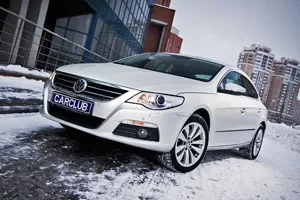
 I am inclined to view the Passat CC not as the newest standalone model in the lineup, but rather as a reincarnation of the Passat. This is connected not only with the close technical kinship of the two cars, but also with the obvious need to rejuvenate the Passat...Comments (8)
The formula of the Roman satirist Juvenal — "bread and circuses" — perfectly describes what Volkswagen has prepared in its new creation, the Passat CC.
Many, upon hearing the abbreviation CC, immediately think of Coupe Cabriolet. I admit, I also harbored this hope until it turned out that the second letter stands for Comfort. The first word is guessed correctly — it is indeed a Coupe, but there is no hint of a convertible here. The disappointment was bitter, but quickly gave way to curiosity.
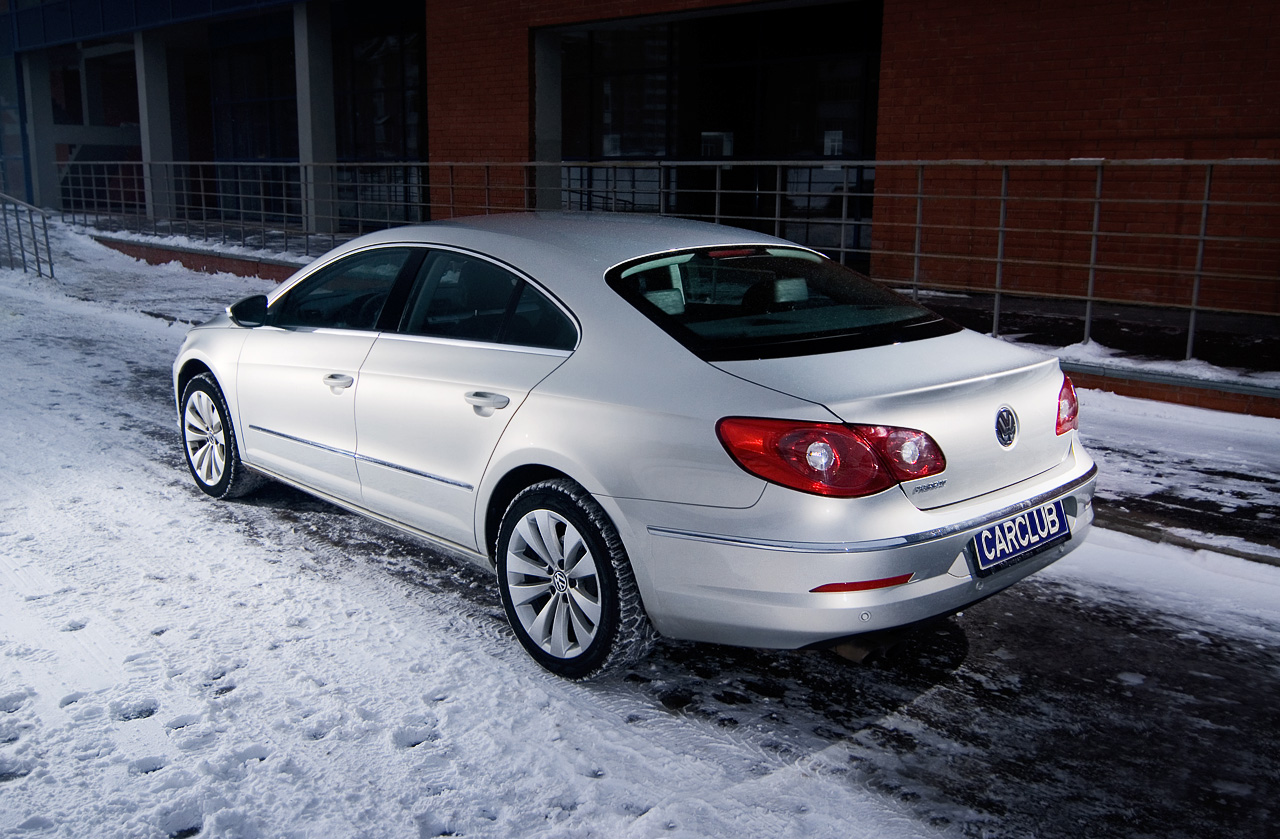 |
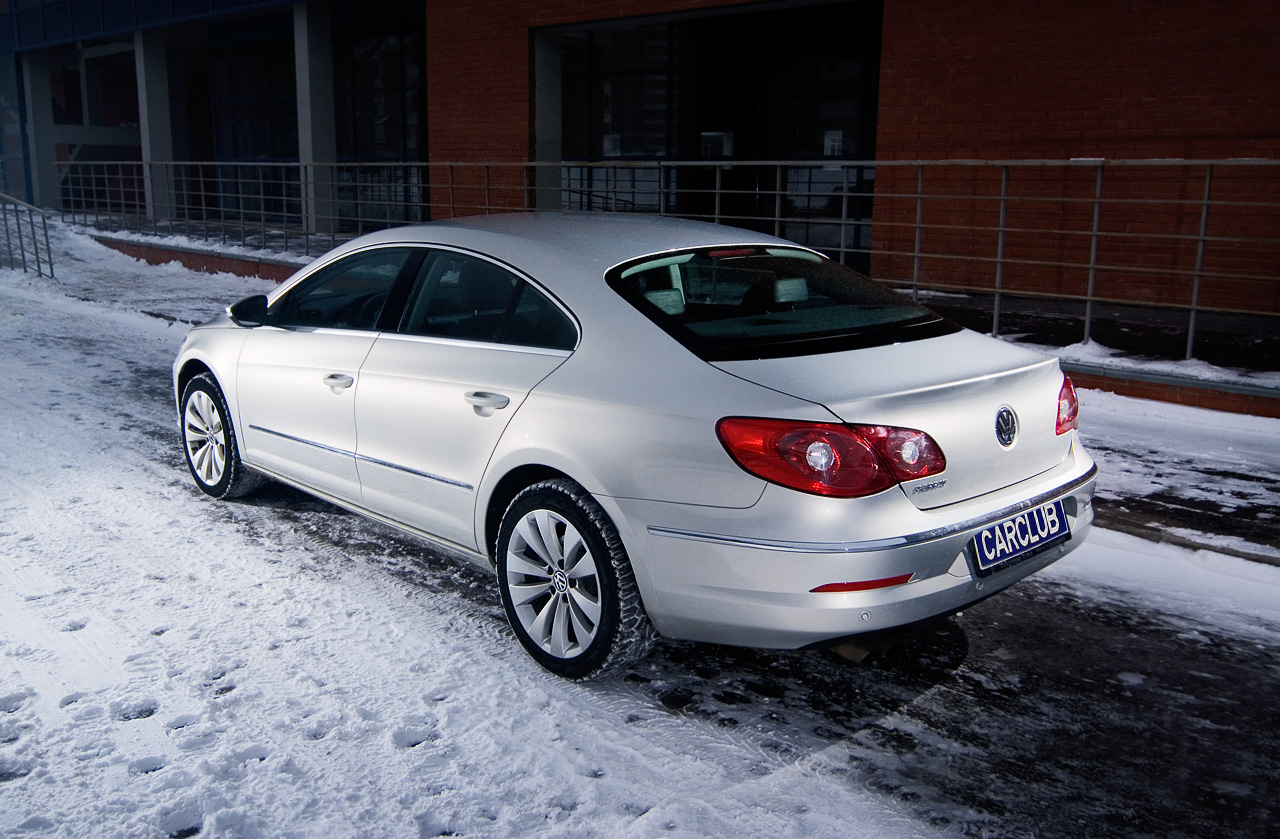
| The fact that this is a coupe is unmistakably reminded by the very refined main body line, which smoothly flows from the front of the car to its very end, descending right behind the heads of the rear passengers, gliding over the rear window and dissolving into space. |
But instead, I had the Volkswagen Passat Comfort Coupe in front of me. And all the minor notes immediately evaporated.
First, let's talk about the "bread," and save the "circuses" for dessert.
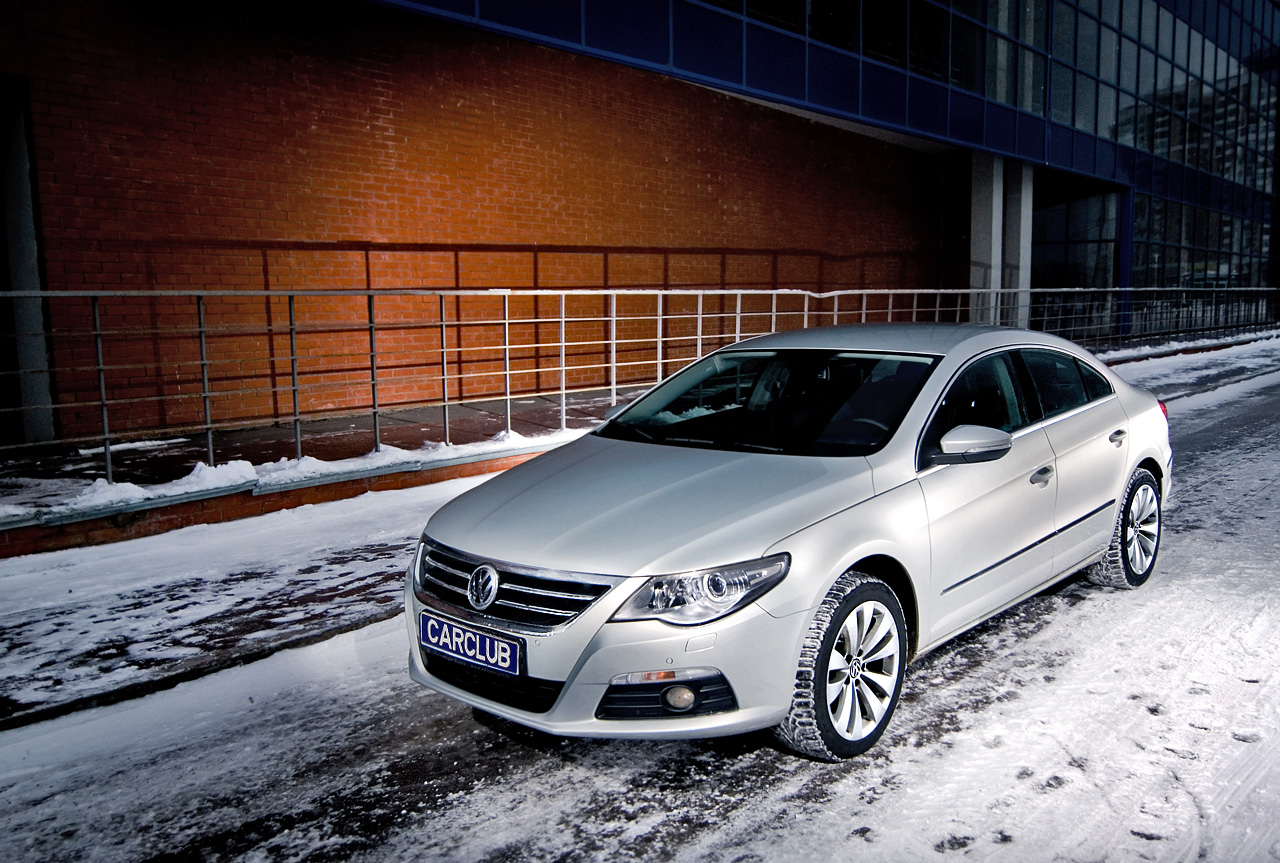 |
| In the front part of our liner, one can observe a sloping hood with molded ribs, giving the front of the car an effect of movement even in a static state. |
I do not consider the Passat CC a fully-fledged new model — rather, it is a rebirth of the regular Passat. It's not just about the technical closeness of the two cars, but also that the "Passat B6" has been produced since 2005 and over four years without a single facelift has managed to bore the public. The car is still popular, reliable, and technically impeccable, but it has lost its former appeal in the eyes of buyers. And given that the Phaeton did not perform too successfully in the super-premium segment, the brand urgently needed to burst into the market with something unexpected and unlike previous models, to shake up the bored consumer and push them towards buying a VW.
This is the "daily bread" — without it, nothing. But let's move on to the most interesting part — the "circuses."
 |
| On the central console, already familiar from the sixth-generation "Passat," a new multimedia system with a touchscreen display has been installed. The display also duplicates the climate system settings and handles a mobile phone connected via Bluetooth remarkably well. |
There is indeed much to admire here. I will not point a finger at the Passat CC and shout about plagiarism from the Mercedes CLS. You cannot patent the idea of adding two extra seats in the back to a sleek coupe for passenger convenience. So all talk about one German giant copying another's model, I consider unfounded. It is surprising that the Passat CC became only the second car in the world to embody the concept of a 4-door coupe.
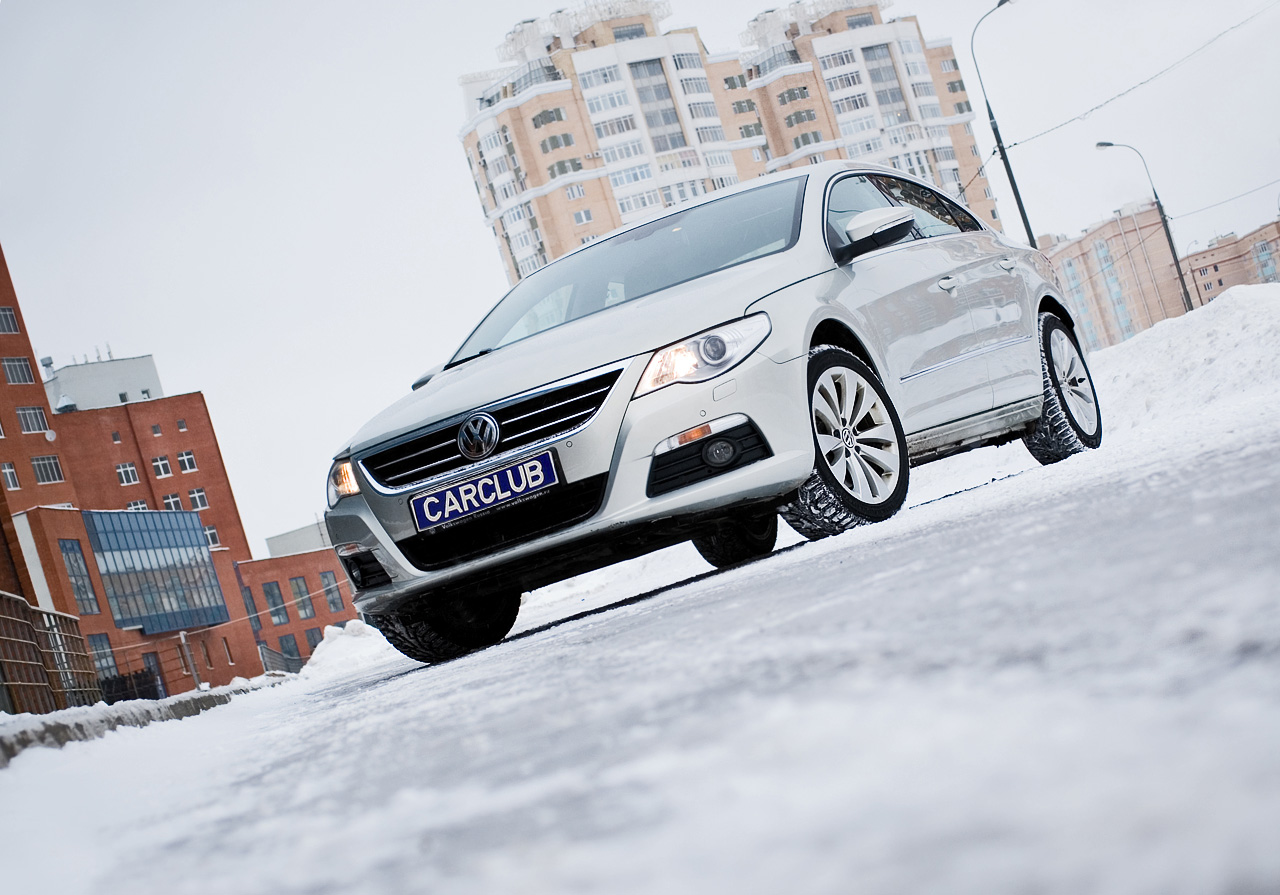 |
| The front bumper is also in good shape and has three impressive mouths of aerodynamic diffusers, integrated turn signals, and fog lights. |
The coupe essence of the car is revealed by the main body line: it starts at the front, stretches along the entire car, dives behind the heads of the rear passengers, runs along the rear window, and smoothly descends from the upper edge of the neat spoiler on the trunk lid. The other lines only emphasize the sporty image of the CC.
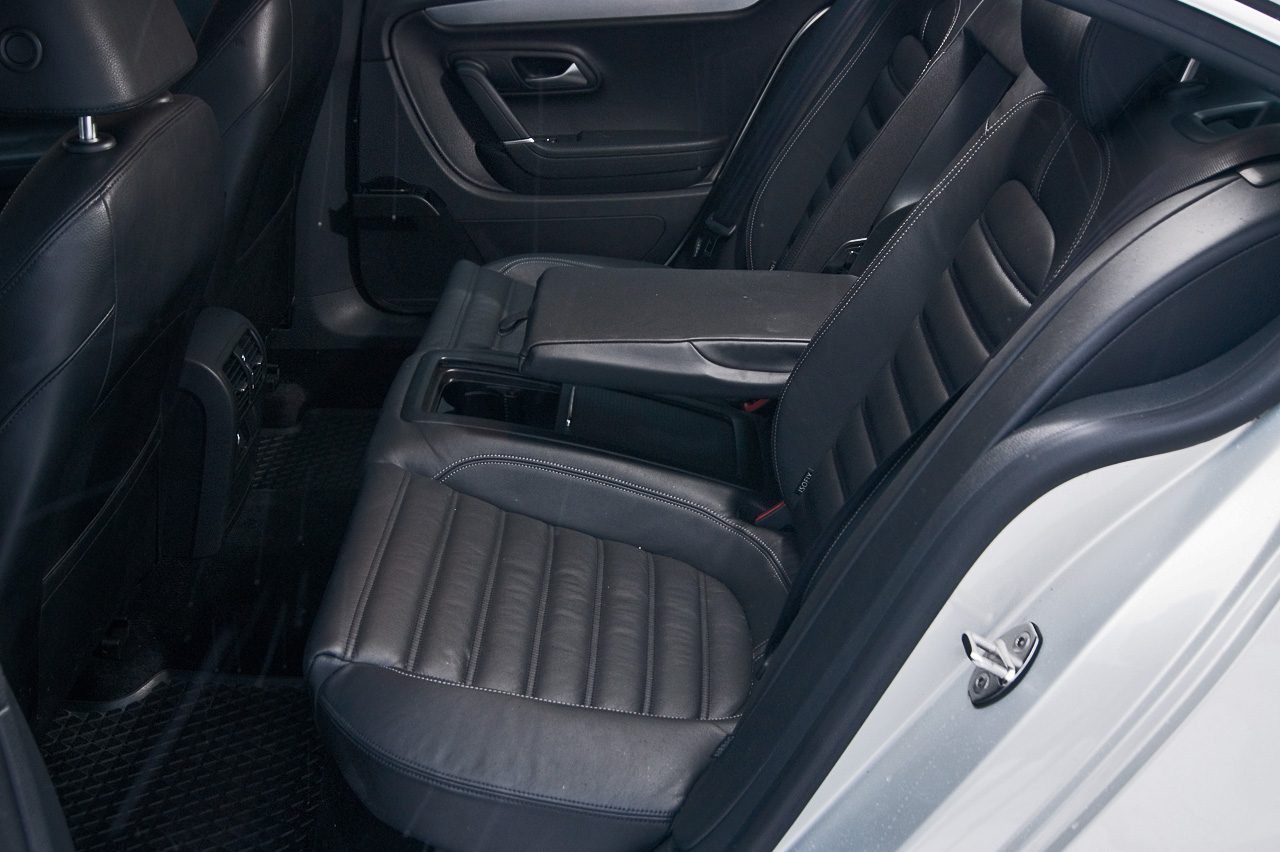 |
| A distinctive feature of the Passat CC interior is the space for rear passengers – even if you wanted to sit three abreast, it would hardly be possible. The seats in the back are clearly molded for two occupants and additionally have a decorative divider inlaid with a small glove box. |
At the front — a sloping hood with relief ribs that give the front a dynamic look even when the car is stationary. The headlights geometrically echo the radiator grille, split by chrome inserts into three parts, and crown the front edge of the fenders. The front bumper does not lag behind: three large air intakes, built-in turn signals, and fog lights.
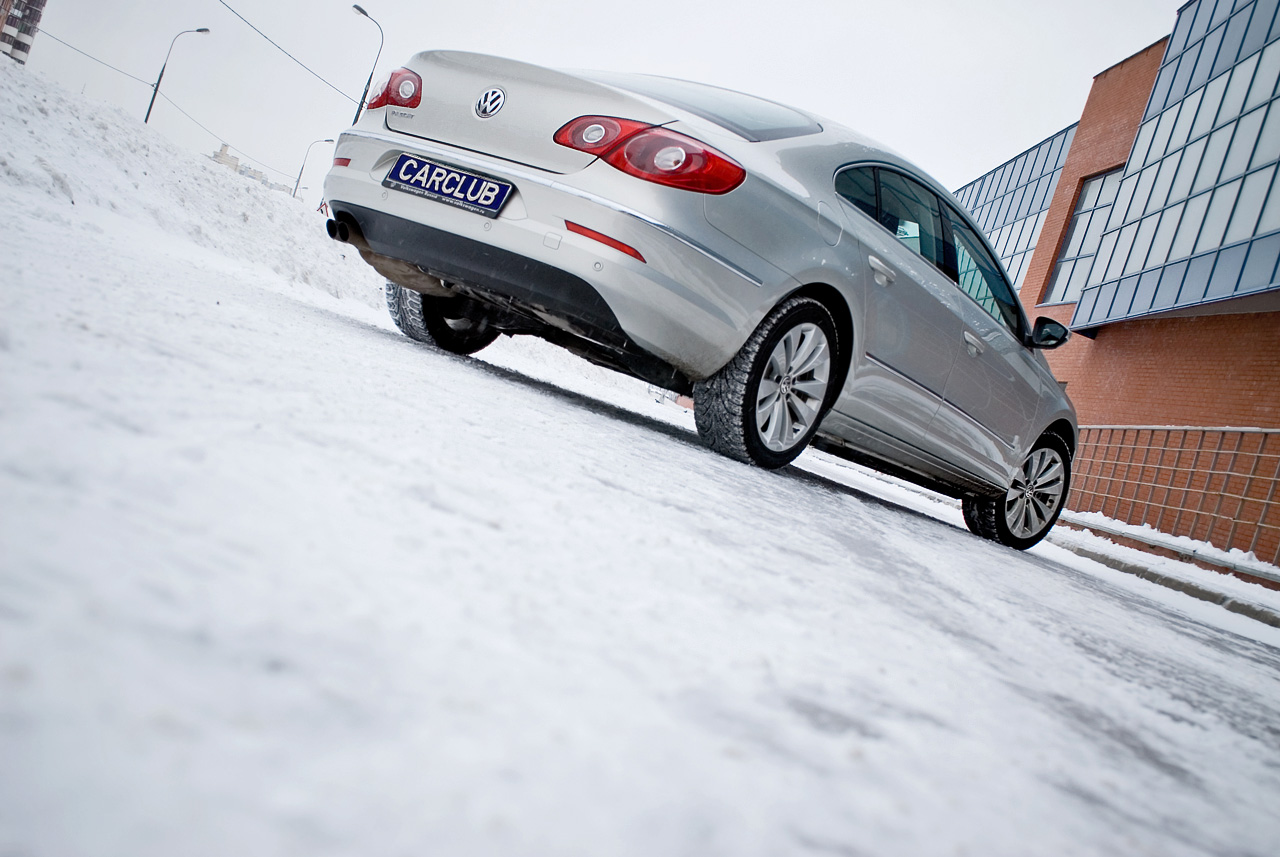 |
| The first thing that catches the eye is the car's glazing: the entire side row of windows is made in the form of a slightly curved crescent. The windows are low and therefore do not overload the profile. |
When viewed from the side, the glazing is the first thing you notice: the side windows form a slightly curved crescent. They are low and do not weigh down the profile. Directly under the window line runs a muscular "tornado line" — a shoulder line that supports the glazing and leads the eye to the lower part of the body. The windows are installed in the doors in a frameless manner.
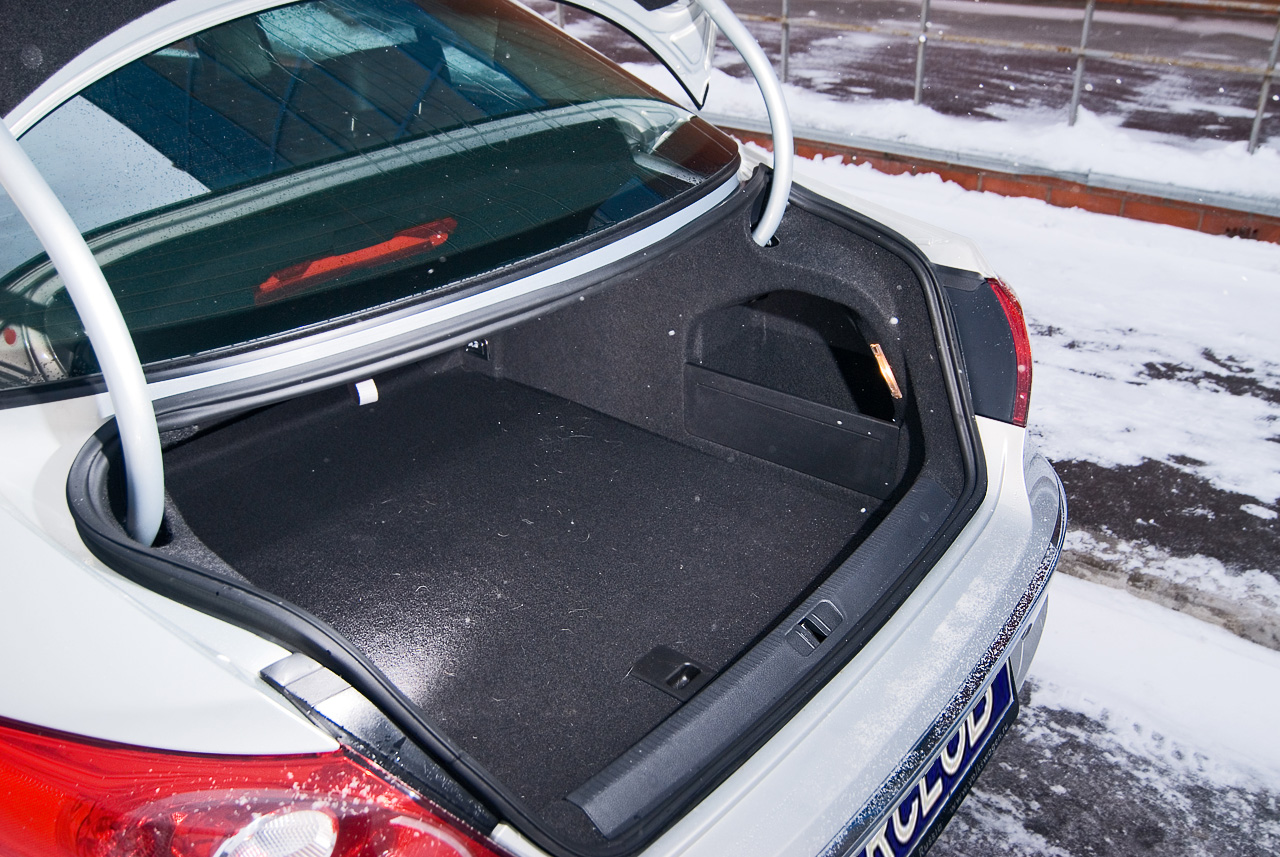 |
The rear completes the picture: a third of the roof descends to the rear window, which is underlined from below by a glossy black insert on the trunk lid. The lid itself has acquired a neat spoiler, molded directly into its structure. The rear lights seem frozen in motion after acceleration — they have retained the recognizable round elements, but now stand at an angle with slight deformation. To top it off — branded VW wheels of 17 or 18 inches to choose from. The result is a business sedan with a very lively appearance that makes passersby flinch at the sight of the predatory squint of the headlights and follow the car with their gaze.
The exterior of the CC is a real "spectacle," it will leave no one indifferent. But the interior is much more familiar — it has almost completely moved over from the Passat B6. Here is the familiar dashboard and central console. It is easier to list what has changed.
The steering wheel has acquired two five-position joysticks on the side spokes — with their help, it is easy to switch all auxiliary and multimedia functions. All steering wheel options offered for the CC look very attractive thanks to decorative inserts and thoughtful ergonomics with clearly defined grip zones. On the central console, familiar from the sixth-generation "Passat," a new multimedia system with a touchscreen is installed. Optionally, it can perform the functions of a navigator, a music storage on a hard drive, and even a car cinema with TV and DVD. In addition, the display shows climate control settings and works perfectly with a phone connected via Bluetooth.
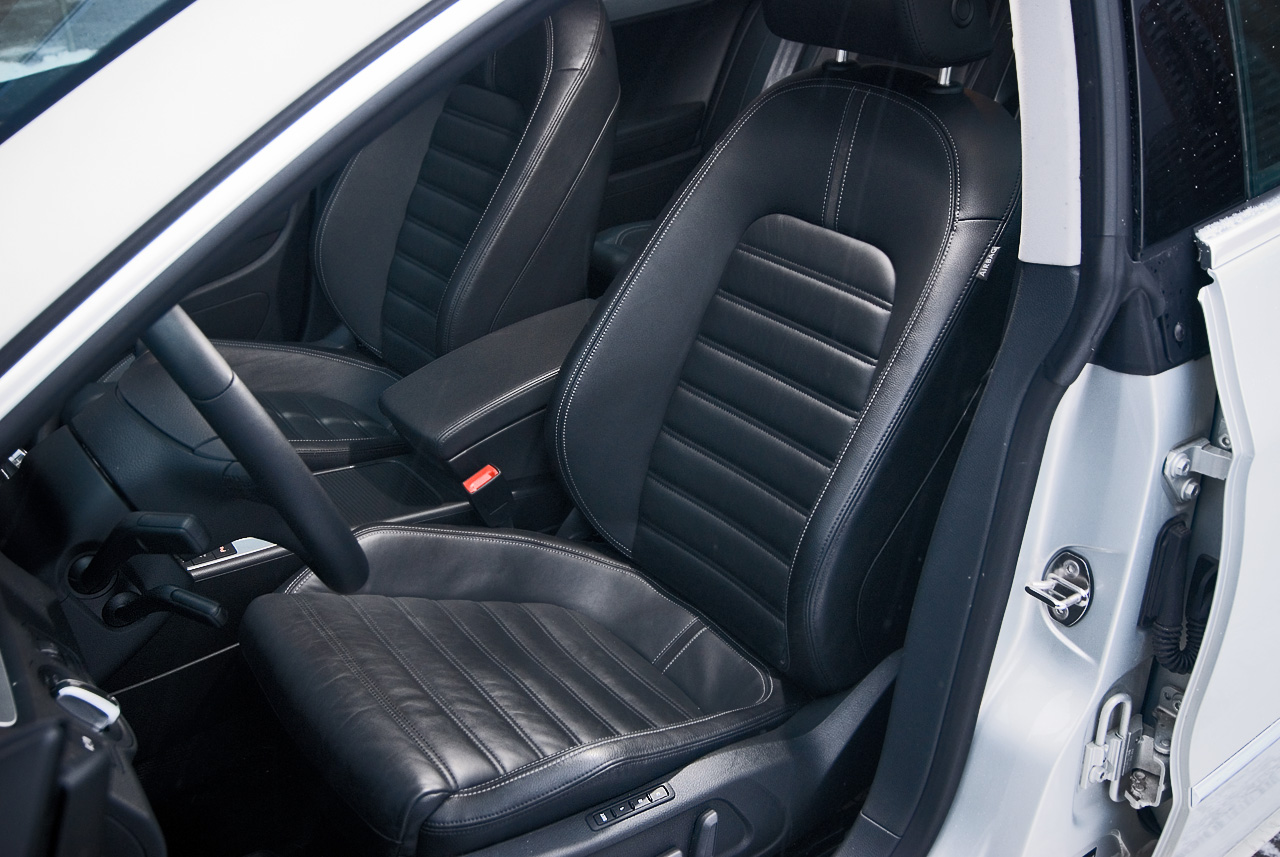 |
| The excellently profiled front seats firmly hold the driver and front passenger with their developed lateral support. The range of electric adjustments is sufficient for people of any build. |
The main highlight of the Passat CC interior is the rear seats. It is practically impossible to sit three abreast: the sofa is clearly molded for two passengers, and between them there is a decorative divider with a small glove box.
 |
The rules of the game are binding, and the outcome of this duel is obvious — the Passat CC wins by a landslide. To become the owner of this modern, stylish, and dynamic car, you need to have just over a million rubles in your account, namely 1,043,600. For those who want to play harder and win by a shutout, you'll have to part with 63,457 dollars (507,650 hryvnias) and get an all-wheel-drive CC with a 3.6-liter V6 and DSG gearbox, which literally teleports you through space.
 |
Dmitry Malygin