
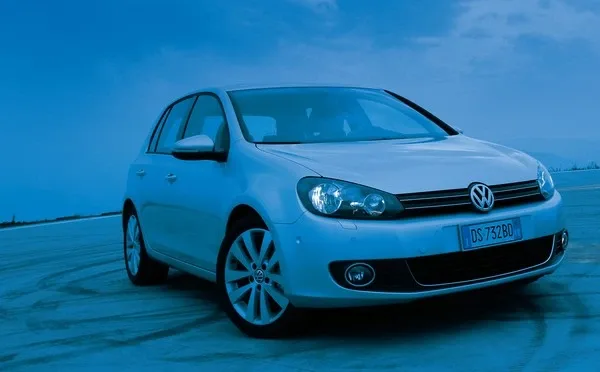
Milan highway, middle lane. The sixth Golf rolls along in sixth gear, the tachometer stays below the 3000 mark. We're moving fast and smoothly. The four-cylinder turbocharged petrol engine runs almost silently. All you can hear is the muffled rustle of wide tires on 17-inch wheels.
I poke at the touchscreen of the infotainment system, checking for traffic jams – it's all clear ahead.
In the rearview mirror, a Golf GTI from the previous, fifth generation appears. It's quickly catching up to us. But we're ready to bet: as soon as it draws level with us, it'll slow down. And so it happened – the GTI, which had just been flashing its high beams and shooing slowpokes out of the left lane, abruptly decelerated. Its driver is clearly calculating how much this encounter will dent his self-esteem: he's got a GTI, albeit an older generation, while we have the new Golf. He studies first the car, then us, carefully. Then he overtakes and changes lanes. A long look at our Scirocco-style grille – and the GTI suddenly surges ahead. He's off to arrange financing for the "sixth" or decided to reassure himself: they say, my "fifth" is better anyway. He has nothing else to counter with.
But we, after several weeks behind the wheel of the sixth Golf, have accumulated plenty of impressions. Let's start with the main thing: few people perceive the Golf VI as a new-generation car, which it actually is. Most simply don't notice the changes. Of course, at dealerships they'll spend hours detailing all the innovations, but at first glance, it seems little has changed. Ah, back in the day, everything was different!..
FANS' OPINION
In 1983, the debut of the second generation was a real event. The first had been in production for nine years by then. And that will remain a record – its successor, the Golf II, stayed on the assembly line a year less, and the fifth generation was limited to just five years. How long the Golf VI will be produced is unknown – possibly even less.
Is the generational change accelerated by fierce competition? Partly yes. Nevertheless, the arrival of the sixth generation impressed hardcore "Golfers" the most. That's why we came up with the idea of letting a dozen people who have never owned anything but a Golf take this car for a spin. Those who remember the epochal transition from the first generation to the second, or from the third to the fourth. Has the Golf become more beautiful? Does it behave better?
Our readers from the "golf club" highly praised the engine's capabilities and the car's driving qualities. Only one of them, the youngest, complained about a "lack of sportiness," and the most senior of those surveyed criticized the interior design – saying it's a clear step backward, which, in his view, is completely unacceptable.
HOW NOT TO GET LOST IN OPTIONS
The new Golf debuts with two "fives": the entire engine lineup meets Euro 5 standards, and in a recent EuroNCAP crash test, the newcomer earned five stars.
Now we can finally focus on the Golf 1.4 TSI 122 hp Highline, luxurious and equipped "to the fullest." The standard equipment is rich in itself and includes seven airbags, stability control, dual-zone climate control, an onboard computer, a multifunction steering wheel, and sport front seats with combined upholstery. To all this, we must add an impressive list of options, which significantly increases the final price.
Everyone has their own recipes for personalization; we'll just advise, given the abundance of everything possible, to pay attention to options that improve the quality of life on board. Say, the seven-speed DSG transmission.
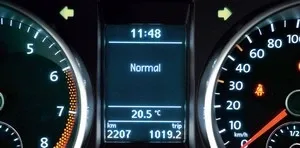
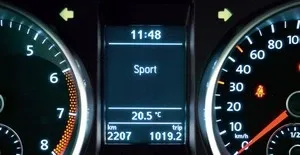
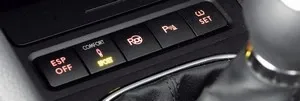 | INDICATORS In front of the gear lever, the "comfort systems" buttons are nestled: Park Assist, parking sensors, tire pressure monitoring. The indicator for the DCC system, which allows you to change suspension and steering settings, lights up yellow. The selected mode is displayed on the instrument cluster screen |
 |  |
YOUNG FOR THE YOUNG
Externally, the new Golf is simple, rounded, youthful. You notice this, for example, in the large sporty radiator grille, aggressive headlights, and stampings along the body. The "sixth" looks lower than its predecessor, but in reality, it isn't.
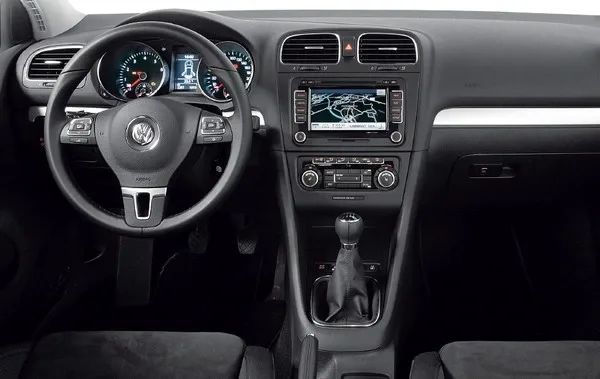
The interior has changed the most – it has gained the polish and sportiness inherent in its older relatives – the Passat CC and Scirocco. Ergonomics have stepped up a notch, as has the level of technology used. The trim materials are expensive and pleasant – you can't fault them.
And yet, the "sixth" is not an unequivocal synonym for "new." It has retained the best features of its predecessor – the multi-link rear suspension and part of the engine lineup. Additionally, the wheelbase remains unchanged. Why? All of this works excellently, so there's little point in developing a new generation from scratch just for marketing purposes. The Golf remains what we've come to expect: rational, thoughtful, but not without a spark. And incredibly comfortable.
DETAILS? IT'S ALL IN THEM...
You realize this when you open the hood, and the telescopic gas strut catches it, saving you extra effort. You can hang the mat on the hook under the cargo cover while you get the tools. Attention to the owner is evident in the little things, although the driver's seat, the new dashboard, and the new steering wheel say the same thing. And where are all the control buttons located? Exactly where you'd want them to be.
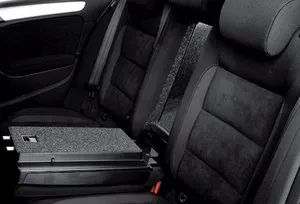
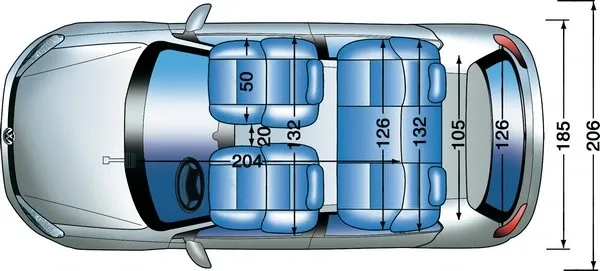
There's still enough room for four occupants: in the second row, the middle passenger feels cramped in the shoulders and legs – due to the tunnel. And the trunk is designed precisely for the needs of four people...
 |  |
FAMILIAR CONDITIONS
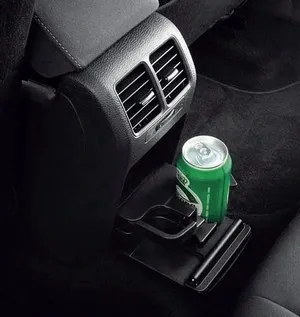
In the second row, two passengers will sit comfortably in the Golf. A third will be a bit cramped in the middle seat. The hatchback's backrest has a practical flap for long items. Sliding cup holders are a convenient solution
A couple of adjustments, and we're settled very comfortably: the seats in the Highline trim are attractive and have a comfortable profile. No extra buttons: the engine starts with a traditional key, and the 1.4-liter turbo engine, which was also installed on the Golf V, runs so quietly that it's barely audible.
The work on improving sound insulation has paid off: this is especially noticeable when driving on the highway. The dull rumble that characterized the previous generation is now just a memory. This is one of the significant advantages of the Golf VI, at least for the petrol version, since we haven't had the chance to check the effectiveness of sound insulation on the common rail turbodiesel variant. So it's better not to trust your senses but to watch your speed more carefully – the silence greatly masks it.
The engine has very decent capabilities: the range of confident torque starts at 1500 rpm and ends only at the 6000 mark – better than some turbodiesels. Of course, it's not a sporty engine, and it's hard to disagree with the die-hard "Golfers" here.
Our Golf was equipped with a six-speed manual that never ceased to delight with precise and light shifts. The clutch pedal is informative, but in city traffic, you realize the effort on it is clearly a bit too high.
LESSONS IN CONFORMISM
On a road winding around the hills, the daytime running lights warn other road users of our approach – good thing they're standard equipment. But on the road, you primarily appreciate the suspension's work – even at high speeds, it copes admirably with its task. Comfort is at the level of a higher-class car, despite our example having low-profile tires.
The test car's suspension is 10 mm lower than standard because it's equipped with DCC. This isn't just a pretty "toy" – the system allows you to choose one of three modes for the suspension and electric power steering.
Press a button on the console, and the car's behavior changes, especially noticeable in Sport mode.
This Golf knows how to deliver pleasure while remaining safe in any conditions thanks to the precise and delicate operation of the standard stability control. The brakes also left an excellent impression: the stopping distance is short and, on average, better than that of the 170-hp Golf 1.4 TSI of the fifth generation.
UNQUESTIONABLY NEW
You're probably eager to know how economical the 1.4 TSI engine is. Given its excellent dynamics (0-100 km/h in 9.5 seconds), you can easily keep consumption to 10 liters per 100 km. For today's times, that's a very respectable figure.
On the highway, average consumption stayed at 8.8 l/100 km, and only in city traffic does the appetite rise to 9.7 l/100 km.
So what's the bottom line? Is this really a new car? Without a doubt: if you look closely, the changes are visible to the naked eye.
Naturally, a devoted Golf fan expects the car they remain loyal to to keep getting better. With the new generation of the bestseller, that's exactly what happened: it seems like the same "fifth" model, but in every aspect — even more refined.
 |  |
LIKES
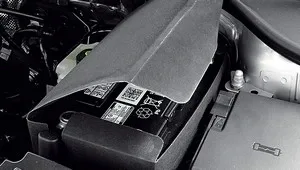
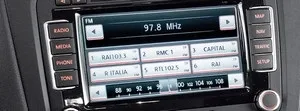
The battery is securely tucked into a soft cover that protects it well from dirt. Another nice touch is the radio tuner with a horizontal scale, which adds a slight retro accent to the design of a model with such a rich lineage. It looks very organic.
 |  |
DISLIKES
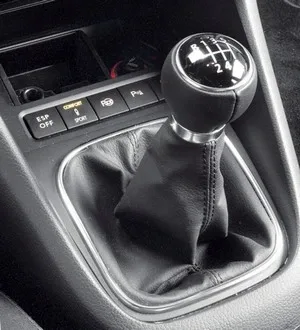
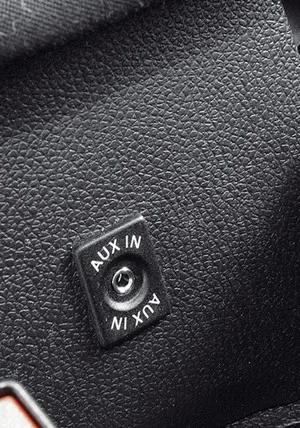
The gearshift lever cover will constantly collect dust, especially if you use the ashtray, which is placed right in front of it. The AUX jack, hidden near the handbrake, gives the impression that the engineers simply couldn't find a better place for it.
SECRET OF SUCCESS: HOW TO CHANGE WITHOUT CHANGING
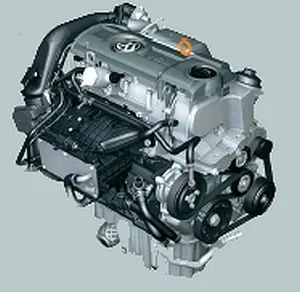 |
HIGHLIGHT This turbo engine is already familiar from the Golf V: small displacement, direct injection, variable valve timing, compact turbocharger and intercooler. |
|
SIGNATURE SCHEME Up front — classic MacPherson struts, at the rear — multi-link. A time-tested scheme, complemented by modern electronic assistants. | 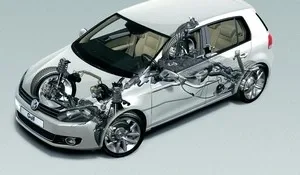 |
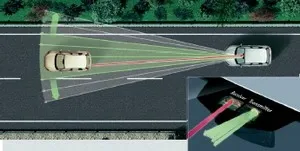 |
KEEP YOUR DISTANCE! Adaptive cruise control (ACC) uses a laser sensor to read the distance to the car ahead and its speed. If a collision threat arises, the system signals the brakes. |
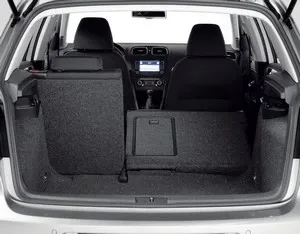 |
The Golf has always been known for its smart interior space organization. The "sixth" is no exception. Up front, you can get very comfortable. In the back, there's also enough room, especially if there are two passengers. If a third sits in the middle, they'll have to put up with a lack of shoulder room. Legroom in the rear is generous. The trunk has a proper rectangular shape and is very convenient, but when folding the rear seatbacks, a noticeable step appears. |
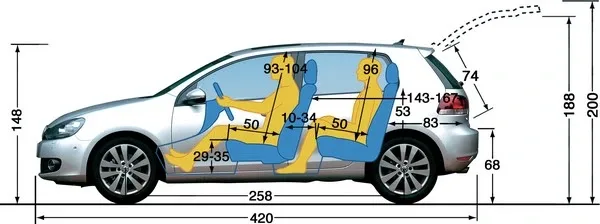
Technical specifications provided by the manufacturer
Volkswagen Golf 1.4 TSI (122 hp)
• Engine: front, transverse, 4 cylinders, cylinder bore – 76.5 mm, piston stroke – 75.6 mm, displacement – 1390 cm3, compression ratio – 10:1, max power – 122 hp at 5000 rpm, max torque – 200 Nm at 1500-4000 rpm, cast iron cylinder block, aluminum alloy cylinder head, 4 valves per cylinder, 2 overhead camshafts, hydraulic lifters (chain), direct injection, turbocharger and intercooler
• Transmission: front-wheel drive, manual, 6 speeds
• Tires: on the test car – 225/45 R17, wheels 7Jx17, space-saver spare
• Body: hatchback, 5 doors, 5 seats
• Suspension: front – with transverse link and telescopic strut (MacPherson), coil springs, rear – multi-link, coil springs, anti-roll bars, hydraulic shock absorbers
• Brakes: disc, front – ventilated
• Steering: rack and pinion with electromechanical power assist
• Dimensions and weight: wheelbase – 2578 mm, front track – 1540 mm, rear track – 1513 mm, length – 4199 mm, width – 1779 mm, height – 1479 mm, curb weight – 1215 kg, trailer weight – 1300 kg, trunk – 350 –1305 dm3, fuel tank – 55 L
• Place of production: Zwickau and Wolfsburg (Germany)