
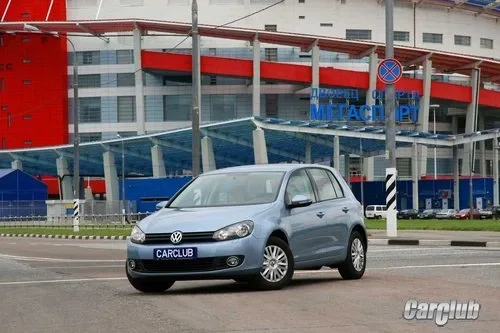
 The wheelbase was decided not to be touched (2578 mm), but the front overhang was shortened by 12 mm, while the rear, on the contrary, was slightly stretched. Thanks to this, the VW Golf VI looks more dynamic and composed than its predecessor.Comments
 The sixth generation of the Volkswagen Golf — a model that once gave its name to an entire class — has again taken the stage. But, strictly speaking, this is not a new round of evolution, but a deep modernization of its predecessor: it's hard to call this car a fundamentally different vehicle.
The first thing that catches the eye is the exterior. Walter de Silva was responsible for it, and he faced a difficult task: the Golf had to freshen up and look younger to remain relevant for another four years, but the body could not be radically changed. And most importantly, the signature style of a legend that VW cherishes above all else could not be lost. Martin Winterkorn, then head of the brand, therefore shelved several overly bold projects for the new Golf. Family traits are sacred. No argument there.
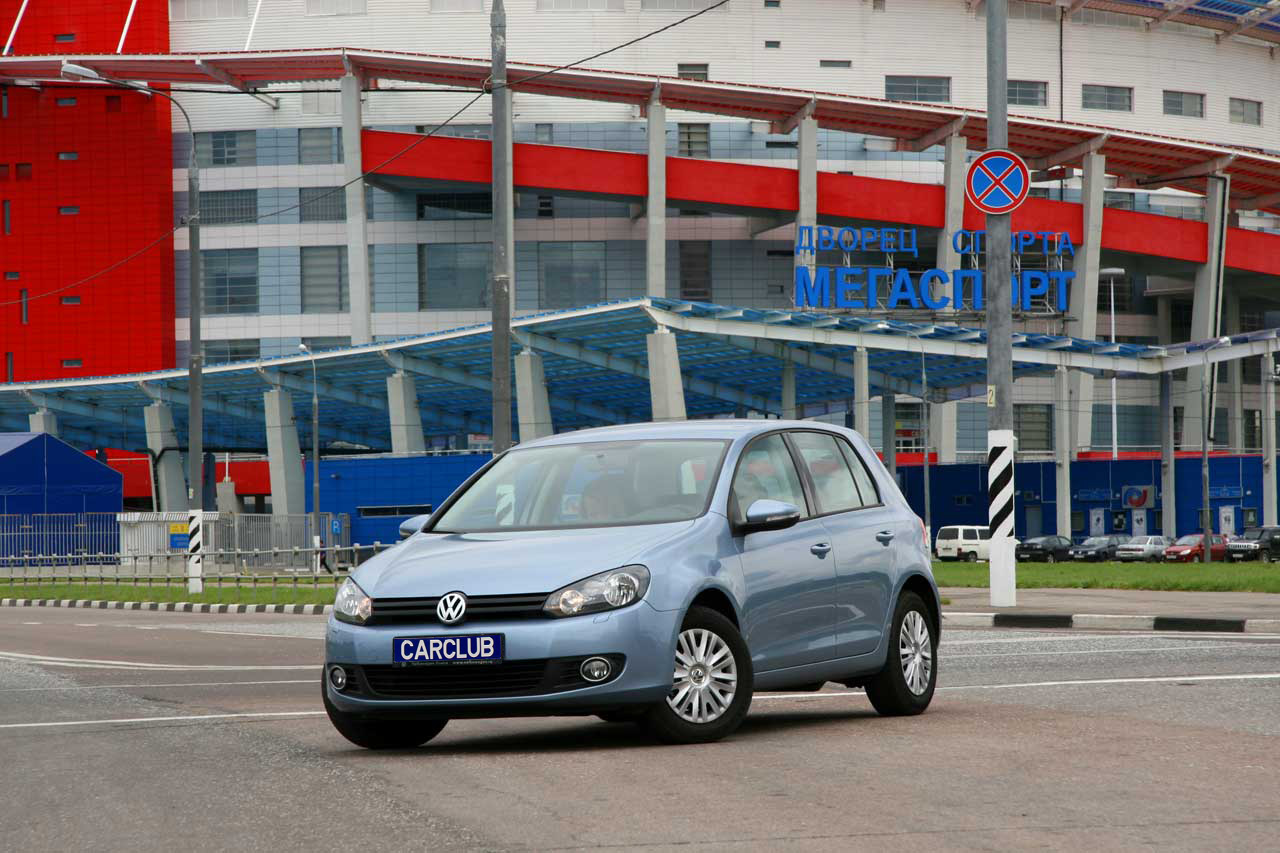 |
| Up front, there's plenty of aggression: faceted headlights with black plastic inside and an aggressive air intake instead of the good-natured look of the VW Golf V make the "sixth" much meaner. |
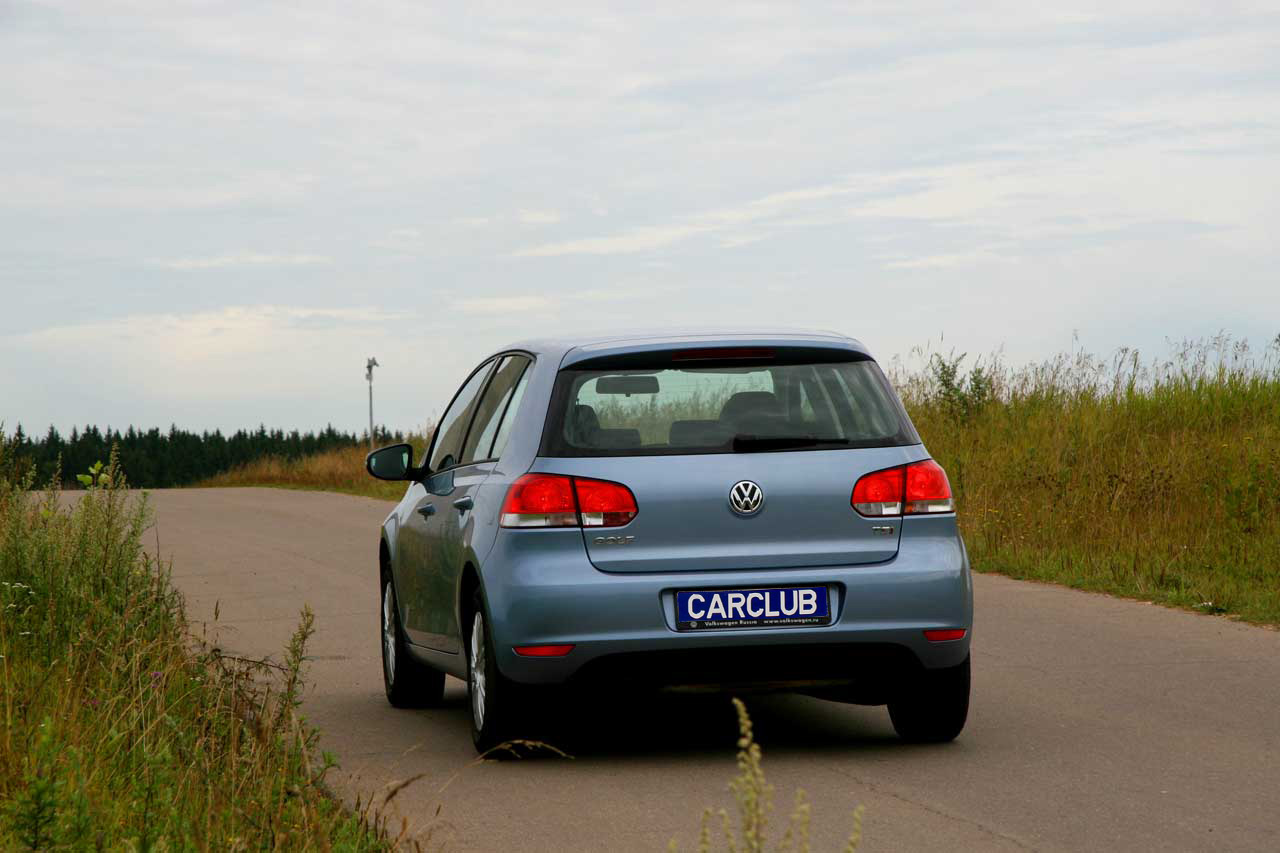
The result of painstaking work is this: the wheelbase is unchanged at 2578 mm, the front overhang was shortened by 12 mm, and the rear was slightly extended. In profile, the hatchback now looks like a typical C-class middleweight: a straight beltline and increased glass area. But up front, it's a real predator: unlike the good-natured gaze of the VW Golf V, the faceted headlights with dark plastic inside and the predatory mouth of the air intake added aggression to the "sixth Golf." The rear changed minimally: a different bumper and slightly elongated taillights. That's it. A simple set of tricks, and the result is obvious: the hatchback has noticeably younger and dressed in a strict business suit.
The body remained the same, as did the shape of the doors with their opening dimensions. But for the sake of cost reduction, the doors lost their removable outer panels — previously they were easy to replace after an accident, but they cost significantly more.
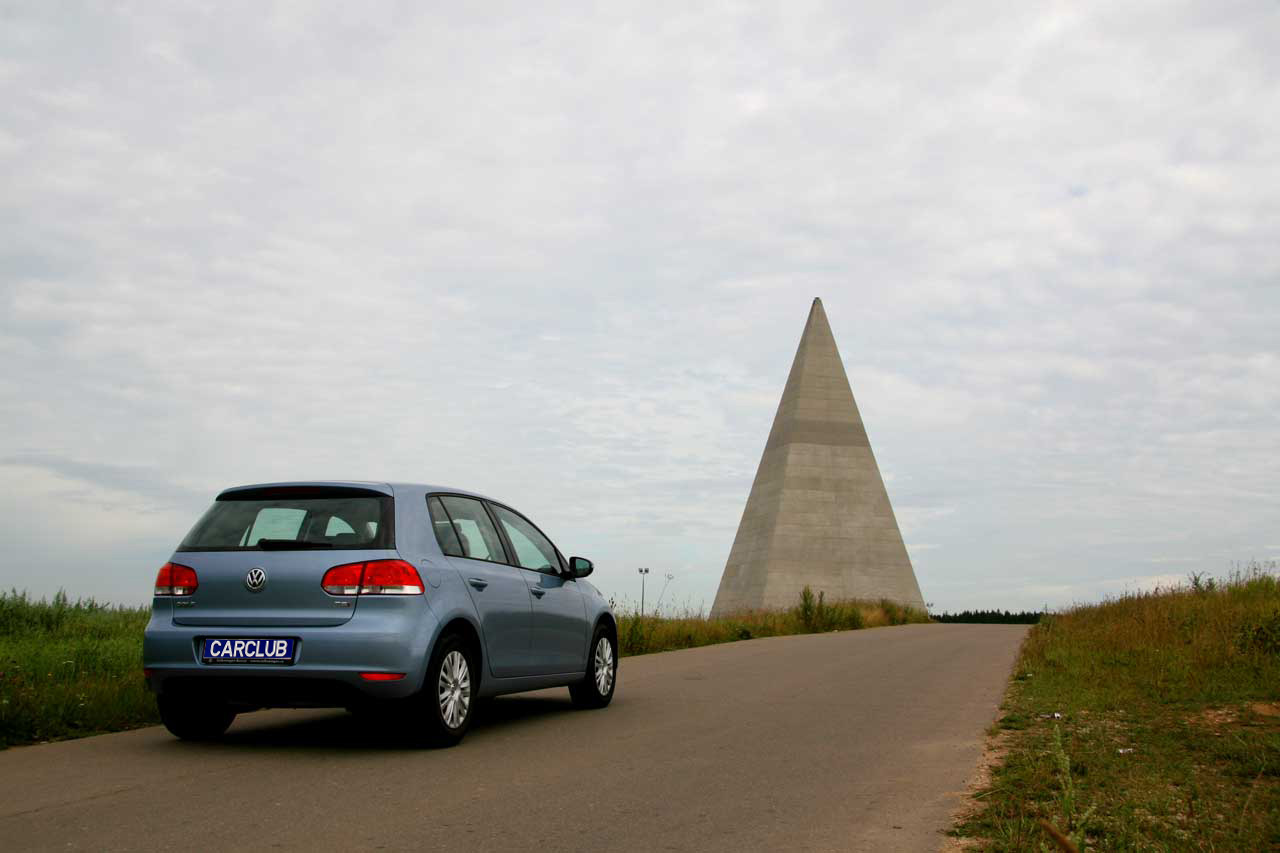 |
| The body remained the same, as did the shape of the doors with their opening dimensions. For cost reduction, the doors received regular outer panels instead of removable ones — those were easy to replace after an accident, but they cost more. |
Inside, the updated Golf has become even more refined and richer. All trim materials are soft and pleasant to the touch. Truly premium. Ergonomics are beyond reproach. The modest steering wheel of the fifth generation gave way to a modern wheel with convenient buttons and stylish chrome trim in the spirit of the Passat CC. The functional climate control unit also migrated from there. And finally, the instrument panel said goodbye to the garish purple-blue backlight — now everything is like in the older VW models: white illumination, red needles. The audio system was also reworked — it became more convenient and logical.
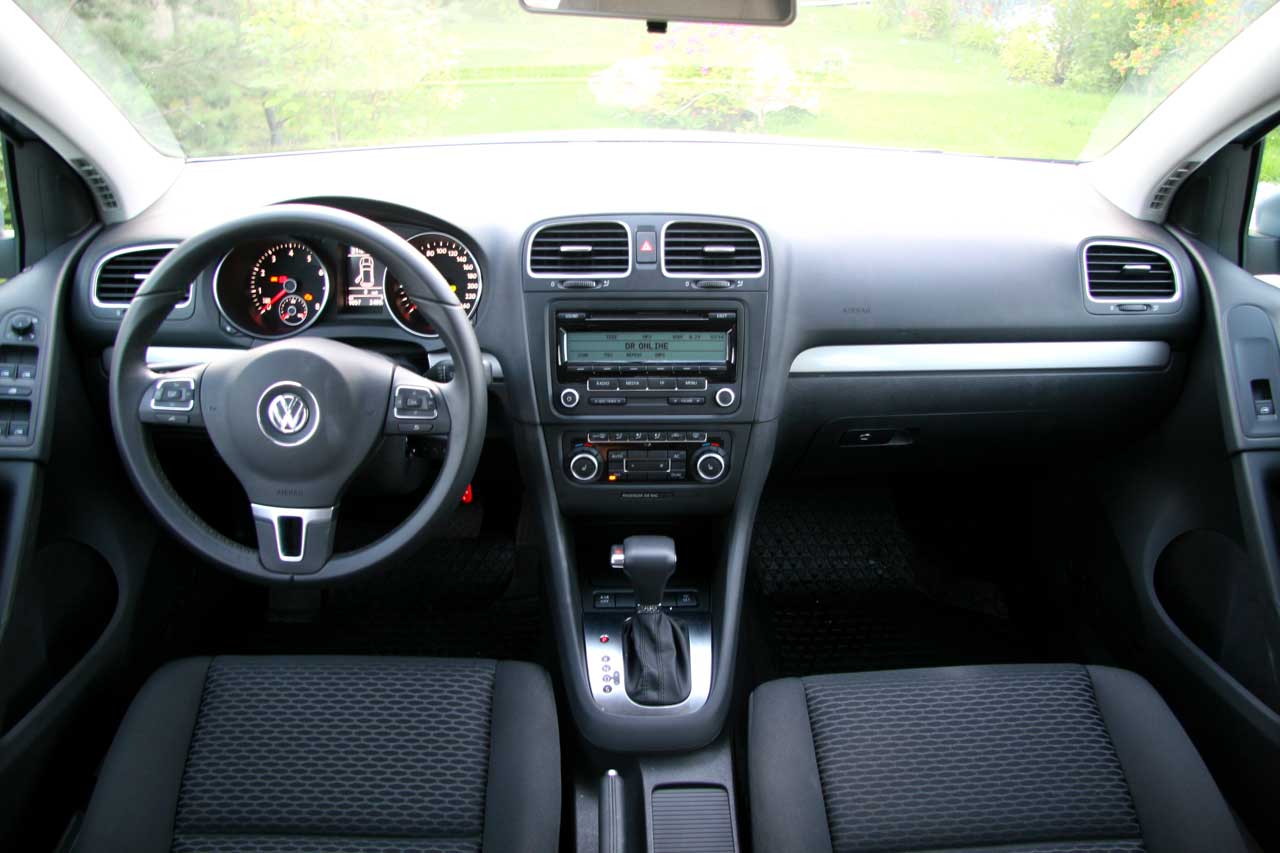 |
| In the cabin, the updated Golf has become even more refined and richer: materials are all soft and pleasant to the touch. Truly premium. Not a single complaint about ergonomics. |
The front seats are moderately firm, with a profile that precisely follows the contours of the body. You sit as if molded. Lateral support holds firmly even in the sharpest corners, and the range of adjustments is enough even for a tall driver. But the rear bench is flat and not so hospitable. At my height of 175 cm, I can barely sit behind myself: there's no more than a centimeter from my knees to the back of the front seat. Three people in the back will be frankly cramped. The backrest folds in a 40/60 ratio. The trunk has hardly changed: 350 liters in normal condition and 1305 liters with the rear seat folded.
For the test, we got a Volkswagen Golf VI with a 122-horsepower 1.4 TSI engine and a 7-speed robotic DSG gearbox. In addition to this engine, the "Golf" is brought to Russia with the old 102-horsepower eight-valve engine, which can now also be ordered with DSG. There's also a hot version, the Golf GTi with 210 horsepower — but that's a separate story. Other modifications, including diesel ones, will arrive later.
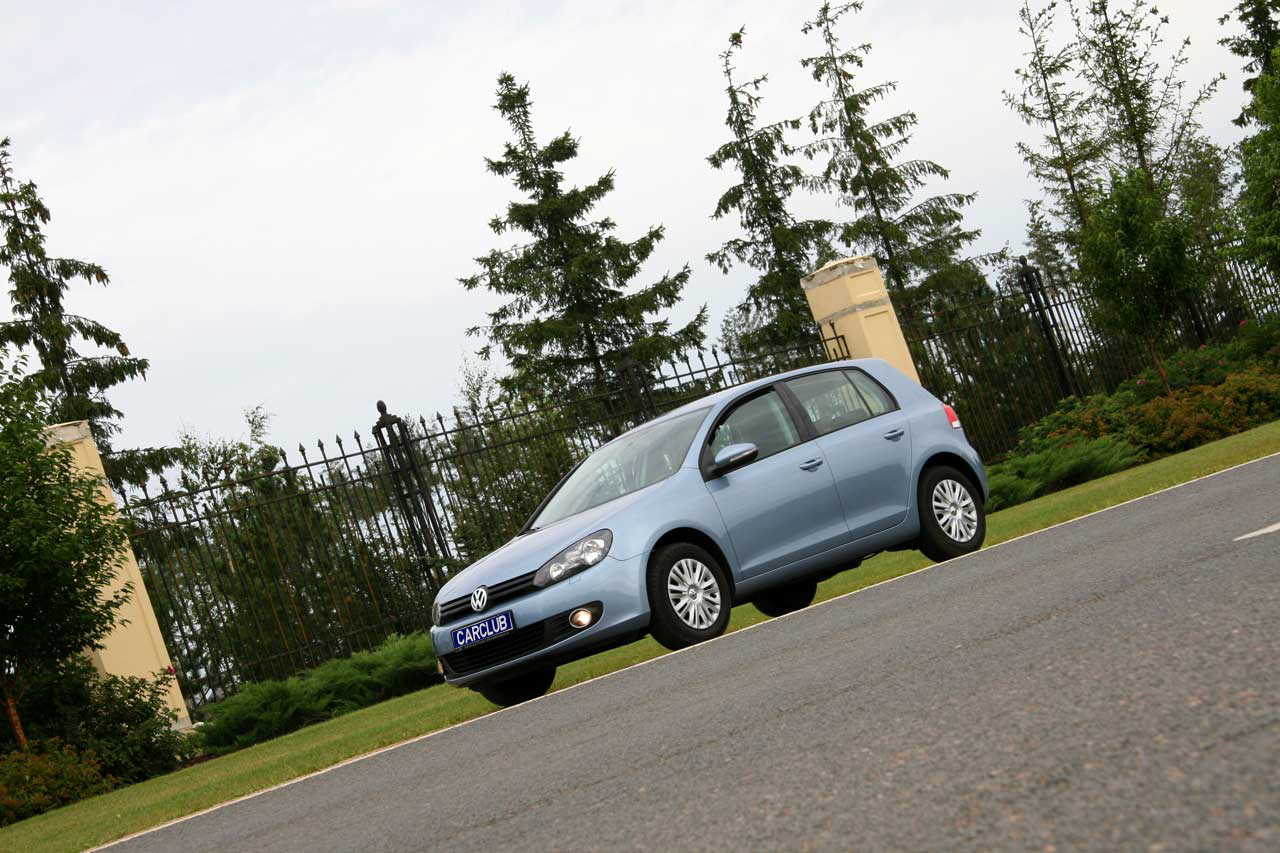 |
| The test Volkswagen Golf VI was equipped with a 122-horsepower 1.4 TSI engine and a 7-speed DSG "robot." With such equipment, the "Golf" shows excellent dynamics: power is enough both for the city and for overtaking on the highway. The new 7-speed DSG instantly selects the right gear. |
If I didn't know there were 122 hp under the hood, I'd give it all 150. That's how briskly the five-door accelerates. The claimed sprint to 100 km/h is 9.5 seconds. Direct injection, turbocharging, and intercooling of the boost air allow the 16-valve "four" to deliver 200 Nm of torque in a wide range of 1500–4000 rpm. Hence, excellent pickup across almost the entire rev range. And fuel consumption is no more than 8 liters per 100 km. The new 7-speed DSG II with two "dry" clutches is simply a song. Shifts are instantaneous, with no jerks even during aggressive acceleration. In sport mode, the gearbox holds the gear to the last, ready for sharp acceleration or engine braking. With such a precise algorithm, manual mode is simply unnecessary.
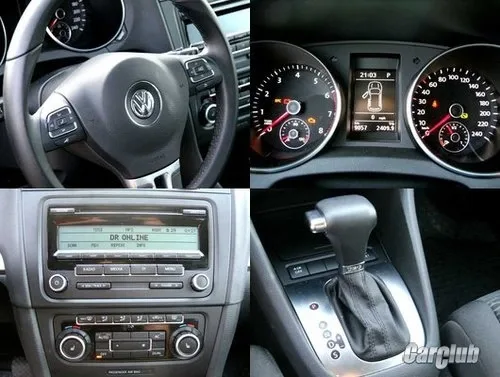 |
| The modest steering wheel of the fifth generation was replaced with a modern wheel with convenient buttons and stylish chrome trim. The climate control unit was borrowed from the four-door coupe VW Passat CC. The instrument panel got rid of the garish purple-blue backlight: now everything is like in the older VWs — white illumination, red needles. |
The suspension layout of the VW Golf VI hasn't changed: McPherson struts up front, and double wishbones at the rear. New springs and recalibrated shock absorbers — that's all the difference. In Europe, an adaptive DCC suspension (Dynamic Chassis Control) is offered for an extra charge, which adjusts shock absorber firmness according to road conditions. But it won't be available in Russia — it's too expensive. Top trim levels of the "Golf" weren't in demand here anyway, and DCC would have driven the already considerable price sky-high. So our marketers are forced to bring only "selected" engines and a reduced list of options to Russia.
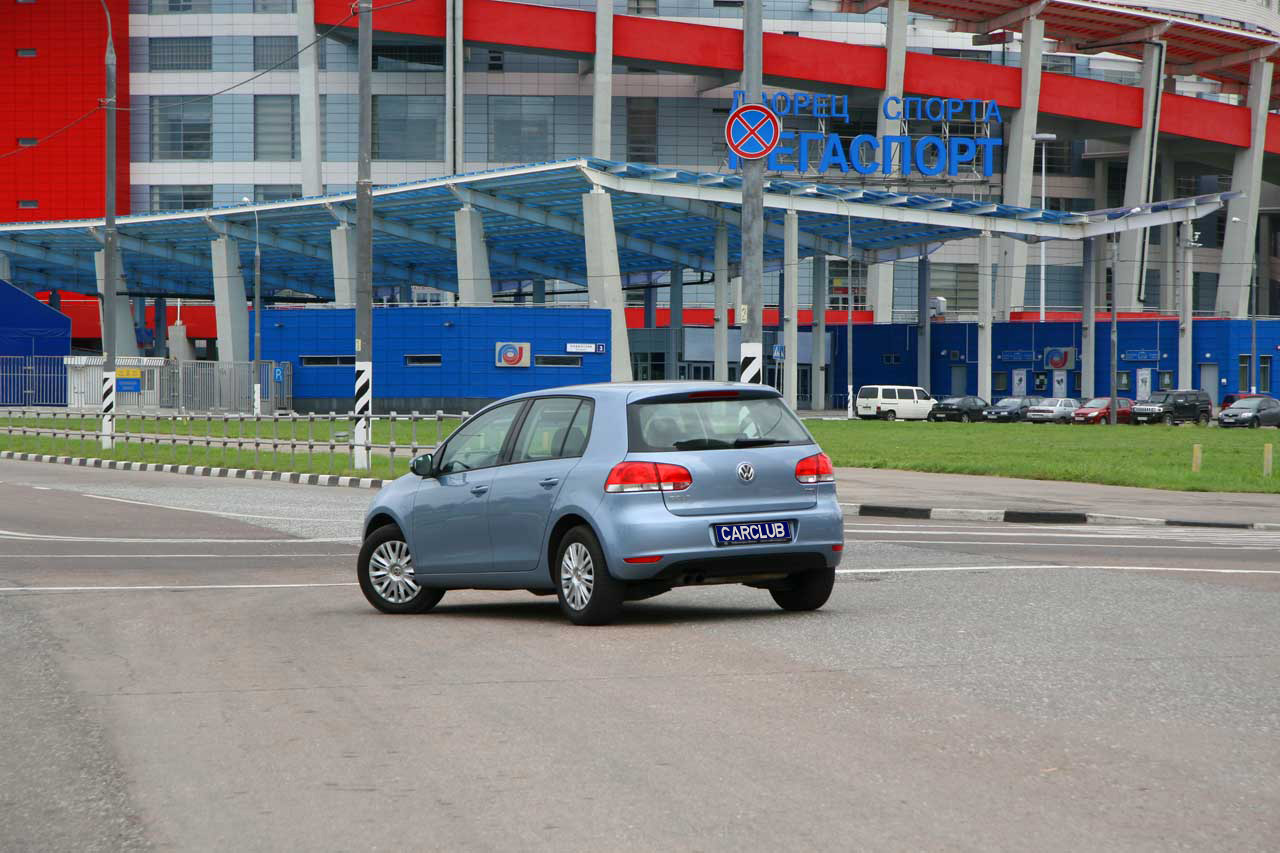 |
| At the rear, changes are minimal: the bumper was modified and slightly elongated taillights appeared. That's all! |
You get behind the wheel and immediately notice how much better the sound insulation is. The Golf V was guilty of cabin noise, but the new model is "quieter than water" even at 140 km/h. According to official Volkswagen data, 120 changes were made to improve the "soundproofing."
On a straight line, the Golf VI holds like a glove. The speedometer needle is already at 160, and it doesn't care: no wandering, no jerking. Overtaking is also no problem — the 1.4-liter TSI responds at the first call. The steering wheel is moderately firm, with precise and correct effort.
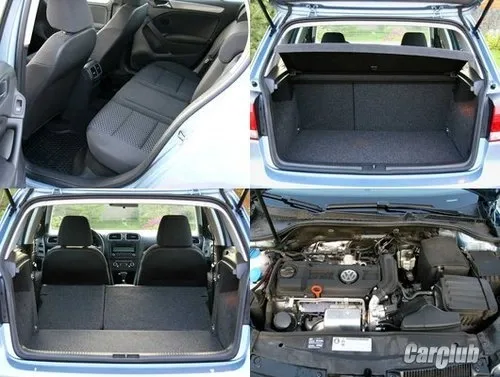 |
| The rear bench is a bit cramped and not very hospitable. At my height of 175 cm, I can barely fit behind myself — there's no more than a centimeter from my knees to the back of the front seat. Three people in the back will be frankly cramped. The backrest folds in a 40/60 ratio. The trunk volume is almost the same — 350 liters with all seats up and 1305 liters with the rear seat folded. |
Subjectively, compared to the "fifth," the suspension, with the same layout, has become a bit denser. The behavior of the VW Golf VI has gained more solidity and a sense of an expensive car. Externally, there's no particular leap forward, but internally you feel it with every cell: you get the impression that you're sitting not in a compact family hatchback, but in a executive sedan. And only on a winding road, where you need to drive fast, does the Golf VI shed its importance and show the character of an athlete, delighting with precise and, importantly, predictable handling. It's no wonder that in Wolfsburg, they name both the affordable Ford Focus and cars of a higher class, such as the BMW 1-Series and the Audi "three," as rivals for their "Golf."
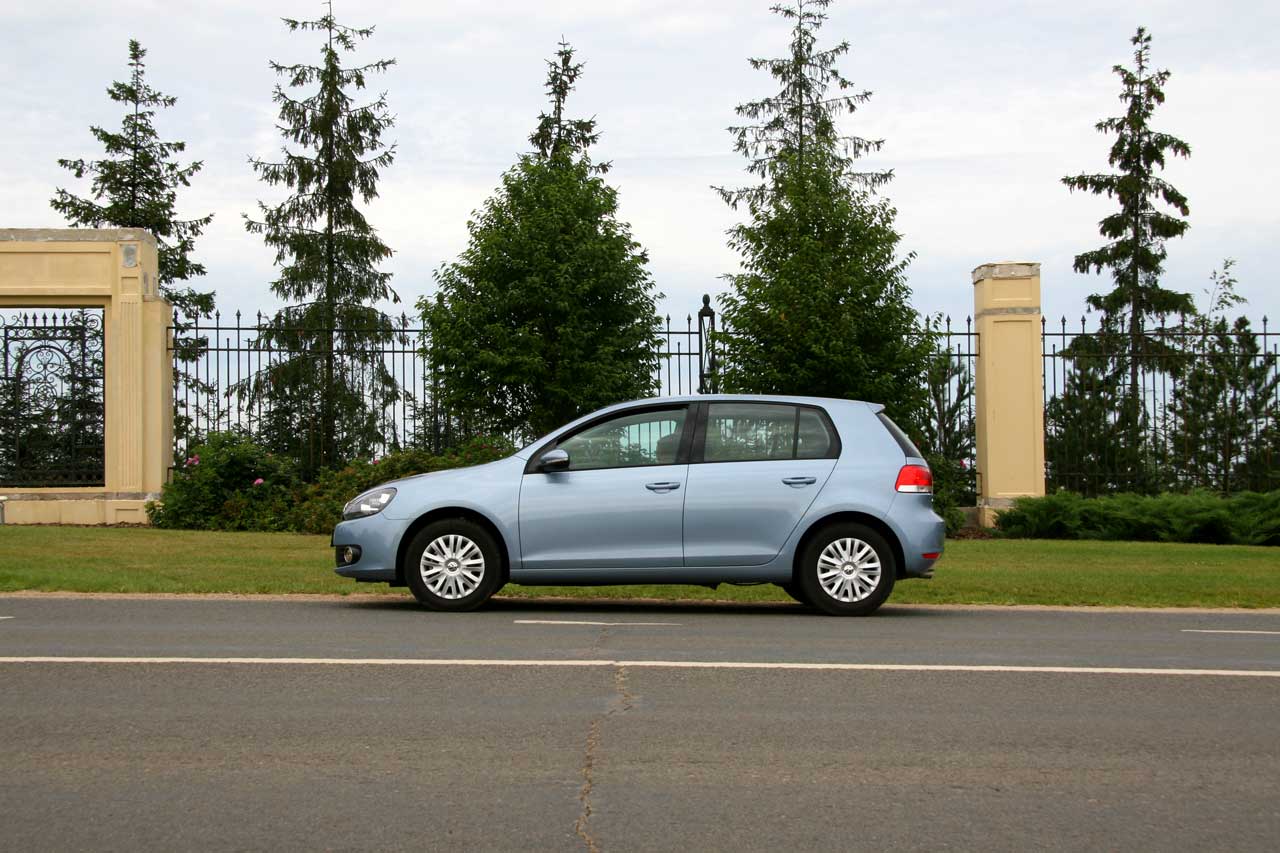 |
| The window sill line was decided to be made straight, and the glazing — larger. In profile, the hatchback now looks like a typical representative of the C-class. |
The base version of the Golf VI with a 102-horsepower engine and a 5-speed manual in the Trendline trim (steel 15-inch wheels with hubcaps, mirrors and bumpers in body color, air conditioning, ABS and seven airbags) is priced at just over 590 thousand rubles. For the DSG robot, you will need to pay another 70 thousand. A simple "Golf" with a 1.4 TSI engine will cost 679 thousand rubles, and if you add options and the same DSG gearbox, the price will easily exceed a million rubles. It all depends on the buyer's wishes. And the new Golf will definitely fulfill them...
A little about the technology
New 7-speed DSG II transmission
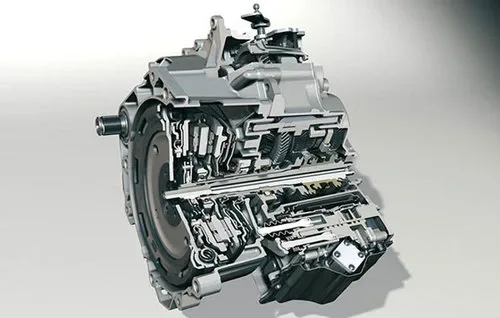 |
| The key feature of the 7-speed DSG robot is the dual dry clutch. Engineers abandoned the oil bath that was in the 6-speed version, which allowed removing the vacuum filter, oil radiator, and high-pressure lines in the crankcase, since oil is no longer needed to cool the discs. Only regular lubrication for gears and bearings remains. Thanks to the fact that the clutch is no longer cooled, the oil volume was reduced from 6.5 liters in the 6-speed DSG to 1.7 liters in the new 7-speed. Torque from the engine is transmitted to the dual clutch via the crankshaft and a dual-mass flywheel. The first clutch is responsible for odd gears, the second for even gears and reverse. For example, when the car is driving in sixth, seventh is already engaged but not active. As soon as the right moment comes, the sixth gear clutch disengages, and the second immediately engages seventh. This scheme eliminates the interruption of power flow during shifts, which has a positive effect on acceleration and the speed of the gearbox operation. Moreover, the new 7-speed DSG allows the use of the technology on low-power engines with torque up to 250 Nm. |
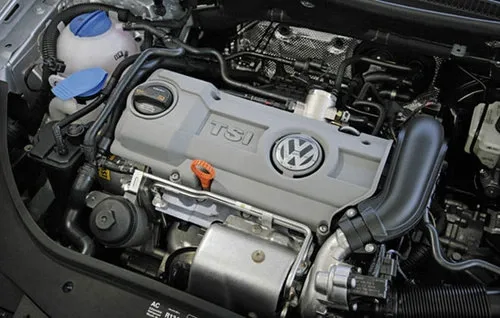 |
| The turbocharged 1.4 TSI produces 122 hp — that's 7 "horses" more than the previous 1.6 FSI, and torque has grown by almost a third: from 155 Nm to 200 Nm. Previously, the peak of thrust was at 4000 rpm, now it is available from 1500 to 3500 rpm. Plus, a new high-pressure injector with six holes allowed for more complete combustion of the mixture and fuel savings of about 6 percent. Another detail is a liquid intercooler with its own coolant circulation system. Intermediate cooling reduces the volume of intake air by half, and boost pressure rises noticeably faster. The result is better dynamics due to minimal turbo lag and optimal cylinder filling. Moreover, even without an additional compressor, the 122-horsepower TSI has virtually no turbo lag. |
Ruslan Galimov