Golf is the benchmark of a rational and affordable car. It is no coincidence that this model created an entire segment. And it is no coincidence that, without inventing anything fundamentally new, Volkswagen under the name "Golf" offers not only the classic hatchback, one of the most sought-after on the planet, but also other versions: Golf Plus — something between a minivan and a hatchback, CrossGolf — a hybrid of a crossover and a hatchback, Golf Variant — a station wagon, plus the "hot" Golf GTI — for those who value dynamics. The German manufacturer has tried to satisfy buyers with the most diverse demands on one platform. In essence, everyone has the same need — for a solid car, but additional wishes already differ.
Let's check how justified this strategy is using the example of a person who seeks versatility in compact dimensions, but also does not forget about the thrill behind the wheel. Volkswagen is confident that his choice is Golf Plus.
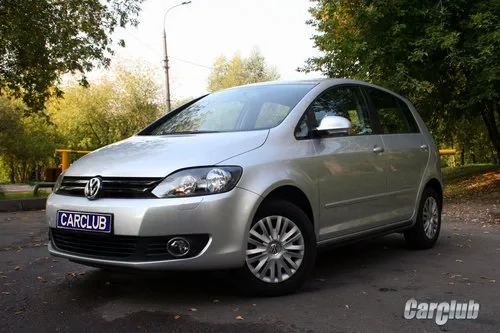 The Germans position the Golf Plus as a compact MPV. It is based on the platform of the "fifth" Golf.
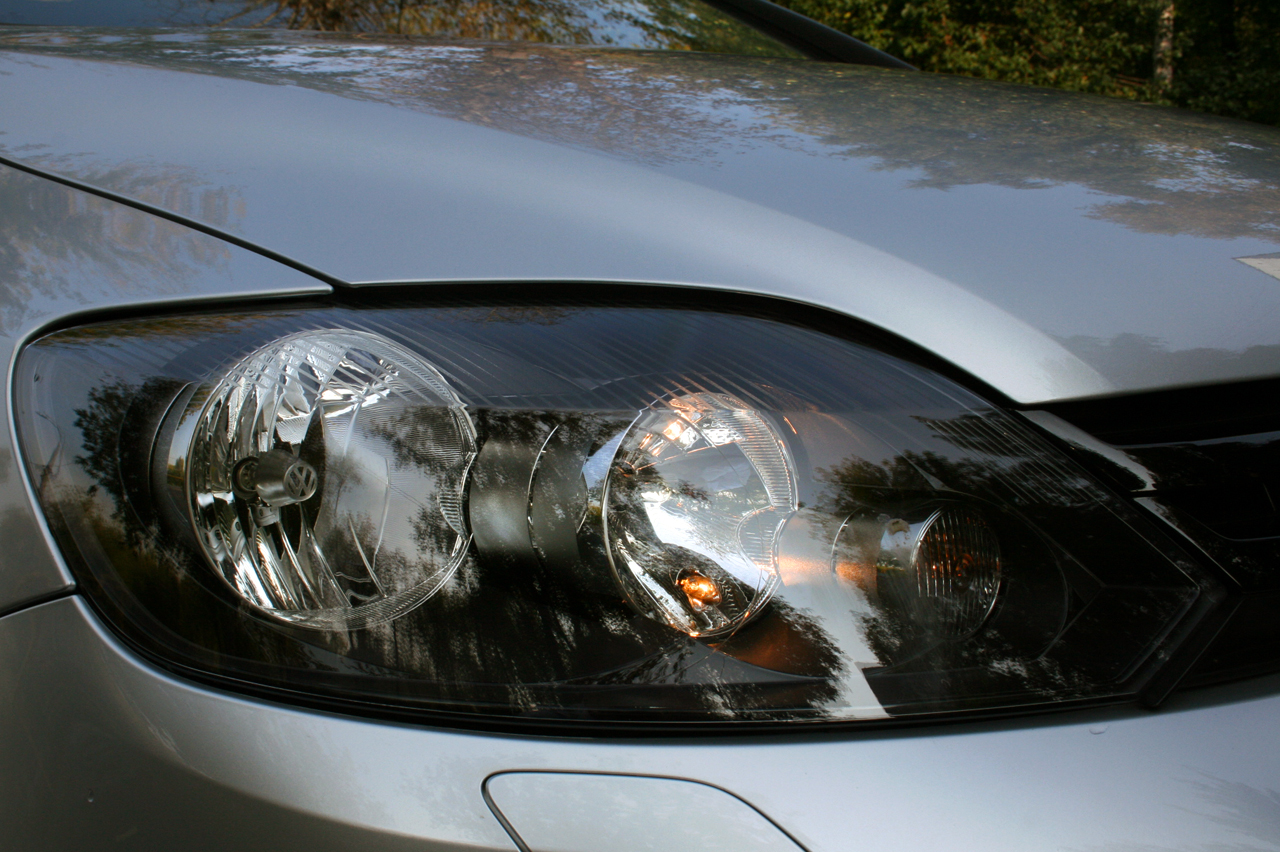
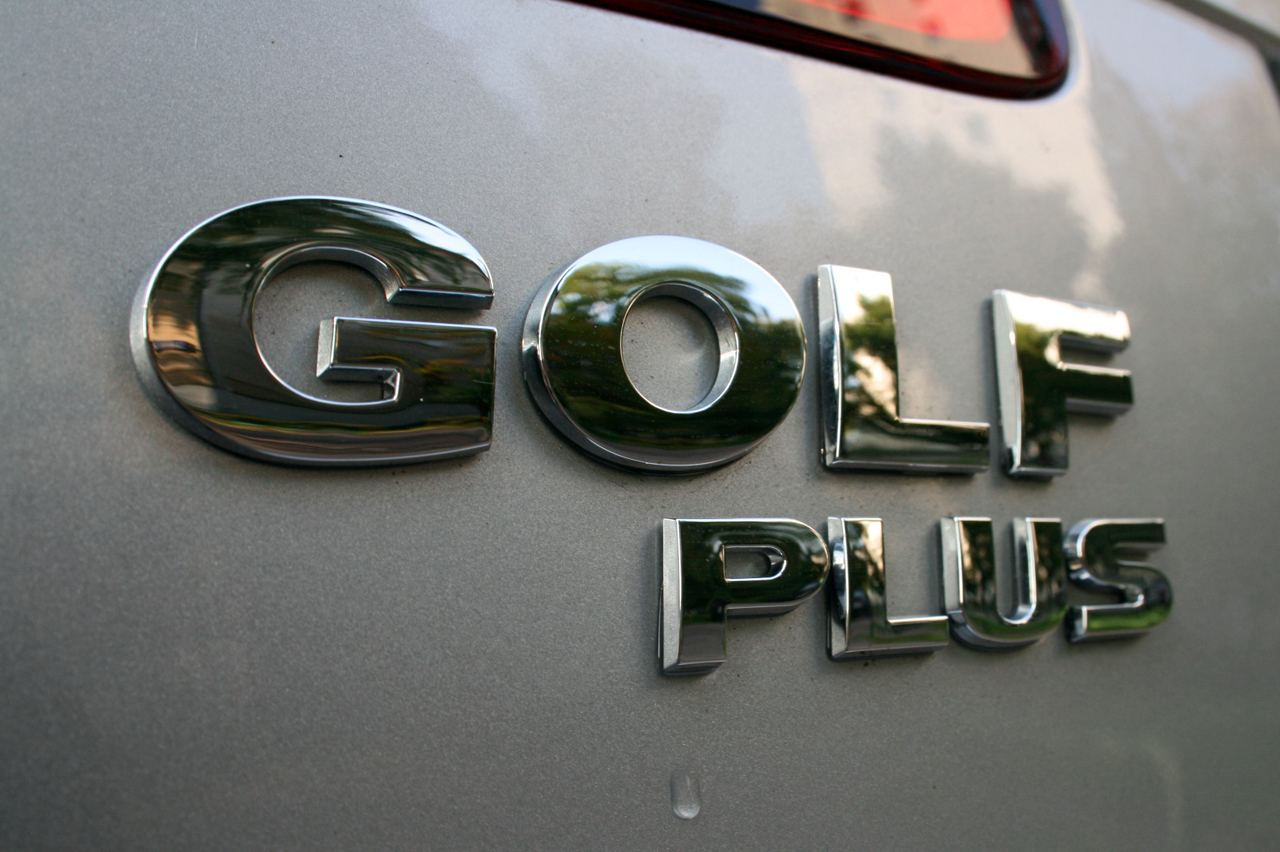
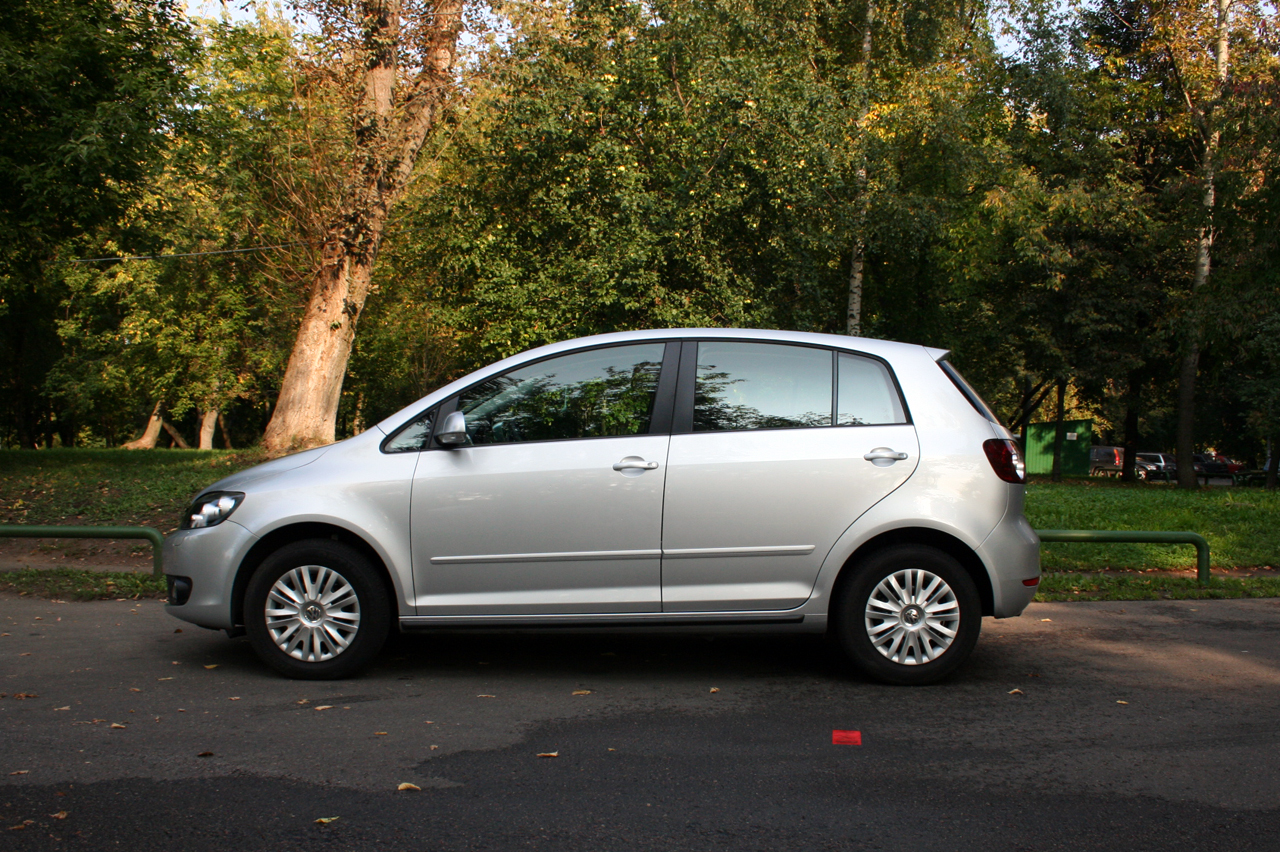
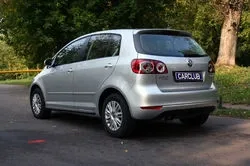
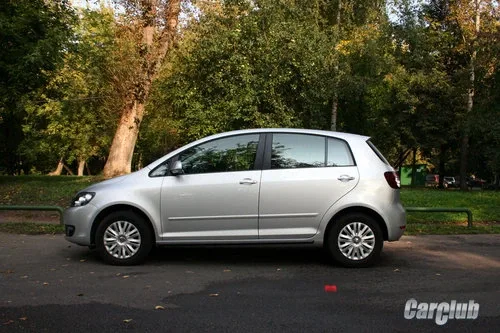
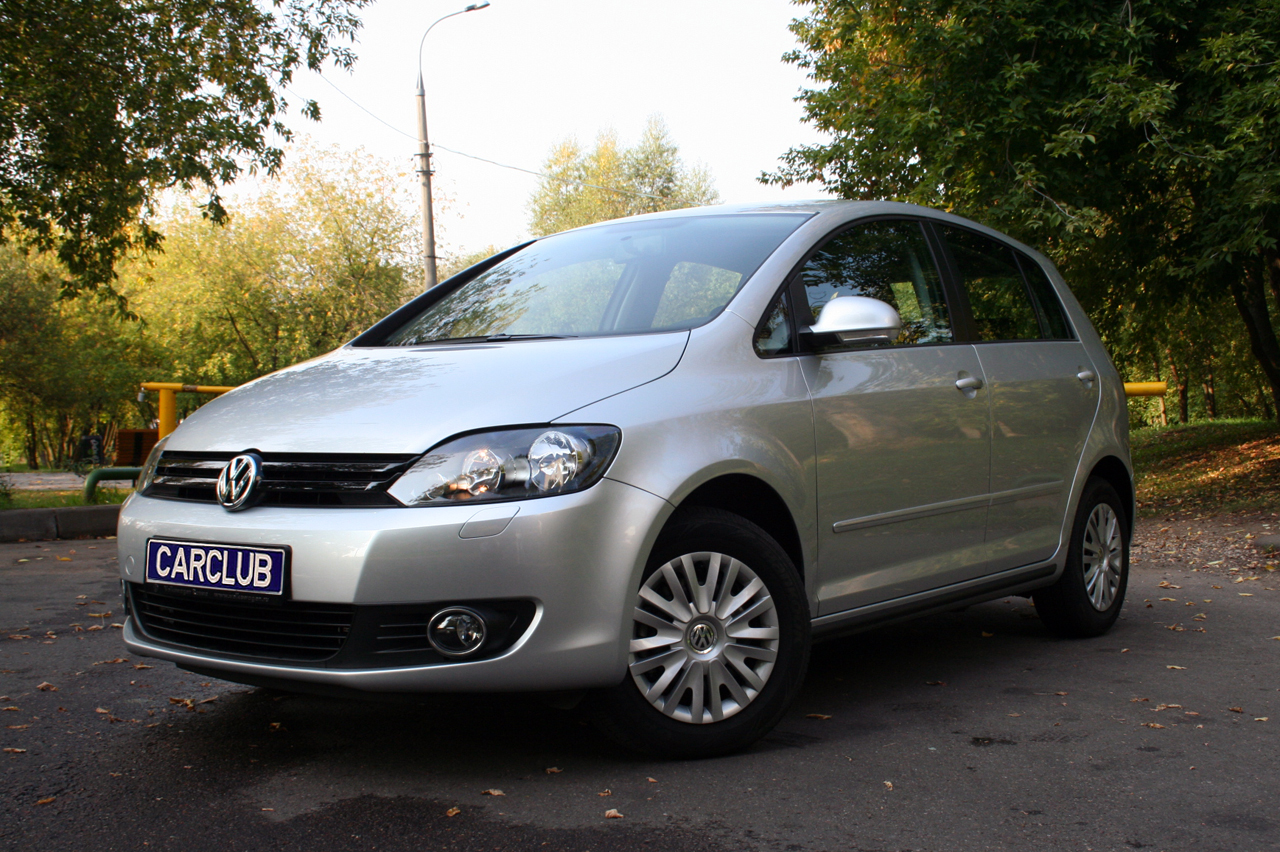
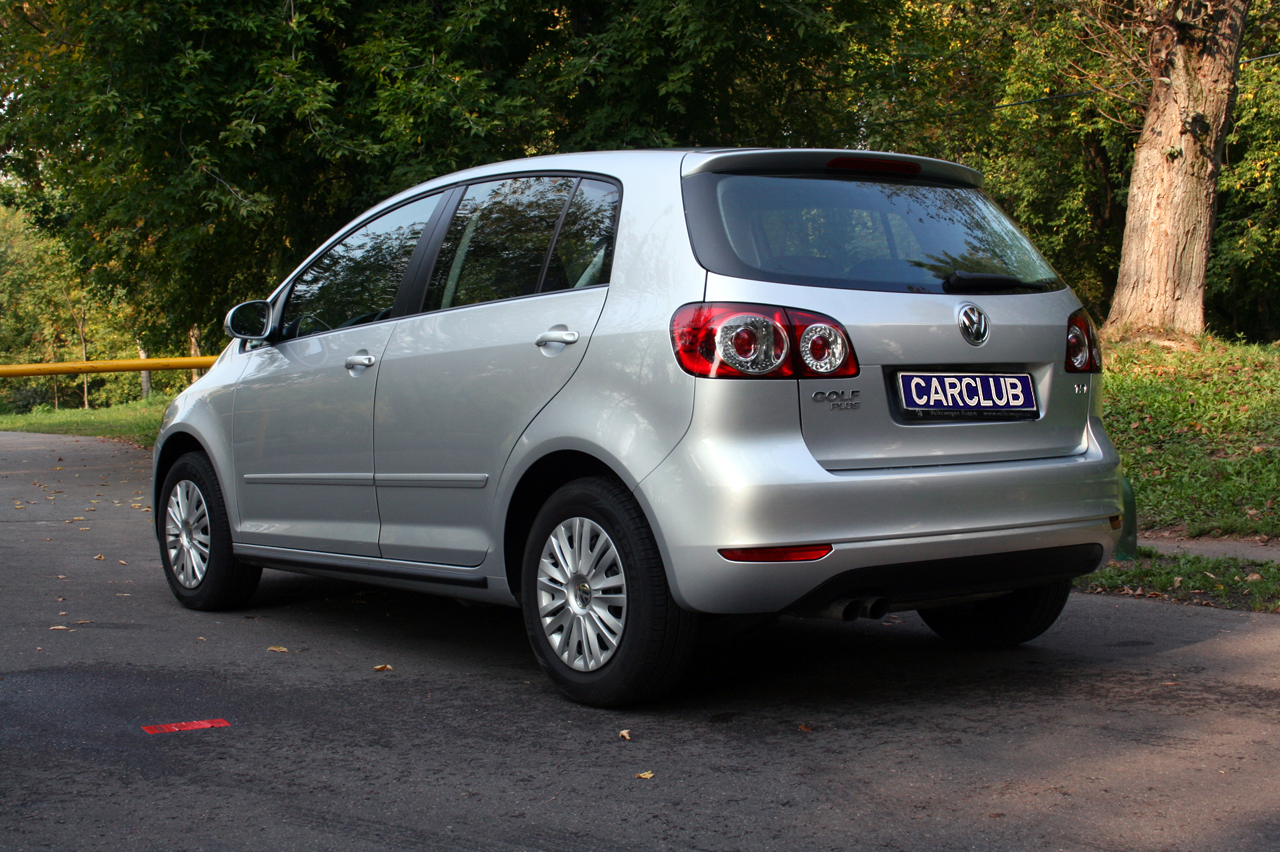
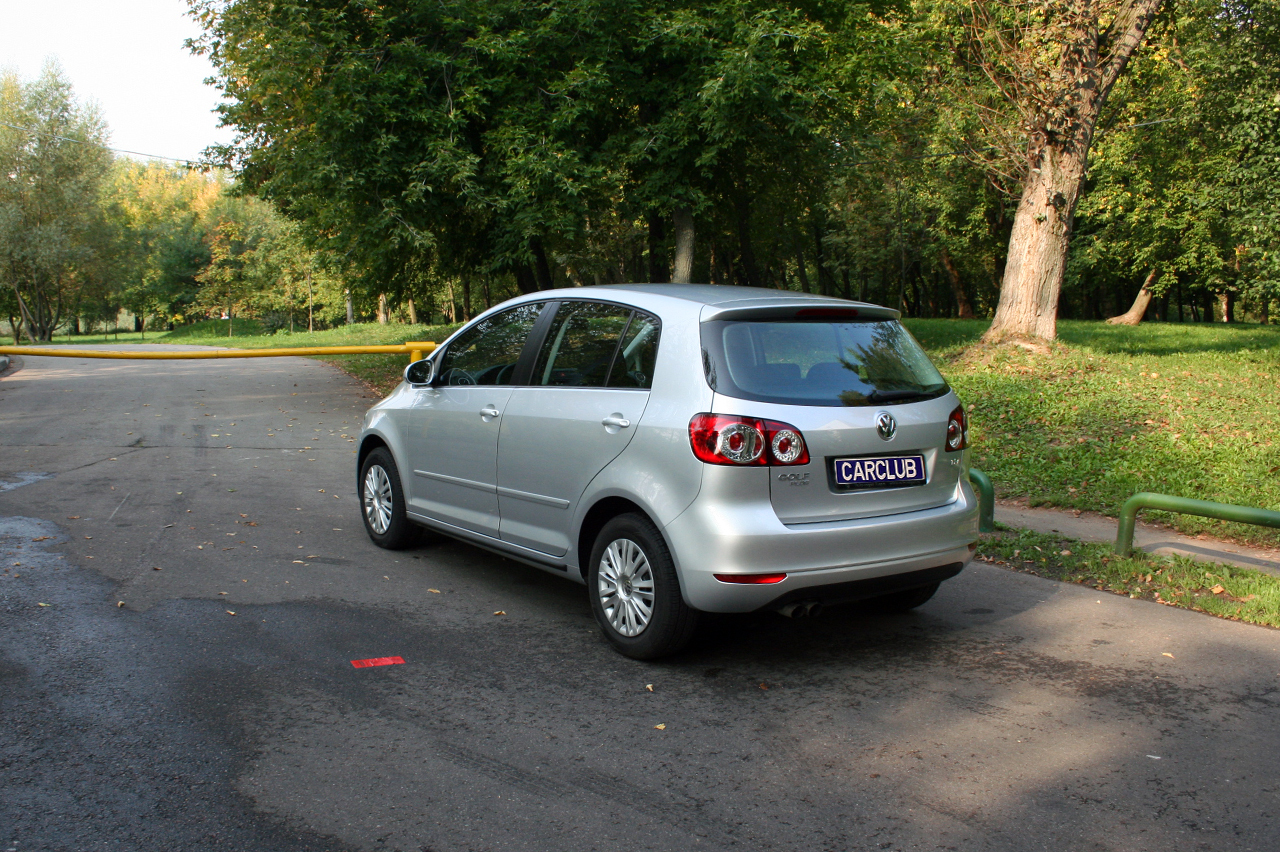
The Germans classify the Golf Plus as a compact MPV. Technically, it is the platform of the previous generation — Golf V. The Plus prefix hints primarily at additional millimeters outside and inside. This is visible to the naked eye: at a glance it can still be confused with a regular "Golf", but once you look closer — the differences are striking. The "Plus" is 113 mm higher than the Golf VI, but 20 mm narrower. The hood is styled differently, the glazing has become larger, and triangular windows have appeared in the front pillars, like in minivans.
 |
| At first it can be mistaken for a Golf |
 |
| But the "Plus" is noticeably higher - by 113 mm |
With all that, this is a one hundred percent VW Golf.
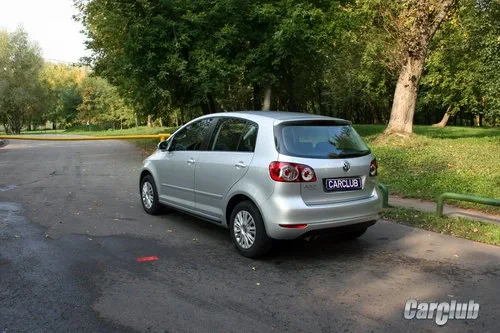 The hood looks different, the glazing area is larger, and the side pillars have triangular windows, like in minivans.
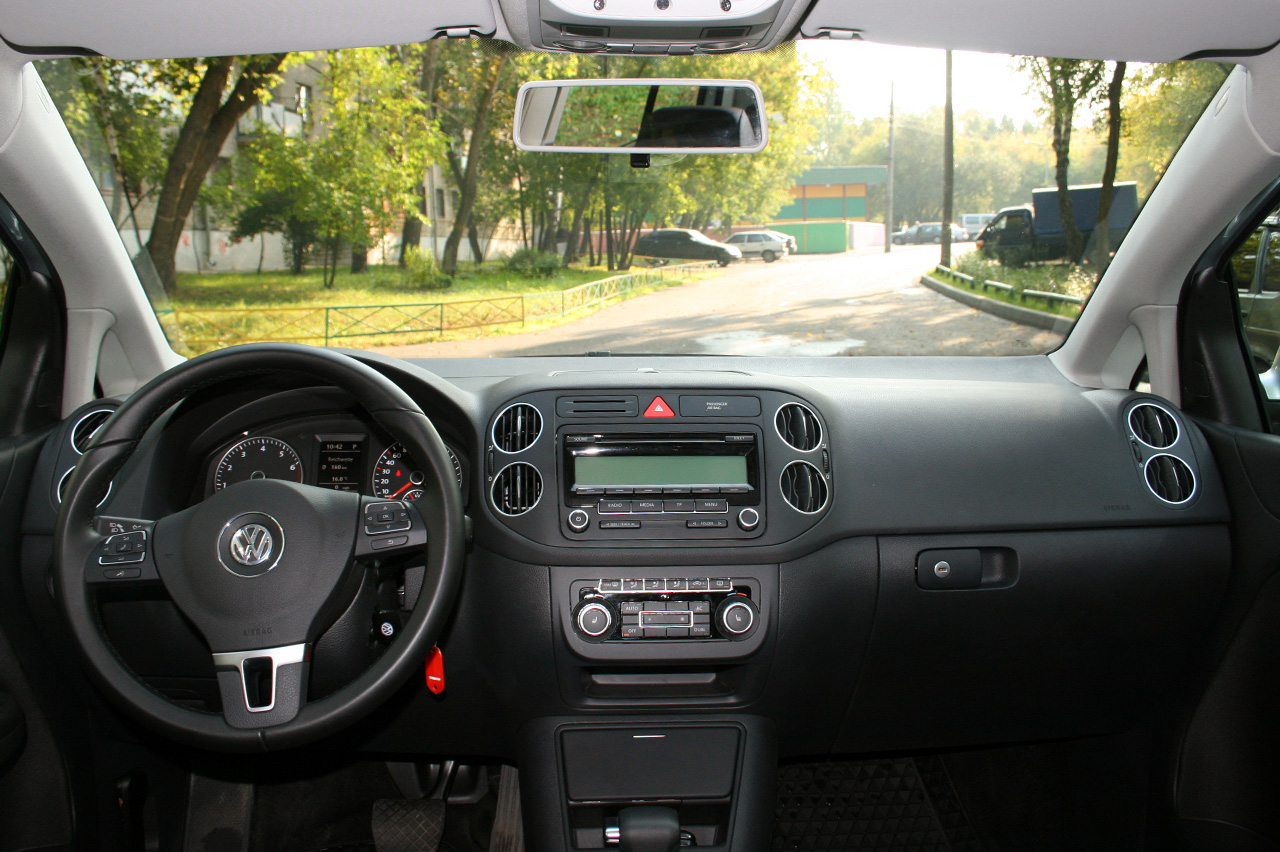
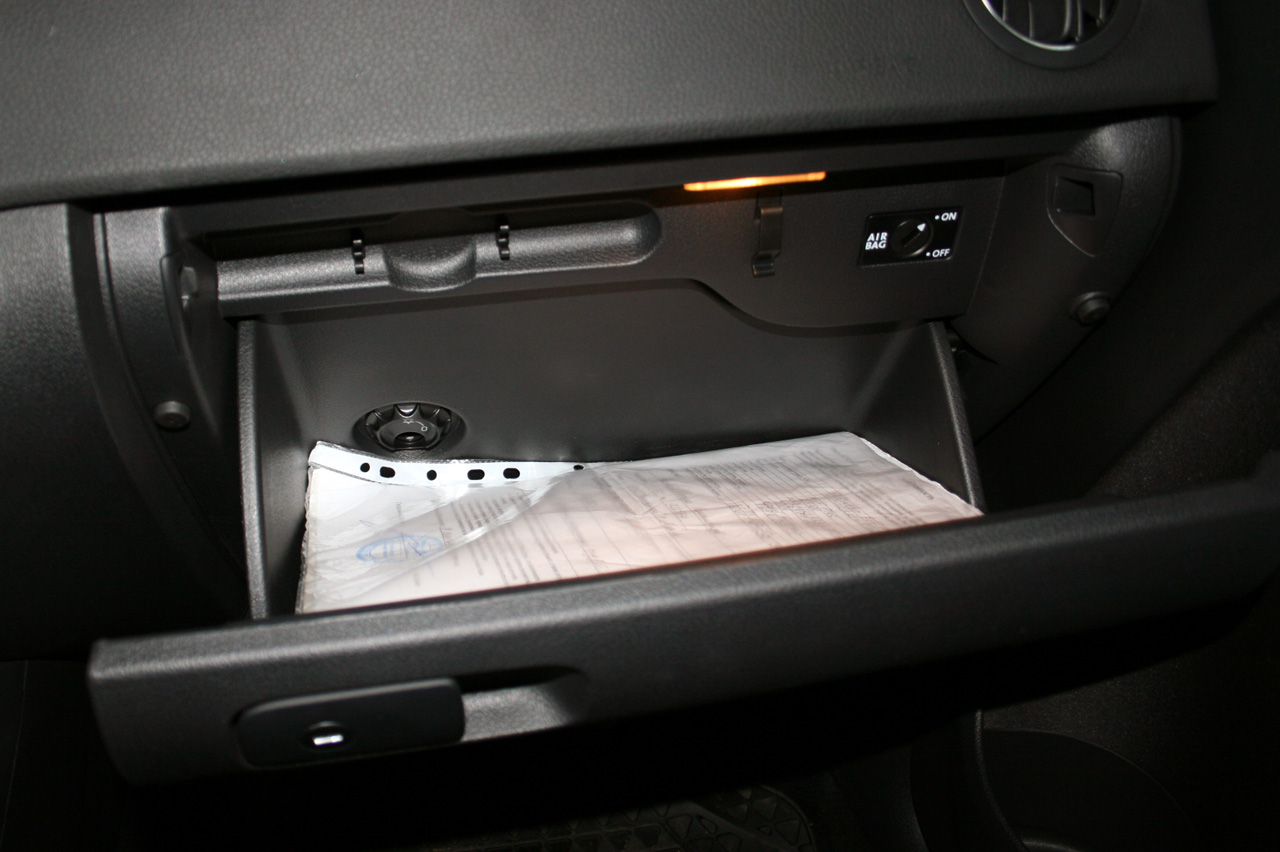
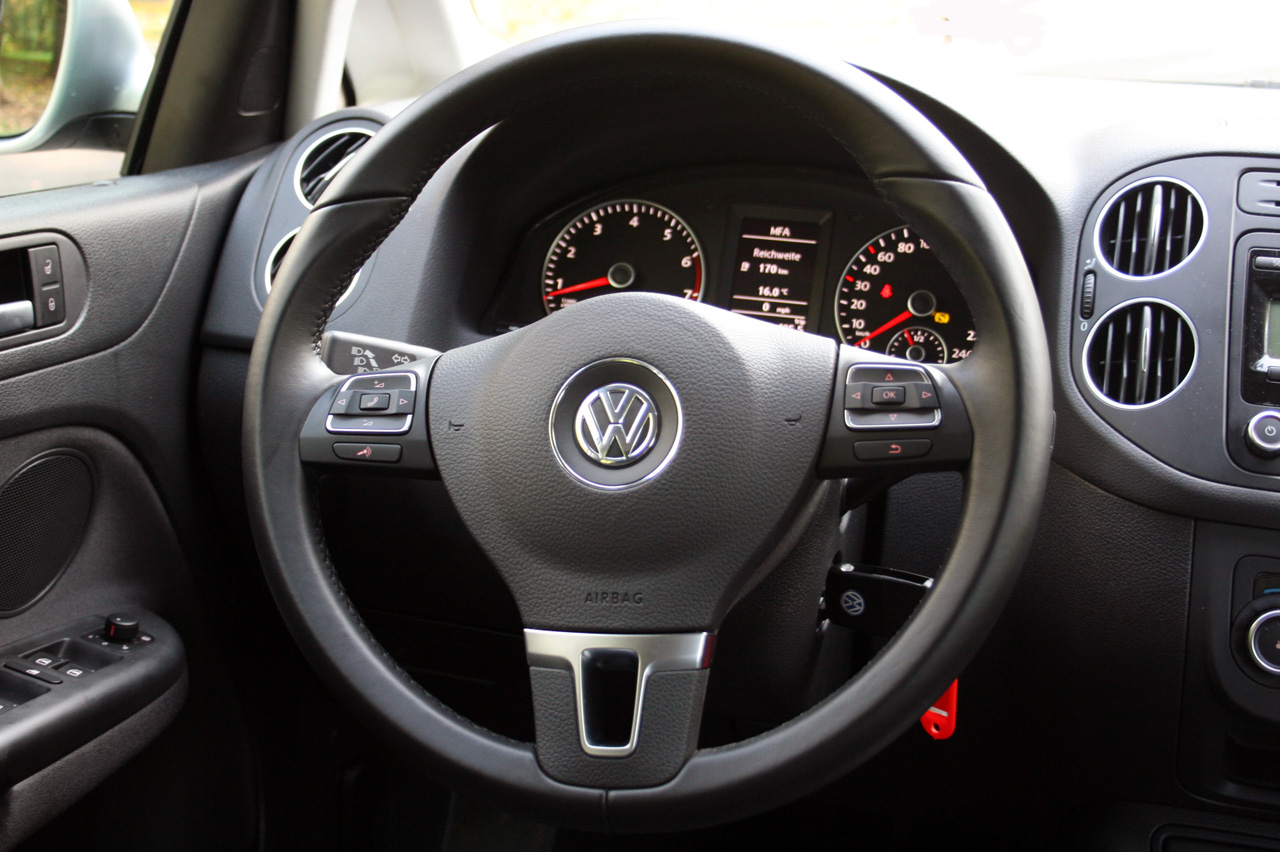
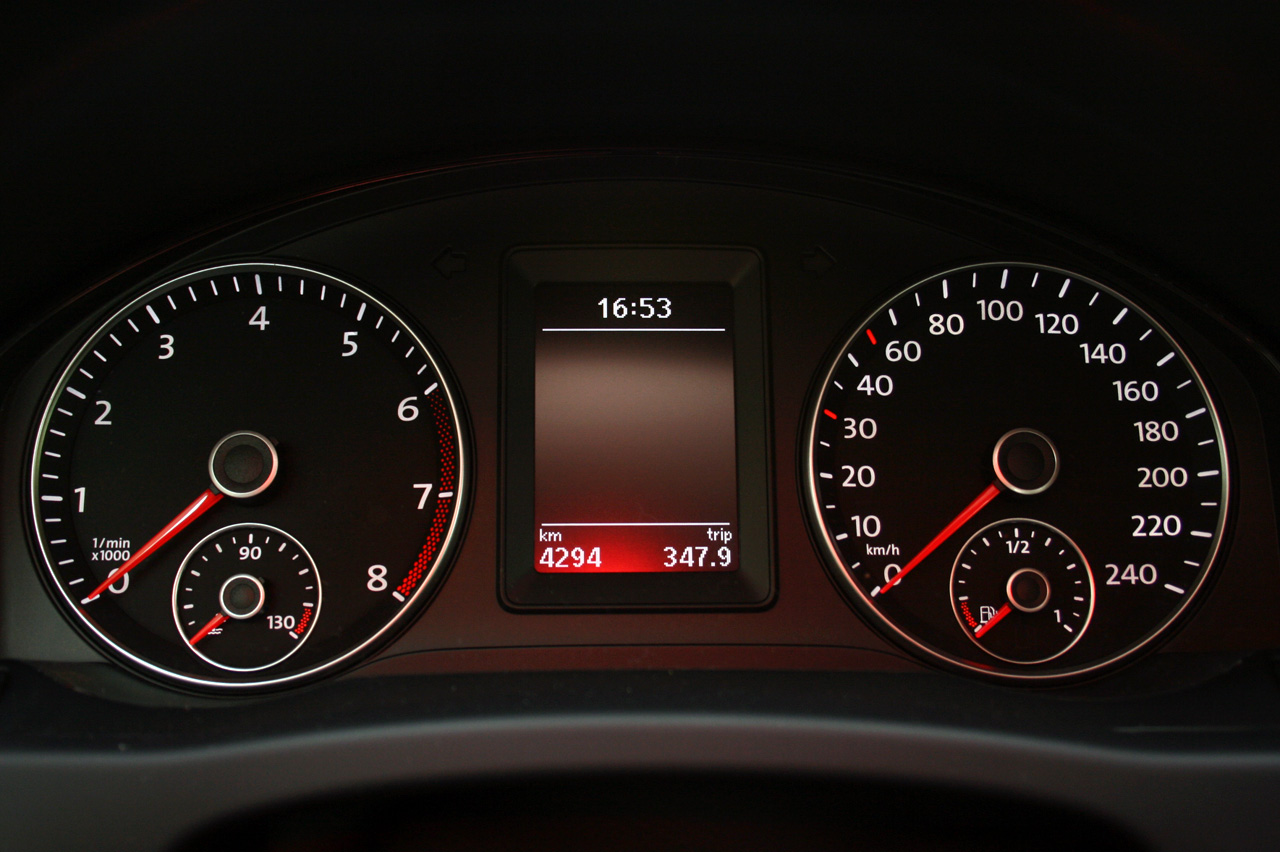
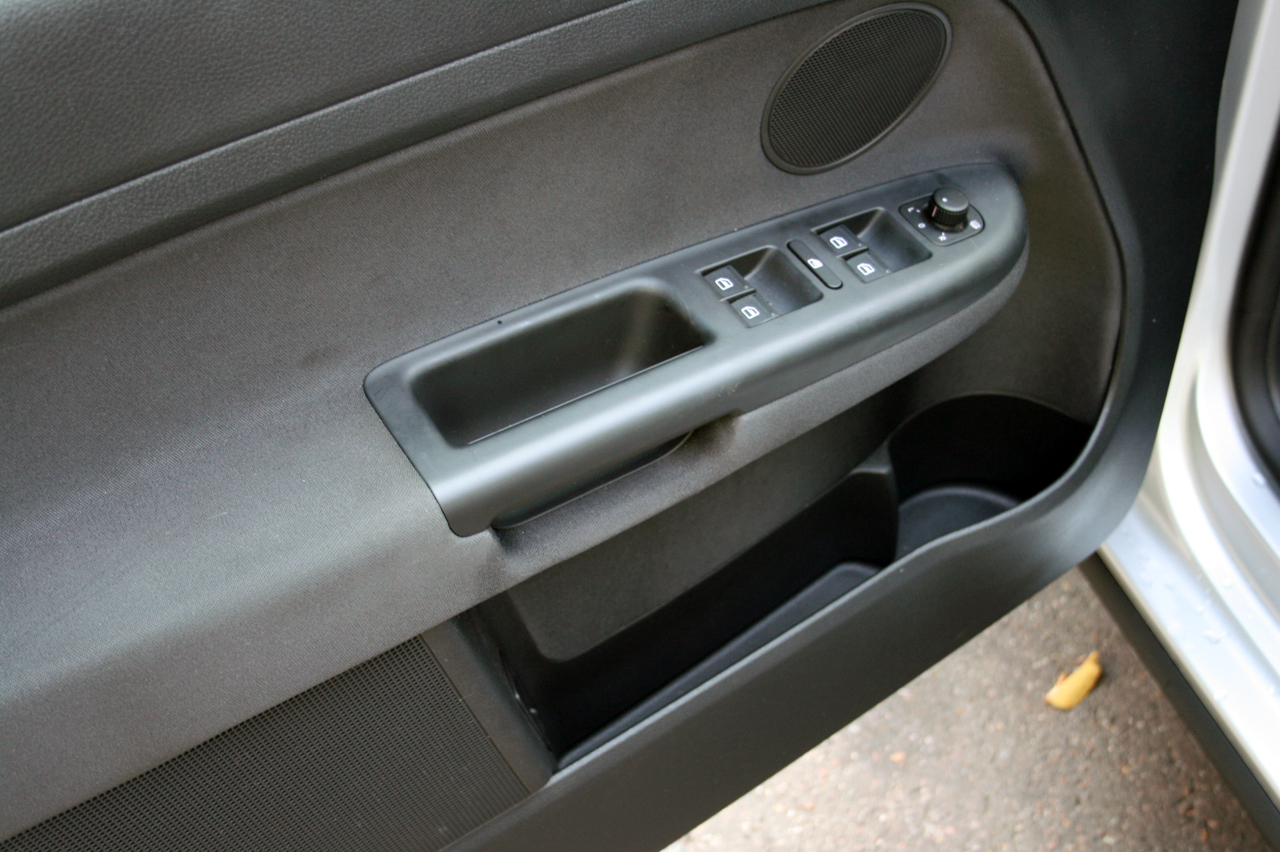
The interior also has its differences. In the Golf Plus, the theme of "height" seems to continue — this feeling is emphasized even by the air vents located one above the other. The center console is different — more streamlined and softer in shape. But when you grab the excellent ergonomic steering wheel, see the stylish white backlighting of the instruments with clear scales, touch the familiar quality materials and perfectly fitted panels — you immediately understand whose relative this is. The Golf belongs to those cars in which everything is at hand, as if you have been driving it for years, and you don't need to get used to anything. Many pockets and compartments allow you to quickly settle in and stow your things.
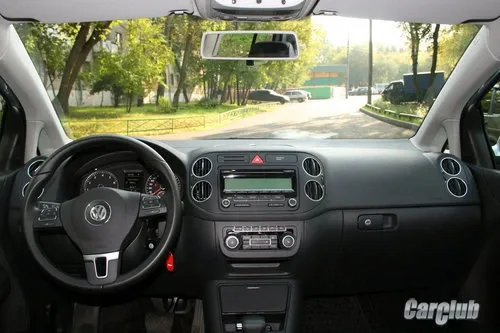 |
| Golf – is one of those cars where everything is at hand, as if you have been driving this car all your life, you don't need to get used to anything. A lot of pockets and compartments for things allow you to immediately make the car your own. |
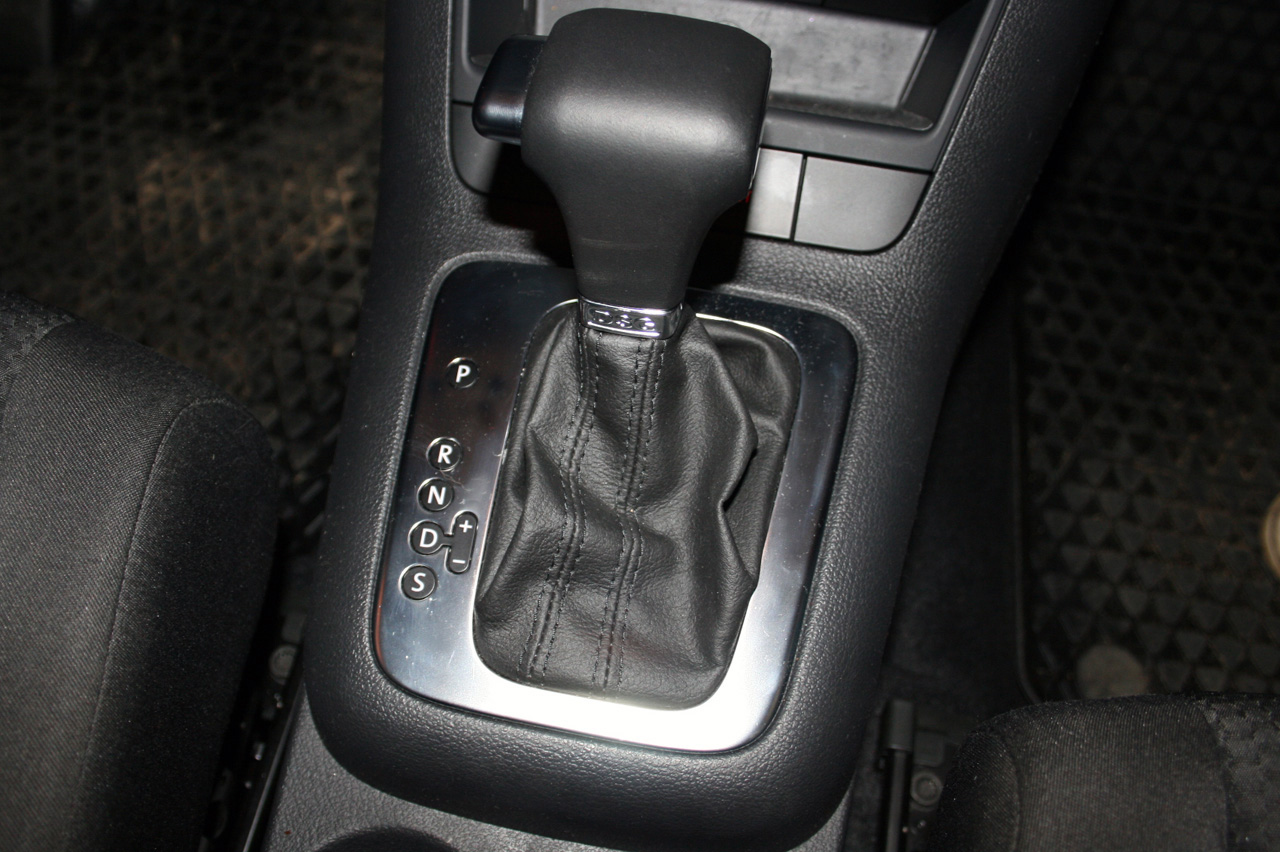
The main interior difference of the Golf Plus is the high, almost minivan-like seating position. This makes getting into the cabin easier and noticeably improves visibility, although the wide front pillars still get in the way a bit, and the windows in them don't help much. The pedals and gear lever are also raised higher.
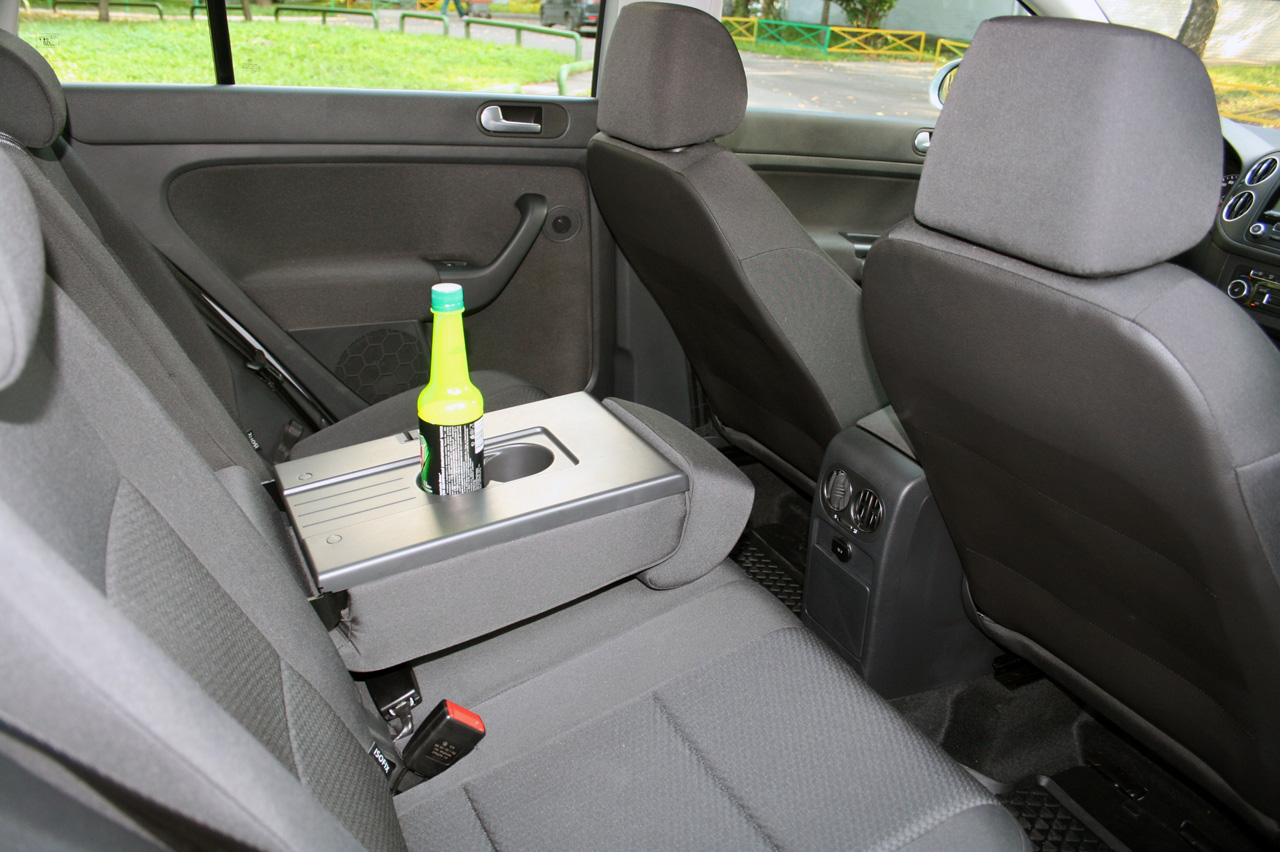
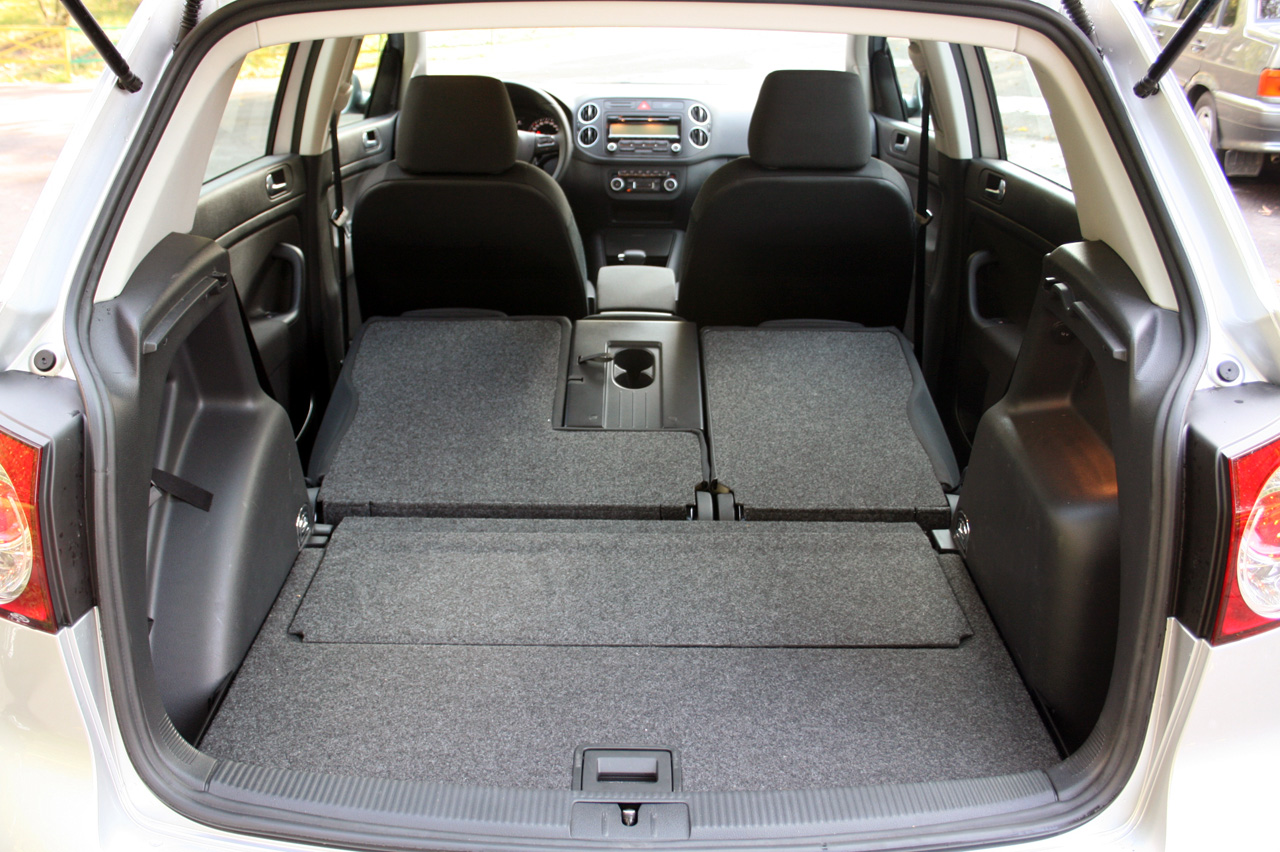
A separate pride of the "Golf Plus" is the rear bench. Firstly, it is spacious: both in height, width, and for legs. Secondly, there is an armrest with cup holders, which can be folded away if desired and turns into a full-fledged seat for a third passenger — they will be comfortable and not offended in the "gallery".
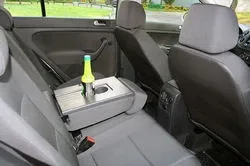 |
| Spacious and comfortable in the rear seat |
The most pleasant thing: the rear seat backrests, split in a 60/40 ratio, are adjustable for recline, and the bench itself slides forward and backward. This way you can change the trunk volume and adapt to passengers of different heights.
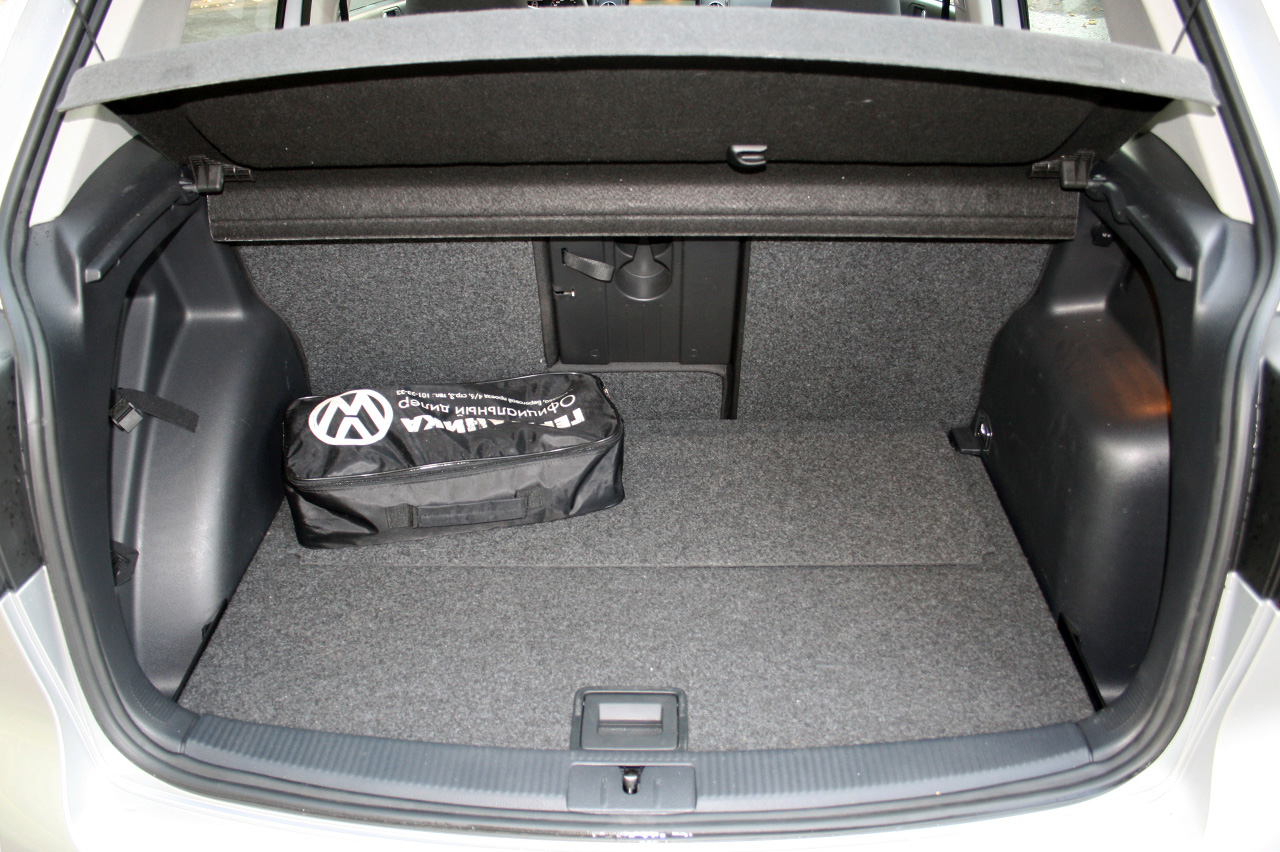
And, of course, the trunk: for the Golf VI it is 350/1305 liters, while for the Golf Plus it is 395/1450 liters. The extra 45 liters is a weighty argument for those who often carry something large. Such drivers will also appreciate the lower loading sill, the quick transformation of the seats, and the perfectly flat floor when the backrests are folded, which is achieved in a couple of simple movements. In this respect, the Golf Plus leaves ordinary hatchbacks far behind.
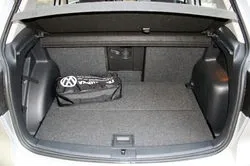 |
| The trunk is 45 liters larger than the Golf VI |
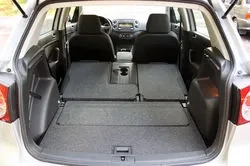 |
| The backrests fold down with one movement |
And how does the car drive? The platform of the "fifth" Golf is a proven solution, but hasn't the tall body affected the behavior? In our test, we have a version with a 1.4-liter engine and a fashionable robotic DSG gearbox with two clutches. Even though the displacement is not impressive — there are 122 hp under the hood, which is quite enough for this "almost minivan" to accelerate briskly.
The seating position is comfortable and firm, the steering wheel and pedals are positioned correctly — everything is as it should be. We check the transmission response: the car reacts to the gas almost instantly, quickly gaining speed. The shifts are smooth and imperceptible, while the gearbox is always ready for sharp acceleration, for example during overtaking. The steering wheel pleases with excellent feedback and pleasant effort that increases with speed, and the suspension — with reasonable stiffness and energy intensity.
On the highway, the Golf Plus holds confidently and solidly, and even when the speedometer needle goes far beyond the permitted values, the feeling persists that the car is fully under control and won't surprise you with anything. The only thing that starts to bother at high speeds is the growing engine hum, which is almost inaudible in a calm driving rhythm. Wind, on the other hand, is hardly a concern: in terms of sound insulation, there are no complaints at all.
Still, one shouldn't forget about the high center of gravity — it will remind you of itself at the moment when the driver, getting carried away, enters a corner at excessive speed or hits the air turbulence from an oncoming truck. Don't forget: the Golf Plus is primarily a practical car — tall, spacious, and cargo-oriented, not a spirited hatchback.
Daily driving in the Golf doesn't tire you out, and if desired, it's easy to add a bit of excitement. Who would it suit? First of all, young families come to mind — those who already have children or are just planning them: they will have frequent trips to the supermarket, transporting strollers, and trips to the countryside. Such drivers will find useful not only the spacious trunk but also the rear row, which can be slid forward so that children are closer to the parents. It's also worth considering the Golf Plus for those who aren't yet ready to buy a crossover but want to sit higher in traffic. Besides, the Plus looks more solid than its lower-slung sibling, the Golf.
 |
| Among the potential buyers of the car are young parents who plan to frequently visit the supermarket, transport strollers, and regularly go to the countryside. They will also find useful not only the spacious and convenient trunk but also the rear seats that slide forward – so that children are closer. The Golf Plus will appeal to those who haven't yet grown into a crossover but want to get the benefits of a high seating position in traffic. And in general, the Plus looks more solid than the lower Golf. |
For this "solidity" you'll have to pay more than 30,000 rubles: the base Golf is priced at 600,192 rubles, while the starting Golf Plus is 634,039 rubles. This amount includes a 1.4-liter engine with 80 hp, paired with a manual gearbox, driver's seat with height adjustment, a 12-volt outlet in the trunk, front and side airbags for front occupants, curtain airbags, ABS, mirrors with electric adjustment and heating, air conditioning, as well as a steering column adjustable for height and reach. In more expensive trims, you can choose a more powerful 1.2-liter or 1.4-liter TSI, as well as a 1.6-liter unit — such versions already cost around 700,000 rubles. For any of the engines, a robotic DSG gearbox is available. The top trim, which we had for the test, costs at least 826,744 rubles and is equipped with a 1.4-liter TSI with DSG.
Svetlana Aleeva

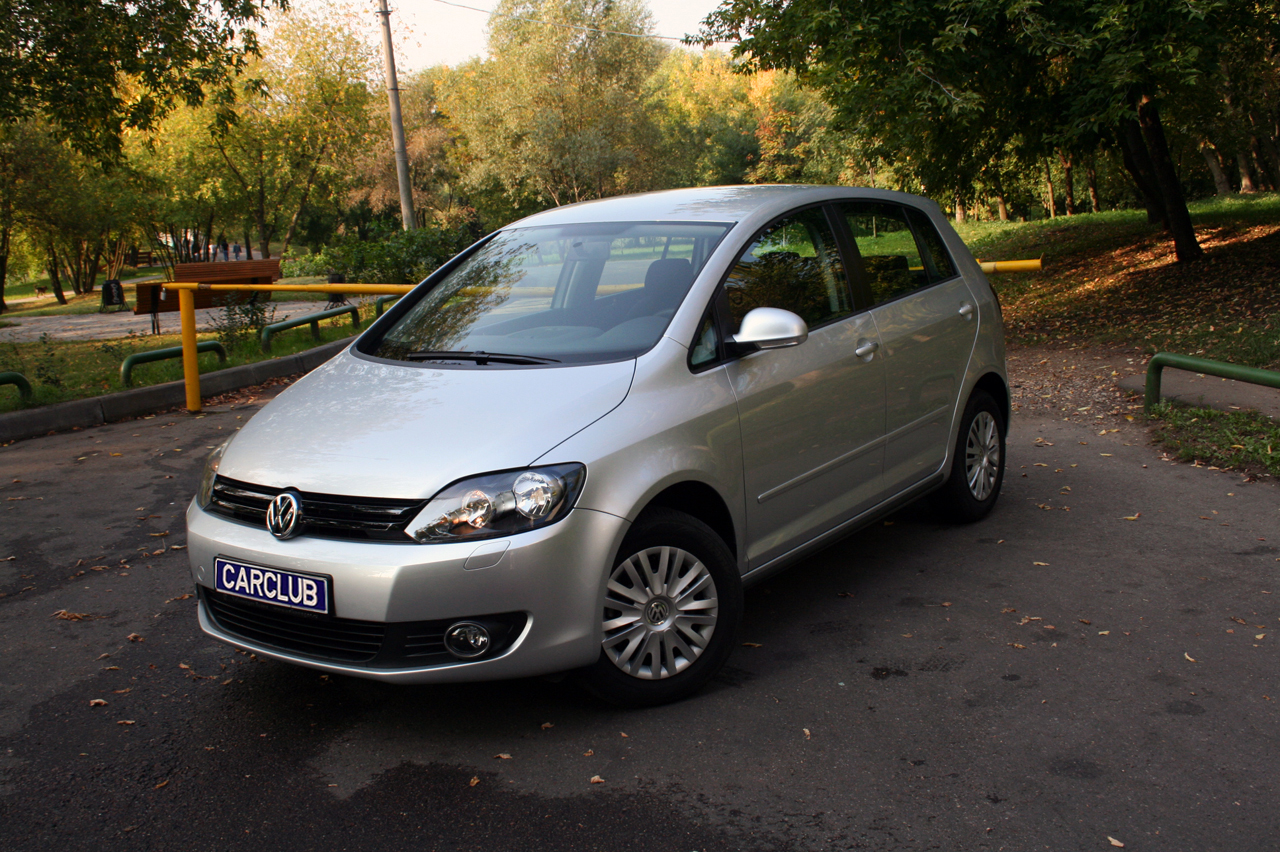 Imagine a driver who needs both practicality and compactness, but is not ready to sacrifice driving pleasure. According to Volkswagen, such a person would suit the Golf Plus.Comments
  The Germans position the Golf Plus as a compact MPV. It is based on the platform of the "fifth" Golf.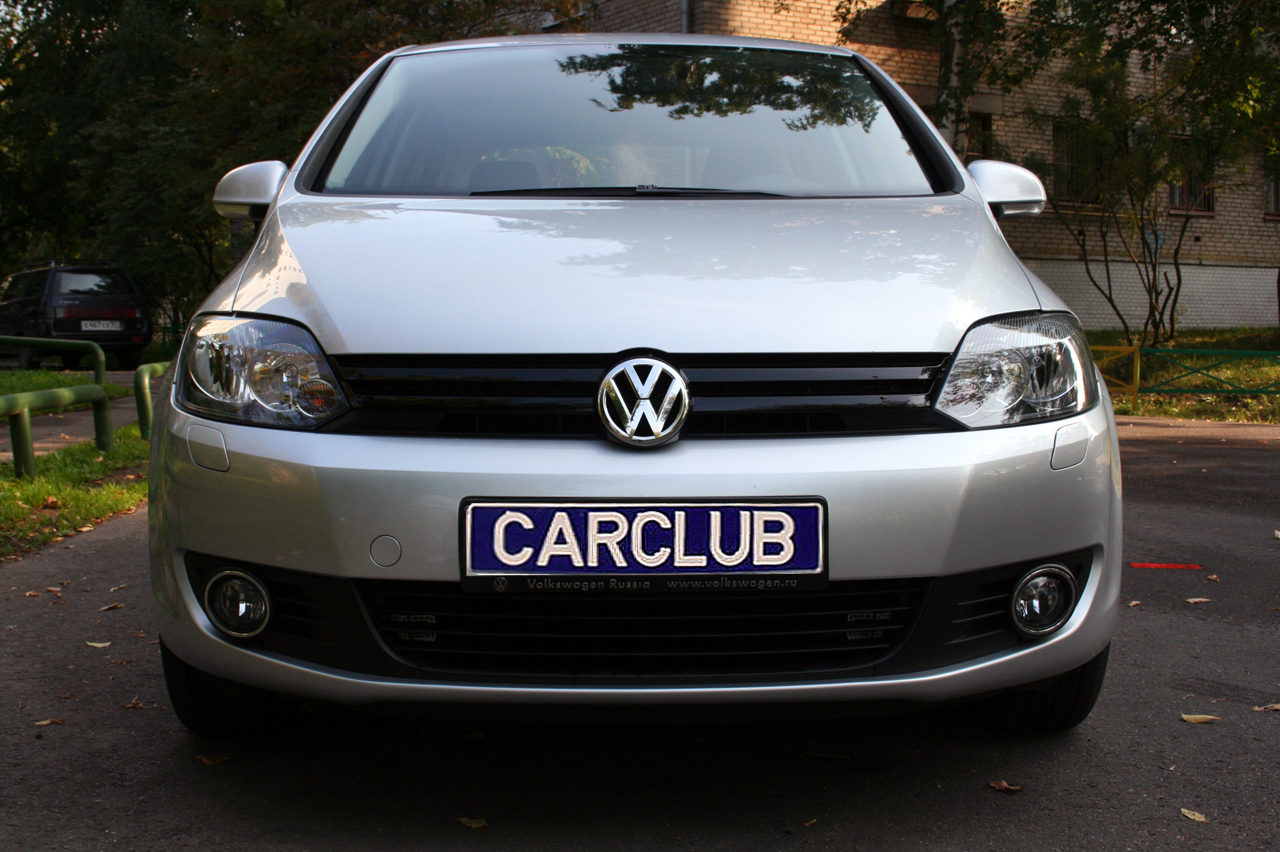
 The hood looks different, the glazing area is larger, and the side pillars have triangular windows, like in minivans.