
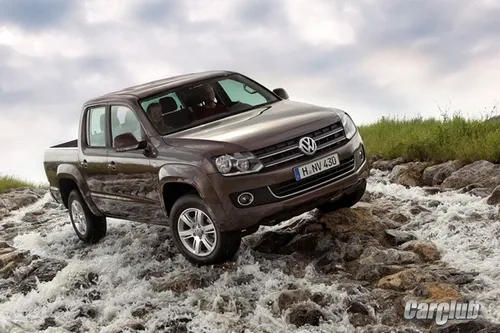
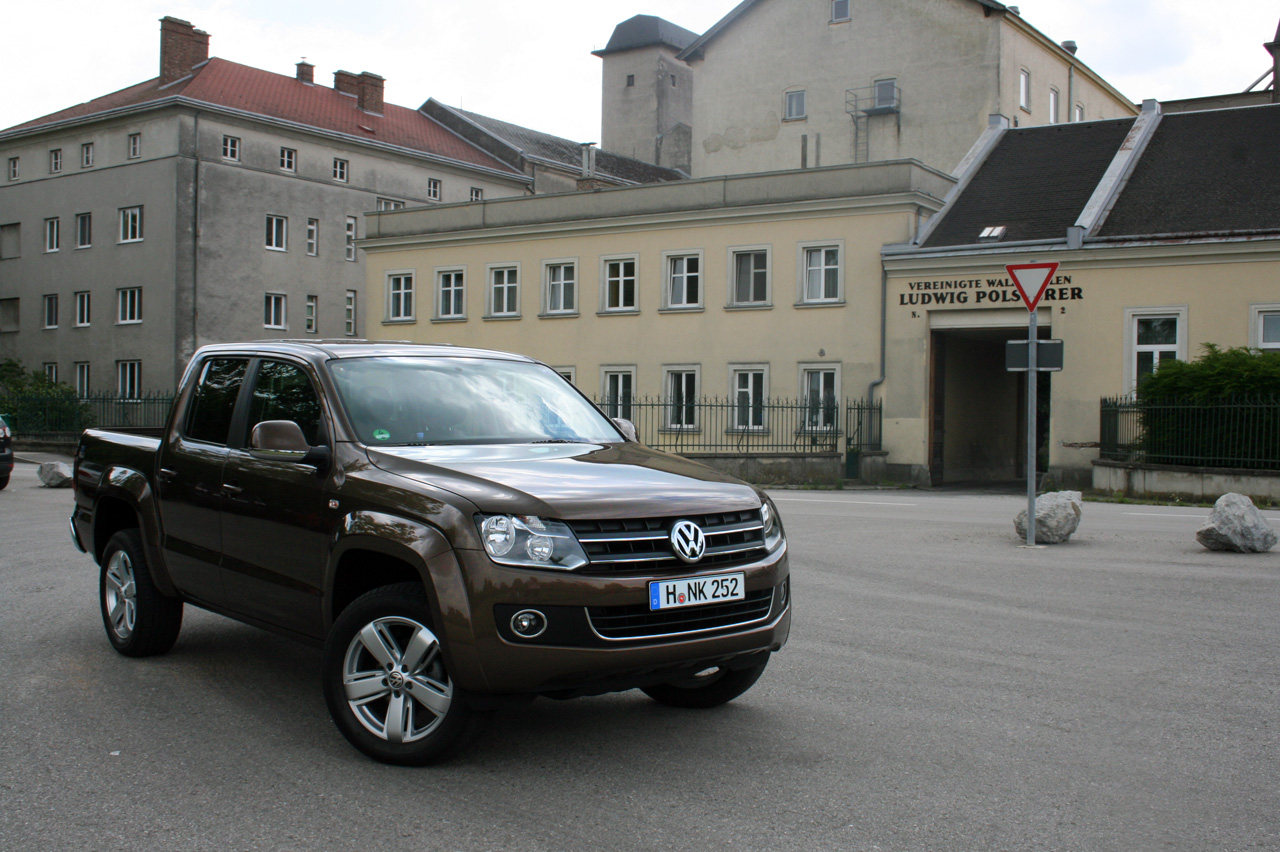
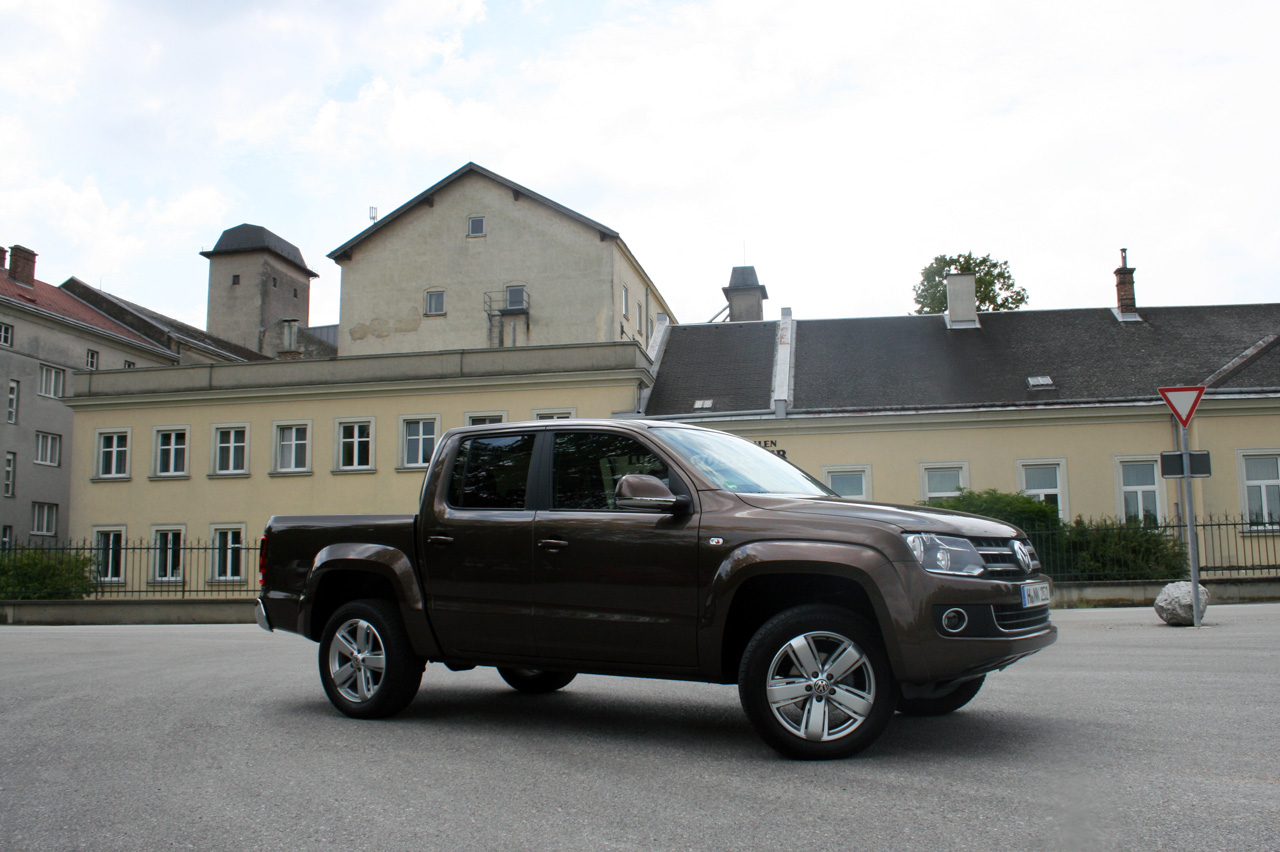
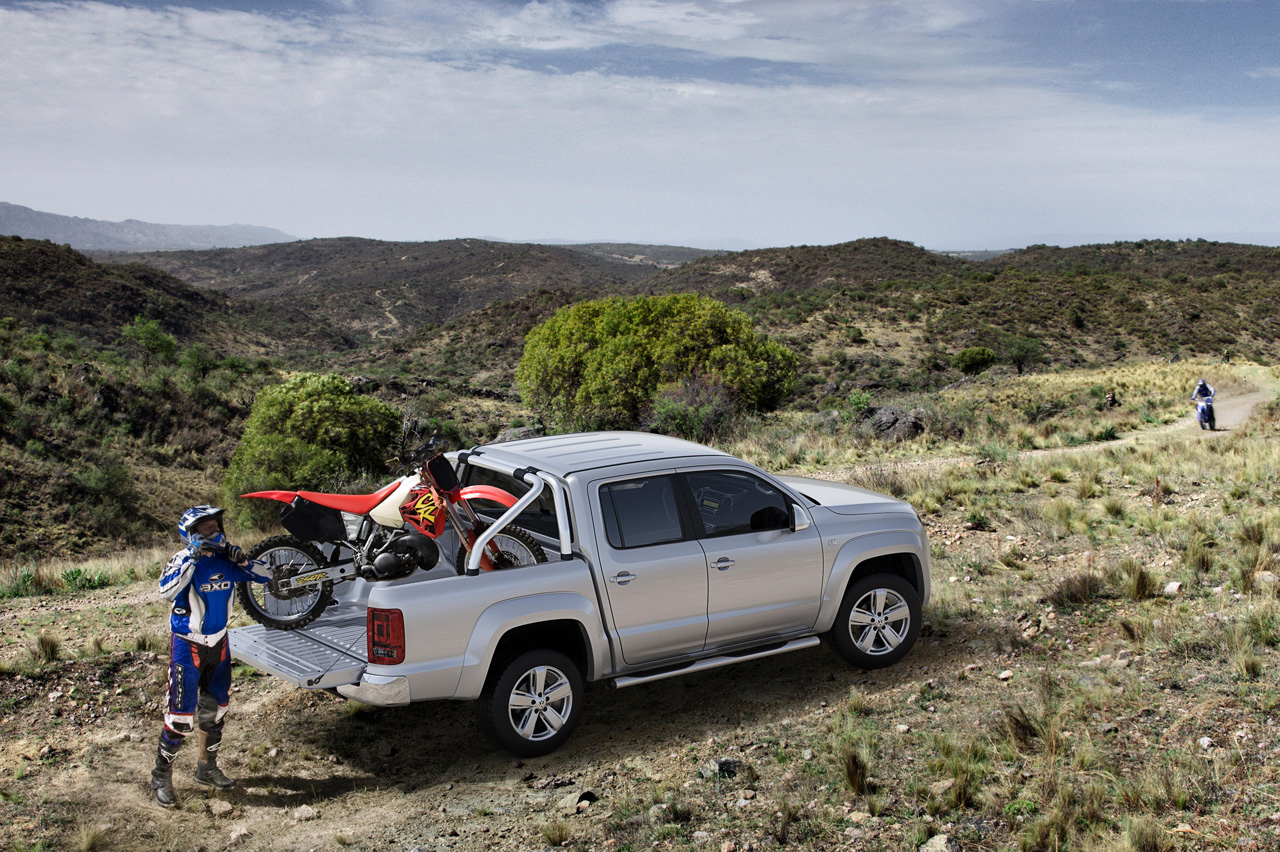
 This is not an SUV with a crudely chopped-off top, but a full-fledged pickup with a genuinely attractive appearance. You want to use such a car not for hauling building materials, but for taking a group of friends in swimsuits for a ride along a sunny beach.Comments (3)
Pickups in Russia are not at all what they are in America or Europe. Overseas, a truck is a long-standing tradition and almost a national symbol, while in the Old World such vehicles are most often used by farmers purely for practical gain. Here, the audience choosing pickups is completely different. Will they be interested in the first European representative of this class called Amarok, which the German concern Volkswagen is preparing to send "into the fields"?
 |
| VW Amarok — the first European pickup. Previously, American and Japanese models, as well as inexpensive Chinese workhorses, dominated this segment. |
The beginning of the Russian pickup market was laid by cars from China. They were inexpensive and at the same time all-wheel-drive off-roaders with impressive cargo capabilities. In essence, an affordable replacement for the Big Black Jeep. Having tasted this format, our compatriots began to look at more expensive options, which, nevertheless, remained more profitable than SUVs. Over time, it came to image versions in the spirit of "I am special": among the simple and purely utilitarian "workhorses", cars began to appear for those willing to pay for comfort and appearance, sacrificing some practicality.
 |
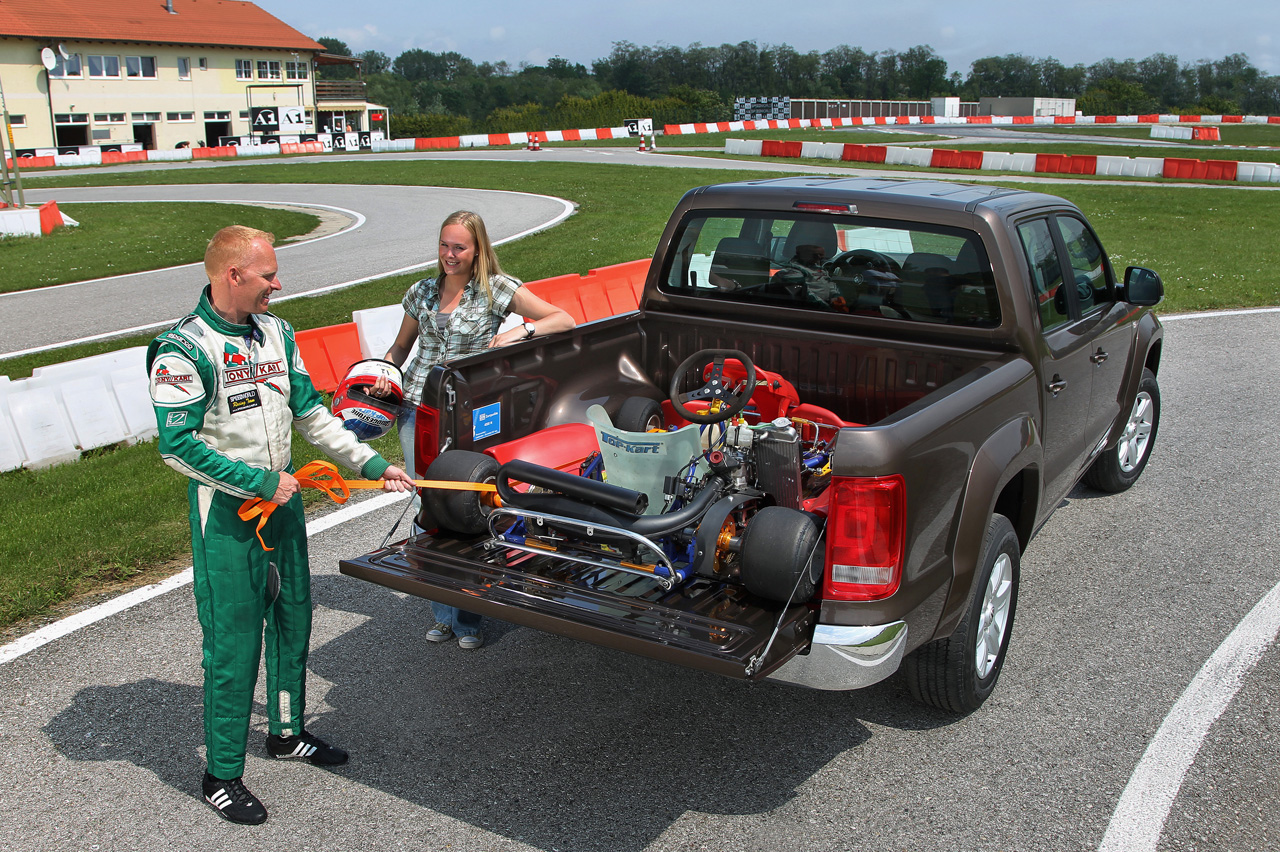 |
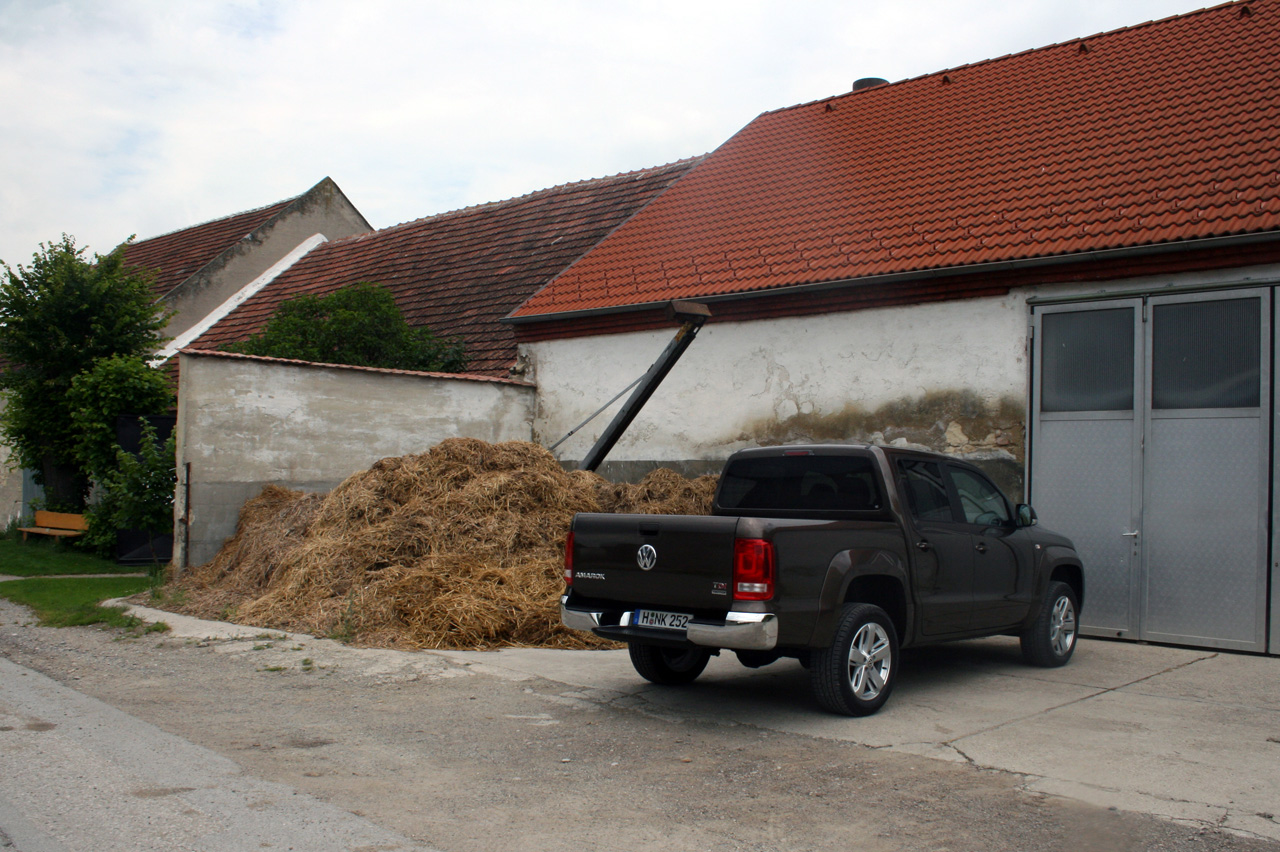
In our country, pickups are definitely not bought by farmers — for them such a purchase is too costly. Much more often, such cars are taken for transporting scooters or ATVs, trips for fishing and hunting, participation in trophy raids, and also — to go to the dacha comfortably with a large volume of things. And these are far from poor people. Pickups are also actively used in everyday urban life.
 |
| In Russia, pickups are definitely not bought by farmers — for them it is too expensive a pleasure. |
Amarok from Volkswagen enters a field where American and Japanese manufacturers have been setting the tone for many years, and does so with its own European vision.
 |
| Amarok in the language of one of the Indian tribes means wolf, king of beasts |
 |
| Amarok can also be translated as "one who loves stones" |
The name "Amarok" was clearly chosen not by chance: in the language of one of the Indian tribes, this is the name of a mythical wolf, the lord of beasts. And this word can also be translated as "one who loves stones." In short, a hint at power, courage, and readiness for severe trials. We checked how true this is at the driving presentation of the new product.
 |
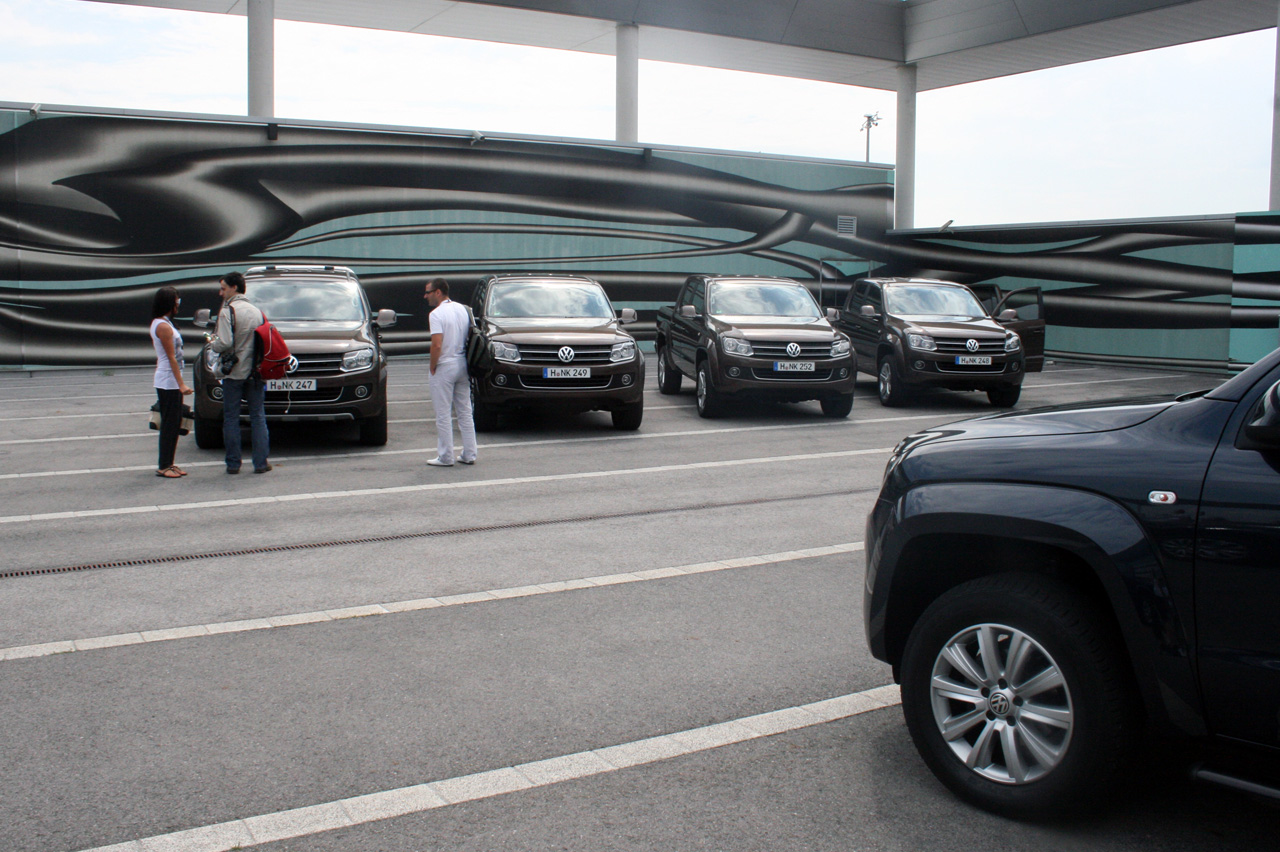 |
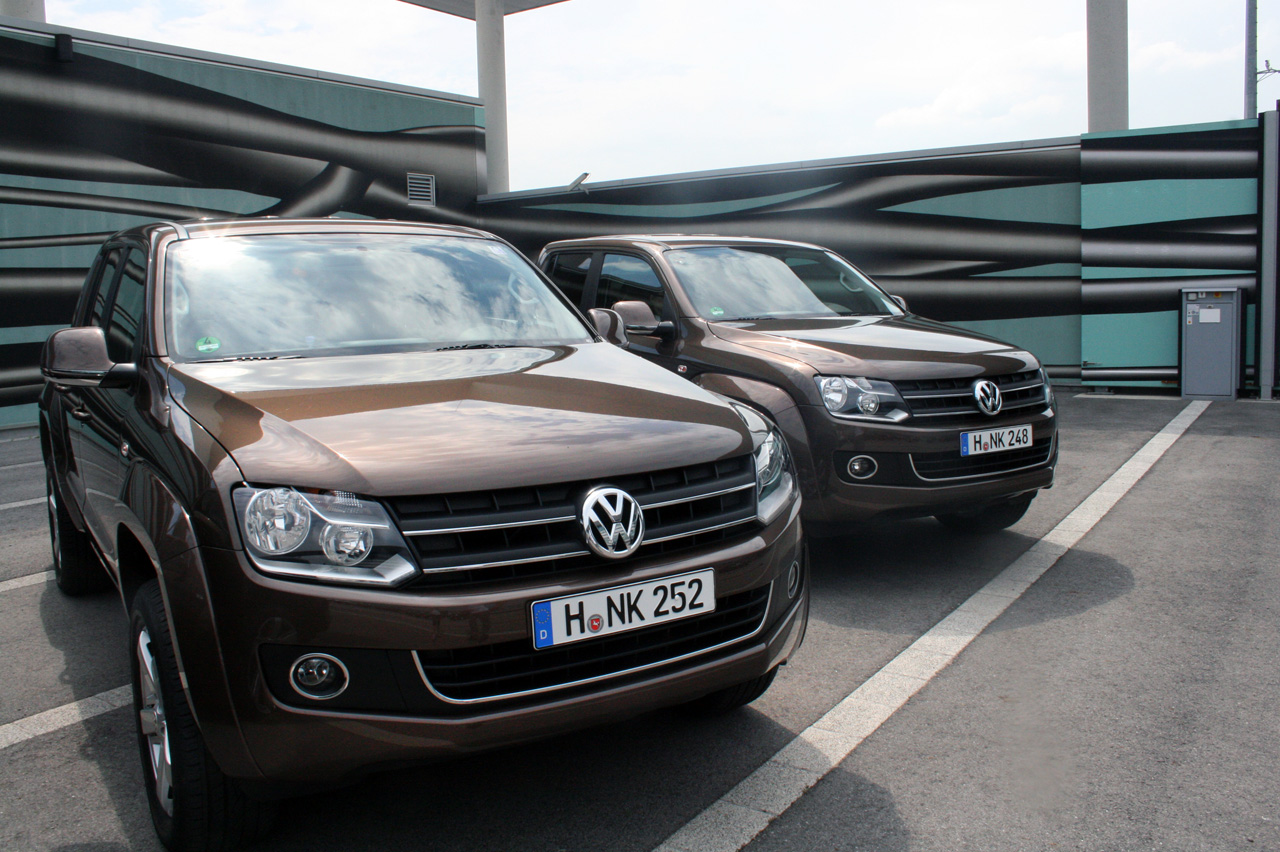
The German pickup looks impressive: its length is 5254 mm, width — 1944/1954 mm, and height — 1834 mm. It clearly proves that a truck can be aesthetic. Perhaps even the most beautiful in its class. The front part is made in the recognizable corporate style of VW: neat optics, two clear horizontal grille slats with a large logo in the middle, smooth hood lines, massive wheel arches, and a mass of restrained but elegant details. You want to take such a car not to load with bags of cement, but to go on vacation in it. And this is not a Jeep with someone carelessly cutting off the rear part — before us is an independent, complete model.
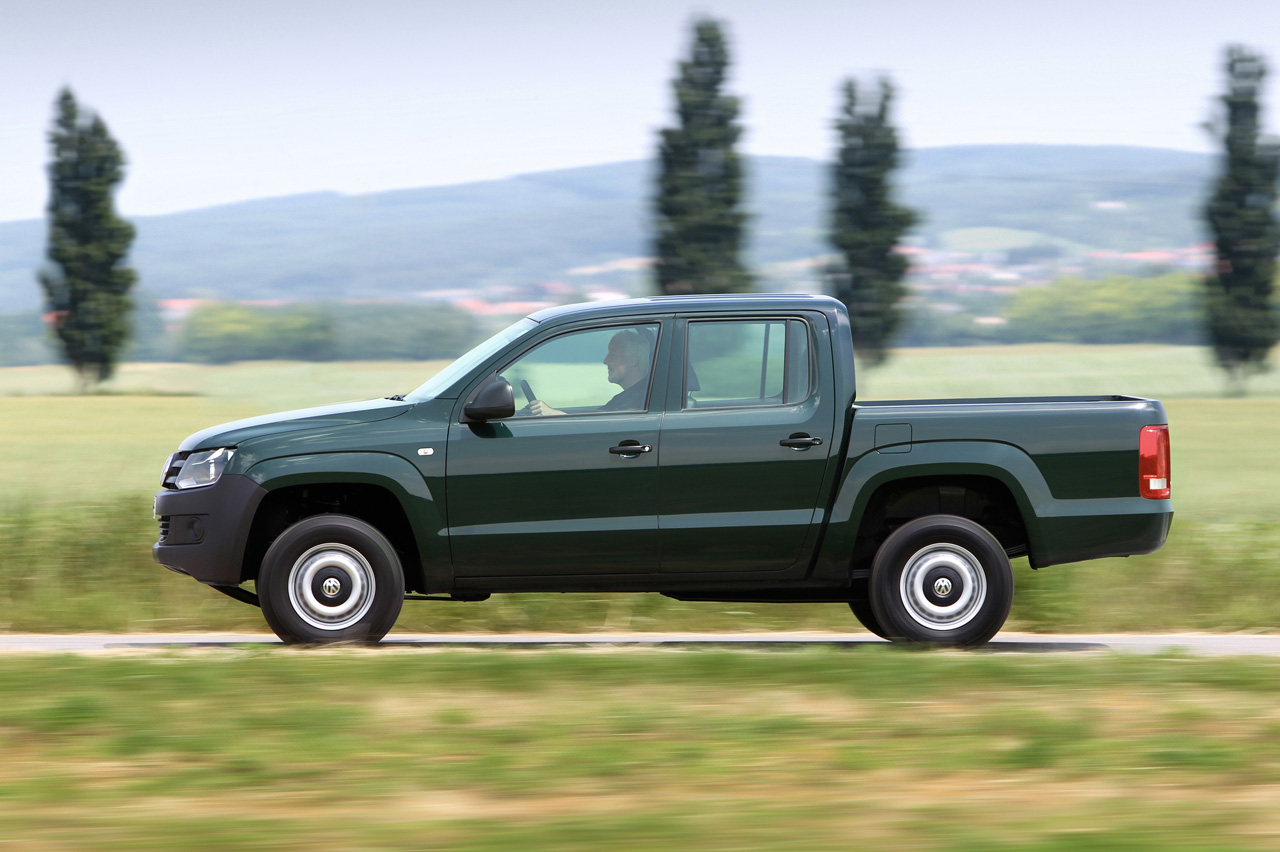 |
| This is not a Jeep with the top of the rear part cut off by a careless axe blow. On the Amarok you want to carry not bricks, but to take a cheerful company in swimsuits for a ride along a hot beach. |
Actually, that is how this "Wolf" turned out. The Germans did not use the Touareg platform, but created a completely new one. They were helped by many years of experience in developing light commercial vehicles (the new product belongs to this category) and all-wheel-drive cars.
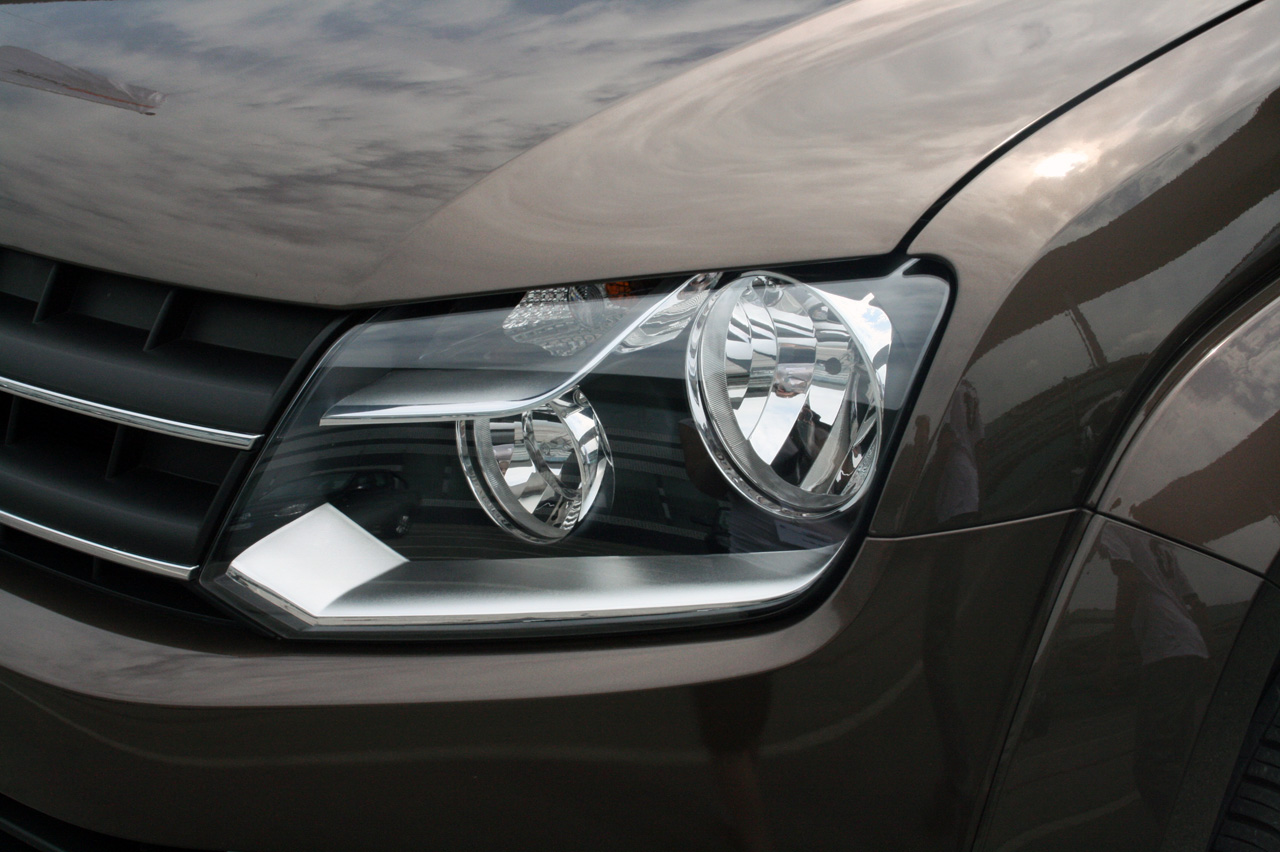 A truck can be beautiful...
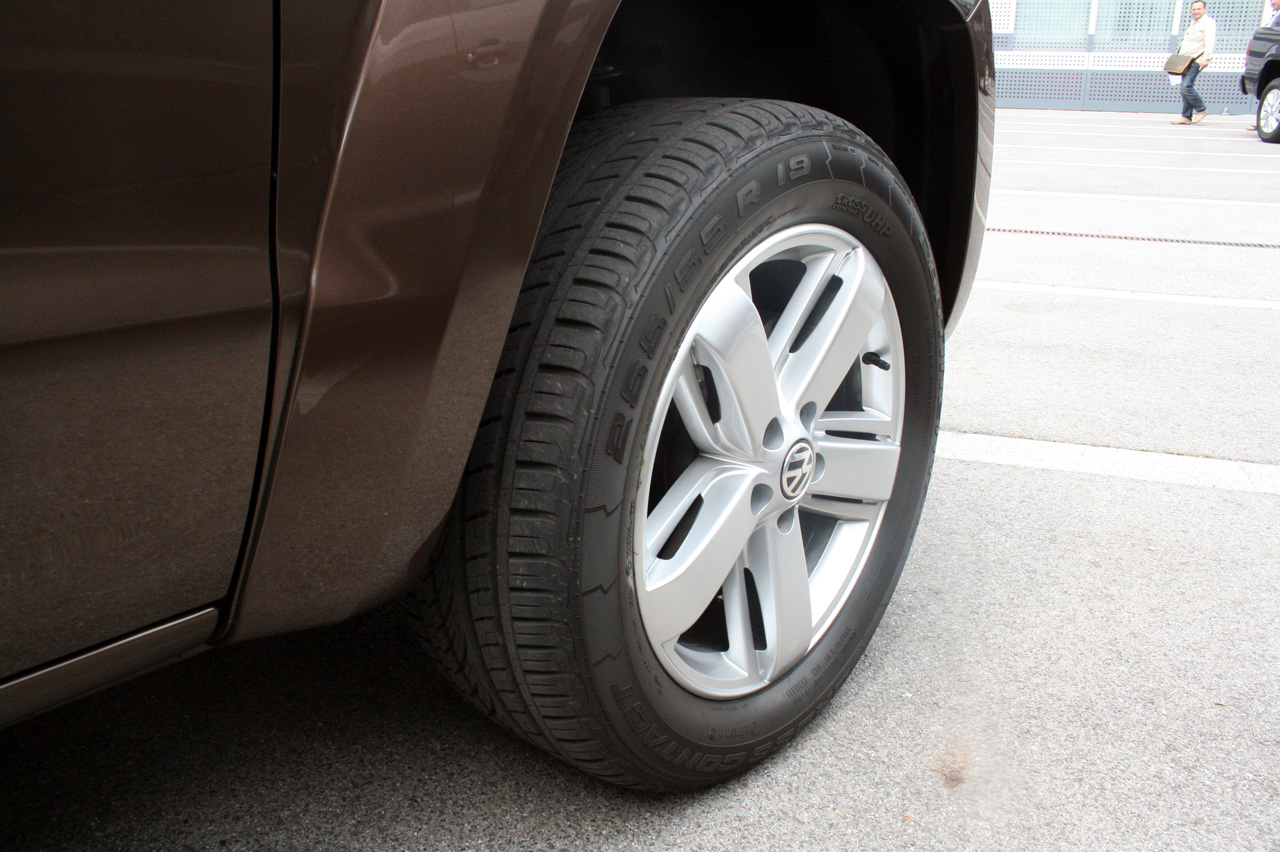 ...and fashionable
The Amarok is based on a ladder frame, which specialists at "Volkswagen Commercial Vehicles" call the strongest in its class, and a body-on-frame. At the front — independent suspension on double wishbones and coil springs. At the rear — a solid axle on leaf springs, with two options: for greater comfort, two-leaf springs are offered, and for those who prioritize load capacity, five-leaf springs, marked as Heavy Duty.
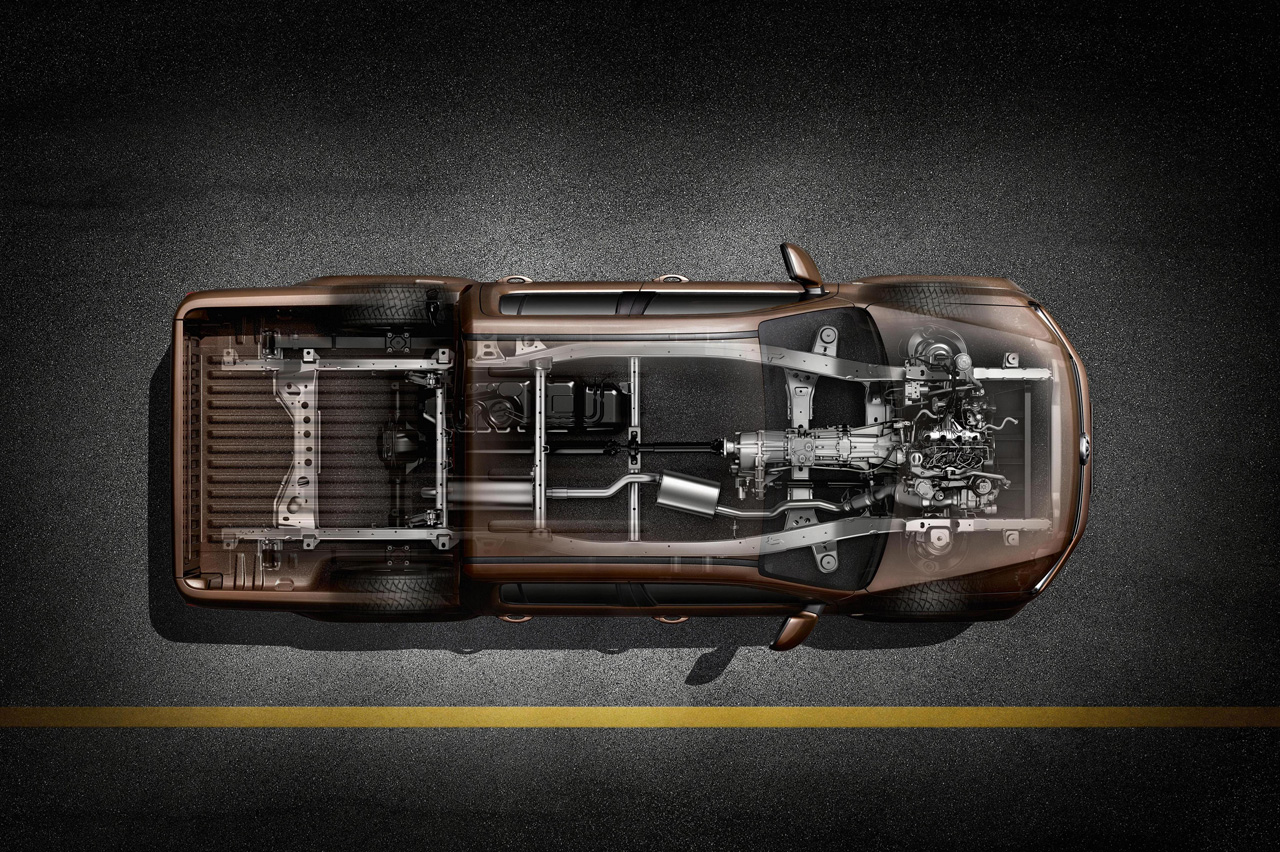 |
| The Amarok is based on a ladder frame, which representatives of "Volkswagen Commercial Vehicles" call the strongest in its class, and a body-on-frame. The front suspension is independent, on double wishbones and coil springs. The rear is a solid axle on leaf springs of two types depending on the buyer's choice: a more comfortable option with two-leaf springs and a more utilitarian one with five-leaf springs called Heavy Duty. |
The pickup has three drive options: simple rear-wheel drive, pluggable all-wheel drive, and permanent all-wheel drive. The rear-wheel-drive version is designed for those who do not find special pleasure in mud, live in the city, drive on asphalt, and want to have a practical alternative to the "Gazelle" at hand.
 |
 |
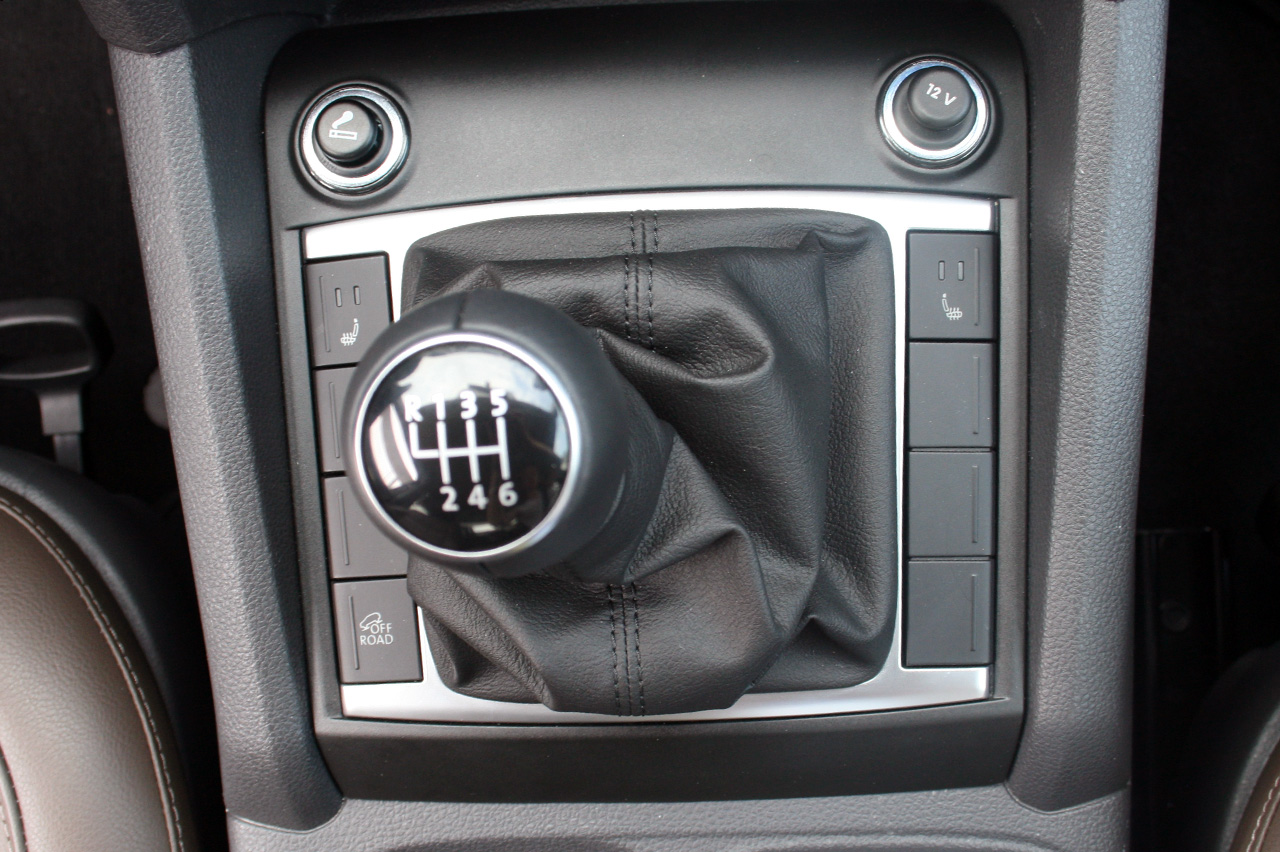
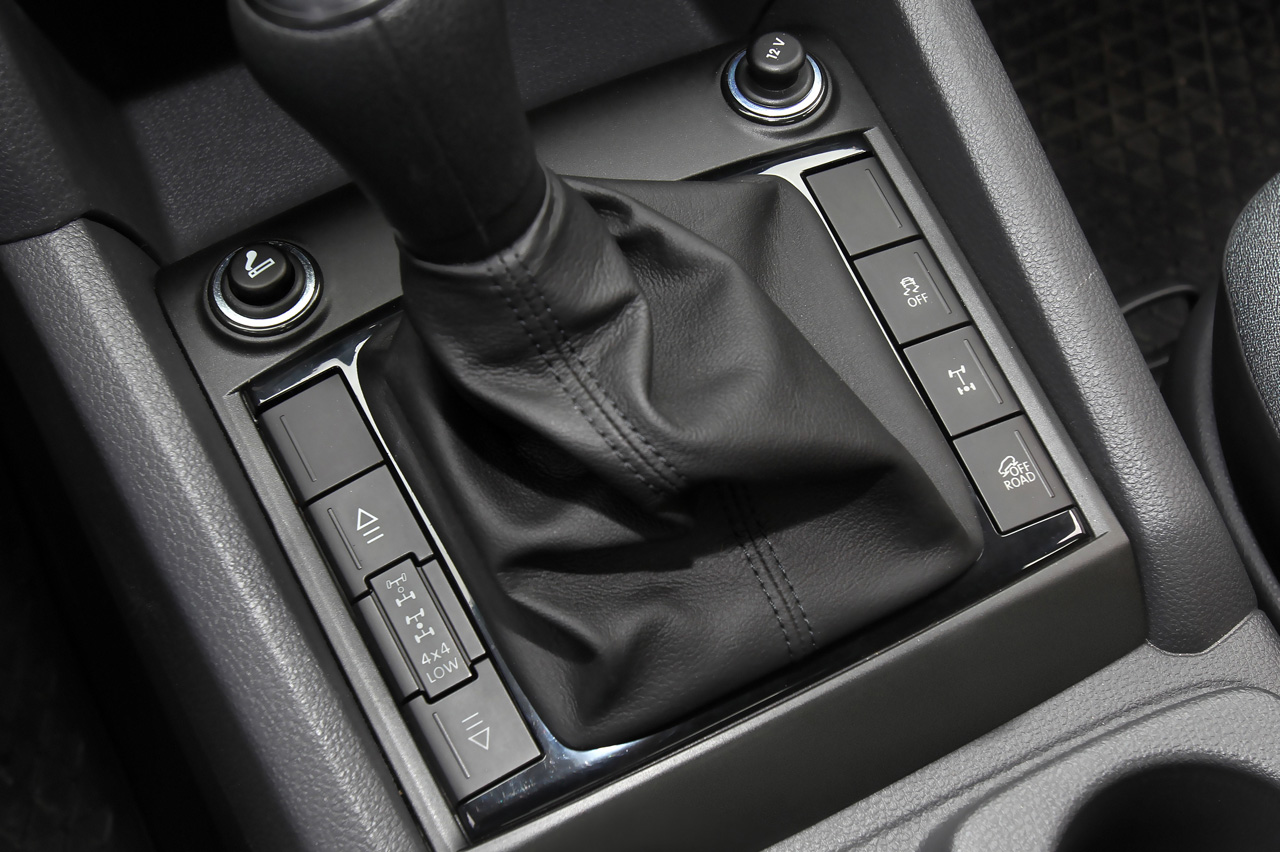
The second option is easily recognized by the 4motion badge with a red number 4. This is all-wheel drive with a rigidly engaged front axle and a low-range gear in the transfer case. Everything is done as simply as possible: to engage the front axle or low-range, just press the button to the left of the gearshift lever.
 |
 |
And finally, what is quite unusual for pickups of this class, is a permanent all-wheel drive system with a Torsen center differential that distributes torque in a 40/60 ratio. There is no low-range gear here.
 |
 |
The rear differential can be locked in any Volkswagen Amarok version — however, for an extra charge.
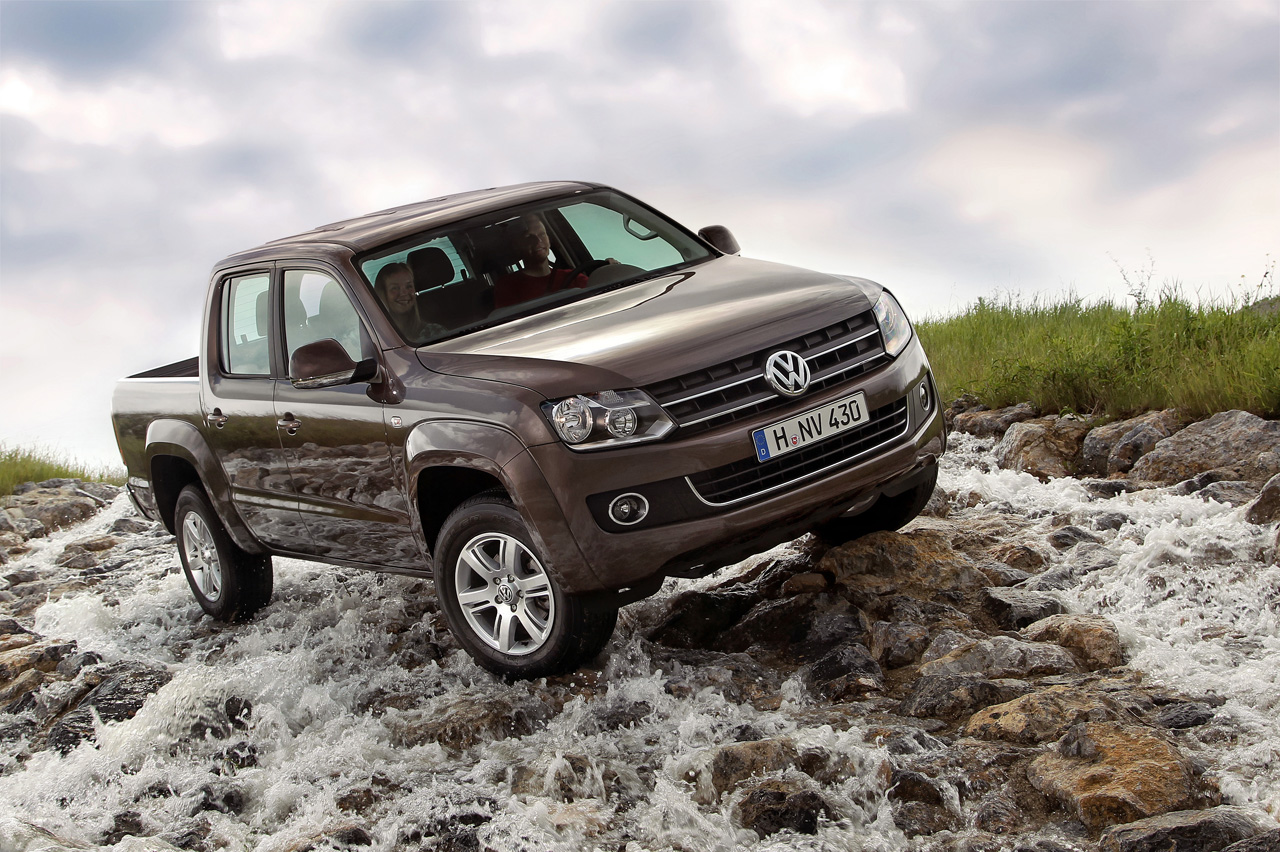
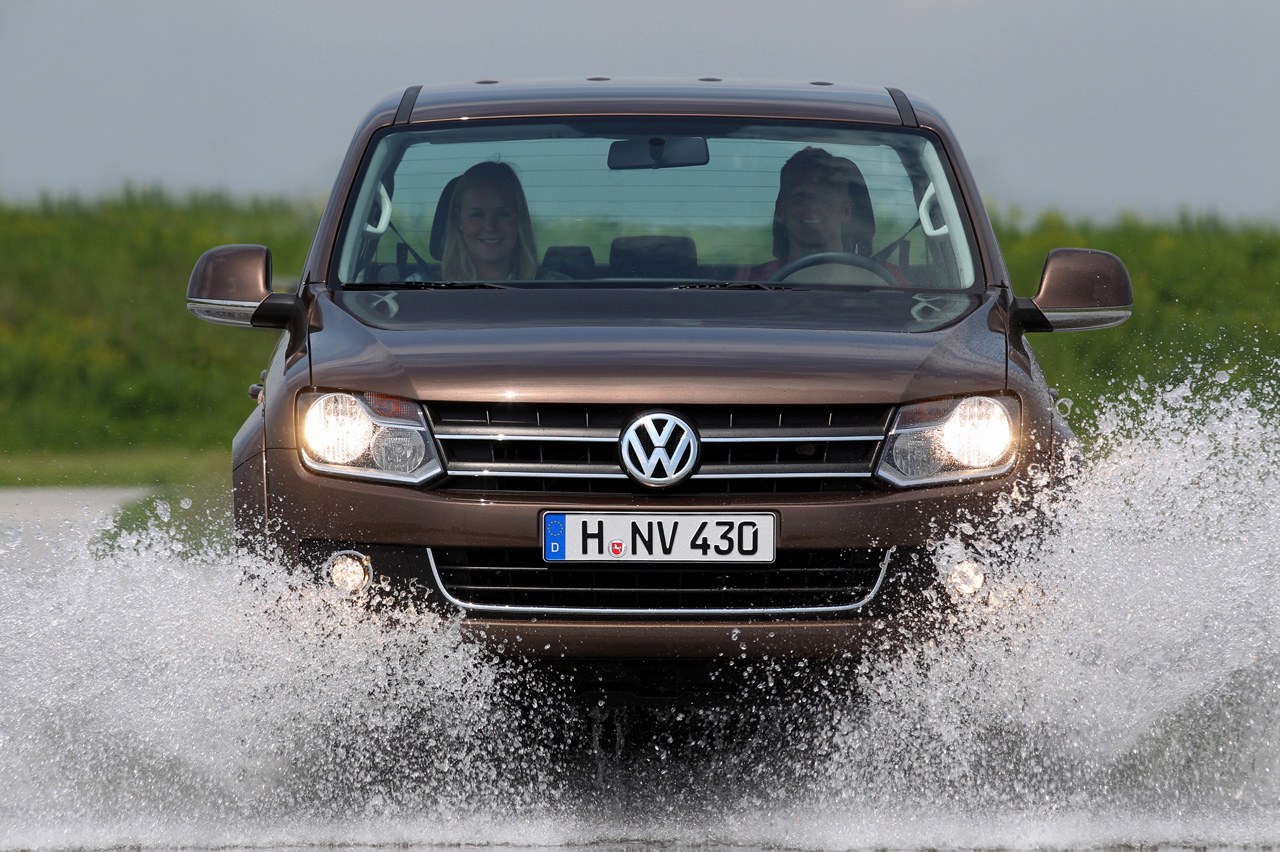
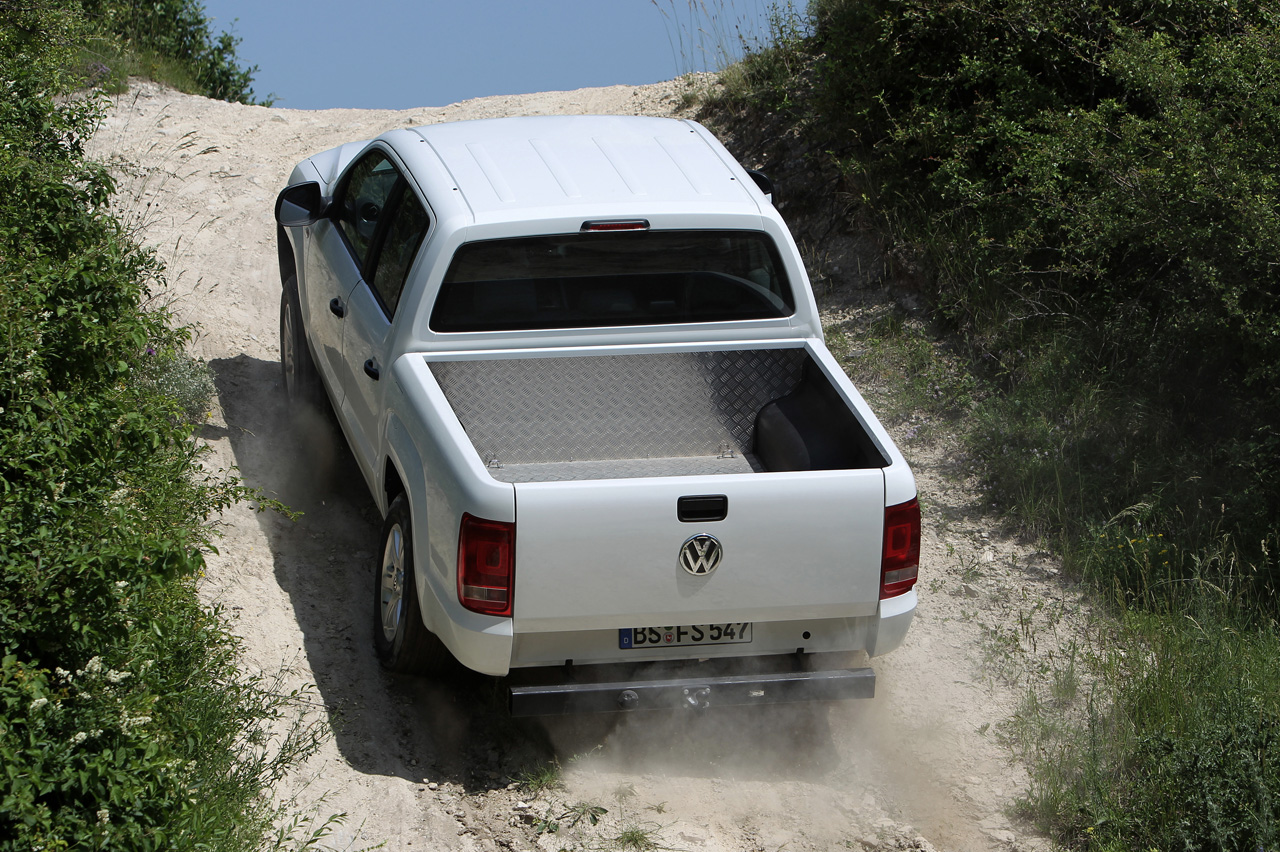
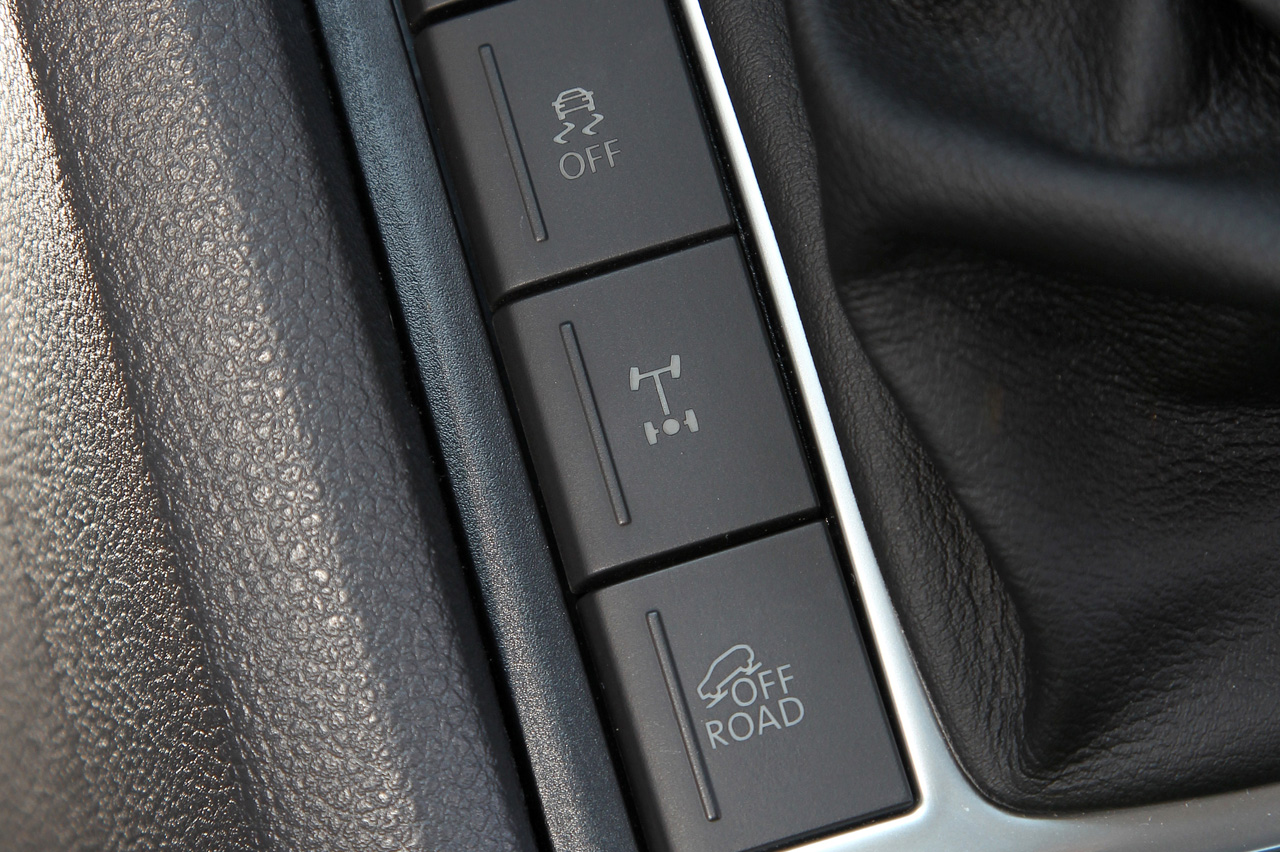
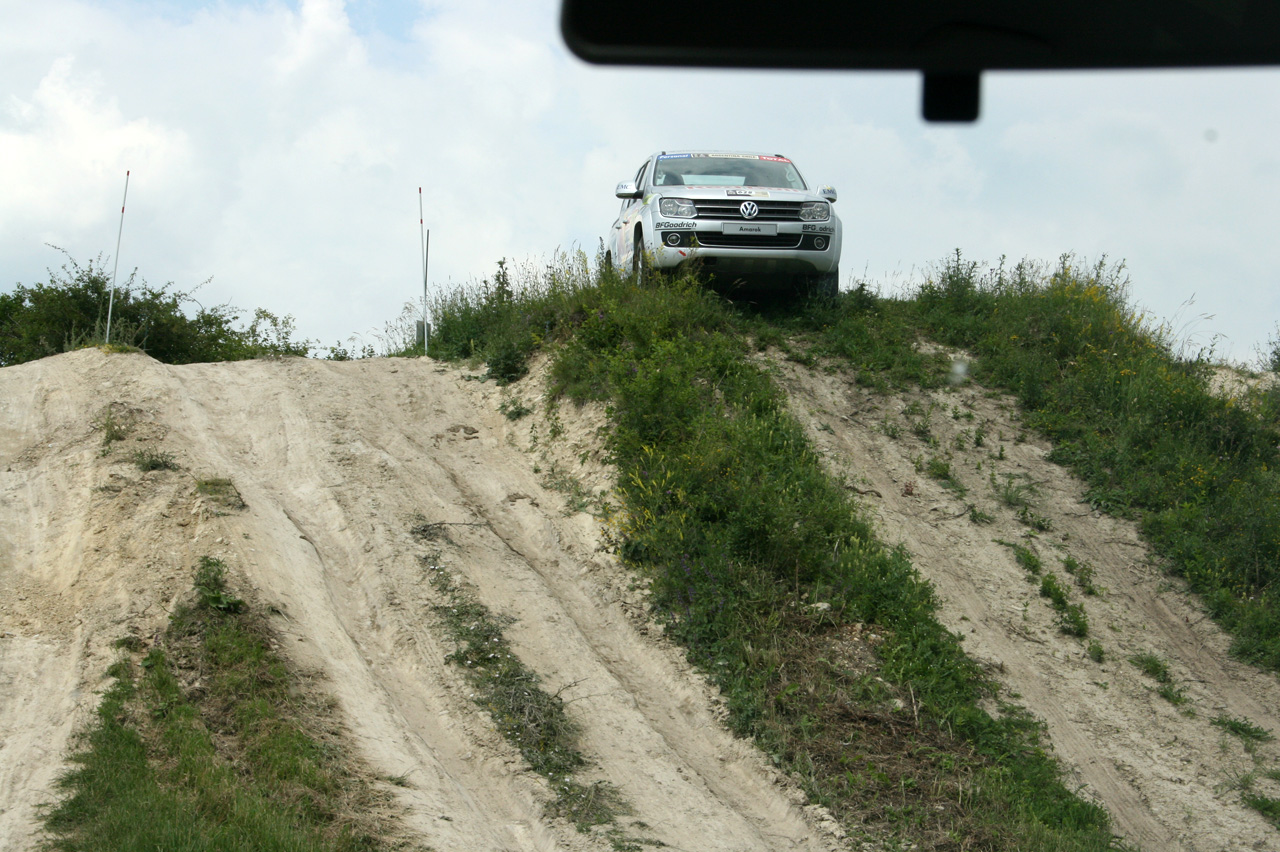
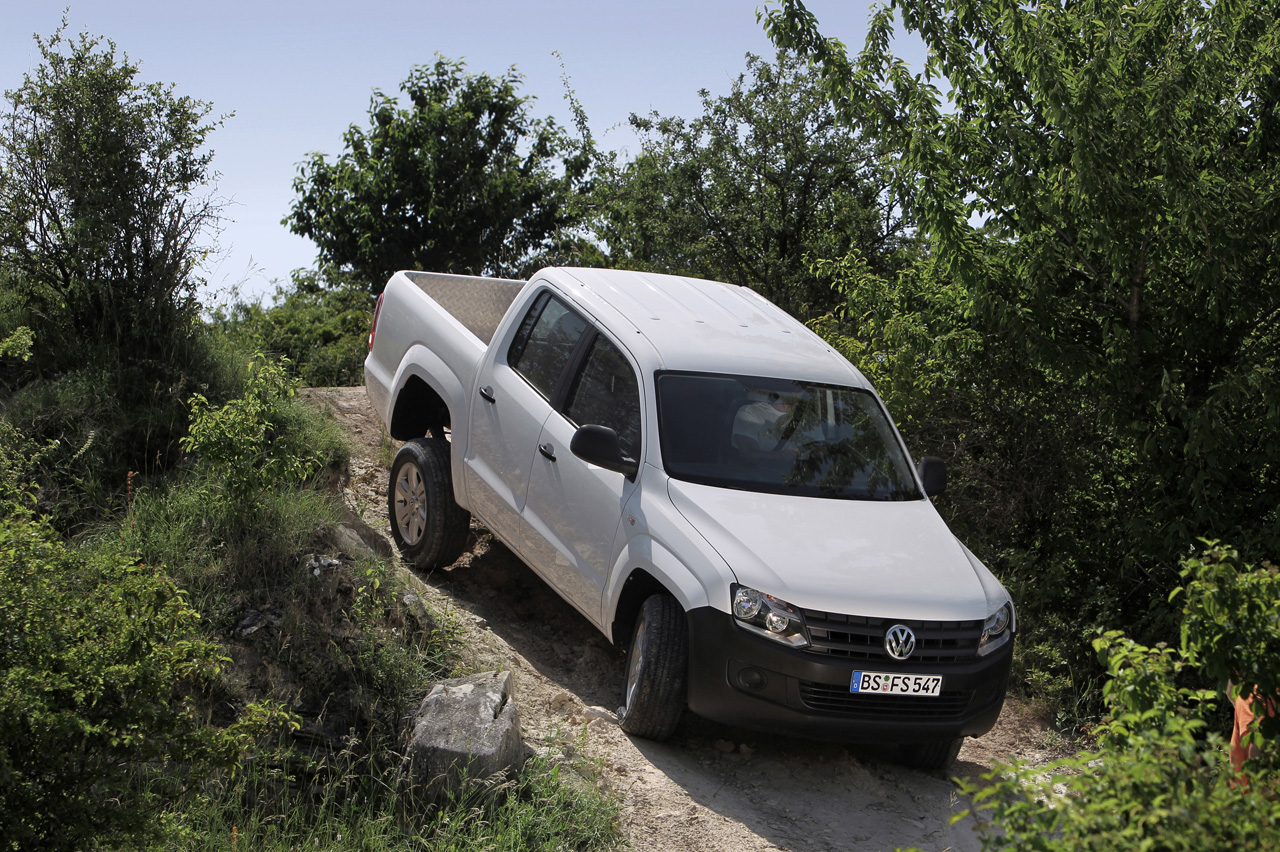
On the route prepared for getting acquainted with the new model, there were no surprises: steep descents and ascents, puddles up to the sills, diagonal wheel hanging, and a broken rut. However, calling the Amarok a Spartan is hard: besides low-range and locking, it has electronic assistants for overcoming ascents and descents — just activate the corresponding buttons and you can take your foot off the brake. Ground clearance reaches 249 mm, and the pickup can ford water up to 500 mm deep.
 |
 |
Off-road talents do not hinder the car on asphalt at all. The massive and heavy vehicle glides calmly and smoothly along highways, and handles almost like a passenger car — for a pickup with a solid rear axle, this is an unexpectedly pleasant discovery.
Under the hood, there can be two variants of the two-liter turbodiesel: a TDI with 122 hp and 340 Nm with a variable-geometry turbine, or a biTDI with sequential turbocharging, producing 163 hp and 400 Nm. For this segment, such a technical solution is a rarity.
 |
| Under the hood, one of two variants of the 2.0-liter turbodiesel can be installed: TDI with 122 hp or biTDI with 163 hp. |
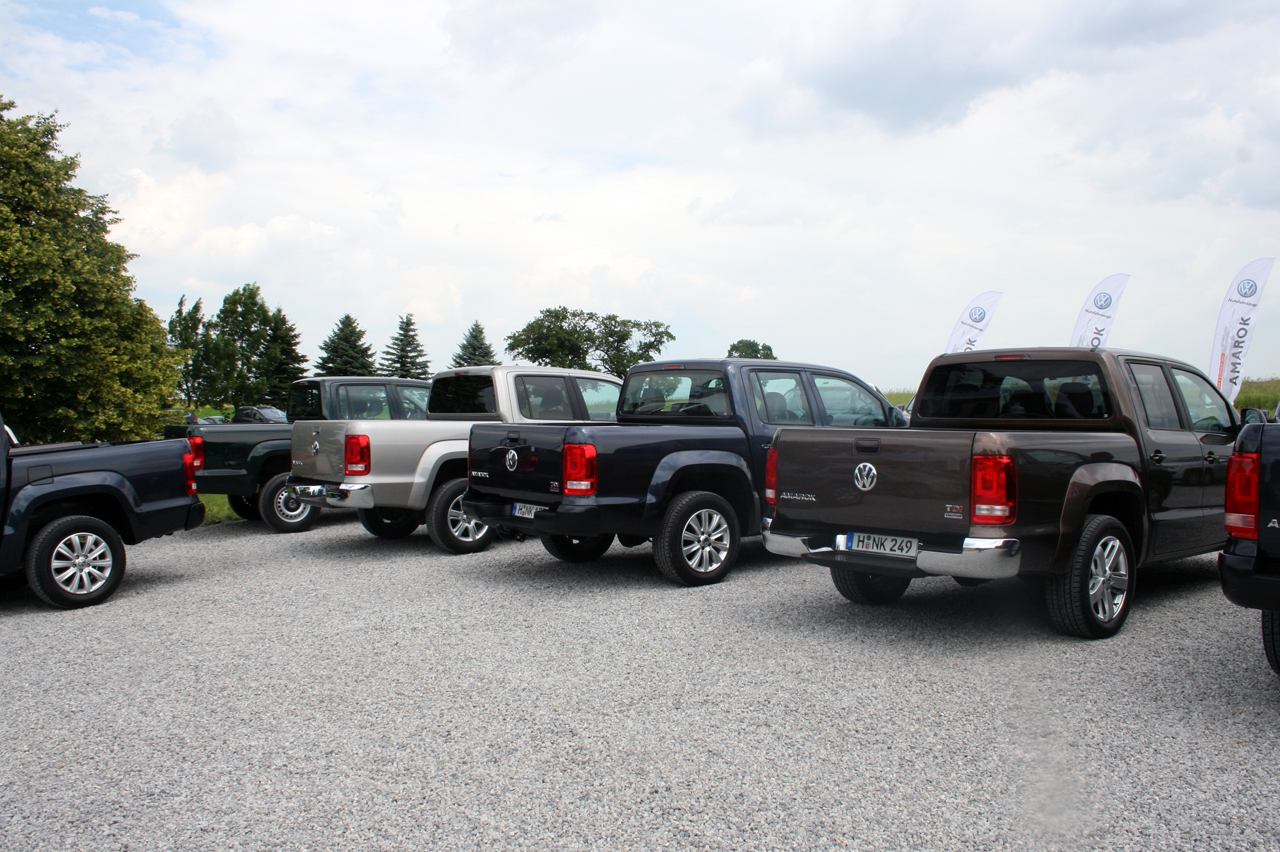 |
| Three drive types are offered for the pickup: base rear-wheel drive, plug-in all-wheel drive, and permanent all-wheel drive. |
Both power units currently work exclusively with a six-speed manual gearbox. An automatic is promised to be introduced by 2011, and then a 2.5-liter gasoline engine with 160 hp will appear for Russia, which will not be available in Europe.
 |
 |
The Amarok accelerates easily, but you have to shift gears often. And even that seems not enough for the onboard computer: it persistently advises shifting up one gear after another. The European mentality has taught it to save fuel and the environment. So the VW pickup can boast efficiency: on a full tank (80 liters), it can travel almost a thousand kilometers, according to the manufacturer.
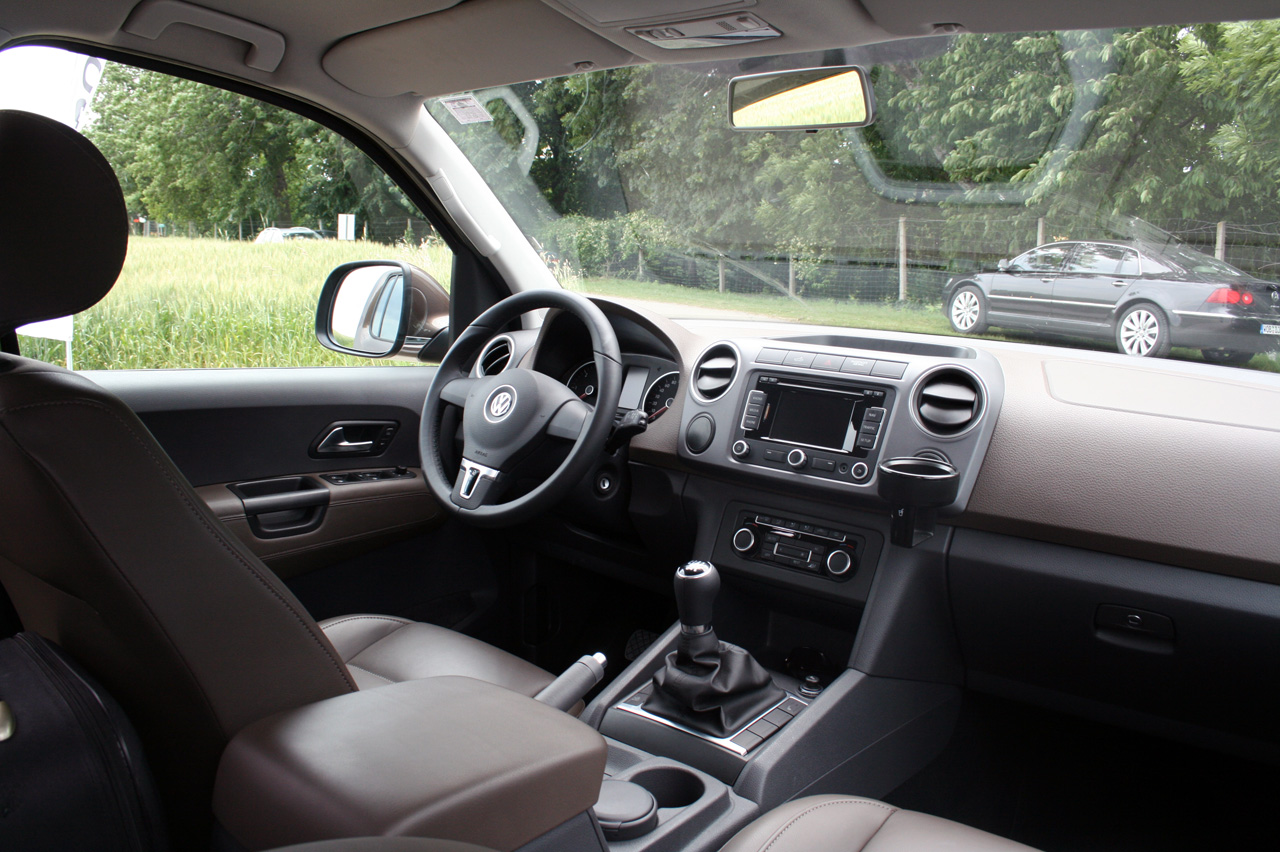 |
| In the Amarok's cabin, you can forget that you are in a pickup - it is so quiet, cozy, and spacious even in the rear seats. And not the slightest vibration. The interior design is practically no different from VW passenger models, except the plastic is a bit rougher. |
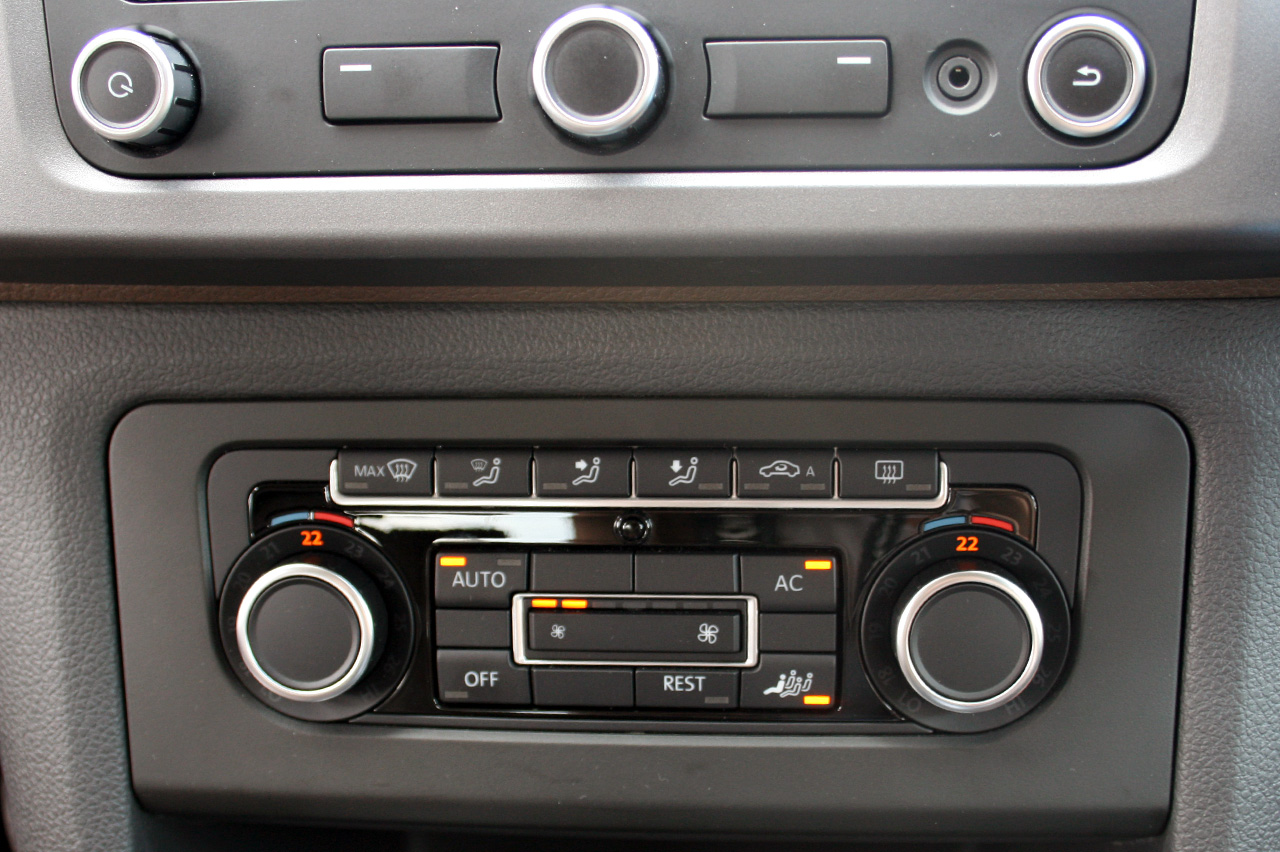
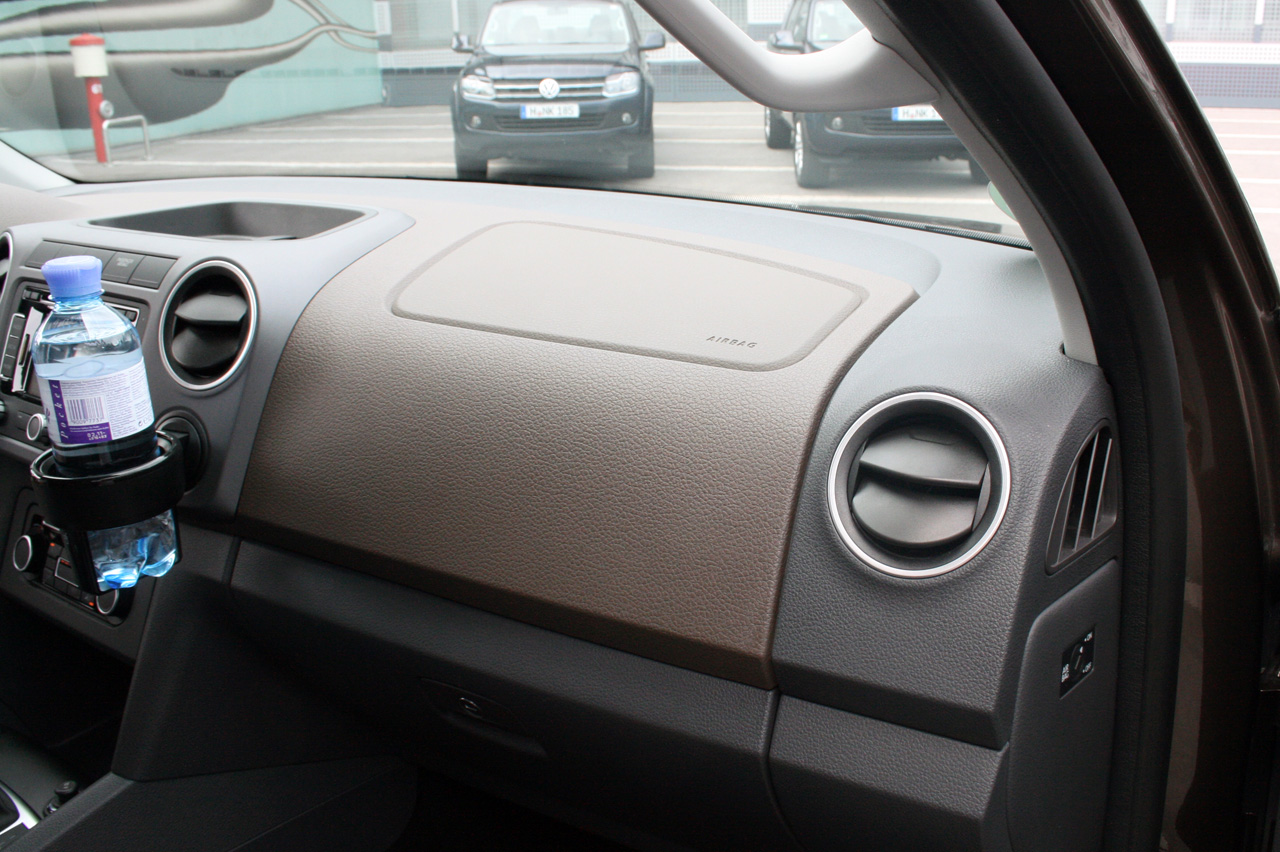
Inside the Amarok, you easily forget that you are sitting in a truck: it is so quiet, spacious, and comfortable, even in the back. And no vibration. The cabin design is almost indistinguishable from passenger Volkswagens — only the plastic is a bit harder.
 |
 |
Despite its impressive dimensions, the car feels good: the mirrors show the entire road situation, except the front pillars slightly obstruct the view. The driver's seat and steering column adjust so you can get perfectly comfortable. The only thing to nitpick is that the electronic fuel level gauge is hard to read.
 |
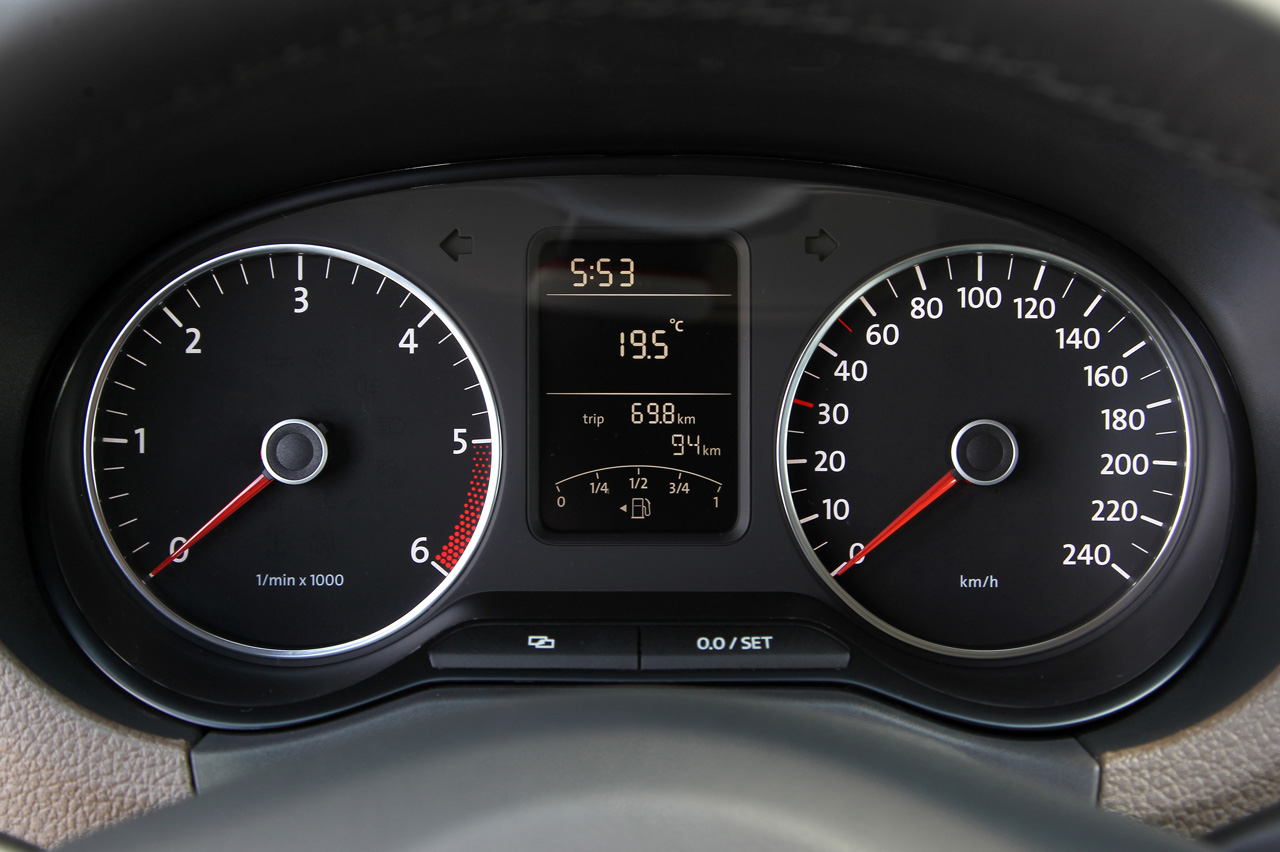 |
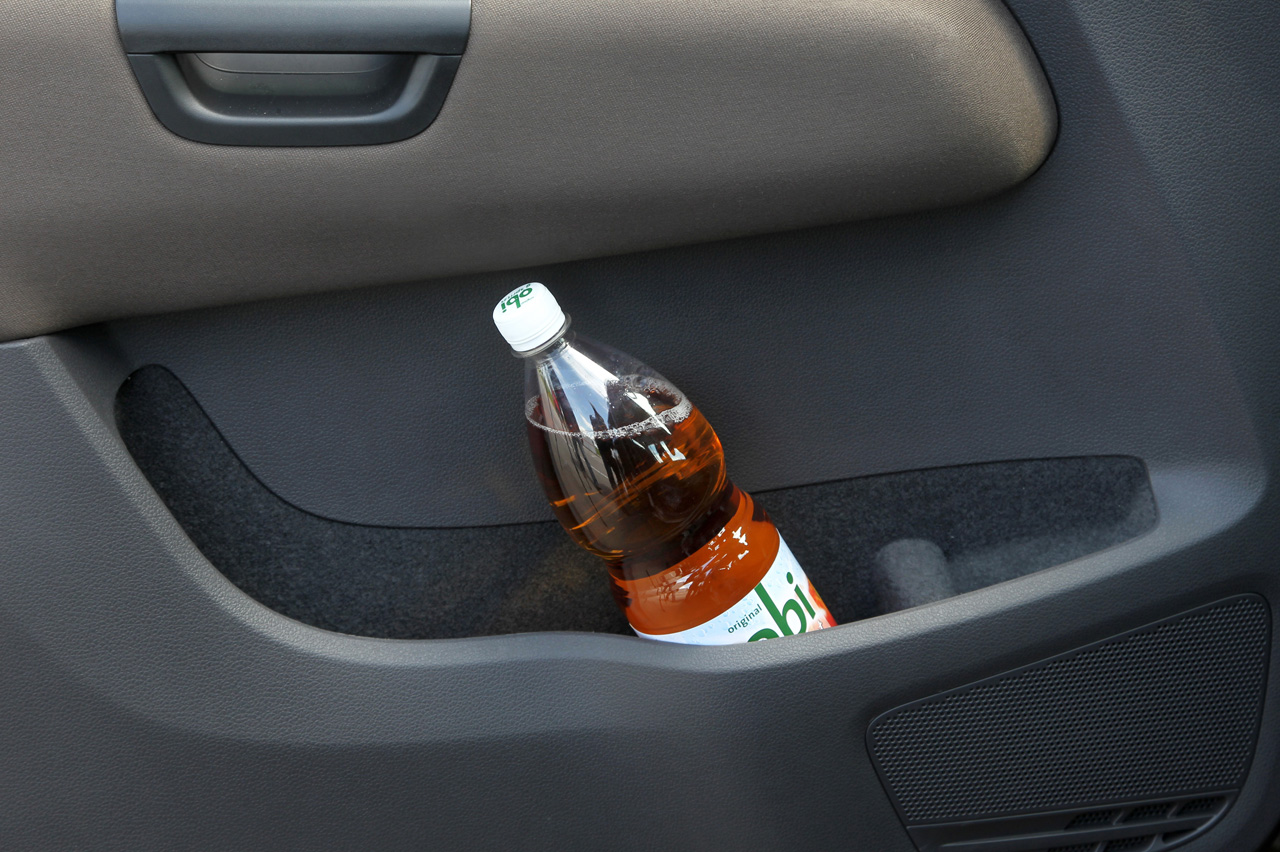
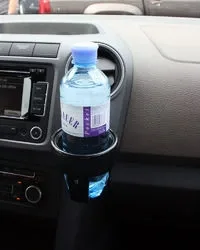
There is plenty of space to store small items in the cabin, and there is even a pull-out bottle holder.
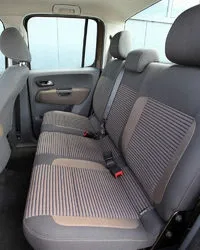
And most importantly — on the rear bench (currently only the Double Cab body is available), you can really sit comfortably without your knees touching the front seats and without your head touching the ceiling. The rear seat folds down: the cushions separately in parts, and the backrest as a whole. The doors open wide — also a nice bonus.
 |
 |
The Germans also thought about the convenience of working with the cargo platform: there is a button in the cabin that turns on the bed lighting. And this is logical, because the cargo compartment here is the largest (2.52 sq.m) and widest (1.22 m between the arches) in its class! The payload can be 850 or 1000 kg — depending on which rear axle is ordered. A Euro pallet 120 cm long fits in the space between the arches. There are special lashing points at the corners of the sides for securing cargo with straps. And such a pickup can tow a trailer weighing up to 2.8 tons.
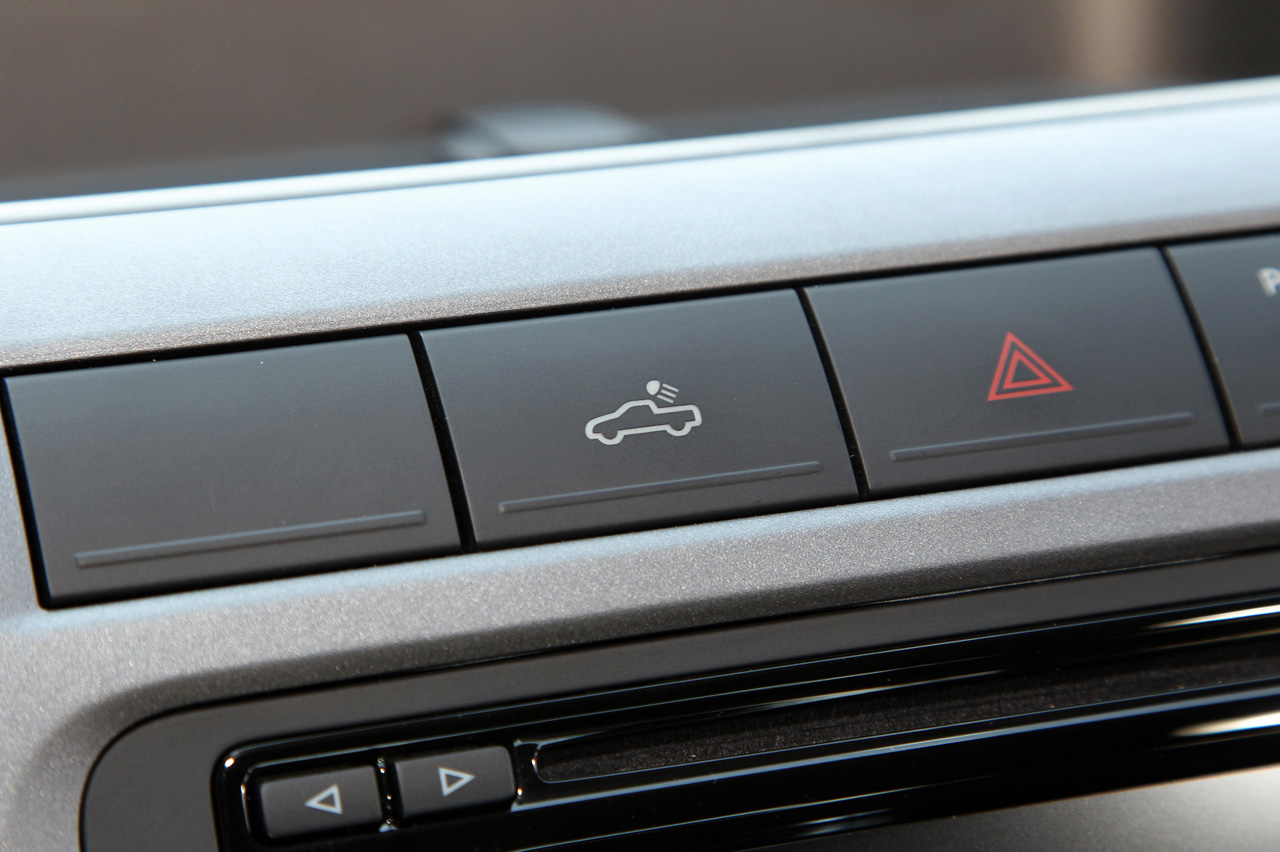 |
| Button for turning on the cargo compartment lighting |
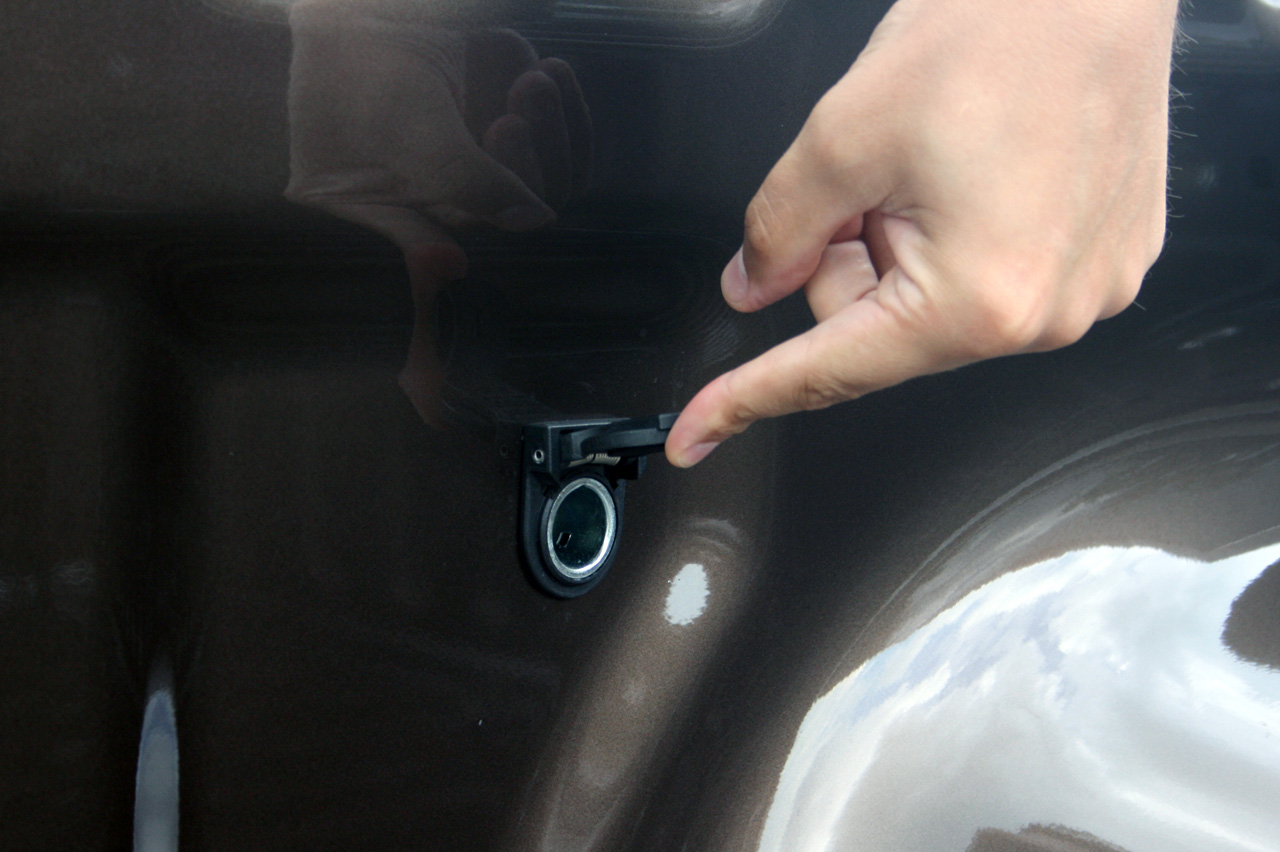 |
| Socket |
You have to pay for the spacious cabin and voluminous bed with maneuverability: the turning circle is 12.95 m, which creates certain difficulties in the city.
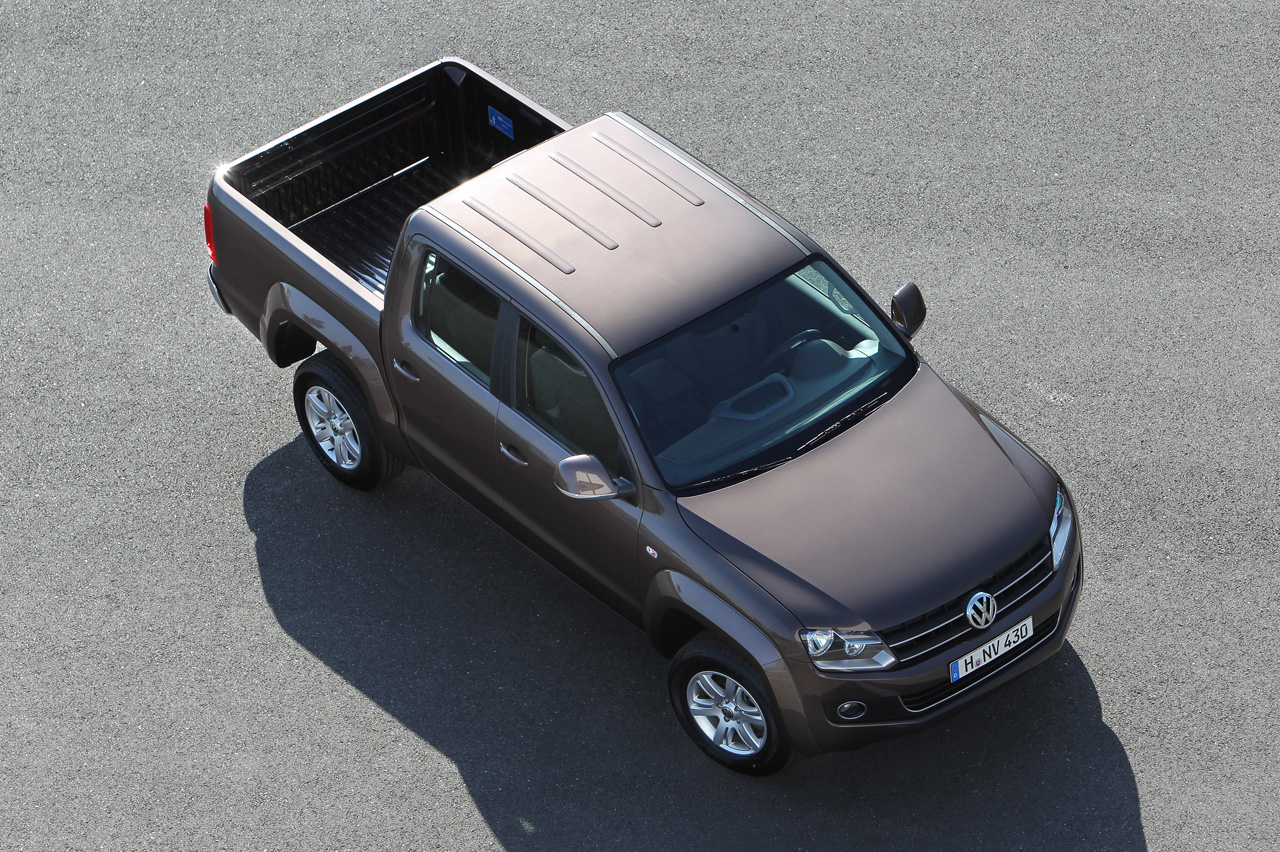 |
| In urban conditions, the "Wolf" will be a bit cramped: impressive dimensions, turning circle - 12.95 m. |
Volkswagen wants to cover the widest possible audience: both those who need a purely work truck and those who want to stand out. Therefore, three trim levels are provided. The minimum one is Spartan: no electric windows, no electric mirror adjustment, and the front bumper, mirrors, and door handles are not even painted. However, the front seats are height-adjustable, and the loading area lighting is present.
The Amarok Tredline version is already more stylish: bumpers and mirrors are painted in body color, there are power windows, power mirrors and locks, a radio, climate control, a multi-function display, cruise control, and front fog lights.
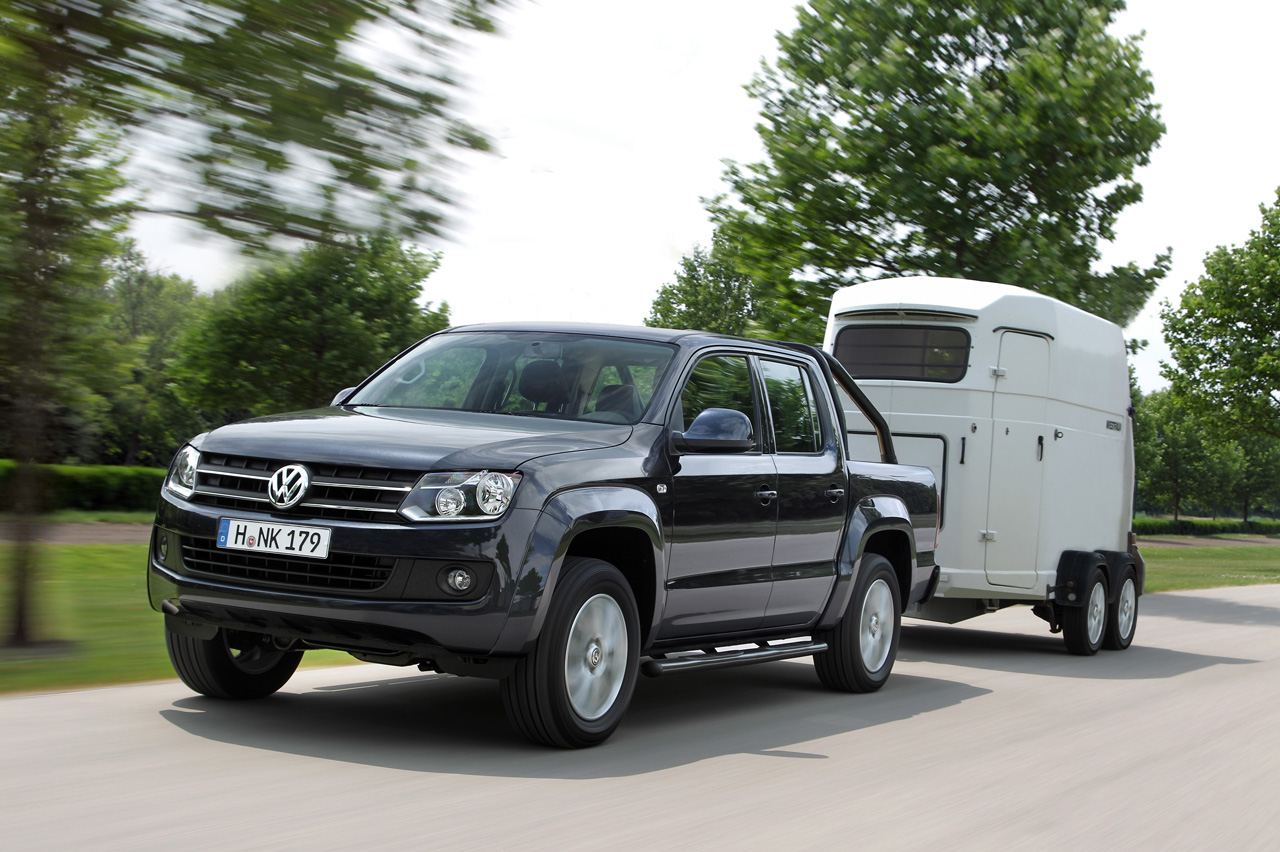 |
| The mass of the trailer that can be towed is 2.8 tons. |
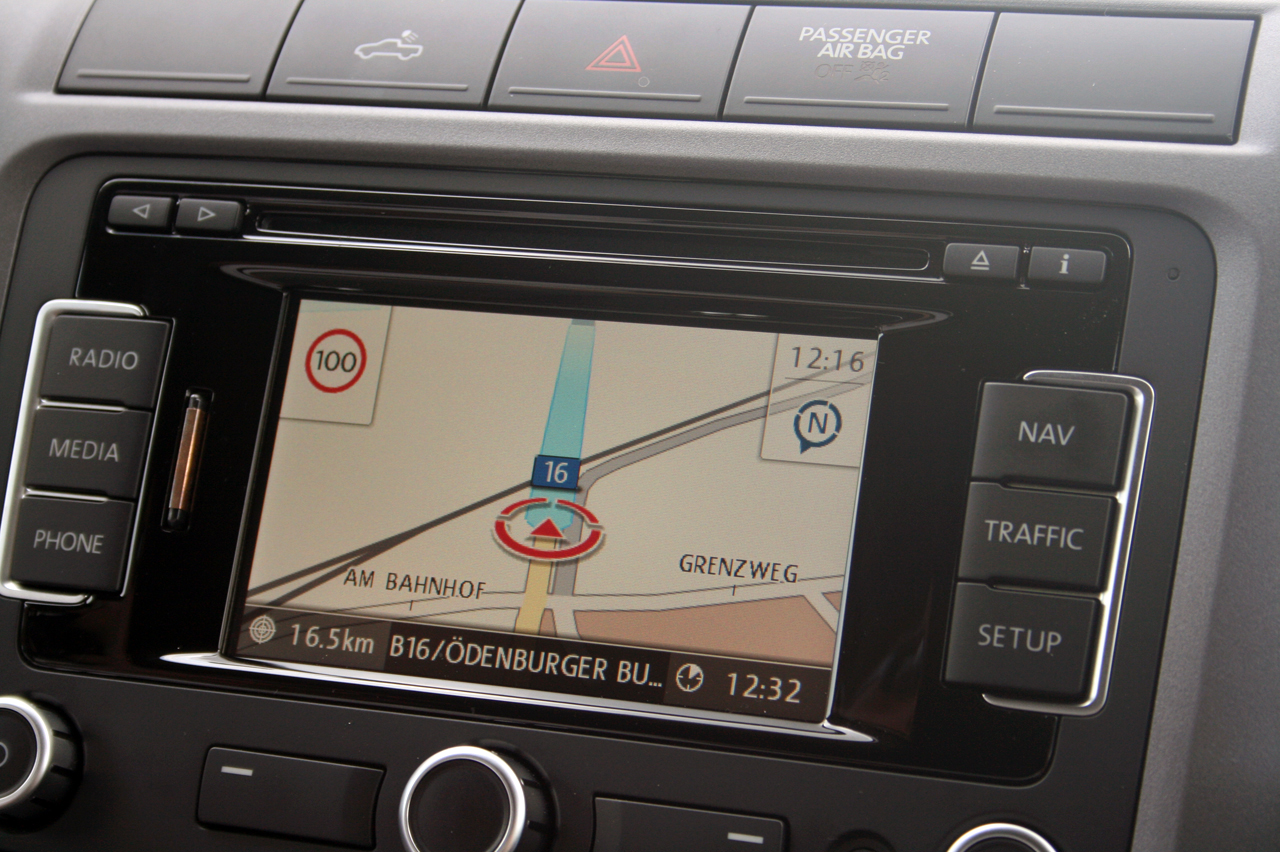 |
| In Russia, the navigation will be adapted to the Russian language |
For those who appreciate aesthetics, the top Highline version is intended. It includes chrome inserts in the interior, wheel arch extensions painted in body color, 17-inch alloy wheels, a more informative instrument cluster, dual-zone climate control, leather-wrapped steering wheel and gear knob, a better audio system, and other pleasant details.
The base version, in addition to ABS, already includes ASR with the electronic differential lock simulation function EDL and the ESP stability control system. For Russia, the car will be offered with Russian-language navigation and a pre-heater.
For the German truck, a wide range of accessories and additional equipment is also available: side steps, hard tonneau covers, roof rails, plus various alloy wheels — 245/70 R16, 245/65 R17, 255/60 R18, and 255/55 R19.
The version with a single cab and extended platform, designed for two doors, will appear in the first half of 2011. By that time, the appearance of a petrol engine and automatic transmission is expected.
 |
The first European pickup turned out to be truly European in spirit: it is economical, comfortable, attractive, spacious, equipped with four airbags, can handle off-road, and remains practical. And most importantly, the choice of modifications is huge: from different suspension and drive type options to trim levels, so finding a suitable variant is easy.
The main markets for the new model are Argentina and Brazil. In fact, the pickup is assembled in Argentina. Nevertheless, VW believes in the model's success in Europe as well.
As for Russia, according to the calculations of the Autostat agency, in the first four months of 2010, 3,300 pickups were sold in the country. What position the Amarok will take in this segment will largely be determined by its price. Official figures have not yet been announced, but, as reported by Mikhail Semenikhin, head of Volkswagen Commercial Vehicles in Russia, the price will fall between the Mitsubishi L200 and Nissan Navara (which is considered its main competitor), that is, from 700,000 to 1,280,000 rubles. So, the "Wolf" has good chances to appeal to buyers. There is no talk yet of assembly in Kaluga — and it is unlikely due to small sales volumes, the high cost of delivering vehicle kits, and high import duties.
Svetlana Aleeva
Behind the scenes
Austria
 |
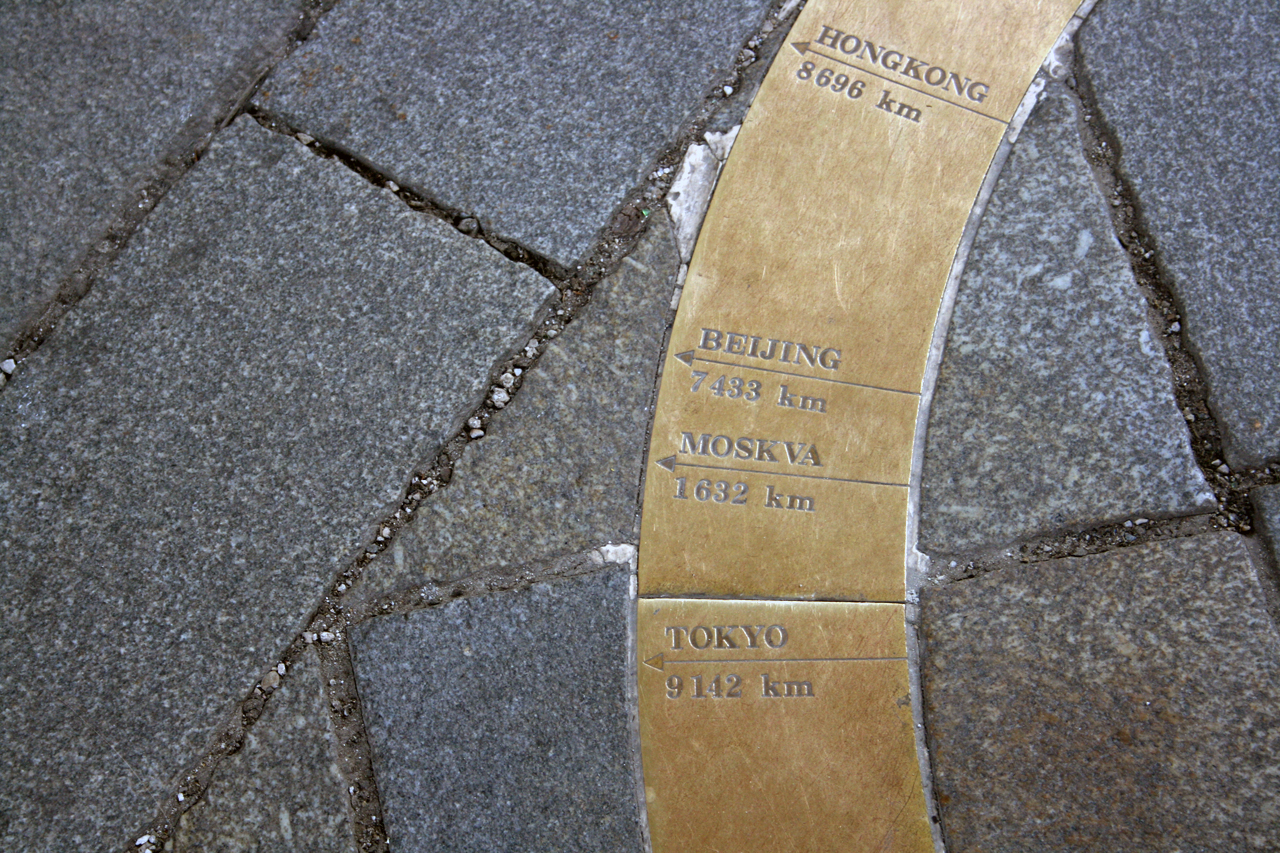
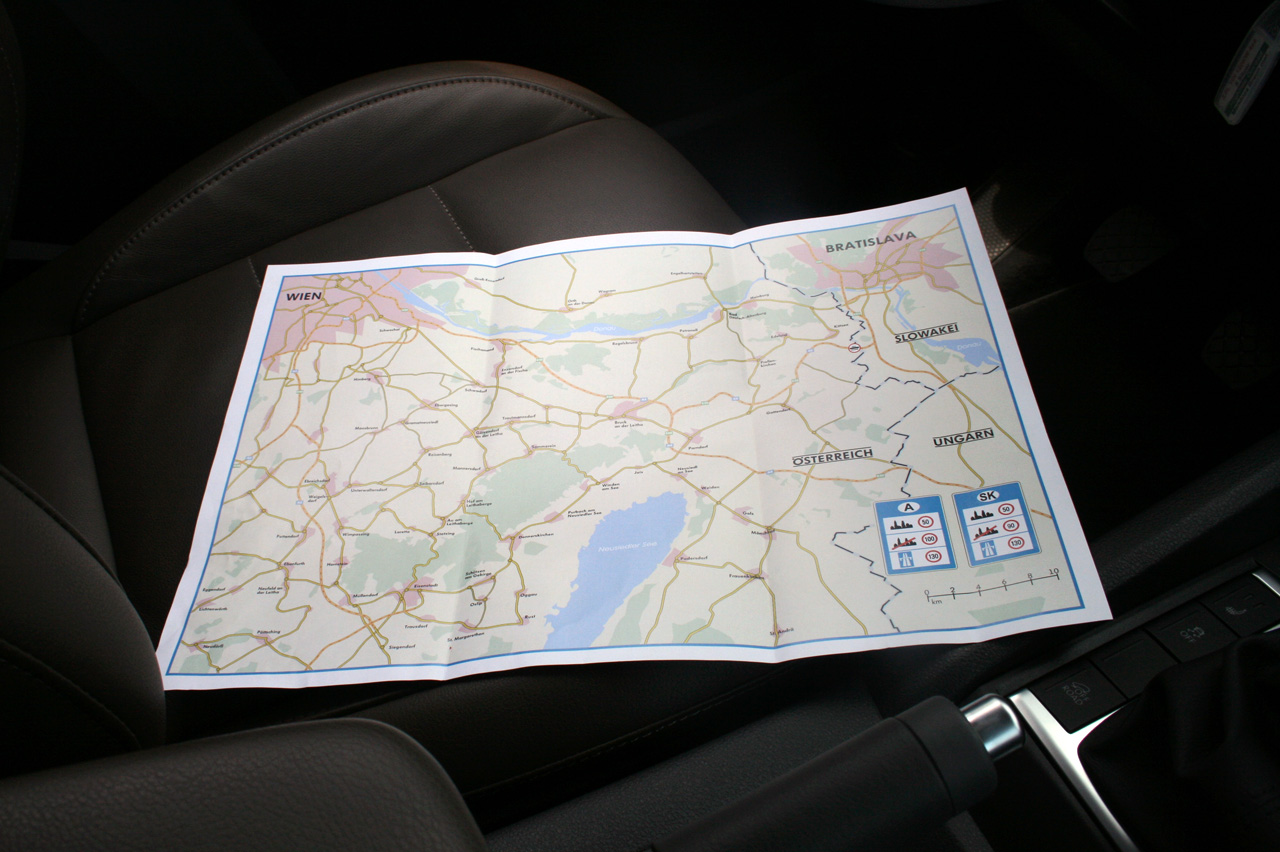
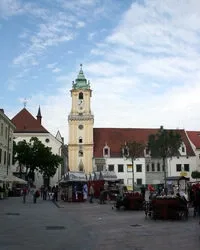
Vienna (Austria) and Bratislava (Slovakia) are separated by only 60-70 kilometers. This is the shortest distance between two European capitals:
 |
 |
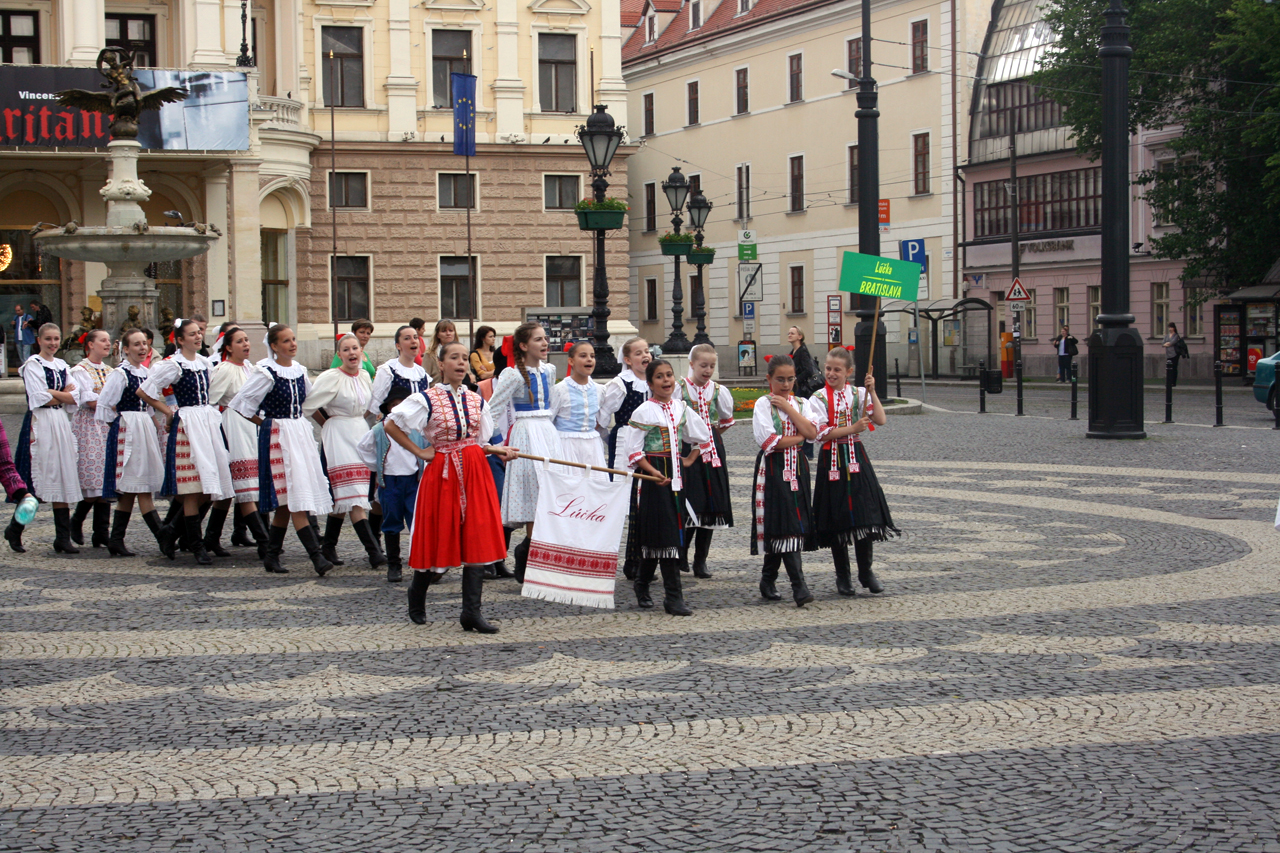
On June 25, the Day of Slavic Unity was held in Bratislava:
 |
 |
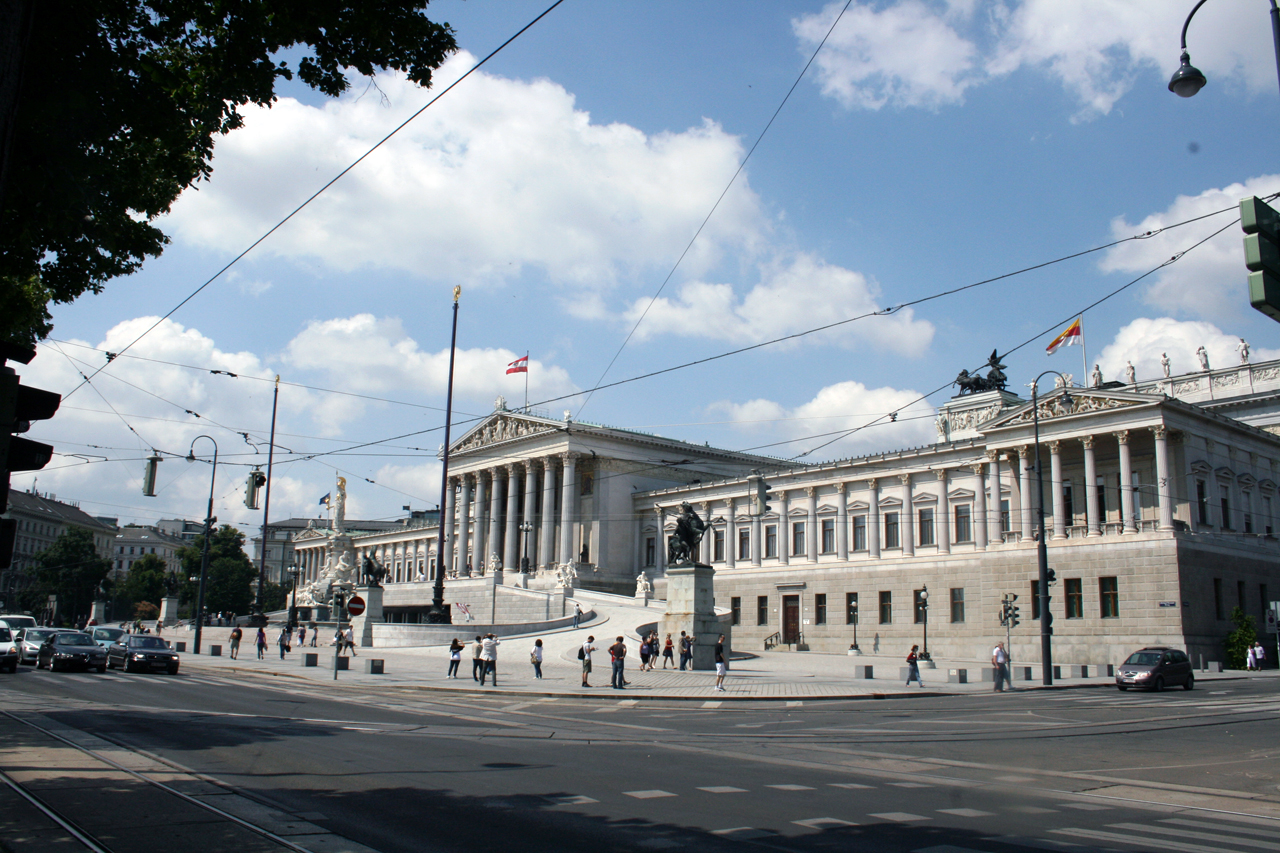
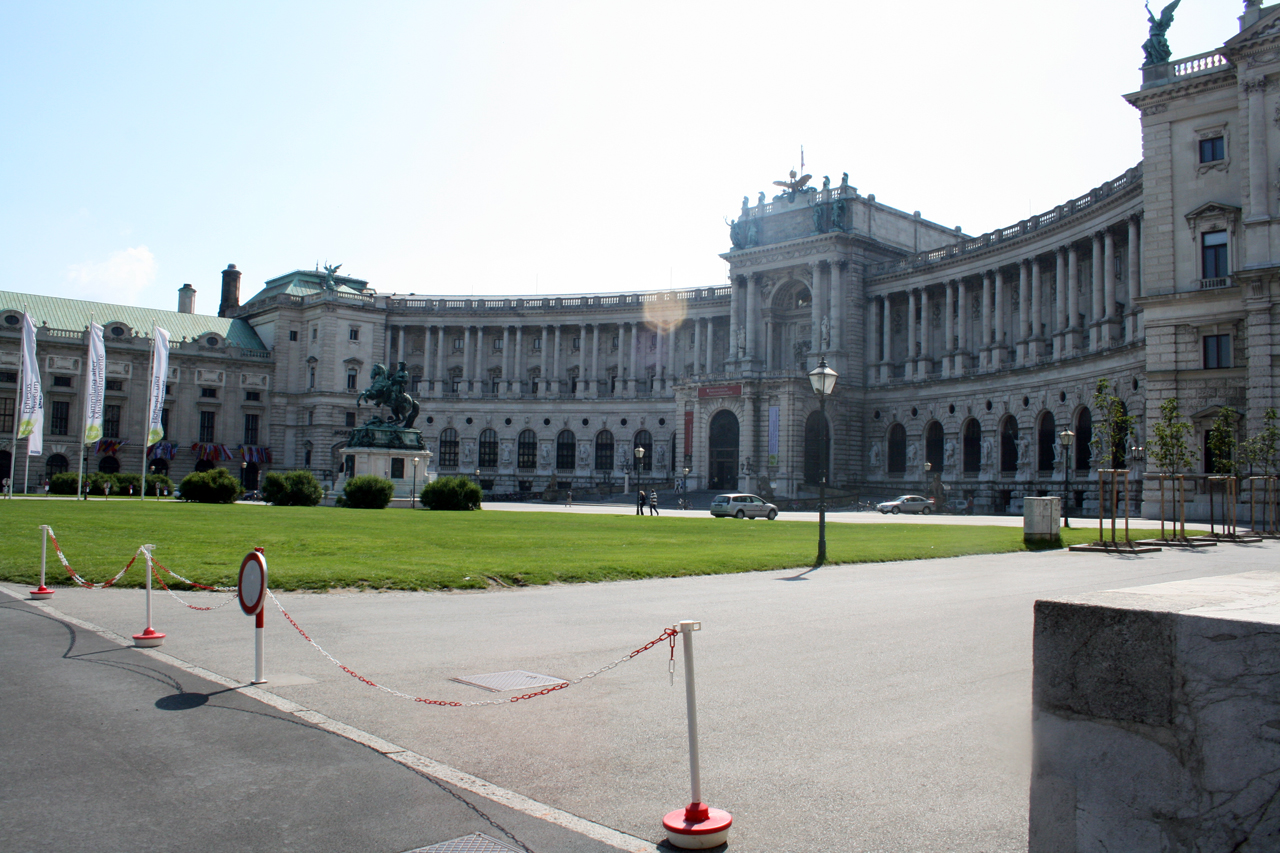
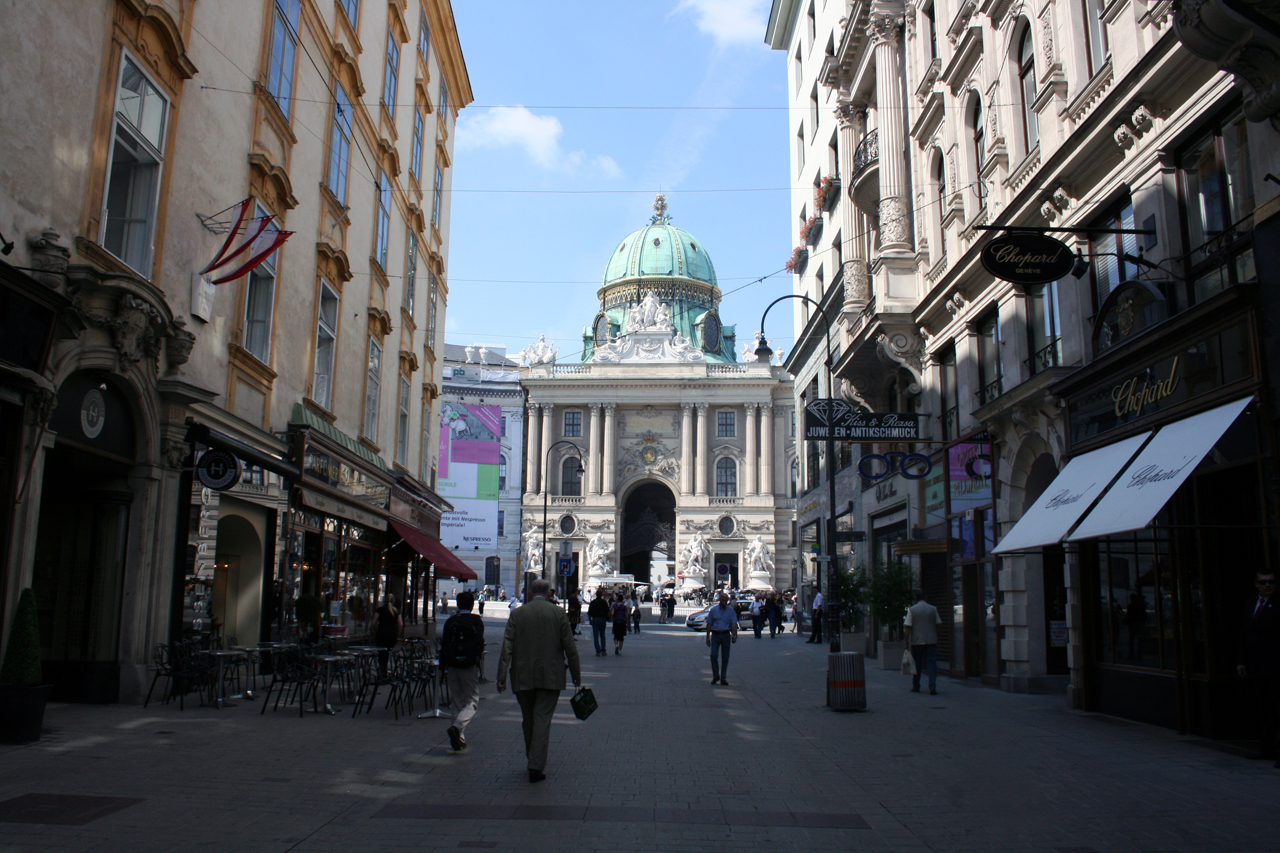
Vienna is a beautiful city.
 |
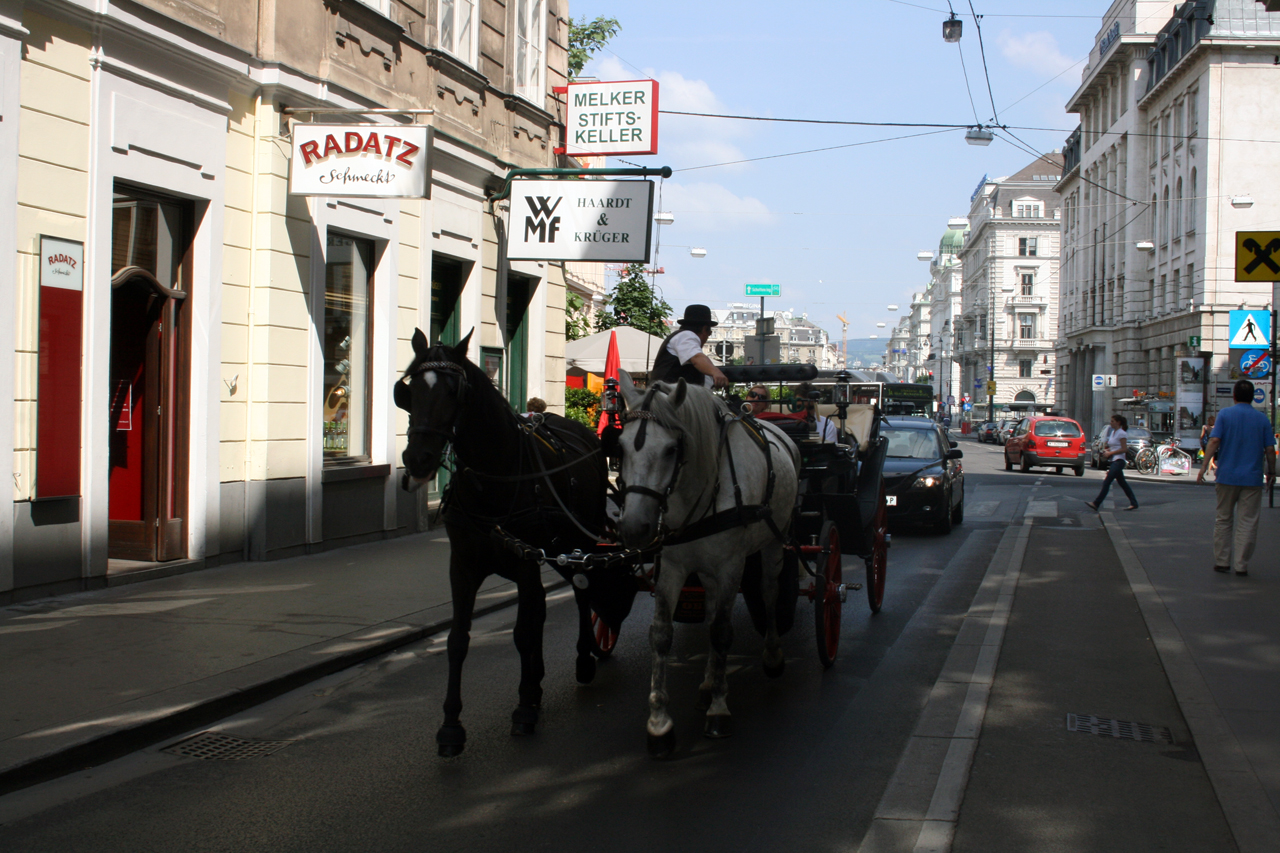 |
Even too beautiful:
 |
 |