
Americans voted for the Tundra with their wallets, and the reasons were purely pragmatic. First, this model hardly loses value when resold and goes to a new owner very quickly. And second, you can not rely on the warranty at all — given that reliability is in order — and just fill it with cheap mineral oil every 40-50 thousand kilometers. Therefore, the second-generation Tundra, a purely American product, which is also important for patriotic US residents, continued the path laid by its predecessor. The reputation has already been earned, the design has not fundamentally changed, and the list of trim levels has exceeded three dozen. Moreover, the differences between them are quite significant.
CHOOSE – I DON'T WANT
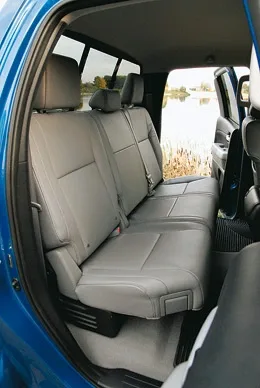
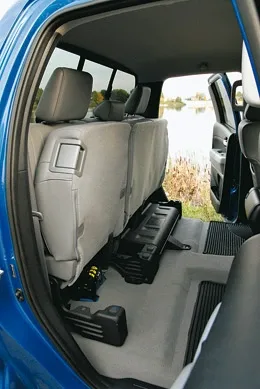
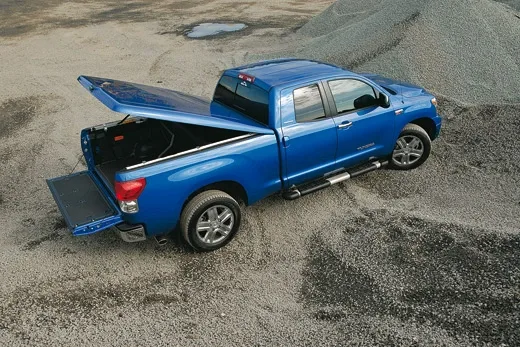
The buyer is offered three cab options: Regular Cab with one row of seats and two doors, Double Cab with four doors and two rows, and CrewMax, where rear passengers get increased legroom. The cargo platform is available in three versions: the shortest is 1.68 meters (for CrewMax it is the only one), the longest is 2.47 meters. It is worth noting that the Double Cab with the maximum body stretches to 6.28 meters in length, so parking such a giant in a standard parking lot is not an easy task. Plus, there are three levels of interior trim from minimalist to luxurious. The number of seats varies from three to six depending on the cab and trim level.
WITH DOUBLE SHIFT
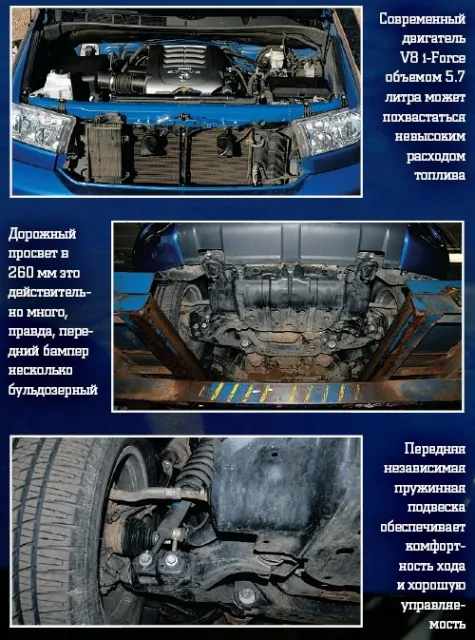
The engine range also consists of three options. The base is a V6 4.0 L (236 hp), familiar from the previous Tundra and other Toyota models. Then come two V8 i-Force: 4.7 L (231 hp), which was also on the first generation, and a completely new 5.7 L (381 hp) with a simply excavator-like torque of 544 Nm. This engine uses the Dual VVT-i variable valve timing system with electronics, where the intake and exhaust valves are driven by separate camshafts. Despite the large displacement and serious power, this modern unit meets strict environmental standards and is quite economical in most modes.
The buyer is offered three cab options: Regular Cab with one row of seats and two doors, Double Cab with four doors and two rows, and CrewMax, where rear passengers get increased legroom. The cargo platform is available in three versions: the shortest is 1.68 meters (for CrewMax it is the only one), the longest is 2.47 meters. It is worth noting that the Double Cab with the maximum body stretches to 6.28 meters in length, so parking such a giant in a standard parking lot is not an easy task. Plus, there are three levels of interior trim from minimalist to luxurious. The number of seats varies from three to six depending on the cab and trim level.
WITH DOUBLE SHIFT
The engine range also consists of three options. The base is a V6 4.0 L (236 hp), familiar from the previous Tundra and other Toyota models. Then come two V8 i-Force: 4.7 L (231 hp), which was also on the first generation, and a completely new 5.7 L (381 hp) with a simply excavator-like torque of 544 Nm. This engine uses the Dual VVT-i variable valve timing system with electronics, where the intake and exhaust valves are driven by separate camshafts. Despite the large displacement and serious power, this modern unit meets strict environmental standards and is quite economical in most modes.
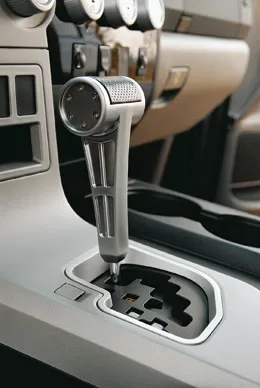
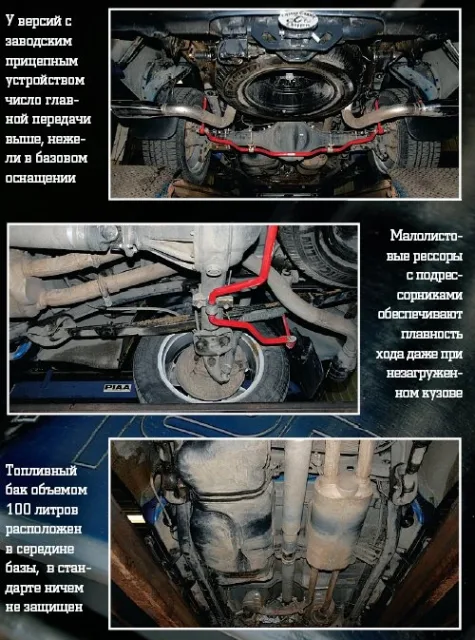
All engines work only with automatic transmissions. For the 5.7-liter engine, a new 6-speed automatic is provided, for the others — a 5-speed one. Versions with a factory towing package have a higher final drive ratio than standard ones. This is logical, because the maximum permissible towing capacity for the modification with the most powerful engine reaches almost five tons (for others — 500 kg less). Since the Tundra is created for the American market, it can be either all-wheel drive or rear-wheel drive only. In 4x4 versions, the front axle is engaged manually by turning a switch, and on models with V8 this can be done on the go. The same switch engages the low range in the transfer case. The rear axle of all-wheel drive versions has a limited-slip differential (ALDS) with electronic control Active Trac. However, all technical details can be read in the catalogs, so let's move on to the driving impressions.
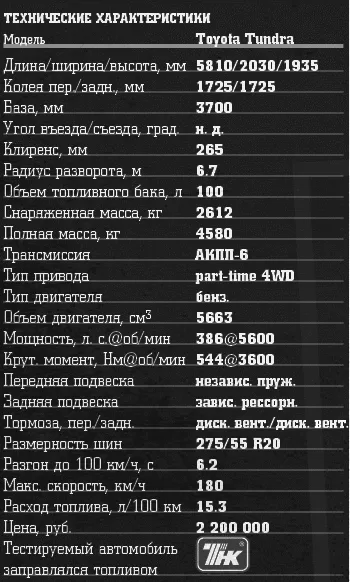
SPECS: TOYOTA TUNDRA
QUIET IN THE TUNDRA, LIKE IN THE FOREST
The first thing that pleasantly surprised was the excellent sound insulation, because with this Toyota, as is known, does not always get along. On the move, the Tundra with a Double Cab did not suffer from the typical "pickup disease" with an unloaded platform: the rear behaved calmly, did not jump over bumps and did not interfere at all. Although the suspension design is the most traditional. In front — an independent scheme on double wishbones with springs and anti-roll bars with a diameter of 35 mm. At the rear — low-leaf springs with helper springs that reduce wheel bounce and compensate for rolls under uneven loading. The tiny turning radius was especially impressive. Later, in the catalogs, the exact figure was found: for the test modification with a medium-length platform, this indicator is 6.7 meters. Today, no big pickup has such results.
GO TO THE POINT
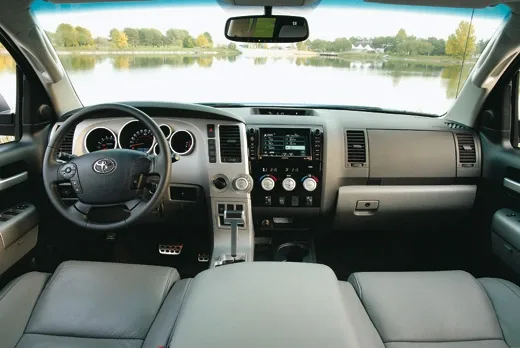
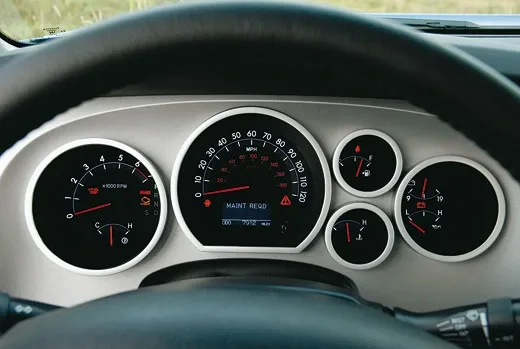
Behind the wheel, you do not feel like a truck driver at all. Visibility is excellent, everything is at hand, the steering wheel is quite informative. The car behaves very obediently — a kind of overgrown passenger car. The automatic transmission works like in a luxury sedan. Gears shift smoothly, on time and without jerks, and you can notice the moment of shifting only by the tachometer. Acceleration to a hundred for this huge pickup with a 5.7-liter engine according to factory data seems unreal — 6.2 seconds. It was not possible to verify the accuracy of the figures with instruments, but by feel it is quite plausible. Despite such agility, the Tundra does not provoke aggressive driving between lanes in traffic. Except that when overtaking, it is pleasant to press the gas pedal harder…
The first thing that pleasantly surprised was the excellent sound insulation, because with this Toyota, as is known, does not always get along. On the move, the Tundra with a Double Cab did not suffer from the typical "pickup disease" with an unloaded platform: the rear behaved calmly, did not jump over bumps and did not interfere at all. Although the suspension design is the most traditional. In front — an independent scheme on double wishbones with springs and anti-roll bars with a diameter of 35 mm. At the rear — low-leaf springs with helper springs that reduce wheel bounce and compensate for rolls under uneven loading. The tiny turning radius was especially impressive. Later, in the catalogs, the exact figure was found: for the test modification with a medium-length platform, this indicator is 6.7 meters. Today, no big pickup has such results.
GO TO THE POINT
Behind the wheel, you do not feel like a truck driver at all. Visibility is excellent, everything is at hand, the steering wheel is quite informative. The car behaves very obediently — a kind of overgrown passenger car. The automatic transmission works like in a luxury sedan. Gears shift smoothly, on time and without jerks, and you can notice the moment of shifting only by the tachometer. Acceleration to a hundred for this huge pickup with a 5.7-liter engine according to factory data seems unreal — 6.2 seconds. It was not possible to verify the accuracy of the figures with instruments, but by feel it is quite plausible. Despite such agility, the Tundra does not provoke aggressive driving between lanes in traffic. Except that when overtaking, it is pleasant to press the gas pedal harder…
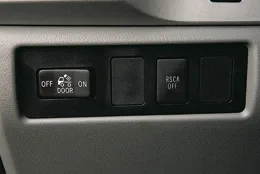
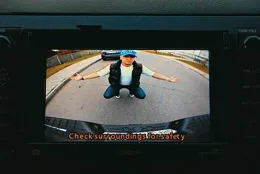
In the cabin there are many pockets and glove boxes, including hidden ones. The traction control system (Traction Control) and stability control (Vehicle Stability Control), which are included in the basic equipment of all versions, can be turned off. There is also a rear-view camera, a hi-end music system, climate control, cruise control and bluetooth. As for fuel consumption, according to the owner, when driving on the highway at a speed of 120-140 km/h with an ATV in the back, consumption does not exceed 17 liters. And since the Tundra is an American truck, it is enough for 92-octane gasoline.
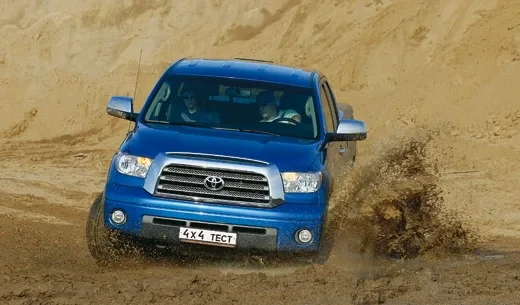
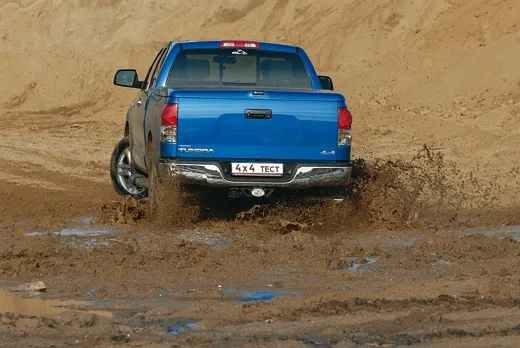
During the photo shoot, the pickup on road tires quite confidently climbed both slippery stones and concrete blocks. Moreover, without wheelspin and engine roar, exclusively on "torque". Even the low range did not need to be engaged.
THERE IS TUNING
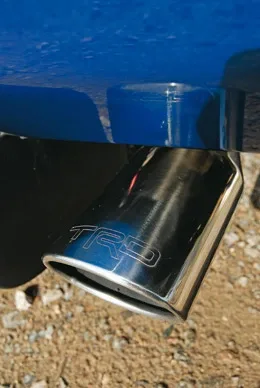
Those who want to upgrade the pickup will definitely not be bored: the range of original accessories is impressive. The catalog includes various bed liners, partitions, running boards, and covers for the cargo platform. And TRD (Toyota Racing Development) has prepared upgraded exhaust and brake systems, a tuned suspension and some body parts. For bad roads, there is an Off-Road Package, which includes a stiffer suspension, 18-inch BFG T/A tires on reinforced wheels, fog lights and a front tow hook.
During the photo shoot, the pickup on road tires quite confidently climbed both slippery stones and concrete blocks. Moreover, without wheelspin and engine roar, exclusively on "torque". Even the low range did not need to be engaged.
THERE IS TUNING
Those who want to upgrade the pickup will definitely not be bored: the range of original accessories is impressive. The catalog includes various bed liners, partitions, running boards, and covers for the cargo platform. And TRD (Toyota Racing Development) has prepared upgraded exhaust and brake systems, a tuned suspension and some body parts. For bad roads, there is an Off-Road Package, which includes a stiffer suspension, 18-inch BFG T/A tires on reinforced wheels, fog lights and a front tow hook.
The market for big pickups has not yet formed in our country, and it is unclear whether it will form at all. The circle of those who need to haul heavy trailers, say, with a yacht or camper, on our roads is narrow. But if you consider the Tundra with a living module on the platform as a travel vehicle, then it is a completely different matter. After all, we have a full-fledged SUV with a large ground clearance, powerful engines and from a family with a good reputation.
The car was provided by the company
Orange County Choppers Moscow, tel. (985) 229 2922