
An Island of Stability
The new Toyota RAV4 is a brilliant car, but exclusively from a marketing standpoint. You come to this conclusion even before you get behind the wheel — during the presentation of the updated crossover, which was organized by representatives of Toyota Motors in Russia. The Japanese have long achieved perfection in the art of restyling, and this becomes clear already from the slides showing the refreshed "Rafik" and its new "filling." You want to buy the car even just by glancing at the brochure.
from the promotional brochures
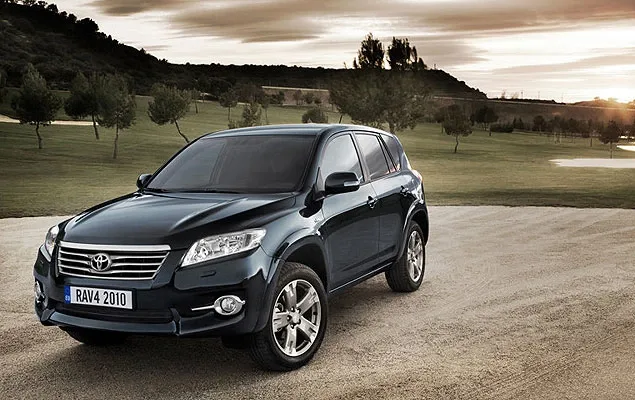
First, the RAV4's appearance has changed dramatically. It's hard to believe that such a result was achieved with minimal effort — by only replacing the front body panels and headlights. True, it's worth noting: most of the restyling updates affected only the short-wheelbase version. But the long-wheelbase modification remained in its previous form and retained all the mechanics, including the 170-horsepower 2.4-liter gasoline engine and four-speed automatic transmission.
But under the hood of the short-wheelbase SUV now sits a new two-liter engine with dual variable valve timing system Dual VVT-i producing 158 horsepower (the old engine of the same volume also has such a system, but it's "single"), and the four-speed "automatic" has given way to a modern CVT. Naturally, such modernization made the car "more dynamic and economical."
The promotional brochures don't forget to mention the new steering wheel, which appeared on all versions except the long-wheelbase one, as well as Russian-language navigation, now available in the top trims "Prestige" for the regular "Rafik" and "Prestige Plus" for the "big one." In general, both on paper and at the presentation site, the RAV4 makes an excellent impression. Exactly the kind that Toyota's marketers can be proud of.
Dry Calculation
Why them, and not engineers or designers? Because in the case of the new generation Toyota RAV4, it's not technical or design thought that triumphs, but dry marketing calculation. After all, the car hasn't changed much in essence.
Take, for example, the restyled engine and continuously variable transmission that equipped the "Rafik" we tested. No one argues that the new valve timing mechanism increases engine efficiency, and the CVT lacks many of the drawbacks of automatic transmissions. However, no technological breakthrough occurred — these units have long been used in other models of the Japanese automaker. For instance, the two-liter engine is installed on the latest generation "Avensis," which has been sold in Russia for over a year.
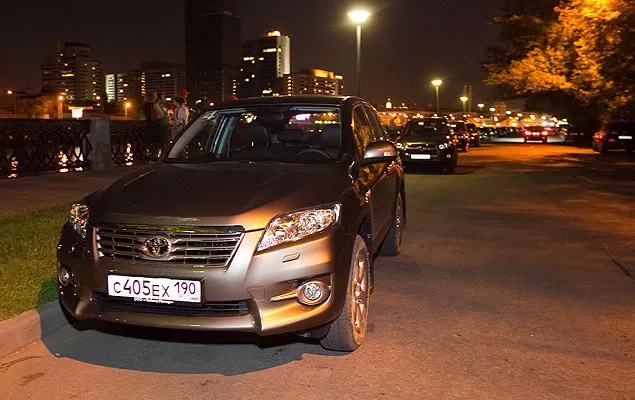
The price of the car has increased — the maximally "packed" Japanese SUV now costs 85 thousand rubles more — 1 million 290 thousand rubles. But the base RAV4, thanks to the front-wheel-drive version, has become more affordable — it can be bought for 899 thousand rubles.
Moreover, replacing the old 152-horsepower engine with a 158-horsepower one is not impressive also because even with the new engine, the SUV still lags behind competitors in dynamics. What difference does it make if the car accelerates to "hundred" in 12 (the result of "Rav-four" with "automatic" before restyling) or 11 seconds (after restyling), if one of the closest competitors — Volkswagen Tiguan with a turbocharged 1.4-liter engine producing 150 "horses" — does the same in 9.6 seconds.
And the improved fuel efficiency of the RAV4, achieved thanks to the new engine, also raises questions. According to the passport, the updated crossover should consume almost twenty percent less fuel in the city than the old one (9.5 and 11.6 liters per hundred kilometers, respectively). However, during our "city test," according to the onboard computer, the "Rafik" needed no less than 12 liters per "hundred."
Didn't Harm
But the restyling, as it should, preserved all the advantages of the Japanese crossover, for which this car is loved in Russia — in 2009, the RAV4 took almost nine percent of the SUV segment of the domestic car market. We're talking about a cozy and spacious interior, "asphalt" handling, as well as numerous passive and active safety systems.
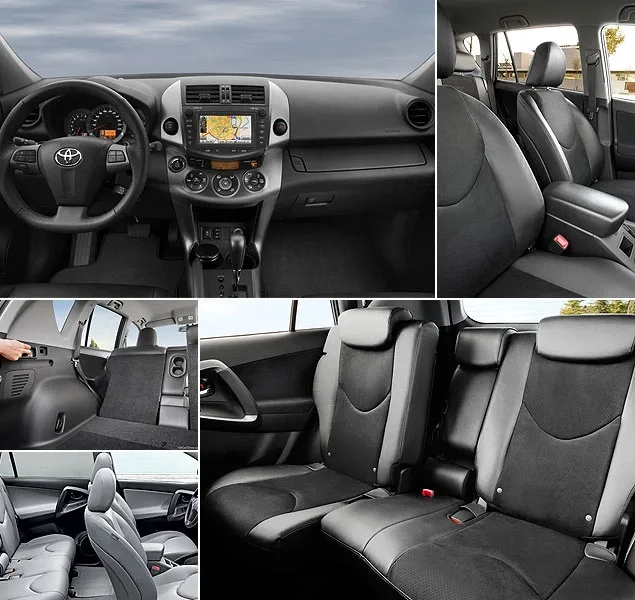
Moreover, the rear sofa has two separate cushions that move longitudinally, and the backrest angle changes. In the trunk, besides the main cargo space, there's also a spacious "underground" with a convenient organizer.
Inside the "Rav-four," it's really easy to get comfortable. Here reigns the "folded" central console, the upper tier of which is given to the touchscreen navigation (on simpler versions — to the audio system), and the lower — to a small climate control screen and three "knobs" with buttons for managing the "weather." Moreover, despite its age ("rafiks" with such a dashboard design have been sold on our market for three years), it still looks relevant and fresh.
The praised visibility of the RAV4, provided by the large glass area and high seating position, hasn't gone anywhere. Moreover, thanks to the fact that the hood is clearly visible from the driver's seat, the driver begins to feel the car's dimensions literally from the first minutes behind the wheel.
In addition, the "Rafik" pleases with a Japanese-thorough approach to interior ergonomics. There are plenty of large keys with clear pictograms, an optitronic instrument panel with white scales, steering column switches with a pleasant resistance in effort, and a slightly "plumped up" steering wheel during the restyling.
However, there were some complaints about the interior, and their origin is also typically Japanese. The short list (of two items) opens with an insufficient range of steering column adjustment for reach, and ends with the hard plastic inherited from the previous generation of the crossover, from which both the front panel and door trim are molded.
And if the first drawback is fully compensated by the comfortable driver's seat, then with the "oak" polymers in the interior of a car worth 1 million 290 thousand rubles (that's how much the tested RAV4 in the top "Prestige" trim will cost the buyer), it's harder to come to terms with.
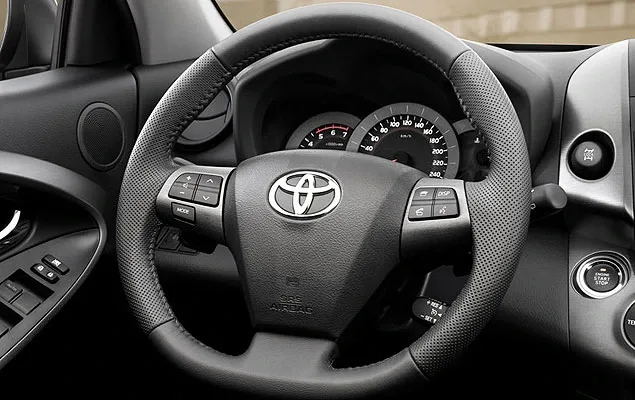
In addition, the algorithm of the active power steering EPS hasn't changed. It still helps the driver in difficult situations, reducing the effort when turning the "wheel" in the direction that should help stabilize the car's trajectory.
The pleasant handling of the car helps to survive this drawback. Especially since the sharp steering wheel, rear multi-link suspension, and almost car-like settings of shock absorbers and springs for a crossover provoke the driver to "feats." The "Rafik's" CVT even has seven virtual gears and paddle shifters to bring the engine out of the optimal-in-terms-of-fuel-consumption rev range and... make it roar loudly, drowning out the noise of tires — the sound insulation of the RAV4 cabin leaves much to be desired.
At first glance, the car literally demands to be driven recklessly. However, after a few "acceleration-braking" sequences, it becomes clear that this crossover is not created for aggressive driving — even in pseudo-manual mode, the "Rafik" gains speed too slowly. The dense, well-assembled suspension seems to have appeared on this car for other purposes: for example, to make the process of moving on the RAV4 from point "A" to point "B" as predictable and safe as possible, in conjunction with the stabilization system, active steering, and "smart" all-wheel drive.
Without Illusions
At the same time, it's better to part with illusions about the "off-road" capabilities of the Toyota RAV4 as early as possible. This car is created for paved roads, and systems for conquering light off-road are provided here just in case — so that the owner doesn't find himself unarmed before suddenly raging elements, like a snowfall, the consequences of which utility workers don't have time to handle.
The "Rav-four," for example, doesn't "like" diagonal hanging. The test drive organizers provided a corresponding test on a special ramp simulating a situation when one of the car's wheels is in the air without contact with the surface. So, the test "Rafik" regularly "hung" on this exercise.
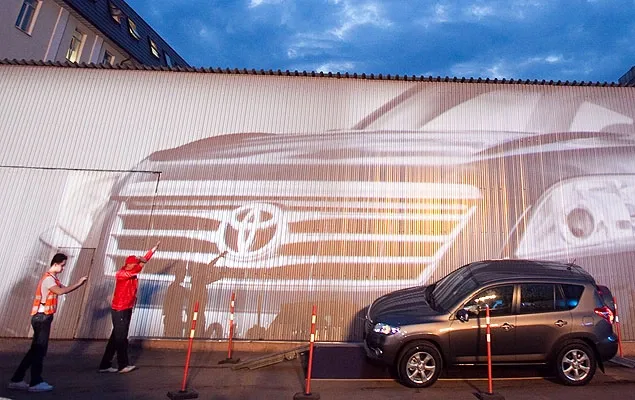
Moreover, the most effective way to "pull out" the car turned out to be turning off the lock of the electromagnetic clutch, which connects the rear wheels and was activated before the obstacle. It seems that with the "center" locked, the crossover lacked traction to get moving. In such a situation, firstly, the traction control system limits power delivery, and secondly, torque is forcibly distributed equally between the axles.
But as soon as I turned off the lock and allowed the all-wheel drive electronics Active Torque Control (ATC) to act on its own, the car confidently rolled forward. Apparently, ATC, following its own algorithms, sent most of the Newton-meters to the axle where traction was better and helped the car continue its journey.
In addition, the algorithm of the hill descent control system also disappointed. To demonstrate it in action, Toyota's PR people brought journalists to a ski resort located right within the city limits. A steep slope overgrown with wet grass was to be conquered without touching the gas or brake pedals – just like, for example, on the LR Freelander crossover.
The "Rafik" handled the most difficult part of the route brilliantly, so on a gentler descent I wanted to speed up a bit by adding gas. In response, the "Rafik" simply turned off the auxiliary electronics, and then turned it back on as soon as I released the accelerator pedal. And it turned it on so that the car jerked noticeably. This means that in more severe conditions, for example, on a wet clay slope, the car after such a "reset" would most likely skid downhill.
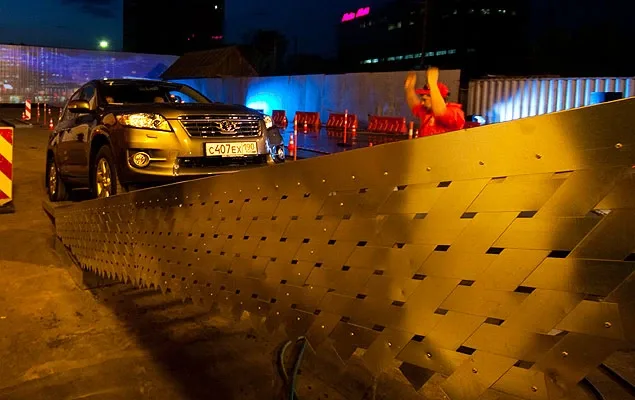
Why the system behaves this way is clear. The belts of modern CVTs do not tolerate engine braking well, so the RAV4 can slow down on a slope only by using the ABS brake circuits. And the pads and discs, apparently, are not able to provide the necessary smoothness of deceleration without the engine's participation. For comparison, in Land Rover vehicles, such a system actively uses engine braking as well and, probably, therefore works flawlessly.
We can only dream of peace
On the other hand, "off-road" adventures are, in fact, not needed by the target audience of the Toyota RAV4. After all, according to the marketing department of the Russian representative office, this crossover is bought mainly by wealthy middle-aged clients – mostly women. What kind of "joyrides" are those.
On the contrary, for these clients, other automotive values come first – predictability and safety, and the RAV4 copes with ensuring them perfectly. For this, fans forgive the "Rafik" for the suspension that loudly "shoots" on speed bumps, the noise in the cabin, and the phlegmatic engine.
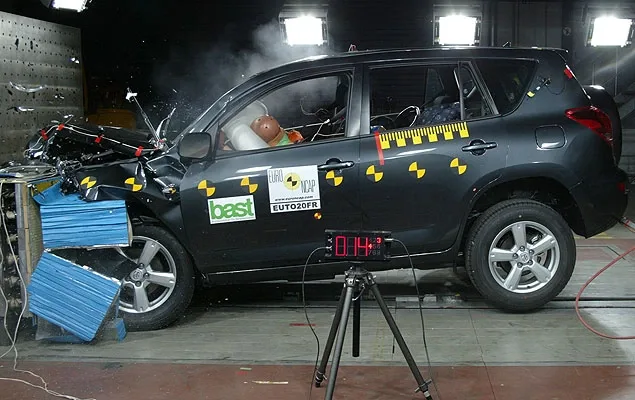
Thanks to such rich equipment with passive and active safety systems, the RAV4 year after year receives high ratings in independent crash tests. In 2009, the "Euro NCAP" awarded the previous version of the crossover four stars for frontal impact.
Boring? But the Japanese are not to blame – they are simply trying to maximally satisfy the demands of modern consumers, who have enough adventures on the pages of newspapers and TV screens, and in everyday life they, on the contrary, need only peace and prosperity.
Moreover, there are so many phobias now that people don't know what to fear first. In the middle of the last century, there was only one threat of the end of the world – nuclear holocaust, and one could try to protect oneself from it. For example, build your own bomb shelter, as was fashionable in the 1950s in the USA.
Modern people have it harder in this regard – it's unclear what to fight first. After all, global warming, terrorists, and the rapid depletion of oil, food, water, and air reserves are all pressing. In this chaos, one wants to have one's own comfortable island of stability. The Japanese offer the Toyota RAV4 for this role.
Technical characteristics of Toyota RAV4
| Length, mm | 4445 |
| Width, mm | 1815 |
| Height, mm | 1685 |
| Wheelbase, mm | 2560 |
| Curb weight, kg | 1580 |
| Engine displacement, cm3 | 1987 |
| Power, hp/rpm | 158/6200 |
| Torque, Nm/rpm | 198/4000 |
| Acceleration time from 0 to 100 km/h, s | 11 |
| Maximum speed, km/h | 185 |
| Fuel consumption in combined cycle, l/100 km | 7.5 |
| DISCUSS | [ comments: NONE ] |