
 The Toyota Prius hybrid system produces about 136 hp — this is the combined result of a 99-hp 1.8-liter gasoline engine and a 79-hp electric motor. The math here is not simple, agree?Comments
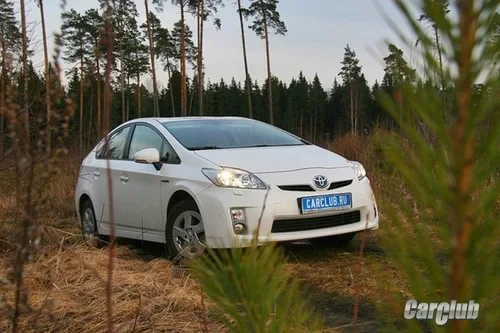
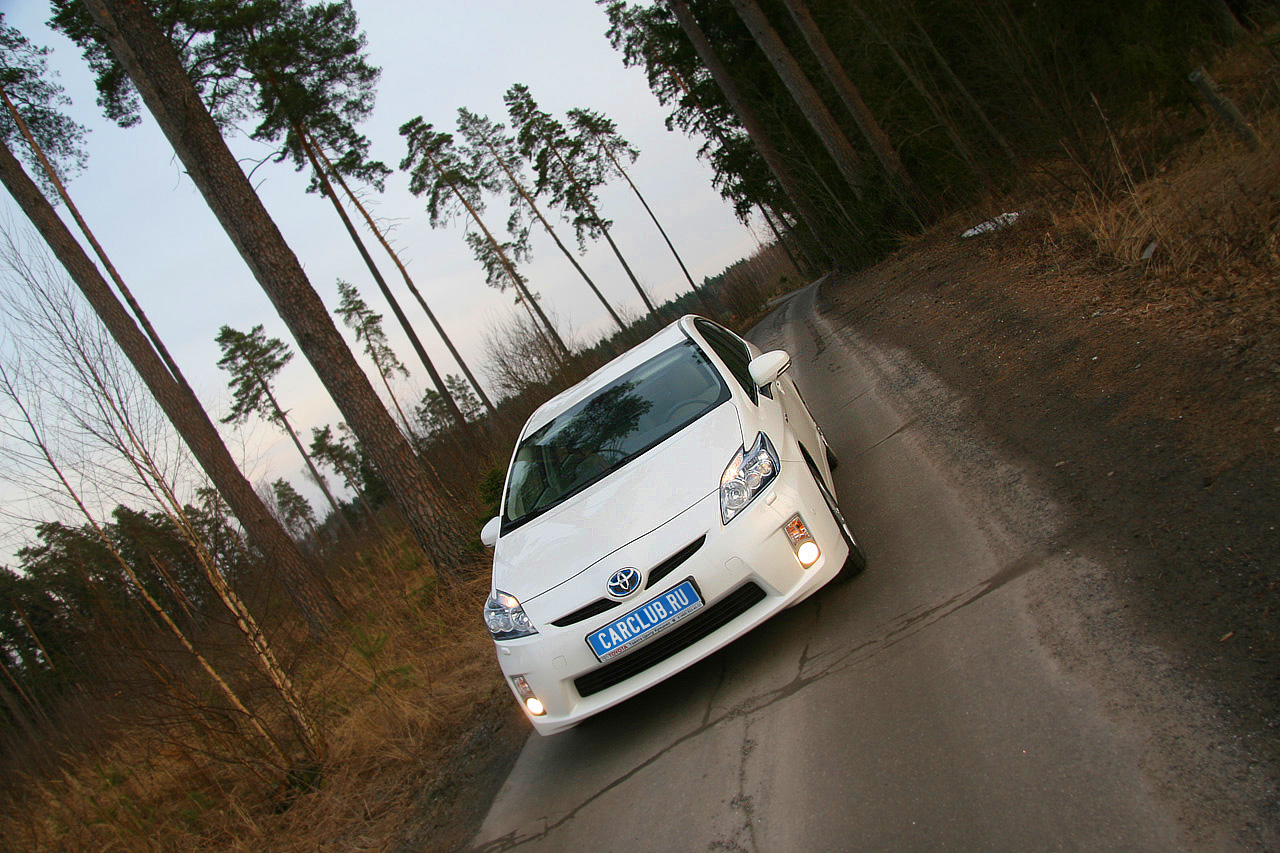
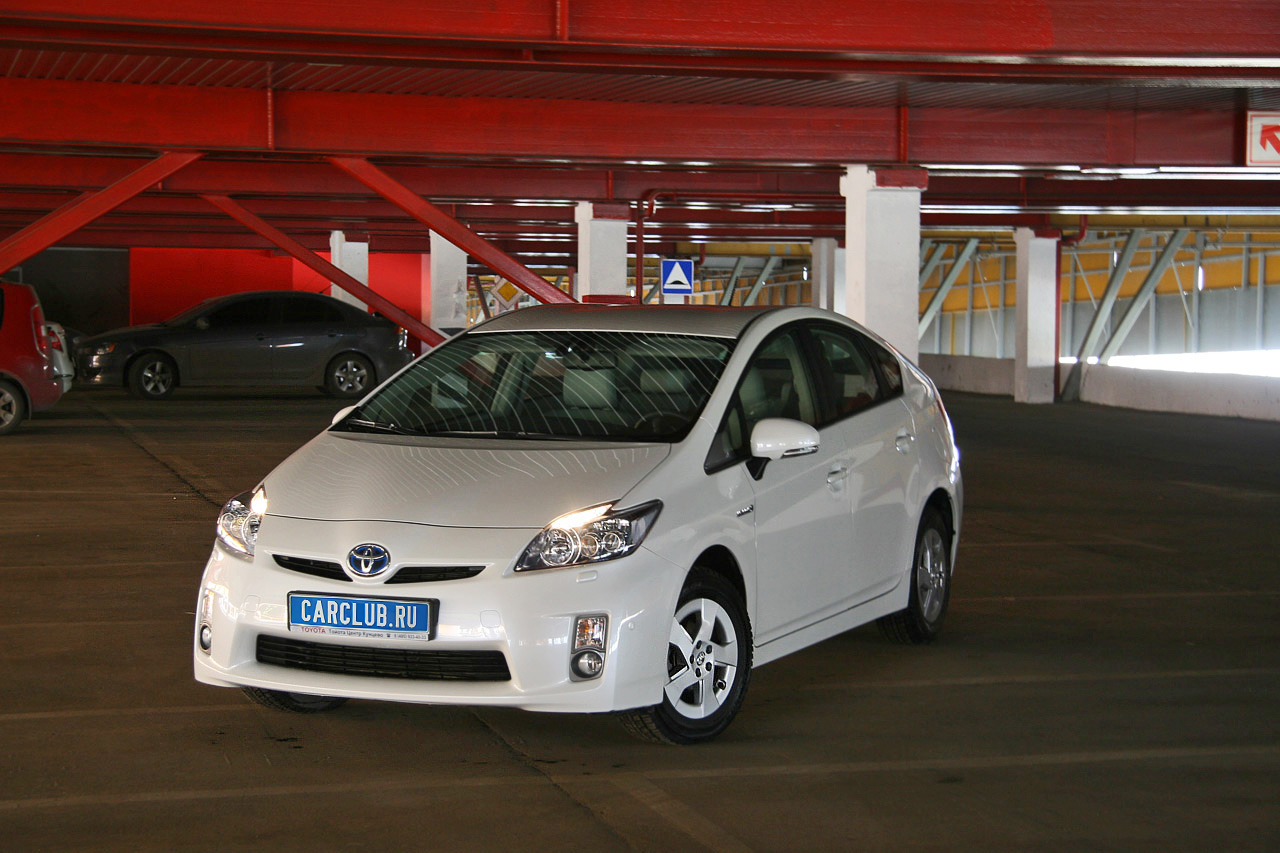
The day I was supposed to pick up the hybrid Prius from Toyota's Moscow office greeted me with a gray sky. I stand in the parking lot waiting for the keys. Company employees are required to park only Toyotas and Lexuses in front of the building — all other brands go to the lot behind. Here are fresh Land Cruiser Prados, funny little iQ cars, and luxurious Lexuses. Among this variety, the snow-white Prius stands out with its unusual drop-shaped form.
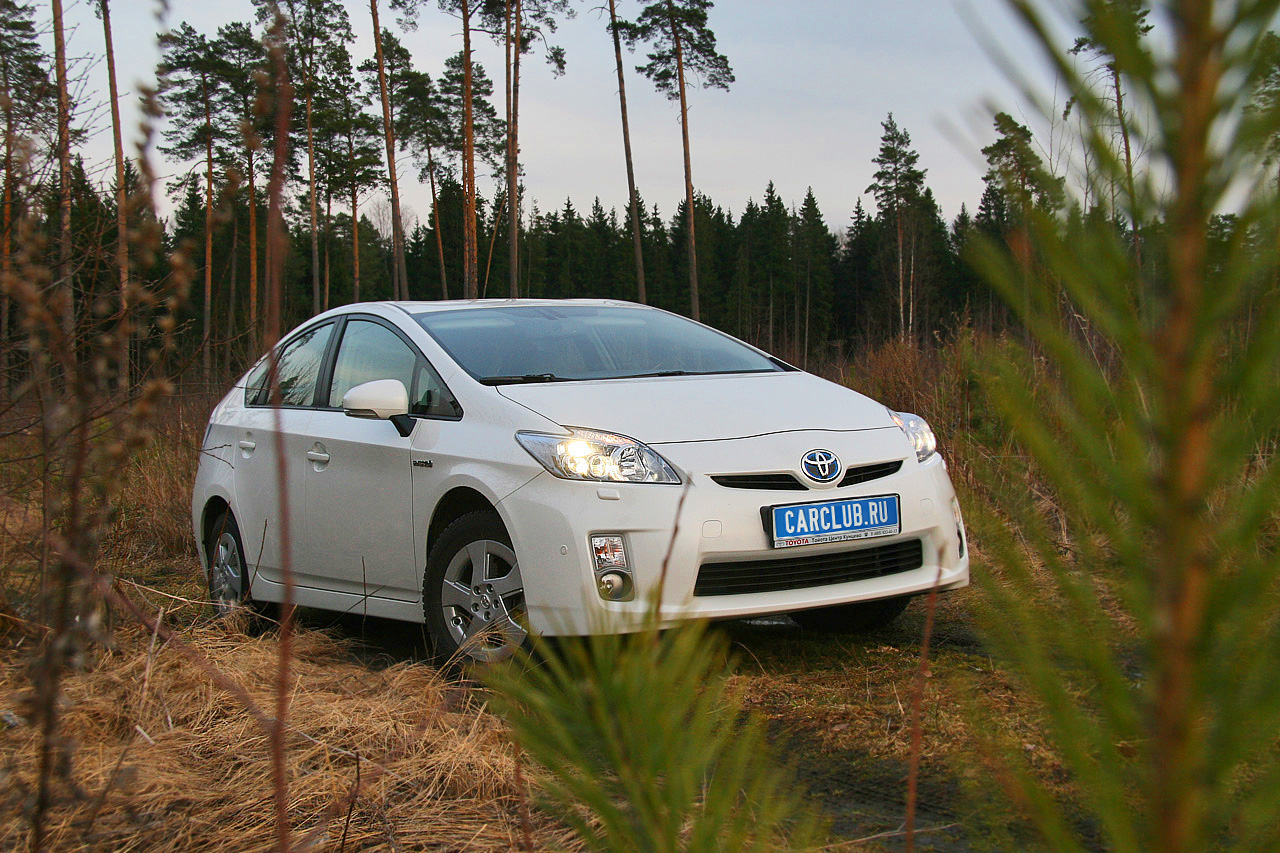 |
The design is like a frame from a science fiction movie of ten years ago, where cars of bizarre shapes seem to hover over the streets of futuristic cities, and the world is run by intelligent machines dreaming of enslaving humanity.
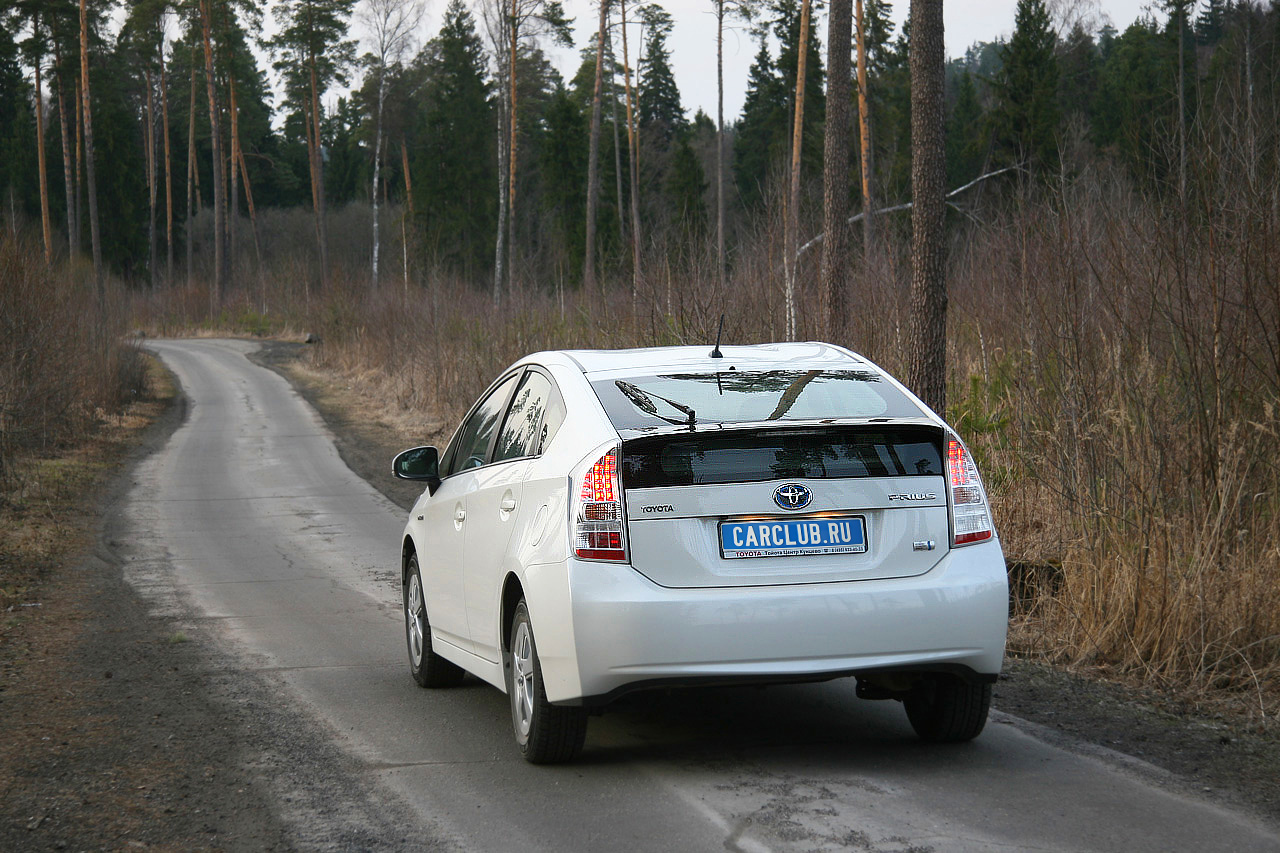 |
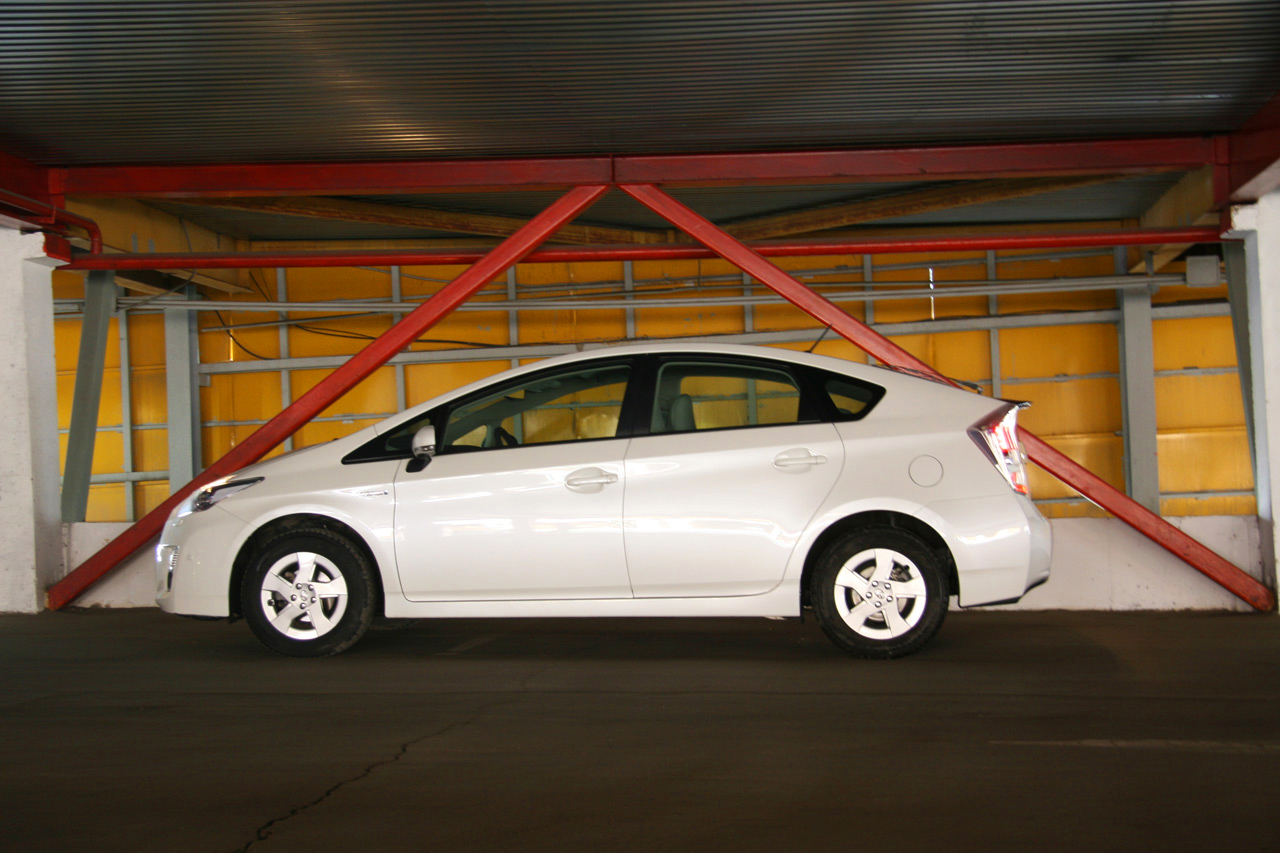
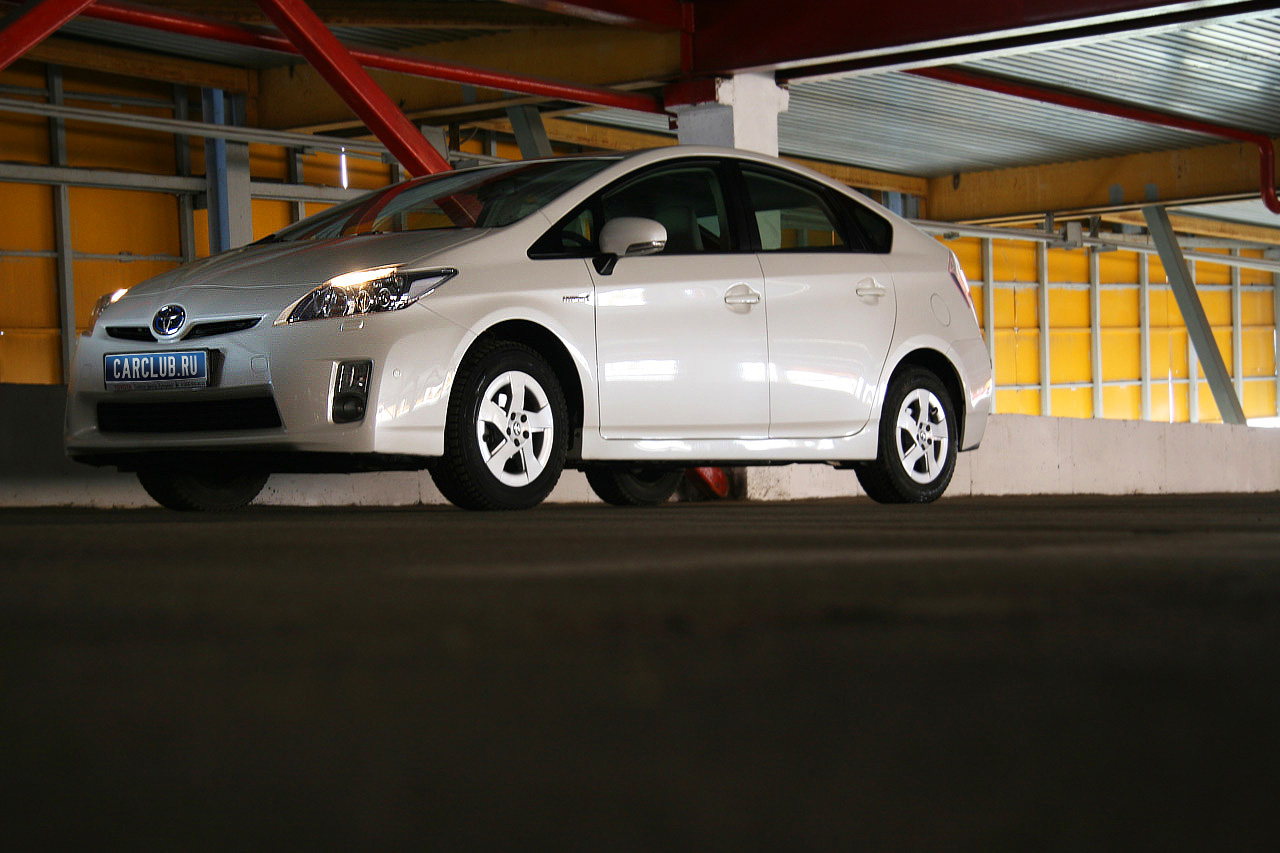
These are exactly the thoughts the Toyota Prius evokes. The intricate front optics with a pair of LED lenses, the arched roof, Toyota emblems with a bluish glow hinting at the hybrid filling, intricate alloy wheels optimized for aerodynamics — one can talk endlessly about the Prius's appearance. But the Japanese designers, creating this car, thought not about podiums and trends, but about aerodynamics. The essence of a hybrid is caring for the environment and saving fuel. And here the engineers succeeded: the drag coefficient of the Toyota Prius reaches 0.25 Cx.
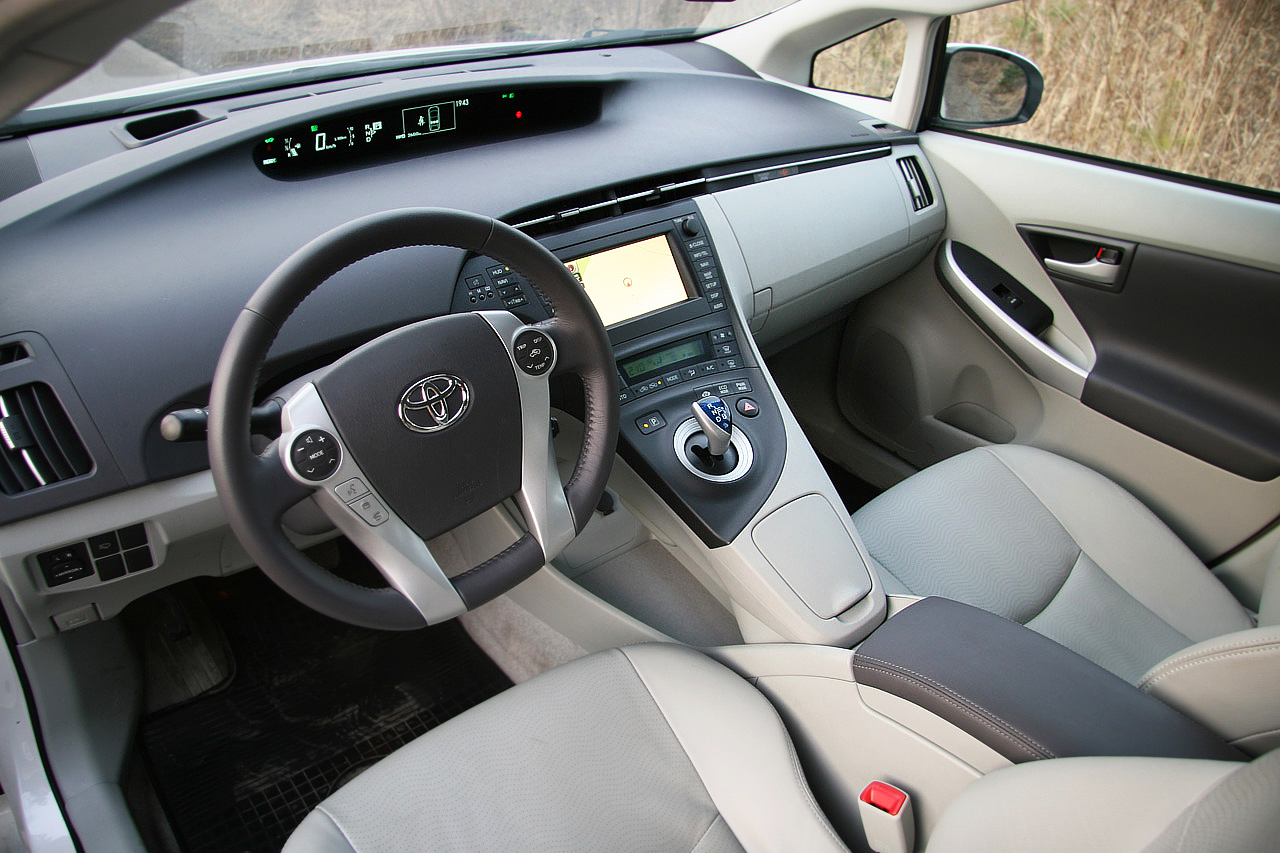 |
Inside, the futuristic theme continues: an electronic instrument panel, a thick steering wheel resembling a helm with a flattened bottom, a "floating" center console, and a neat gear selector. Everything is laconic, without excess, but modern and convenient. The front seats have a decent profile, but the slippery leather upholstery literally throws occupants out in corners. You have to push your foot hard against the footrest on the left and grip the steering wheel.
 |
As befits a car from the future, the Toyota Prius is equipped with a couple of interesting features. The first is the projection of speed and navigation prompts onto the windshield. It would seem a familiar option, but here Toyota surprised: the image can be adjusted in height and brightness with separate buttons.
One cannot ignore the automatic parking system. The Prius impressed again: it can park not only parallel but also perpendicular. True, this process is rather tedious, and the spot needs to be perfect.
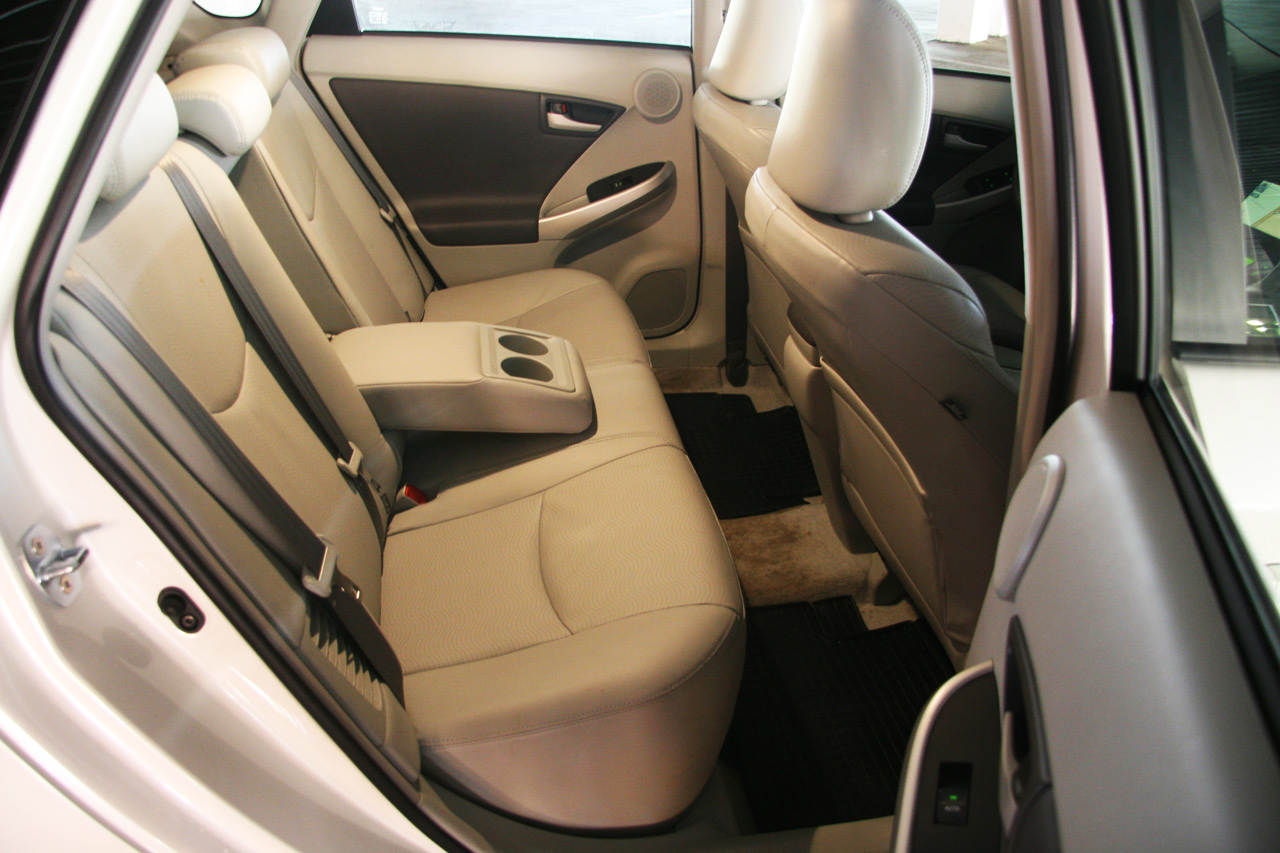 |
In the back, the Toyota Prius is spacious and comfortable — there is practically no central tunnel. Only the same slippery leather disappoints. The trunk is 445 liters. Not enough? But under the floor are both a full-size spare tire and a set of batteries for the electric motor.
 |
The total output of the Toyota Prius hybrid system is about 136 hp. The components: 99 hp from the 1.8-liter gasoline unit and 79 hp from the electric motor. Tricky math, right? The secret is that out of the "pure" 178 hp, part of the power is taken for recharging the electric motor — this is done by the generator and batteries.
 |
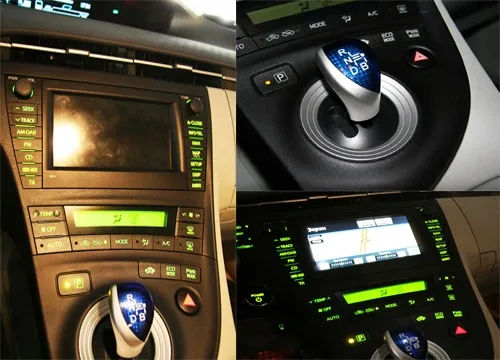
The elegant selector on the "floating" console only manages driving modes, while "parking" is activated by a separate button. Nearby are three more mode selection buttons. The first, EV, uses only electricity. Then the Prius becomes a kind of "trolleybus." But with caveats: don't press the gas pedal, don't exceed 35 km/h. And the charge in EV mode melts rapidly. The economical Eco is what you need for traffic jams. The response to the accelerator is sluggish, but the appetite is modest. When pressing PWR, the hybrid Toyota transforms: the response to gas is sharper, acceleration is livelier.
 |
Driving the Prius feels artificial. On the highway, you constantly have to correct the steering, especially in crosswinds that tend to push the hatchback off the lane. In corners, the unnatural steering effort is annoying — the driver has to guess the trajectory. But in city traffic, the hybrid feels like a fish in water. The short steering wheel, excellent maneuverability, and ease of control fit perfectly into the rhythm of a metropolis.
 |
Now about the main thing — efficiency. After all, the hybrid scheme was invented precisely to reduce harmful emissions, which is directly related to fuel consumption. Here the Prius did not disappoint. The onboard computer showed an average of about 5 liters per 100 km. And surprisingly: both in traffic and on the highway, the figure fluctuates by only a couple of tenths. In a traffic jam, the electric motor does the main work, and on the highway, the gasoline engine is economical by itself. Of course, if desired, you can push the consumption to serious values, but the car was created for something completely different.
 |
The price of the Toyota Prius at official dealers is 1,249,000 rubles. A substantial amount. For that money, many Russians would choose a higher-class car. However, our people are gradually starting to think about savings, increasingly looking at modern diesels. Maybe in time it will be the turn of hybrids. But for that, a consumption of 5 liters alone is not enough. Hybrid owners need transport tax benefits and fuel discounts. And only then will dreams of a green planet with clean air and transparent rivers become at least a little more real. In the meantime, the high-tech Prius has to share the road with twenty-year-old junk trucks that have a fresh inspection sticker on the windshield and smoke mixed with oil pouring from the exhaust pipe...
Ruslan Galimov