
Toyota Land Cruiser Prado
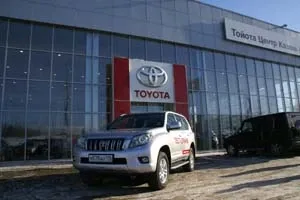
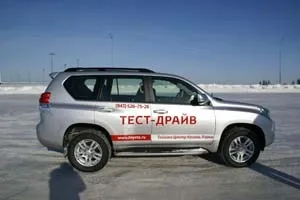
An honest SUV
Engine — 4.0 L petrol Dual VVT-i
Max power — 282 hp/5600 rpm
Max torque — 387 Nm/4400 rpm
Max speed (km/h) — 180
0–100 km/h acceleration — 9.2 sec
Fuel consumption:
City — 14.7
Highway — 8.6
Combined — 10.8
5-speed automatic
Permanent all-wheel drive
Curb weight — 2125 kg
Length — 4760
Width — 1885
Height — 1880
Ground clearance (min) — 220 mm
Tires 265/60 R18
Trim level:
leather interior, 3-zone climate control, remote central locking + alarm + Smart Entry&Push Start, full electric package, driver seat adjustment, rain and light sensors, cruise control, multifunction steering wheel, JBL audio system, radio + CD/MP3/WMA/DVD, AUX/USB cable + 14 speakers + subwoofer, rear-view camera, 4 cameras around the perimeter, navigation in Russian, cooled box, third row of seats with electric drive, color touchscreen display, ABS, EBD, BAS, TRC, VSC,
HAC, DAC, KDSS body stabilization system, CRAWL CONTROL and MTS, AVS adaptive suspension, AHC rear air suspension, Torsen center differential with increased friction, forced locking of the center differential and rear inter-wheel, ESP, DBS. 7 airbags, alloy wheels, fog lights, power mirrors, adaptive xenon.
Service interval:
10,000 km
Service 1 — $322 (2,576 UAH)
Service 2 — $349 (2,787 UAH)
Service 3 — $322 (2,576 UAH)
Service 4 — $685 (5,476 UAH)
Service 5 — $322 (2,576 UAH)
Service 6 — $349 (2,787 UAH)
Service 7 — $322 (2,576 UAH)
Service 8 — $804 (6,432 UAH)
Service 9 — $322 (2,576 UAH)
Service 10 — $349 (2,787 UAH)
Warranty — 3 years
or 100,000 km mileage
Price at the time of the test
$88,257 (706,050 UAH)

Igor Tolmachev, "Autoclub-Kazan"
It makes sense to start the test drive story with the exterior. This car immediately catches the eye with its dimensions, and when you look at the technical passport and see 282 horsepower under the hood, the impression becomes even stronger. I fell in love with it at first sight. But enough of the lyrical digression, let's get down to business. When all the test papers were ready, Alfred and I went outside, where this "herd of horses" was waiting for us. The Prado had clearly just been washed — all the windows were fogged up from the inside. As soon as we started the engine, after about a minute and a half the windows cleared on their own. True, all this time a hum resembling the noise of a jet engine came from under the hood. Then this roar gradually subsided.
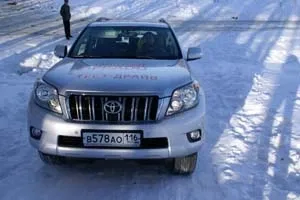
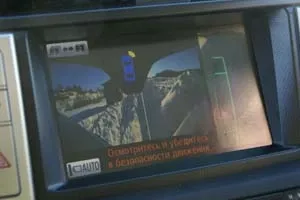
We get in, buckle up — and off we go. The interior is truly comfortable: comfortable seats, plenty of free space — both in the front and in the back, and even in the third row, if you move the front seats forward a bit. We didn't check that — it was much more pleasant to ride in the standard configuration. With such impressive dimensions, the car feels perfect, and even the cameras with parking sensors seem unnecessary. We slowly headed towards the M7 highway, hoping to catch at least some pothole or bump. No luck. The suspension mercilessly swallows all irregularities, and passengers simply don't feel them. Having driven halfway to the highway, we couldn't resist and stopped to study the rich menu of onboard systems. We immediately found how to display the image from the cameras installed around the entire perimeter. The side cameras are a very useful thing. You can see where you stopped — in a puddle or on asphalt, how far to the curb, and one camera shows two zones at once: near the front and rear wheels.
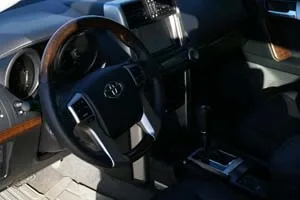
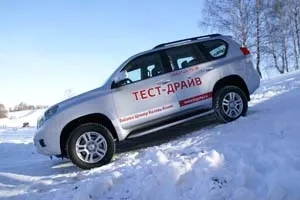
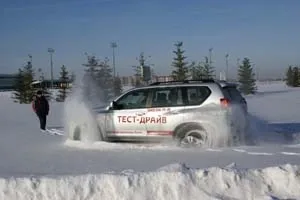
But the front camera seemed not the most practical to me — our roads are far from ideal. And the rear camera is placed unusually: it sits where most cars have the tailgate lock (when opening upwards). The lock itself is hidden on the left, disguised as the rear pillar. After digging through the menu and assessing its capabilities, we hit the highway. I'll say right away: for storing speeding tickets, neither the glove box nor the armrest (which, by the way, is cooled) will be enough — the speed is absolutely not felt, you have to constantly glance at the speedometer. From the highway we turned towards off-road, which, unfortunately, we didn't find. Well, it was there, but all under a layer of decent snow. We didn't risk going there — the place is remote and deserted, who knows what could happen. The next point was the beloved new hippodrome, where classes of the school of high driving skills are held under the guidance of the famous Oleg Yuryevich Shatov. On ice, the car behaves uncertainly, but it obeys: at low speed you can handle it, but as soon as you add gas — it starts to trace unpredictable trajectories. However, what else can you expect from a car weighing more than two tons. Oleg Yuryevich himself drove up to us. He tried the Prado on the ice, and then decided to drive it into the snowdrifts. Here both the car and the driver's skill showed themselves. The Prado climbed into the snowdrifts, turned around right in them, and calmly got out. True, to move through snow, you need to press the pedal to the floor — at low revs you won't get out of a snow trap.
In the end, I'll say: the Prado is not made for quietly driving onto a curb or bypassing traffic jams on sidewalks. It is primarily for people with an active lifestyle, those who constantly go out into nature in search of new adventures.
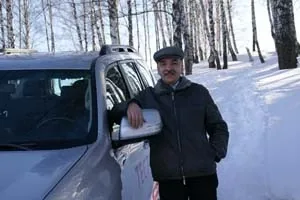
Vadim Sadykov, "Autoclub-Kazan"
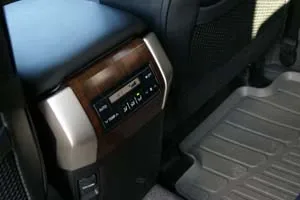
This time my test drive started from the back seat. It's known that on a broken road, in almost any car, it's more comfortable in the front seat. Here, in the back row, you could also feel the bumps. But only until we switched the adaptive suspension to "comfort" mode. The difference between the settings is huge! I set the climate control to my liking, adjusted the upper deflectors — and you can relax. Alfred got on the highway, and I reclined the backrest, closed my eyes, and almost dozed off. In a Kia Sorento or Jeep Compass, that would have been impossible in principle. My favorite test — overtaking a truck on the highway going at 80–90 km/h — this time was performed by Alfred. What can I say? The acceleration is excellent, no hesitation in the 5-speed automatic's operation.
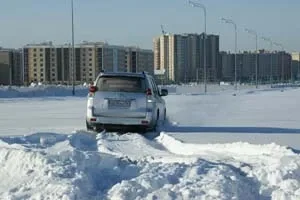
The Prado is a true body-on-frame SUV, so we tested it twice in loose snow. Where the snow is shallow, there are no problems at all, even in the normal drive mode. When you turn on the "off-road driving assistance system," hints appear on the screen in Russian, for example, "move the lever to N," "select the surface" (sand, rocks, mud). It all seems simple — follow the instructions, but it takes a lot of time. However, you can do it "manually": disabling traction control, fully disabling stability control, changing ground clearance with the air suspension, locking the rear axle, center differential lock, low range. A serious arsenal. But there are nuances: the car is heavy, it digs in quite quickly, and the engine protection has an unfortunate shape — it works like a bucket, collecting and pushing snow in front of it.
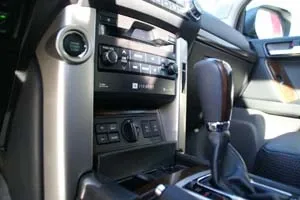
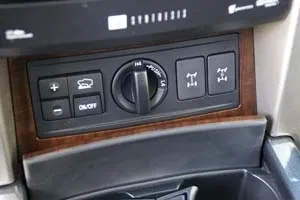
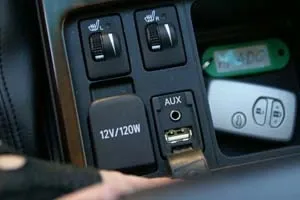
However, if the wheels can get traction on solid ground, the car always retains the ability to move. There is one peculiarity in digging out of snow: instead of the standard "quiet crawling out," it's much more effective to actively work the gas pedal. That's exactly how Oleg Shatov moved a seemingly hopelessly stuck car. Disabling off-road systems is not an easy task for someone who hasn't studied the manual thoroughly. Alfred and I eventually figured it out "by trial and error," but we spent a lot of time on it. By the way, the abundance of systems creates another inconvenience: a bunch of closely spaced buttons. But there's nothing to be done about it: our shortcomings are a continuation of our strengths.
I'll repeat: the Prado is a true body-on-frame SUV, and you can't demand car-like handling from it. But on the ice rink, we still gave it a run. With the stability control system on, the car was sluggish (and that's right — safety first). On ice, with traction control off, acceleration became livelier, but in corners it was still "choked" by the stability control system. If you turn that off too, catching the car in corners is harder: you need to turn the steering wheel in advance. And with the rear axle lock engaged, the car can "draw" circles in a sideways slide. Quite decent handling for such a large and heavy car.
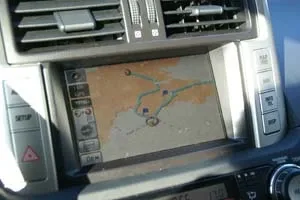
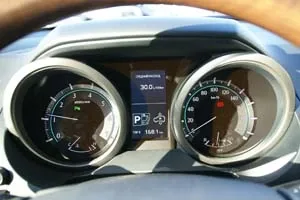
City driving brought some surprises: everything turned out to be predictable. The car starts briskly even from the lowest revs, and with a calm driving style it delivers true pleasure. When the tachometer drops below 1800 rpm, a green “ECO” indicator lights up on the dashboard. True, I never managed to figure out how this mode works — I couldn't find any information about it. It reminds me of the Honda Pilot with its V6, where the system sequentially deactivates two and then three cylinders to save fuel. Does something similar happen here? A mystery. The average fuel consumption before our test was 30 liters, while after resetting the readings we measured 27 liters. The claimed 14.7 liters per 100 km in the city from the spec sheet seems like something out of science fiction — it's hard to believe that in real life you could get close to such figures. By the way, besides the 4.0-liter gasoline four-cylinder, under the hood of the Prado there could also be a 3.0 diesel (173 hp at 3400 rpm, 410 Nm in the range of 1600-2800 rpm). This is a time-tested unit that, given our fuel realities, will likely prove more durable than the trendy turbodiesels.
In recent years, Toyota hasn't always managed to make a new generation of a model unequivocally better than the previous one. But the Prado is a pleasant exception: the new model outperforms its older “brother” in every way.
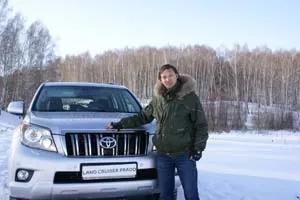
Alfred Mardanov, “Avtoclub-Kazan”
Igor managed to get to the dealership before everyone else, and just at the moment he called me, I was driving under a bridge in the Sovetsky district. I was about five minutes late — I had to go back home for a forgotten camera, and then there was this elevator that crawled forever. “I'm on my way, just a second,” I reassured Igor, who, not finding Vadim and me, had already started to worry whether he had mixed up the dealership, since there are two in the city. To be honest, I treat Toyota with a fair amount of skepticism — I've been driving a Corolla for almost five years — but I went to the test drive in an unusually upbeat mood. And how could it be otherwise: the weather is whispering, and so is the car. The Prado has indeed seriously updated, but at the same time, and this is the main thing, it has retained its body-on-frame construction and a proper permanent all-wheel drive. There you go! “So what's the news?” you might say. But look around: which of the current giants, even those aiming to be real SUVs, still uses a frame? Everyone is abandoning it in favor of weight, handling, and other things. Manufacturers are mass-fleeing the “mud-mixing village” to the asphalt city, switching to crossovers. And here I want to make a small digression: I just recently returned from the hinterland. There, on the map, places are marked as asphalt, but in reality, it's just a direction. And there, without the entire arsenal that the Prado has, you simply can't get by.
The very presence of a frame already instills confidence and calm. Its main advantage is the increased durability of the vehicle. The permanent drive here is implemented through a proper mechanical Torsen limited-slip differential. In addition, there are lockers for the center and rear differentials. And if you add a low-range gear to this, you still don't get the full picture of off-road equipment. Why not full? I'll answer: there are other tricks. I'm talking about the suspension, which can automatically raise the car, increasing ground clearance, the Crawl Control system, as well as Multi-terrain and a descent assist. To understand all the intricacies of these systems, you'll need more than an hour of studying the manual and the car itself. If the lockers are clear, then the new systems deserve a more detailed explanation. Crawl Control allows the car to crawl off-road at a speed of 5–7 km/h, regardless of whether it's going uphill or downhill. It's something like an extended version of the descent assist. But Multi-terrain is a more interesting thing. Those familiar with the similar Land Rover system, which is activated by a rotary knob between the seats, will notice that Toyota's activation is more complicated — through the menu.
But here there's foolproof protection: the on-screen menu will always tell you what to turn on or, conversely, turn off to activate the system. It's impossible to make a mistake. Inside this system, there are several driving modes: “Mud and Sand”, “Loose Rock”, “Mogul”, and “Rock”. In addition, video cameras are activated, and the central display shows a picture of what's directly in front of the nose, with overlays of the car's width, front edge, and the predicted trajectory of the front wheels depending on the steering angle. You don't have to worry about where the wheels will go, into which pothole — everything is perfectly visible. The cameras also allow you to view the space from the side and, of course, from the rear. You can reverse without mirrors at all, staring at the huge monitor. It's just unclear why the manufacturer kept the descent assist system — it now partially duplicates Crawl Control. Let the photos speak about the appearance; this is not the case to discuss it: the car is clearly not chosen for it. Although it can be said that the design is calm and smooth, just fitting the character of the car. I'm the first to get behind the wheel... and, my God, how huge it is! No, in terms of dimensions, I'm clearly a couple of steps behind — I need to gain about sixty more kilograms to match. The road goes along the highway, and I diligently search for all the potholes to feel the suspension's work.
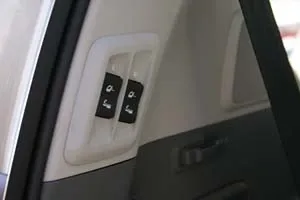
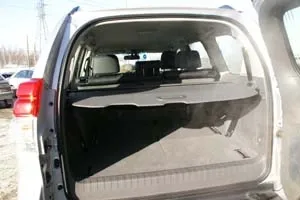
Igor in the next seat was openly mocking me, and Vadim in the back was sleeping altogether. I couldn't shake them: the car swallowed all the bumps like an elephant — a piece of sugar. Getting out onto the open road, I floored the gas pedal. The automatic transmission shifts gears without hesitation, and the speedometer needle goes far beyond a hundred. When I voiced the speed, Igor nearly jumped, while Vadim, it seems, just stretched and turned over to the other side. Such a beast completely masks the sensation of speed: excellent sound insulation, a superbly tuned suspension that doesn't let the car rock and at the same time absorbs all the bumps, protecting passengers from the slightest discomfort. I, as expected, tried the cruise control on the highway. The algorithm is correct: the set speed is automatically restored after overtaking or braking — you take your feet off the pedals, and the Prado itself returns to the desired value and holds it firmly. On the off-road section, we got a good look at the operation of the systems described above, but a full off-road test didn't happen. We return to the city, to the hippodrome. There's ice there — just the time to get out the skates. On the ice rink, the car with the stability control system is obedient, but with it turned off, it needs to be tamed. There are no miracles: the Prado easily goes into a slide outward with all four paws, pardon, wheels, as soon as you lift off the gas. But the whole idea with the rink was to test stability. And here's the main thing: the new Prado has no body roll! The hydraulic system increases suspension travel, plus, apparently, the Sport and Comfort settings change. And the off-road part, oddly enough, we tested right there, at the hippodrome. The car got out of the snow trap on its own, without any outside help. So the puzzle pieces came together into a single picture, and, I must say, a good picture, but... an expensive one. The car has gained new capabilities, become much more interesting, but also, as a result, more expensive. Our version — the most expensive one — will cost buyers about 2,600 thousand rubles.