
About the Suzuki brand
Japan founded in 1920 Model range
General Information
Suzuki Motor Co. Ltd. from Japan is known for producing small and compact off-road vehicles, as well as sports products. Its head office is located in Hamamatsu. As of 2001, General Motors owned a third of the company's shares.
Corporate History
Suzuki was founded by Michio Suzuki. In 1920, in the small village of Hamamatsu on the Japanese coast, he began producing weaving looms. Work on the small car project started in 1937, and by 1939 several experimental compact cars were ready. However, the government declared civilian passenger cars a "non-essential commodity," and Suzuki was ordered to stop production.
After the war, the company returned to automotive themes. The first result was the Power Free motorized bicycle — inexpensive and simple. Its feature was a two-star gear system: it allowed the rider to pedal to assist the engine or disengage and ride solely on the motor.
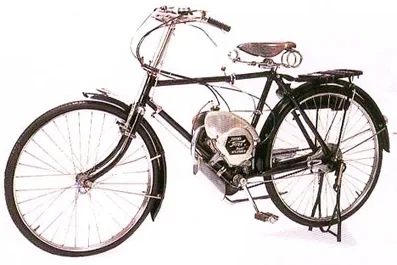
By 1954, Suzuki's monthly motorcycle production reached 6,000 units, and the company changed its name to Suzuki Motor Co., Ltd. In 1955, following the success of the first motorcycles, the first car appeared — the Suzulight. It featured front-wheel drive and four-wheel drive, independent suspension, and rack-and-pinion steering — innovations that became standard in the global automotive industry four decades later.
In 1967, a new generation of front-wheel-drive Fronte-360 models was released. The late 1970s saw the introduction of the original four-wheel-drive microcar Jimny. In 1981, an improved version — the Jimny SJ410 series — was presented, which was later exported to many countries.
Since 1977, Suzuki began manufacturing engines for motorboats. By the 1980s, the company sold a full line of two-stroke motors — from modest 2 hp to powerful 225 hp. Major technological advances were implemented, including computer engine management for optimal operating modes. Suzuki also offered the first three-year limited warranty — the longest among marine engines at the time.
In 1981, the first Alto model was released. From autumn 1994, it began production in India. To attract buyers, the five-door hatchback was sold at the price of a three-door. From 1982, production of a new generation of Fronte/Alto/Cervo microcars began with two-, three-, and five-door bodies and three-cylinder engines producing 29–40 hp.
In 1983, the Cultus (Swift) model with a 1.0-liter engine entered the market. For the European market, the Swift was produced in Hungary at the Suzuki plant. Later, Swift production was significantly reduced, leaving only three- and five-door GLS and GC hatchbacks with an economical engine.
1985 was a breakthrough: Suzuki introduced its automotive lineup in the USA. Over 30 years, the company built a reputation as a manufacturer of world-renowned small cars. The four-wheel-drive Samurai (4WD) model entered the American market, with hundreds of thousands sold to Americans seeking a sporty and practical vehicle.
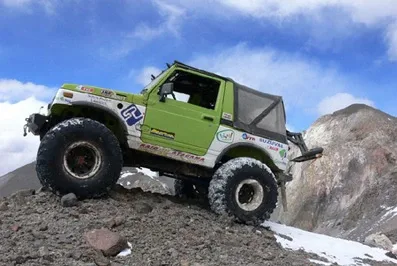
In 1988, the Escudo (Vitara) model appeared with a 1.6-liter engine producing 95 hp and four-wheel drive. The Vitara is known by many names and configurations: in Japan it was called Escudo. The car was produced with three- or five-door bodies, with a soft or hard top. A long-wheelbase five-door "wagon" Vitara Long was also produced, with the engine chosen by the customer.
In the 1990s, the company changed its name to Suzuki Motor Corporation. The model range was updated: in 1991, production of the small two-seater Cappuccino began. In 1995, the subcompact Baleno, the X-90 on the Vitara chassis, and the LOVE electric bicycle were released. In 1997, the Wagon R Wide (Wagon R+) model appeared — a one-liter subcompact selling about 250,000 units per year. In Europe, sales of the Metro under the Chevrolet brand started. The same year, the Gran Vitara with engines of 1.6–2.5 liters producing 107–160 hp was presented.
In 1998, the Kei and Grand Vitara (for foreign markets) models were released, and in 1999, the seven-seat Every+. By 1999, total Suzuki motorcycle production reached 40 million. A business agreement was also signed with Fuji Heavy Industries.
By 2000, Suzuki ranked 12th among global automakers with sales of about 1.8 million units per year. Celebrating its 80th anniversary, the company changed its president (Masao Toda), established an education and culture foundation, and released the Wagon R Solio and Grand Escudo models. In 2001, a joint product of Suzuki and General Motors — the Chevrolet Cruze — was announced, and agreements were reached with Kawasaki and Nissan. In 2002, the Jimny Sierra, mini-car Alto Lapin models appeared, and exports of the Chevrolet Cruze began. In 2006, the third generation of Vitara — the Suzuki New Grand Vitara — was introduced.
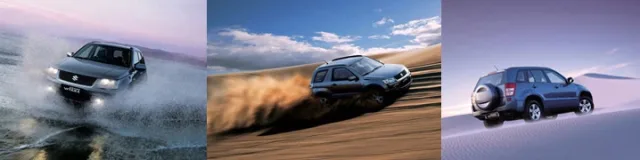
From a small group of engineers developing weaving looms, Suzuki has grown into a global company with nearly 15,000 employees who create and distribute products in more than 170 countries.
Suzuki in Ukraine
In Ukraine, the Suzuki brand is represented by DP "Auto International" (formerly "Mazda Motors Ukraine"), operating in the market since 1993. As the official distributor of Suzuki Motor Co., the company supplies cars adapted to local conditions, has a certified service station, and maintains a permanent stock of cars and spare parts.