
Better stay away from such drivers. But the black Mercedes R-class shouldn't scare you. An intelligent face will peek out and calmly say, "Good afternoon." Even if you just rode over its hood on a motorcycle. Lexus owners believe in a certain magic circle that no one will dare to enter, because their car is too good-looking. BMW drivers drive with the same self-confidence but rely on others' fear. Subaru, on the other hand, is either so fast that no one has time to get a good look, or, conversely, so unflappable and self-assured that they leave no mental trace. The Japanese support this camouflage by constantly changing Subaru's design, stripping the car of clear details in both exterior and interior.

The test took place at Khodynka Field and at the suburban Moscow circuit Drive-Land (www.drive-land.net), which has an off-road section, high-speed stretches, and turns
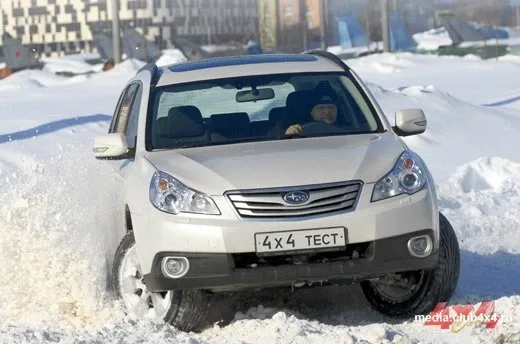
The only thing you can be absolutely sure of is that the Subaru owner behind the wheel looks thoughtful at any speed. And it's not because he's listening for knocks in the transmission. He's pondering. And there's plenty to ponder! Subaru has four types of all-wheel drive. A true "Subarist" must constantly remember which one is installed on his car – it's a matter of honor. True, today only one person truly understands these nuances – Dmitry Filonov, director of the training center for Subaru mechanics. It was he who described the whole picture of Japanese all-wheel-drive diversity to us. Then we tried three of them, feeling the difference. Fortunately, the fourth type of all-wheel drive is intended for the sporty Impreza and has nothing to do with our topic.

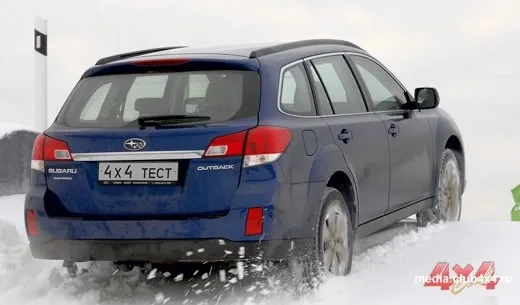
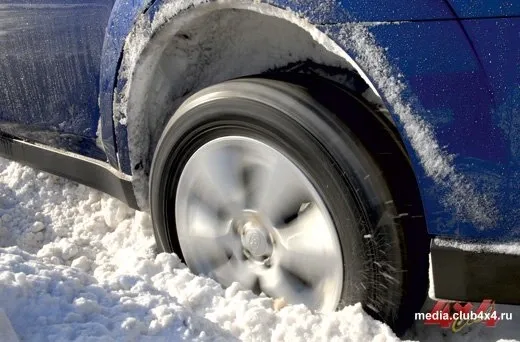
WELDING THE CLUTCH
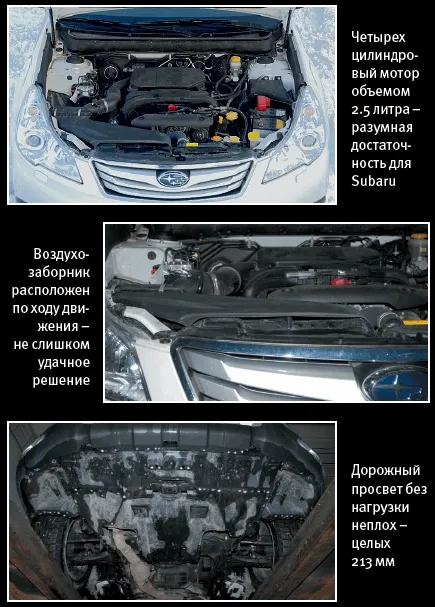
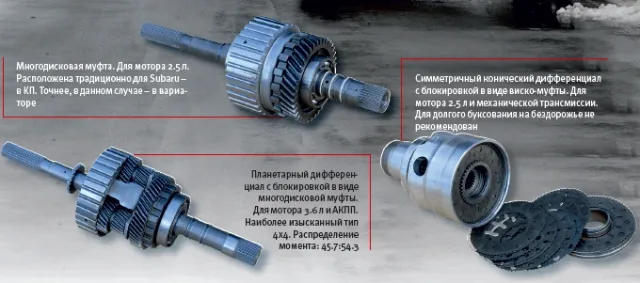
The most straightforward all-wheel-drive scheme is found in the Outback 2.5L with a CVT. Here, a multi-plate clutch with electronic control is installed. The plates are pressed together hydraulically. Unlike other manufacturers, Subaru places the clutch not on the rear axle but directly in the transmission, where it works in the same fluid as the gearbox. Hence its reliability. We all know how easy it is to bring a regular multi-plate clutch in the rear differential to a boil. A couple of minutes of intense wheelspin – and you can brew coffee while waiting for it to cool down. But the fluid volume in an automatic transmission is many times greater than in a differential, and this perfectly protects the Subaru clutch from overheating.

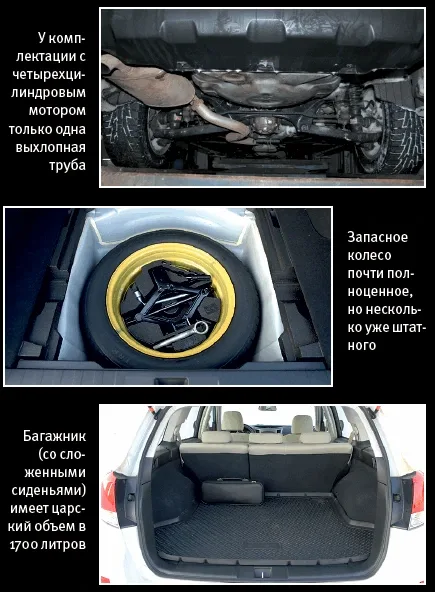
The spare wheel is not included in the base trim. You need to pay an extra $119 (946 UAH) for it
You can play with the "world's most reliable multi-plate clutch" as much as you like, but never try to squeeze the maximum out of the second type of Subaru all-wheel drive – the viscous coupling. It is installed on the Outback 2.5L with a manual transmission and acts as a lock. The torque is redistributed by a regular differential, which the manufacturer calls "conical." I tried several times to use this term in conversations with journalist friends, but everyone thought I was talking about horses. In reality, it's a simple part, most often used in cars as a differential between wheels. So, let's return to the viscous coupling. It has no electronic control. It only reacts to the difference in rotational speeds of the shafts, so it's a bit sluggish. You can only wake it up with the command "floor it." And when you, feeling the thrill, start abusing it off-road, it can fail. "The plates will weld to each other," Dmitry Filonov scared me. For some reason, I warned him that I was still going to test its strength. Dmitry looked at me like I was a girl who decided to pour windshield washer fluid into the gas tank. I had to take his word for it.
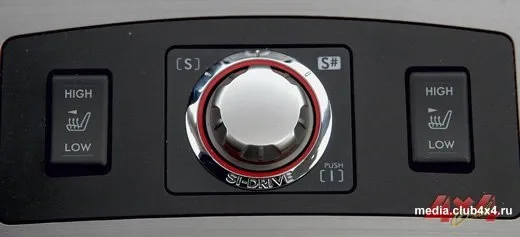
You can choose one of three modes: "bad sport," "unclear sport," and "sport as it should be"
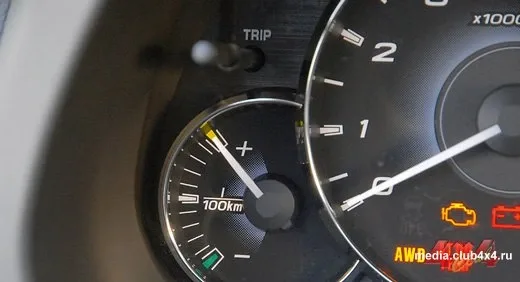
The most amazing thing on the Suba-ru dashboard is the fuel consumption gauge. It's so well disguised that you realize its true purpose after a couple of days of driving
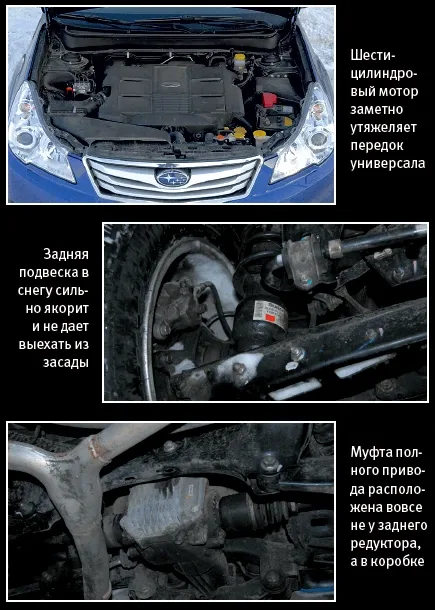
The third type of Subaru all-wheel drive is installed on the Outback 3.6L with an automatic transmission. It is based on a planetary differential and is locked by the already familiar multi-plate clutch (as on the Outback 2.5L with CVT). The planetary differential distributes torque in a 45/55 ratio. The electronic multi-plate clutch is used here not only for speed and reliability but also for packaging reasons: as I said, Subaru engineers have learned to hide it directly inside the automatic transmission housing.
OFF-ROAD CAPABILITY COSTS MORE THAN DRIVING PLEASURE
So, we have the cheapest, morally outdated, and not too reliable all-wheel drive on the Subaru 2.5L with a manual transmission. In contrast, there's the super-durable clutch on the 2.5L versions with a CVT. And, as a mockery of the latter, the most expensive scheme for the 3.6L engine with an automatic transmission, which redistributes torque for more interesting handling.
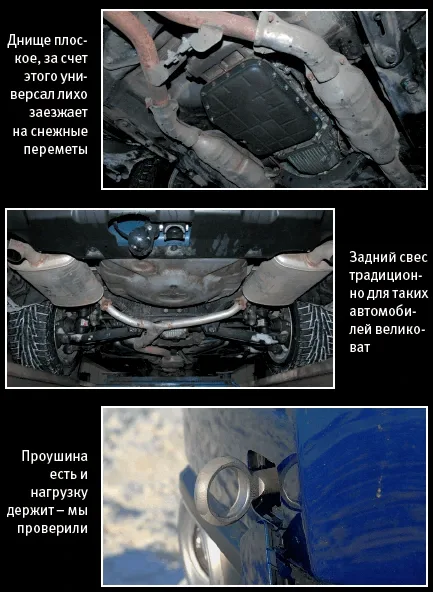
All our attempts to bog down the Outback and try to get out, to somehow test the theory, failed miserably. The test took place when 60 centimeters of snow fell in Moscow in two days. After trying hard, we found a place where the cover didn't exceed 30 centimeters. But then an amazing feature of the Japanese wagon came to light. The Outback enters virgin snow quite briskly thanks to its flat bottom, but at the slightest loss of momentum, it immediately sits on its rear arms. They anchor the car firmly, and it's impossible to move it without a tow truck.
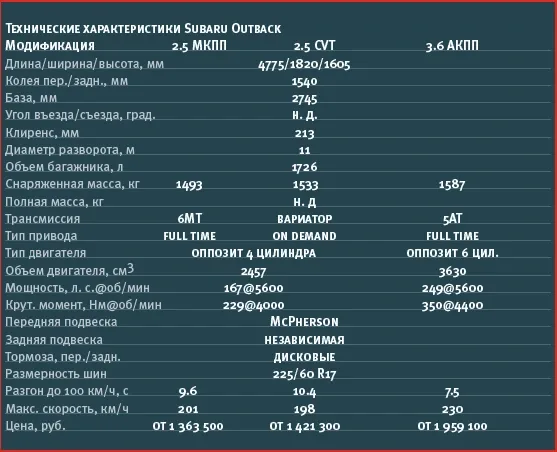
SPECS: SUBARU OUTBACK
SPECS: SUBARU OUTBACK
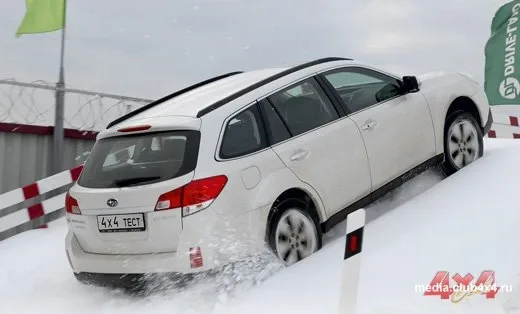
Finally, at the Moscow test site, we found a suitable snow hill. Three Outbacks lined up and set off to storm the summit. The manual version got stuck and stalled halfway. The CVT wagon, reaching the middle of the slope, stopped, then unexpectedly came alive and climbed to the top. The Outback with the automatic simply drove up. ESP remained on in all three cars. But it hindered the manual car from accelerating from the start, held back the CVT car halfway, and only achieved harmony with the automatic version. Later, when we got the hang of it and also turned off ESP, all three drove the same. But for such suitcase wagons and their average pilots off-road, there's usually only one attempt, during which most end up in deep trouble. From this perspective, the off-road round is won by the Subaru Outback 3.6L with an automatic transmission, so we award the victory to the most complex of the three all-wheel-drive schemes: the planetary differential locked by a multi-plate clutch.
The second round of the battle took place on the asphalt track. The manual version showed the best lap time and the most driving pleasure. Handling the CVT on the twists of the short track is difficult; the connection between it and the gas pedal is thin and unpredictable. And the most powerful Outback with the automatic, due to its overweight front end, simply flew out of the corner.
In total: the 2.5L manual version delivers the driving thrill, while the 3.6L automatic trim provides off-road capability. The 2.5L wagon with CVT and multi-plate clutch is neither here nor there. But it's precisely this one that all those thoughtful-faced people buy most often.
During the test, we used radio communication from
the company "Argut," www.argut.net