
Subaru Impreza
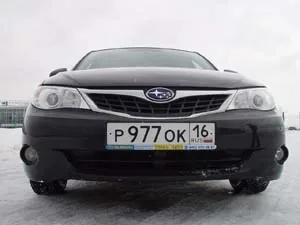
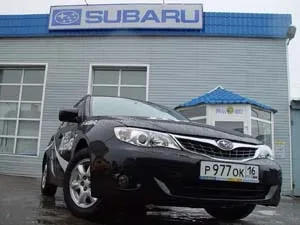
New Subaru Impreza
Engine: horizontally opposed 1498 cm3
Max power
kW/hp/rpm 79/107/6000
Max torque
Nm/rpm 142/3200
Max speed: 167 km/h
Transmission: 4-speed automatic
Drive: all-wheel drive
Fuel consumption:
Urban cycle9.8
Extra-urban cycle6.2
Combined cycle 7.5
Suspension:
front independent
MacPherson
rear independent double wishbone
Length 4415
Width1740
Height1475
Ground clearance 155
Tires 195/65 R15
Curb weight 1325
Price: 653,200 RUB (base - 577,700 RUB)
Brand history
Life is full of situations where various events have bizarrely influenced the fates of people and even entire countries. When organizing his own aviation research laboratory in 1917, young Japanese engineer Chikuhei Nakajima probably could not have imagined that he would go down in history as the creator of a company that built a car of a remarkable brand, Subaru. In the early thirties, the laboratory grew and was reorganized into the Nakajima Aircraft Company, which built aircraft for civil and military aviation. Its owner wanted to devote himself to designing airplanes and was succeeding in this direction until World War II broke out. It radically changed his life and business.
After Japan's defeat in World War II, aircraft manufacturing, like many other industries, was plunged into deep depression. The country was not allowed to have its own air fleet, so new areas of development had to be sought. The company underwent reorganization and became Fuji Sangyo Limited, a large concern engaged in the production of consumer goods and servicing the needs of various industries. Twelve divisions of Fuji Sangyo Limited produced a wide range of products, from scooters and outboard motors to railway cars. The company split into independent enterprises, six of which in 1953 merged again under the brand Fuji Heavy Industries Ltd. The new firm was headed by President Kenji Kita, who is credited with the name Subaru.
According to company legend, the name Subaru refers to a cluster of stars in the constellation Taurus. The six brightest of them form the Subaru emblem. Kenji Kita chose this name for his first creation, the prototype passenger car R-1, assembled in 1954. The model never went into production, and Subaru gained public recognition only four years later, after the release of the SUBARU 360, a four-seat two-door compact car. The car became a real hit, a Japanese people's car that survived several modifications and was produced for twelve long years. The build quality and consumer characteristics of Subaru pleased the Japanese so much that they gladly purchased all subsequent developments of the company.
By the end of the 20th century, 11 car models of this brand had come off the Subaru assembly line, conquering roads not only in Japan and neighboring Eastern countries but also far abroad. American consumers were offered the Subaru XT adapted for their market, while in Europe sales of another model, the Legacy, were steadily growing. Now all over the world, including Russia, cars of various classes are sold: sports, family, and crossovers.
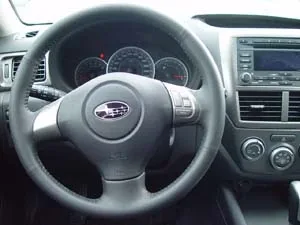
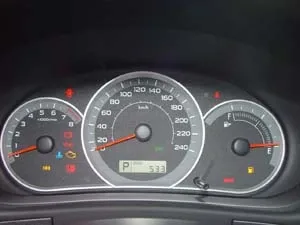
Permanent all-wheel drive has not won mass popularity. In well-maintained Europe, this exotic feature seems like a waste of money. But where, as is known, there are two troubles – fools and bad roads, the Impreza will not leave its owner in trouble and will try to help as much as possible. Subaru is proud that the Impreza holds the title of world rally champion in 1995 and 1996. One should not reproach Subaru's designers for the simplicity of the dashboard (its main and only virtue is functionality) or for placing the radio somewhere deep under the panel (this is an ancient national tradition of Japanese automakers). Better to pay attention to the car's ability to realize the potential of all-wheel drive. Compared to cars of this class, the Impreza, thanks to all-wheel drive, holds the road significantly more confidently on straights and in corners, and regardless of the condition of the surface (even if there is ice on the road), the car easily copes with the difficult task and successfully solves it. The Impreza does not hide its flaws. It has been refused a wedding ceremony so often after courtship that today it is ready for any proposal. Its dowry is modest: reliability and a very honorable place in accident-free statistics.
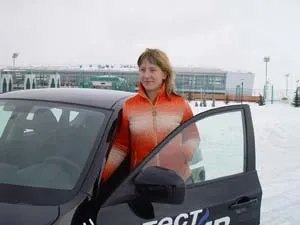
Natalya Koroleva
One of my acquaintances reveres Subaru cars no less than a religious fanatic reveres his god. So when I was offered a test drive of the Subaru IMPREZA, I agreed without hesitation, hoping to unravel the "mystery of worship."
I am not a specialist, so I will give an assessment from a consumer's point of view.
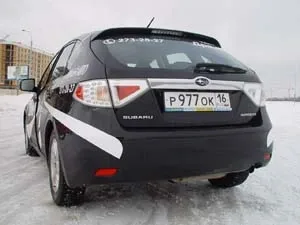
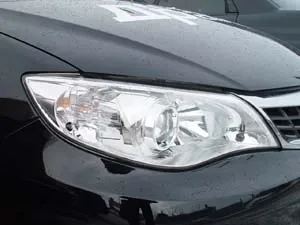
Externally, the car definitely appealed to me. The interior view did not disappoint either, although it did not evoke wild enthusiasm.
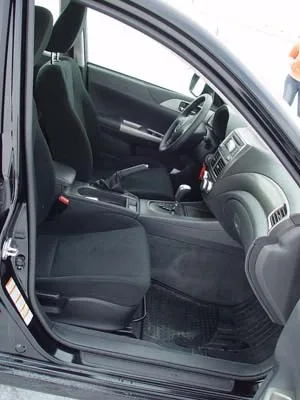
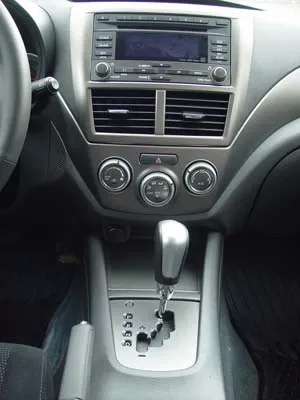
The interior trim is without frills, everything is very modest, but it was pleasant to drive.
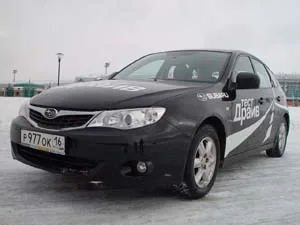
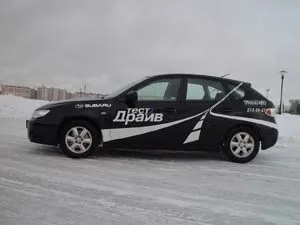
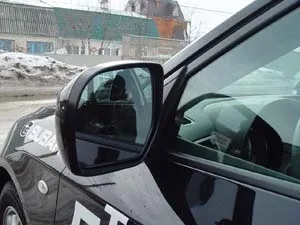
The driver's seat and steering column are adjustable for height and reach. Apparently, my height turned out to be quite standard, so I did not have to use the driver's seat height adjustments or change the steering wheel position. Personally, I was very pleased with the side mirrors - they are not just big, but very big, so you don't need to look at the rearview mirror.
For me, this was my first experience driving a car with an automatic transmission. I was even a bit scared at the beginning. My hand treacherously reached for the gearbox, especially at traffic lights. Probably, for a big city with kilometer-long traffic jams, an automatic transmission is very convenient. But, honestly, I was disappointed, or maybe I just didn't have time to feel all its charm?! A comparison came to mind. When you ride a horse, you control it yourself, you feel it, but an automatic transmission is like riding a carousel wooden horse...
Now about all-wheel drive, from an ordinary person's point of view. Of course, when you drive on a straight, flat road, you don't feel any difference. So for the sake of experiment, we drove into the snow, into snowdrifts... I perceived this idea quite skeptically and even mentally prepared for the fact that we would have to push the car. The IMPREZA drove through the snow cover like an icebreaker through the Arctic, calmly, steadily, and after making a lap of honor, we returned to the regular road.
Next in the test drive program was a trip on the highway. Of course, the model presented to us with a 1.5-liter engine is not the most sporty car, and the road surface on our highways in spring is far from perfect (potholes and ruts are common) to have races.
It is worth noting the car's good handling - it is easy and pleasant to drive. On the highway you understand this especially, because in the city from traffic light to traffic light you don't have time to appreciate your sensations.
Sitting in the front seats of the car is much more pleasant, whether in the driver's seat or the passenger's. Firstly, it is much quieter. Secondly, it is more spacious.
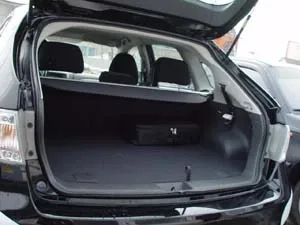
In the back seat, a passenger of average height can sit quite comfortably, but getting in and out is difficult - legs catch on the threshold.
Summing up. Overall, the car appealed to me. But, from a consumer's point of view, high fuel consumption (11 liters in the city), quite expensive maintenance, in general, the Subaru IMPREZA is not my car. After the trip, I did not have the desire to buy one; it did not pass all the points of my selection.
And my friend has never driven a Subaru and only relies on technical specifications, so this is ideal love.
Try sitting behind the wheel of the Subaru IMPREZA yourself – I think you will like it.

Nesterova Lidiya
I have too little experience to evaluate a good car by all parameters. My assessment is more based on sensations than on analysis. SUBARU is a serious car, and the fact that the Impreza is the cheapest in the entire model range changes the situation little.
Externally, the Impreza is somewhat unusual, although it's hard to pinpoint what makes it so; the car has its own charm, a hint of foreignness. The new Impreza hasn't become a common sight on our roads. Inside - without excessive luxury, democratic, stylish, comfortable, and the interior design organically combines with the car's exterior. It's as comfortable behind the wheel as it is in the back - the cabin is spacious, and the car feels bigger inside than it looks outside. I really liked the mirrors - visibility is truly good.
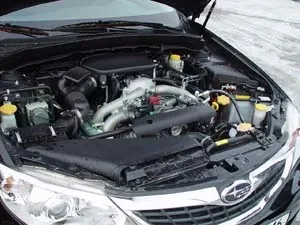
I've always had a prejudice against automatic transmissions, partly because I live in a private sector. Snow on our street isn't cleared all winter. In spring and autumn, we experience all the delights of a country road with clay underneath. You can get stuck at any time of year, so what good is an automatic! The Impreza pleasantly surprised me; I deliberately brought everyone to my street to drive in the snow. We couldn't get the car stuck. Well, maybe just scraped the bottom a bit. Yes, all-wheel drive is all-wheel drive, a really good addition to the automatic. However, for enthusiasts, there's a manual mode.
On the road, the car behaves excellently; for a 1.5-liter engine, it accelerates very well, brakes superbly, and handles corners nicely. True, on one turn of the Arakchinskoye highway, I faltered - the lack of habit with power steering showed. The steering wheel is surprisingly responsive; the car seems to read your thoughts. The suspension is dynamic - neither stiff nor soft; SUBARU always emphasizes handling. On the highway, I completely forgot that the Impreza's engine is only 1.5. The car flew, and I enjoyed the flight. Alfred voiced from the back seat - What's on the speedometer? - 140. Yes, and that's despite the fact that I never speed. Working in a paint and body shop, I know too well how that ends.
When Alfred took the wheel, Russian-style extreme began. On the highway, the left lane was covered with snow - apparently, so it would melt. Alfred flew right over the snow, overtaking those driving on the asphalt in the right lane. The sight was so impressive that I regretted sitting in the back, no matter how cozy it was. In general, the impressions lasted a whole day. My prejudice that foreign cars with automatic transmissions aren't made for our roads was shattered to pieces. The Impreza looks great in our conditions too.

Mardanov Alfred
This time, the test drive turned out unusual, rich in various events. Driving on a snowy rut, a frightened Kamaz driver coming toward us, a strange man in Arakchino throwing snow from a roof right into the windshields of passing cars - all these were just the beginning. The icing on the cake was the bypass road with a huge truck wheel lying in the middle and massive snow clumps scattered by a tractor across the entire road surface. Only a narrow strip of road remained usable, and not for every vehicle, but for trucks with their huge wheels. So, as we moved along this "rut" behind another truck, suddenly, right in front of the hood, as if from nowhere, a discarded wheel appeared.
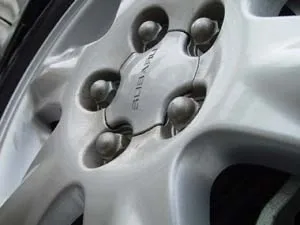
An involuntary cry of fear in the cabin, a maneuver to the left, a sigh of relief - the wheel is behind. No, where else can you encounter such a thing?! It's a pity that the thought to remove the wheel from the road came too late - we had already driven far, and turning around through the snowdrift was simply unrealistic; it will definitely doom someone. Not everyone has an all-wheel-drive car, and one so light and obedient in handling. On another car, I don't know how it would have ended. If not for the Subaru, I wouldn't have risked overtaking those endlessly long trucks on such a road full of snow clumps. True, the result is sad - we still broke the fender liner, hit a too-large snow clump, but the bumper didn't suffer at all. The car showed itself as a champ, boldly breaking through the snow mass without losing control of the road for a second. Super! True, all this was at the end of the test drive, and it all started with us deciding to "take a spin" on a snowy path near the hippodrome. We had to worry, thinking we'd get stuck, but the dealership manager just smiled and, apparently, laughed at us inwardly. According to him, this slush is just a light warm-up for this car. Well, you can feel the car's confidence; all-wheel drive is all-wheel drive.
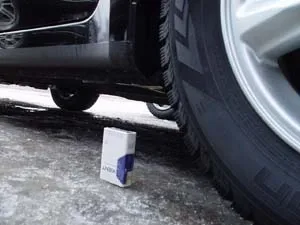
From the very first meters of the road, the car, how should I put it, surprised me. Yes, exactly surprised. What did I expect? I expected a "dull" (1.5 liters with automatic, and also all-wheel drive), somewhat stiff imitation of the legendary Impreza. But instead, I got a nimble, springy, quite attractive piece of automotive art from Subaru with its own character. Pedigree!!! There's probably no point in describing all the delights and advantages of all-wheel drive; I'll just note the fact that the car, despite the low-power engine (107 hp) and automatic, doesn't suffer from "thoughtfulness." Only in "pedal to the metal" mode will there be a delay of fractions of a second, and then a "shot." But if you work the pedal smoothly, the start will be dynamic and assertive, and the shifts are almost unnoticeable. Manual mode wasn't needed even for overtaking; the car easily handled the task anyway. Of course, I played with manual mode but eventually switched back to automatic. Regarding ride comfort. The ride is comfortable! I already noted the springy character of the car's behavior. A balance is achieved between the excellent handling typical of Subaru and comfort. The car is intuitively more stiff than soft, but that doesn't disturb passengers' peace, even on a broken spring road. Sharp steering, informative weighted wheel, excellent brakes - I also added these to the positive track record. The connection with the wheels isn't lost even on snowy slush, and I always know where the wheels are turned.
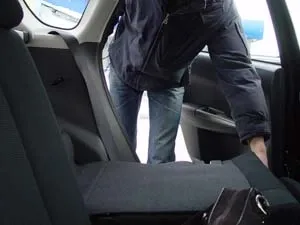
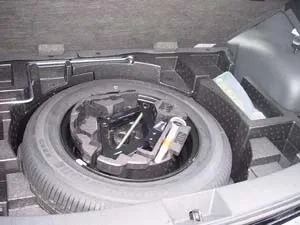
The brakes are tuned so that the braking force is clearly dosed depending on the brake pedal pressure, and the moment of ABS activation is easily felt. Sound insulation corresponds to class C; it's certainly not ideal for rear passengers - the noise of studded tires on bare asphalt still penetrates the cabin, but its level doesn't exceed comfort. It's very comfortable to sit behind the wheel because you sink deeply into the wide seat, the steering wheel is low, creating the impression of a race car cockpit. But getting in and out from behind the wheel is a hassle; the steering wheel gets in the way. You need a certain habit and skill. Rear passengers aren't deprived of space, again thanks to sinking into the seats, making it comfortable to sit, with plenty of knee and headroom. Another point characteristic of Subaru. The manufacturer doesn't bother with interior design; everything is simple and functional. The main thing for them is the technical equipment of the car, capable of unlocking all the possibilities of all-wheel drive, and it's precisely this quality that Subaru enthusiasts highly value.