
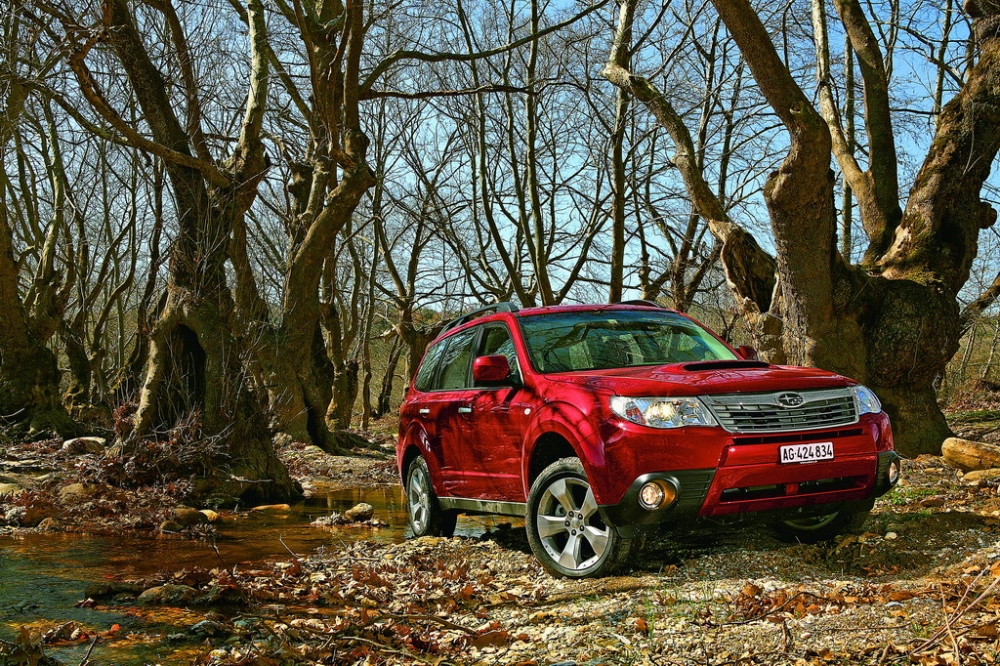
 At first, a certain doubt crept into my mind about the correctness of the choice of venue for the presentation of the updated Forester. After all, Forester means "forester," and a forest is perhaps the only thing that is clearly missing in the vicinity of the ancient city of Thessaloniki. But the subsequent test drive route showed how groundless my suspicions were – everything needed to form a complete and multifaceted impression of such a specific car as the Forester was present in abundance. At first, a certain doubt crept into my mind about the correctness of the choice of venue for the presentation of the updated Forester. After all, Forester means "forester," and a forest is perhaps the only thing that is clearly missing in the vicinity of the ancient city of Thessaloniki. But the subsequent test drive route showed how groundless my suspicions were – everything needed to form a complete and multifaceted impression of such a specific car as the Forester was present in abundance. |
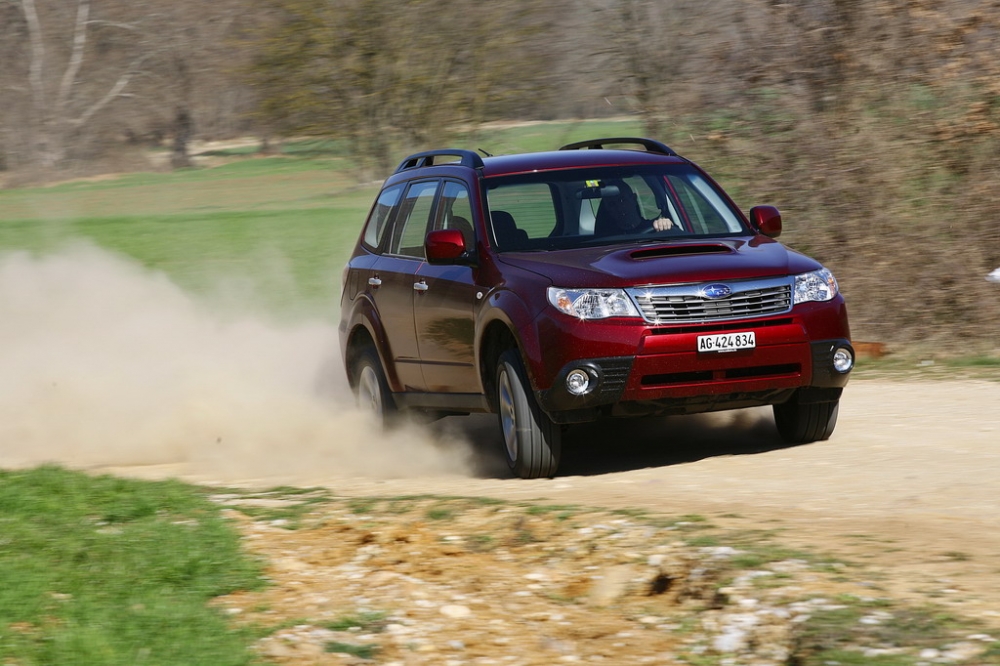 After Subaru designers changed the appearance of the Impreza almost beyond recognition, one might have expected some radical changes in the Forester's looks as well, but I wouldn't say it has become different. If you didn't know that the car is built on a completely new platform, you might even think it has merely undergone a facelift. And that, in my opinion, is not bad. We have long been accustomed to seeing the Forester exactly like this, just as thousands of fans of the model around the world have. The first two generations, released in 1997 and 2002 respectively, created in our minds a firm idea of what the Forester should be – a rugged crossover with impressive ground clearance, a kind of spacious "simpleton," a true helper in the owner's active lifestyle. After Subaru designers changed the appearance of the Impreza almost beyond recognition, one might have expected some radical changes in the Forester's looks as well, but I wouldn't say it has become different. If you didn't know that the car is built on a completely new platform, you might even think it has merely undergone a facelift. And that, in my opinion, is not bad. We have long been accustomed to seeing the Forester exactly like this, just as thousands of fans of the model around the world have. The first two generations, released in 1997 and 2002 respectively, created in our minds a firm idea of what the Forester should be – a rugged crossover with impressive ground clearance, a kind of spacious "simpleton," a true helper in the owner's active lifestyle. |
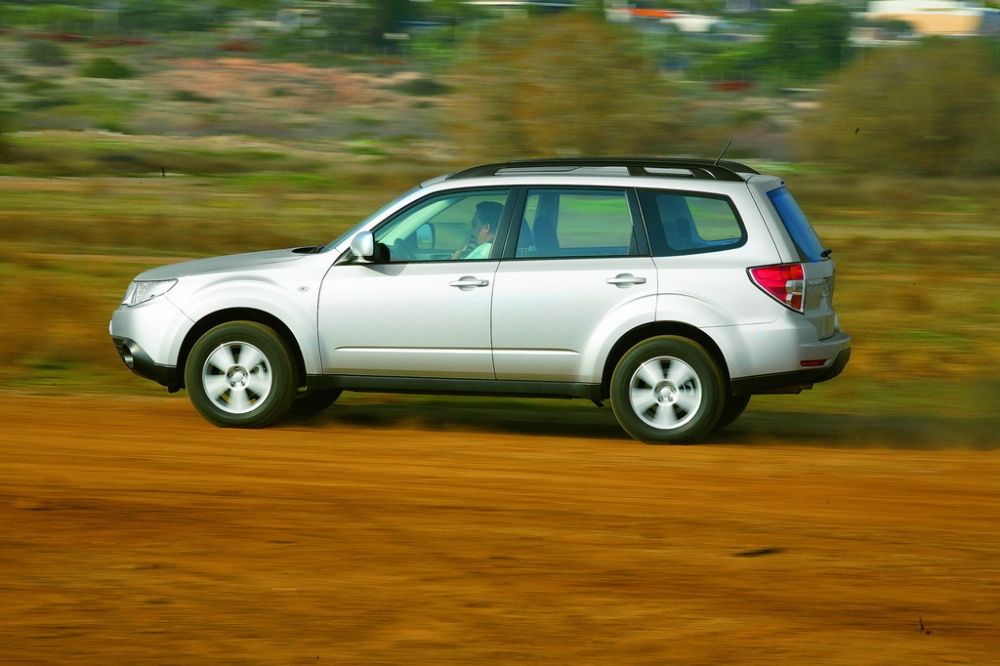
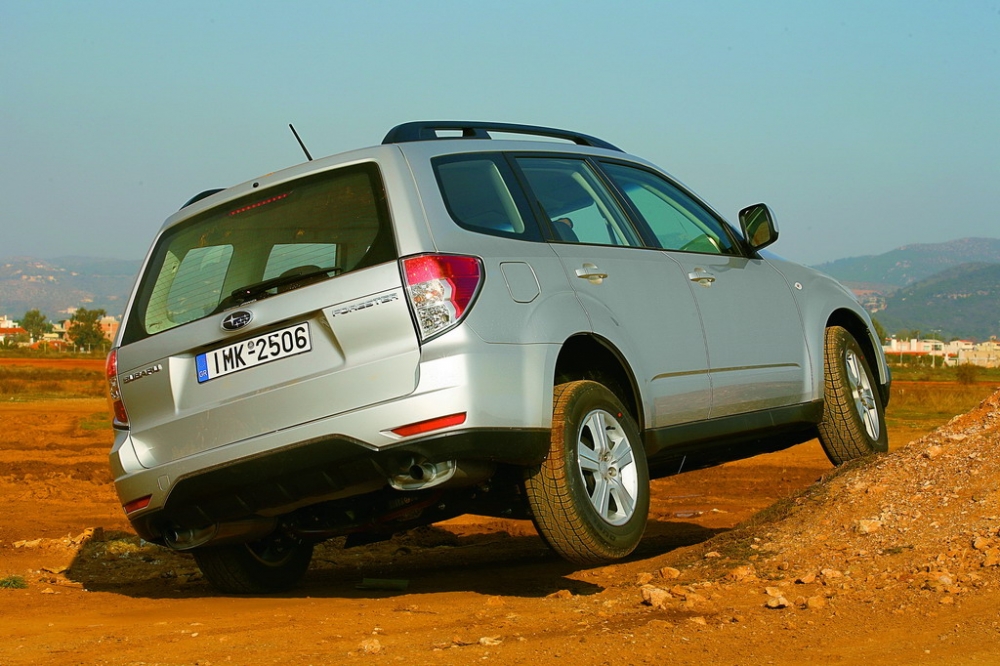
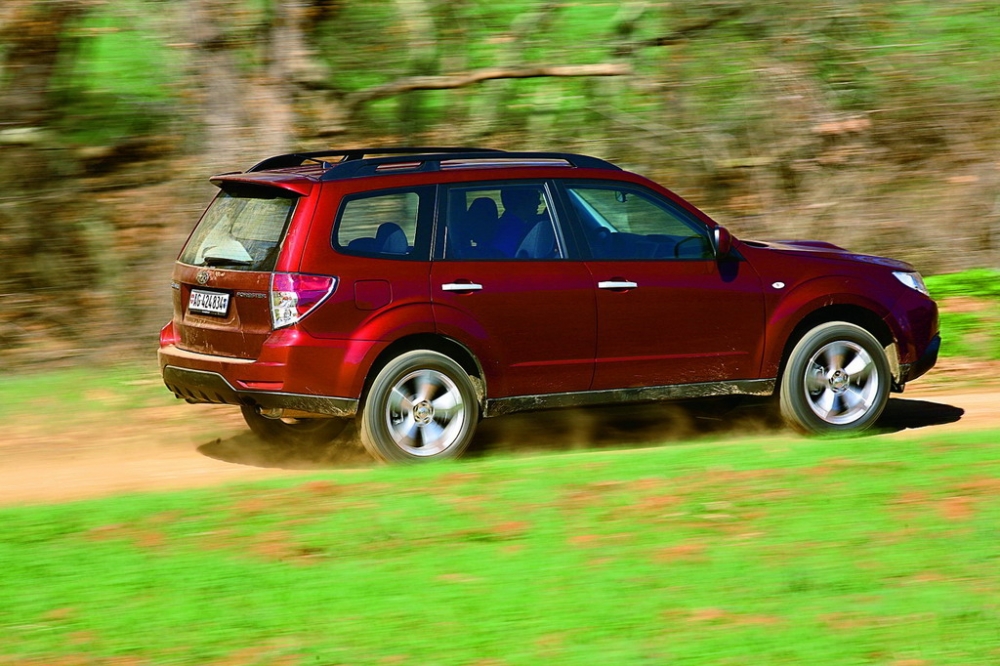 Therefore, the decision of Subaru designers to do without any revolution in its appearance seems quite reasonable. But, having "digested" the first impression, I begin to peer into the details and realize that the body is completely different! And the "face" has changed: a new chrome grille, a partially painted bumper with pseudo-protection, "falcon eye" headlights... And the rear is also solved differently: different lighting, a different tailgate, and a pair of exhaust pipes instead of one... On the sides, above the wheel arches, original creases have appeared – you just want to pinch them! Therefore, the decision of Subaru designers to do without any revolution in its appearance seems quite reasonable. But, having "digested" the first impression, I begin to peer into the details and realize that the body is completely different! And the "face" has changed: a new chrome grille, a partially painted bumper with pseudo-protection, "falcon eye" headlights... And the rear is also solved differently: different lighting, a different tailgate, and a pair of exhaust pipes instead of one... On the sides, above the wheel arches, original creases have appeared – you just want to pinch them! |
 Well, and of course, as is customary in the modern automotive world, the new generation of the model has become larger. The dimensions of the third generation have noticeably increased. The length has grown to 4560 mm (+75 mm), width to 1780 mm (+45 mm), and the car has become taller by as much as 100 mm (1700 mm). The wheelbase has grown by 90 mm (2615 mm). Naturally, all this has made it possible to make the crossover more spacious inside. This mainly concerns space for rear passengers and luggage. Thus, legroom for rear-seat passengers has increased by 110 mm, and this increase is visible even to the naked eye. The trunk has become wider and taller, but even now its volume is only 450 liters – not that much for cars of this class. Well, and of course, as is customary in the modern automotive world, the new generation of the model has become larger. The dimensions of the third generation have noticeably increased. The length has grown to 4560 mm (+75 mm), width to 1780 mm (+45 mm), and the car has become taller by as much as 100 mm (1700 mm). The wheelbase has grown by 90 mm (2615 mm). Naturally, all this has made it possible to make the crossover more spacious inside. This mainly concerns space for rear passengers and luggage. Thus, legroom for rear-seat passengers has increased by 110 mm, and this increase is visible even to the naked eye. The trunk has become wider and taller, but even now its volume is only 450 liters – not that much for cars of this class. |
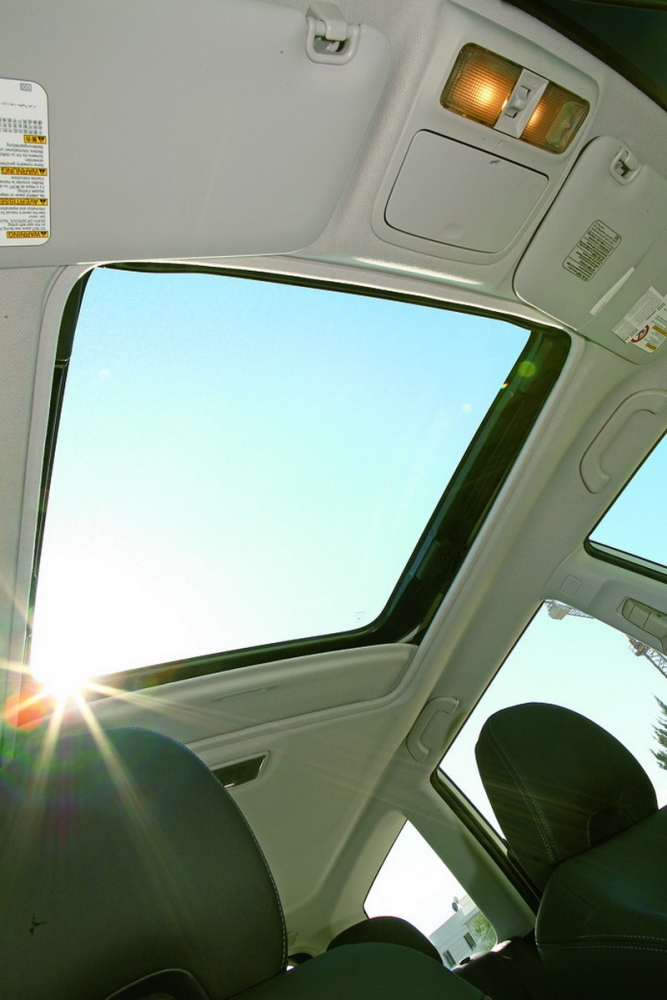
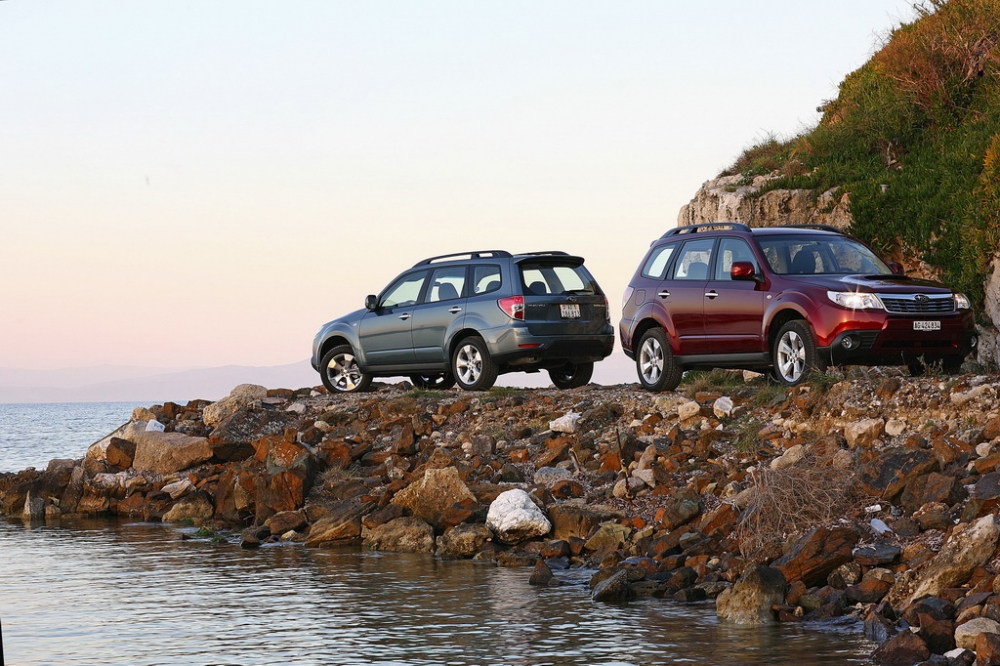 The most obvious advantage of the luggage compartment seems to me to be the huge glass of the tailgate. It provides excellent rear visibility; through it, you can see, for example, a child only 1 meter tall. It has become more convenient to get in and out of the car – the doors open at a wider angle. Brand fans will undoubtedly mourn the frameless windows that are a thing of the past, but nothing can be done; this is a necessary measure to increase body rigidity and comply with strict safety standards. With the overall increase in dimensions, Subaru specialists managed to keep the front overhang unchanged (940 mm), and make the rear even shorter by 15 mm (1005 mm). Together with an increase in ground clearance by 10 mm (to 215 mm for models with a 2-liter engine and up to 225 mm with a 2.5-liter one), this guarantees excellent geometric off-road capability. The most obvious advantage of the luggage compartment seems to me to be the huge glass of the tailgate. It provides excellent rear visibility; through it, you can see, for example, a child only 1 meter tall. It has become more convenient to get in and out of the car – the doors open at a wider angle. Brand fans will undoubtedly mourn the frameless windows that are a thing of the past, but nothing can be done; this is a necessary measure to increase body rigidity and comply with strict safety standards. With the overall increase in dimensions, Subaru specialists managed to keep the front overhang unchanged (940 mm), and make the rear even shorter by 15 mm (1005 mm). Together with an increase in ground clearance by 10 mm (to 215 mm for models with a 2-liter engine and up to 225 mm with a 2.5-liter one), this guarantees excellent geometric off-road capability. |
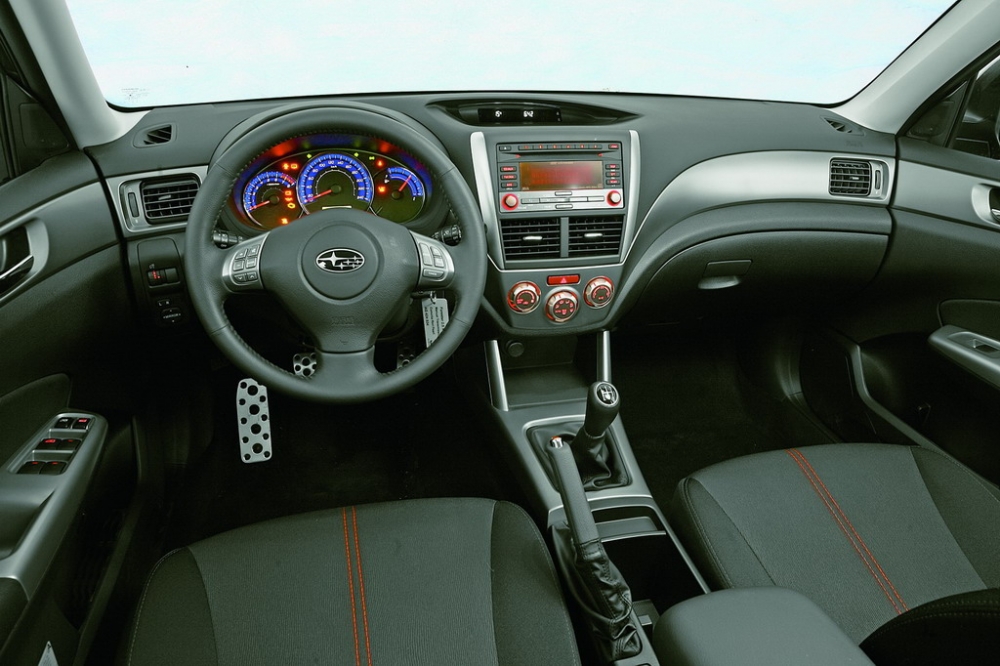
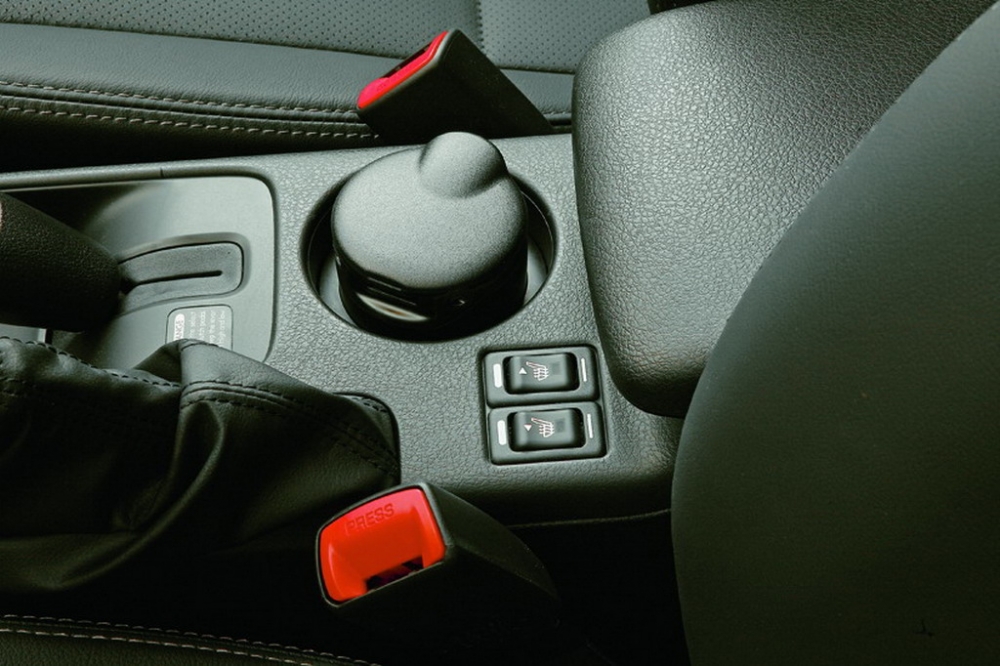
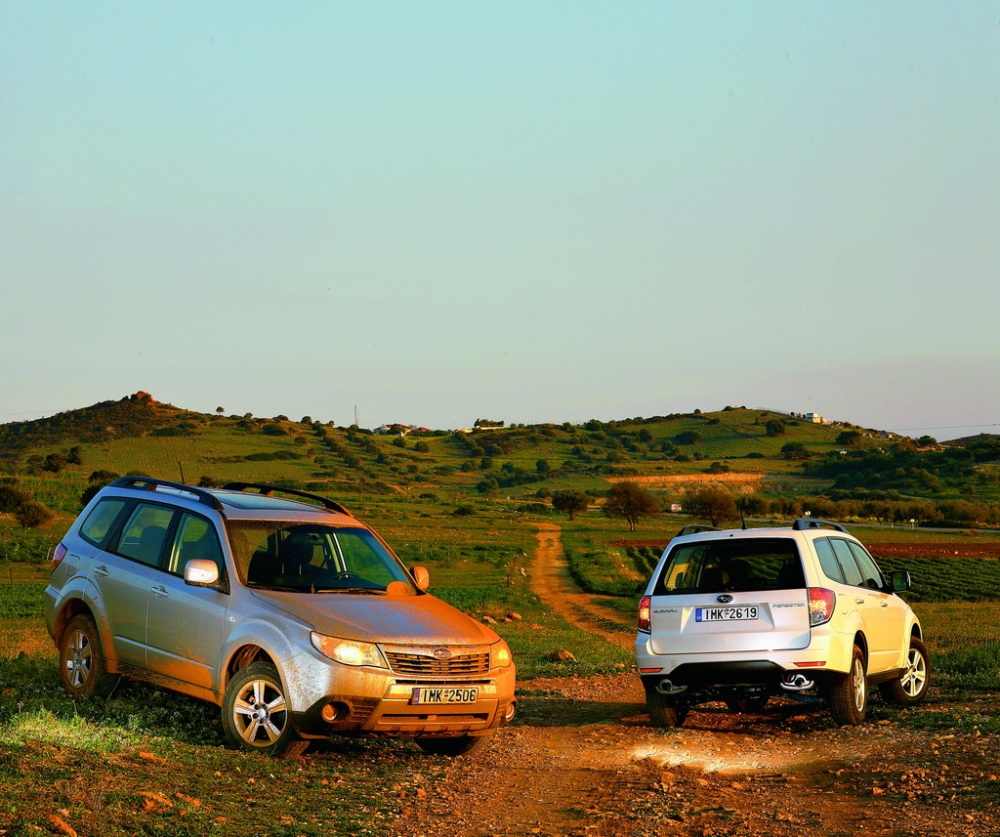 The Forester's interior has finally begun to look not just like a set of parts made of strange-quality plastic. Now it is a harmonious, well-tailored interior. Quite at the level of most modern counterparts. Two color schemes are available – light gray and black with interesting orange stitching. Both options are good in their own way. The light one makes the interior space visually even more spacious, giving a feeling of lightness. The dark one is more strict and less easily soiled, which in our weather conditions may become a decisive factor for some when choosing a car. The Forester's interior has finally begun to look not just like a set of parts made of strange-quality plastic. Now it is a harmonious, well-tailored interior. Quite at the level of most modern counterparts. Two color schemes are available – light gray and black with interesting orange stitching. Both options are good in their own way. The light one makes the interior space visually even more spacious, giving a feeling of lightness. The dark one is more strict and less easily soiled, which in our weather conditions may become a decisive factor for some when choosing a car. |
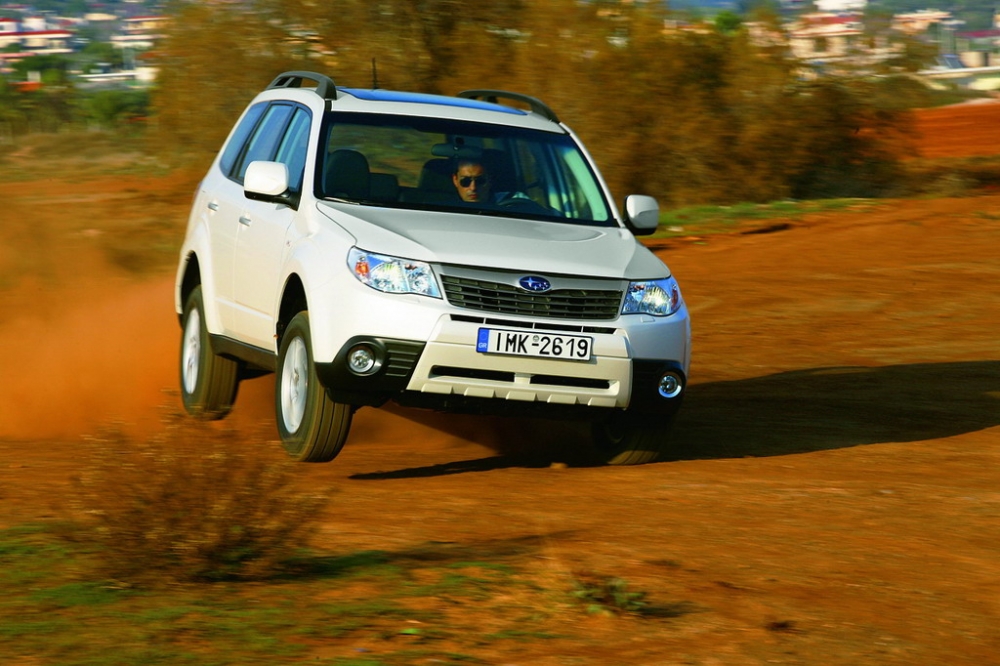 The Forester of previous generations was famous for its ability to handle well on roads of far from the best quality, while remaining a fairly comfortable car. According to the creators of the new model, continuing this tradition and bringing it to an even higher level will be made possible by the application of the new Subaru Dynamic Chassis Control Concept chassis concept, or, as they abbreviate it, DC³ (pronounced "dee-see-cube"). It is based on the classic symmetrical all-wheel drive Subaru, operating under the control of the VDC dynamic stabilization system, as well as a modernized front and completely new rear suspension. The Forester of previous generations was famous for its ability to handle well on roads of far from the best quality, while remaining a fairly comfortable car. According to the creators of the new model, continuing this tradition and bringing it to an even higher level will be made possible by the application of the new Subaru Dynamic Chassis Control Concept chassis concept, or, as they abbreviate it, DC³ (pronounced "dee-see-cube"). It is based on the classic symmetrical all-wheel drive Subaru, operating under the control of the VDC dynamic stabilization system, as well as a modernized front and completely new rear suspension. |
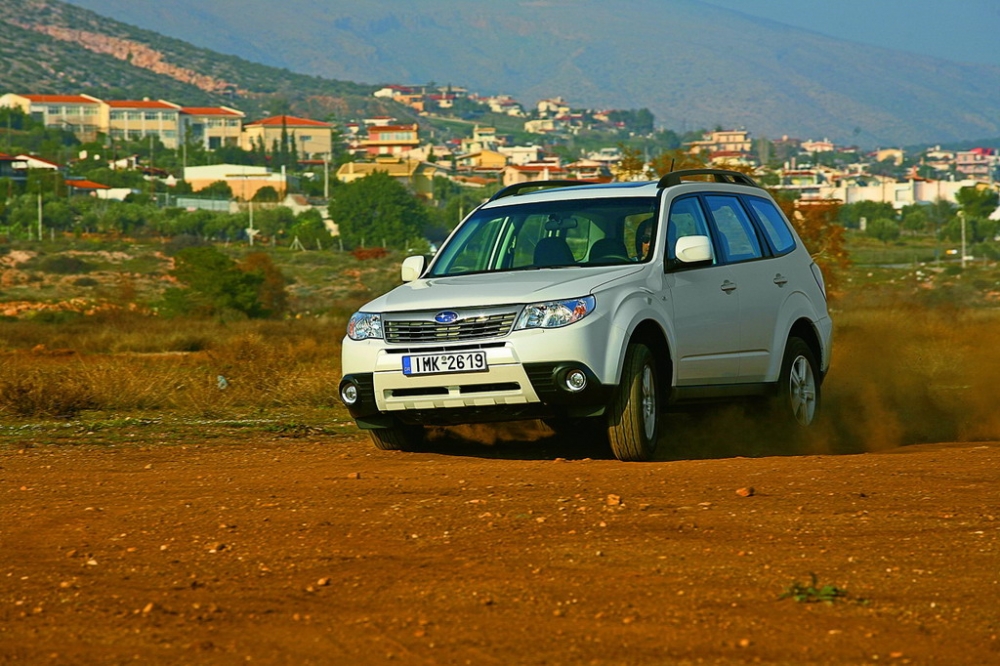 At its core, as stated in the official press release, are "double wishbones," but in fact it is still closer to a multi-link setup, although more compact than on previous models. This was made possible to judge by the "bare" chassis displayed in the hall for the press conference. Returning to the all-wheel drive system, it is worth noting that no fundamental changes have been made to it. Just as in cars of the previous generation, a hydraulic multi-disc clutch is used to distribute torque between the axles in cars with an "automatic," and in models with a manual transmission – a center differential with bevel gears and a viscous coupling. At its core, as stated in the official press release, are "double wishbones," but in fact it is still closer to a multi-link setup, although more compact than on previous models. This was made possible to judge by the "bare" chassis displayed in the hall for the press conference. Returning to the all-wheel drive system, it is worth noting that no fundamental changes have been made to it. Just as in cars of the previous generation, a hydraulic multi-disc clutch is used to distribute torque between the axles in cars with an "automatic," and in models with a manual transmission – a center differential with bevel gears and a viscous coupling. |
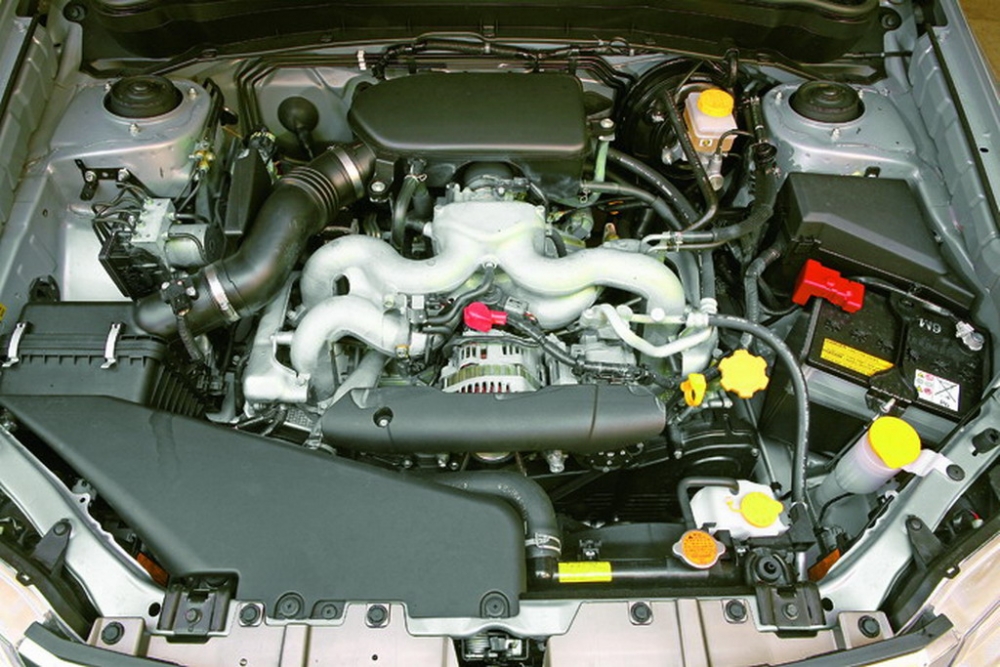
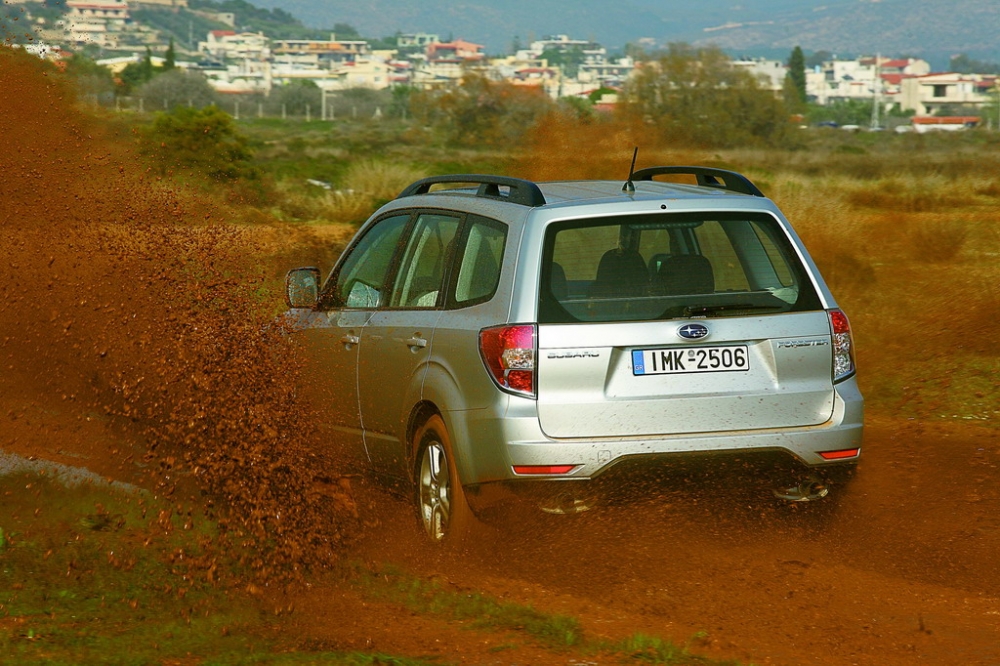 The third generation Forester still uses boxer powerplants. Thereby, Subaru remains one of the two global automakers (the second is Porsche) using engines of this configuration in their production models. And the Japanese are not going to abandon the V-shaped engine with a cylinder bank angle of 180°. A clear example of this is the almost completed development of the world's first turbo diesel boxer engine. This 2-liter engine will also later appear on the Forester along with a new 6-speed manual. But for now it is not available, just as there were no cars with 2.5-liter naturally aspirated engines at the presentation – Foresters with these engines will appear in Russia a little later. For now, two "boxers" are available: a turbocharged 2.5-liter and a naturally aspirated 2-liter. The third generation Forester still uses boxer powerplants. Thereby, Subaru remains one of the two global automakers (the second is Porsche) using engines of this configuration in their production models. And the Japanese are not going to abandon the V-shaped engine with a cylinder bank angle of 180°. A clear example of this is the almost completed development of the world's first turbo diesel boxer engine. This 2-liter engine will also later appear on the Forester along with a new 6-speed manual. But for now it is not available, just as there were no cars with 2.5-liter naturally aspirated engines at the presentation – Foresters with these engines will appear in Russia a little later. For now, two "boxers" are available: a turbocharged 2.5-liter and a naturally aspirated 2-liter. |
 Both engines have undergone a number of changes. Thanks to a new cylinder head and modernized intake, the power of the 2-liter has increased to 150 hp, and torque to 196 Nm. At the same time, fuel efficiency and environmental friendliness have improved. Changes in the 2.5-liter engine affected only the turbocharger. Power remained the same – 230 hp, but torque at low and medium revs improved. The gearboxes also remained unchanged – a 5-speed manual and a 4-speed automatic. Each of them can be paired with any of the engines. Both engines have undergone a number of changes. Thanks to a new cylinder head and modernized intake, the power of the 2-liter has increased to 150 hp, and torque to 196 Nm. At the same time, fuel efficiency and environmental friendliness have improved. Changes in the 2.5-liter engine affected only the turbocharger. Power remained the same – 230 hp, but torque at low and medium revs improved. The gearboxes also remained unchanged – a 5-speed manual and a 4-speed automatic. Each of them can be paired with any of the engines. |
 For the first part of the test route, I got a 2-liter Forester with a manual. An excellent combination for an active driver! The manual transmission absolutely more than compensates for the engine's modest power. The car accelerates wonderfully, and shifting from one gear to another is easy and pleasant. I shift down, and to the characteristic dry growl of the boxer engine, the Forester playfully overtakes on the narrow roads near Thessaloniki. The suspension allows you to hold a high-speed straight perfectly. But that's not all. The organizers had prepared a section of a real mountain serpentine. For the first part of the test route, I got a 2-liter Forester with a manual. An excellent combination for an active driver! The manual transmission absolutely more than compensates for the engine's modest power. The car accelerates wonderfully, and shifting from one gear to another is easy and pleasant. I shift down, and to the characteristic dry growl of the boxer engine, the Forester playfully overtakes on the narrow roads near Thessaloniki. The suspension allows you to hold a high-speed straight perfectly. But that's not all. The organizers had prepared a section of a real mountain serpentine. |
 In corners, the crossover behaves like a regular passenger car, clinging to the mediocre Greek asphalt until the last moment. The low center of mass and excellent all-wheel drive take their toll. The latter, together with the VDC system, also allows you to easily handle quite serious off-road conditions. For example, diagonal wheel hanging is no problem at all for the Forester! And given the large departure and approach angles, this SUV is capable of a lot. But a real test of the driving qualities was possible already on the way back behind the wheel of the 2.5-liter modification with an "automatic." In corners, the crossover behaves like a regular passenger car, clinging to the mediocre Greek asphalt until the last moment. The low center of mass and excellent all-wheel drive take their toll. The latter, together with the VDC system, also allows you to easily handle quite serious off-road conditions. For example, diagonal wheel hanging is no problem at all for the Forester! And given the large departure and approach angles, this SUV is capable of a lot. But a real test of the driving qualities was possible already on the way back behind the wheel of the 2.5-liter modification with an "automatic." |
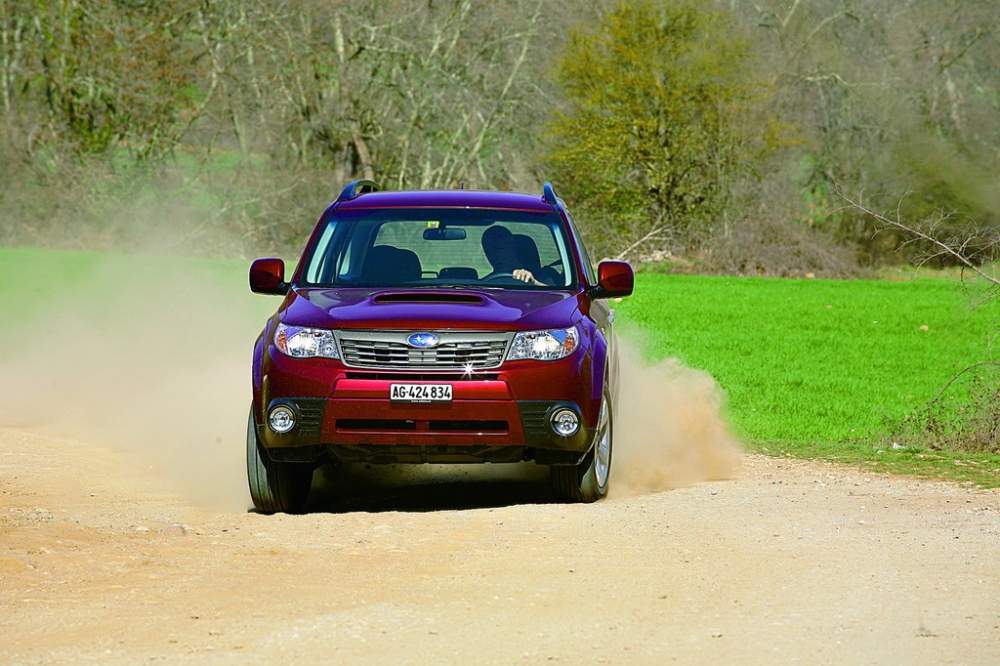
 A gravel section of road about 20 km long did not allow doubting the main thing – the Forester has remained itself. Its ability to move at high speed on a road of terrible quality with fairly large sharp stones scattered here and there has not gone anywhere. Interesting, "tasty" handling and an acceptable level of comfort even in such conditions – these are the undoubted trump cards of this car! Storming one turn after another (as if on the Greek stages of the WRC rally!) and leaving clouds of dust behind me, I almost forgot about the main drawback. This is, of course, the old 4-speed automatic. It, unfortunately, negates the efforts of the 230-horsepower turbo engine. A gravel section of road about 20 km long did not allow doubting the main thing – the Forester has remained itself. Its ability to move at high speed on a road of terrible quality with fairly large sharp stones scattered here and there has not gone anywhere. Interesting, "tasty" handling and an acceptable level of comfort even in such conditions – these are the undoubted trump cards of this car! Storming one turn after another (as if on the Greek stages of the WRC rally!) and leaving clouds of dust behind me, I almost forgot about the main drawback. This is, of course, the old 4-speed automatic. It, unfortunately, negates the efforts of the 230-horsepower turbo engine. |
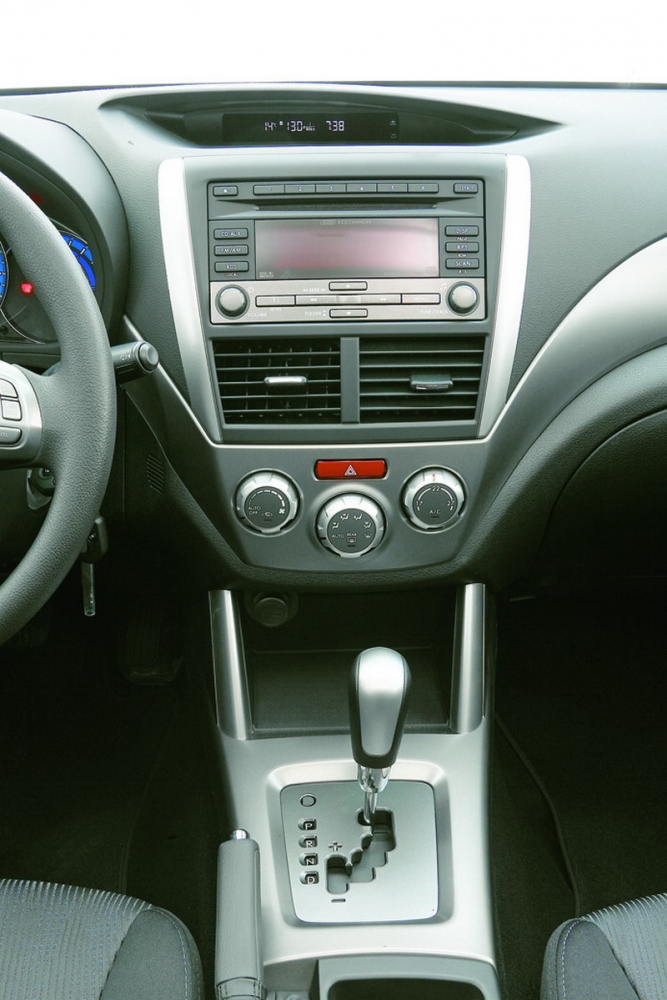 What would happen if you add an automatic transmission to the regular 2-liter? To find out, after lunch I take the keys to just such a car from the organizers. By the way, this is the most popular configuration in Russia. I also chose a "statistically average" route – about 15 km of highway, and then the city streets of Thessaloniki. It is in such conditions that most modern cars are operated, and the Forester is no exception. As a result, I found out that such a combination of gearbox and engine is contraindicated for active drivers. The long gears of the sluggish "automatic" and 150 horsepower of the engine are the height of calmness and slowness. If on the highway, having reached cruising speed, you can somehow come to terms with this, then in the city – either the roar of the engine in second gear, or very sluggish acceleration in third begins to irritate very quickly. Why didn't Subaru offer an adequate automatic transmission for the new generation? A mystery. Apparently, they are saving money. Moreover, excessively. Perhaps the only serious drawback, but... really serious. It's a pity, of course, that versions with 2.5-liter naturally aspirated engines were not yet available. They could well compete in popularity with the 2-liter ones. But there is no doubt that the new generation Forester, even in existing variants, will be in demand. A wonderful car with a good image and excellent history, which handles superbly both on asphalt and off-road. And, importantly, reliable. And Greece... In this country, there really was everything to test these qualities. What would happen if you add an automatic transmission to the regular 2-liter? To find out, after lunch I take the keys to just such a car from the organizers. By the way, this is the most popular configuration in Russia. I also chose a "statistically average" route – about 15 km of highway, and then the city streets of Thessaloniki. It is in such conditions that most modern cars are operated, and the Forester is no exception. As a result, I found out that such a combination of gearbox and engine is contraindicated for active drivers. The long gears of the sluggish "automatic" and 150 horsepower of the engine are the height of calmness and slowness. If on the highway, having reached cruising speed, you can somehow come to terms with this, then in the city – either the roar of the engine in second gear, or very sluggish acceleration in third begins to irritate very quickly. Why didn't Subaru offer an adequate automatic transmission for the new generation? A mystery. Apparently, they are saving money. Moreover, excessively. Perhaps the only serious drawback, but... really serious. It's a pity, of course, that versions with 2.5-liter naturally aspirated engines were not yet available. They could well compete in popularity with the 2-liter ones. But there is no doubt that the new generation Forester, even in existing variants, will be in demand. A wonderful car with a good image and excellent history, which handles superbly both on asphalt and off-road. And, importantly, reliable. And Greece... In this country, there really was everything to test these qualities. |
 |
 |
 |
“Lesnik” – he is “Lesnik” in Greece too
Greek pastry chef Dymba in the film adaptation of Chekhov's "The Wedding" claimed that "in Greece, there is everything." Subaru's invitation to travel to Thessaloniki allowed us to see this firsthand. Now we can also say with full confidence: yes, Greece has everything needed for... a Subaru Forester test drive.
Test drive photos
Comments
No comments yet. Say the first word.