
 In December 2007, the world premiere of the new (third) generation Subaru Forester took place, during the creation of which the developers decided to abandon their concept of a cross-class car and set a course called "crossover".Comments (1)
With the release of the first generation wagon with increased off-road capability in 1997, Subaru occupied a certain niche in this still emerging segment. Initially, the utilitarian appearance of the "forester" did not gain the popularity that the automaker had expected. However, the versatile development of the automotive industry contributed to the fact that Subaru Forester became one of the most popular cars in its class. "Honest" all-wheel drive, boxer engines, and the leading position of Subaru in motorsport became the main trump cards of the Forester.
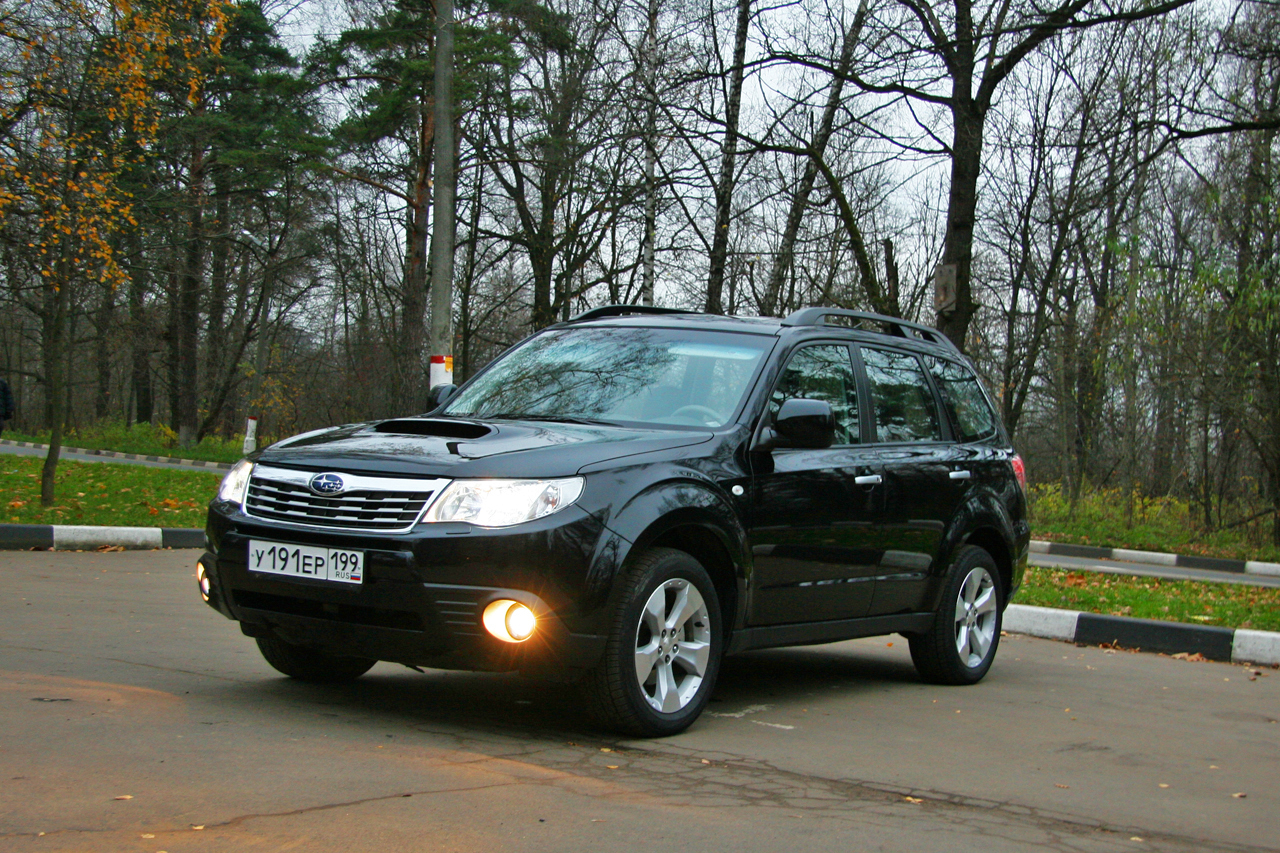 |
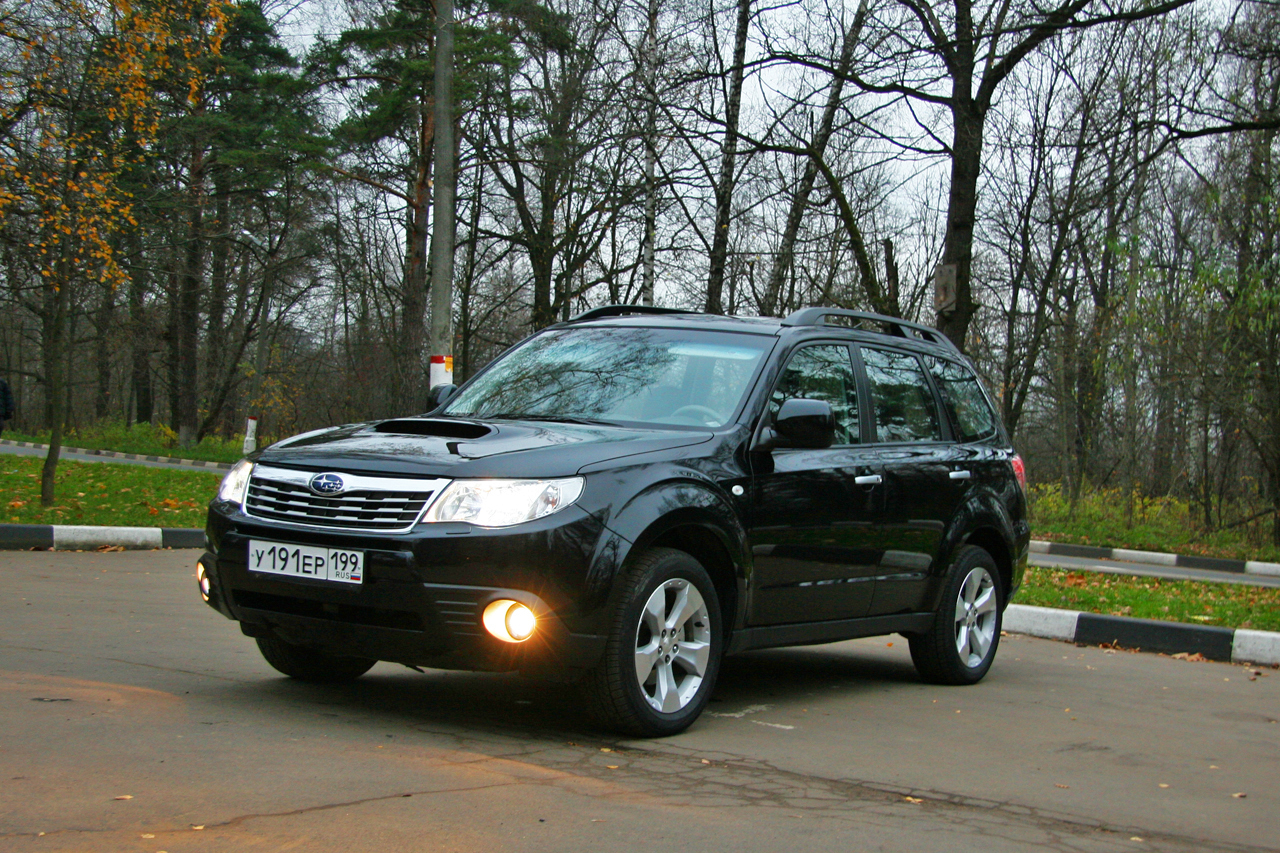
| In December 2007, the world premiere of the new (third) generation Subaru Forester took place, during the creation of which the developers decided to abandon their concept of a cross-class car and set a course called "crossover". |
Following the first generation, the second one appeared. Then the angular image of the "Forester" acquired more rounded shapes, receiving a dose of successful design solutions. As a result, the "wagon" gained driver qualities, became more powerful and prestigious. Subsequently, the success of the Forester model only grew, as evidenced by its recognition as "car of the year" in various countries around the world. And so, in December 2007, the world premiere of the new (third) generation Subaru Forester took place, during the creation of which the developers decided to abandon their concept of a cross-class car and set a course called "crossover".
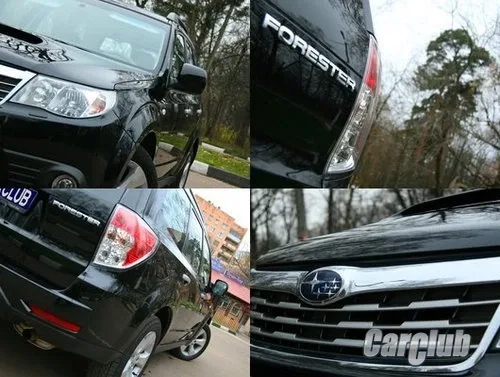 |
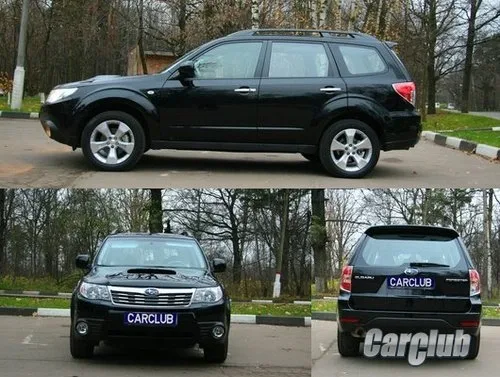
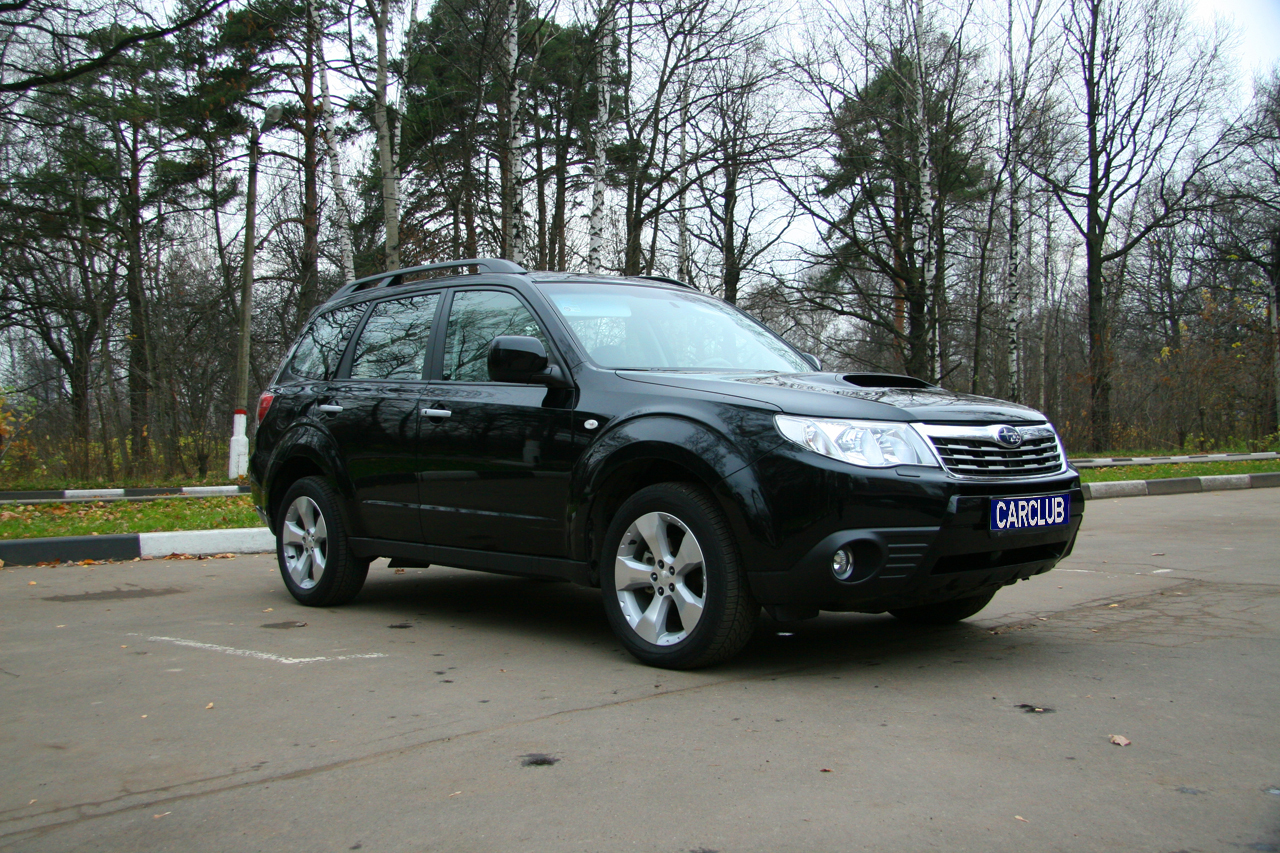
| The new "Forester" acquired completely different optics and received a different shape of the false radiator grille. The image of the new product became more rounded and swift. |
The new product has significantly grown in size: the body length increased by 74 mm and amounted to 4,560 mm; the "Forester" added 45 mm in width, and now it is 1,780 mm; the height was 1,675 mm (an increase of 85 mm), and the wheelbase increased to 2,615 mm. Such external data are comparable to Toyota RAV4 and Honda CR-V, which automatically brought Subaru Forester into the crossover segment. This is where the first contradictions arose. Someone will joyfully exclaim: "Finally, the Forester has been made into a normal full-fledged crossover," and they will be right. However, on the other hand, with the release of the new generation, Subaru abandoned the cross-class nature that attracted many Forester fans who loved the combination of sporty car handling and the makings of an "off-roader". Honestly, if you remove the badge with the model name and the predatory opening on the hood (on turbocharged versions), I would never have thought that in front of me was a Subaru Forester.
We open the door, and the first thing that catches the eye is the presence of door frames. A tribute to safety, nothing can be done, and it's a pity. Once upon a time, frameless doors were a distinctive "feature" of Subaru, and millions of fans loved these cars, including for this reason.
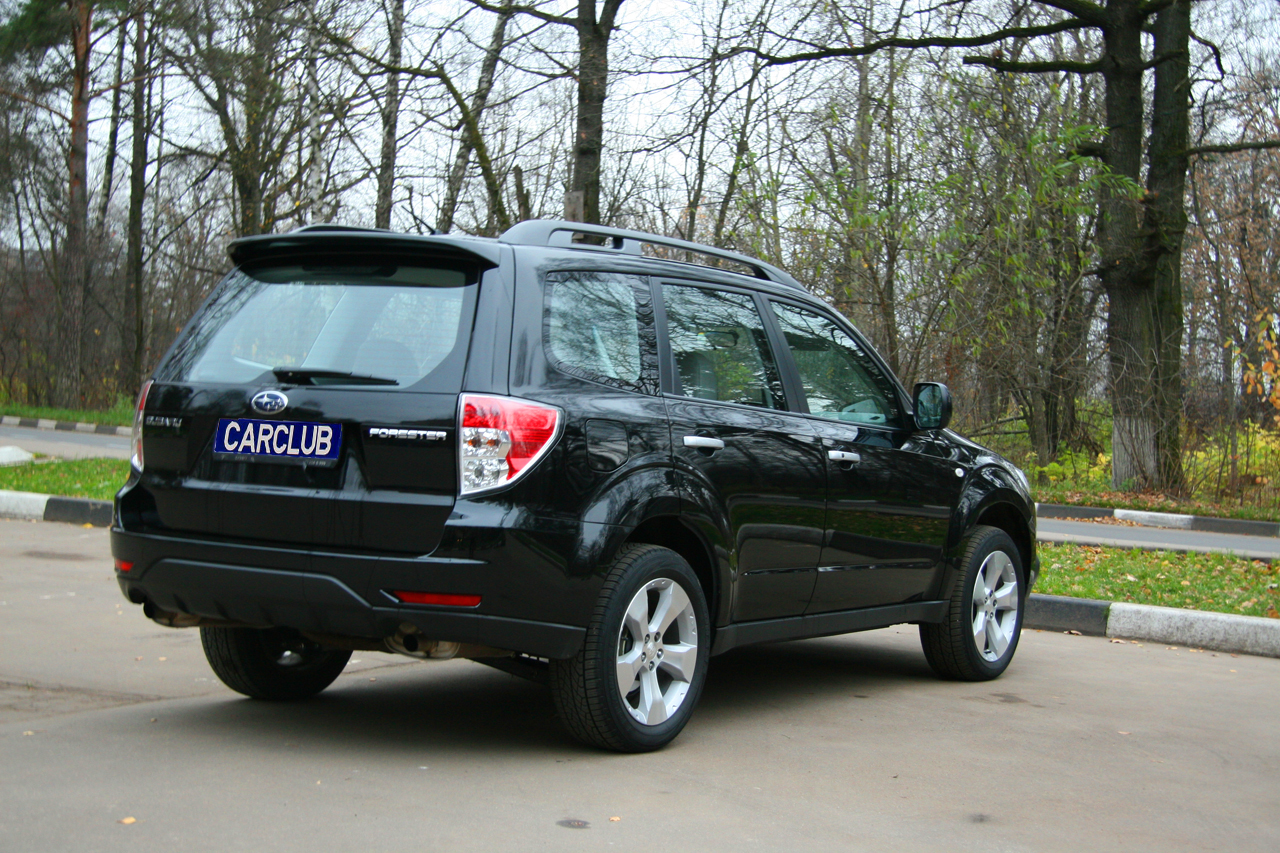 |
| The "Forester" of the latest generation has significantly increased in size: the body length increased by 74 mm and amounted to 4,560 mm; the "Forester" added 45 mm in width, and now it is 1,780 mm; the height was 1,675 mm (an increase of 85 mm), and the wheelbase increased to 2,615 mm. Such external data are comparable to Toyota RAV4 and Honda CR-V |
The interior has undergone noticeable changes that have clearly been beneficial. More smooth lines and transitions have appeared in the design, replacing the angular solutions of the previous generation. The steering column is adjustable both by tilt angle and reach. The plastic used in the dashboard trim is pleasing to the eye, and only after a "knock" test do you realize that it is actually made of hard plastics. The comfortable driver's seat is equipped with electric drive. To the left of the steering column, a Start/Stop button has appeared – the prerogative of the top trim. The instrument panel with pleasant blue backlighting suffers from too fine calibration of the tachometer. If it weren't for the frankly "cheap" knobs responsible for controlling the climate system and the plastic painted to look like "aluminum", the interior of the new "Forester" could have given more pleasant impressions.
Rear passengers will be able to truly appreciate the increased external dimensions, having received a sufficient amount of free space, an armrest, and convenient illuminated cup holders.
 |
| The 230-horsepower Subaru Forester with an "automatic" demonstrates brisk and powerful acceleration, accompanied by the noble roar of the boxer engine. Good traction begins from the very bottom and does not disappear until the tachometer needle reaches the maximum permissible revs. It is noteworthy that turbocharged versions are equipped not with electric, but with a traditional hydraulic power steering. As a result, the steering wheel in these modifications is more informative with good reactive effort and feedback. |
For the test drive, we got a Subaru Forester equipped with a boxer gasoline turbocharged engine with a volume of 2.5 liters and a power of 230 hp. The latest generation of "foresters" equipped with a naturally aspirated engine is distinguished by the presence of a DOHC gas distribution mechanism. Both the turbocharged and naturally aspirated engines can optionally be paired with a 5-speed "manual" or a 4-range "automatic". Those who chose a car with a "stick" will appreciate the "Hill Start Assist" system, which allows you to avoid the car rolling back when starting on a hill.
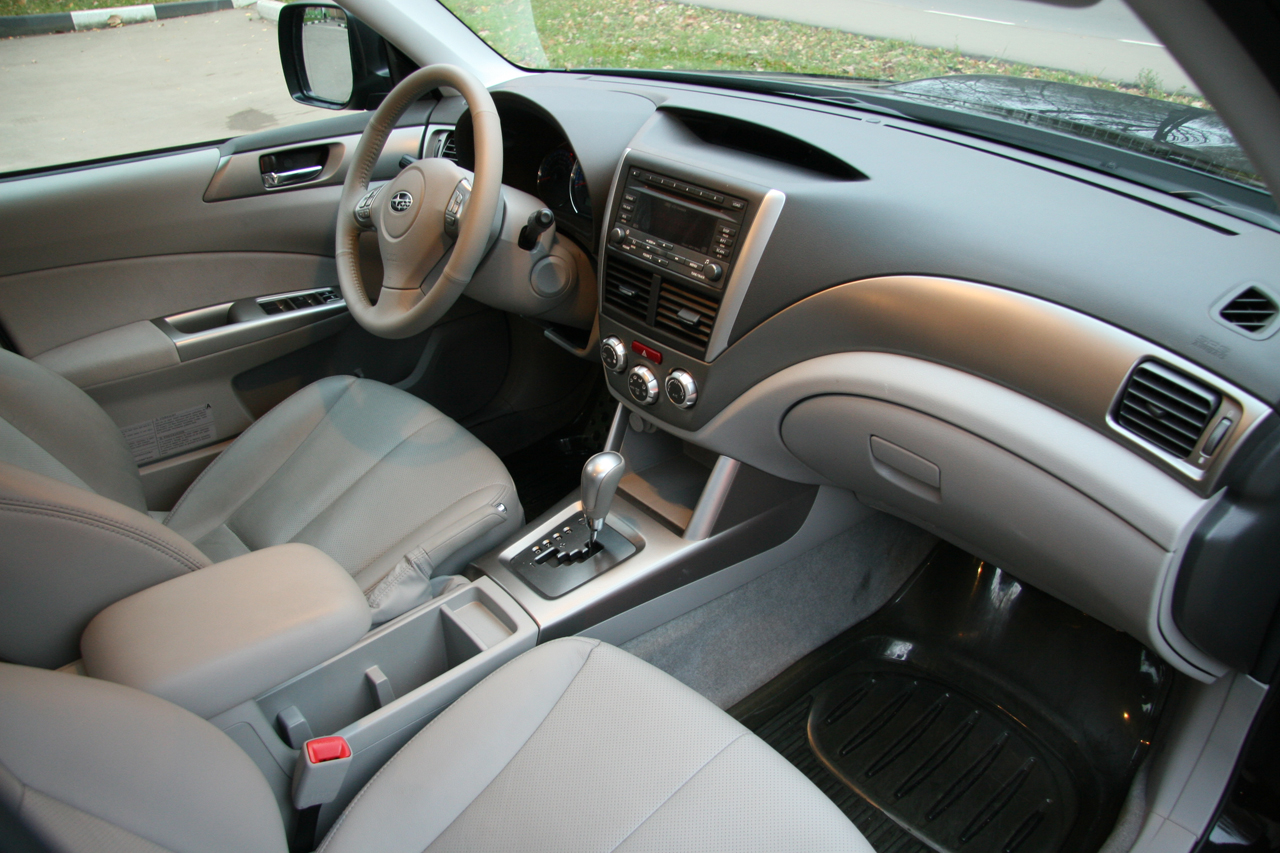 |
| The interior has undergone noticeable changes that have clearly been beneficial. More smooth lines and transitions have appeared in the design, replacing the angular solutions of the previous generation. In addition, the trim materials have improved, although the plastic is still hard. |
Also, a new engine control system SI-DRIVE has appeared, designed to improve fuel efficiency without losing dynamics. The 230-horsepower Subaru Forester with an "automatic" demonstrates brisk and powerful acceleration, accompanied by the noble roar of the boxer engine. Good traction begins from the very bottom and does not disappear until the tachometer needle reaches the maximum permissible revs. Characteristically, the turbocharged and naturally aspirated versions of the 2.5-liter engine, unlike the 2.0-liter engine, are equipped with a traditional hydraulic power steering. As a result, the steering wheel in the powerful modifications of the "forester" is more informative with good reactive effort and feedback.
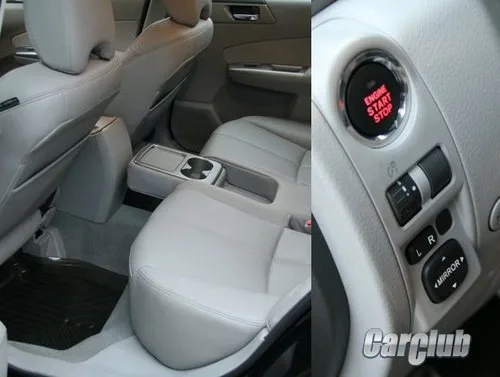 |
| With the growth of external dimensions, comfort for rear passengers has also increased. The legroom has significantly increased. In the sofa cushion, convenient illuminated cup holders and an improvised table have appeared. For the top version, a keyless entry system and an engine start button located to the left of the steering wheel are available. |
Despite the increased dimensions, the handling of the latest generation reveals the sporty traits of previous Subaru Forester models. Of course, due to the increased ground clearance, body rolls have become much larger, but the "forester" enters a corner with the same enthusiasm. If you overdo it with the accelerator, the Forester will respond with an obvious understeer, which, however, is easily corrected by lifting off the throttle. But now the suspension with increased travel swallows potholes like seeds. On dirt roads, it's also no problem. Vibrations from bumps are calmly damped by the suspension, not having time to "jump" onto the body, and the sporty handling allows you to enjoy winding dirt turns. However, you need to be careful: if you load the front end harder in a corner, the "Subaru" will obediently wag its rear axle, ready to go into a classic drift.
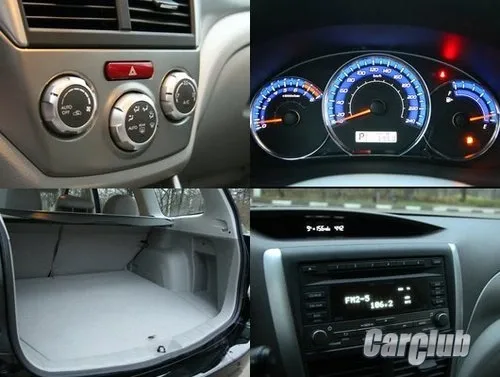 |
| The frankly cheap climate control knobs spoil the positive impression of the interior trim. The instrument panel suffers from too small markings. No complaints about the trunk - if you fold the rear row of seats, the Forester will please you with 1610 liters of useful volume. |
The good old four-speed automatic transmission Sportshift has been refined. As a result, gear changes are even smoother and faster. Delays during shifts are practically absent, but you can't count on fuel economy. With frequent accelerations and fast overtaking, the four-speed transmission layout does not allow the tachometer needle to leave the high rpm zone, which makes you check the fuel level in the tank more and more often.
With the release of the new generation of the Subaru Forester, the crossover segment has gained a strong newcomer that can provide worthy competition to the class leaders. The new "forester" features good equipment, good handling, and an excellent all-wheel drive system, in which torque is constantly transmitted to the axles and distributed through a differential with a viscous coupling (in most crossovers, all-wheel drive is plug-in, which does not have a positive effect on handling on slippery roads).
 |
| Despite entering the crossover segment, the Subaru Forester remained true to "real" all-wheel drive. With this layout, torque is constantly transmitted to the axles and distributed through a differential with a viscous coupling (in most crossovers, all-wheel drive is plug-in, which does not have a positive effect on handling on slippery roads). |
Of course, it's a bit sad that the good old Forester, which has won so many fans, has moved to the secondary market. After all, true fans of a particular brand or model are often very conservative about the radical changes that automakers have prepared for them. However, in the modern world, you can't stand still – progress is inevitable. As one of my acquaintances said: don't be a system, be its development.
Ruslan Galimov