|
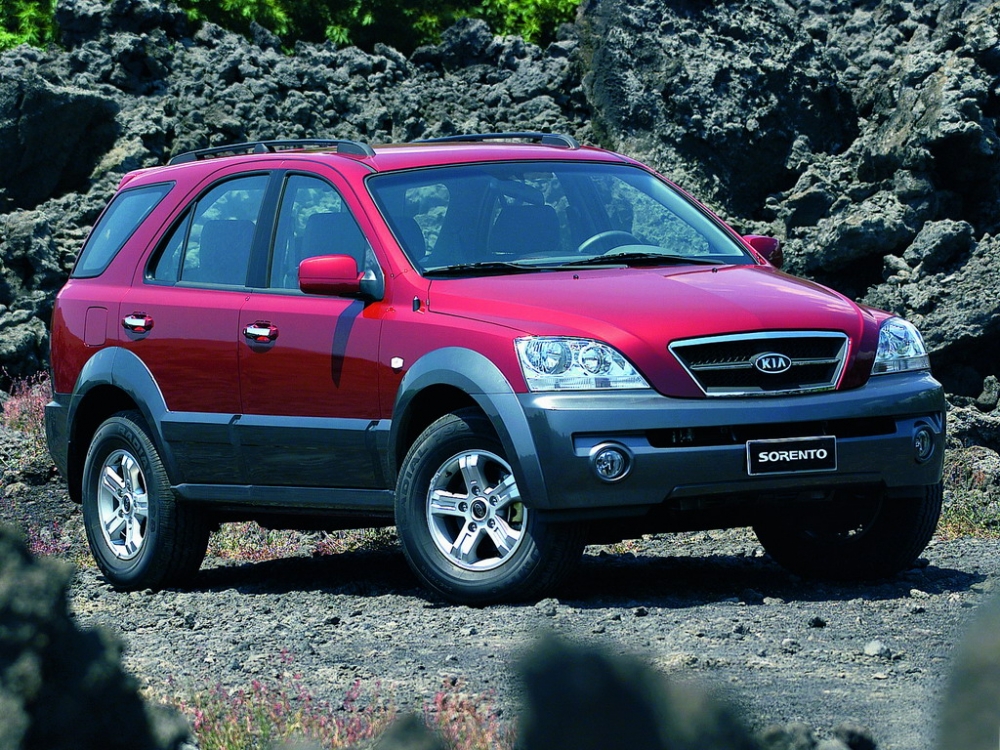
 We deliberately took diesel versions for comparison. The logic is simple: a person looking at a Korean SUV is most likely thinking about economy, and therefore about fuel consumption. Petrol units, as a rule, are voracious V6s with a displacement of more than three liters. And sales statistics confirm this: in our country, Rexton and Sorento are most often bought with heavy-fuel engines. As you know, there is no accounting for taste, and we will not argue. We will only say that the angular, classic look of the Kia is unlikely to surprise anyone, but it looks solid and neat, while the "inflated" SsangYong with bulging headlights and a massive Mercedes-style grille is clearly trying to attract attention. We deliberately took diesel versions for comparison. The logic is simple: a person looking at a Korean SUV is most likely thinking about economy, and therefore about fuel consumption. Petrol units, as a rule, are voracious V6s with a displacement of more than three liters. And sales statistics confirm this: in our country, Rexton and Sorento are most often bought with heavy-fuel engines. As you know, there is no accounting for taste, and we will not argue. We will only say that the angular, classic look of the Kia is unlikely to surprise anyone, but it looks solid and neat, while the "inflated" SsangYong with bulging headlights and a massive Mercedes-style grille is clearly trying to attract attention. |
 And it certainly succeeds, albeit at the cost of an ambiguous public reaction. Before us are two opposites of Korean design: one is simple and inconspicuous, the other is overly pompous and ornate. They are still far from Japanese precision or European subtlety. Nevertheless, many of our buyers find this quite enough - the abundance of Sorento and Rexton on the roads is clear proof of that. And it certainly succeeds, albeit at the cost of an ambiguous public reaction. Before us are two opposites of Korean design: one is simple and inconspicuous, the other is overly pompous and ornate. They are still far from Japanese precision or European subtlety. Nevertheless, many of our buyers find this quite enough - the abundance of Sorento and Rexton on the roads is clear proof of that. |
 The fact that a turbodiesel works under the Rexton's hood is indicated by the RX270XVT badges on the front doors. The Kia is more modest in this regard - there are no identification marks distinguishing it from the petrol version. The XVT abbreviation indicates that the licensed Mercedes diesel, which SsangYong traditionally installs on its models, has undergone another modernization: it has variable intake geometry and a new turbine. Power has increased to 186 hp, torque - to 402 Nm. At the same time, the previous XDi (165 hp and 340 Nm) remains on the assembly line for simpler trim levels. The fact that a turbodiesel works under the Rexton's hood is indicated by the RX270XVT badges on the front doors. The Kia is more modest in this regard - there are no identification marks distinguishing it from the petrol version. The XVT abbreviation indicates that the licensed Mercedes diesel, which SsangYong traditionally installs on its models, has undergone another modernization: it has variable intake geometry and a new turbine. Power has increased to 186 hp, torque - to 402 Nm. At the same time, the previous XDi (165 hp and 340 Nm) remains on the assembly line for simpler trim levels. |
 But the Sorento's engine is already Kia's own development. It is a 2.5-liter CRD VGT with Common Rail fuel supply. If on the previous generation SUV a similar displacement turbodiesel produced only 140 hp, here it is all 170. The progress is obvious! When you turn the key, both interiors are filled with characteristic diesel grumbling, although vibrations on the steering wheel and pedals are almost not felt. Only if you sharply press the gas in neutral, the cars shudder displeasedly with the whole body. But there is no point in revving for a long time while standing still - it's time to hit the road. But the Sorento's engine is already Kia's own development. It is a 2.5-liter CRD VGT with Common Rail fuel supply. If on the previous generation SUV a similar displacement turbodiesel produced only 140 hp, here it is all 170. The progress is obvious! When you turn the key, both interiors are filled with characteristic diesel grumbling, although vibrations on the steering wheel and pedals are almost not felt. Only if you sharply press the gas in neutral, the cars shudder displeasedly with the whole body. But there is no point in revving for a long time while standing still - it's time to hit the road. |
 The Kia engine runs smoother as it gains speed and sounds almost no different from a petrol one. But the SsangYong engine continues to rumble like a tractor, loudly sobbing and whistling with the turbine, like a truck. Even good sound insulation cannot drown out this symphony. But over time you get used to this voice and even begin to find something pleasant in its hoarseness. In acceleration, both cars go almost on par. This is confirmed by similar acceleration figures to a hundred - quite good for two-ton SUVs. Both in the city and on the highway, there is enough dynamics with a reserve. But personally, I liked the Sorento more, or rather its "automatic" (both cars have five-speed gearboxes). The shifts here are predictable, quite fast, and the tachometer needle constantly stays in the most efficient range, which makes traction control very convenient. The Rexton's gearbox is more thoughtful, and at high speeds it sometimes shifts without apparent need. The Kia engine runs smoother as it gains speed and sounds almost no different from a petrol one. But the SsangYong engine continues to rumble like a tractor, loudly sobbing and whistling with the turbine, like a truck. Even good sound insulation cannot drown out this symphony. But over time you get used to this voice and even begin to find something pleasant in its hoarseness. In acceleration, both cars go almost on par. This is confirmed by similar acceleration figures to a hundred - quite good for two-ton SUVs. Both in the city and on the highway, there is enough dynamics with a reserve. But personally, I liked the Sorento more, or rather its "automatic" (both cars have five-speed gearboxes). The shifts here are predictable, quite fast, and the tachometer needle constantly stays in the most efficient range, which makes traction control very convenient. The Rexton's gearbox is more thoughtful, and at high speeds it sometimes shifts without apparent need. |
 The transmissions of both cars respond slowly to kick-down, taking a long time to shift down, and their manual modes are frankly inconvenient. In the SsangYong, gears can be selected either with an awkward "flag" on the gear lever or with buttons on the steering wheel, while in the Kia - only with the lever, moving it from Drive to the right. Both cars pause for a second, squat on the rear, and then an unpleasant jerk with acceleration follows. So it is better to limit yourself to the usual Drive mode. Up to speeds of 120-140 km/h, both cars behave decently. They confidently hold the straight line and almost do not react to bumps. But in corners, everything is not so rosy. Large steering gear ratios force you to turn the steering wheel at impressive angles, while giving the driver almost no feedback. The Sorento's steering wheel at least allows you to feel the angle of the front wheels and has an almost imperceptible but adequately increasing feedback. But the Rexton is completely deprived of this feedback, but its steering wheel is better protected from vibrations - jolts and impacts are almost not felt on it. The transmissions of both cars respond slowly to kick-down, taking a long time to shift down, and their manual modes are frankly inconvenient. In the SsangYong, gears can be selected either with an awkward "flag" on the gear lever or with buttons on the steering wheel, while in the Kia - only with the lever, moving it from Drive to the right. Both cars pause for a second, squat on the rear, and then an unpleasant jerk with acceleration follows. So it is better to limit yourself to the usual Drive mode. Up to speeds of 120-140 km/h, both cars behave decently. They confidently hold the straight line and almost do not react to bumps. But in corners, everything is not so rosy. Large steering gear ratios force you to turn the steering wheel at impressive angles, while giving the driver almost no feedback. The Sorento's steering wheel at least allows you to feel the angle of the front wheels and has an almost imperceptible but adequately increasing feedback. But the Rexton is completely deprived of this feedback, but its steering wheel is better protected from vibrations - jolts and impacts are almost not felt on it. |
 The SsangYong generally feels like a more comfortable car, largely due to better sound insulation and a rich interior. On gentle waves, it smoothly lulls passengers, while the Sorento at speeds over 150 km/h in a similar situation begins to rock up and down with a large amplitude. Strange, given the overall composure of its suspension. Perhaps the shock absorbers of the test car are already quite worn out? In any case, there will be few people willing to rush on these SUVs faster than 140 km/h. After all, then their main trump cards are lost - comfort and smoothness of the ride, and a lack of power begins to be felt. Aerodynamic noises become annoying, the wind howls in the mirrors, the cars begin to float on the road, forcing the driver to constantly strain. And the brakes at such speeds no longer cope, although in normal modes there are no complaints about them. I liked the Kia's brakes more. But the soft, long-travel pedal of the SsangYong - less. The SsangYong generally feels like a more comfortable car, largely due to better sound insulation and a rich interior. On gentle waves, it smoothly lulls passengers, while the Sorento at speeds over 150 km/h in a similar situation begins to rock up and down with a large amplitude. Strange, given the overall composure of its suspension. Perhaps the shock absorbers of the test car are already quite worn out? In any case, there will be few people willing to rush on these SUVs faster than 140 km/h. After all, then their main trump cards are lost - comfort and smoothness of the ride, and a lack of power begins to be felt. Aerodynamic noises become annoying, the wind howls in the mirrors, the cars begin to float on the road, forcing the driver to constantly strain. And the brakes at such speeds no longer cope, although in normal modes there are no complaints about them. I liked the Kia's brakes more. But the soft, long-travel pedal of the SsangYong - less. |
 The Rexton is very comfortable even on a broken dirt road. But the excessive softness of the suspension sometimes leads to breakdowns on large bumps. The Sorento, on the contrary, goes over large potholes with pleasure, excellent energy intensity, but shudders on small road trifles. And the vibrations of unsprung masses are stronger in it. Apparently, the dependent rear axle affects it, unlike the independent suspension on this version of the Rexton (XDi modifications still have a beam axle). The all-wheel-drive transmissions of the test cars are devoid of differential locks. Torque between the axles is distributed automatically (rigid connection of the front axle and locking of the center differential are only on the Rexton XDi). Therefore, we did not expect miracles from these crossovers, and even from the Kia, despite the presence of a low range, they did not happen. The cars cannot resist diagonal hanging. But to achieve such hanging, you need to try hard. The Rexton is very comfortable even on a broken dirt road. But the excessive softness of the suspension sometimes leads to breakdowns on large bumps. The Sorento, on the contrary, goes over large potholes with pleasure, excellent energy intensity, but shudders on small road trifles. And the vibrations of unsprung masses are stronger in it. Apparently, the dependent rear axle affects it, unlike the independent suspension on this version of the Rexton (XDi modifications still have a beam axle). The all-wheel-drive transmissions of the test cars are devoid of differential locks. Torque between the axles is distributed automatically (rigid connection of the front axle and locking of the center differential are only on the Rexton XDi). Therefore, we did not expect miracles from these crossovers, and even from the Kia, despite the presence of a low range, they did not happen. The cars cannot resist diagonal hanging. But to achieve such hanging, you need to try hard. |
 Large suspension travels and a significant axle articulation angle allow, with the help of the ESP system, to overcome quite serious off-road conditions. The Sorento's cross-country ability is slightly better due to a smaller front overhang and a shorter wheelbase, despite a smaller ground clearance. In addition, the low range allows you to confidently storm climbs, and on descents not be afraid to accelerate too much. The SsangYong is equipped with a hill descent control system, but by the time it activates, the SUV manages to accelerate to such a speed that it becomes scary. A flaw. It is better to hold the car with the brakes. Large suspension travels and a significant axle articulation angle allow, with the help of the ESP system, to overcome quite serious off-road conditions. The Sorento's cross-country ability is slightly better due to a smaller front overhang and a shorter wheelbase, despite a smaller ground clearance. In addition, the low range allows you to confidently storm climbs, and on descents not be afraid to accelerate too much. The SsangYong is equipped with a hill descent control system, but by the time it activates, the SUV manages to accelerate to such a speed that it becomes scary. A flaw. It is better to hold the car with the brakes. |
 So who buys the Sorento and Rexton? Marketers claim that these are mainly middle-aged men, family men, ready to sacrifice driving sharpness for comfort, practicality and versatility. It is hard to argue with that. Especially since you can safely add an acceptable price and good quality of modern Korean cars to this. And the design? Here you choose for yourself - either be a gray mouse on the Sorento, or flaunt the eclectic face of the Rexton. Do you like neither one nor the other? Save up for an advanced "European"... So who buys the Sorento and Rexton? Marketers claim that these are mainly middle-aged men, family men, ready to sacrifice driving sharpness for comfort, practicality and versatility. It is hard to argue with that. Especially since you can safely add an acceptable price and good quality of modern Korean cars to this. And the design? Here you choose for yourself - either be a gray mouse on the Sorento, or flaunt the eclectic face of the Rexton. Do you like neither one nor the other? Save up for an advanced "European"... |
 History History
|


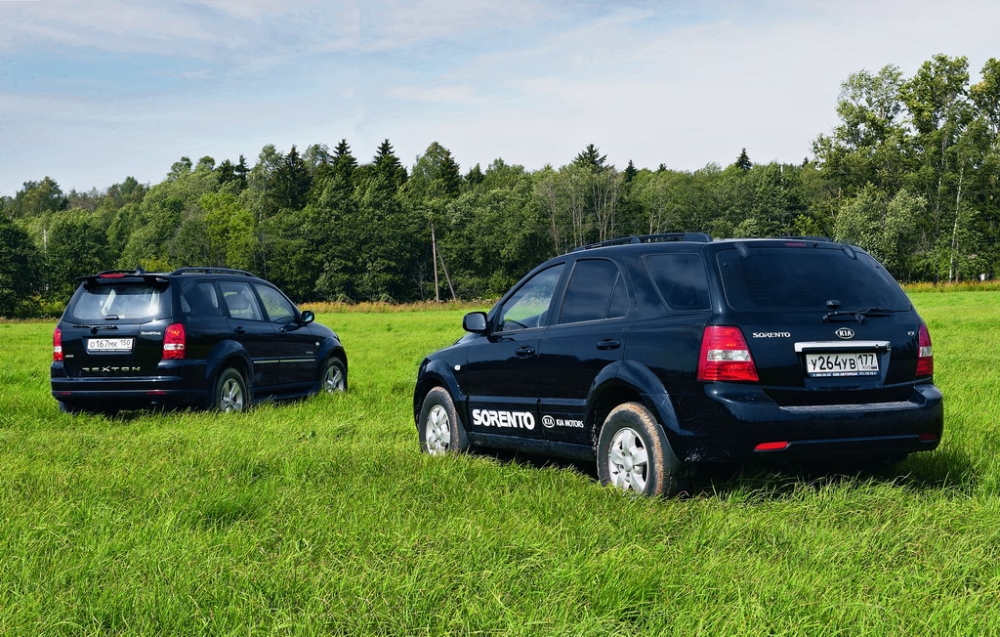
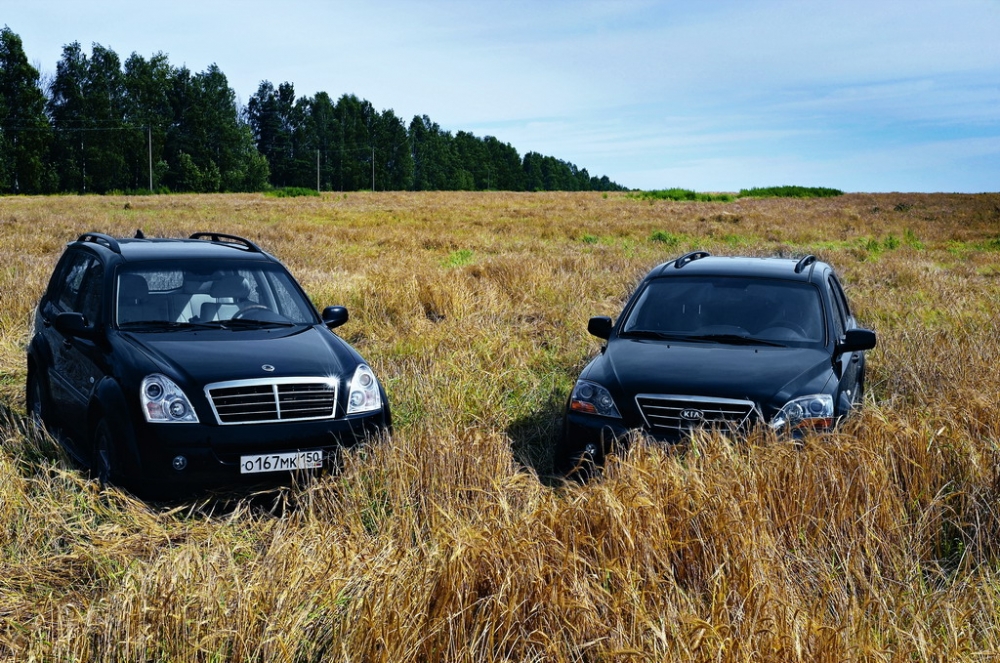 We deliberately took diesel versions for comparison. The logic is simple: a person looking at a Korean SUV is most likely thinking about economy, and therefore about fuel consumption. Petrol units, as a rule, are voracious V6s with a displacement of more than three liters. And sales statistics confirm this: in our country, Rexton and Sorento are most often bought with heavy-fuel engines. As you know, there is no accounting for taste, and we will not argue. We will only say that the angular, classic look of the Kia is unlikely to surprise anyone, but it looks solid and neat, while the "inflated" SsangYong with bulging headlights and a massive Mercedes-style grille is clearly trying to attract attention.
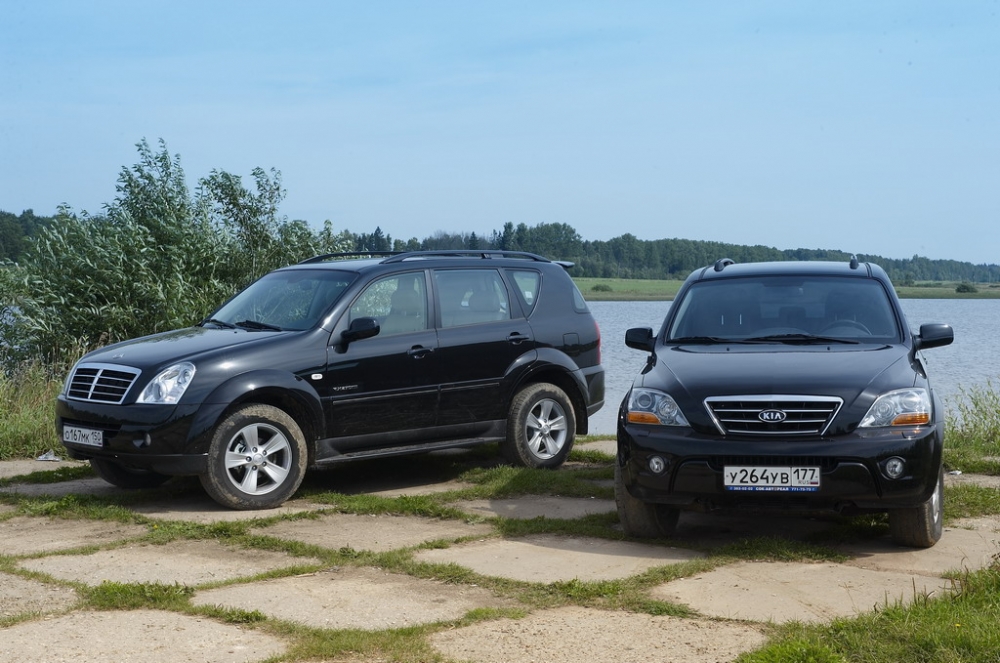 And it certainly succeeds, albeit at the cost of an ambiguous public reaction. Before us are two opposites of Korean design: one is simple and inconspicuous, the other is overly pompous and ornate. They are still far from Japanese precision or European subtlety. Nevertheless, many of our buyers find this quite enough - the abundance of Sorento and Rexton on the roads is clear proof of that.
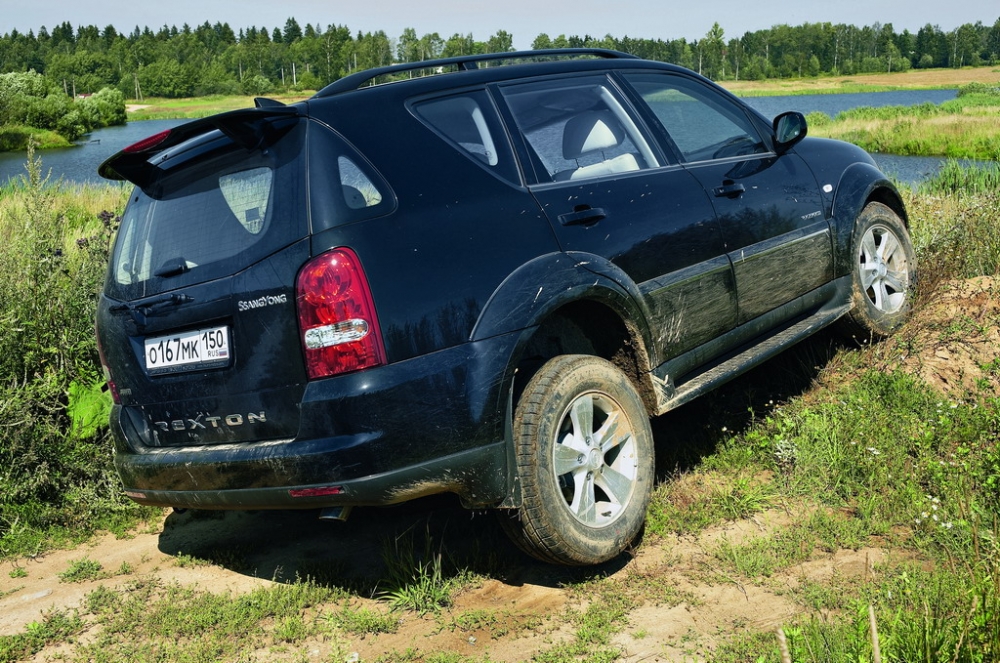
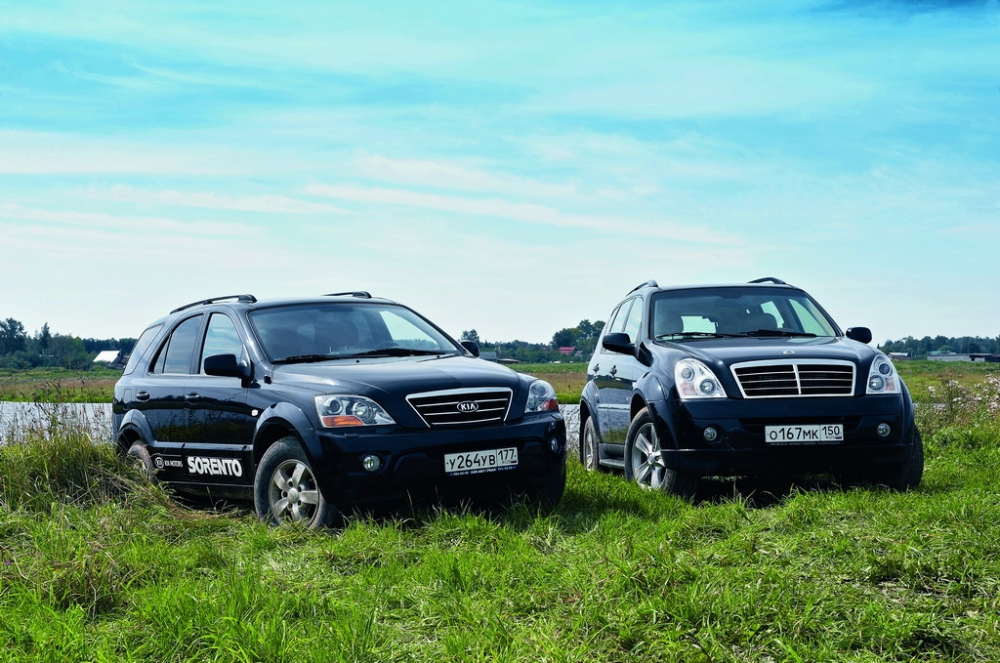 The fact that a turbodiesel works under the Rexton's hood is indicated by the RX270XVT badges on the front doors. The Kia is more modest in this regard - there are no identification marks distinguishing it from the petrol version. The XVT abbreviation indicates that the licensed Mercedes diesel, which SsangYong traditionally installs on its models, has undergone another modernization: it has variable intake geometry and a new turbine. Power has increased to 186 hp, torque - to 402 Nm. At the same time, the previous XDi (165 hp and 340 Nm) remains on the assembly line for simpler trim levels.
 But the Sorento's engine is already Kia's own development. It is a 2.5-liter CRD VGT with Common Rail fuel supply. If on the previous generation SUV a similar displacement turbodiesel produced only 140 hp, here it is all 170. The progress is obvious! When you turn the key, both interiors are filled with characteristic diesel grumbling, although vibrations on the steering wheel and pedals are almost not felt. Only if you sharply press the gas in neutral, the cars shudder displeasedly with the whole body. But there is no point in revving for a long time while standing still - it's time to hit the road.
 The Kia engine runs smoother as it gains speed and sounds almost no different from a petrol one. But the SsangYong engine continues to rumble like a tractor, loudly sobbing and whistling with the turbine, like a truck. Even good sound insulation cannot drown out this symphony. But over time you get used to this voice and even begin to find something pleasant in its hoarseness. In acceleration, both cars go almost on par. This is confirmed by similar acceleration figures to a hundred - quite good for two-ton SUVs. Both in the city and on the highway, there is enough dynamics with a reserve. But personally, I liked the Sorento more, or rather its "automatic" (both cars have five-speed gearboxes). The shifts here are predictable, quite fast, and the tachometer needle constantly stays in the most efficient range, which makes traction control very convenient. The Rexton's gearbox is more thoughtful, and at high speeds it sometimes shifts without apparent need.
 The transmissions of both cars respond slowly to kick-down, taking a long time to shift down, and their manual modes are frankly inconvenient. In the SsangYong, gears can be selected either with an awkward "flag" on the gear lever or with buttons on the steering wheel, while in the Kia - only with the lever, moving it from Drive to the right. Both cars pause for a second, squat on the rear, and then an unpleasant jerk with acceleration follows. So it is better to limit yourself to the usual Drive mode. Up to speeds of 120-140 km/h, both cars behave decently. They confidently hold the straight line and almost do not react to bumps. But in corners, everything is not so rosy. Large steering gear ratios force you to turn the steering wheel at impressive angles, while giving the driver almost no feedback. The Sorento's steering wheel at least allows you to feel the angle of the front wheels and has an almost imperceptible but adequately increasing feedback. But the Rexton is completely deprived of this feedback, but its steering wheel is better protected from vibrations - jolts and impacts are almost not felt on it.
 The SsangYong generally feels like a more comfortable car, largely due to better sound insulation and a rich interior. On gentle waves, it smoothly lulls passengers, while the Sorento at speeds over 150 km/h in a similar situation begins to rock up and down with a large amplitude. Strange, given the overall composure of its suspension. Perhaps the shock absorbers of the test car are already quite worn out? In any case, there will be few people willing to rush on these SUVs faster than 140 km/h. After all, then their main trump cards are lost - comfort and smoothness of the ride, and a lack of power begins to be felt. Aerodynamic noises become annoying, the wind howls in the mirrors, the cars begin to float on the road, forcing the driver to constantly strain. And the brakes at such speeds no longer cope, although in normal modes there are no complaints about them. I liked the Kia's brakes more. But the soft, long-travel pedal of the SsangYong - less.
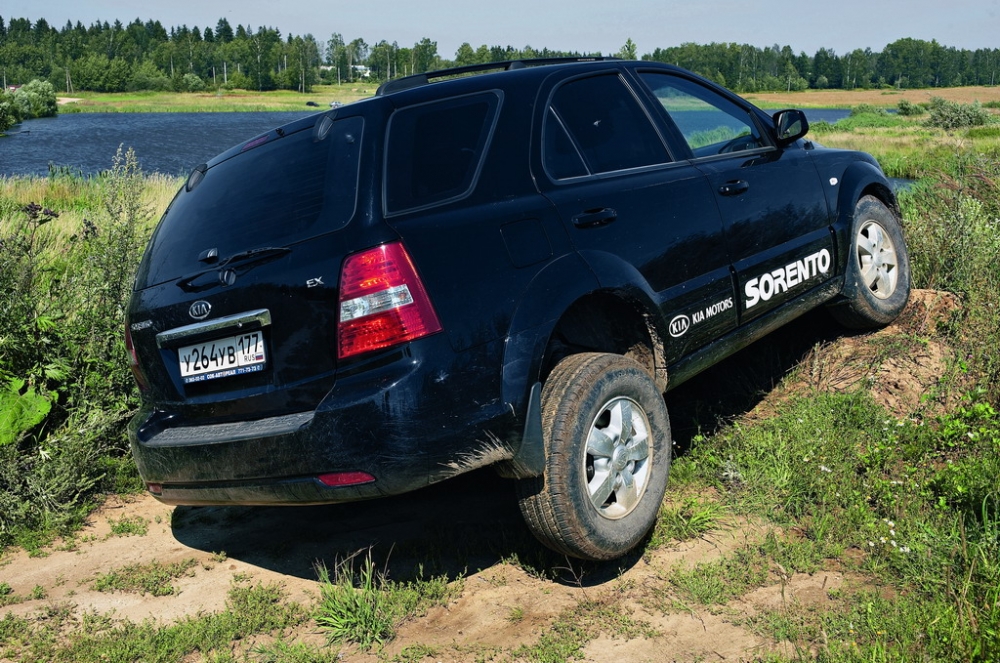
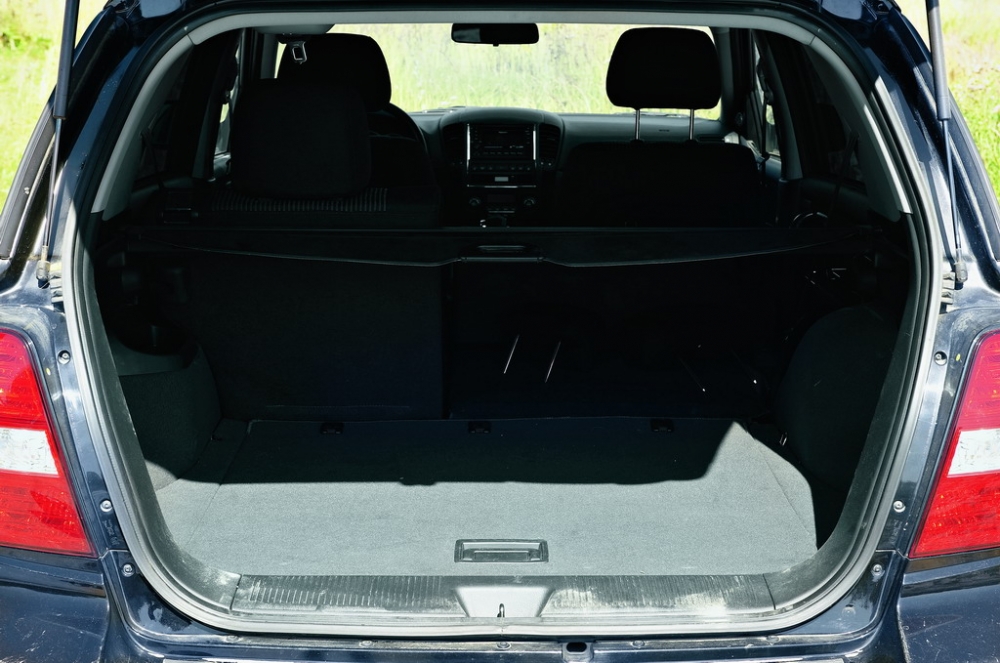 The Rexton is very comfortable even on a broken dirt road. But the excessive softness of the suspension sometimes leads to breakdowns on large bumps. The Sorento, on the contrary, goes over large potholes with pleasure, excellent energy intensity, but shudders on small road trifles. And the vibrations of unsprung masses are stronger in it. Apparently, the dependent rear axle affects it, unlike the independent suspension on this version of the Rexton (XDi modifications still have a beam axle). The all-wheel-drive transmissions of the test cars are devoid of differential locks. Torque between the axles is distributed automatically (rigid connection of the front axle and locking of the center differential are only on the Rexton XDi). Therefore, we did not expect miracles from these crossovers, and even from the Kia, despite the presence of a low range, they did not happen. The cars cannot resist diagonal hanging. But to achieve such hanging, you need to try hard.
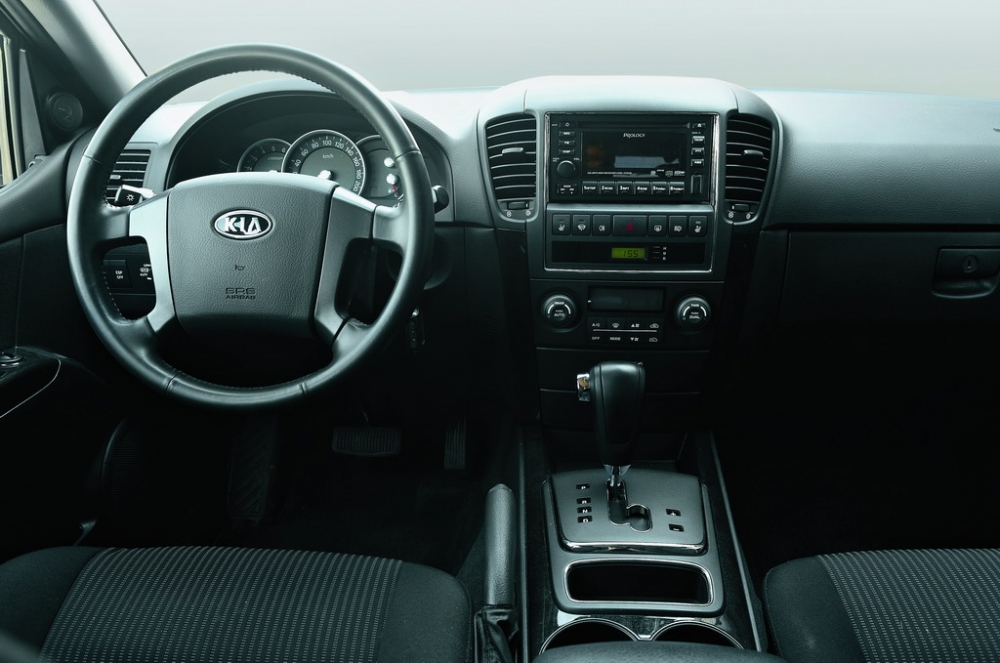 Large suspension travels and a significant axle articulation angle allow, with the help of the ESP system, to overcome quite serious off-road conditions. The Sorento's cross-country ability is slightly better due to a smaller front overhang and a shorter wheelbase, despite a smaller ground clearance. In addition, the low range allows you to confidently storm climbs, and on descents not be afraid to accelerate too much. The SsangYong is equipped with a hill descent control system, but by the time it activates, the SUV manages to accelerate to such a speed that it becomes scary. A flaw. It is better to hold the car with the brakes.
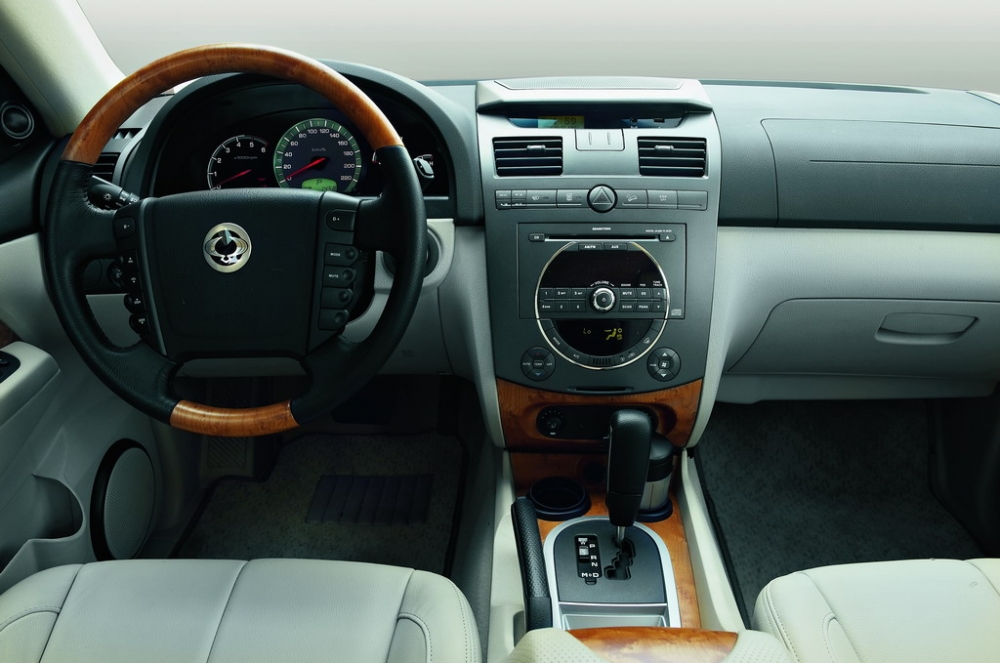 So who buys the Sorento and Rexton? Marketers claim that these are mainly middle-aged men, family men, ready to sacrifice driving sharpness for comfort, practicality and versatility. It is hard to argue with that. Especially since you can safely add an acceptable price and good quality of modern Korean cars to this. And the design? Here you choose for yourself - either be a gray mouse on the Sorento, or flaunt the eclectic face of the Rexton. Do you like neither one nor the other? Save up for an advanced "European"...
 History