
Test drive Skoda Octavia RS: practical sport
For more than a month I had been planning a test of the hot Skoda Octavia RS – and now ... it happened. Right after a minor repair, the bright blue hatchback came into my disposal for a whole week. Remembering the previous encounter with the Octavia 1.8 TSI, which left only positive impressions, the date with the RS stirred the blood in my veins even more.
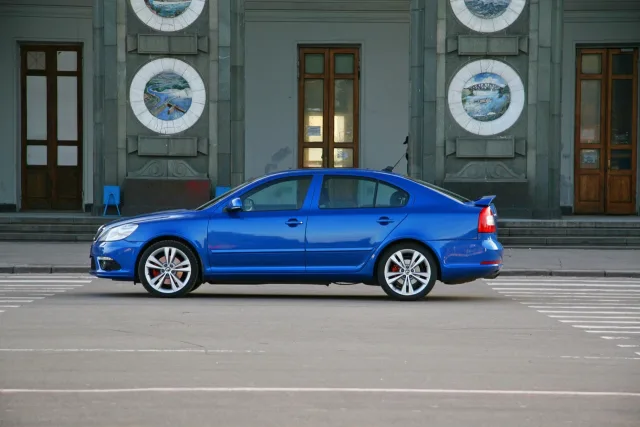
I waited almost a month for the chance to test the hot Skoda Octavia RS, and finally it happened. After a short stay at the service center, the bright blue hatchback came into my hands for a whole week. My earlier encounter with the regular Octavia 1.8 TSI left only pleasant memories, so I looked forward to getting to know the RS version with even more excitement.
The exterior is a solid five. The ordinary, somewhat plain look of the standard Octavia has been transformed beyond recognition. Aggressive bumper trim, reduced ground clearance, LED daytime running lights, optional 18-inch wheels, and a neat spoiler on the tailgate — such simple touches have turned a typical family helper into a true hot hatch that catches interested glances on the streets.
Inside, the sporty nature of the Skoda is reminded by the steering wheel with the RS emblem, metal pedal covers, and seats with well-defined lateral support. The strict interior, in the best Volkswagen traditions, is complemented by aluminum-look inserts that hint at the character of the Czech hatchback. Otherwise, the Octavia RS cabin is the usual high-quality materials and impeccable ergonomics.
Under the hood is a two-liter engine with 200 horsepower. The same unit is used in the Golf GTI and Scirocco hatchbacks — unification, as it is. The test car was equipped with a DSG robotic gearbox.
I turn the key and hear a quiet rumble from the turbo-four. The six-speed robot shifts up quickly, although it hesitates a bit at the start. Everything is familiar and predictable. Up to two thousand rpm, the engine seems to doze, and after that — a sharp surge and confident acceleration. The engine keeps trying to spin the front wheels, and the car sometimes tries to veer its nose, but the traction control system promptly reins in the excess torque. The claimed acceleration to 100 km/h is 7.2 seconds, and the average fuel consumption per the spec sheet is 7.9 liters. In practice, however, the Skoda asked for about 12–13 liters, which is quite acceptable for a 200-horsepower turbo car.
On the highway, the car holds the road like a rock: no pitching, minimal reaction to crosswinds. The power reserve seems endless — just press the gas a little, and the car being overtaken already disappears in the mirror. The main thing is to get used to the quirks of the DSG: it needs time to understand the driver's intentions and choose the right moment. Otherwise, the advantages of the robot are obvious: upshifts happen with machine-gun speed, without any break in thrust.
On a winding road, the Skoda carves an arc with calligraphic precision, and the steering feedback is perfectly dosed. Even on broken asphalt, the hot hatch doesn't bounce over potholes but calmly continues to hold the chosen line. There's no sharpness like in the Mazda 3 MPS or Opel Astra OPC — slight body rolls appear in extreme corners. But don't forget that the Octavia RS is not only about racing genes but also a practical, spacious car that can comfortably take the family to the dacha or on a long trip without exhausting the passengers.
The suspension swallows bumps decently, without annoying jolts as is often the case with many hot hatches. The silence in the cabin is disturbed only by small stones tapping on the wheel arches. Sound insulation is top-notch.
The Octavia RS is a successful compromise between everyday practicality and thrilling driving sensations. In Russia, such cars are sold in tiny numbers, but in Europe, bright wagons with this badge are a common sight. Europeans, apparently, better understand the value of practical sport, when one car can be many things.
At Russian dealers, the price of the Skoda Octavia RS starts at 999,000 rubles. The base equipment includes dual-zone climate control, rear parking sensors, cruise control, an audio system with eight speakers, fog lights, heated front seats, a rain sensor, full power accessories, six airbags, and 17-inch alloy wheels.
The test car with additional options — stability control, xenon headlights, heated rear seats, navigation, 18-inch wheels, and a more expensive audio system — would cost 1,173,600 rubles.
Ruslan Galimov
Test drive photos
Source: CarClub
Comments
No comments yet. Say the first word.