
Czech antidepressants
In mid-March, the updated Skoda Fabia and Skoda Roomster were shown in Greece. At first glance, this is not work but pure pleasure: fly to Athens and spend the whole day driving Czech small cars along the coast of the Aegean Sea. However, journalists went to this test without much enthusiasm.
The reason is simple: the Fabia has so many modifications that it makes your head spin. Besides the standard hatchback, there is the Fabia Combi estate and its "off-road" version Combi Scout, and after the facelift, the "all-road" hatchback Fabia Scout joined them.
is off the charts
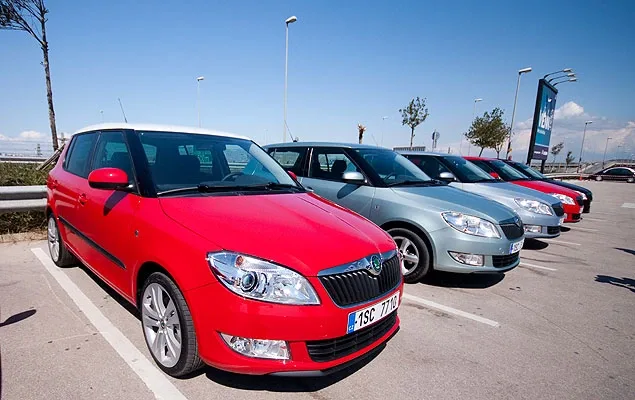
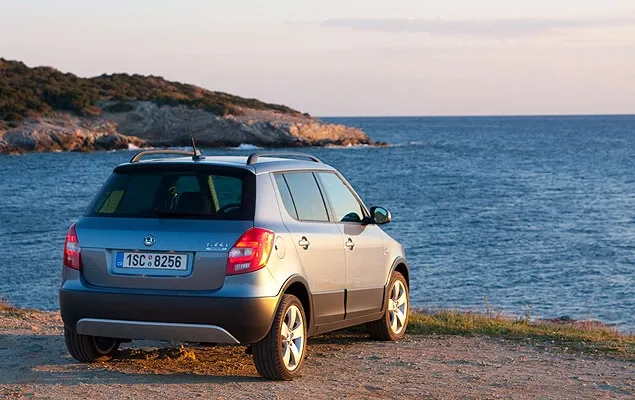
In addition, due to the close relationship with the Fabia, the update also affected the Skoda Roomster compact MPV, and not alone, but together with the Roomster Scout version. In total, seven cars that need to be photographed in one daylight day, preferably not near some garbage heap, but against the backdrop of picturesque landscapes. From such a scenario, one could indeed become despondent. But already during the test drive, it became clear: the new Fabia is quite capable of acting as a cure for the blues.
New facets
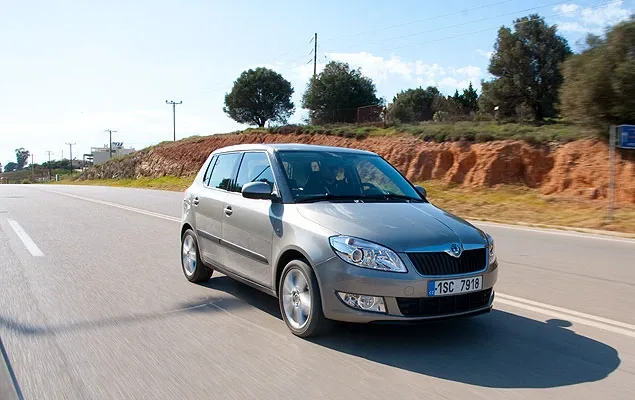
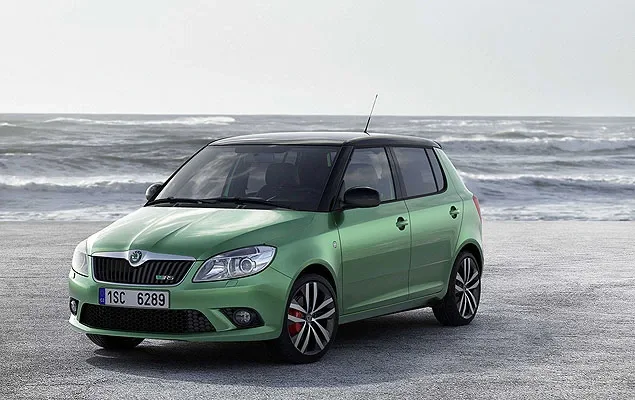
The facelift of the Skoda Fabia and Skoda Roomster can hardly be called revolutionary — the designers limited themselves to a fresh front bumper, a different fake radiator grille, and new headlights. The press release states that a new horizontal line has appeared in the front of both cars, which visually presses the car to the ground and, accordingly, makes it look more dynamic. Although the actual height has not changed: 1498 and 1607 millimeters, respectively.
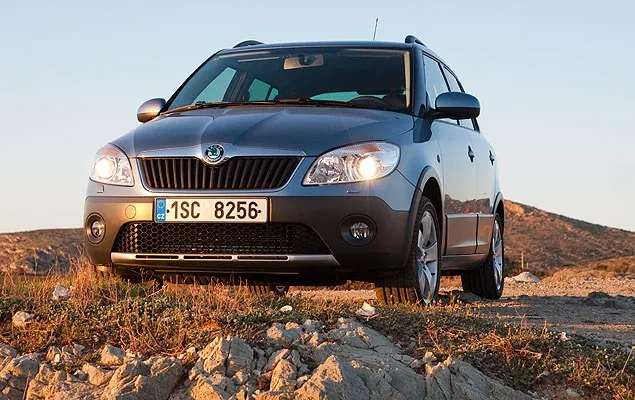
Indeed, a noticeable edge has appeared on the "face" of the Fabia in the upper part of the body kit, and with it, the car looks angrier. But these are details that you notice only if you specifically look for them.
If you do not set such a goal, then the updated Skoda Fabia and Skoda Roomster are perceived simply as "refreshed." Most likely, this is exactly the effect the designers in Mlada Boleslav were aiming for.
The interior of the Fabia and Roomster of previous generations (the Roomster received the front part of the interior from the compact hatchback) could without exaggeration be considered a role model in the B-class. A well-thought-out and unobtrusive front panel, soft plastic, large music control buttons, climate control knobs without a hint of play, and comfortable seats with excellent lateral support — you did not want to get out of the Skoda Fabia, especially during frosty Moscow winters.
After the update, the feeling of home comfort has not gone anywhere, but the interior began to be perceived more seriously: chrome-look trims were added, the instrument lighting changed the signature green "Skoda" shade to pale blue (like the fresh Golf), and a color five-inch touchscreen navigation screen appeared on the center console — though for an extra charge. However, on the Russian market, Fabias with navigation will not be available yet.
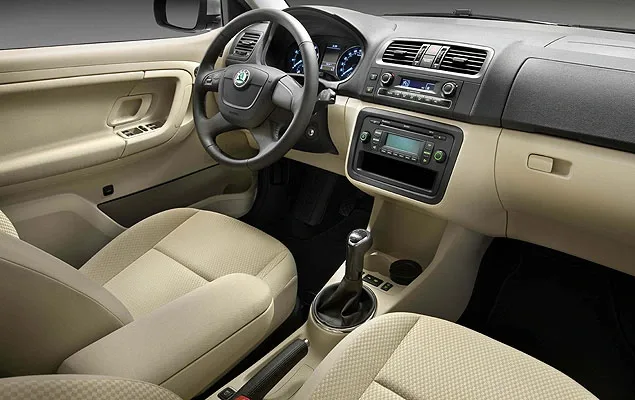
But the new multifunction steering wheel will reach Russian cars. In pre-facelift small cars, audio system control buttons were installed on a special steering column stalk, while in the new Fabias and Roomsters, they, like in larger Skodas, are placed on the hub.
Another innovation is the Mobil Device Interface (MDI). This is a box to which you can connect an iPod or iPhone, or any other music storage device with such common types of connectors as USB, mini-USB, or a simple "jack." A place for MDI was found on the shelf under the lower glove box (the Fabia has two).
The Fabia we lost?
That's it. At this point, the story about the updated Czech small cars could be ended. Because the main "bombs" of the Fabia and Roomster facelift - two new 1.2-liter turbocharged gasoline engines with 86 and 105 horsepower, two turbodiesels with 90 and 105 horsepower, and a robotic gearbox with two clutches DSG - will not reach Russia in the near future.
In our country, the new Fabias will be equipped with "pre-facelift" three- and four-cylinder naturally aspirated engines, which are paired either with a five-speed manual gearbox or a six-speed Tiptronic automatic (with manual mode). The engine and transmission lineup of the Roomster, of course, will also not change.
However, there is still hope that new gasoline engines will be brought to us — Skoda's management has not yet made a final decision on supplying these engines to the Russian market. This hope, though, is weak - even the Volkswagen Polo, which is catching up in price with premium small cars, is equipped in our country with only one of the two new 1.2-liter engines - the top 105-horsepower TSI. And the Fabia and Roomster, which cover only the budget segment of the market, are unlikely to pull such an expensive unit. Therefore, the 1.2 turbo engine will most likely be tested not on the mass Fabia, but on one of the "niche" modifications.
But if the new "Volkswagen" engines do break through to Russia, both the Fabia and the Roomster will only benefit. With the top 105-horsepower TSI, the character of the small car becomes much brighter and more cheerful than that of a car with a pre-facelift naturally aspirated engine of the same power.
The secret of the emotional component is simple - thanks to the turbine, the new engine reaches peak torque of 175 Newton-meters already at 1550 rpm and holds it up to 4100 rpm. The naturally aspirated engine, on the contrary, builds traction gradually, reaching a maximum of 153 Nm only at 3800 rpm. Hence the difference in temperament.
In the less powerful - 86-horsepower version, the range of crankshaft speeds at which the engine reaches maximum torque of 160 Newton-meters is narrower - from 1500 to 3000 thousand rpm, and therefore it copes with the 1116 kilograms of the Fabia worse than the 105-horsepower twin. Especially during overtaking and on climbs, of which there are many on the coastal serpentines near Athens - this engine lacks torque reserve for confident maneuvering.
|
No pasaran
|

The main trump card of the new engine compared to the old 1.4-liter naturally aspirated unit it replaced is its modest appetite and environmental friendliness. True, few people here pay attention to CO2 emission levels, and with current fuel prices, the difference between the rated 6.5 liters for the naturally aspirated engine and 5.2 liters for the turbo version does not seem critical.
In Greece, we also tried the diesel versions, which will definitely not reach Russia. The new 1.6-liter turbodiesel with 90 horsepower wins over not only with its low-end torque and excellent flexibility, but also with phenomenal fuel economy. Even during active driving along coastal serpentines, the Fabia was content with just 4.5 liters of diesel per hundred kilometers, and on the highway the appetite drops to three liters. For such dynamics and efficiency, you can forgive it for the vibrations and the rather narrow operating range, which forces you to frequently work the manual gearbox lever.
Special Equipment
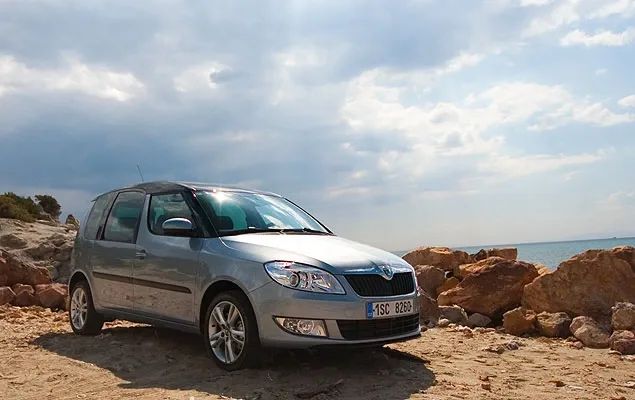
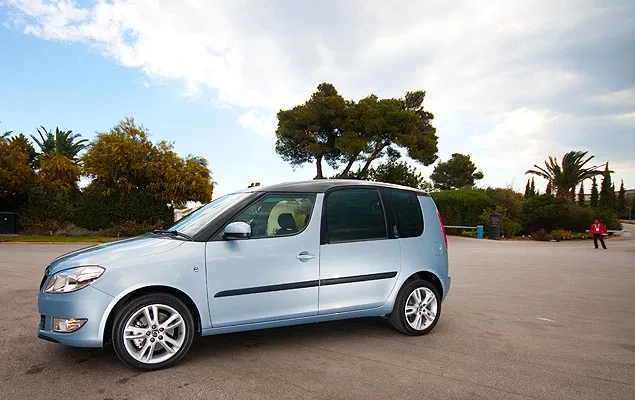
When we reported on the facelifted Octavia RS after last year's test in Hungary, we noted that the engineers did not touch the chassis. And rightly so — improving it would hardly have been possible. The same principle was applied to the updated Fabia and Roomster: their suspension and steering settings remain unchanged. The Roomster was especially pleasantly surprising. First, it has less body roll thanks to a wider rear track — the rear suspension along with the platform module is borrowed from the larger Octavia. Second, the compact MPV seems to have its own electric power steering settings, which makes the steering wheel filled with pleasant heaviness and provides more road information than the hatchback.
The Fabia behaves more relaxed: more body roll, lighter steering. But on a winding road, this is not annoying — the car seems to trace the trajectory along a ruler, clearly following the steering commands.
For our market, this compact MPV is exotic, so the Czechs are in no hurry
to bring it to Russia
True, this almost reference handling did not come for free: both small cars are noticeably shaken on uneven surfaces. It did not reach teeth-rattling stiffness, of course, but the suspensions meticulously transmit all small oscillations and vibrations to the body, leaving the driver in no doubt about the condition of the asphalt.
Placebo
Overall, the new Skoda Fabia and the updated Roomster do an excellent job as antidepressants, especially on the Greek coast. But in Russia, the facelifted cars will be sold without the main active ingredient — the new line of petrol and diesel engines. So for us, this is more of a placebo.
On the one hand, there is not much to rejoice about. But a placebo, unlike a real medicine, has no side effects. For example, such as a failed high-pressure fuel pump that could not cope with the sulfur or water in domestic diesel fuel. Our gasoline is also far from ideal: microparticles, organic matter, water, and cheap additives to increase the octane number can significantly reduce the lifespan of the new small-displacement turbo engines that the Volkswagen Group is betting on. So perhaps, without TSI engines, we are even calmer.
Therefore, in Kaluga, starting in May, only the Skoda Fabia and Skoda Fabia Combi will be produced, while the updated Skoda Roomster, along with the "Scouts" and "RS" that are exotic for our market, will be imported from Mlada Boleslav from the end of summer.
Moreover, the facelifted Skoda Fabia is an excellent anti-crisis car: thanks to the fact that the hatchbacks and station wagons will be produced with full cycle in Kaluga, the company's management did not raise prices for the updated model. In addition, the Fabias assembled in Russia participate in the government program for recycling old cars and in the program for subsidizing loans. And compared to such a placebo, real antidepressants take a back seat. Auto.Lenta
Technical Specifications of Skoda Fabia (105 hp)
| Length, mm | 4000 |
| Width, mm | 1642 |
| Height, mm | 1498 |
| Wheelbase, mm | 2462 |
| Curb weight, kg | 1116 |
| Engine displacement, cm3 | 1197 |
| Power, hp/rpm | 105/5000 |
| Torque, Nm/rpm | 175/1550-4100 |
| Acceleration time from 0 to 100 km/h, s | 10.1 |
| Maximum speed, km/h | 191 |
| Fuel consumption in combined cycle, l/100 km | 5.3 |
Technical Specifications of Skoda Roomster (86 hp)
| Length, mm | 4214 |
| Width, mm | 1684 |
| Height, mm | 1607 |
| Wheelbase, mm | 2608 |
| Curb weight, kg | 1221 |
| Engine displacement, cm3 | 1197 |
| Power, hp/rpm | 86/4800 |
| Torque, Nm/rpm | 160/1500-3500 |
| Acceleration time from 0 to 100 km/h, s | 12.6 |
| Maximum speed, km/h | 172 |
| Fuel consumption in combined cycle, l/100 km | 5.7 |
| DISCUSS | [ comments: NONE ] |