
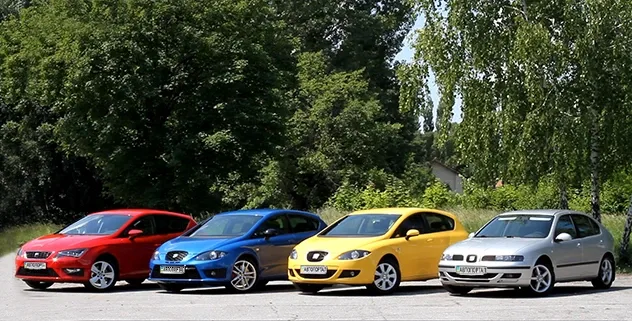
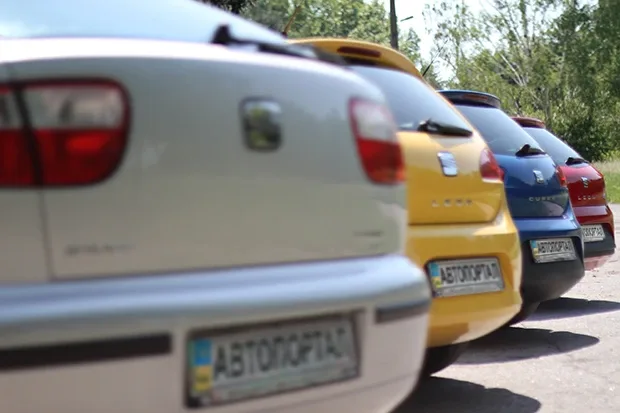
If SEAT doesn't improve sales within 5 years, it's quite possible that Volkswagen will drop it. And the new Leon should become the engine of trade. Does it have a chance? To find out, based on our past experience with a comparative test of all generations of the Honda CR-V, we gathered different generations of the Leon and, as in the case of the new VW Golf test, asked owners of Leons from different years to share their opinion about the new model after a blitz test with our editorial team.
In addition, we posted a video test of the new Leon with a review of its predecessors on the Autoportal YouTube channel.
1998-2006
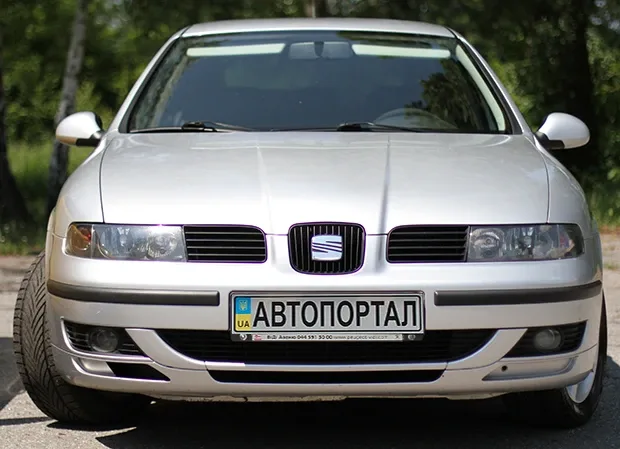
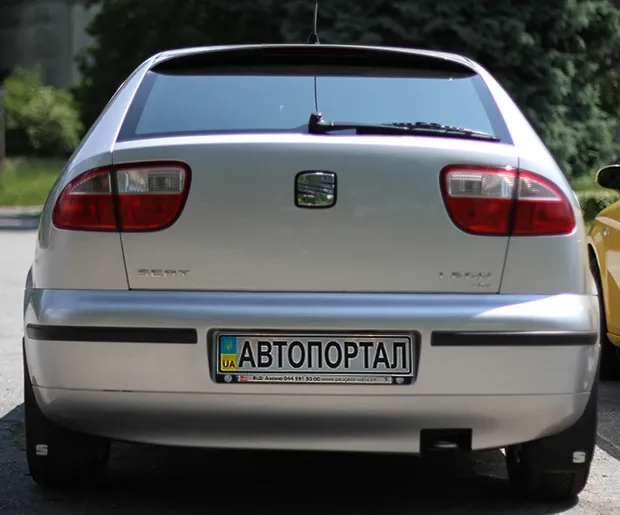
The first generation was born in 1998 and stayed on the assembly line for as long as 8 years. The model turned out to be quite successful - thanks to sporty notes in the exterior and an attractive price, which was lower than that of the Volkswagen Golf.
Inside, everything is quite ascetic and simple - today the interior of the first Leon clearly seems outdated, but at the same time, despite its considerable age, the finishing materials have practically not lost their pristine appearance.
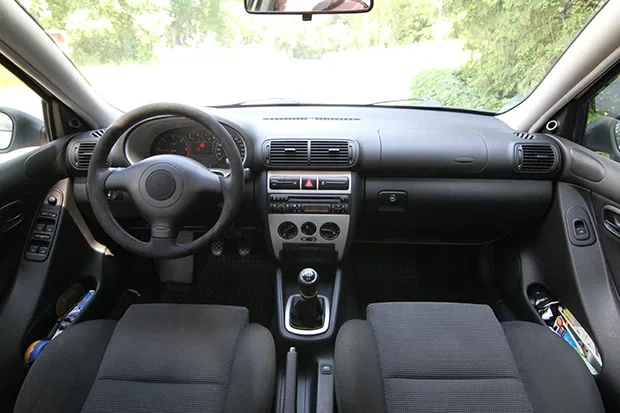
Alexander, owner of SEAT Leon 1M
Since I am a fan of the VW Golf, I really liked the design of the latest generation Leon, which is "tuned" for the seventh generation Golf. The second generation somehow didn't inspire me. The model has become better integrated into the VAG lineup of this class, I liked the front headlights with LED technology. Until now, I considered the SEAT brand an alternative to the more expensive Volkswagen - everything inside is from Volkswagen, but the price is lower. But when I found out the price of the test Leon FR, which is very close to the top version of the VW Golf GTI, I was disappointed. Inside, everything is pleasant to the touch, good ergonomics, comfortable seats. After the test, the impressions are generally good and positive. The suspension is moderately stiff and energy-intensive, smooth ride, good brakes, dynamics at a decent level. True, I don't understand why the FR trim didn't get 2.0 and 200 hp, like its classmates from the VAG lineup? What I didn't like was the 7-speed DSG gearbox, which is thoughtful at start. And during overtaking and lane changes, it's constantly tense - you don't understand whether it will shift or not. Although, as an owner of cars with manual transmission, I cannot objectively judge the operation of modern DSGs. Perhaps it is really at its best compared to similar developments from other automakers.
From the Autoportal editorial team: for the sake of fairness, we compared the cost of the VW Golf VII GTI with the price of the tested SEAT Leon, adding the same options to the standard equipment that are on this Leon. As a result, the difference was almost 70,000 UAH (292,000 UAH vs 363,000 UAH). But we need to make an adjustment that the Golf's power is 220 hp (versus 180 hp for the tested Leon FR).
2006-2009
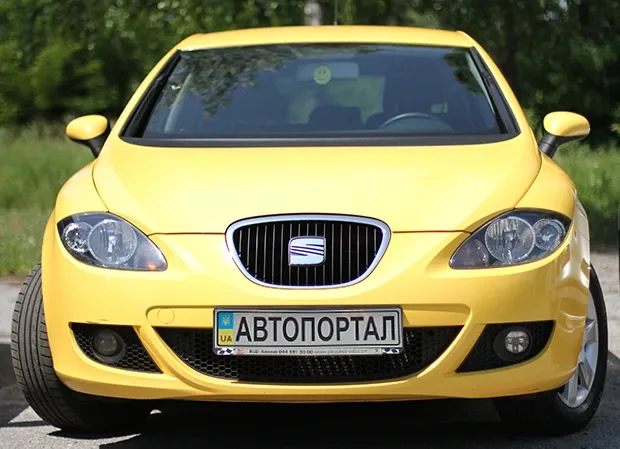
The second generation went into production in 2006. The car changed radically, and at first many brand fans didn't receive it very warmly, relying on the fact that the predecessor was more lowered and sporty. Nevertheless, it was this Leon that became most widespread in Ukraine - not least due to the boom in new cars that fell on 2007-2008. The design of this car was developed by Walter de Silva, ex-designer of Alfa Romeo. This is immediately noticeable - the Leon got a pronounced de Silva line and hidden rear door handles. Such a pleasant little thing appeared as pantograph wipers that cover almost the entire area of the windshield. Thanks to the small rear window and wide rear, the car looks very "trim" from behind.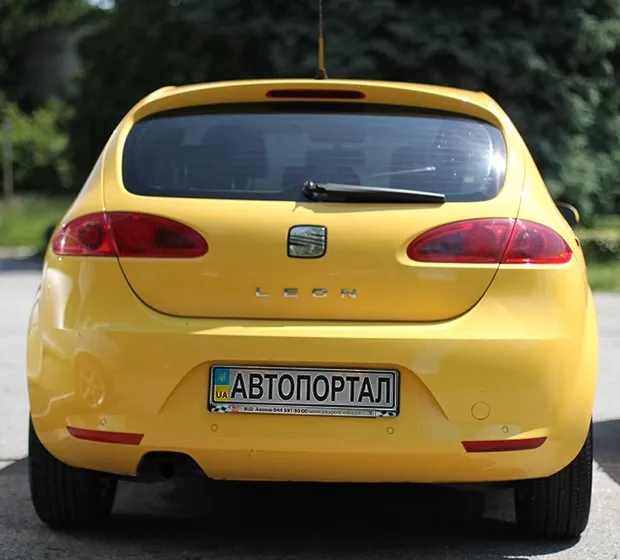
Inside - a comfortable steering wheel, somewhat hard but non-creaking plastic. Ergonomics are decent, but the overall picture is spoiled by the not most successful design of the central console. And the dashboard is too simple. These shortcomings were corrected after the model's restyling, which was presented in 2009...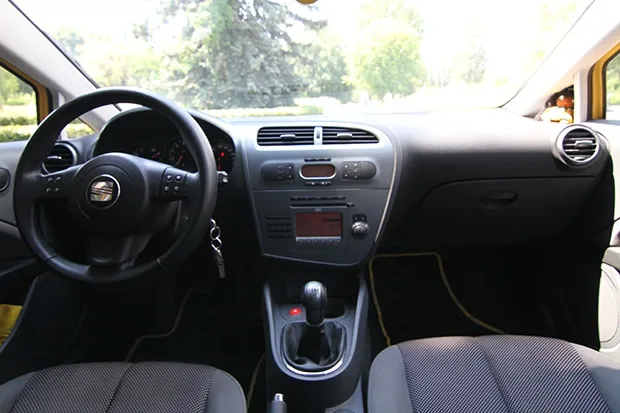
Alexander, owner of SEAT Leon 1P
Exterior. I really liked: front and rear optics, exterior rear-view mirrors, the sharpness of the hood and fender lines. But overall it's a bit boring, especially the side view. Compared to the previous Leon, the "zest" has disappeared. In the cabin, the "zest" has disappeared completely. Yes, the materials have become more quality and pleasant to the touch, but the design has approached the classic style. In motion, the new Leon has become much more comfortable - in terms of suspension. The combination of engine and DSG transmission in drive mode left a mixed impression. On one hand, the engine is very lively after 3000 rpm, and the gearbox shifts gears perfectly. On the other hand, at low revs, the robot is very slow. Overall - a good, solid car, but in which the charisma of the previous Leon is hard to guess.
2009-2012
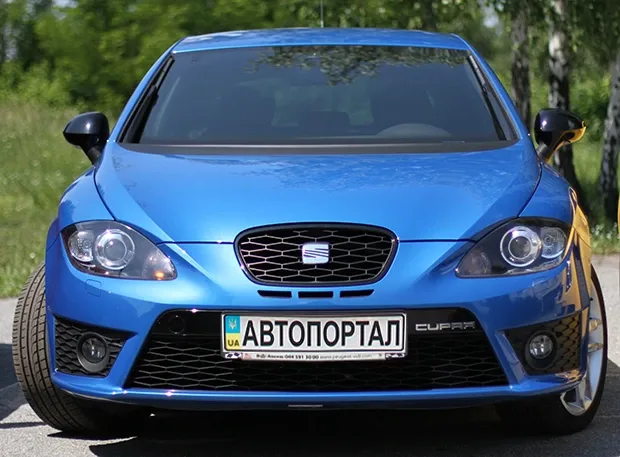
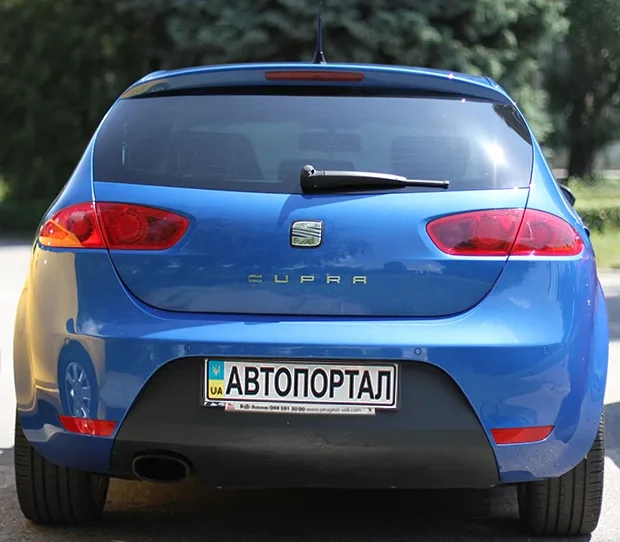
Formally, this version can be considered the third generation of the Leon, but in fact - an updated version of the second generation. At the front, there are practically no changes - except that the radiator grille has changed and the logo has decreased in size. The changes affected the rear lights, which changed their shape due to the enlarged glass - this was done to improve rear visibility, which owners of pre-restyling Leons complained about. True, this somewhat worsened the visual sportiness - the rear began to resemble the Golf and lost its former monumentality.
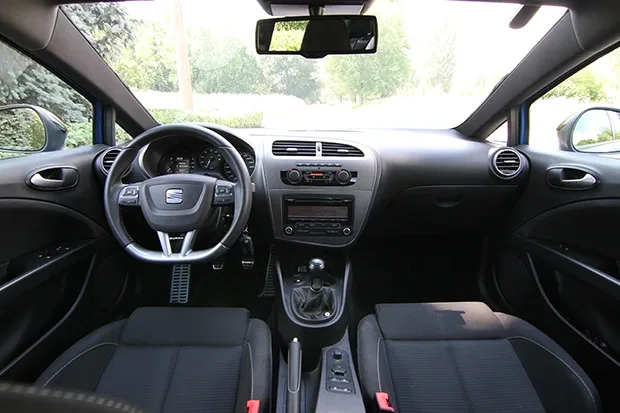
Inside, the changes affected the central console, which acquired a more modern and harmonious look, as did the dashboard.
Dmitry, owner of the restyled SEAT Leon 1P
Besides the design, nothing in the car pleased me. The engine is sluggish. The price is "cosmic". After driving it, I didn't get any pleasure. The car is soulless. I hope the Cupra will be "more fun"...
SEAT Leon 2013
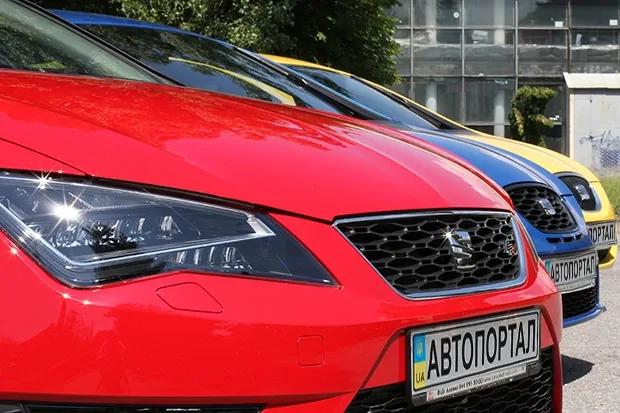
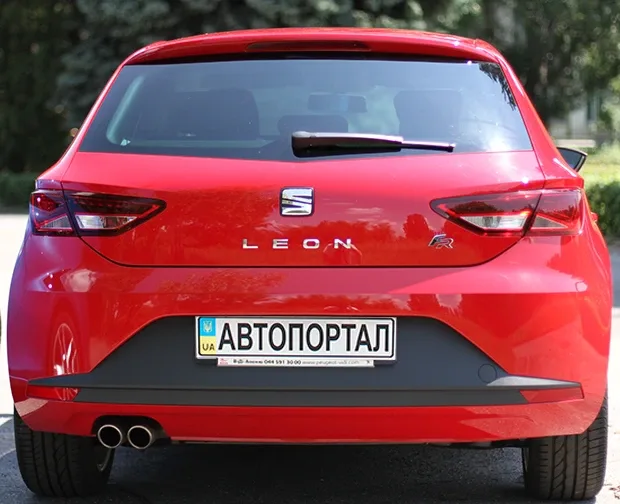
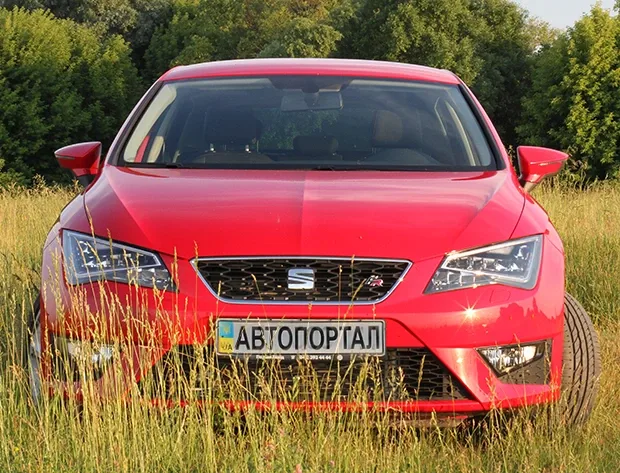
The special pride of the Spaniards is the fully LED headlights, which, in their words, is nonsense for golf-class cars. They really add a special charm, and in the dark, the front LED headlights provide excellent visibility. There's just one "but" - the fully LED optics come at an extra cost, which, wait a second, is just over 2 thousand dollars. True, there is a special offer according to which they can be ordered on favorable terms, and even in a package with other options - they're luring us, luring us...
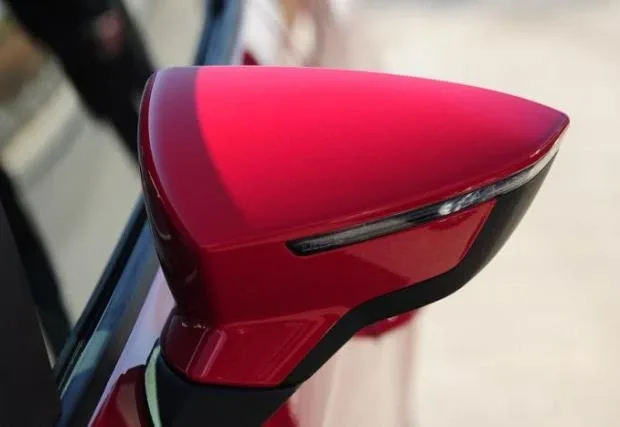
We note that despite the LEDs in the headlights and taillights, the turn signals are still ordinary - incandescent. Or at least they look that way. Pay attention to the rear-view mirrors - they have become sharp as a knife and got built-in turn indicators. On the side, the mirrors are duplicated - at first we thought it was blind spot monitoring. By the way, the mirrors are just as small as on the predecessor - rear visibility is not the best.
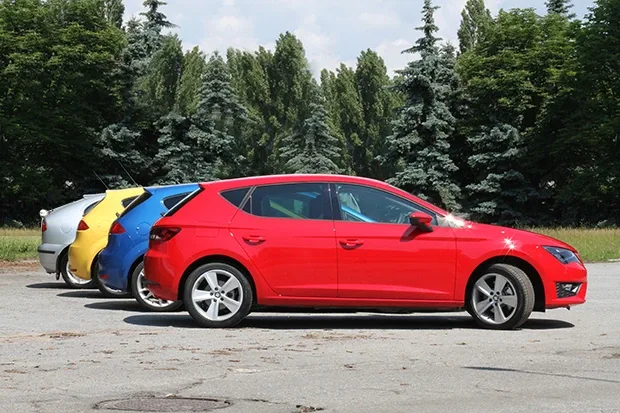
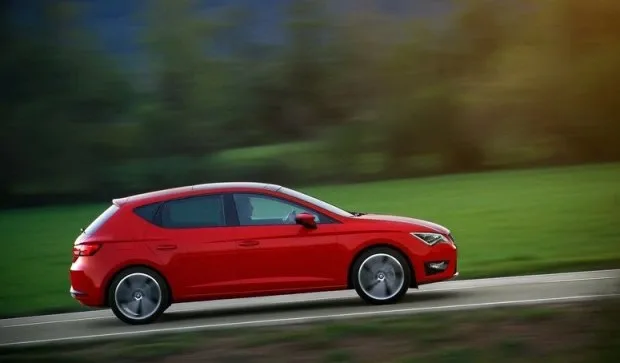
Now about the design of the body itself. Probably, everyone sees features of the Audi A3 in the new Leon. That's true, except for the sharp lines. The design of the new model was worked on by the Spaniards themselves - at the Martorell base. Therefore, in the new Leon, the character of this hot nation is visible - the car turned out passionate and with character. Particularly notable are the waistline broken on the rear doors and the sharp edge on the hood lid. And even though the new Leon is no longer the same and has somewhat lost its family trimness, personally we like it - among golf-class cars, perhaps the most beautiful model. And compared to its predecessors, the freshness of the design is felt.
But what is this? Why did the designers return the rear door handles to the usual place for most people? The answer is simple – unification. Dios mio, why??? Where did the wiper-style rear wipers go? The answer is known by the project design manager Daniel Hervás. According to him, the only section of glass they did not clean was the small triangular zone behind the rearview mirror, which the driver does not see. But it is exactly there that Volkswagen and Audi have the light sensor, rain sensor, and electronic "eyes" that help the driver monitor the road. Designing an original system for SEAT is not profitable: it is simpler and cheaper to unify the wiper mechanism. Is it a pity? For me, as a former owner of the second Leon, yes.
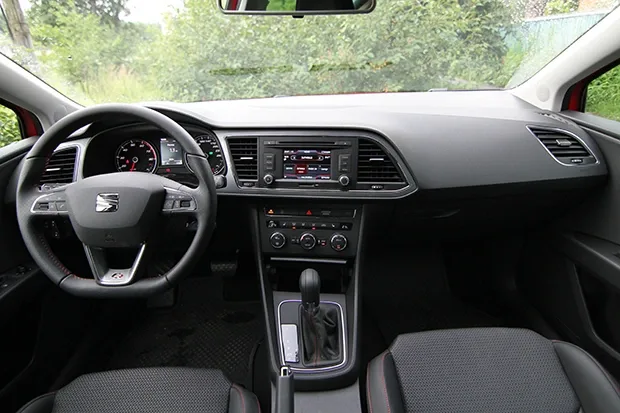
The interior of the new model is also designed in the image and likeness of the platform-sharing "Germans." But Spanish notes are present. The quality of materials has improved, and there is a touch of premium. The dashboard looks elegant and neat. The center console, turned toward the driver, adds sportiness.
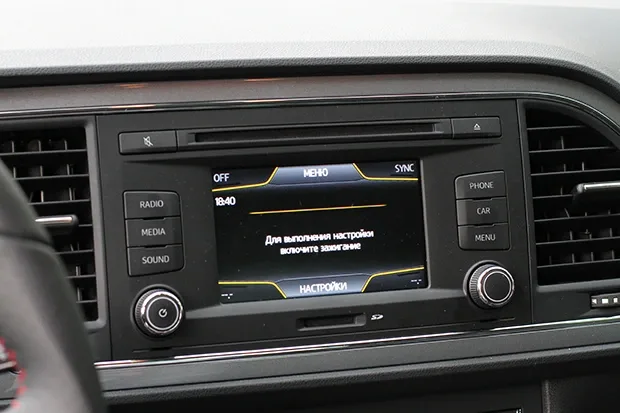
At the top of it is a touchscreen display that shows literally everything related to the car – from audio system settings to selecting the operating mode of the transmission, engine, and steering. There are four driving modes, including an individual one that allows you to customize the car specifically to your liking. A very cool feature. As for the audio system, its sound deserves the highest praise, and it can read information from almost any media. I liked the styling of the radio receiver, which is done in a retro spirit. As for the screen itself, it seemed a bit small to us, and the graininess was a bit disappointing.
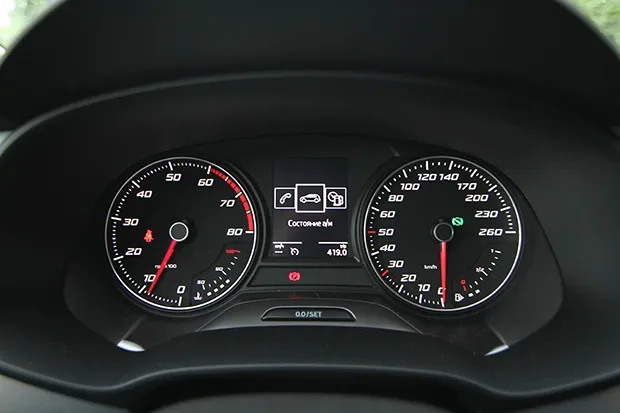
The instrument cluster is from the Audi A3. It looks quite harmonious and provides all the necessary information; there is nothing to complain about. Except that the engine temperature and fuel level indicators glow white, which makes you concentrate your gaze rather than quickly read the data. Among the innovations, it is worth mentioning such an interesting thing as eco-tips. The Leon is not shy about telling the owner what and how it is better to do. Windows open at speed – it will politely recommend closing them. You accelerated and released the gas – it will inform you that the car is coasting (more details in the video). Small things, but pleasant.
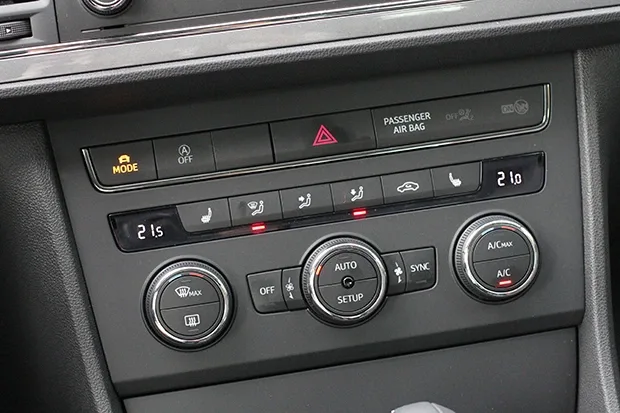
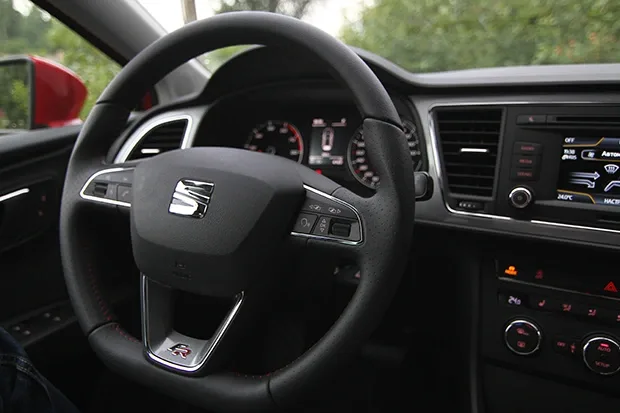
The new Leon inherited from all its predecessors the knob located to the left of the driver – it is responsible for lighting settings. Steering wheel controls are similar to those on the previous model. In the FR trim, like ours, the steering wheel is flattened at the bottom – making entry and exit easier. The grip is comfortable, and the leather upholstery is pleasant to the touch.
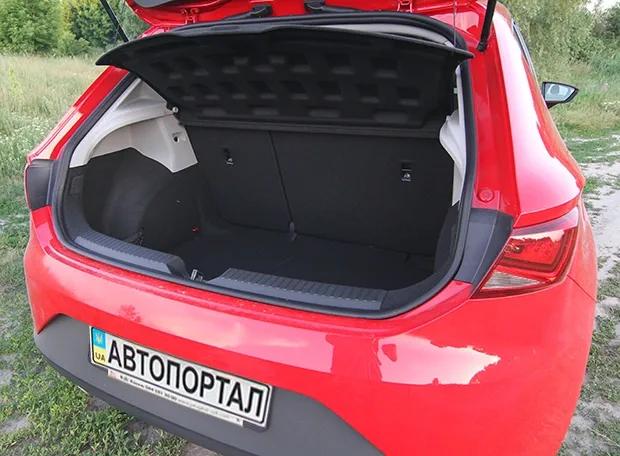
Our car has sport seats – they have pronounced lateral support and, as is traditional for all turbocharged Leons, cause no complaints. Almost like bucket seats, but quite soft. In the back, there is actually the same amount of space as in the predecessor – at least by feel. What I did not like was the upholstery material. The fabric is too rough – you can feel its texture even in jeans. Not to mention shorts. There are no particular differences in the cargo areas of the new and previous Leon – the volume is approximately the same, and the loading height is just as high.
As is the presence of the start-stop system, which personally annoyed us and annoys us on all cars – even if it saves a hundred milliliters of fuel, we turned it off. By the way, about consumption – during measured driving at 80-100 km/h, our car consumed very little. If you press harder – consumption can reach 12-13 liters. On average, in a mixed mode, you can fit into 8-10 liters.
And everything would be fine; the car has a lot of good, interesting, and useful things. There is charisma, comfort, and sport. But the price... in our trim with LED headlights, the car costs 36 thousand dollars. At the same time, there are no electric seats, no rearview camera, no parking sensors... strange. In the base – 22 thousand dollars, but... attention! There is no air conditioning, not even a radio! And with an 86-horsepower engine, you won't go fast. In a decent trim with the 1.2 105-horsepower engine and manual, it will be 27 thousand, with automatic – 28 and a half. Diesel with automatic – 30 thousand. In the catalog of new cars, you can learn more about the prices and trims of the SEAT Leon 2013.
In principle, this car is probably worth that money – if only for its looks and handling, but we doubt that in Ukraine there will be enough enthusiasts who agree to pay such a sum for a well-handling and stylish, but by no means the most practical car...