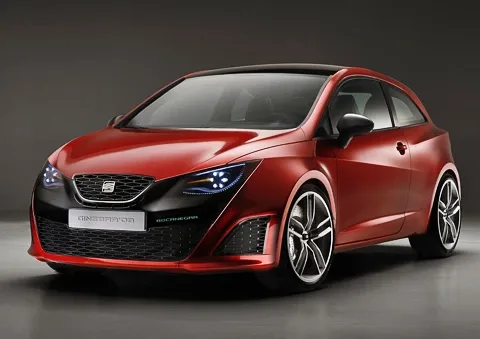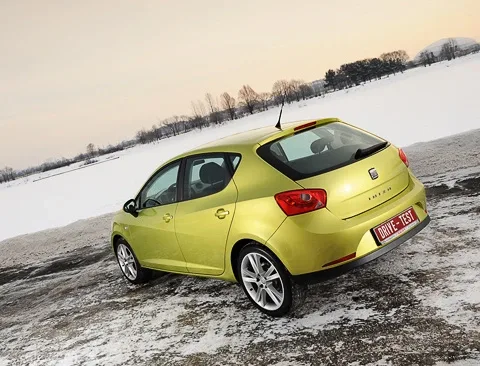
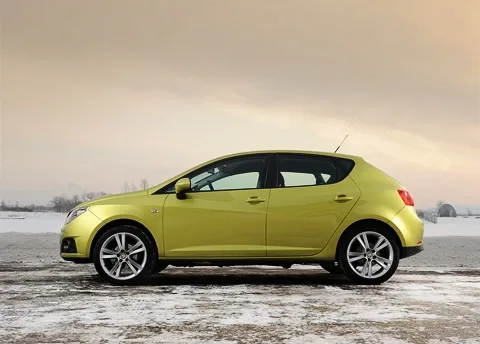
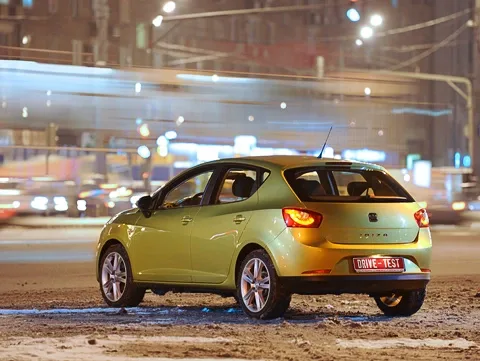
If such a philosophy is declared, then so be it. Seat's new chief designer, Luc Donckerwolke, took the forms de Silva had devised back in 2001 (then it was the Tango concept) and brought them in line with the new course. The Ibiza became simpler, but also sleeker and more harmonious. At the same time, the artists did not ease off: sporty proportions and bold edges only added charm — in traffic, the little car is noticeable not just thanks to its bright paint. It would be naive to think these are light and positive emotions. Not at all! Everything is much more complicated.
The ailment begins with the interior. First, whoever chose the colors for the interior should get their eyes checked — it seems they have issues with color perception. You'd have to try hard to "cheapen" the insides with just a color scheme! Gray is everywhere, which makes you overlook both the good materials and the interesting solutions! And I'm not alone in this opinion: I spoke with Seat's interior designer, and he too was twirling his finger at his temple.
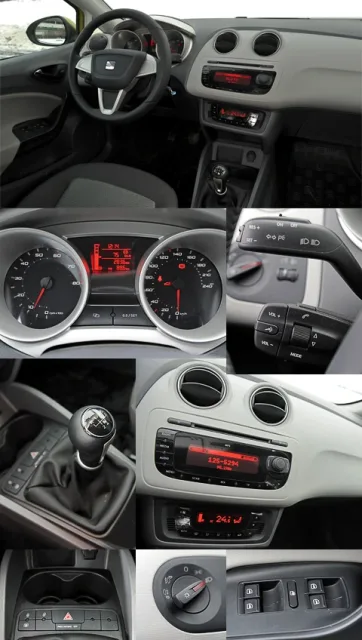
Second, the author of the central armrest should be sent straight to a pathologist. Lower it — and you can barely reach the gearshift lever (which is precise enough, albeit long-throw). Raise it — and when engaging even gears, your elbow hits it. I wonder who came up with this? A descendant of the builders of inquisitorial torture devices, perhaps? If I ever get my hands on them!
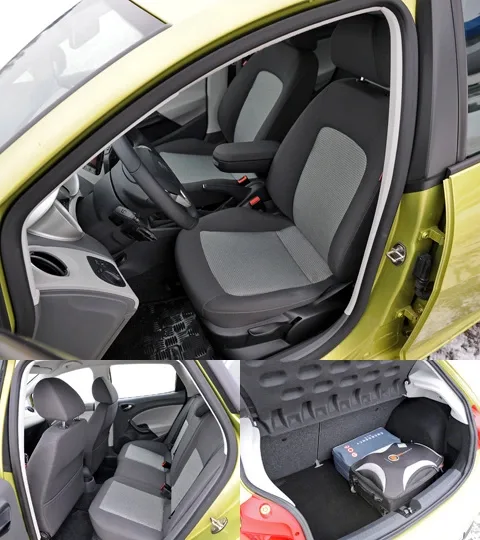
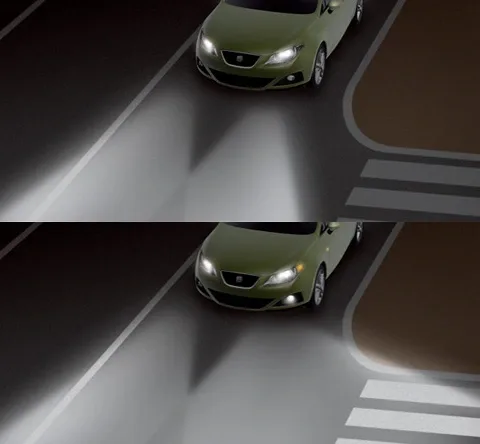
Otherwise, if you set aside these nitpicks, everything is not so bad. The interior is actually decent: the seating position is comfortable, the steering wheel adjusts both for height and reach, and the seat adjustment range is enough even for a very tall driver. The base seats have moderate lateral support, and the steering wheel has a pleasantly thick rim. The displays of the audio system and climate control don't glare and remain readable. The buttons and knobs are convenient, as in any Volkswagen. And they're certainly better than in the Leon. Most importantly, the interior doesn't look assembled from Volkswagen parts. It has its own character. The equipment is also decent: the test car was in mid-level trim, but for an extra charge, you can get swiveling bi-xenon headlights and a glass roof almost half the size of the roof.
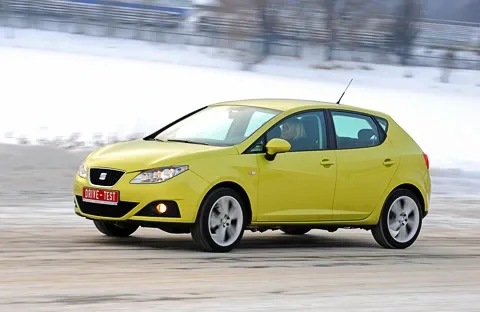
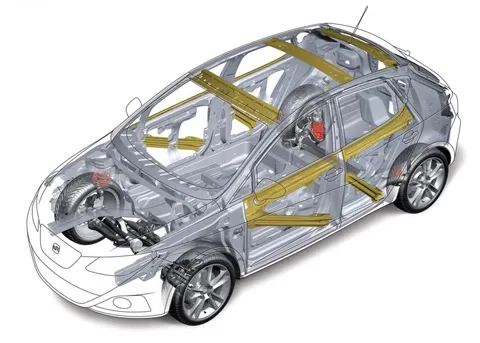
Now for something more important: the Ibiza is built on a new platform. It will form the basis for future Volkswagen Polo and Audi A1. There are no sensations in it — up front it's the same MacPherson, at the rear a torsion beam. But everything has been refined: different kinematics, lighter arms, and the body has become stiffer yet half a hundredweight lighter than its predecessor. I recalled that the Skoda Fabia, built on the old platform, pleased me. And here we have something new. Positive emotions again? Eh...
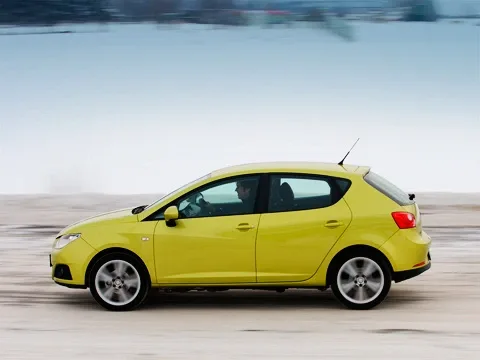
The engine (by no means new 1.4) performs quite confidently and allows you to be nimble, though it goes flat at high revs. And the chassis seems decent and responsive. The car holds a straight line confidently and turns willingly, slightly tightening the trajectory when you lift off the throttle. True, due to the low-profile 17-inch tires, there are issues with ride smoothness: it shakes on both small and large bumps. But there are no suspension breakages, and potholes and ruts don't throw the Ibiza off course too much. So our roads are no problem for the Ibiza. But not for the drivers.
Weaving through traffic of crazy Messerschmitts and dodging hereditary daredevils and honorary idiots in the Ibiza is not very comfortable. A serious problem in the city's hell — on one hand, this car doesn't let you relax for a second. When I got into the car, I saw that colleagues who tested it before me had tuned the radio to Relax FM and set the speed warning beeper to 75 km/h. It doesn't help! The controls in the Ibiza are light, not very informative, and sharp: you either err with braking, or the car darts to the side. You'll only drive comfortably where no one bothers you.
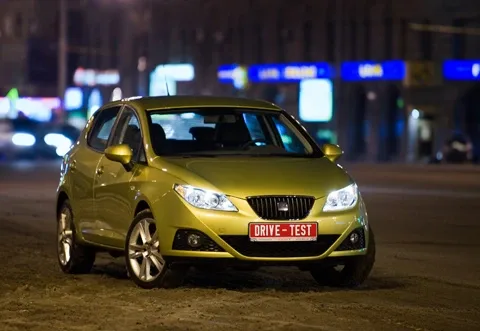
And driving fast isn't very interesting either: the handling is decent, but to get fired up, you lack steering feel and sporty chassis settings. And rolls and dives, on the contrary, are excessive. Am I nitpicking? Absolutely! I understand that tastes differ and that automakers, especially Seat — the "son" of Volkswagen itself — know how to build cars. And I'm sure they had a thousand reasons for the Ibiza to be exactly as it is. But it didn't grab me — and I can't help it! Why? It lacks character.
The design — yes, excellent. And the interior is good. But the car can't boast of comfort or space. The previous iteration of the Volkswagen supermini — the practical Skoda Fabia — I liked unconditionally: primarily for its balance and practicality. And the Ibiza's just slightly elevated degree seemed insufficient compensation for the cramped rear seats (even though the wheelbase is increased by 11 mm), the less convenient trunk, ergonomic miscalculations, and the price.
I don't demand practicality from the Ibiza. What I demand is zest! Make the steering wheel heavier and the suspension stiffer, put in more sculpted seats — and to hell with all political correctness! Let the car truly excite, then I'm ready to even throw out the rear bench and shake the crooked hand of the creator of the front armrest. We don't need a second Fabia with an extra plus for design and minuses for almost everything else. We need something of its own.
Well, there it is. I'm not sick, and spring hasn't arrived yet. But I already want an exacerbation of the Ibiza.
Technical specifications
| Specifications | Seat Ibiza |
|---|---|
| Body | |
| Number of doors/seats | 5/5 |
| Length, mm | 4052 |
| Width, mm | 1693 |
| Height, mm | 1445 |
| Wheelbase, mm | 2469 |
| Track front/rear, mm | 1465/1457 |
| Curb weight, kg | 1025 |
| Gross weight, kg | n/a |
| Trunk volume, l | 292 |
| Engine | |
| Type | petrol, with distributed injection |
| Location | front, transverse |
| Number and arrangement of cylinders | 4, in-line |
| Number of valves | 16 |
| Displacement, cm3 | 1390 |
| Max. power, hp/rpm | 85/5000 |
| Max. torque, N•m/rpm | 132/3800 |
| Transmission | |
| Gearbox | manual, five-speed |
| Drive | front |
| Chassis | |
| Front suspension | independent, coil spring, MacPherson |
| Rear suspension | semi-independent, coil spring |
| Front brakes | disc, ventilated |
| Rear brakes | drum |
| Ground clearance, mm | n/a |
| Performance characteristics | |
| Maximum speed, km/h | 175 |
| Acceleration time 0–100 km/h, s | 12.2 |
| Fuel consumption, l/100 km | |
| — urban cycle | 8.2 |
| — extra-urban cycle | 5.1 |
| — combined cycle | 6.2 |
| Emission standard | Euro-4 |
| Fuel tank capacity, l | 45 |
| Fuel | AI-92–95 |
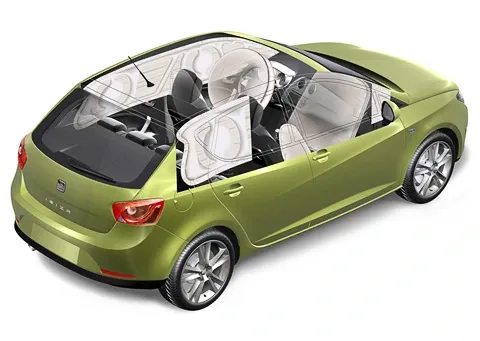
- Front airbags
- Side airbags
- Fog lights
- Power steering
- ABS
- Air conditioning
- CD player with MP3 support
- Cruise control
- Immobilizer
- Follow me home function
- Power-adjustable and heated mirrors
- Central locking
- Electric windows front and rear
- On-board computer
- Tilt and reach adjustable steering column
- Leather-wrapped steering wheel and gear knob
- Climate control
- Metallic paint
- 17-inch alloy wheels
- USB port
- Bluetooth
The base version costs 469,900 rubles.
The test car costs 558,267 rubles.