"...but the looks... that's exactly why I didn't like the Logan. The new sedan had already been brought to the showroom — I looked at it, but it still didn't grab me. And anyway, at first I wanted a hatchback, I flipped through magazines, browsed the internet: I looked at the Aveo, the Rio, and the Kalina, even glanced at the Corsa (though it turned out later that half of those options didn't fit my budget). So, there I am, thinking: I want a hatchback, but the Logan's price suits me, and I like its ride. Then the manager says: we've got a new model based on the Logan, called the Sandero, it costs almost the same, but it's a hatchback and it's good-looking. He showed it to me — I liked it right away, and then I realized: this is it, what I was looking for!"
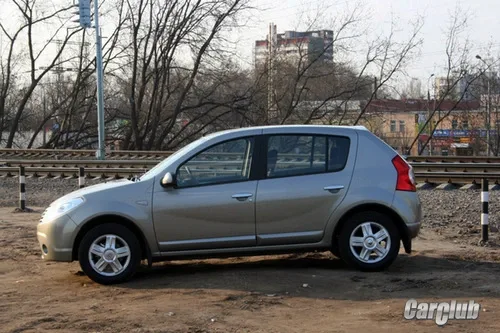 |
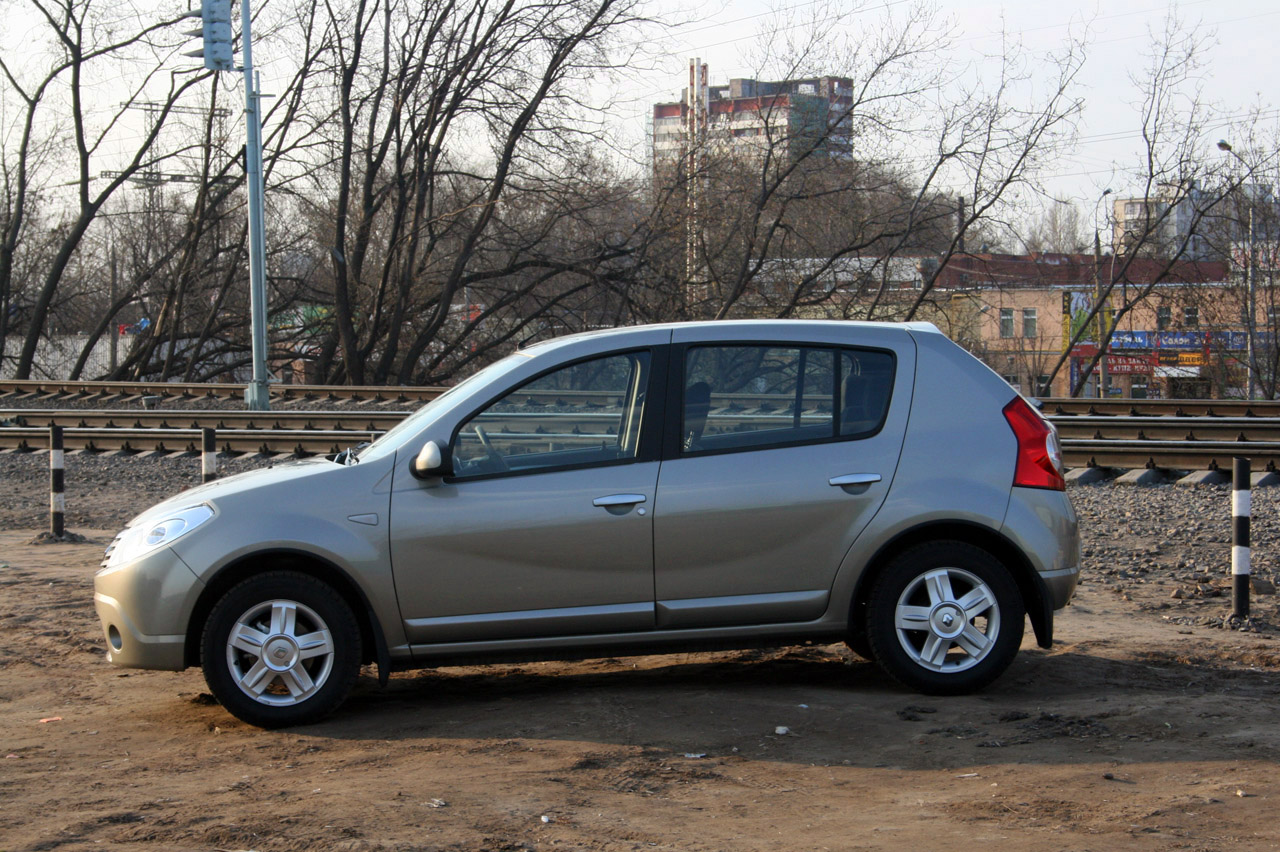
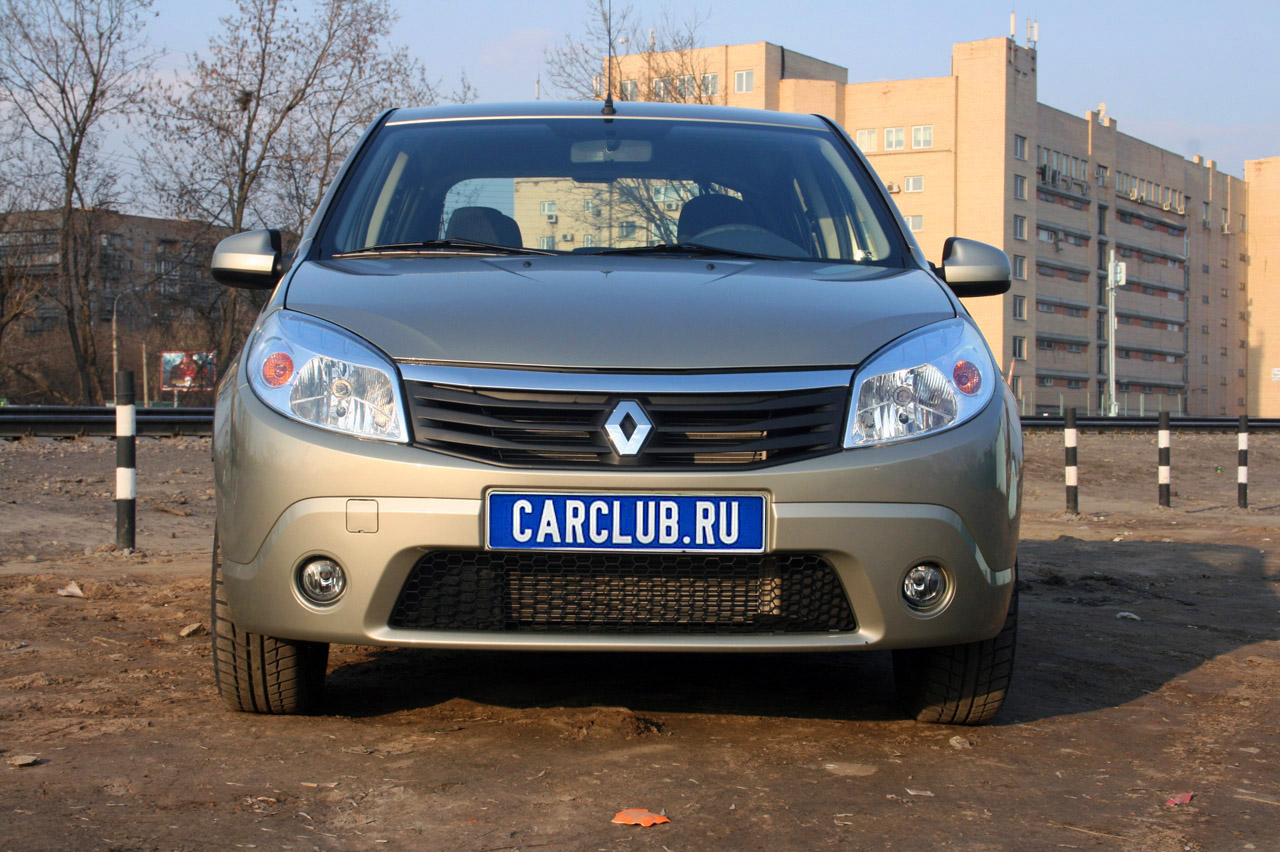
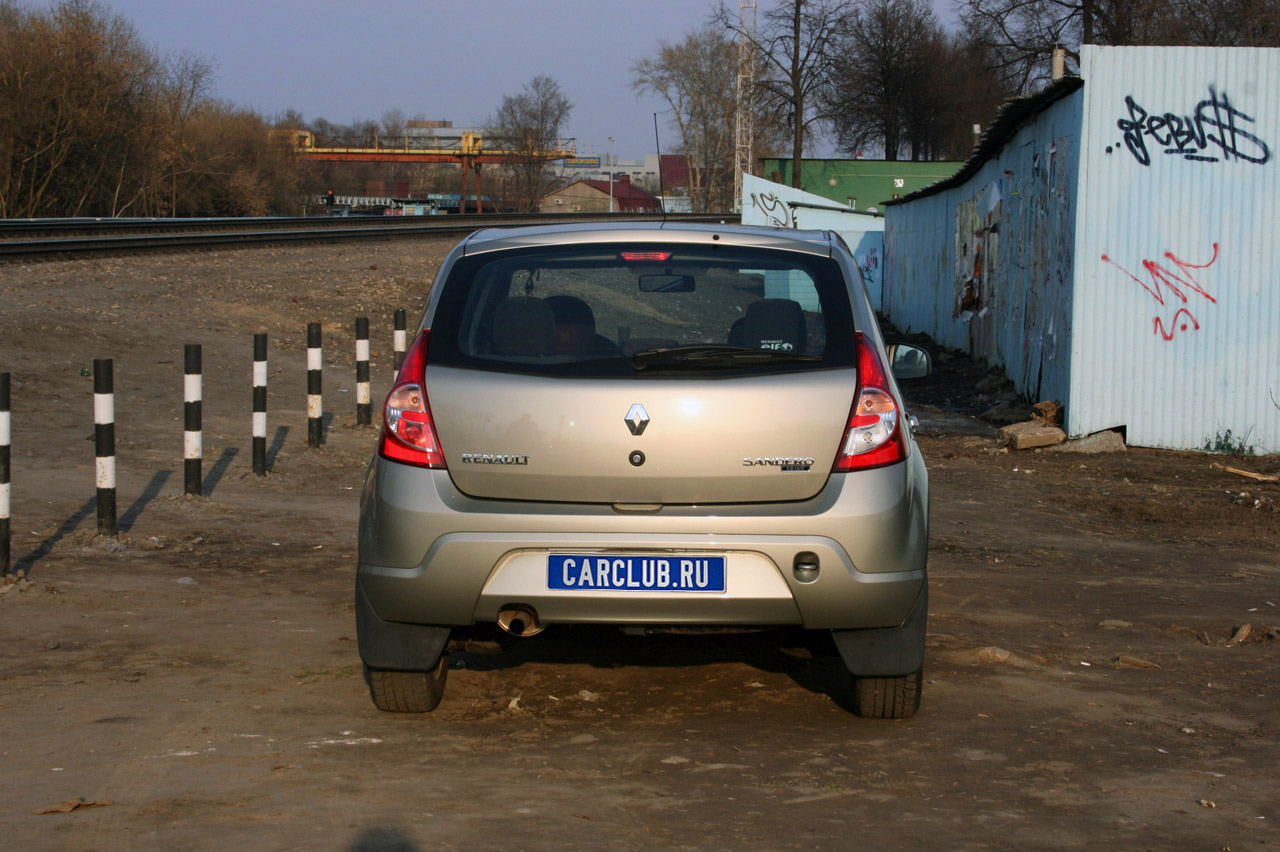
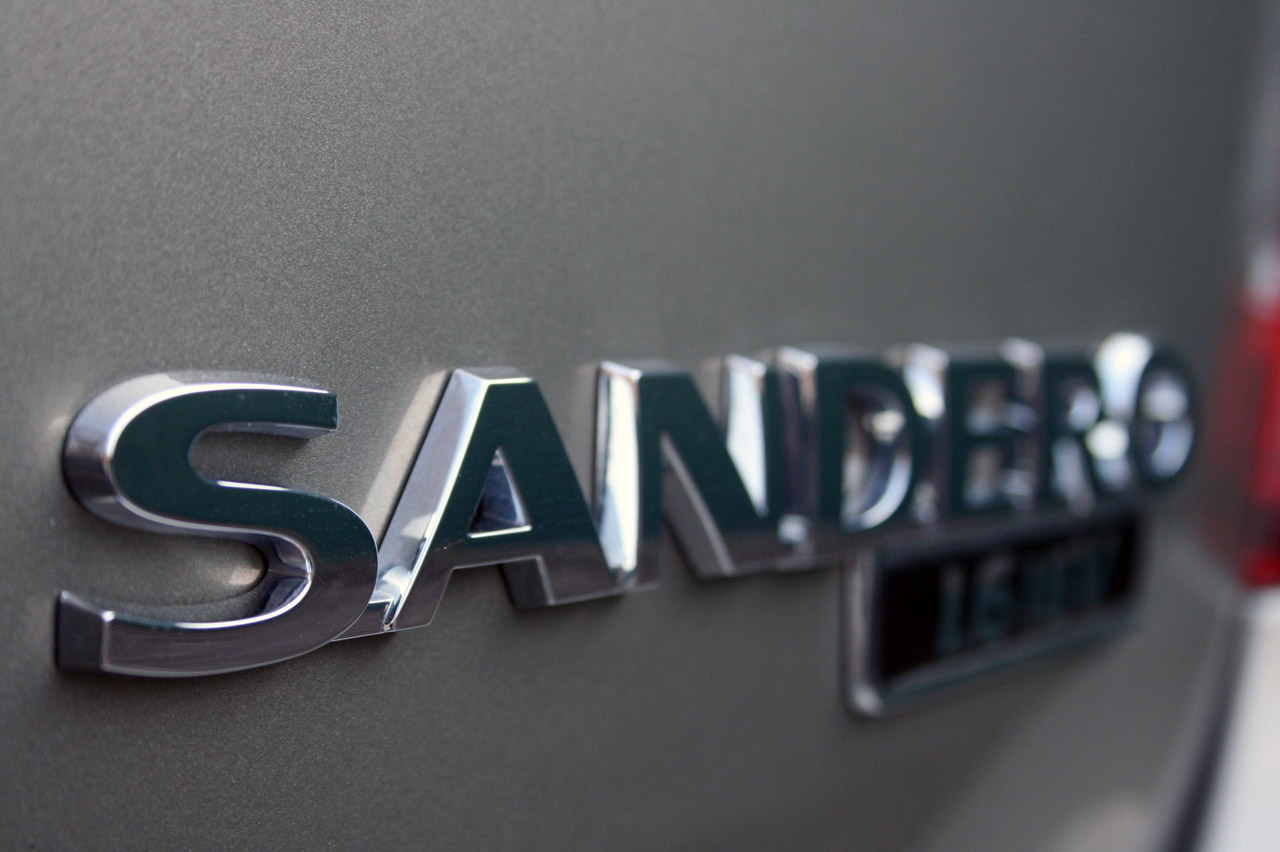
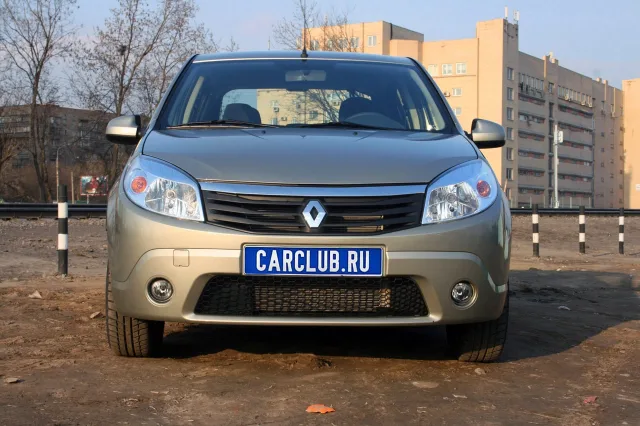
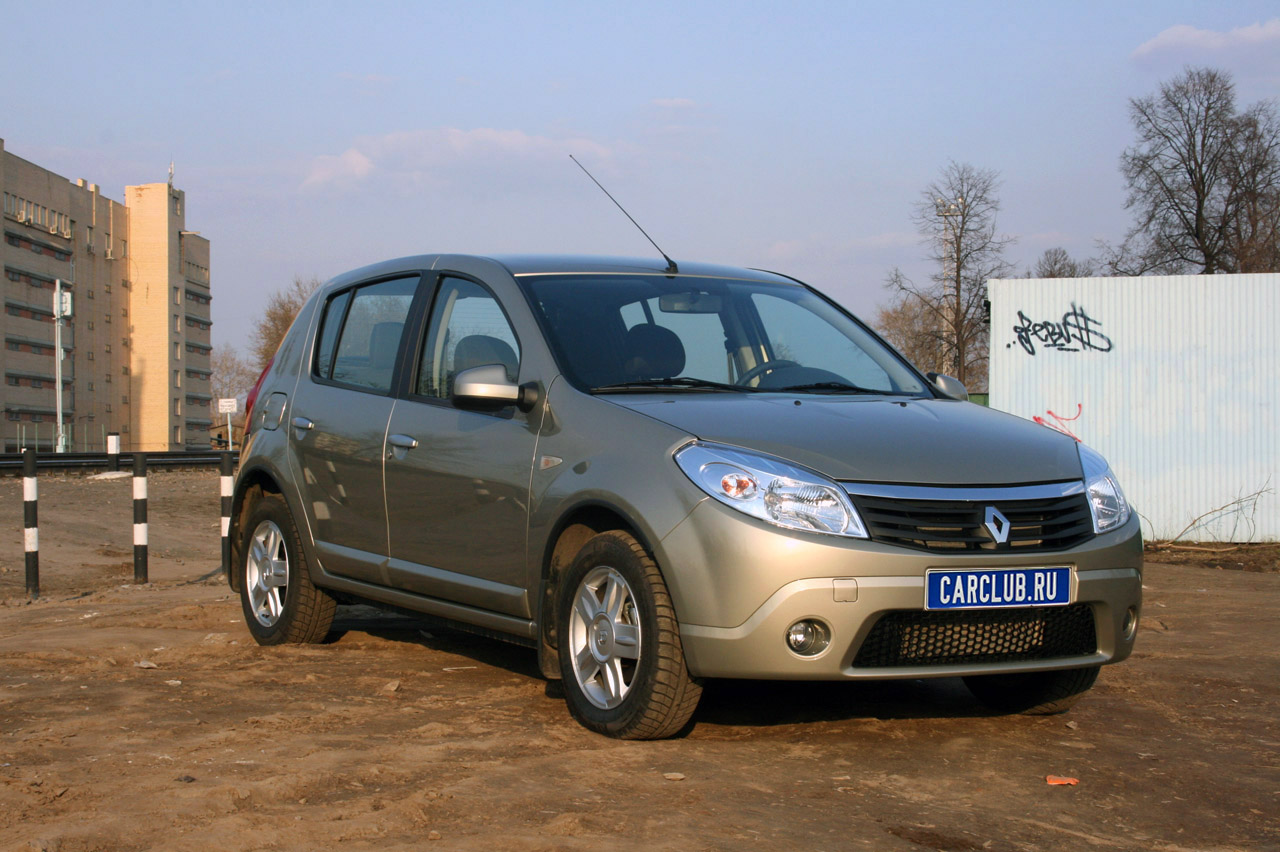
| The hatchback is 70% unified with the Logan, but externally they share no common parts. The Sandero looks simple, without pretentiousness, but it's cute. It doesn't resemble a small "women's" hatchback — it's a calm, serious car without claims to originality, but not boring either. |
These words, which are almost verbatim repeated by both potential and existing Renault Sandero buyers, perhaps best describe the essence of the new Renault model.
Yes, the Logan's appearance is its weak point. No matter how you justify the simple minimalist lines, you can't call the sedan handsome: its angularity scared off buyers, despite the affordable price, good adaptation to Russian roads, and pleasant driving qualities. The Sandero is a completely different matter. The hatchback is 70% unified with the Logan, but they share no common exterior features. The Sandero looks simple, without pretentiousness, but attractive. It's not a small women's hatchback — it's a calm, serious car that doesn't claim originality, but isn't boring either.
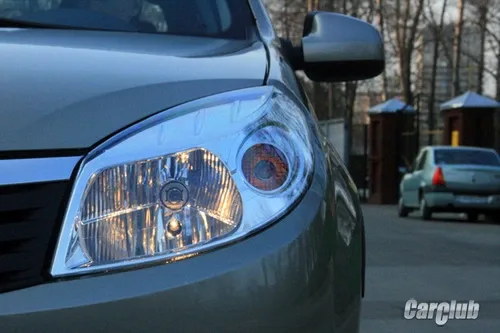 |
| No matter how you defend the simple and minimalist lines, you can't call the Logan handsome, and its angularity made potential buyers turn away, despite the affordable price, good adaptability to Russian conditions, and good driving characteristics. Unlike the Sandero. |
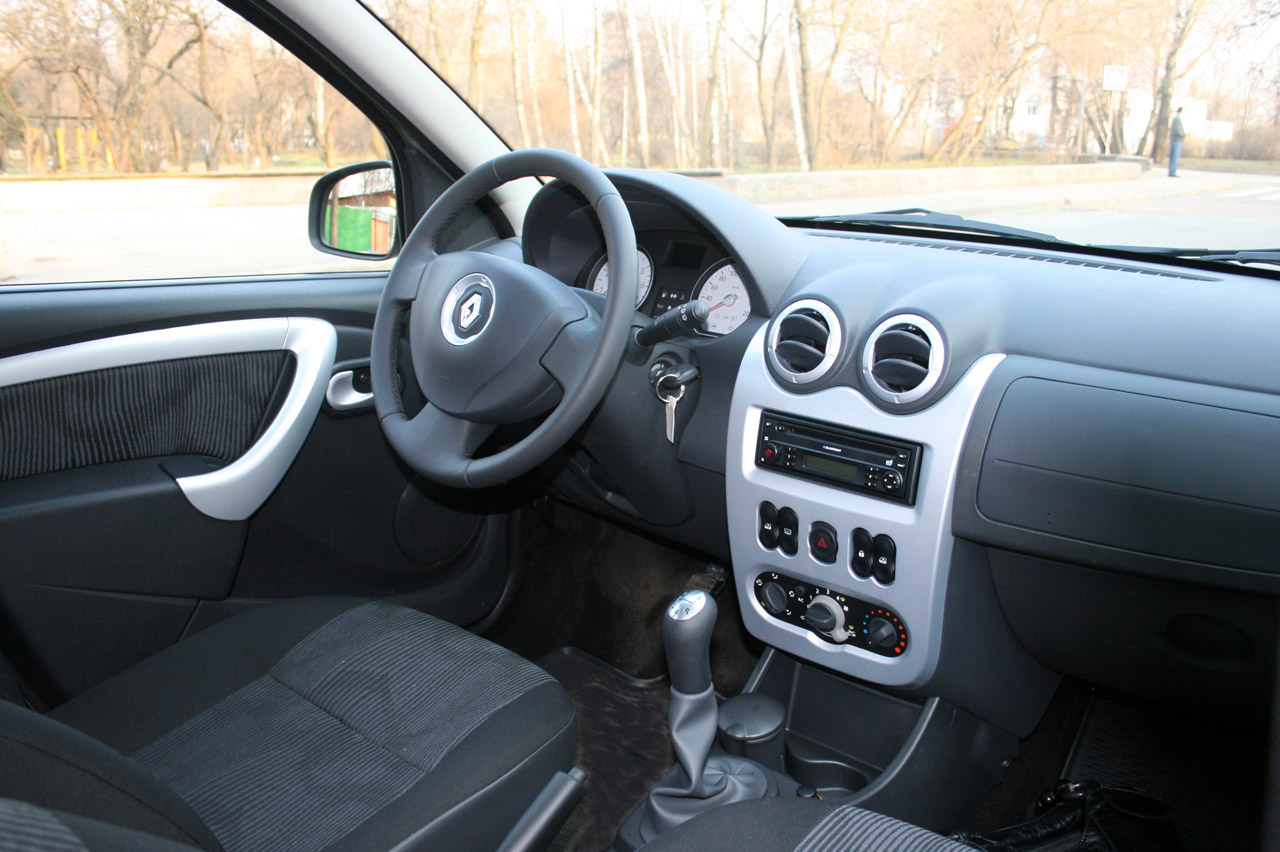
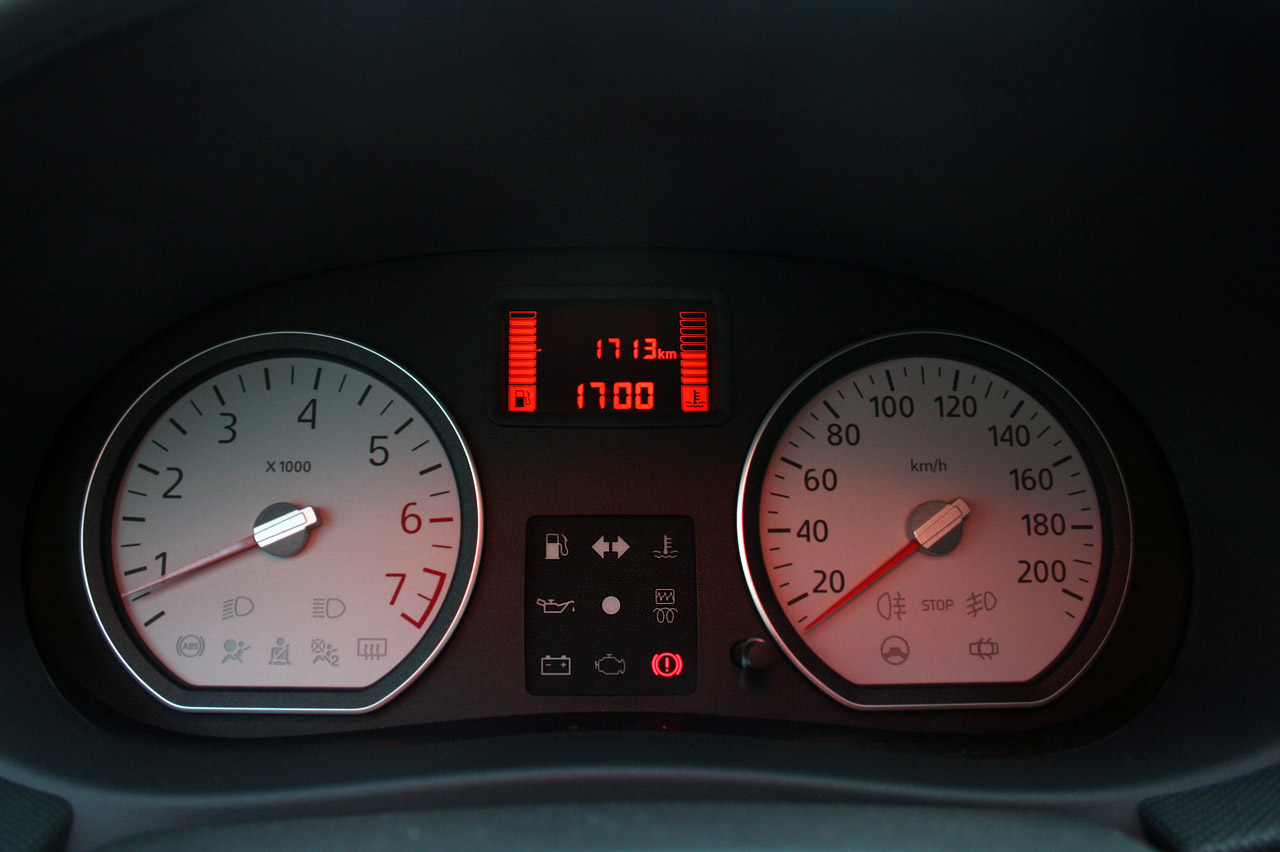
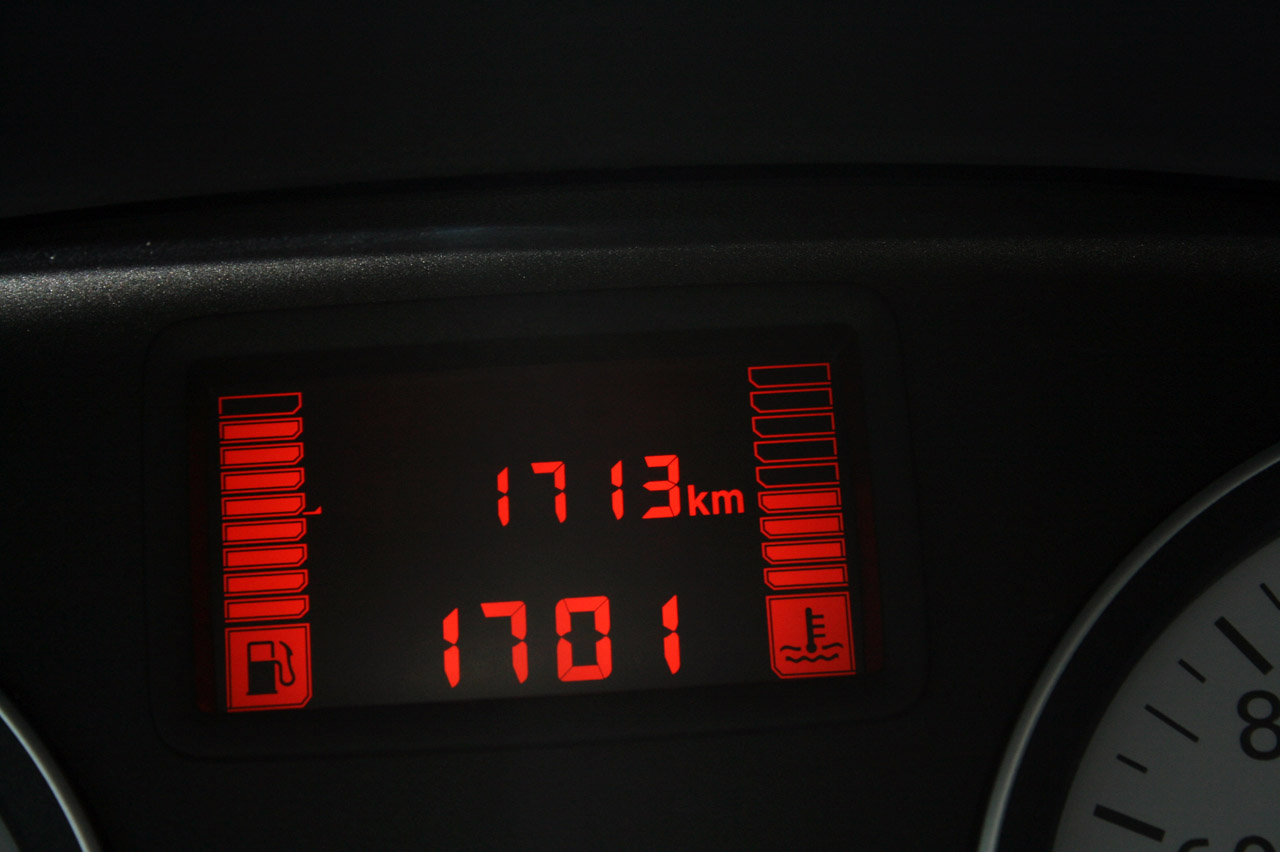
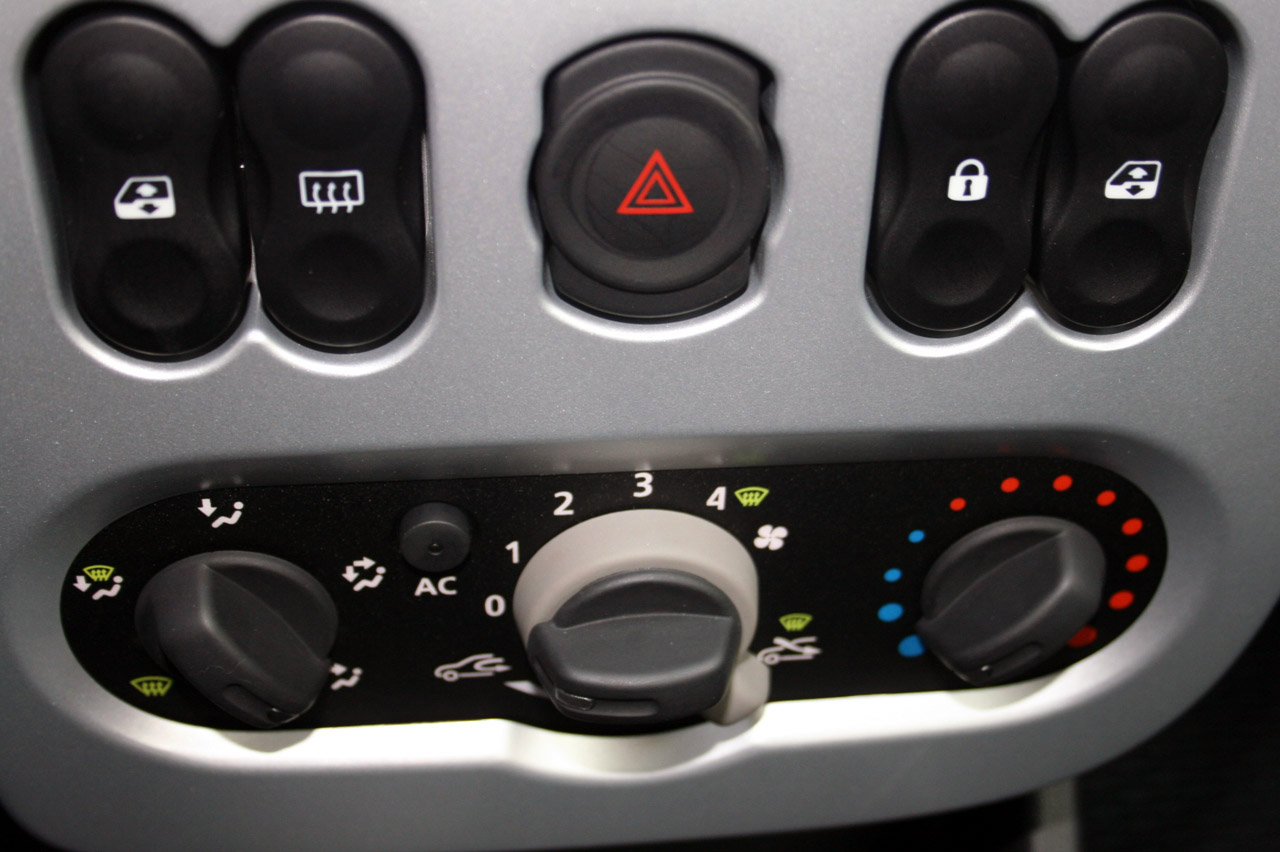
The interior, however, remains the same — ascetic but functional. The instruments with a white background and orange backlighting are unpretentious but well readable; engine temperature and fuel level are displayed as compact electronic scales.
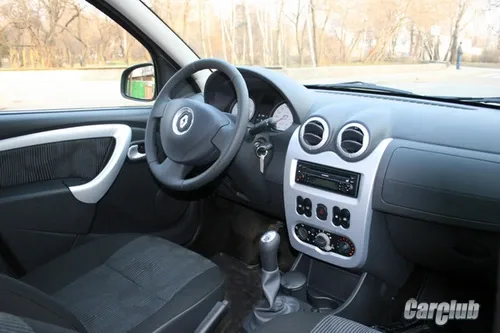 |
| The Sandero's interior remains the same as the Logan's — ascetic but functional. |
The nice-looking steering wheel hides a couple of unpleasant surprises: in the upper position (the column, which, by the way, adjusts for height) it's tilted back, and when parking, no power steering helps — the heavy wheel is inconvenient to turn. There's also a lack of audio control buttons on the steering wheel.
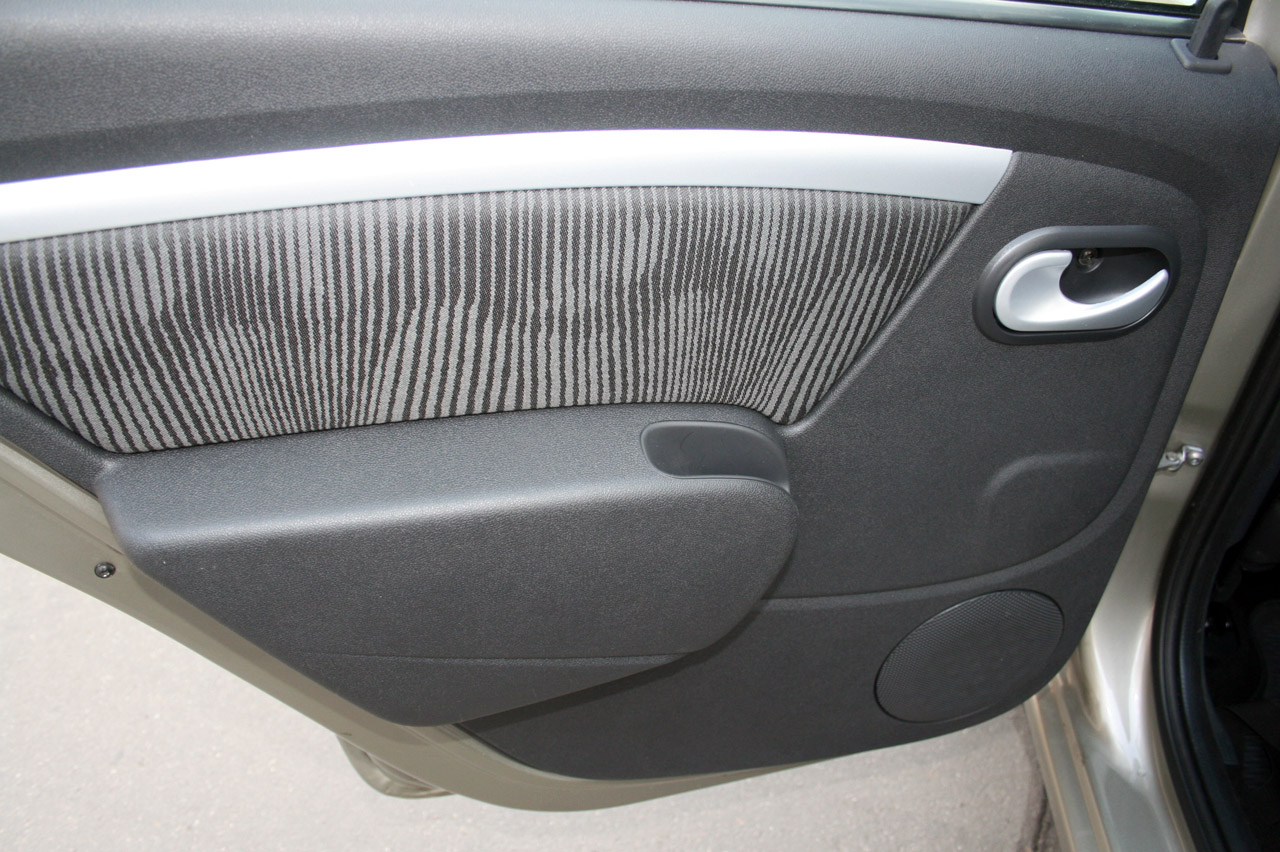
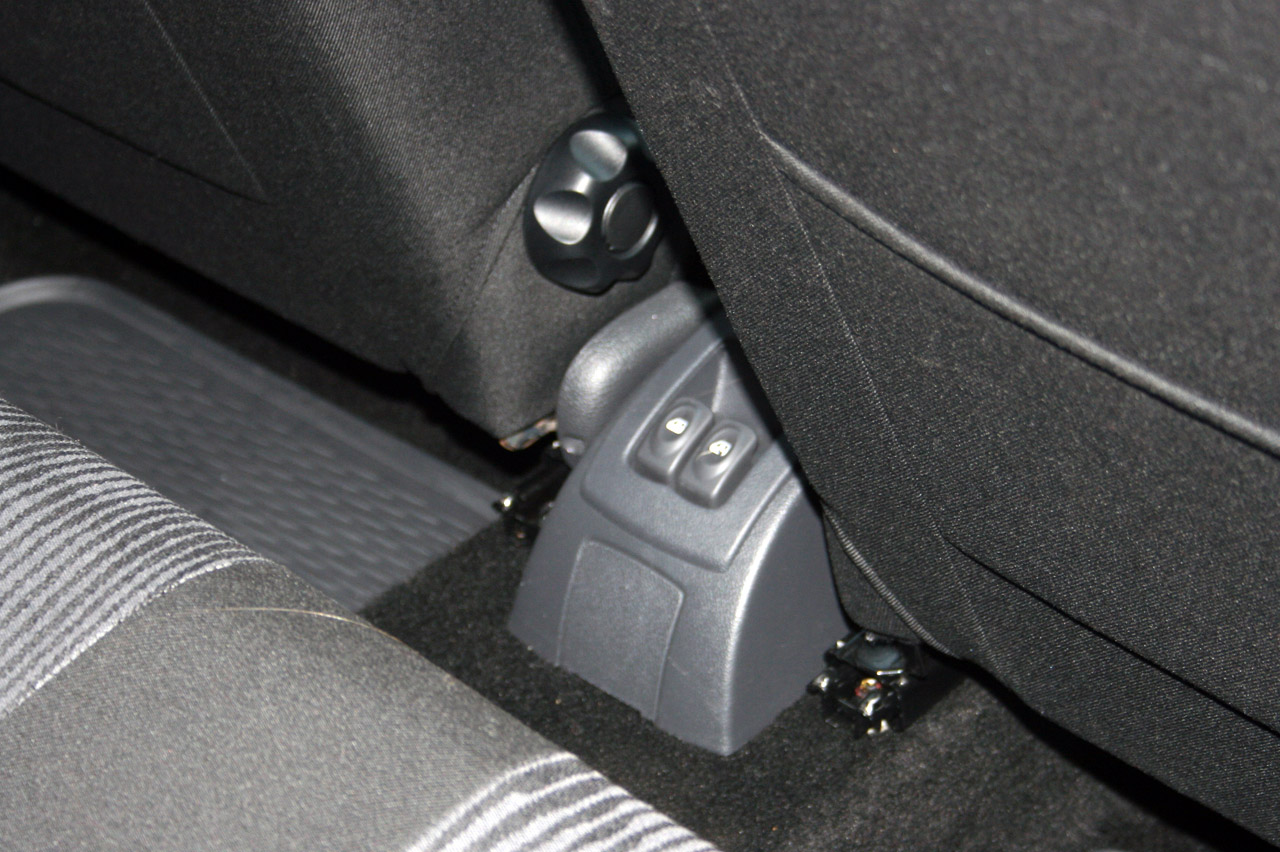
The front door handles inside, fortunately, are full-fledged and successfully painted in a contrasting color relative to the overall trim. But on the rear ones — those same famous inconvenient recesses. And the same inconvenient placement of the power window switches — in the middle, both front and rear.
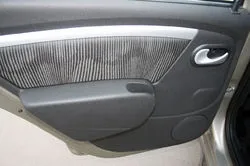 |
| On the rear doors — the famous inconvenient recesses |
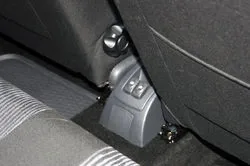 |
| The power window switches are inconveniently located, in the middle |
Assembly quality is at a good level, without gaps or squeaks, but some small details stand out: for example, the doors don't close on the first try, the exterior handles have an awkward grip, and the recess on the inside of the tailgate is slippery.
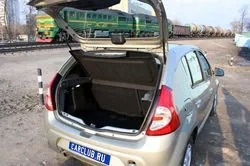 |
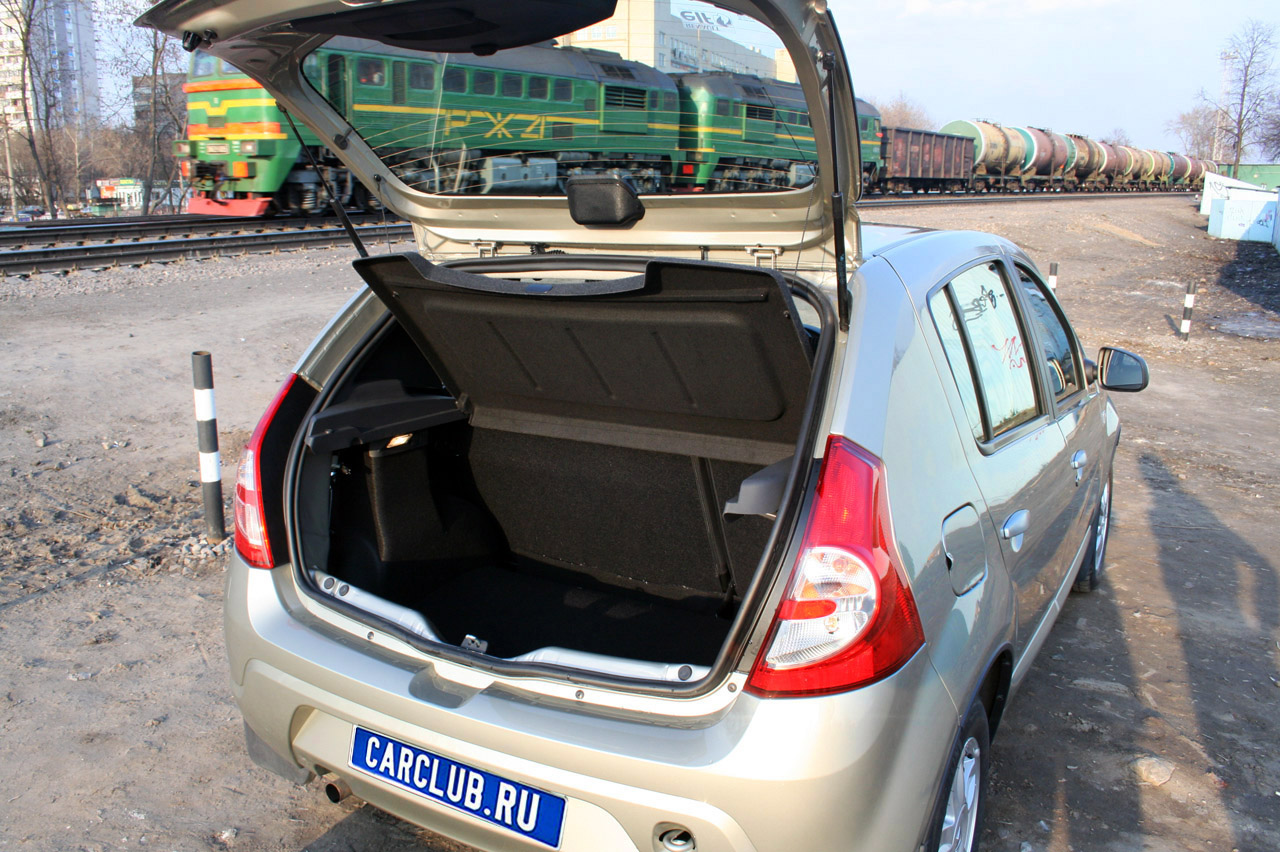
| The trunk has become smaller... |
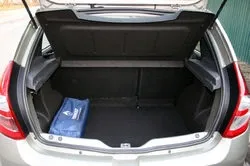 |
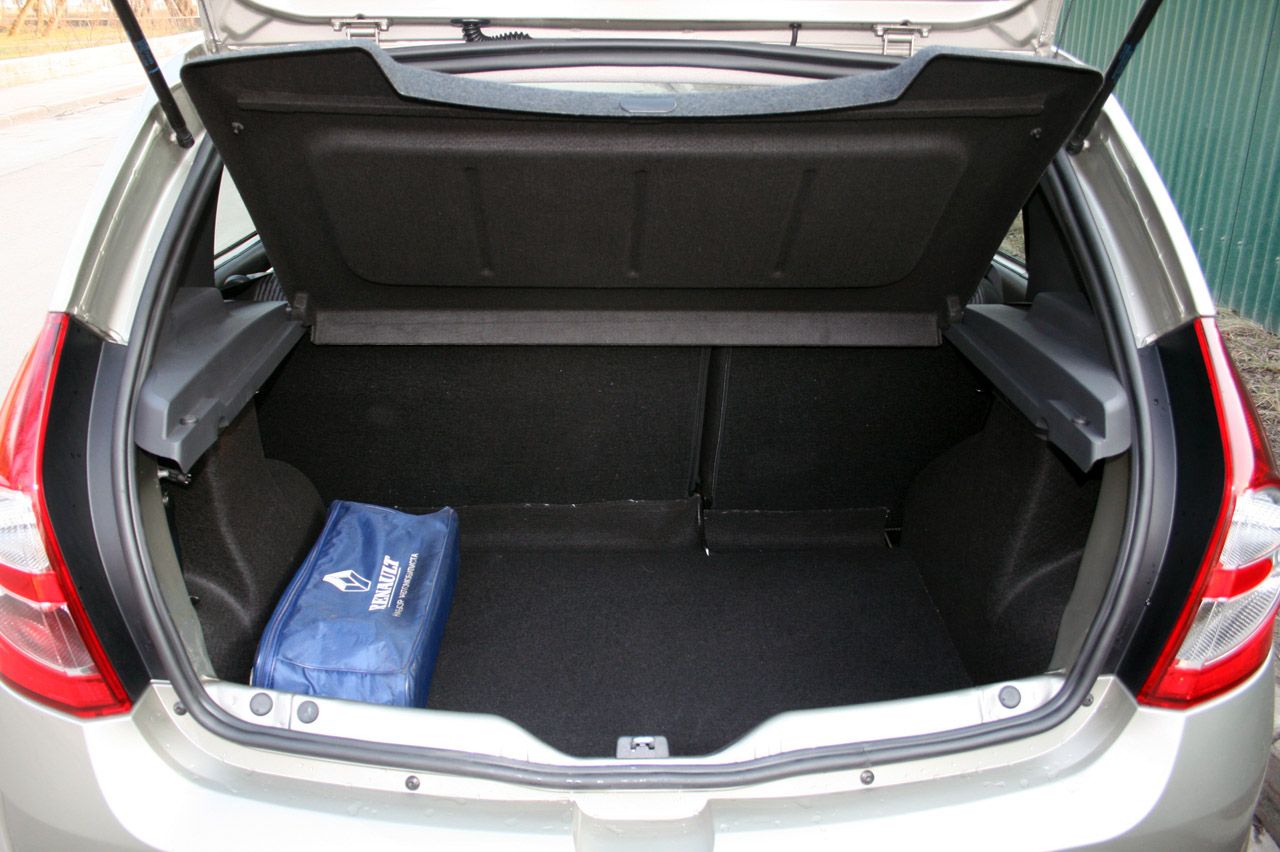
| ...but it's more convenient to use |
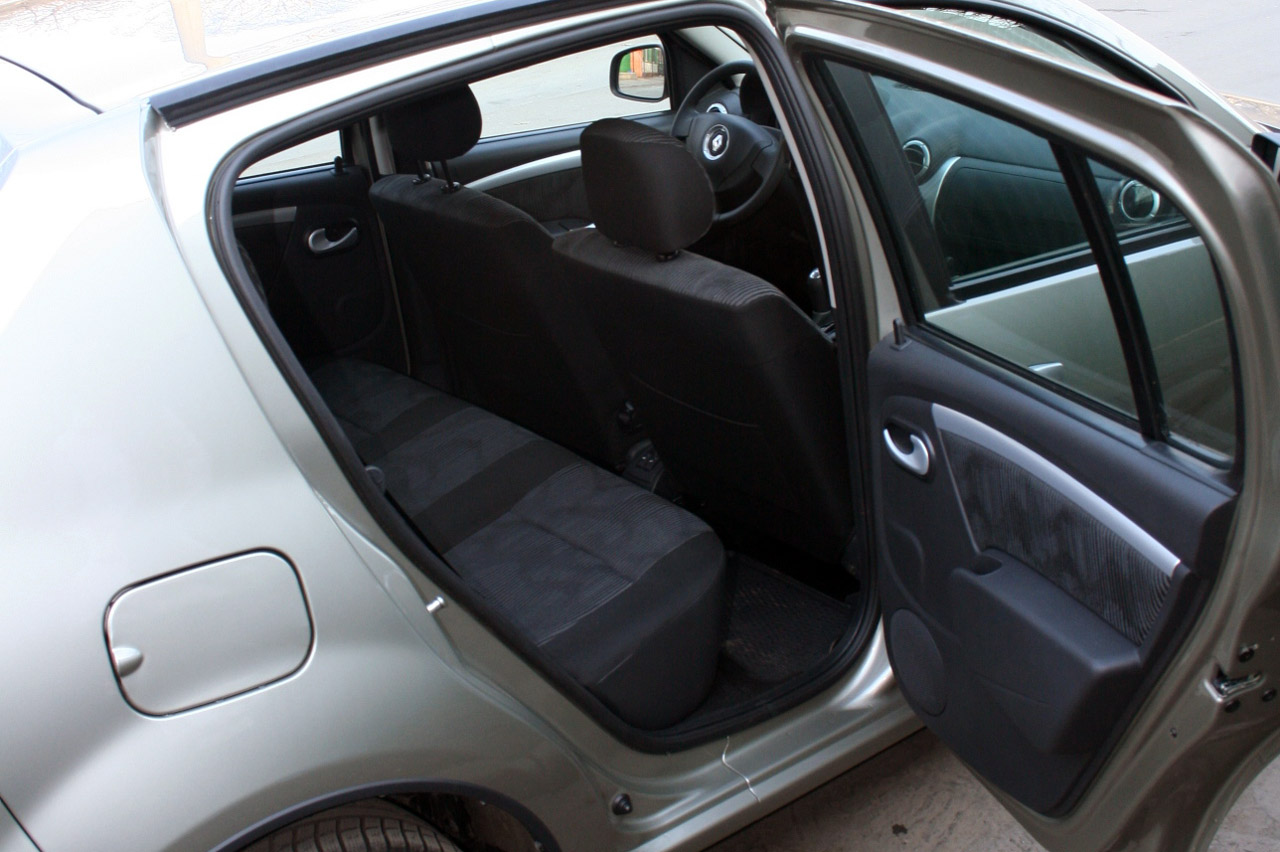
An important question for those choosing between the Logan and the Sandero is the space in the cabin and the trunk. The hatchback's wheelbase compared to the sedan has decreased by 42 mm — this has affected the cabin dimensions. Rear passengers suffered especially: it became tighter for legs and above the head. Still, the Sandero can't be called cramped: five passengers will fit here comfortably — and that's no exaggeration.
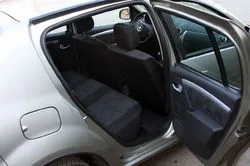 |
| It's not at all cramped in the back of the Sandero |
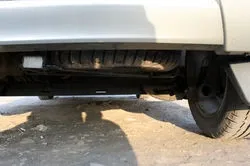 |
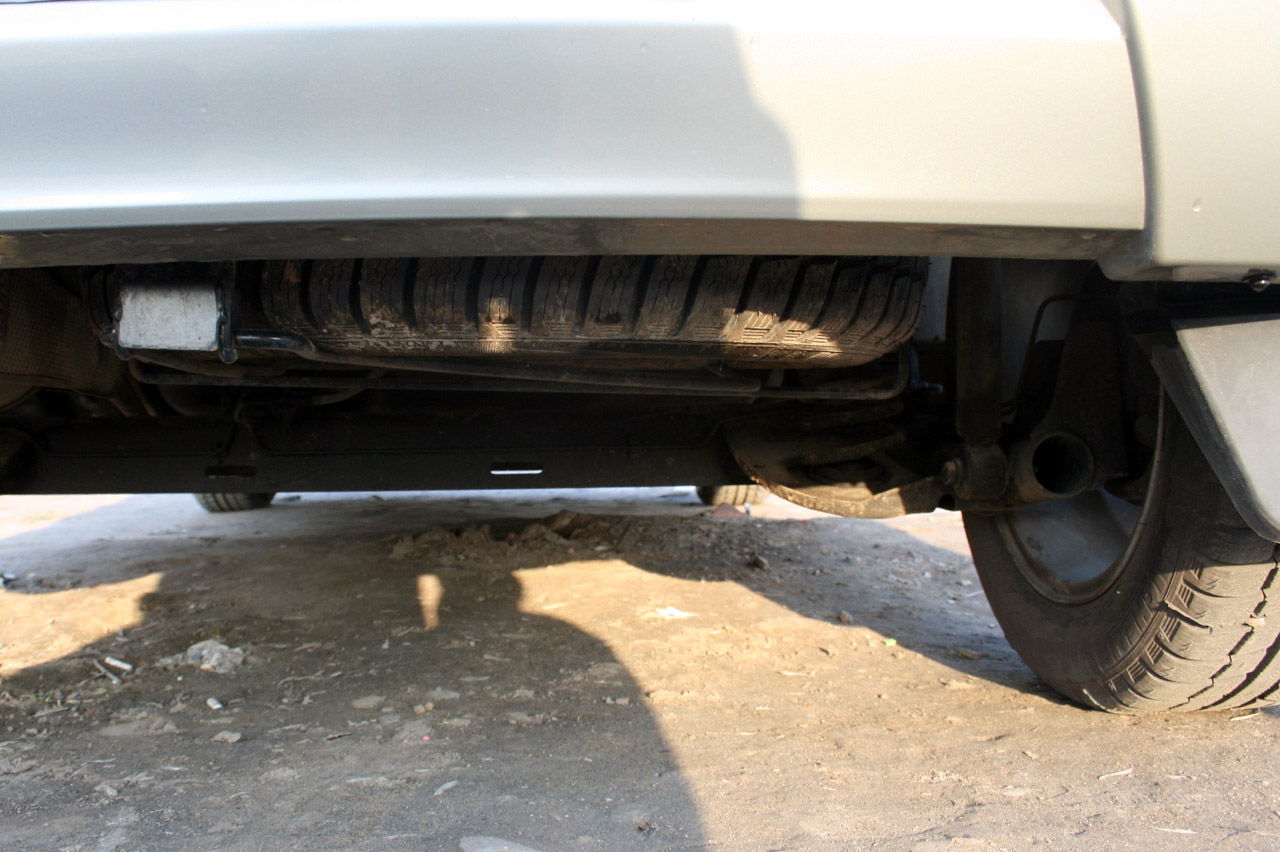
| The spare wheel is hidden under the floor |
The trunk is noticeably smaller than the Logan's: 320 liters versus 510. But it's more convenient to use, and besides — the trump card of any hatchback — with the rear seat folded down, the loading space reaches 1,200 liters! The seats fold easily, almost into a flat floor. True, there's a nuance: such an option as a split-folding rear seat is only available in the most expensive Prestige trim, while in cheaper versions the backrest is one-piece. The spare wheel, by the way, is hidden under the floor to save space.
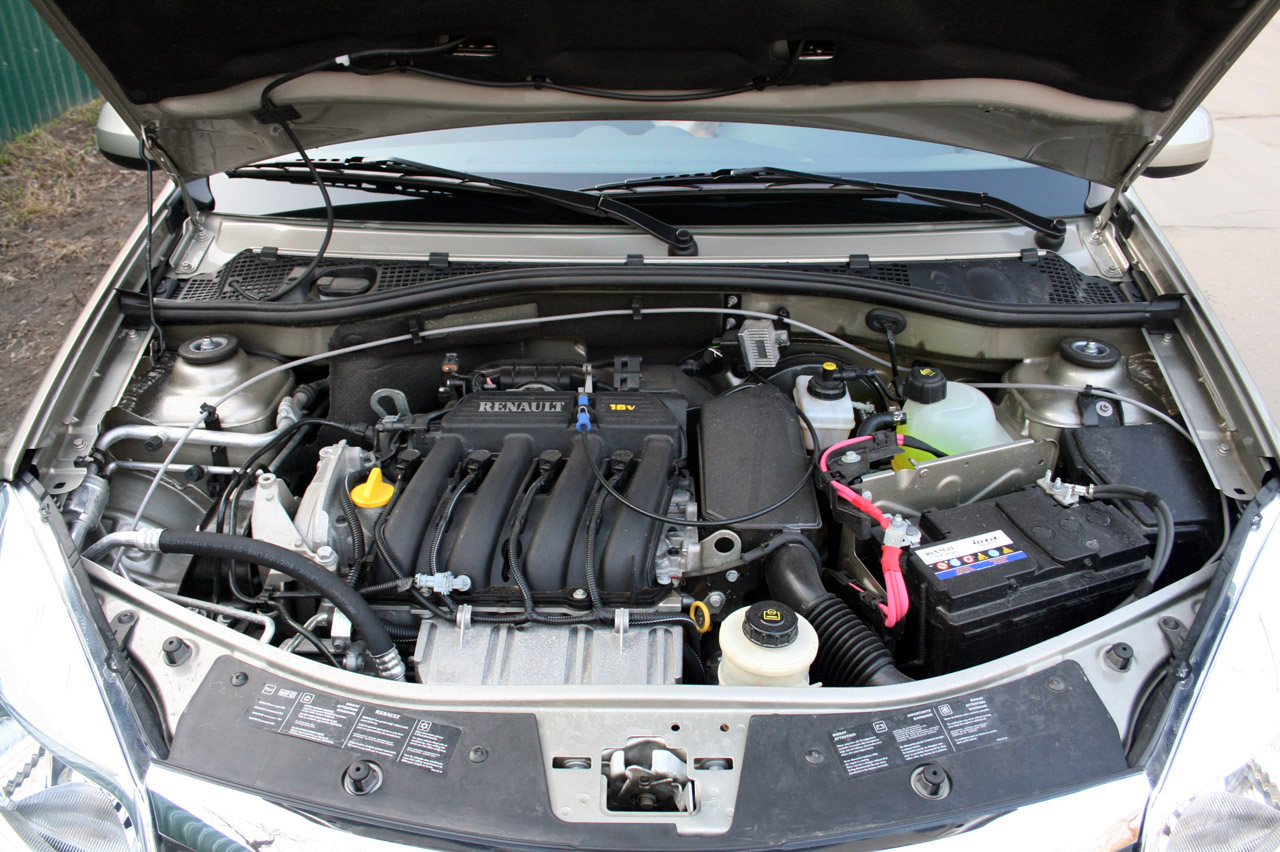
The technical content of the Sandero is completely identical to the Logan; the car is also assembled at the Moscow Avtoframos plant. Our test car has a 1.6-liter 102-horsepower engine and a manual transmission.
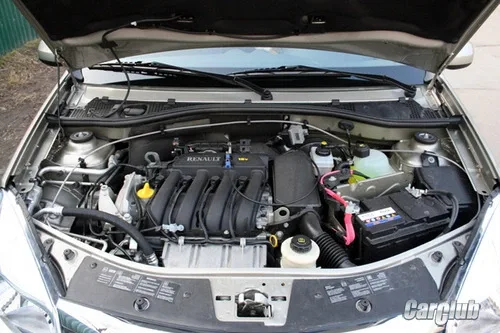 |
| The technical component of the Sandero is completely identical to the Logan; the hatchback, like the sedan, is produced at the Moscow Avtoframos plant. |
The pedals are surprisingly light, almost weightless, and in the first minutes it seems impossible to feel their response. But you unexpectedly discover that this doesn't interfere at all, and you quickly get used to the unusual lightness. A drawback: the accelerator pedal is shifted toward the center tunnel, so it might be a bit tight in winter footwear.
The gear shift lever moves with long throws, and the precision of gear selection leaves much to be desired. If you're not used to it, you might miss reverse on the first try. The older 102-horsepower unit is the same one installed on the Logan and brings no surprises: it's easy to pull away, acceleration is effortless, and the tachometer needle briskly runs toward the red zone. Sound insulation is mediocre: the higher the speed, the more persistently aerodynamic whistles and noise from the wheels and engine penetrate the cabin. And if you turn on the blower to the second speed or higher, a howl from the fan or heater joins in, depending on the weather.
It's no wonder the Logan is hailed as the optimal car for Russian roads — the ride is excellent, the suspension doesn't care what asphalt (or lack thereof) it rolls over, and the ground clearance is solid. The Sandero has neatly preserved all these advantages. At the same time, handling hasn't gone anywhere: on corners, the hatchback doesn't sway from side to side like a boat in a storm, and the steering wheel allows you to easily track and correct the trajectory. Of course, there's no talk of sportiness, but the Sandero is ready to deliver its share of driving pleasure. At the same time, the suspension remains energy-intensive enough to calmly drive over that same broken road to a distant dacha in the rain.
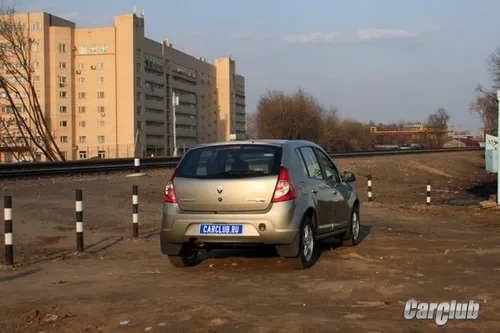 |
| It's no wonder the Logan is hailed as the optimal car for Russian roads — the ride is excellent, the suspension doesn't care what asphalt (or lack thereof) it rolls over, and the ground clearance is solid. The Sandero has neatly preserved all these advantages. |
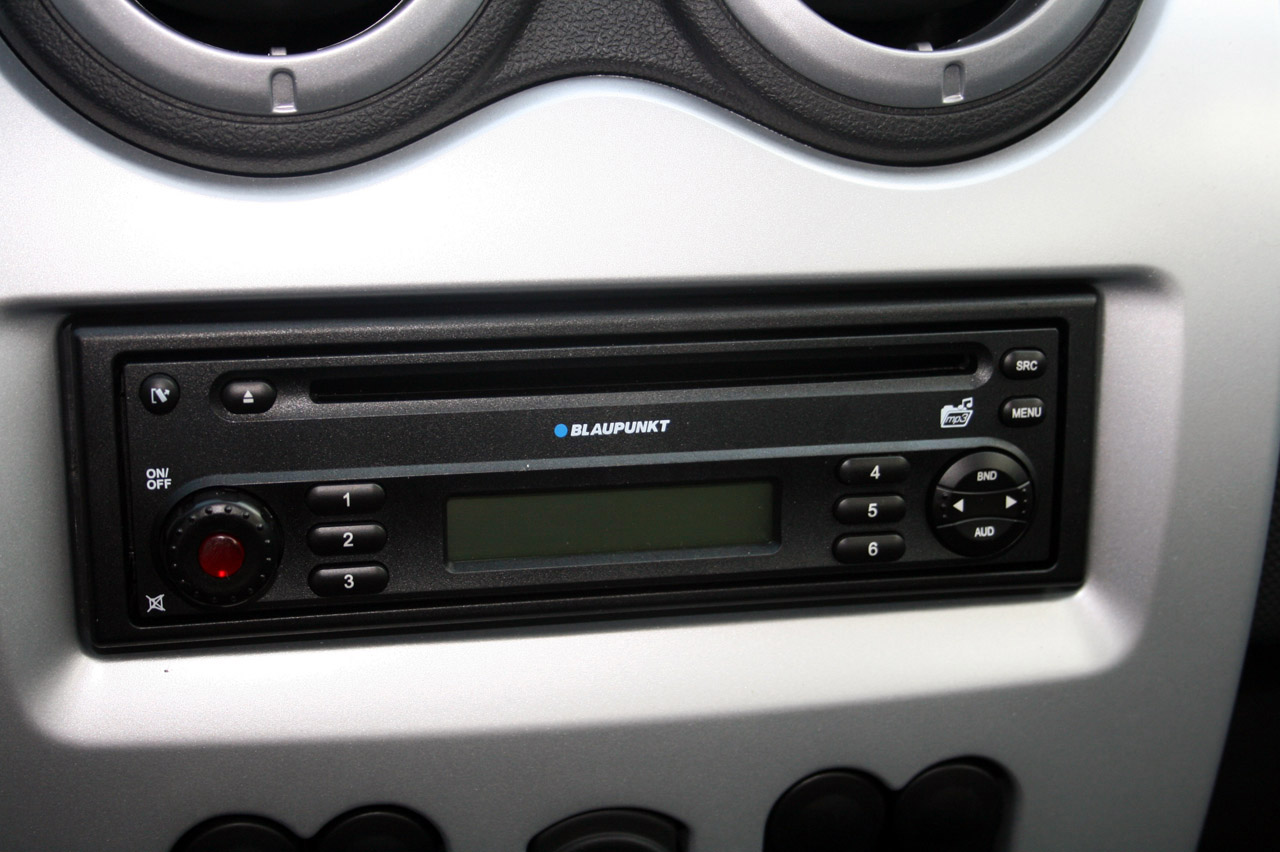
Of course, everyone has already been pleased that the base version of the Sandero costs only 10,000 rubles more than the Logan — 329,000 rubles. The closest rivals — the Lada Kalina and Lada Priora hatchbacks — start at 256,490 and 293,193 rubles, respectively. However, in inexpensive trim levels, the Sandero lacks power steering, an audio system, airbags and ABS, air conditioning, and seat heating, and the front suspension has no anti-roll bar. The engine there is 1.4 liters. The top Prestige version comes only with the 1.6-liter engine. Diesel modifications in Russia, as is usually the case, should not be expected, but an automatic transmission was promised later.
 |
The base version of the Sandero costs only 10,000 rubles more
than the Logan — 329,000 rubles. |
 |
Diesel versions in Russia, as is usually the case,
should not be expected, but an automatic
was promised later. |
Sales experience shows: even those who initially aim for the cheapest option eventually leave the dealership not with the minimal trim. Therefore, the most popular Sandero models will likely not be the "bare" base version, but cars with a price tag around 400,000 rubles.
Svetlana Aleeva

 The new product from Moscow's Avtoframos is all the strengths of the Logan, packed into a nice-looking body. Short and to the point.