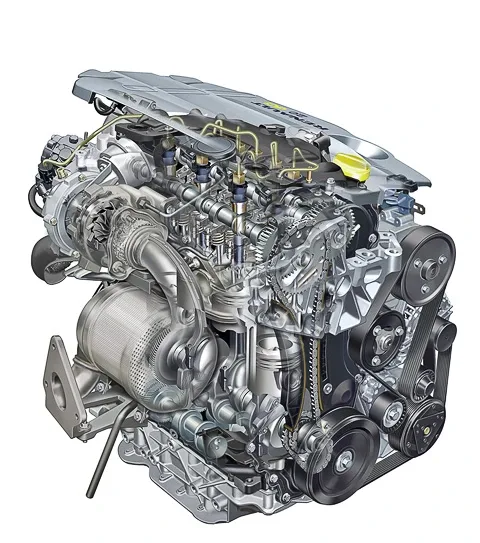
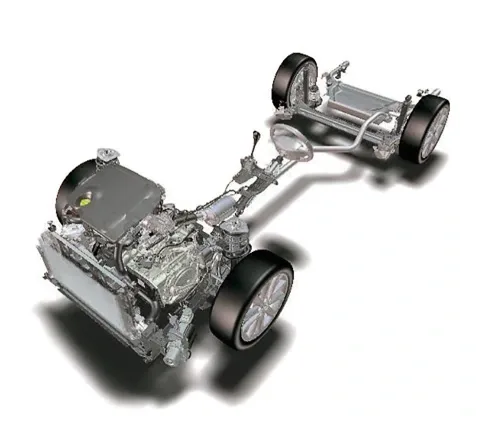
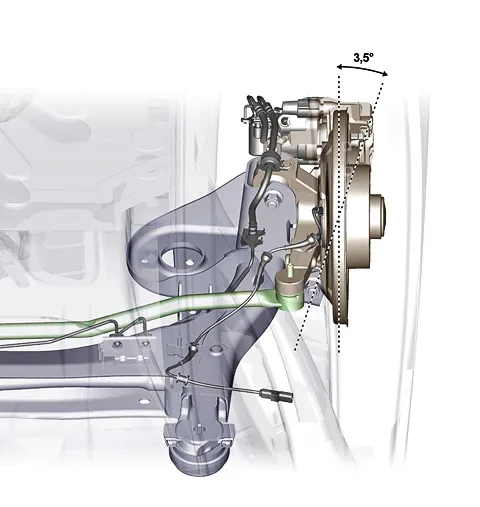
Although if you look closely, how new is it really? The suspension was barely touched, just refined. The same was done with the steering. The petrol engines offered in Russia are also already familiar. The top variant — a turbocharged 2.0 (170 hp) — carried over unchanged. The base 1.6 (115 hp) has long been seen on the Megane. And the freshest in the lineup is the two-liter naturally aspirated engine (140 hp), which links the Laguna to the Nissan Qashqai. The turbo engine works with an automatic transmission, the others with a manual. These six-speed gearboxes are truly new, without exaggeration, but they don't dispel the feeling that under the guise of the third generation hides the Laguna II. And for the image-conscious D-class, the sense of novelty that hits the eye is so important. And even if in this segment buyers often choose with their heads, the manufacturer must capture the heart, capture it. The French have always been masters at that.
Once, Mayakovsky's purchase of a Renault car stirred the Russian beau monde. Eighty years later, Russia was stirred by the "budget" Logan, but wealthy citizens treat the brand coolly. The previous Laguna didn't catch their eye — the new Ford Mondeo or Mazda 6 were awaited here with a eagerness the "Frenchwoman" never dreamed of. Meanwhile, for Renault, this Laguna is significant. Carlos Ghosn personally predicted it would be among the top three in the D-class in... quality. He unequivocally hinted that the "Germans" and "Japanese" would have to make room. A bold forecast! Quality is tested by time, so now the French emphasize the traditional forte of the Laguna — safety. But our buyer won't be impressed by French quality or the number of airbags. What else is special about the new Laguna?
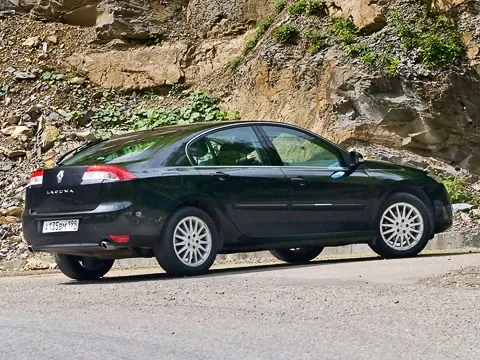
The body has grown by 115 mm in length, 61 in width, and 15 in height. The wheelbase has increased by 11 mm. And you wouldn't say it by looking.
Design! The previous one was an interesting lady, and after the facelift she became even prettier. The new one is somehow illogical. Even though the hatchback and estate have become lighter by 15 kg, there's no lightness in their appearance. The "barn" is more harmonious, while the hatchback looks like a blank for a truly beautiful coupe. Although, you'll agree, the cars are recognizable.
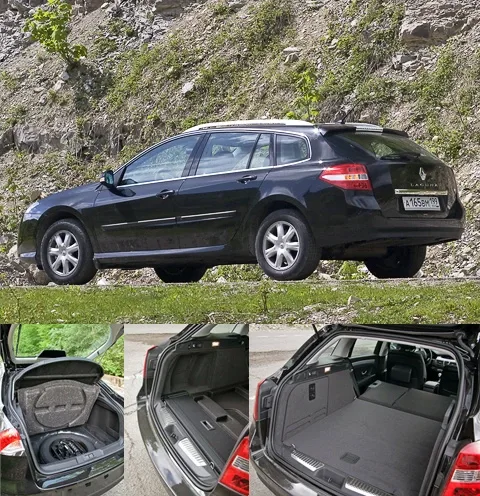
The estate is both prettier and more practical than the hatchback. The width of the rear opening is noticeably larger. If you fold the rear seatbacks (you can do it right from the trunk), the cargo volume increases from 508 to 1593 liters. The luggage shelf can be hidden under the floor — a trifle, but pleasant. An unpleasant trifle: the tailgates of both versions open by pressing the center of the emblem. A regular handle would be more convenient. For an extra charge, an opening rear window is offered for the estate.
The interior is clear confirmation of Ghosn's words about a quality leap. Both in the selection of materials and in execution, the French mosquito won't sharpen its nose. The Russian one even more so. But German or Japanese mosquitoes will find a gap of the right size. But the fact is: the interior of the new car is drawn with imagination, is quite pleasant to the touch, and stays silent on the broken Sochi roads. And the sound insulation is good. No wonder the "Renault folks" hope for the Laguna's success among used car owners. As Mayakovsky said: "I've had enough of slapping around, dead and quiet, on various nags-otters..."
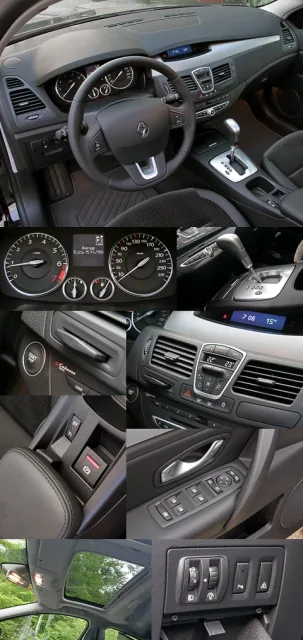
- Those familiar with the previous Laguna will find everything in its place. But the quality of design work and finishing materials has reached a new level.
- The key card is now waterproof.
- The dual-zone climate control has a Fast mode that allows you to change the cabin temperature as quickly as possible. True, the original control unit requires getting used to.
- The 2.0T versions come standard with an automatic "handbrake."
- The power sunroof is an option available only for Dynamique and Privilege trims.
- To the left of the steering wheel is the ESP off button. At 50 km/h, the system comes back to life.
The platform of the previous Laguna didn't allow for a layout feat: there's no excess of interior space. But four people of average height sit comfortably in the cabin. Special thanks for the front seats. You sit down and forget that the "French" were famous for their pouf-like chairs. The driver's position is well organized. In this class, creativity and encroachment on the familiar are allowed only to Citroen. And Renault chose not to experiment more than before — and didn't miss out.
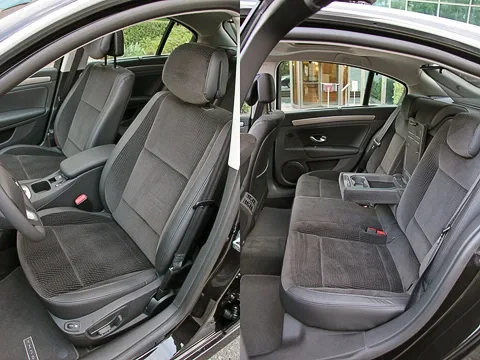
The front seats are good: a successful shape, wide adjustment ranges. Although the seating is more comfortable in the version with mechanical adjustments — apparently, the seat height installation has an effect. In the back, there's enough space — but no more.
And on the road, the Laguna doesn't require getting used to at all. The car with the 1.6 engine still rather pulls than goes. The engine is unpretentious — it's not even offered on the estate. The two-liter versions are more interesting. The naturally aspirated one is especially good. Torquey, elastic, obedient, it will forgive even rough mistakes in gear selection. Too bad the gearshift mechanism still has a "French touch." The turbo version? It's great for high-speed highways. If only the driver spends time training the adaptive automatic or immediately switches it to manual mode.
But the naturally aspirated Laguna 2.0 is preferable. It's a good hundredweight lighter than the turbo-Laguna, accelerates to 100 km/h faster, and its ride is softer — there are no 17-inch wheels with low-profile tires here. Especially since handling is fine in both versions: no accents, no surprises. And only on steep serpentine bends does the old Laguna show through in the new car. The steering lacks the desired sharpness. But the brake drive, on the contrary, is free of the notorious French nervousness.
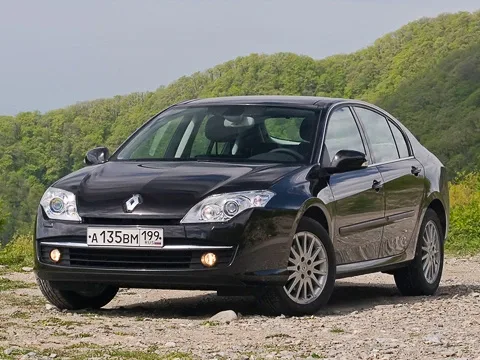
Alas, the main thing has been inherited — the lack of integrity. Like its predecessor, the Laguna III is a set of more or less successful qualities, but they don't create a complete image. And therefore the slogan "You have the right to demand perfection!" on the Laguna's advertising posters reads strangely — like advice to look at competitors.
Although the Laguna has an ace up its sleeve — a diesel! The Laguna III is the first Renault model to taste our diesel fuel. The two-liter "four" (150 hp, 340 N•m), meeting Euro-4 standards, will be offered starting in September with a six-speed automatic. Renault is counting heavily on corporate sales: any transport department head will appreciate the consumption — 6.2 l/100 km... It's just that the price of the diesel car starts at 881,450 rubles. Prices for petrol versions are more humane: from 694,625 rubles for the Expression trim, from 742,625 for the Dynamique, and for the Privilege — from 885,425.
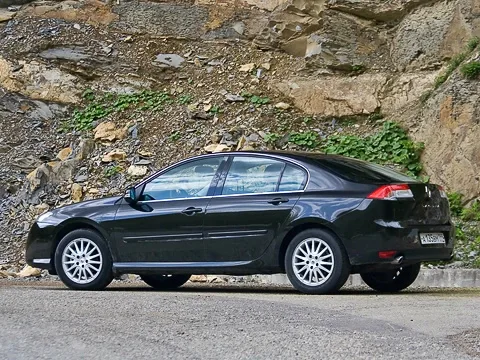
A balanced suspension and increased ground clearance are not the only "Russian" differences of the Laguna. The list includes: steel engine protection, anti-gravel coating on the underbody, "cold" technical fluids, an enlarged washer fluid reservoir, and a full-size spare tire. And soon the representative office will sort out translation difficulties and offer Russian navigation. For an extra charge.
Of course, Renault in Russia doesn't stake as much on the Laguna as on the Logan or Sandero. And cooperation with VAZ occupies the Russian representative office much more. "But we must be present in the D-class," says Dominique Musset, marketing director of Renault in Russia. "No one expected such sales growth in this segment." So here's another plus of the Laguna — no queues. And then, who knows, the promised quality might show itself. And, who knows, maybe buyers of the Laguna will stop being looked at as complete aesthetes. Remember how Mayakovsky put it: "I can't avoid nasty gossip. Well, forgive me, please, that I brought a Renault from Paris. Not perfume or a tie." True, the poet didn't have such a choice as today. And Lila Brik even advised him to buy a "Ford"...
Technical specifications
| Characteristics | Renault Laguna III |
| 1.6 | 2.0 | 2.0 T | 2.0 dCi |
| Body |
| Number of doors/seats | 5/5 (4/5)* |
| Length, mm | 4695 (4803) |
| Width, mm | 1811 |
| Height, mm | 1445 |
| Wheelbase, mm | 2756 |
| Track front/rear, mm | 1557 / 1512 |
| Ground clearance, mm | 120 |
| Curb weight, kg | 1355 | 1369 (1390) | 1467 (1488) | 1480 (1501) |
| Gross weight, kg | 1900 | 1919 (1940) | 1961 (1995) | 2025 (2046) |
| Trunk volume, l | 450–1377 (508–n/a) |
| Engine |
| Type | petrol, with distributed injection | diesel |
| Location | front, transverse |
| Number and arrangement of cylinders | 4, in-line |
| Number of valves | 16 |
| Displacement, cm3 | 1598 | 1997 | 1998 | 1995 |
| Max power, hp/rpm | 115/n/a | 140/6000 | 170/5000 | 150/4000 |
| Max torque, N•m/rpm | 151/4250 | 195/3750 | 270/3250 | 340/2000 |
| Transmission |
| Gearbox | manual, six-speed | automatic, six-speed |
| Drive | front |
| Chassis |
| Front suspension | independent, coil spring, McPherson |
| Rear suspension | semi-independent, coil spring |
| Front brakes | disc |
| Rear brakes | disc |
| Performance characteristics |
| Maximum speed, km/h | 192 | 210 (205) | 220 (215) | 210 (205) |
| Acceleration 0–100 km/h, s | 11.7 | 9.1 (9.3) | 9.2 (9.4) | 10.2 (10.7) |
| Fuel consumption, l/100 km |
| urban cycle | 10.4 | 10.7 | 13 | 8 |
| extra-urban cycle | 6.3 | 6.3 (6.5) | 6.6 (6.7) | 5.3 (5.4) |
| combined cycle | 7.6 | 7.9 (8) | 8.9 | 6.2 |
| Emission standard | Euro-3 | Euro-4 |
| Fuel tank capacity, l | 66 |
| Fuel | AI-95 | diesel |
* in parentheses data for estate
Trim levels
Expression
- Power steering
- Steel wheels R16
- Fabric seat upholstery
- Leather-wrapped steering wheel and gear knob
- On-board computer
- Electromechanical parking brake (for 2.0T)
- Front fog lights
- Headlight washer
- Key card
- Air conditioning (dual-zone climate control for 2.0T)
- Heated front seats
- Steering column tilt and reach adjustment
- Driver's seat height adjustment
- CD stereo
- Power-adjustable and heated exterior mirrors
- Light sensor (for 2.0T)
- Rain sensor (for 2.0T)
- ABS
- ESP (except 1.6)
- 6 airbags
- Alarm
Dynamique (differences)
- Alloy wheels R16
- Fabric and leather seat trim
- Cruise control
- Passenger seat height adjustment
Privilege (differences)
- Alloy wheels R17
- Electromechanical parking brake
- Rear parking sensors
- Bi-xenon adaptive headlights
- CD stereo with MP3 support
- Leather seat upholstery
Price of Expression — from 694,625 rubles
Price of Dynamique — from 742,325 rubles
Price of Privilege — from 885,425 rubles
Safety
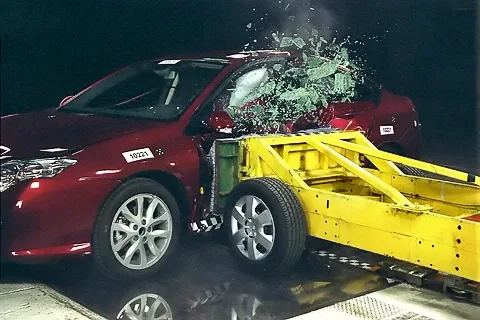
In 2001, the Laguna became the first five-star car in Euro NCAP history. The new one has the world's first double side airbags, which protect both the chest and hip area. And now the Laguna is predicted to get six stars.
Behind the scenes
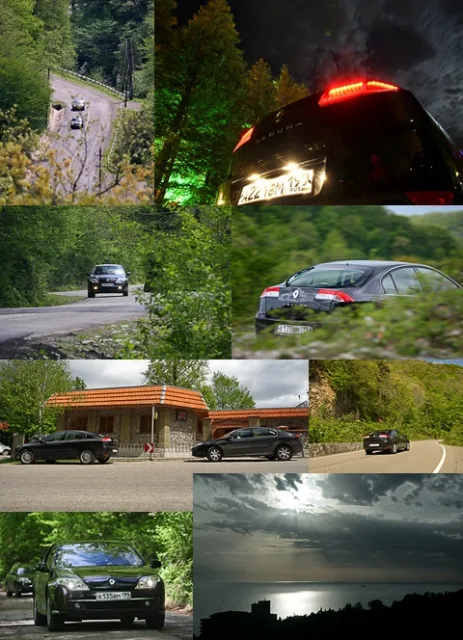
Maintaining Olympic calm on the streets of Sochi is not easy. In six years, the garden city will host Olympic guests, but for now it is actively being built and — alas! — choked by traffic jams. God forbid it chokes if roads are not reconstructed this season. By the way, on the mentioned road to Solokh-Aul, journalist test drives are now increasingly taking place. We sympathize with Sochi residents: what calm can there be with such attention to their hometown…