
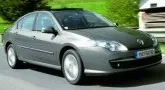
It has always been interesting to see how a car that is positioned as "people's" behaves, while trying to please both the wallet and ambitions. The test drive of the new model promised to dot the i's. You approach the car in the parking lot — and immediately understand that the designers clearly weren't lazy. The exterior is fresh, with a claim to modernity, although in some body lines you can guess familiar notes that have already been seen in competitors.
Inside: ergonomics and compromises
The interior greets you with a pleasant smell of new plastic and quite spacious for its class. In the back, knees don't press into the front seat backs, which pleased me. But the first impression of the seating position was spoiled by ergonomics. The seat, despite mechanical adjustments, seemed too firm, and the steering wheel wants to be moved closer to you, even in the extreme position. The seating position turns out to be "bus-like," which is not very good for long trips. The instrument panel is easy to read, but some buttons on the center console are scattered chaotically — you have to reach for some without looking at the road, which is annoying.
Sound insulation is a separate story. At low speeds, the cabin is quiet, but as soon as you accelerate past a hundred, tires and wind start to annoy. The engine is also audible, especially if you sharply press the gas. Overall, there are no complaints about build quality, but about materials — yes. Hard plastic that is easy to scratch, and inconvenient cup holders that can't even fit a standard water bottle, slightly spoil the overall impression.
On the move: dynamics and suspension
Under the hood, we had a 1.6-liter engine that honestly tries, but without fanaticism. The car accelerates to a hundred in 12 seconds — enough for the city, but for overtaking on the highway, you have to plan the maneuver in advance and downshift. The gearbox works clearly, but the lever throws are a bit long. Fuel consumption in the combined cycle was about 8 liters, which, in my opinion, is a lot for such an engine — I'd like more economy.
But what really surprised me was the suspension. It is surprisingly energy-intensive, but at the same time stiff. On small joints and potholes, the car honestly transmits all road information to the steering wheel and your backside. On large bumps, the body doesn't break through, but it shakes noticeably. At speed, the car stands confidently, but on a curve with bumps, it starts to "float" a bit, which adds adrenaline. The steering wheel is informative, but too light in the parking lot and with synthetic effort at center — it lacks naturalness.
The brakes work predictably, but the pedal feels empty at the beginning of the travel. You have to get used to it. Overall, the car feels like an honest "workhorse" that doesn't forgive driver mistakes, but also doesn't let you get bored behind the wheel.
Final assessment and trim levels
Before us is a car that tries to be both a city dweller and a country helper. It is not without sin, but not hopeless either. For the base version, they ask about 15 thousand dollars, and it includes only the minimum: ABS, two airbags, and air conditioning. For "warm" options (heated seats and mirrors), you'll have to pay extra. In the maximum trim, which already costs 17 thousand, climate control and parking sensors appear, but the car itself doesn't drive better from this.
The car didn't seem bad to me. It seemed compromise. If you need a simple means of transportation with character, and you're ready to put up with its stiff suspension and noise — it will suit you. But if you expect comfort and dynamics for this money, then you should look for alternatives. My rating is 7 out of 10. For effort, but not for the result.
To fall in love with a French car, you need to be something of an aesthete — not a snob (or, on the contrary, a super-snob) and certainly not a slave to the herd instinct, which is why modern Russia is effectively feeding the German and Japanese auto industries, which produce high-tech, solid, practical, but sometimes depressingly predictable cars without a spark. The French, on the other hand, due to their irrepressible creative imagination and desire to amaze the whole world, sometimes fly into such avant-garde distances and such extravagance that you are amazed, but you still refuse to buy such a car. In essence, the difference between German and French cars is the same as between their cuisines. In Germany, you are brought a huge plate of potatoes with sauerkraut and an equally huge, delicious beefsteak or pork chop, and you eat this dish to your heart's content, washing it down with beer if you wish, grunting contentedly and slapping your full belly (burping and picking your nose is not obligatory). In France, on the other hand, you are served one after another equally large plates, but with tiny portions of "haute cuisine" creations, which, when savored with a glass of exquisite Burgundy, can bring heavenly pleasure, or you might shrug in bewilderment or even exclaim in your heart: "What rubbish!" — and no longer want to send this "rubbish" into your stomach. A striking example is the Renault Avantime, which never found understanding among people, clearly ahead of its time (as you name a ship, so it will sail!) and its slightly more commercially successful relative, the Vel Satis. But as soon as the same manufacturer served up the most ordinary, simple hamburger in the form of the Logan on the automotive market table, it sold like hotcakes not only here in Russia, but also in Germany itself — the waiters can't keep up with taking orders and delivering ready portions! So the long-awaited third-generation Laguna became a kind of moment of truth for Renault: a family sedan, and even with a clear claim to a higher class, requires if not healthy design conservatism, then at least its reasonable combination with the "unhealthy," irrepressible imagination of French automotive couturiers. Plus practicality and reliability at the notorious German level. Did the followers of the great Louis Renault and the charges of the all-powerful Carlos Ghosn succeed? When the driver who met me at Charles de Gaulle airport led me to the car left in the parking lot, he noted with obvious pleasure and even pride: "Monsieur, for you — the newest Laguna!" So, having flown to Paris at the invitation of the Renault F1 team for its next presentation, I unexpectedly found myself a passenger in the very car I was just about to write about in this material. I sit down, as befits a "VIP," in the back seat and immediately immerse myself in a relaxed, very pleasant, cozy atmosphere. The driver, without taking the electronic key card out of his pocket, silently starts the engine with a brief touch of a button to the right of the steering wheel, and the car moves off very smoothly, and after a few minutes just as smoothly, but very assertively, rushes first along the highway to Paris, then along the almost empty at this late hour Boulevard Périphérique surrounding the French capital... In the audio system's speakers, quietly (excellent sound insulation allows it!), the duet of Serge Gainsbourg and Jane Birkin sounds soulfully, I am comfortable, spacious, and calm, and until we reach the hotel, I can calmly and, as it were, from the outside, examine everything that I had previously seen from the driver's seat. Or I can close my eyes and, surrendering to my subconscious, imagine myself blissfully on the shore of the Blue Lagoon, sung by screenwriters, under the quiet splash of incoming waves. Well, not a bad addition to the impressions I had already gained a couple of months earlier, testing a brand-new, one of the very first production Renault Lagunas in the breathtakingly picturesque surroundings of the Alpine Lake Wolfgangsee — just under the quiet splash of waves... However, in the car's exterior design — which, contrary to expectations, did not become a sedan, but remained a hatchback — a certain "lagoon" motif is discernible only in the roofline curving down toward the "stern," and otherwise its contours are rather emphatically straight. Especially in this sense, the front end draws attention: a "monumental" hood with a slightly raised trapezoidal middle part and aggressively curved down, with a large diamond emblem, triple profiled block headlights of intricate configuration, and between them — a narrow straight air intake slot separating the hood and bumper, bringing an unexpectedly effective harsh note to the car's overall fairly calm design. And the forward-slanted nose profile, combined with a side edge running along the lower edge of the body, gives the car a swift and even somewhat sporty look when viewed from the front-side. From the rear, it seems to me, the new Laguna looks somewhat worse — as if flattened on the sides and stretched upward, although the architecture of the "stern" itself, with two-section LED lights soaring to the very top, looks fresh and original. The most powerful versions can be recognized from behind by two exhaust pipes with chrome tips. A fundamental external difference compared to the previous generation Laguna: the rear window no longer emphasizes, as before, that this is a hatchback, but, on the contrary, conceals this fact, thus turning the car into a "pseudo-sedan," similar to competing hatchbacks like the Ford Mondeo and Opel Vectra. The rationale for this decision is dictated by European market preferences: the demand for a modern D-class car increases if it, being a hatchback and possessing its practicality, boasts the prestigious appearance of a sedan. Overall, the Laguna III is "drawn" in such a way that under its completely new, original silhouette, the outline of the previous model seems to show through, making the car easily recognizable. The "water-coastal" theme embedded in the name shows through in the interior design, which, unlike the car's exterior, has undergone a much deeper rethinking and differs strikingly from the previous one — for the better. The central console does not fall habitually onto the central tunnel casing, but beautifully "hovers" above it, and the ribs "flying apart" from its lower edge toward the doors resemble seagull wings. And when "sculpting" the upper curve of the front panel, which wraps around the information display, the designers drew inspiration, one must assume, precisely from the coastline of some lagoon. The premium Initiale trim provides for finishing the surface under this line, as well as the door panels, with noble matte inserts of natural wood. At the same time, the quality of finishing has noticeably improved in principle, in all trim levels — while remaining definitely French, the interior has become more "German." A striking distinctive feature of the steering wheel is the double lower spoke, echoing in its geometry the front end of the car, and in the sporty Dynamique version this element is larger and entirely clad in aluminum, while the rim itself, of variable thickness, is flattened at the bottom, like in "hot" Audi versions. Another geometric paraphrase on the theme of the "nose" is the metallized frame surrounding the small, ergonomic climate control unit located under the display. The instrument panel is stylish and laconic, the instruments are easy to read. Behind the gear shift lever is a practical joystick for controlling the communication and navigation system. But was it worth placing the cruise control button here as well? It seems that if this button were on the steering wheel, it would be more familiar and convenient to use. But the aforementioned "start/stop" button is in its usual place, familiar from the previous generation model (and in those days, other mass-produced cars didn't even smell of such luxury!). One touch, and — off you go. Fortunately, the choice is rich. To begin with, for a "warm-up," you can dash across the nearby border into Germany along the unlimited section of the Salzburg-Munich autobahn, and then heartily twist along the endless road serpentines winding along the lake shores and surrounding mountain slopes. At my disposal is a fairly powerful version with a modern two-liter 170-horsepower turbo engine, thanks to which the car demonstrates enviable dynamic potential on the high-speed highway: it accelerates evenly, but assertively, and then cuts through space like a good long-haul liner. The engine runs exceptionally smoothly, but is always ready for "spurring," providing acceleration from 80 to 120 km/h in 7.7 seconds in "overtaking" mode. Helping this engine demonstrate the best it is capable of is a surprisingly "correct," truly intelligent and fast-acting automatic transmission — perhaps the best in its class today, and this impression not only persists but intensifies when, after a power workout on the autobahn, we move on to the more complex part of the exercises and "water procedures" — we head for the mountain roads surrounding Lake Wolfgangsee, sometimes driving off them into the lake itself for a beautiful shot! We are me and the Laguna. Or the Laguna and me — whichever you prefer. In any case, the point is that this car is pleasantly interactive to drive and easily, good-naturedly allows you to merge with it. It would not be a great exaggeration to say that it gives itself to the person behind the wheel like a loving and devoted woman, ready to fulfill your every whim. The accelerator pedal is transparent just enough to allow precise dosing of power delivery to the wheels according to conditions, but does not lead to a nervous breakdown. The brake pedal, contrary to French traditions, has the same transparency: no jerking, the highest efficiency. The steering wheel is very pleasant to the touch and fits perfectly in your hands — it is comfortable to control. The steering has become noticeably more precise — thanks to a reduced gear ratio of 1/16, greater rigidity of the steering column, elimination of gaps, and the use of a new generation adaptive power steering. It's just that it doesn't share feedback with the driver too generously, but its reasonable sharpness and clarity inspire due confidence in the car and, again, allow you to be on "first-name terms" with it, squeezing out everything it is capable of. The seats are very comfortable — both in the standard version and especially in the "near-sporty" Dynamique version — with more pronounced lateral support. During the test, I change my "girlfriend" for a less temperamental one — also with a two-liter engine, but naturally aspirated, with only 140 hp. Surprisingly, while losing to the more powerful version in top speed and overtaking dynamics, this Laguna reaches "a hundred" 0.1 s faster — probably due to the well-tuned and clearly working manual gearbox and more confident traction of the engine from the very bottom, although this difference is so insignificant that it is practically imperceptible. The mountain road winds in a serpentine from one fairy-tale Tyrolean village to another, now rushing down, now soaring upward, from where breathtakingly beautiful views open at every turn. You admire it — and... Road workers will later have to install new posts, and it's scary even to think about what will happen to you and the car. On such a road, confidence is all the more important, which the car instills in you, unity with it, its refined handling. No, of course, the Laguna in terms of feel is by no means a sports car, but still a family car, but its chassis allows much more than before. The engineers reworked the suspension in the most radical way (in particular, significantly increasing the diameter of the anti-roll bars and spring stiffness), and as a result, there is no trace of the former rolliness, body rolls are minimal even during fast and aggressive driving on a winding road, and at the same time the car rides, as already noted, very softly and smoothly. The designers endowed it with "innate" directional stability, and the setting of the stabilization system ensures very correct activation. It would be surprising if Renault engineers did not use their main trump card and did not bet on the impeccable safety of the new product. Let me remind you that six years ago, it was the previous generation Laguna that became the first model to earn the maximum five stars in Euro NCAP crash tests. Now the designers have raised the bar even higher, paying special attention to protection from the most dangerous side impact. All this is done in the expectation that the new product will receive the highest score on the new, six-star scale. And how are things with build quality and reliability — those parameters by which Renault could not always compete with German competitors in the past? It turned out that before falling into the hands of journalists on the shore of a mountain lake in Austria, the Laguna III in the form of one and a half hundred pre-production prototypes passed tests of 6 million kilometers (!). These tests took place in Argentina, Malaysia, Australia, and even in the Far North of Russia, which should guarantee the reliability of the new car. In addition, brand representatives emphasize that assembly is now carried out strictly according to the "production and service quality improvement plan" adopted several years ago. According to Renault experts, the combination of these factors will allow the car to enter the top three leaders in its segment. The task is not easy, given the emergence of such strong rivals as the new Ford Mondeo and Mazda6 (which are already selling well in Russia), not to mention other upcoming premieres in the D class. We should also not forget that in Europe, the family car segment is going through hard times, giving way to the C class. But in Russia, where the situation is the opposite, French brands have always yielded to German and Japanese ones. Will the new Laguna's obvious advantages be enough to break this stereotype? Personally, I liked the car, but... (see above). Be that as it may, sales of the Renault Laguna III in Russia will start immediately after the release of this material. It is already known that diesel versions will still not be available here, but both of the two-liter gasoline modifications described above will be offered. In the initial configuration, the Laguna will receive an economical 1.6-liter engine with 110 horsepower, which by our standards looks like not the most attractive offer for a car of this class. A little later, as has happened before, station wagons will appear, and for lovers of dynamics, the most powerful version of the hatchback with a modernized V6, created jointly with Nissan, will be prepared. The same engine, along with the "steering" rear suspension, is planned to be installed on the delightful Laguna coupe, which so far exists only as a concept.