
 Surprisingly, over the past month this is already my second trip to the outskirts of Sochi for a presentation test drive, and both times – of French cars. Maybe the future Olympic capital reminds the French of the Côte d'Azur of their native Nice, and the low Sochi mountains seem similar to the coastal Alps? Or maybe the narrow, winding and dizzying roads remind them of Corsican ones... I don't know. In any case, the locations chosen for the test are wonderfully beautiful. Well, the scenery is worthy. Let's see what the show itself will be like performed by the new Renault Laguna. Surprisingly, over the past month this is already my second trip to the outskirts of Sochi for a presentation test drive, and both times – of French cars. Maybe the future Olympic capital reminds the French of the Côte d'Azur of their native Nice, and the low Sochi mountains seem similar to the coastal Alps? Or maybe the narrow, winding and dizzying roads remind them of Corsican ones... I don't know. In any case, the locations chosen for the test are wonderfully beautiful. Well, the scenery is worthy. Let's see what the show itself will be like performed by the new Renault Laguna. |
 Recently, French automakers have been increasingly trying to bring their products closer to German ones. This desire is quite understandable: sales of most "French" cars in our country, except for lower-class models, are going neither shaky nor rolling. And Renault is no exception here – the main sales volume consists of the more than modest Logan, Symbol, and, at best, Megane, while Laguna, for example, was sold in very insignificant quantities last year. Although, of course, the upcoming generational change was also to blame, but still, special hopes are placed on the new model, and aiming at the "reference Germans" in this case is, perhaps, a wise decision. Recently, French automakers have been increasingly trying to bring their products closer to German ones. This desire is quite understandable: sales of most "French" cars in our country, except for lower-class models, are going neither shaky nor rolling. And Renault is no exception here – the main sales volume consists of the more than modest Logan, Symbol, and, at best, Megane, while Laguna, for example, was sold in very insignificant quantities last year. Although, of course, the upcoming generational change was also to blame, but still, special hopes are placed on the new model, and aiming at the "reference Germans" in this case is, perhaps, a wise decision. |
 But if any brand fans are worried that in light of all this story the new car has lost its recognizability and originality, I will immediately reassure: this has not happened. Moreover, the new Laguna, in my opinion, looks much brighter and more original than the previous one, which lacked expressiveness. But won't this play a cruel joke on the new model? Won't it scare off potential buyers? After all, everyone understands that most people first choose a car with their eyes, and only then are interested in its essence, and Laguna owners have traditionally been quite conservative people. But if any brand fans are worried that in light of all this story the new car has lost its recognizability and originality, I will immediately reassure: this has not happened. Moreover, the new Laguna, in my opinion, looks much brighter and more original than the previous one, which lacked expressiveness. But won't this play a cruel joke on the new model? Won't it scare off potential buyers? After all, everyone understands that most people first choose a car with their eyes, and only then are interested in its essence, and Laguna owners have traditionally been quite conservative people. |
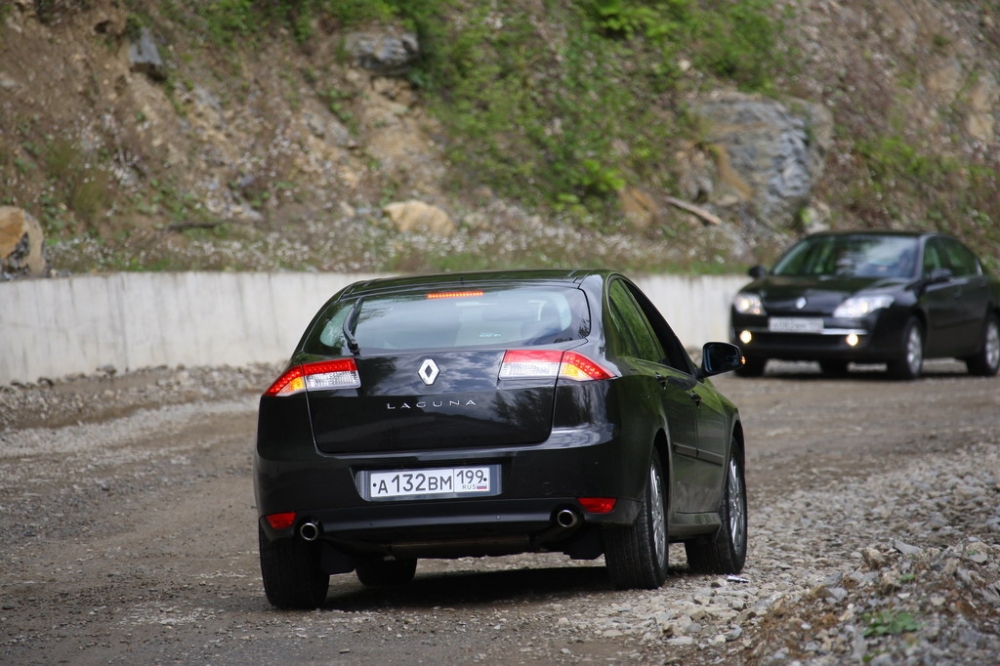 On the other hand, if Renault had compromised their design principles, Laguna might have lost the individuality and certain charm inherent in French cars. In general, the task was not easy. How correctly the French managed to solve it will, of course, soon be decided by the market – sales of the model in Russia have already begun. And for now, in front of me in the parking lot there are more than a dozen brand new Lagunas – as they are and will be for the next few years. On the other hand, if Renault had compromised their design principles, Laguna might have lost the individuality and certain charm inherent in French cars. In general, the task was not easy. How correctly the French managed to solve it will, of course, soon be decided by the market – sales of the model in Russia have already begun. And for now, in front of me in the parking lot there are more than a dozen brand new Lagunas – as they are and will be for the next few years. |
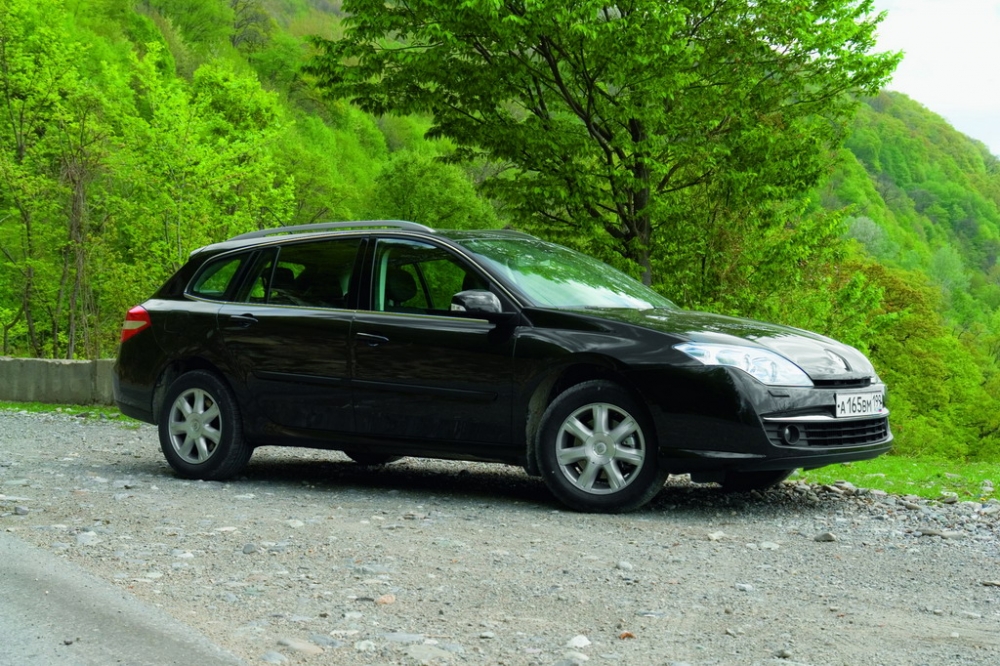
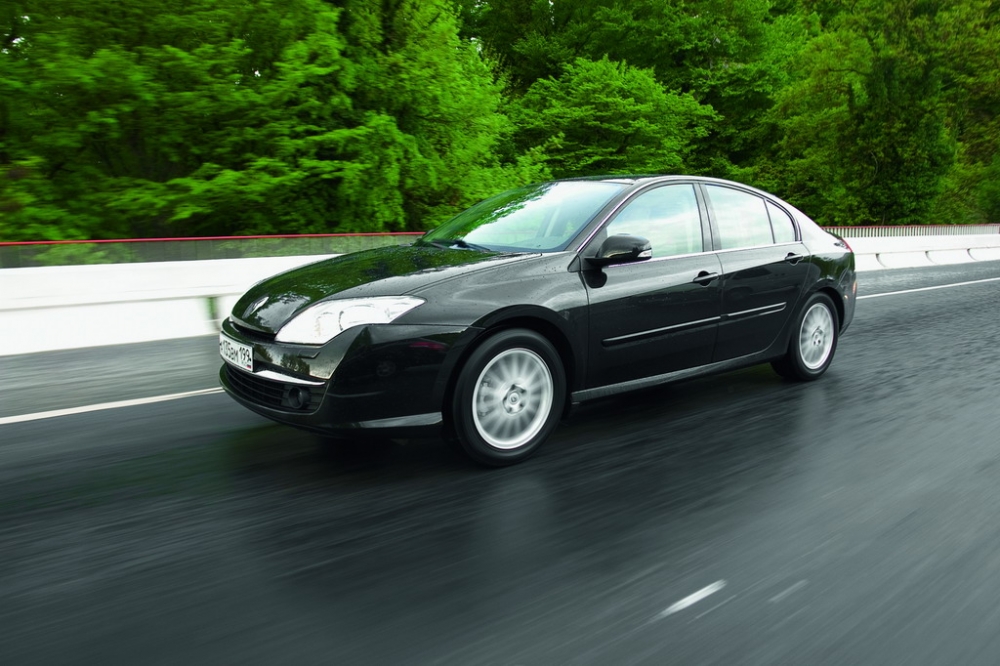
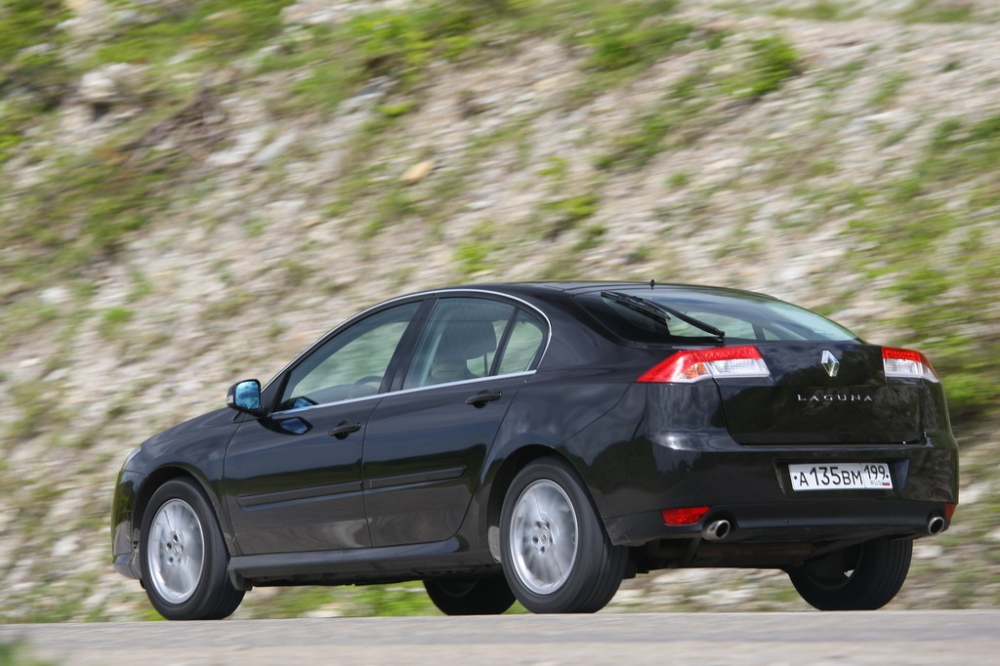
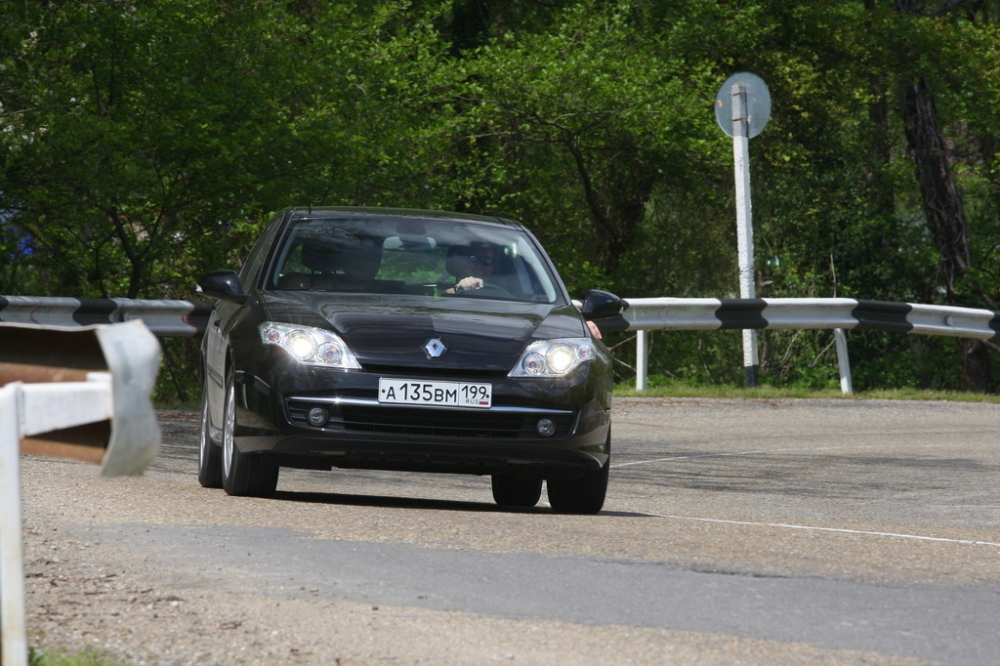
 In the traditionally grown-in-size body, almost flat door and hood panels are unusually combined with massive bumpers, a high beltline, strokes of sharp edges, and lighting of whimsical shape. A huge air intake with an elegant chrome strip is spread across the entire width of the front bumper. The emblems – in the spirit of the times – have become larger and more noticeable. The new Laguna looks angrier than the previous one, but at the same time heavier. Its impressive front and rear parts especially weigh it down. Well, okay, let's leave talk about design; to each his own, as they say. It's time to get behind the wheel... In the traditionally grown-in-size body, almost flat door and hood panels are unusually combined with massive bumpers, a high beltline, strokes of sharp edges, and lighting of whimsical shape. A huge air intake with an elegant chrome strip is spread across the entire width of the front bumper. The emblems – in the spirit of the times – have become larger and more noticeable. The new Laguna looks angrier than the previous one, but at the same time heavier. Its impressive front and rear parts especially weigh it down. Well, okay, let's leave talk about design; to each his own, as they say. It's time to get behind the wheel... |
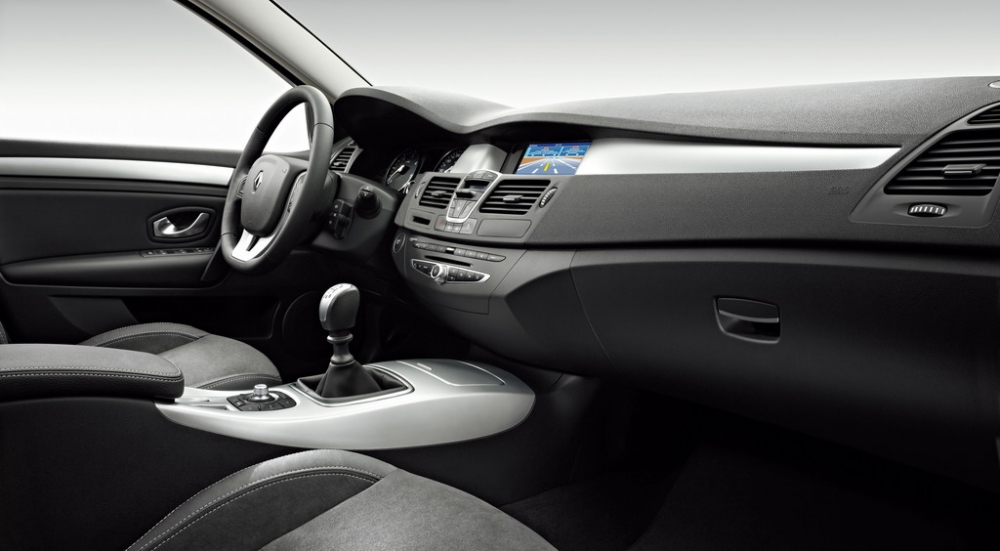
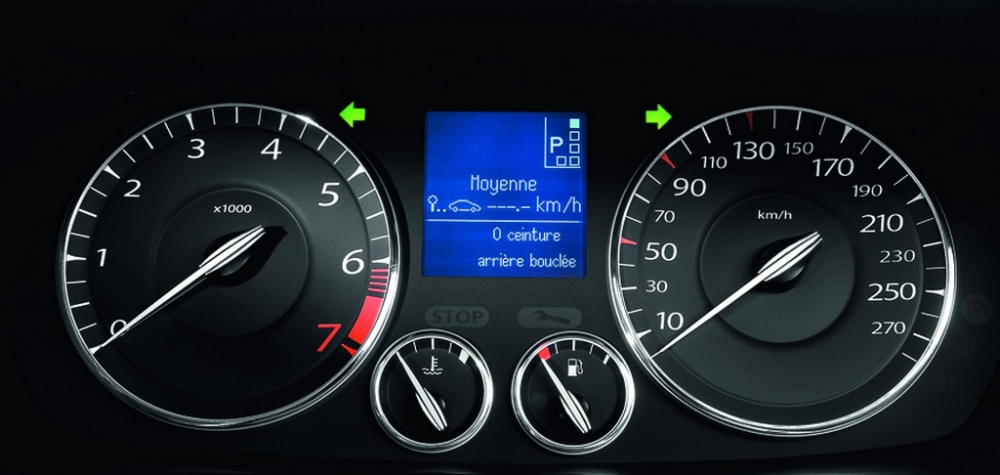
 I close the door behind me with a characteristic pleasant sound and look around. Here, the "Germanization" is in full swing! The first thing that catches the eye is the architecture of the front panel, reminiscent of... BMW! The laconicism of the perfectly readable instrument panel also slightly reminds of Bavarian cars. And the quality of trim materials and panel fit are at a very high level. Perhaps, by these indicators, the new Renault is not inferior to German "classmates," not to mention Japanese ones. Everywhere there is soft, solid plastic, modern and high-quality materials, and even inserts imitating aluminum do not look alien. Compared to the interior of the previous generation Laguna, this is a huge leap forward. I close the door behind me with a characteristic pleasant sound and look around. Here, the "Germanization" is in full swing! The first thing that catches the eye is the architecture of the front panel, reminiscent of... BMW! The laconicism of the perfectly readable instrument panel also slightly reminds of Bavarian cars. And the quality of trim materials and panel fit are at a very high level. Perhaps, by these indicators, the new Renault is not inferior to German "classmates," not to mention Japanese ones. Everywhere there is soft, solid plastic, modern and high-quality materials, and even inserts imitating aluminum do not look alien. Compared to the interior of the previous generation Laguna, this is a huge leap forward. |
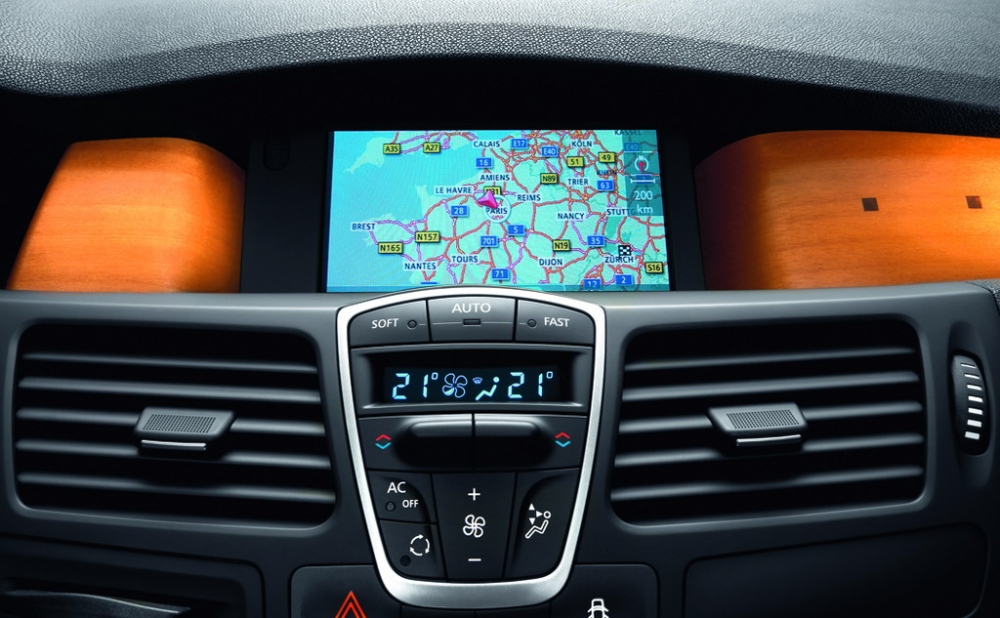
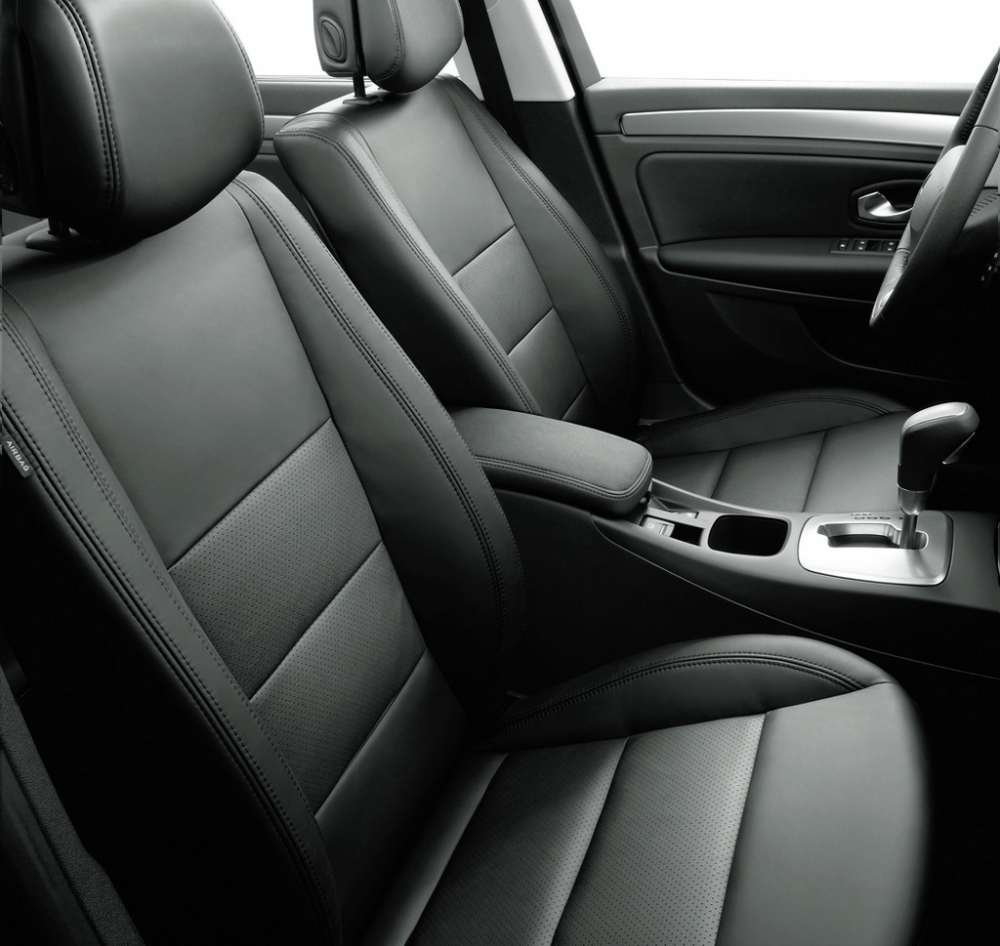
 The seating position is comfortable, found at once and does not tire on a long journey. The traditional soft-amorphous seats have been replaced by moderately firm ones, with good lateral support and an excellent profile. The range of adjustments will be enough even for the tallest drivers. At the same time, with my height of 184 cm, I can easily sit "behind myself." The interior is spacious. And the optional sunroof makes it also very bright. The only thing I didn't like was that when open (slid back), this sunroof forms a kind of "cap" in the rear part of the cabin, reducing the space above passengers' heads. But how often do you have to drive with the sunroof open? Moreover, there are no complaints about the dual-zone climate system. The seating position is comfortable, found at once and does not tire on a long journey. The traditional soft-amorphous seats have been replaced by moderately firm ones, with good lateral support and an excellent profile. The range of adjustments will be enough even for the tallest drivers. At the same time, with my height of 184 cm, I can easily sit "behind myself." The interior is spacious. And the optional sunroof makes it also very bright. The only thing I didn't like was that when open (slid back), this sunroof forms a kind of "cap" in the rear part of the cabin, reducing the space above passengers' heads. But how often do you have to drive with the sunroof open? Moreover, there are no complaints about the dual-zone climate system. |
 Now let's see how the new car performs on the road. For the Russian market, the Laguna will be supplied with 1.6 and 2.0 L engines paired with a 6-speed manual transmission, and a 2-liter turbocharged engine paired with a 6-speed "automatic" (a version with a 2-liter turbodiesel will appear later). At my disposal first was the version with a 2-liter naturally aspirated power unit producing 140 hp. Inserting the key-card, well known from other Renault models, into the slot on the front panel, I press the Start/Stop button, and under the hood an inline "four" calmly comes to life. I press the gas pedal several times and realize that in the "voice" of the Renault, as before, there is no spark, no fervor, no zest – the engine just works, and that's it. But sound insulation and vibration protection have become much better; it's very quiet in the cabin. During the test, it also became clear that the Laguna is a quiet one not only when standing still, but also when driving. Now let's see how the new car performs on the road. For the Russian market, the Laguna will be supplied with 1.6 and 2.0 L engines paired with a 6-speed manual transmission, and a 2-liter turbocharged engine paired with a 6-speed "automatic" (a version with a 2-liter turbodiesel will appear later). At my disposal first was the version with a 2-liter naturally aspirated power unit producing 140 hp. Inserting the key-card, well known from other Renault models, into the slot on the front panel, I press the Start/Stop button, and under the hood an inline "four" calmly comes to life. I press the gas pedal several times and realize that in the "voice" of the Renault, as before, there is no spark, no fervor, no zest – the engine just works, and that's it. But sound insulation and vibration protection have become much better; it's very quiet in the cabin. During the test, it also became clear that the Laguna is a quiet one not only when standing still, but also when driving. |
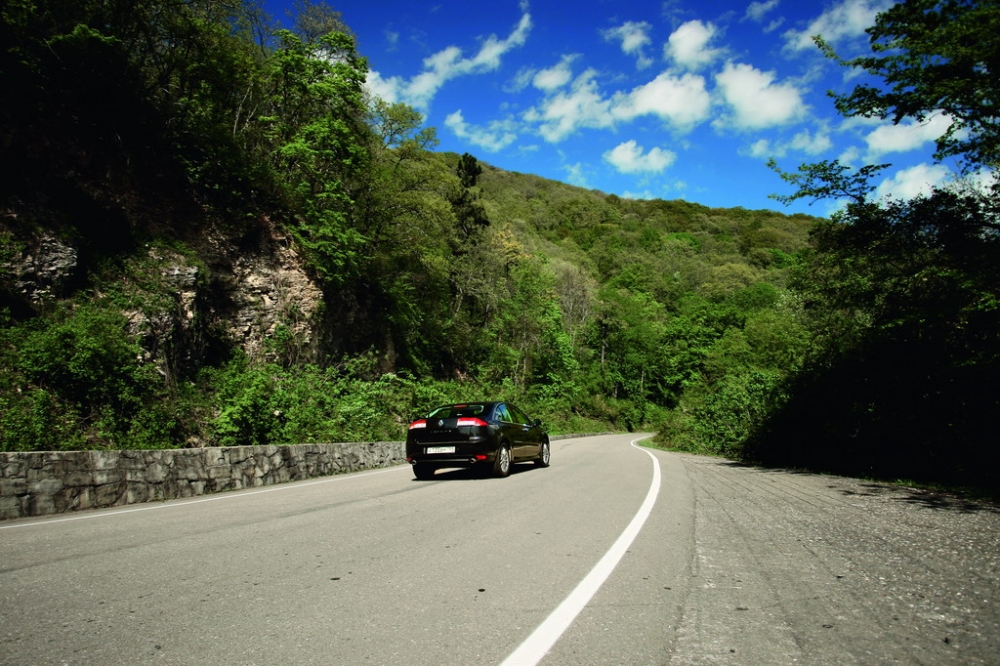
 But it's not only for this reason that driving it is a pleasure. Of course, the dynamics of the 2-liter "atmospheric" engine are quite average, not least due to the stretched transmission row. But the suspension is tuned very well. The increase in body, spring, and anti-roll bar stiffness was not in vain. Anyone who has ever driven on mountain roads in the vicinity of Sochi will understand that this winding serpentine is an excellent place to evaluate the suspension's work. And the Laguna did not disappoint. The car's stability is very good, and its handling is close to neutral. But it's not only for this reason that driving it is a pleasure. Of course, the dynamics of the 2-liter "atmospheric" engine are quite average, not least due to the stretched transmission row. But the suspension is tuned very well. The increase in body, spring, and anti-roll bar stiffness was not in vain. Anyone who has ever driven on mountain roads in the vicinity of Sochi will understand that this winding serpentine is an excellent place to evaluate the suspension's work. And the Laguna did not disappoint. The car's stability is very good, and its handling is close to neutral. |
 The electric power steering provides the driver with quite adequate feedback, although it leaves a feeling of some lightness in the steering wheel. The angle of wheel rotation is always clear. The Laguna has come very close to the "Germans" in terms of handling quality. There is a composure that the previous generation of the model never dreamed of. It's also good that the improvement in driving characteristics did not come at the expense of comfort – the Laguna, even on 17-inch wheels and imperfect asphalt, remains a very loyal car to passengers. The electric power steering provides the driver with quite adequate feedback, although it leaves a feeling of some lightness in the steering wheel. The angle of wheel rotation is always clear. The Laguna has come very close to the "Germans" in terms of handling quality. There is a composure that the previous generation of the model never dreamed of. It's also good that the improvement in driving characteristics did not come at the expense of comfort – the Laguna, even on 17-inch wheels and imperfect asphalt, remains a very loyal car to passengers. |
 Next, I faced a choice – 1.6 L or 2.0 L with a turbo. Not fully satisfied with the dynamics of the 2-liter naturally aspirated engine, I still decided to add "horses" and try the 170-horsepower turbo engine with an "automatic." What can I say, such a Laguna has practically lost its weak points. Having slightly gained in weight (after all, the engine is essentially the same, just a turbo "attached"), it simply acquired the dynamics necessary for a car of this class. And the new automatic transmission works perfectly in tandem with the more powerful engine. The previous 4-speed "automatic" from Renault is not fit to hold a candle to this one! The adaptive shifting mechanism, smoothness, and at the same time speed of gear changes allow, if necessary, to drive in a fairly active manner. Next, I faced a choice – 1.6 L or 2.0 L with a turbo. Not fully satisfied with the dynamics of the 2-liter naturally aspirated engine, I still decided to add "horses" and try the 170-horsepower turbo engine with an "automatic." What can I say, such a Laguna has practically lost its weak points. Having slightly gained in weight (after all, the engine is essentially the same, just a turbo "attached"), it simply acquired the dynamics necessary for a car of this class. And the new automatic transmission works perfectly in tandem with the more powerful engine. The previous 4-speed "automatic" from Renault is not fit to hold a candle to this one! The adaptive shifting mechanism, smoothness, and at the same time speed of gear changes allow, if necessary, to drive in a fairly active manner. |
 Undoubtedly, such a Laguna pleased the most. And everything would be fine, if it weren't the top version with a corresponding price. As experience shows, usually the most loaded modification accounts for the fewest cars sold. In any case, credit must be given to the French engineers at Renault. As it turned out, they are quite capable of experiments. Or maybe time and the market forced them to do so? But that doesn't matter. What matters and is clear is that the new Laguna has become the car that can compete on equal terms with competitors in the D class. All prerequisites for this are in place. It's just that the French at Renault should not forget that the Germans and Japanese are not sleeping either. Otherwise, it turns out that the Laguna is playing the role of a chaser, albeit a fast one. Undoubtedly, such a Laguna pleased the most. And everything would be fine, if it weren't the top version with a corresponding price. As experience shows, usually the most loaded modification accounts for the fewest cars sold. In any case, credit must be given to the French engineers at Renault. As it turned out, they are quite capable of experiments. Or maybe time and the market forced them to do so? But that doesn't matter. What matters and is clear is that the new Laguna has become the car that can compete on equal terms with competitors in the D class. All prerequisites for this are in place. It's just that the French at Renault should not forget that the Germans and Japanese are not sleeping either. Otherwise, it turns out that the Laguna is playing the role of a chaser, albeit a fast one. |
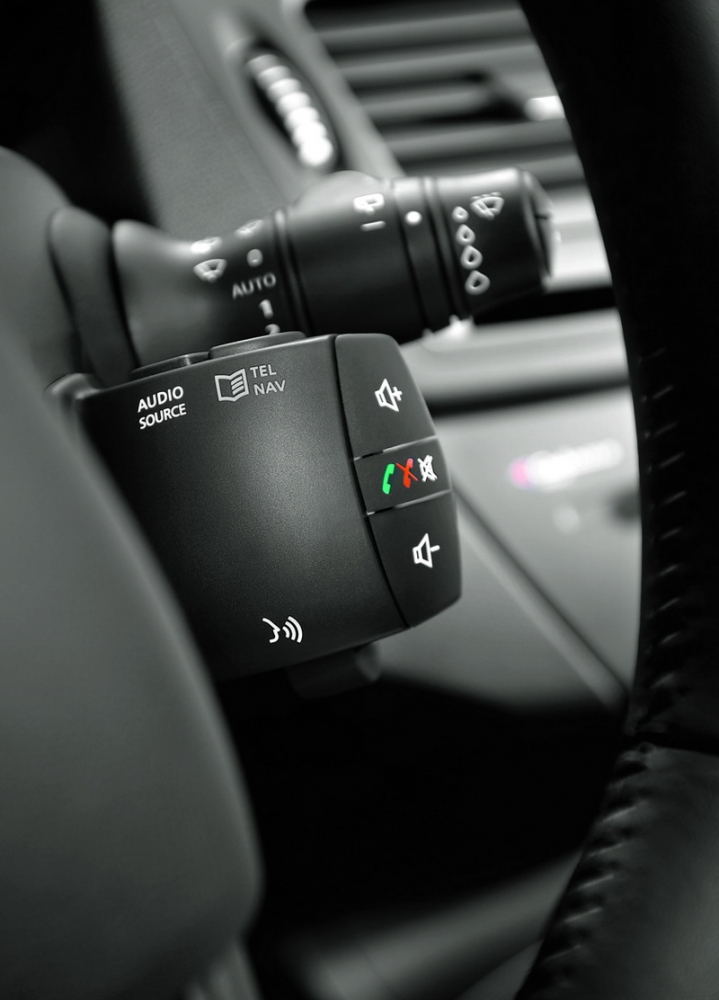 Photo: Alexander Goryunov Photo: Alexander Goryunov |
RENovation RENome
French cars have always been a thing in themselves, which often did not find understanding among the general public and backfired in terms of sales. Is the Laguna III capable of finding understanding among the masses? Having tested last autumn the very first, hot off the press pre-production examples of the new Renault sedan on the mountain roads of Austria, we set out to find the answer to this question behind the wheel of already production cars and on our own mountain roads – near the city of Sochi.
Test drive photos
Comments
No comments yet. Say the first word.