When rumors about the Renault Koleos first started circulating, it immediately became clear: we were looking at another representative of a familiar family built on the Megan–X-Trail–Qashqai platform. Further developments are still shrouded in mystery, but it is quite possible that a similar crossover may soon appear under the Lada brand, with the same 2.5-liter engine and CVT.
Global automakers are quite capable of flooding the market with identical models that differ only in styling details. So let's try to get to the essence: what exactly is the Koleos? Is it just another fashionable trinket or a car truly worthy of attention? How much does the platform define its character, and aren't the chassis settings more important here?

THE ENEMY OF GOOD IS DESIGN
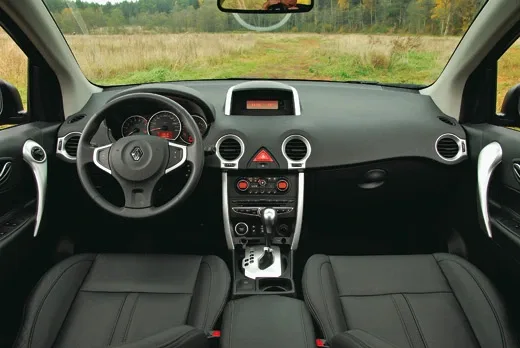
Renault reasoned sensibly. The X-Trail looks chiseled and rugged, the Qashqai is small, but people queue up for it. Between them, another affordable crossover logically fits. But will there be the same hype for it? And the materials inside are completely different: soft plastic that is noticeably nicer than in its Japanese counterparts. Examining and feeling this trim, you initially don't notice the ergonomic flaws. But as soon as you lower the steering wheel to its lowest position, the instruments are completely obscured. Funny enough, it's the Renault–Nissan alliance that already knew how to solve this problem: in the previous Murano, the instrument panel moved in sync with the steering wheel, and in the old X-Trail, the gauges were placed in the center of the dashboard—they were always visible.
Renault reasoned sensibly. The X-Trail looks chiseled and rugged, the Qashqai is small, but people queue up for it. Between them, another affordable crossover logically fits. But will there be the same hype for it? And the materials inside are completely different: soft plastic that is noticeably nicer than in its Japanese counterparts. Examining and feeling this trim, you initially don't notice the ergonomic flaws. But as soon as you lower the steering wheel to its lowest position, the instruments are completely obscured. Funny enough, it's the Renault–Nissan alliance that already knew how to solve this problem: in the previous Murano, the instrument panel moved in sync with the steering wheel, and in the old X-Trail, the gauges were placed in the center of the dashboard—they were always visible.
The same story applies to climate control and audio system management. To this day, no one except Volvo has come up with anything more convenient than three round knobs, where one controls temperature, the second—airflow intensity, and the third—direction. This approach is used by Dodge, Mitsubishi, Subaru, and Nissan itself. But then how is a designer supposed to express themselves? If there's nothing to improve, they start complicating things. Judging by the promotional materials, the artist at Renault dreamed of placing all the buttons on the center console so they'd be easy to reach by hand. The idea is good, but now it's hard for the eyes to reach them. The buttons are hidden at the bottom of the panel, and above them hangs a huge black visor that covers the emptiness like a piece of slate.
They say you can get used to anything, but a driver has to live with the dashboard for years, so its thoughtfulness is critical. The situation is saved by the huge glovebox in front. I tried to see its bottom—unsuccessfully, and I couldn't reach it with my hand either. It seems you could drive a tank with its barrel raised inside, and there'd still be room for a chocolate bar.
A BUCKET FOR CHAMPAGNE
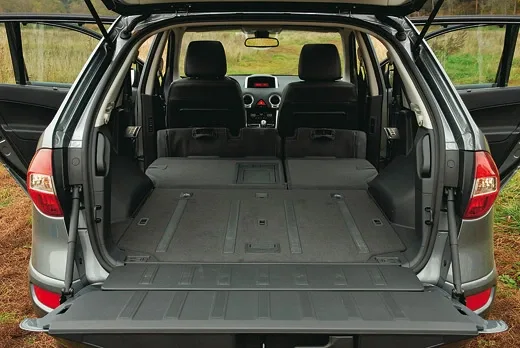
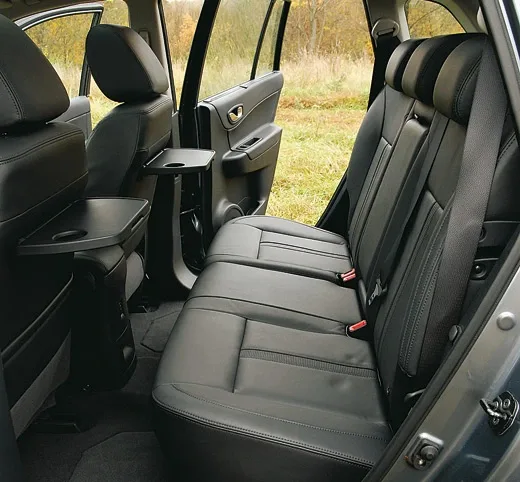
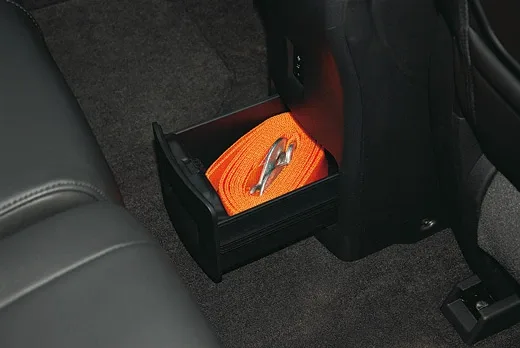
The rear of the Koleos doesn't disappoint. The trunk volume is a standard 450 liters for the class. Folding the seat backs is easy and quick, and they form a flat floor, so the phrase "in one motion" is not empty here. The seat backs have fold-down tables with cup holders, like on an airplane. The central box between the seats is cooled, and inside it sits a small bucket with a handle. Perhaps for a picnic, or perhaps to make it easier to throw out accumulated trash—wrappers, receipts, and accidentally forgotten phones.
A BUCKET FOR CHAMPAGNE
The rear of the Koleos doesn't disappoint. The trunk volume is a standard 450 liters for the class. Folding the seat backs is easy and quick, and they form a flat floor, so the phrase "in one motion" is not empty here. The seat backs have fold-down tables with cup holders, like on an airplane. The central box between the seats is cooled, and inside it sits a small bucket with a handle. Perhaps for a picnic, or perhaps to make it easier to throw out accumulated trash—wrappers, receipts, and accidentally forgotten phones.
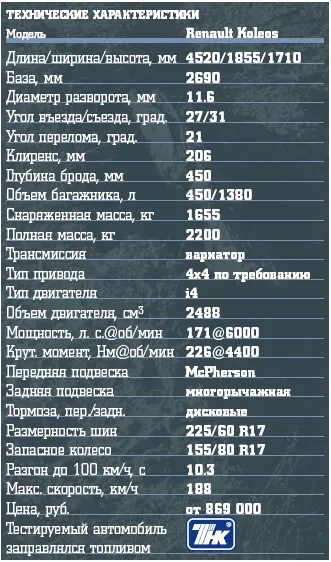
SPECS: RENAULT KOLEOS


GIVING A PUSH IN THE BACK
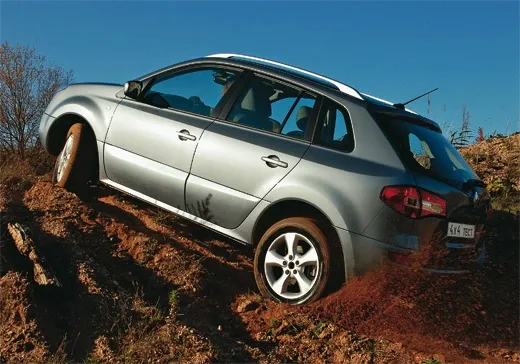
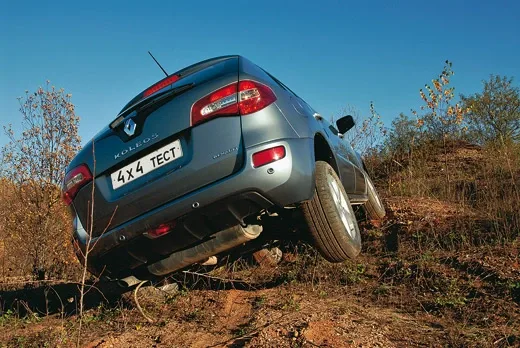
In the ads, as usual, we're boldly invited to conquer nature. And we must admit, the Koleos has excellent geometric off-road capability: approach angle—27 degrees, departure angle—31 degrees. Thanks to these parameters, we had a blast driving on sand, hills, and dunes. Surprisingly, the next day I went to the same place in a Jeep Grand Cherokee Overland and nearly left its front bumper there. It seems crossovers dream of being known as SUVs, while real SUVs, on the contrary, try on a "crossover" image.
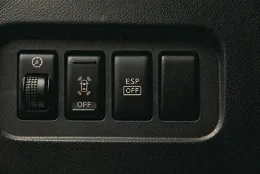
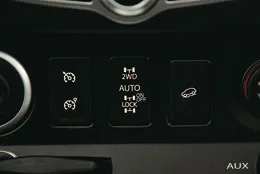
The electronic imitation of wheel locks in the Renault Koleos works on the principle of "give the falling a push." If you keep the steering wheel straight and press the gas to the floor, the car will go quite far, but as soon as one wheel slips a little, the electronics immediately cut fuel supply—you barely spin the wheels, and that's it, you're stuck. If you turn off ESP, the wheels instantly dig in. However, with proper skill, you can confidently drive on moderate off-road. The suspension is not finicky; it won't break on small bumps. But the plastic underbody protection could be sturdier.
In the ads, as usual, we're boldly invited to conquer nature. And we must admit, the Koleos has excellent geometric off-road capability: approach angle—27 degrees, departure angle—31 degrees. Thanks to these parameters, we had a blast driving on sand, hills, and dunes. Surprisingly, the next day I went to the same place in a Jeep Grand Cherokee Overland and nearly left its front bumper there. It seems crossovers dream of being known as SUVs, while real SUVs, on the contrary, try on a "crossover" image.
The electronic imitation of wheel locks in the Renault Koleos works on the principle of "give the falling a push." If you keep the steering wheel straight and press the gas to the floor, the car will go quite far, but as soon as one wheel slips a little, the electronics immediately cut fuel supply—you barely spin the wheels, and that's it, you're stuck. If you turn off ESP, the wheels instantly dig in. However, with proper skill, you can confidently drive on moderate off-road. The suspension is not finicky; it won't break on small bumps. But the plastic underbody protection could be sturdier.
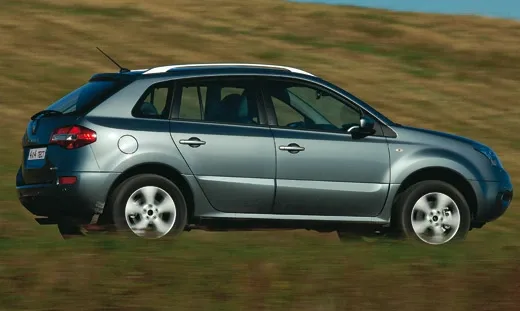
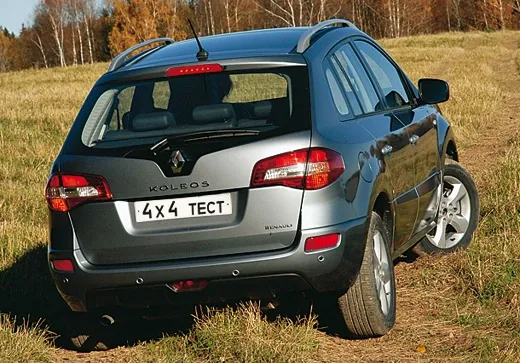
On asphalt, the Koleos behaves calmly and quite quietly. That's exactly what you should rely on when driving the crossover without unnecessary fuss. Sharp maneuvers are hindered by noticeable body roll. If you're not afraid, you can confidently press the gas and enter a turn, though at first it will be a bit scary, and passengers will definitely fall to one side. The "Frenchman's" suspension is tuned noticeably softer than that of its Japanese platform siblings. The steering wheel is light but informative. The brakes are perfectly calibrated—neither overly sharp nor mushy. The CVT-engine combination also behaves politely. I wouldn't even delve into the nuances of handling and settings. For the Koleos, there are two key words—quiet and comfortable. Everything else is secondary.
TO EACH THEIR OWN
You could, of course, blow up a whole discussion about choosing between Japanese and French models and end up in a dead end. For instance, the X-Trail has a more spacious interior, but it doesn't have that little bucket between the seats, and the rear bench doesn't fold as quickly. What a tragedy! It would be much simpler if men were offered the X-Trail and women the Koleos. But no such luck: ladies don't buy ugly cars. And men are unlikely to even notice the difference in behavior between the "Japanese" and the "Frenchman."
You could, of course, blow up a whole discussion about choosing between Japanese and French models and end up in a dead end. For instance, the X-Trail has a more spacious interior, but it doesn't have that little bucket between the seats, and the rear bench doesn't fold as quickly. What a tragedy! It would be much simpler if men were offered the X-Trail and women the Koleos. But no such luck: ladies don't buy ugly cars. And men are unlikely to even notice the difference in behavior between the "Japanese" and the "Frenchman."