
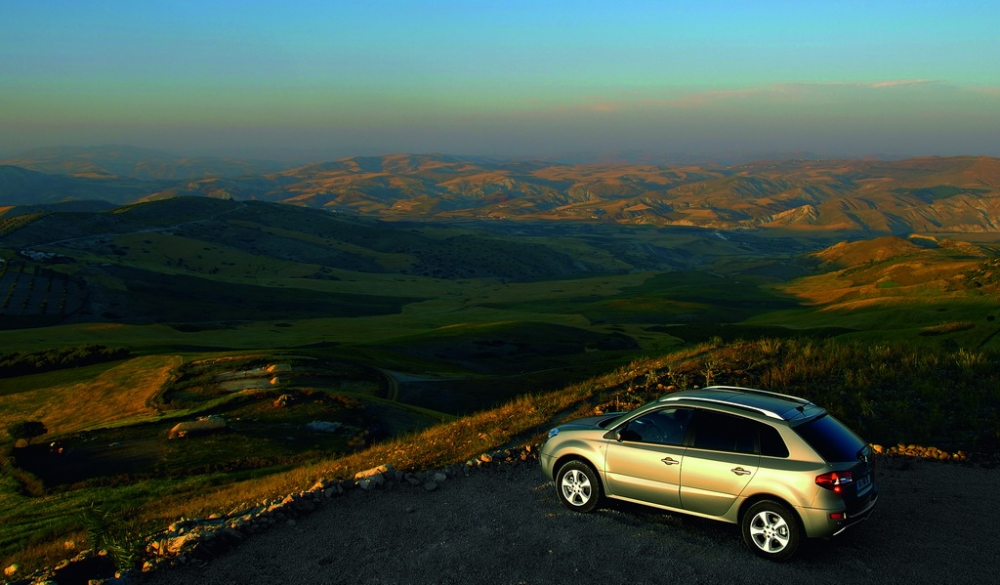
 When Koleos was shown in its production guise at the Geneva Motor Show in March, I ended my story about it with the words: "All that remains is to wait for this car to hit the roads and check whether everything about it is as wonderful as its creators describe." The "road test" was not long in coming: having left the serene carpeted floor and air-conditioned coolness of the exhibition pavilion, just a couple of months later Koleos appeared before journalists in full combat readiness under the scorching sun of Morocco, where it was given to them "to be torn apart." When Koleos was shown in its production guise at the Geneva Motor Show in March, I ended my story about it with the words: "All that remains is to wait for this car to hit the roads and check whether everything about it is as wonderful as its creators describe." The "road test" was not long in coming: having left the serene carpeted floor and air-conditioned coolness of the exhibition pavilion, just a couple of months later Koleos appeared before journalists in full combat readiness under the scorching sun of Morocco, where it was given to them "to be torn apart." |
 True, in relation to this North African country, much more than to Russia, the statement is true: "There are no roads here, only directions." That is exactly the case in the area of Morocco's ancient capital, the city of Fez, where everything seems to have remained in the same pristine state as 12 centuries ago. But that is all the better: if you call yourself an all-wheel-drive crossover, then get onto the bad asphalt and off-road to justify your universal purpose! True, in relation to this North African country, much more than to Russia, the statement is true: "There are no roads here, only directions." That is exactly the case in the area of Morocco's ancient capital, the city of Fez, where everything seems to have remained in the same pristine state as 12 centuries ago. But that is all the better: if you call yourself an all-wheel-drive crossover, then get onto the bad asphalt and off-road to justify your universal purpose! |
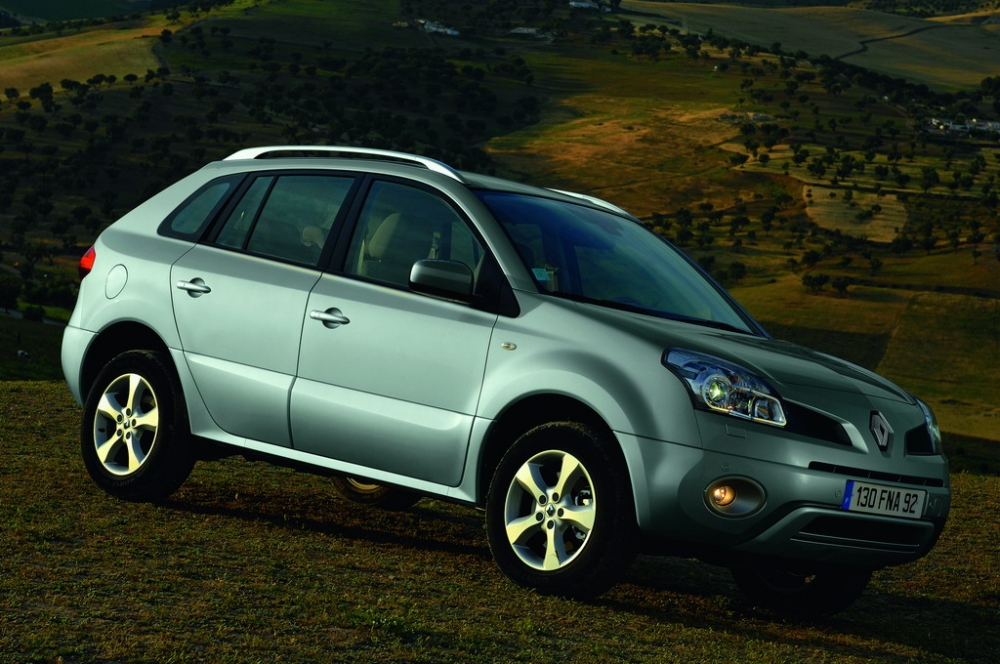
 By the way, I will immediately note – against the backdrop of steppe expanses, rocky mountain slopes and other natural landscapes, Koleos is by no means lost, but looks far more expressive and impressive than in the faceless protocol settings of an auto show. So its unassuming exterior is a relative concept. Well, since almost everything about this car, except its driving and operational qualities, was described in sufficient detail in the aforementioned article ("MOTOR", April 2008), I will not repeat myself, but will start, as they say, right off the bat. By the way, I will immediately note – against the backdrop of steppe expanses, rocky mountain slopes and other natural landscapes, Koleos is by no means lost, but looks far more expressive and impressive than in the faceless protocol settings of an auto show. So its unassuming exterior is a relative concept. Well, since almost everything about this car, except its driving and operational qualities, was described in sufficient detail in the aforementioned article ("MOTOR", April 2008), I will not repeat myself, but will start, as they say, right off the bat. |
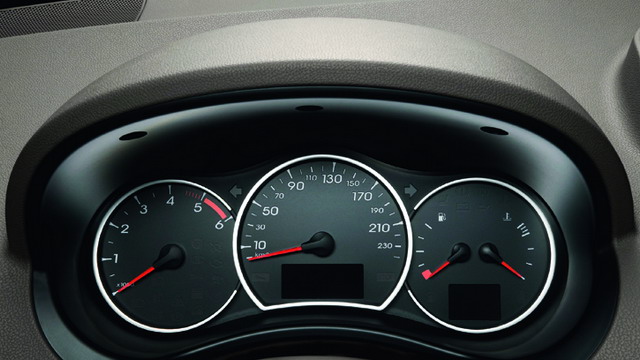
 However, it was precisely with this that problems immediately arose. I did not gloat for long over my colleagues, who unsuccessfully tried to drive off from the airport parking lot, but time after time were forced to restart the stalled engine, as if they were not professionals, but "newbies" who had gotten behind the wheel for the first time. When my turn came to move off, I suffered the same fate – as did my partner a little later. Only the use of elementary skills in driving racing cars, whose engines require constant maintenance of high revs, helped. In the same way, the 2-liter diesel engine (in versions of 150 and 175 hp) with which Koleos is equipped is completely "useless" in the range up to 2000 rpm, and it is extremely difficult to move the car from a standstill without first giving it a good "gas" and only then engaging the clutch. Especially uphill – and the presence of a very useful in principle hill-hold system during such a start, as it seemed, even aggravates this problem. However, it was precisely with this that problems immediately arose. I did not gloat for long over my colleagues, who unsuccessfully tried to drive off from the airport parking lot, but time after time were forced to restart the stalled engine, as if they were not professionals, but "newbies" who had gotten behind the wheel for the first time. When my turn came to move off, I suffered the same fate – as did my partner a little later. Only the use of elementary skills in driving racing cars, whose engines require constant maintenance of high revs, helped. In the same way, the 2-liter diesel engine (in versions of 150 and 175 hp) with which Koleos is equipped is completely "useless" in the range up to 2000 rpm, and it is extremely difficult to move the car from a standstill without first giving it a good "gas" and only then engaging the clutch. Especially uphill – and the presence of a very useful in principle hill-hold system during such a start, as it seemed, even aggravates this problem. |
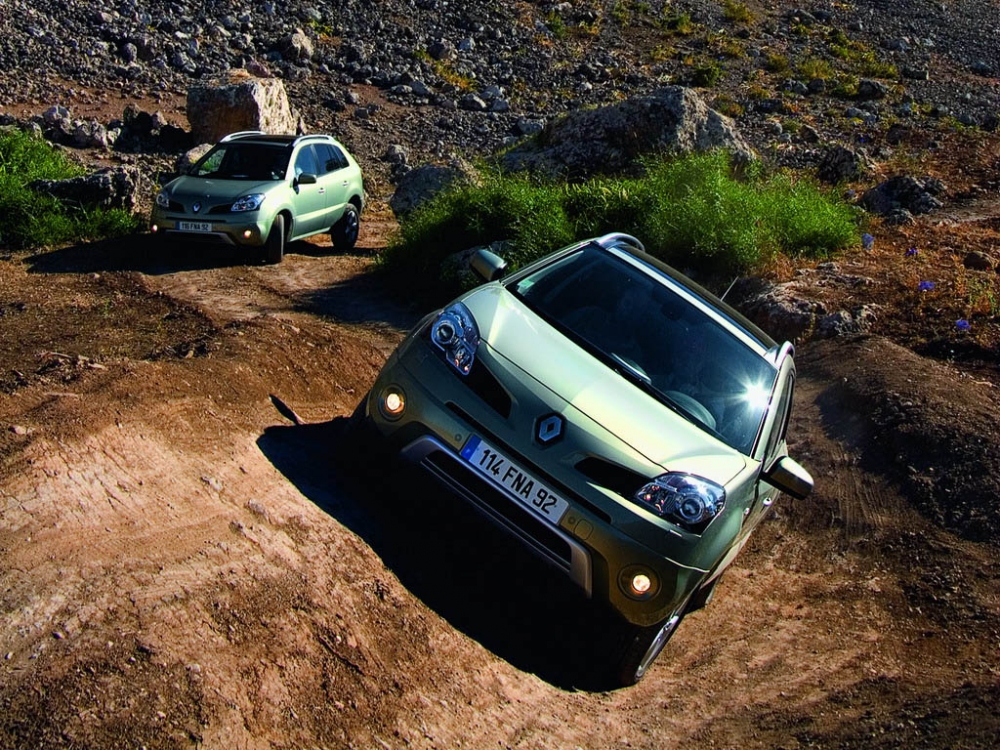 However, although it is planned to supply diesel versions of Koleos to Russia, they are unlikely to be in demand. The main demand will, of course, be for cars with a petrol engine. So far, only one is offered – with a displacement of 2.5 liters and a power of 170 hp, borrowed, like the all-wheel-drive system, from the alliance partner – Nissan. This engine also lacks a special spark in its character, but it is still much more capable at "low revs" and gives the crossover more liveliness in the middle and upper ranges of its operation. At the same time, both petrol and diesel engines do not annoy with noise. Along the way, it is worth immediately noting that Renault crossover passengers are equally effectively protected from aerodynamic and tire noise. However, although it is planned to supply diesel versions of Koleos to Russia, they are unlikely to be in demand. The main demand will, of course, be for cars with a petrol engine. So far, only one is offered – with a displacement of 2.5 liters and a power of 170 hp, borrowed, like the all-wheel-drive system, from the alliance partner – Nissan. This engine also lacks a special spark in its character, but it is still much more capable at "low revs" and gives the crossover more liveliness in the middle and upper ranges of its operation. At the same time, both petrol and diesel engines do not annoy with noise. Along the way, it is worth immediately noting that Renault crossover passengers are equally effectively protected from aerodynamic and tire noise. |
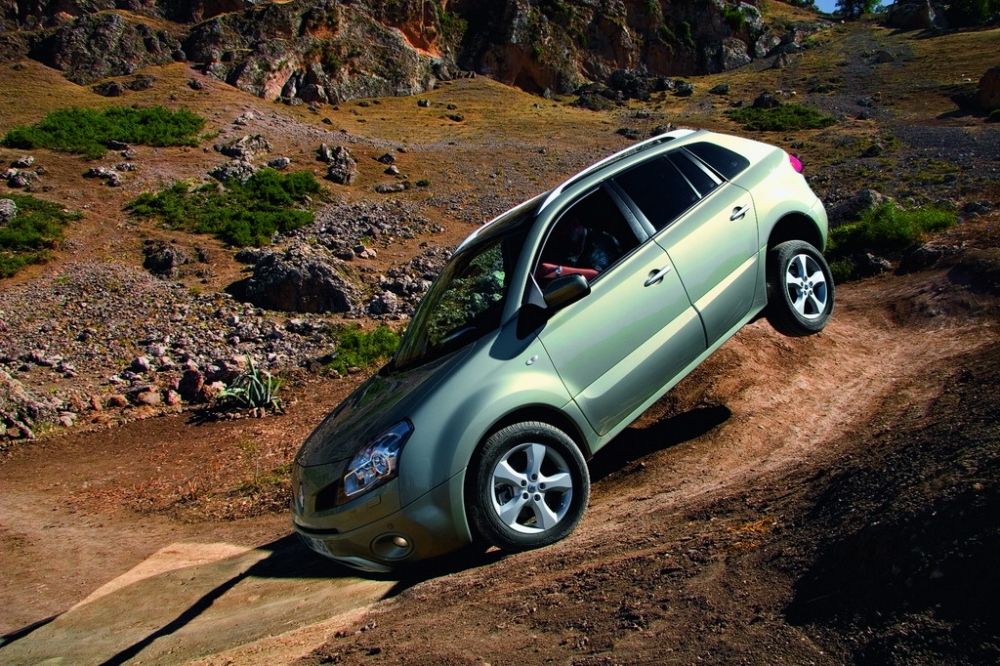
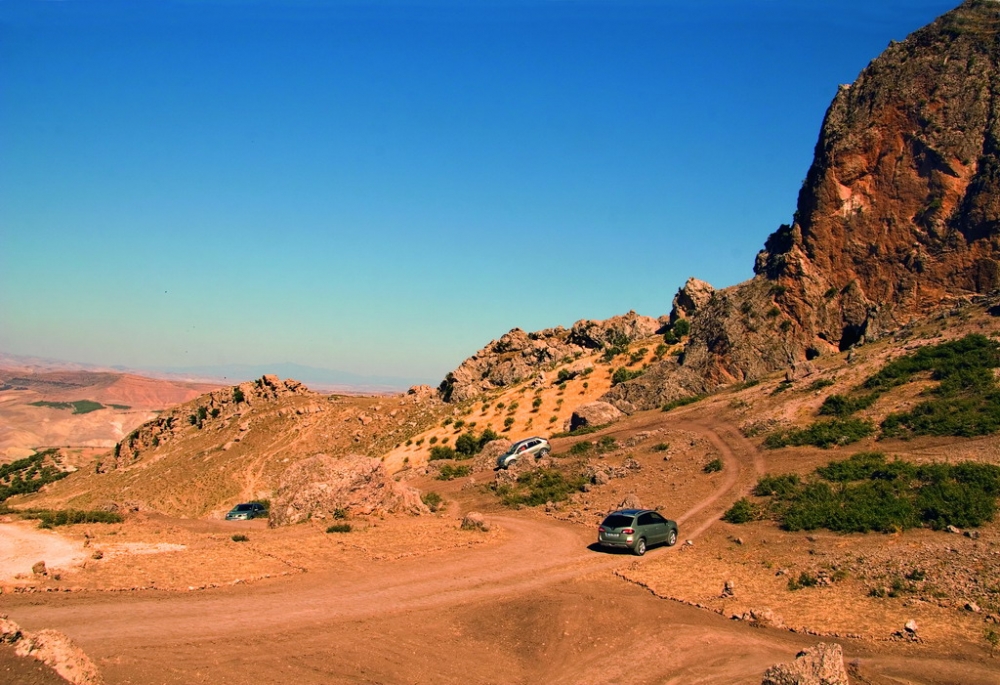 Like similar models of other brands, Koleos is produced in both all-wheel-drive and front-wheel-drive versions, but only 4 x 4 cars will be supplied to Russia. The intelligent All mode 4 x 4-i system, which came to the Renault crossover along with the platform from the new Nissan X-Trail, allows it to plow through much more serious off-road terrain than what is "within the teeth" of most direct competitors. Finding mud in Morocco with its rather arid climate is problematic, but there is plenty of sand, potholes and stones, and the organizers of the premiere test kindly took care to ensure that all this was abundantly under the wheels of the test cars. Like similar models of other brands, Koleos is produced in both all-wheel-drive and front-wheel-drive versions, but only 4 x 4 cars will be supplied to Russia. The intelligent All mode 4 x 4-i system, which came to the Renault crossover along with the platform from the new Nissan X-Trail, allows it to plow through much more serious off-road terrain than what is "within the teeth" of most direct competitors. Finding mud in Morocco with its rather arid climate is problematic, but there is plenty of sand, potholes and stones, and the organizers of the premiere test kindly took care to ensure that all this was abundantly under the wheels of the test cars. |
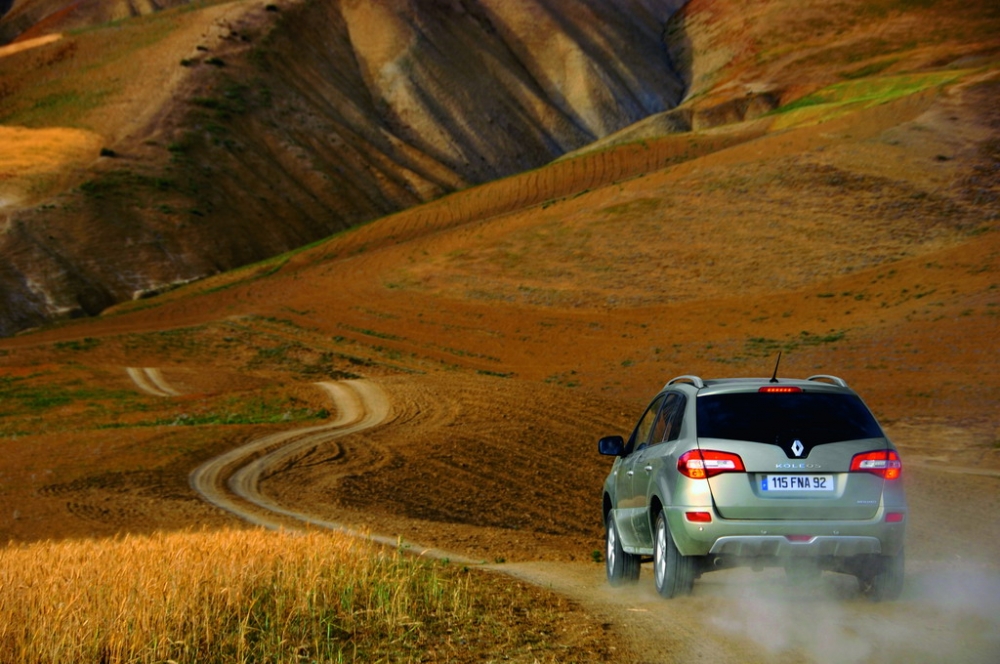
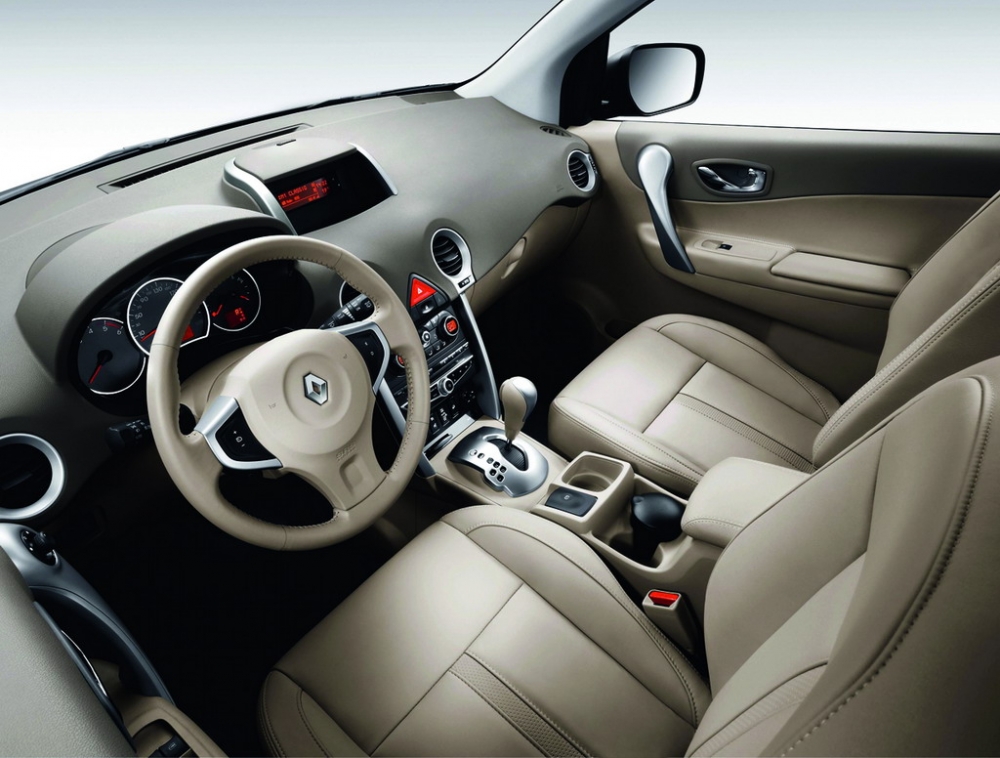 Several hundred kilometers along dusty dirt roads connecting remote adobe villages, narrow mountain serpentines laid along the edge of cliffs by ancient Berber nomads, over hills and plains, dried-up lakes and badly broken asphalt left the most favorable impression of the new crossover's ability to overcome earthly space beyond the highway. And although overly meticulous colleagues still achieved their cherished goal and sat it on its belly by driving into too deep sand, Koleos cannot be called a "parketnik." At the same time, attention is drawn to the softness of its ride even on the roughest road. Several hundred kilometers along dusty dirt roads connecting remote adobe villages, narrow mountain serpentines laid along the edge of cliffs by ancient Berber nomads, over hills and plains, dried-up lakes and badly broken asphalt left the most favorable impression of the new crossover's ability to overcome earthly space beyond the highway. And although overly meticulous colleagues still achieved their cherished goal and sat it on its belly by driving into too deep sand, Koleos cannot be called a "parketnik." At the same time, attention is drawn to the softness of its ride even on the roughest road. |
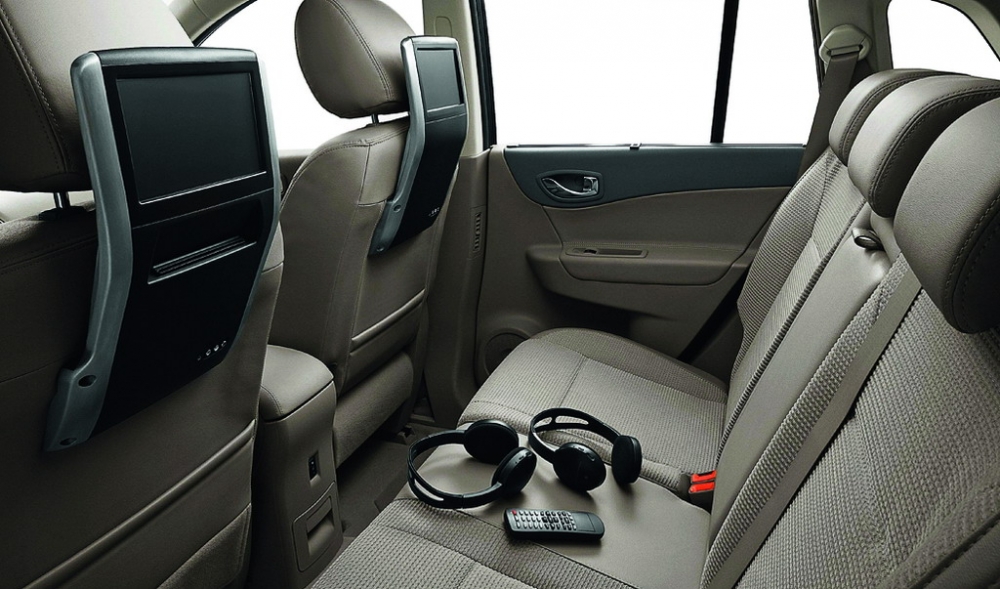 The operating principle of the all-wheel-drive system is traditional for a modern car of this type: at start, torque is distributed equally to all four wheels via a multi-plate electro-friction clutch, then during normal driving it is directed only to the front wheels, and when traction is lost, it is automatically partially (up to 50%) redistributed to the rear axle based on sensor signals. In addition, in combination with the ESP stabilization system, the all-wheel-drive system helps to properly correct the vehicle's trajectory. The operating principle of the all-wheel-drive system is traditional for a modern car of this type: at start, torque is distributed equally to all four wheels via a multi-plate electro-friction clutch, then during normal driving it is directed only to the front wheels, and when traction is lost, it is automatically partially (up to 50%) redistributed to the rear axle based on sensor signals. In addition, in combination with the ESP stabilization system, the all-wheel-drive system helps to properly correct the vehicle's trajectory. |
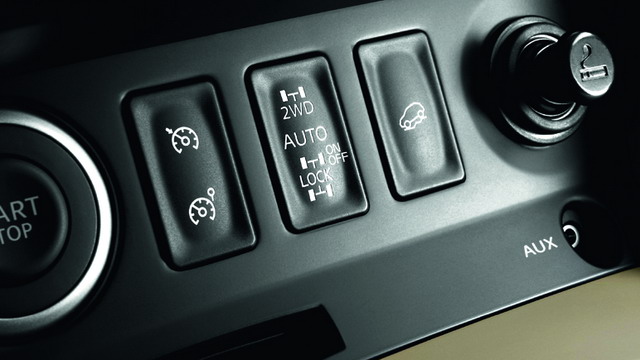
 You can lock the clutch and transfer 50% of the torque to the rear axle forcibly by pressing the corresponding switch on the instrument panel. This same key serves to manually engage the more economical front-wheel-drive mode. Having tried various modes on winding gravel-strewn roads-directions, we, as they say, felt the real difference: the slightest mistake in choosing speed or braking in front-wheel-drive mode is fraught – and now the front or rear axle has gone against your intention in some way of its own. Switching to 4 x 4 mode and forcibly engaging the lock significantly increase the vehicle's stability and the chances of keeping it and yourself intact. An unconditional aid when driving over rough terrain (if in the case of the diesel version you can find a common language with the power unit that does not want to pull from "low revs") is the aforementioned hill start assist system, which is activated on slopes of more than 10%, and the hill descent control system. You activate HDC with a switch on the center console, and on slopes – again more than 10% – Koleos descends on its own (including in reverse), maintaining a speed of 7 km/h without the need to use the brakes. You can lock the clutch and transfer 50% of the torque to the rear axle forcibly by pressing the corresponding switch on the instrument panel. This same key serves to manually engage the more economical front-wheel-drive mode. Having tried various modes on winding gravel-strewn roads-directions, we, as they say, felt the real difference: the slightest mistake in choosing speed or braking in front-wheel-drive mode is fraught – and now the front or rear axle has gone against your intention in some way of its own. Switching to 4 x 4 mode and forcibly engaging the lock significantly increase the vehicle's stability and the chances of keeping it and yourself intact. An unconditional aid when driving over rough terrain (if in the case of the diesel version you can find a common language with the power unit that does not want to pull from "low revs") is the aforementioned hill start assist system, which is activated on slopes of more than 10%, and the hill descent control system. You activate HDC with a switch on the center console, and on slopes – again more than 10% – Koleos descends on its own (including in reverse), maintaining a speed of 7 km/h without the need to use the brakes. |
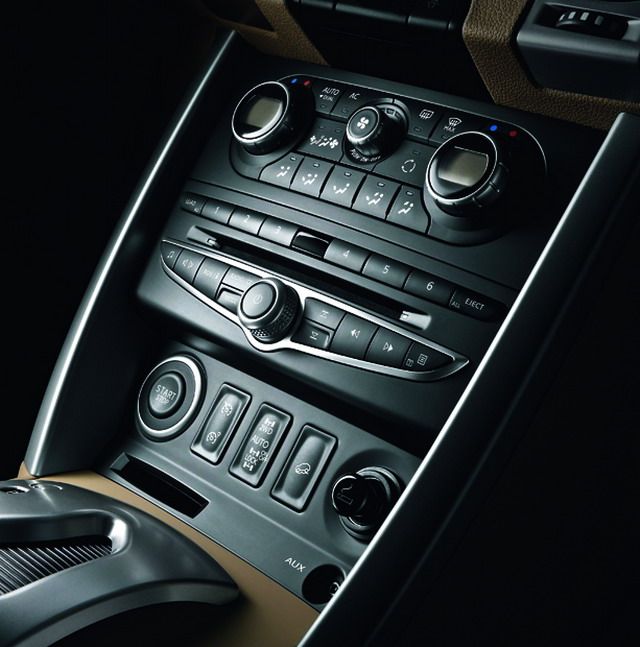 Until recently, such devices were the privilege of premium-class SUVs, and here you go – they are already equipped on a quite democratic crossover. However, even not the steepest climbs presented another unpleasant surprise, regardless of the engine type: no matter how you press the gas pedal to the floor, you cannot force the car to continue moving in either third or second gear. At best, it barely crawls until you shift to first, and at worst, the engine stalls altogether (fortunately, the hill-hold system immediately comes to the rescue). And if this is not another "childhood disease" of pre-production examples, then, apparently, such "fool protection" is designed to protect the clutch from emergency overload and remind you that you should not expect even such a well-equipped crossover to perform the same feats as a pure-blooded SUV. But it is worth noting along the way that even when driving on the roughest surfaces, the interior practically does not creak, which indicates high-quality assembly and fitting of trim panels and decent body rigidity combined with soft suspension operation. And this is an undoubted plus to the fact that the interior design, although it does not amaze with any special refinements and is quite restrained, is still definitely successful: functional, ergonomic, stylish. Until recently, such devices were the privilege of premium-class SUVs, and here you go – they are already equipped on a quite democratic crossover. However, even not the steepest climbs presented another unpleasant surprise, regardless of the engine type: no matter how you press the gas pedal to the floor, you cannot force the car to continue moving in either third or second gear. At best, it barely crawls until you shift to first, and at worst, the engine stalls altogether (fortunately, the hill-hold system immediately comes to the rescue). And if this is not another "childhood disease" of pre-production examples, then, apparently, such "fool protection" is designed to protect the clutch from emergency overload and remind you that you should not expect even such a well-equipped crossover to perform the same feats as a pure-blooded SUV. But it is worth noting along the way that even when driving on the roughest surfaces, the interior practically does not creak, which indicates high-quality assembly and fitting of trim panels and decent body rigidity combined with soft suspension operation. And this is an undoubted plus to the fact that the interior design, although it does not amaze with any special refinements and is quite restrained, is still definitely successful: functional, ergonomic, stylish. |
 As for the direct operation of the transmission, it (the test provided cars only with a six-speed manual gearbox, but the petrol version will also be equipped with a continuously variable transmission, and diesel versions with an "automatic") caused no complaints: gears shift easily and clearly. The brakes are also very well tuned and cope perfectly with their work – both when performing "acrobatic etudes" off-road and during high-speed driving on the highway. Yes, asphalt roads in the vicinity of Fez do exist, although the width of most of them allows only two donkeys to pass easily. By the way, these four-legged "vehicles" can be found on Moroccan roads almost more often than four-wheeled ones, so if someone has blocked your passage or is crawling ahead barely moving, the remark "What a donkey!" will be more than appropriate. As for the direct operation of the transmission, it (the test provided cars only with a six-speed manual gearbox, but the petrol version will also be equipped with a continuously variable transmission, and diesel versions with an "automatic") caused no complaints: gears shift easily and clearly. The brakes are also very well tuned and cope perfectly with their work – both when performing "acrobatic etudes" off-road and during high-speed driving on the highway. Yes, asphalt roads in the vicinity of Fez do exist, although the width of most of them allows only two donkeys to pass easily. By the way, these four-legged "vehicles" can be found on Moroccan roads almost more often than four-wheeled ones, so if someone has blocked your passage or is crawling ahead barely moving, the remark "What a donkey!" will be more than appropriate. |
 Nevertheless, we managed to drive enough on asphalt, even sometimes quite smooth, to be able to judge the driver-oriented component of the Renault crossover. No, it did not amaze with anything special in this regard. Of course, "softening" the suspension to ensure smoothness off-road required to a certain extent sacrificing steering sharpness, but it remained quite sufficient for a car of this type and purpose. The steering wheel, somewhat empty during slow off-road driving (which is correct), acquires quite sufficient weight and transparency as speed increases on the highway. Dynamics are not sports-car-like, of course, but such a car does not need them. So overall, the handling and composure of this crossover on asphalt are closer to a classic passenger car. Nevertheless, we managed to drive enough on asphalt, even sometimes quite smooth, to be able to judge the driver-oriented component of the Renault crossover. No, it did not amaze with anything special in this regard. Of course, "softening" the suspension to ensure smoothness off-road required to a certain extent sacrificing steering sharpness, but it remained quite sufficient for a car of this type and purpose. The steering wheel, somewhat empty during slow off-road driving (which is correct), acquires quite sufficient weight and transparency as speed increases on the highway. Dynamics are not sports-car-like, of course, but such a car does not need them. So overall, the handling and composure of this crossover on asphalt are closer to a classic passenger car. |
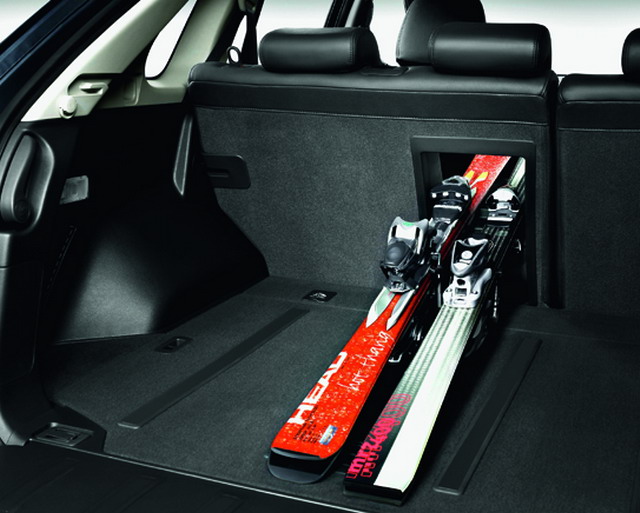
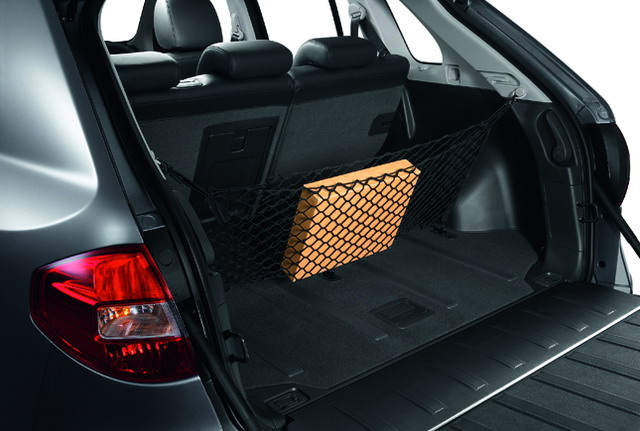 So, what is the bottom line? A car designed to combine the qualities of a hatchback, minivan and SUV. "Drawn" to look like an SUV, but still more resembling a grown-up hatchback – due not only to the silhouette, but also to the overall design, which sets not an aggressive but a cheerful mood. In essence – an excellently proven X-Trail in a more frivolous French "packaging." Extremely richly equipped with both standard and additional equipment (for example, a video system and a camping tent connected to the body through the tailgate). So, what is the bottom line? A car designed to combine the qualities of a hatchback, minivan and SUV. "Drawn" to look like an SUV, but still more resembling a grown-up hatchback – due not only to the silhouette, but also to the overall design, which sets not an aggressive but a cheerful mood. In essence – an excellently proven X-Trail in a more frivolous French "packaging." Extremely richly equipped with both standard and additional equipment (for example, a video system and a camping tent connected to the body through the tailgate). |
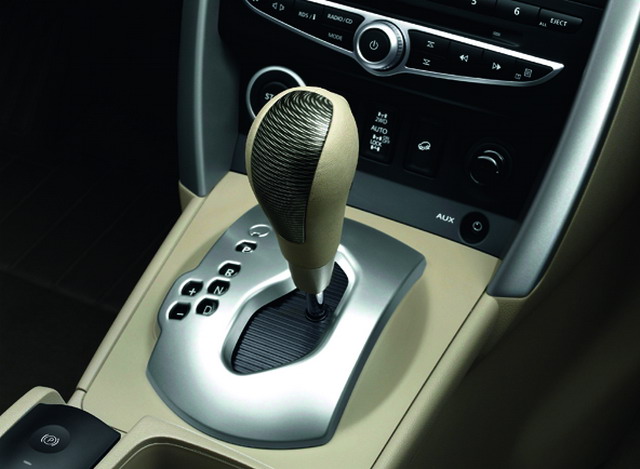 Possessing a truly worthy off-road potential that may turn out to be unnecessary. At least in Russia, where cars of this class are purchased in the vast majority of cases for "show-off," not for driving on country roads. But, again, the appearance of the Renault crossover is too soft, modest... In general, the eclecticism of this car in relation to Russia is ambiguous. Will Koleos, amid such fierce competition in this sector of the car market, find itself in the position of a person who tried to sit on two chairs at once, but as a result ended up between them? Well, a try is not a torture. Perhaps this is exactly the car that has been missing until now. Possessing a truly worthy off-road potential that may turn out to be unnecessary. At least in Russia, where cars of this class are purchased in the vast majority of cases for "show-off," not for driving on country roads. But, again, the appearance of the Renault crossover is too soft, modest... In general, the eclecticism of this car in relation to Russia is ambiguous. Will Koleos, amid such fierce competition in this sector of the car market, find itself in the position of a person who tried to sit on two chairs at once, but as a result ended up between them? Well, a try is not a torture. Perhaps this is exactly the car that has been missing until now. |
To both yours and ours?
It seems that Renault was the last of the world's largest automakers to jump on the bandwagon of the already fast-moving SUV train. However, its long-awaited Koleos crossover turned out to be far from the least significant among vehicles of this type.
Test drive photos
Comments
No comments yet. Say the first word.