
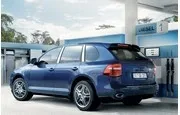
The first passenger car in Porsche's history with a diesel engine is an event that is hard to overestimate. The arrival of the Cayenne Diesel will surely go down in the brand's chronicle as one of the most significant moments, not least because it is another victory for environmental movements. The public's reaction at the same time resembles the famous plot of Repin's painting: "They Didn't Expect Him!" Some brand traditionalists literally clutched their hearts, asking how this was allowed. After all, quite recently the company flatly refused to consider using diesel fuel.
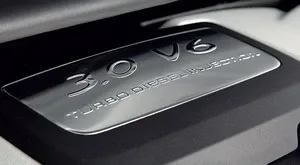
It is worth noting that the transformation of the Cayenne into a "Solaris" happened rapidly. The engineers did not have to invent their own engine — they took a ready-made turbo diesel V6 3.0 developed by the Volkswagen Group. Several months were spent on its adaptation and recalibration. Now Porsche executives confidently list all the bonuses that dieselization provides.
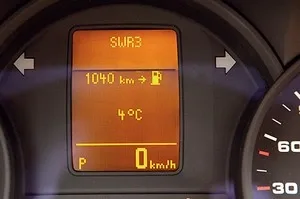
The Cayenne Diesel's range exceeds a thousand kilometers on a single tank, and towing a trailer weighing more than three tons causes it no difficulties at all. The gasoline versions of the Cayenne family are certainly more powerful and livelier, but, if you do not take into account the initial modification Cayenne V6 3.6, they all cost more than the diesel. Moreover, in Europe, owners of gasoline cars have to pay taxes that hit the wallet noticeably harder.
The arguments, you will agree, are quite weighty. Marketers expect that pragmatic Europeans will appreciate them, for whom the appearance of a diesel Porsche is not a reason to grab valerian and mourn the end of the world, but a chance, albeit not the cheapest, to join the prestigious brand. It is primarily this audience that the Cayenne Diesel is aimed at.
Interestingly, with all the obvious "diesel" advantages, the creators consider it extremely important that the new version does not differ from its gasoline siblings in terms of comfort. Externally, the Cayenne Diesel does not give away its diesel nature at all — they even decided not to add badges, apparently considering them a threat to the image.

NOTEWORTHY
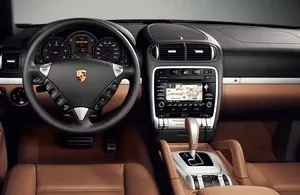
The version has a minimum of distinctive features — even the tachometer scale remains standard. For outsiders, the presence of a turbo diesel under the hood remains a mystery that the car reveals only at the gas station. When the 100-liter tank is filled to the brim, the onboard computer can show a range of more than 1000 km.
The first kilometers behind the wheel act on skeptics better than any sedative. Diesel? But there is no characteristic rattling on the steering wheel or pedals, silence reigns in the cabin, and only an acoustics expert can determine the engine type by ear. The Cayenne Diesel readily responds to pressing the gas pedal, accelerates smoothly but assertively. A real boost of energy! The power distribution is handled by the six-speed automatic Tiptronic S, which perfectly understands both economy and how to respond correctly to kick-down. Shifts are also available in manual mode — via the lever or paddle shifters on the steering wheel. If you want more drive, you can press the Sport button, which changes the settings of the accelerator, gearbox, and air suspension to more active ones.
And what's the result? The Cayenne Diesel behaves like a real Cayenne. At the same time, Porsche engineers are already eyeing more powerful Volkswagen turbo diesels, but they are ready to install them on the model only if the V6 3.0 proves successful and the market demands more. After all, more powerful versions will be both thirstier and more expensive than the diesel firstborn.
Meanwhile, a hybrid Cayenne is already being prepared! It has been officially announced that it will debut at the end of 2010. Those who negatively perceive Porsche's progressive changes will apparently definitely not be able to do without valerian now.
Manufacturer data
ENGINE
2967 cm3, diesel, V6,
240 hp at 4000 rpm,
550 Nm at 2000 rpm
TRANSMISSION
Automatic, 6 speeds,
all-wheel drive
DYNAMICS
max speed – 214 km/h,
acceleration 0-100 km/h – 8.3 s
DIMENSIONS (mm)
length – 4798
width – 2200
height – 1699
ECONOMY
average consumption –
9.3 l/100 km