
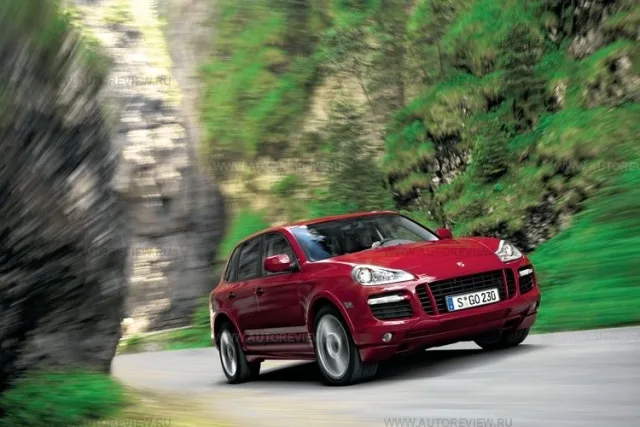
The first hundred kilometers I couldn't stop thinking that the driving presentation of the Porsche Cayenne GTS SUV should be held exactly in these mountains in southern Portugal. Here, there are turns for every taste, and speed in them is limited more by a sense of self-preservation than by the ceiling of the 'lowered' Cayenne chassis. However, by evening, Portuguese roads had shaken almost all my reserved compliments out of me. This is the stiffest Cayenne!
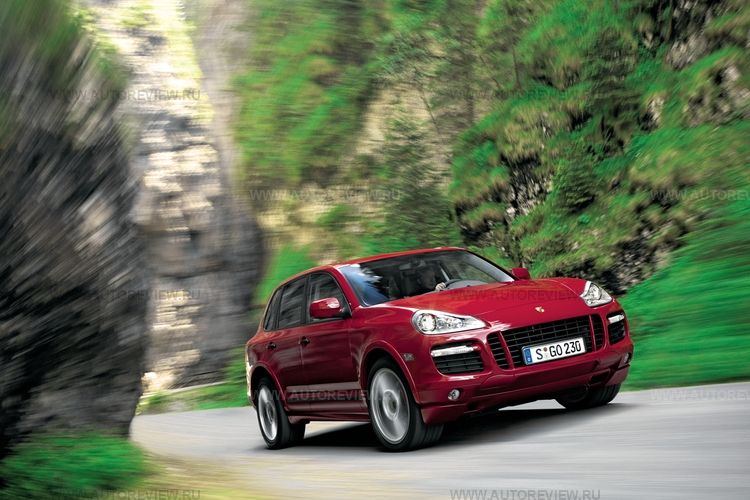
Externally, the Cayenne GTS looks even angrier than the 500-horsepower Turbo, although under the hood there's a naturally aspirated engine almost a hundred horsepower weaker. But the bumpers are 'turbocharged', and from under the wheel arches widened by one and a half centimeters, tires on 21-inch wheels stick out. If the wheels have grown by three inches in diameter, and the rubber has expanded to 295 mm, then the brakes remain from the Cayenne S. It was this one that became the 'starting point' for the GTS version — Grand Tourismo Sport. Fortunately, the previous brakes are enough: the power of the naturally aspirated 'eight' has grown by only 6%, from 380 hp to 405 hp, and the torque hasn't changed at all — 500 Nm. The sporty spirit, besides the ambiance, is created by a dual-mode exhaust system: when the Sport button is pressed, an additional chamber opens in the rear muffler, reducing backpressure and adding racing notes to the sound.
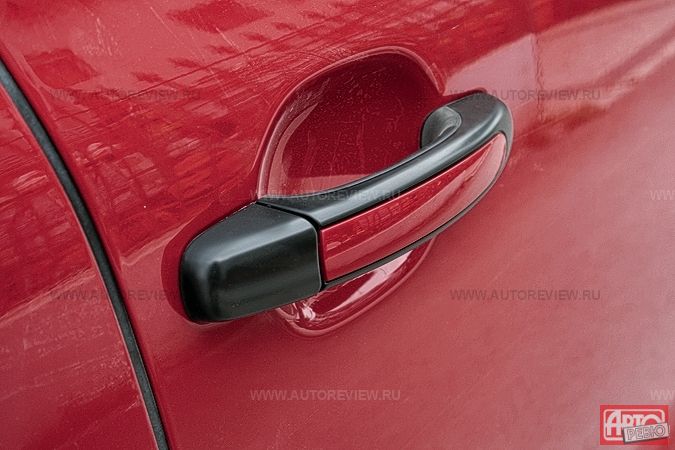 | 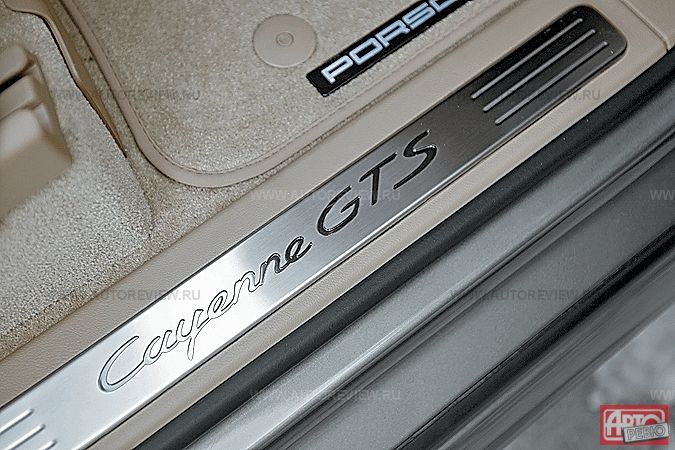 | |
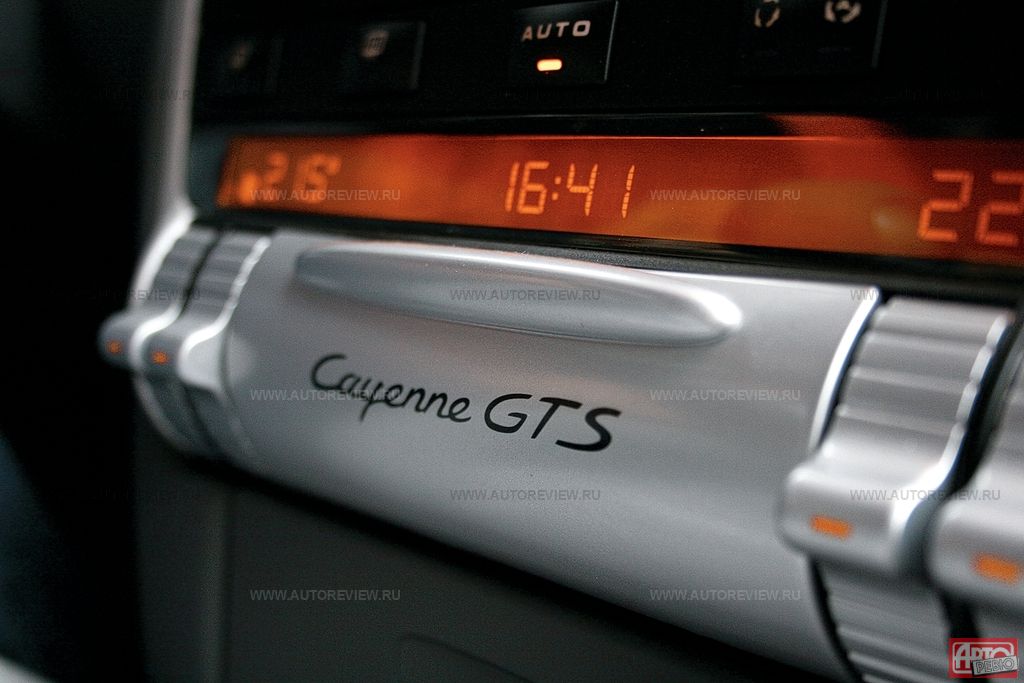
| Among the exterior details distinguishing the GTS version are black door handles and window frames. The two-tier spoiler can be ordered at no extra cost. On the door sills are original stainless steel overlays | ||
Such an exhaust was previously offered as an option for Cayennes. But a 'short' final drive with a ratio of 4.1 instead of the standard 3.55 couldn't be ordered. Here it's 'standard', as is the 'honest' manual gearbox and the regular suspension — not air, but with metal springs. However, the Cayenne GTS can also be ordered with an 'automatic' and air suspension, but people from Porsche insist that such a car will lose part of its sporty spirit. It's no coincidence that the springs here are 20% stiffer than on the S version! And it's not just that these springs are combined with electronically controlled PASM dampers, also included in the base equipment.
In the driver's seat, everything is as before, except that the side support bolsters of the seat have become larger, and the steering wheel diameter is slightly bigger. But the engine sound is noticeably richer, and in Sport mode, during acceleration, it's simply magnificent: in the eight-cylinder overtones, there's both depth, power, and respectability. At the 'bottom', the engine pulls no worse than in the 'S', and after four thousand it becomes even more cheerful. And that's why it's a pity that the 'cutoff' interrupts the flight at 6800 rpm — oh, if only there were another 500 revs... But as it is, you drive and don't forget that a slightly more powerful engine and 'short' transmission still have to haul 2.2 tons of curb weight.
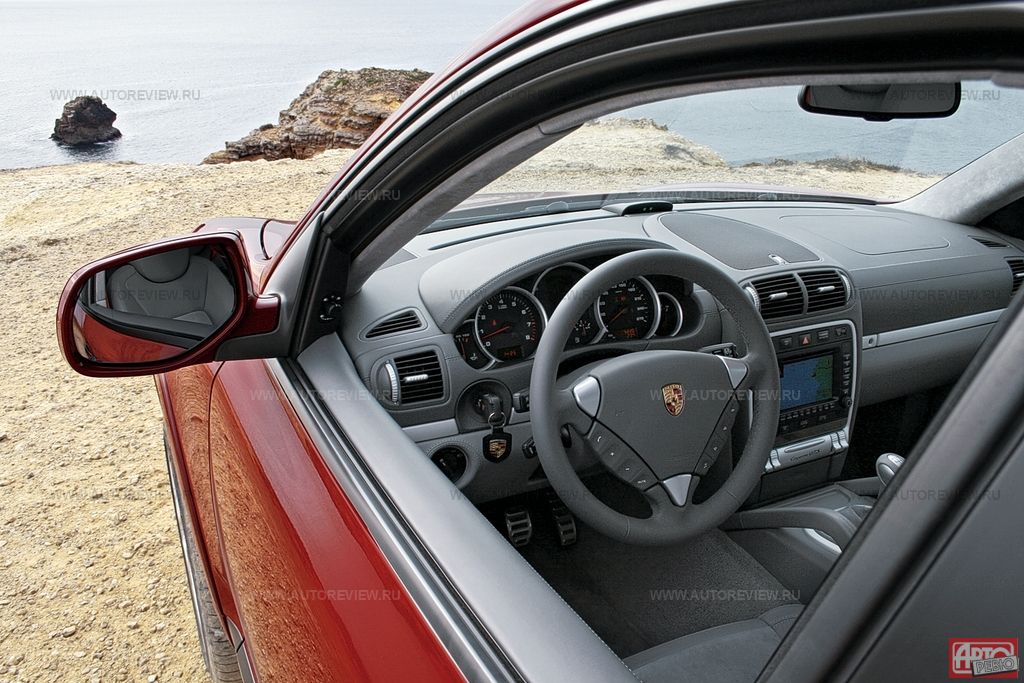 |  |
| The steering wheel rim diameter has increased |
Yes, the first hundred the Cayenne GTS with 'manual' covers half a second earlier — in 6.1 seconds. But there's no more thrill from acceleration, apart from the 'acoustics': the vague clutch and gearbox drives remain the same.
But in corners... A little more, just a little — and I'll wholeheartedly call the Cayenne GTS a supercar. The Michelin Pilot Sport tires hold like glued. The maximum lateral accelerations, if you believe the engineers, reach 0.93 g versus 0.8 g on average for SUVs with sporty traits. On an arc, both the increased negative camber and the reduction of ground clearance by 24 millimeters make themselves known. Although, of course, the center of gravity was high and remains so: any two-door Porsche behaves decidedly better.
The Germans assure that they tuned the GTS chassis to be more 'neutral'. Here the front stabilizer is more powerful, the diameter of the rear one is reduced... Stop! According to science, it should have been the other way around! But the chassis department engineer Robert Ferger-Andrews assured me that against the background of 'stiffening' the elastic elements and reducing the clearance, the stabilizers had to be tuned exactly this way. Well, that's what Porsche engineers are famous for — they know how to step away from dogmas in time and solve problems their own way.
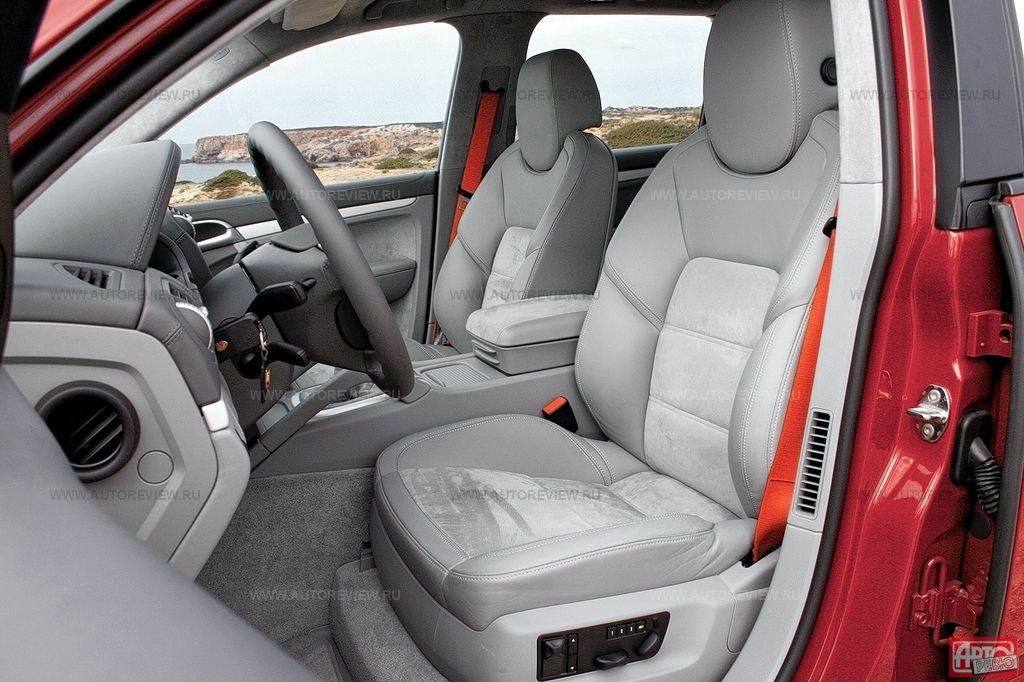 | 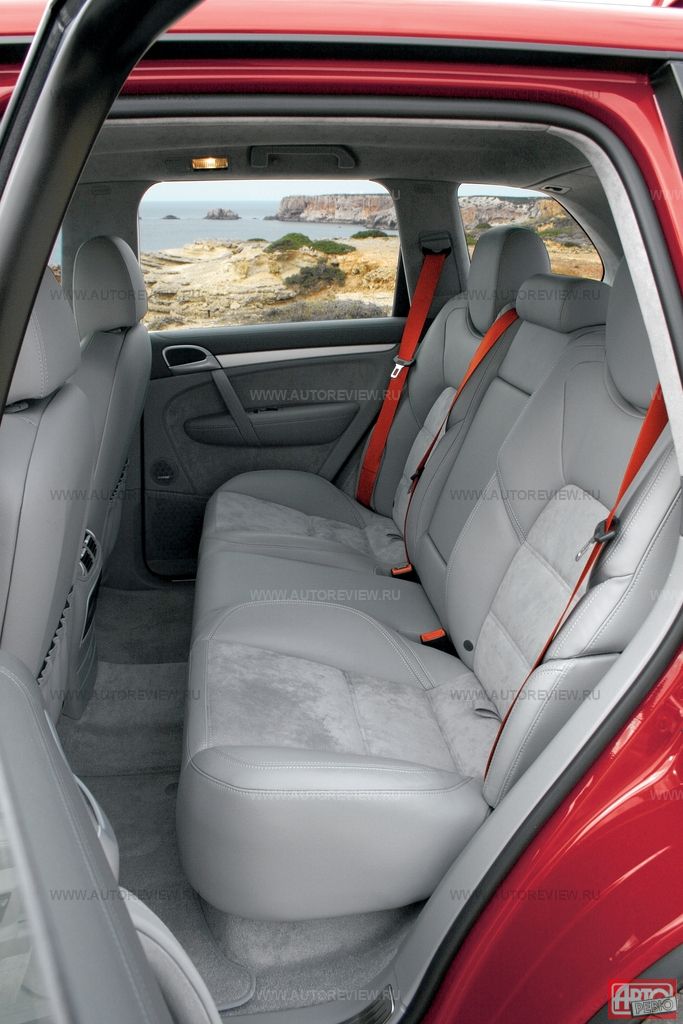 | 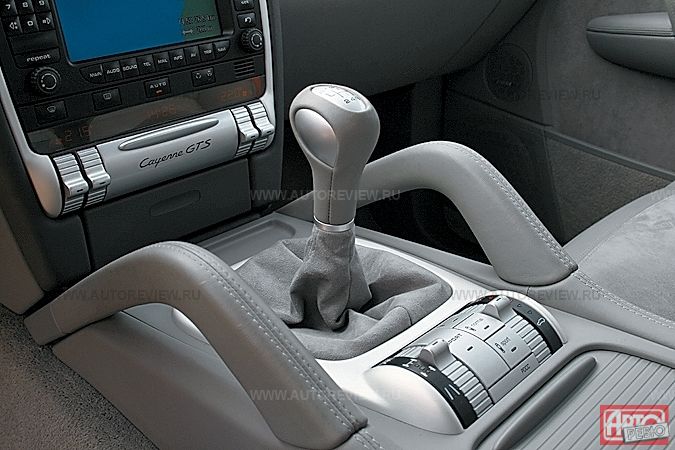 |
| Front seats — with more developed but unobtrusive side support | The rear seat is molded for two, but the bolsters are not hard and the middle spot is quite 'workable' | The 'manual' lever, as well as the ceiling and central part of the seats, are trimmed with Alcantara |
But even these wizard engineers couldn't break out of the compromise between 'sport' and 'comfort'. The new spring suspension shakes at all speeds and on any roads from dirt to highway! And switching the active PASM dampers to 'comfort' mode helps only slightly: on waves, rocking appears, but the car remains stiff. Moreover, due to the high seating position, any pothole that hits one of the wheels results not only in vertical but also lateral body oscillations. So it's doubly bumpy. And there's no other way to make a two-ton car reliably grip the asphalt, alas: you have to 'clamp' the suspension.
The GTS on 'air ride' is only slightly softer — and still, I would prefer it, and even with an 'automatic'. Yes! Let the Tiptronic S not have become younger, and with a more 'combat' engine and 'short' final drive, its thoughtfulness has become even more noticeable. But here it's more organic than the current 'manual'. Because no matter how 'charged' an SUV is, even if it's three times a Porsche, it still won't become a true sports car. So the 'heated' Cayenne GTS is an excellent car for autobahns. But then another question arises: why does it need this intelligent all-wheel drive, and even a low-range gear?
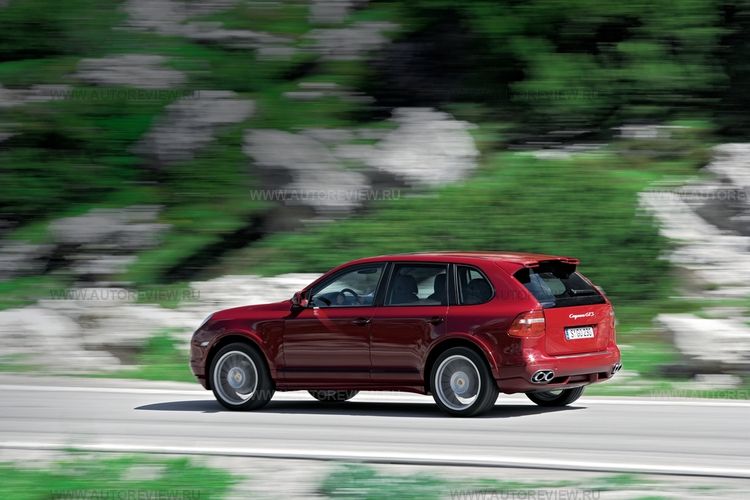
The spring suspension is lowered by 24 mm, and the air suspension by 20 mm. The negative camber of the front wheels is increased from 20 to 50 minutes, the rear from 1'20" to 1'50". The caster angle of the front wheels has also slightly increased. As a result, the Cayenne GTS holds the asphalt like no SUV ever dreamed of!
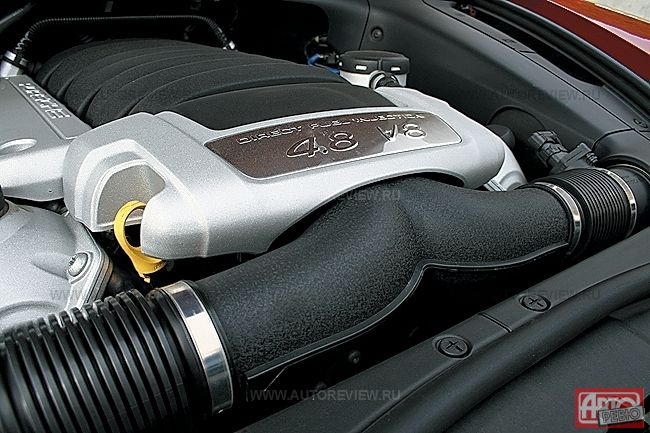 |
| Two dozen horsepower were added by a throttle body with a diameter of 82 mm versus the previous 76 mm and a larger cross-section intake duct |
Just to have it. Or rather — no need. After all, the task of the GTS is to warm up interest in all current Cayennes, which have at most two or three years of conveyor life left. Remember, it was already like that with the extreme 520-horsepower Turbo S version, presented less than a year before the Cayenne update (see AR No. 5, 2006)? It appeared loudly and quietly disappeared. So, I'm sure, it will be now: in a year or a year and a half, following the GTS, the supercharged 'hardcore' Turbo S will also be announced.
However, the Porsche Cayenne GTS will find its buyers. Moreover, the entire Russian pool of 212 cars until July 2008 has been sold out. In total, maybe there won't be five thousand a year, as the Germans plan, but someone will surely buy the Cayenne GTS instead of a fast station wagon, someone instead of the Range Rover Sport Supercharged SUV or the same Cayenne S version. And someone won't wait for the BMW X6.
But I strongly doubt that a third of customers, as the Germans expect, will choose the 'manual'. Most likely, as with the currently produced Cayennes, the share of cars with regular gearboxes will be from 3% to 10%. Interestingly, with a car price of 91,200 euros (almost ten thousand euros more expensive than the Cayenne S), Russians are offered the manual gearbox for the GTS as a completely free option. But hardly anyone will bite on this generous gesture. You know how many people bought a Cayenne 'on a stick' in all three years that the model has been officially sold in Russia? Not a single one.
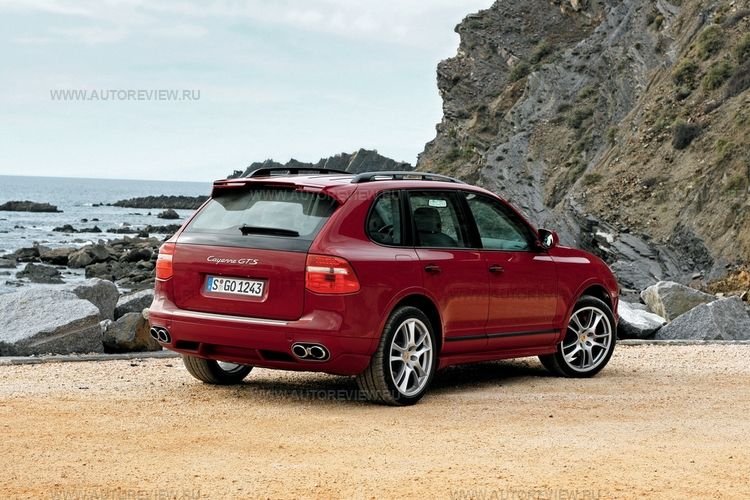
The Cayenne GTS is painted in the same colors as the Cayenne S, plus two original shades, including red GTS Red
| Specifications | |
| Parameters | Vehicle |
| Porsche Cayenne GTS | |
| Body type | 5-door wagon |
| Number of seats | 5 |
| Dimensions, mm | |
| length | 4795 |
| width | 1957 |
| height | 1675 |
| wheelbase | 2855 |
| track, front/rear | 1659/1682 |
| Trunk volume, l | 540—1749 |
| Curb weight, kg | 2225 |
| Gross weight, kg | 3080 |
| Engine | petrol, with direct injection |
| Location | front, longitudinal |
| Number and arrangement of cylinders | 8, V-shaped |
| Displacement, cm³ | 4806 |
| Cylinder bore/piston stroke, mm | 96.0/83.0 |
| Compression ratio | 12.5:1 |
| Number of valves | 32 |
| Max. power, hp/kW/rpm | 405/298/6500 |
| Max. torque, Nm/rpm | 500/3500 |
| Gearbox | manual, 6-speed (automatic, 6-speed)* |
| Drive | permanent all-wheel |
| Front suspension | independent, spring, double wishbone, with stabilizer |
| Rear suspension | independent, spring, multi-link, with stabilizer |
| Front brakes | disc, ventilated |
| Rear brakes | disc, ventilated |
| Tires | 295/35 R21 |
| Maximum speed, km/h | 253 (251) |
| Acceleration time 0—100 km/h, s | 6.1 (6.5) |
| Fuel consumption, l/100 km | |
| urban cycle | 22.6 (20.6) |
| extra-urban cycle | 10.9 (10.2) |
| combined cycle | 15.1 (13.9) |
| Fuel tank capacity, l | 100 |
| Fuel | petrol AI-98 |
| * In parentheses — data for version with Tiptronic S automatic | |