
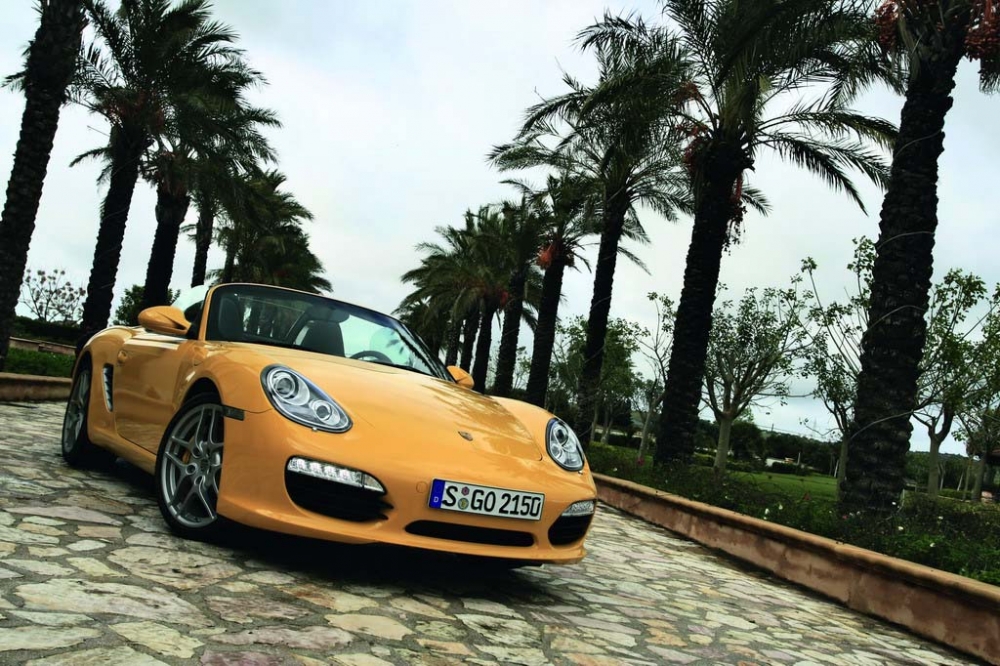
 Automotive history knows many examples of companies going bankrupt, but there are also stories with a happy ending. One might say that Porsche was lucky. Lucky, as the strongest are lucky. In those days, making a Cayenne was pointless. The concept of a "crossover" did not exist, and the notorious jeeps were used only for their utilitarian purpose – people moved around cities in passenger cars. Accordingly, Porsche needed a product that, firstly, would not be as frankly budget-friendly and unconventional for the company as cheap front-engined coupes. Secondly, it still had to remain affordable. Automotive history knows many examples of companies going bankrupt, but there are also stories with a happy ending. One might say that Porsche was lucky. Lucky, as the strongest are lucky. In those days, making a Cayenne was pointless. The concept of a "crossover" did not exist, and the notorious jeeps were used only for their utilitarian purpose – people moved around cities in passenger cars. Accordingly, Porsche needed a product that, firstly, would not be as frankly budget-friendly and unconventional for the company as cheap front-engined coupes. Secondly, it still had to remain affordable. |
 Dr. Wiedeking and his comrades then came up with the Boxster. The mid-engine layout satisfied the demands of the most discerning driving enthusiasts, while the small size and engines allowed for a very democratic price tag. If you look at the car park of that time, it is easy to notice that the potentially mass-market Boxster simply had no worthy competitors. It was bound to be a hit. And Porsche's management went all-in. With the company's total value in 1993 at 300 million German marks, they invested five times more in the development and promotion of the Boxster. The concept car of the same name was sent to the New York Motor Show to become the main show-stopper there. Dr. Wiedeking and his comrades then came up with the Boxster. The mid-engine layout satisfied the demands of the most discerning driving enthusiasts, while the small size and engines allowed for a very democratic price tag. If you look at the car park of that time, it is easy to notice that the potentially mass-market Boxster simply had no worthy competitors. It was bound to be a hit. And Porsche's management went all-in. With the company's total value in 1993 at 300 million German marks, they invested five times more in the development and promotion of the Boxster. The concept car of the same name was sent to the New York Motor Show to become the main show-stopper there. |
 Everyone knows the ending of this story with an economic slant. The Boxster did fire like Münchhausen from a cannon, and the sales plan of 15,000 cars per year was significantly exceeded. The company's affairs sharply improved. Today's position of Porsche allows us to say that it is one of the most serious players in the automotive market. If not the most serious. The Boxster also has a second story. And if it weren't for that, perhaps I would be writing these lines about some other Porsche car. But I am writing specifically about the Boxster, and if so, then two magical words for every racing enthusiast immediately come to mind – Targa Florio! Everyone knows the ending of this story with an economic slant. The Boxster did fire like Münchhausen from a cannon, and the sales plan of 15,000 cars per year was significantly exceeded. The company's affairs sharply improved. Today's position of Porsche allows us to say that it is one of the most serious players in the automotive market. If not the most serious. The Boxster also has a second story. And if it weren't for that, perhaps I would be writing these lines about some other Porsche car. But I am writing specifically about the Boxster, and if so, then two magical words for every racing enthusiast immediately come to mind – Targa Florio! |
 The island of Sicily, June 1956. The company Dr. Ing. h.c. F. Porsche AG brought its prototype Porsche 550 A Spyder here. The car was untested, the company was young. In general, the Spyder had come for testing, and no one set super-tasks for the team. Yes, 11 days before the Targa Florio, the prototype won the 1000 km of Nürburgring in its class. So what? The Nürburgring is good, but in those days the Targa Florio was considered the most difficult and interesting race in the world! And the best of the best gathered here, among them – the entire Italian automotive elite, who annually aimed exclusively for gold. The island of Sicily, June 1956. The company Dr. Ing. h.c. F. Porsche AG brought its prototype Porsche 550 A Spyder here. The car was untested, the company was young. In general, the Spyder had come for testing, and no one set super-tasks for the team. Yes, 11 days before the Targa Florio, the prototype won the 1000 km of Nürburgring in its class. So what? The Nürburgring is good, but in those days the Targa Florio was considered the most difficult and interesting race in the world! And the best of the best gathered here, among them – the entire Italian automotive elite, who annually aimed exclusively for gold. |
 Just imagine this picture. A little "frog" with a curb weight of just over 600 kilograms and a two-liter engine with a little over 100 horsepower, with two mechanics as support and a single driver, on the day of its debut at the Targa Florio becomes the best in the overall standings! Behind the wheel of the prototype was the Italian Umberto Maglioli. This fearless and, in a good way, crazy driver, on a small, shaky "stool" without a roof and other comforts, covered the distance in exactly 7 hours 54 minutes and 52 seconds. And that is 10 laps of 72 kilometers each. The car proved reliable and only pulled into the pits for refueling. When the judge's stopwatch counted 7 hours 54 minutes and 53 seconds, everyone realized that a sensation had been born. True, few could then imagine what the consequences would be. Just imagine this picture. A little "frog" with a curb weight of just over 600 kilograms and a two-liter engine with a little over 100 horsepower, with two mechanics as support and a single driver, on the day of its debut at the Targa Florio becomes the best in the overall standings! Behind the wheel of the prototype was the Italian Umberto Maglioli. This fearless and, in a good way, crazy driver, on a small, shaky "stool" without a roof and other comforts, covered the distance in exactly 7 hours 54 minutes and 52 seconds. And that is 10 laps of 72 kilometers each. The car proved reliable and only pulled into the pits for refueling. When the judge's stopwatch counted 7 hours 54 minutes and 53 seconds, everyone realized that a sensation had been born. True, few could then imagine what the consequences would be. |
 It must be said that Targa Florio and Porsche have always gone hand in hand. And the success of the mid-engine 550 A Spyder was only part of the brilliant performances of cars prepared by the hands of the Stuttgart company's masters. It all started even earlier, when in 1922 the Austro Daimler Sascha, designed by Ferdinand Porsche, won here among production cars. In total, the company has 11 titles in the overall standings. The last one was won in 1973 on the Porsche 911 Carrera RSR. That was the last international Targa Florio. The following year, the dangerous race was closed to international competitions. And four years later, it was abolished altogether – during a race in one of the Italian racing series, a car from one of the participants crashed into a crowd of spectators. Two people died on the spot. It must be said that Targa Florio and Porsche have always gone hand in hand. And the success of the mid-engine 550 A Spyder was only part of the brilliant performances of cars prepared by the hands of the Stuttgart company's masters. It all started even earlier, when in 1922 the Austro Daimler Sascha, designed by Ferdinand Porsche, won here among production cars. In total, the company has 11 titles in the overall standings. The last one was won in 1973 on the Porsche 911 Carrera RSR. That was the last international Targa Florio. The following year, the dangerous race was closed to international competitions. And four years later, it was abolished altogether – during a race in one of the Italian racing series, a car from one of the participants crashed into a crowd of spectators. Two people died on the spot. |
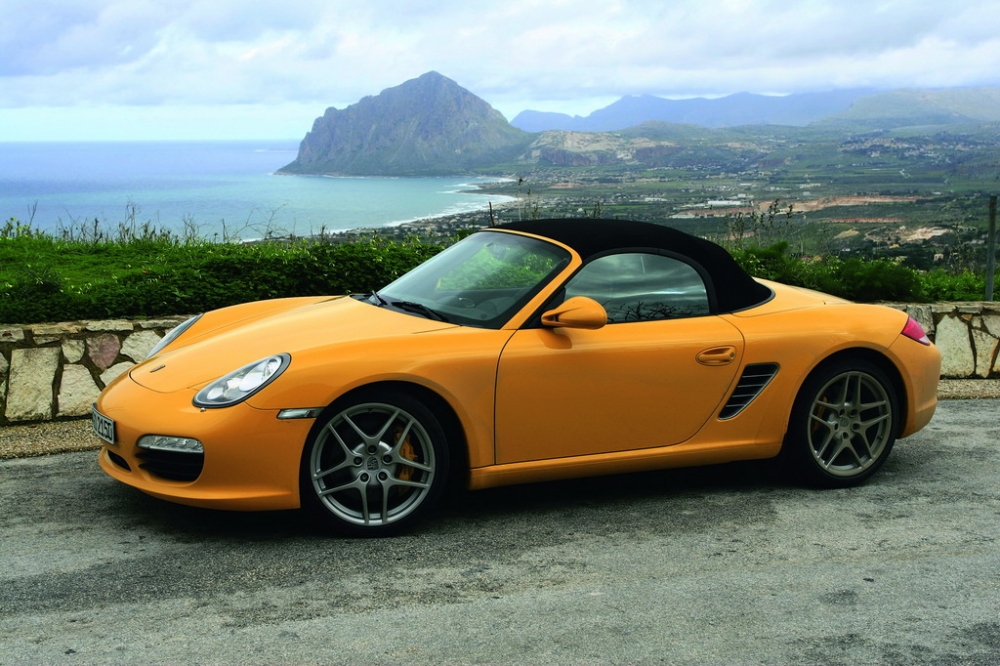
 There is no race, but memories of it are more alive than ever. The smell of legend is in the air! The legend of a little mid-engine "Porsche" that came to practice at the Targa Florio and ended up beating everyone there. Today, legends are one of the main engines of trade. Thus, two stories came together, ensuring unprecedented success for the new Boxster. In 1996, it pulled the company back into the highest automotive echelons. This test is special for me. I am in Sicily, holding the key to a new Boxster S. Whether you like it or not, thoughts about my unity with two legends – the company and the greatest race – obsessively begin to stir in my mind. Before my eyes, the characteristically black-and-white footage of that time plays. Here, Maglioli gets into the little "boat," accompanied by the gazes of two mechanics and a small support group. Here, he sets off into the race… There is no race, but memories of it are more alive than ever. The smell of legend is in the air! The legend of a little mid-engine "Porsche" that came to practice at the Targa Florio and ended up beating everyone there. Today, legends are one of the main engines of trade. Thus, two stories came together, ensuring unprecedented success for the new Boxster. In 1996, it pulled the company back into the highest automotive echelons. This test is special for me. I am in Sicily, holding the key to a new Boxster S. Whether you like it or not, thoughts about my unity with two legends – the company and the greatest race – obsessively begin to stir in my mind. Before my eyes, the characteristically black-and-white footage of that time plays. Here, Maglioli gets into the little "boat," accompanied by the gazes of two mechanics and a small support group. Here, he sets off into the race… |
 Definitely, Umberto was an obsessed man with nerves of steel. If you do the simple math with the number of kilometers in that Targa of 1956 and the time the driver showed, it becomes clear that he drove at an average speed of 90.9 km/h. You say – not much? If so, then you have never driven the Targa Florio route. You haven't even seen the race and have no idea what it is. Sicily is an island of volcanic origin. Mount Etna is still "working" to this day. The roads here twist terribly, elevation changes are constant. Closer to the mountains, the asphalt strip begins to trace such snakes that… I feel sorry for my colleague sitting next to me, gripping the door handle with a death grip. Definitely, Umberto was an obsessed man with nerves of steel. If you do the simple math with the number of kilometers in that Targa of 1956 and the time the driver showed, it becomes clear that he drove at an average speed of 90.9 km/h. You say – not much? If so, then you have never driven the Targa Florio route. You haven't even seen the race and have no idea what it is. Sicily is an island of volcanic origin. Mount Etna is still "working" to this day. The roads here twist terribly, elevation changes are constant. Closer to the mountains, the asphalt strip begins to trace such snakes that… I feel sorry for my colleague sitting next to me, gripping the door handle with a death grip. |
 Honestly, if I were in another car, in another situation, I would probably have noticed that my colleague was feeling unwell and would have calmed down. But I, like a madman, imagining myself as Maglioli in that old Spyder, desperately fought with the trickiest hairpins and combinations. And the roads in Sicily, I tell you, are far from the best quality. One might say some sections consist entirely of patches, others have gaping potholes. And there are waves – like on the surface of the Mediterranean Sea nearby. And that makes it all the more commendable for the new Boxster that it, like many of its legendary ancestors, looks here exclusively in its element. It constantly asks the driver to push harder and in every corner, slow or fast, tells him: "Buddy, it seems you're still not fast enough for me." Honestly, if I were in another car, in another situation, I would probably have noticed that my colleague was feeling unwell and would have calmed down. But I, like a madman, imagining myself as Maglioli in that old Spyder, desperately fought with the trickiest hairpins and combinations. And the roads in Sicily, I tell you, are far from the best quality. One might say some sections consist entirely of patches, others have gaping potholes. And there are waves – like on the surface of the Mediterranean Sea nearby. And that makes it all the more commendable for the new Boxster that it, like many of its legendary ancestors, looks here exclusively in its element. It constantly asks the driver to push harder and in every corner, slow or fast, tells him: "Buddy, it seems you're still not fast enough for me." |
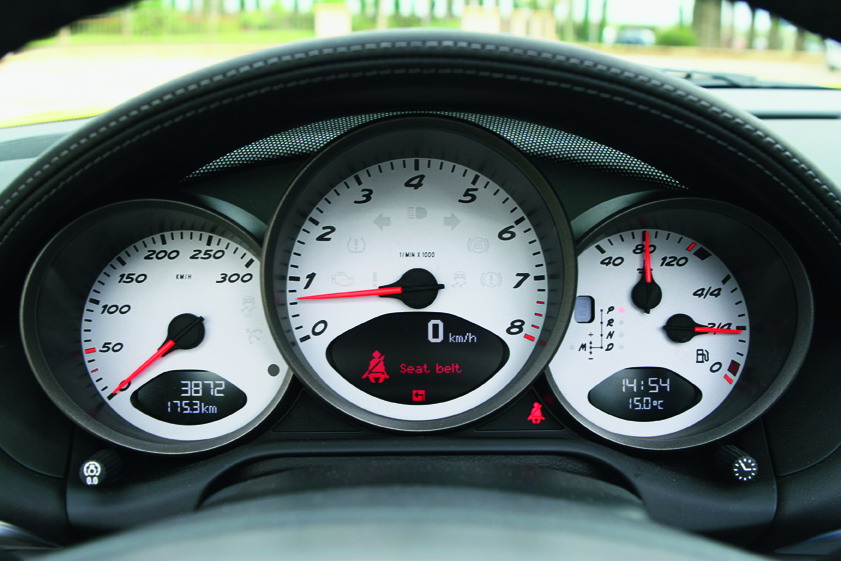
 And now I'm already switching on the super-sporty Sport Plus mode. The suspension stiffens, the gearbox begins furiously working through gears and clutches, but at the same time allows you to hang on the selected gear even at the limiter. The steering and accelerator response sharpen. Hairpin after hairpin, chicane after chicane. I get into the rhythm, pick up my own revs. What a thrill it is to fly on a mid-engine Porsche along the narrow Sicilian twists, occasionally wagging the tail, enjoying the rich, tuned baritone of the exhaust and unrestrained accelerations. But my partner has already turned pale and asks to stop. I understand, and it's quite possible that in his place I would have behaved the same way. And now I'm already switching on the super-sporty Sport Plus mode. The suspension stiffens, the gearbox begins furiously working through gears and clutches, but at the same time allows you to hang on the selected gear even at the limiter. The steering and accelerator response sharpen. Hairpin after hairpin, chicane after chicane. I get into the rhythm, pick up my own revs. What a thrill it is to fly on a mid-engine Porsche along the narrow Sicilian twists, occasionally wagging the tail, enjoying the rich, tuned baritone of the exhaust and unrestrained accelerations. But my partner has already turned pale and asks to stop. I understand, and it's quite possible that in his place I would have behaved the same way. |
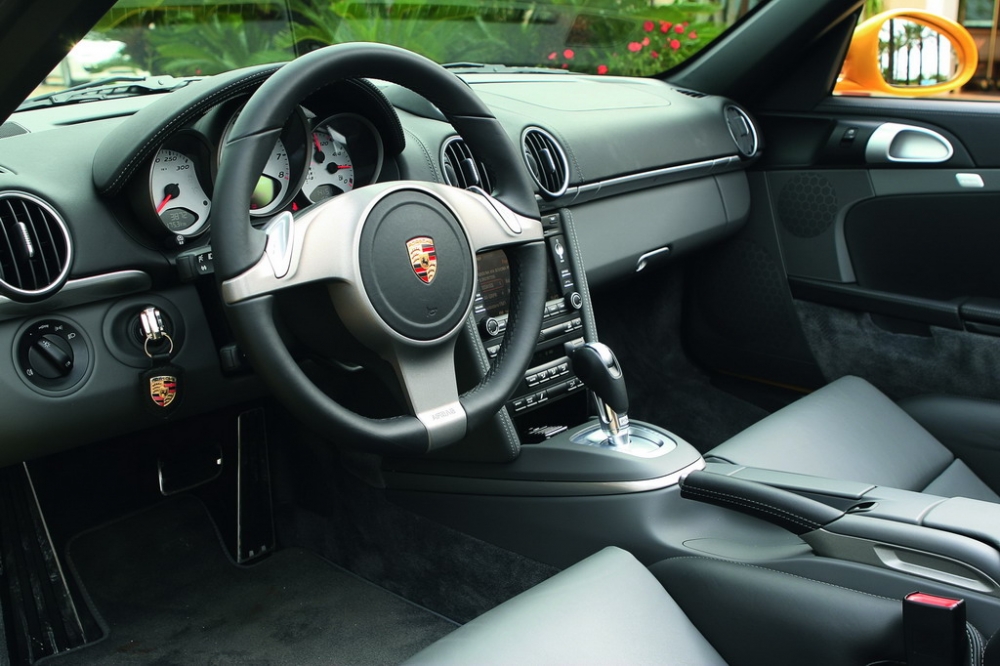
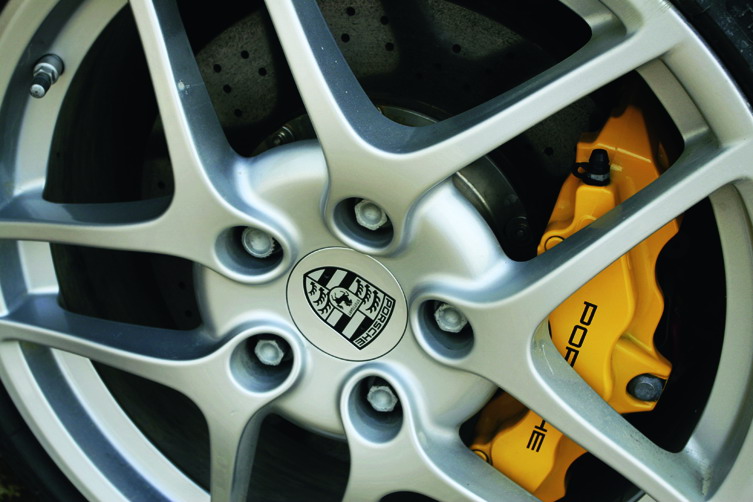
 At the age of twelve, after a deep update, the Boxster has matured. For example, after getting to know it, my tongue no longer turns to call this car a baby-Porsche. Believe me, this is an adult sports car! It has everything necessary in its arsenal to deserve such an honorable name: a modern engine with direct fuel injection, the latest "automatic" with two clutches, active suspension with variable stiffness, a self-locking differential on the rear axle, carbon ceramic brake discs. The steering here is also from the older model – the Carrera, but after the facelift it was recalibrated specifically for the Boxster's architecture. At the age of twelve, after a deep update, the Boxster has matured. For example, after getting to know it, my tongue no longer turns to call this car a baby-Porsche. Believe me, this is an adult sports car! It has everything necessary in its arsenal to deserve such an honorable name: a modern engine with direct fuel injection, the latest "automatic" with two clutches, active suspension with variable stiffness, a self-locking differential on the rear axle, carbon ceramic brake discs. The steering here is also from the older model – the Carrera, but after the facelift it was recalibrated specifically for the Boxster's architecture. |
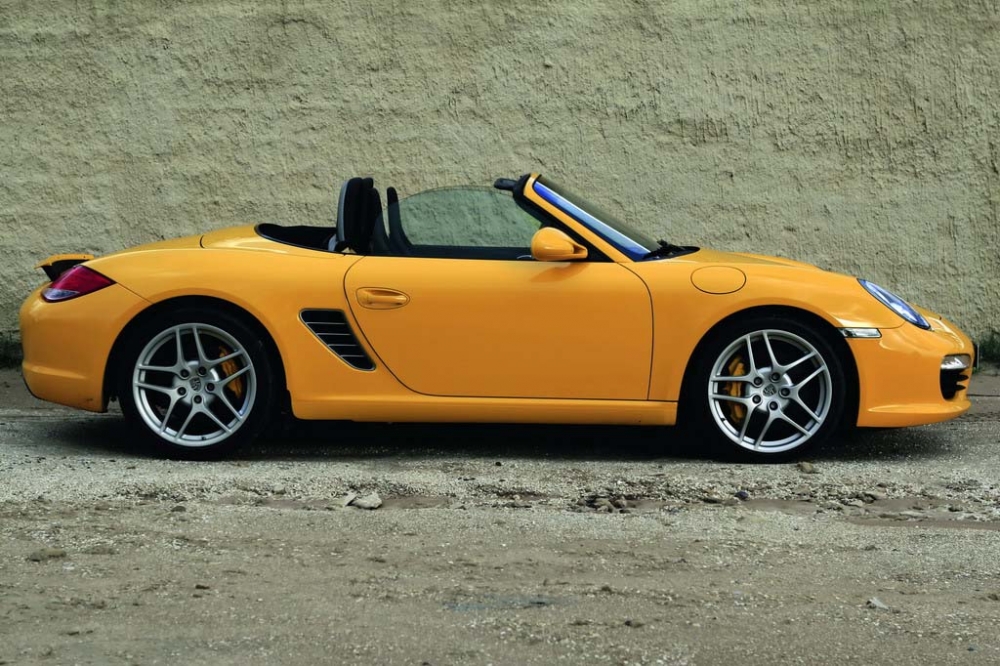
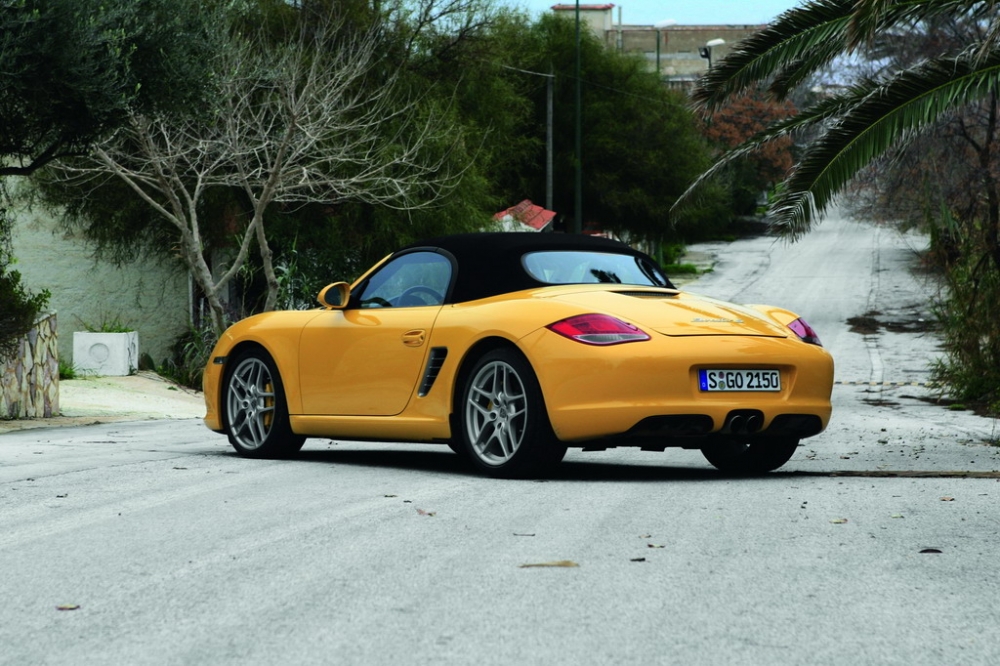
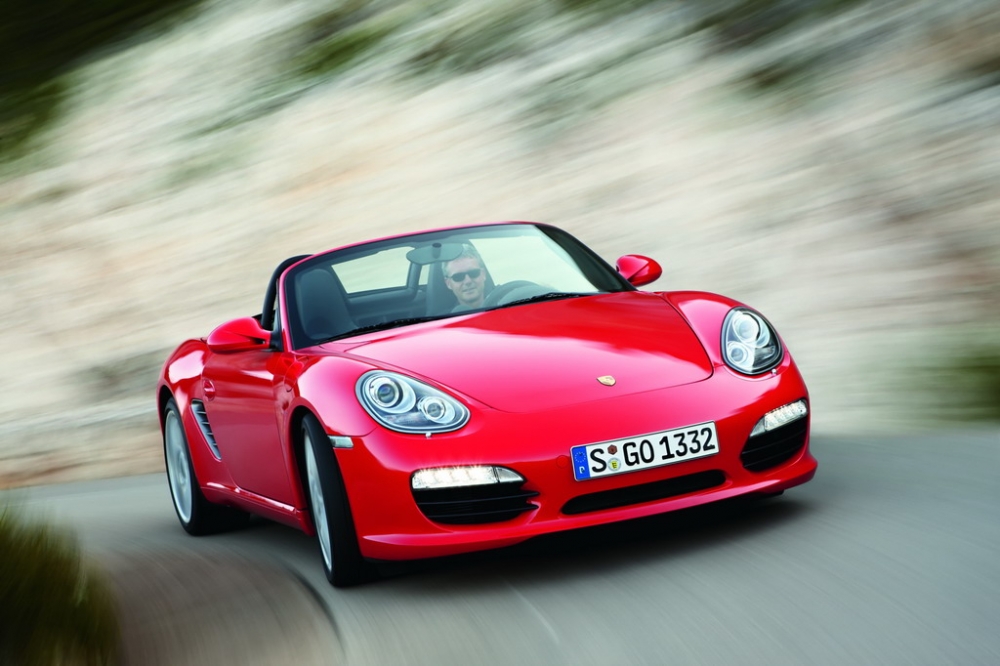
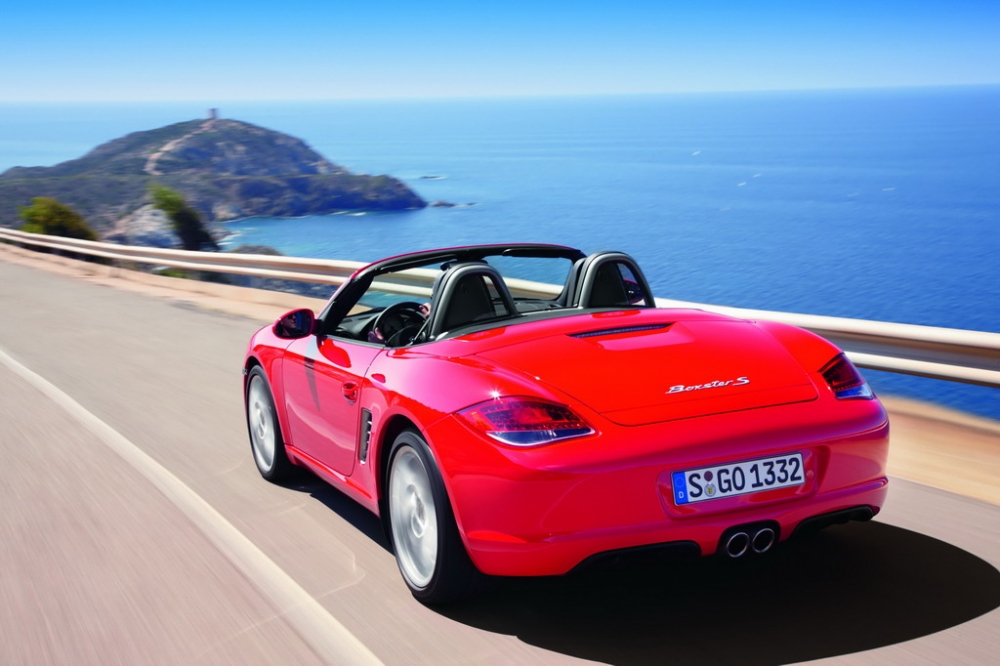
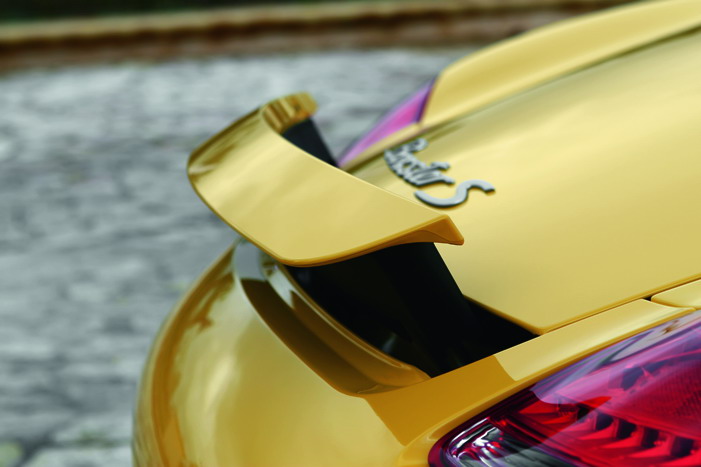
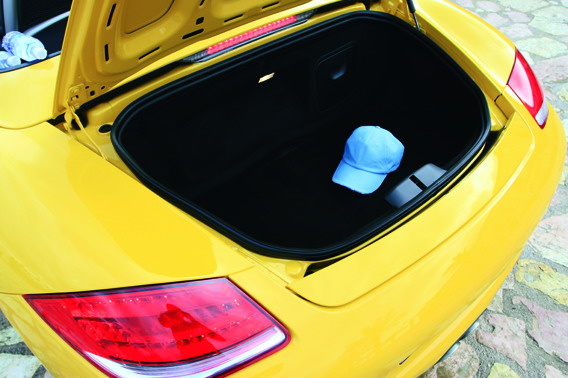
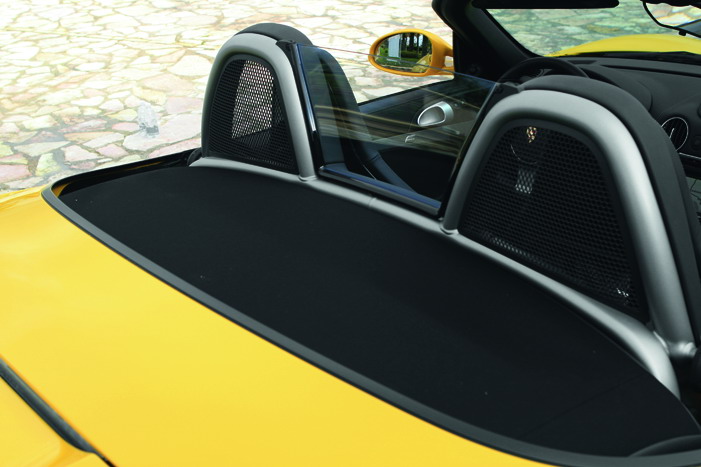
 But personally, what impressed me most was not the set, but how the listed things complement each other, painting an impressive and complete picture of the new Boxster S. It is very fast, but at the same time quite comfortable. The suspension does not allow body roll, but at the same time easily handles the corrugated profile of Sicilian roads. The brakes know no fatigue, and the gearbox thinks just like a human. The PDK adaptation algorithms to the driver's requests are the widest. And now stop and look into its eyes! Look at it this way and that. Take the roof off. Don't you recognize it? Personally, I immediately spotted the old 911 in the updated contours. And only the rear view, with a long flat trunk and central exhaust, unambiguously makes it clear that this is exactly a Boxster. But personally, what impressed me most was not the set, but how the listed things complement each other, painting an impressive and complete picture of the new Boxster S. It is very fast, but at the same time quite comfortable. The suspension does not allow body roll, but at the same time easily handles the corrugated profile of Sicilian roads. The brakes know no fatigue, and the gearbox thinks just like a human. The PDK adaptation algorithms to the driver's requests are the widest. And now stop and look into its eyes! Look at it this way and that. Take the roof off. Don't you recognize it? Personally, I immediately spotted the old 911 in the updated contours. And only the rear view, with a long flat trunk and central exhaust, unambiguously makes it clear that this is exactly a Boxster. |
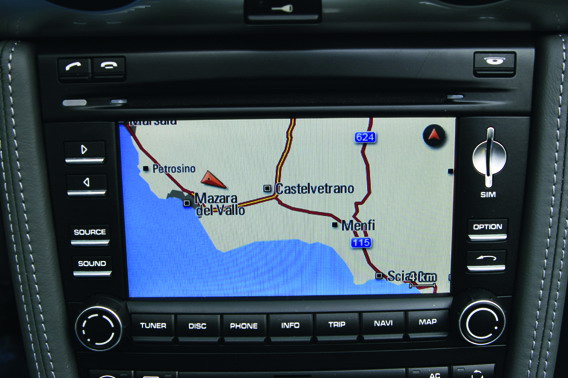 Many years have passed since Porsche won its last, eleventh, victory in the overall standings of the Targa Florio. To be more precise – all thirty-five! The Sicilian roads have been repaved several times since then, and they are unlikely to remember the events of days long past. But I am absolutely sure that the Targa Florio will never be forgotten. And I even know which company is responsible for that. Among other things, I can show you a car that carries the spirit of those glorious, long-gone days of pure racing romance. Many years have passed since Porsche won its last, eleventh, victory in the overall standings of the Targa Florio. To be more precise – all thirty-five! The Sicilian roads have been repaved several times since then, and they are unlikely to remember the events of days long past. But I am absolutely sure that the Targa Florio will never be forgotten. And I even know which company is responsible for that. Among other things, I can show you a car that carries the spirit of those glorious, long-gone days of pure racing romance. |
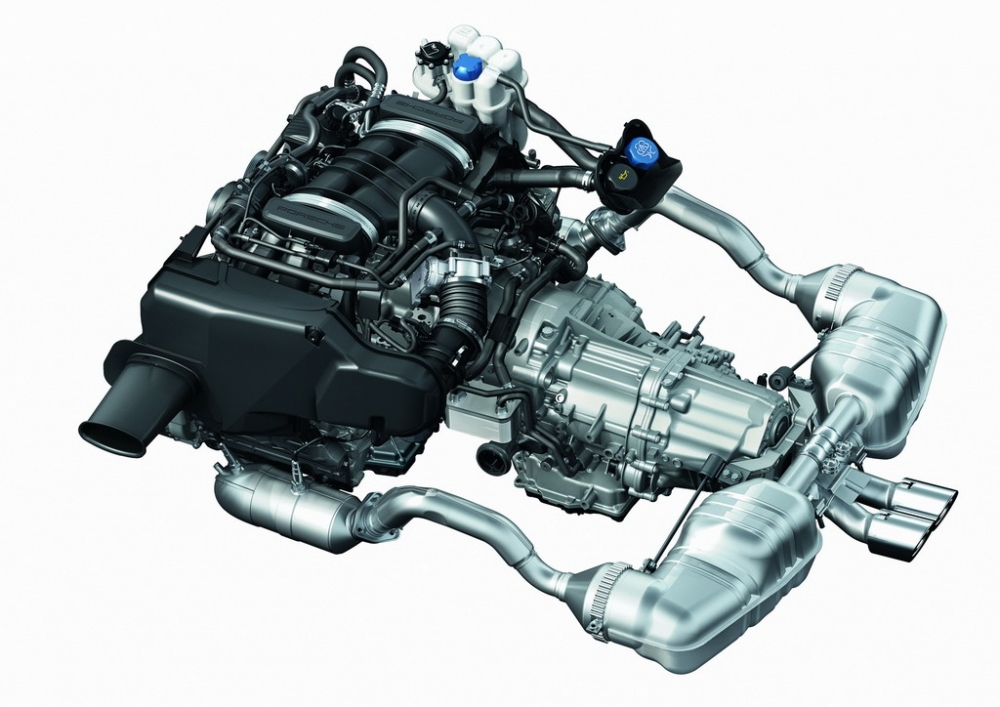 FOR YOUR INFORMATION FOR YOUR INFORMATIONENGINE The engines of the updated Boxster were significantly modernized. The standard one became 0.2 liters larger (2.9 liters), gained 10 hp (255 hp) and 17 Nm (290 Nm). The engine of the S version became more powerful by 15 hp (310 hp) and more torquey by 20 Nm (360 Nm). As on the older 911 family, the cylinder block now consists of two parts instead of four – this increased the rigidity of the structure. The mass of the power units decreased by almost 6 kg. Due to the use of an anti-friction coating with diamond-like carbon DLC (Diamond Like Carbon) and better quality processing of all parts, friction losses in the Boxster S engine decreased by about five percent. This engine also adopted direct fuel injection, which had the best effect on its elasticity and efficiency |
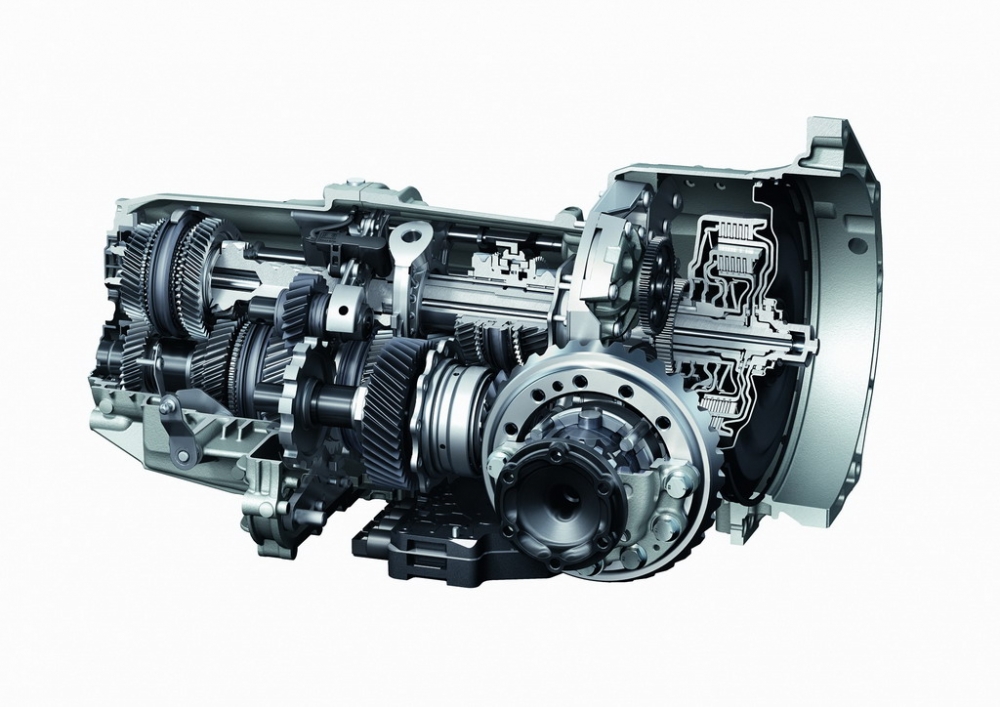 TRANSMISSION TRANSMISSIONThe Boxster received a six-speed manual as standard instead of the previous five-speed. But the main innovation, of course, should be considered the appearance in the list of available equipment of PDK (Porsche Doppelkupplungsgetriebe) – this is a seven-speed preselective unit with two clutches. The version for the Boxster is based on the gearbox from the 911 Carrera. The different-sized clutches (153 and 202 mm in diameter) and the hydraulic control unit are the same. Recall that PDK is 60% faster than an automatic, while being 11 kg lighter. PDK has a Launch Control function – for the most effective start from a standstill. To do this, the gearbox must be switched to Sport Plus mode, press the brake pedal, press the accelerator, and when the inscription Launch Control Activated lights up, release the brakes. At this moment, the tachometer will show 6500 rpm. |
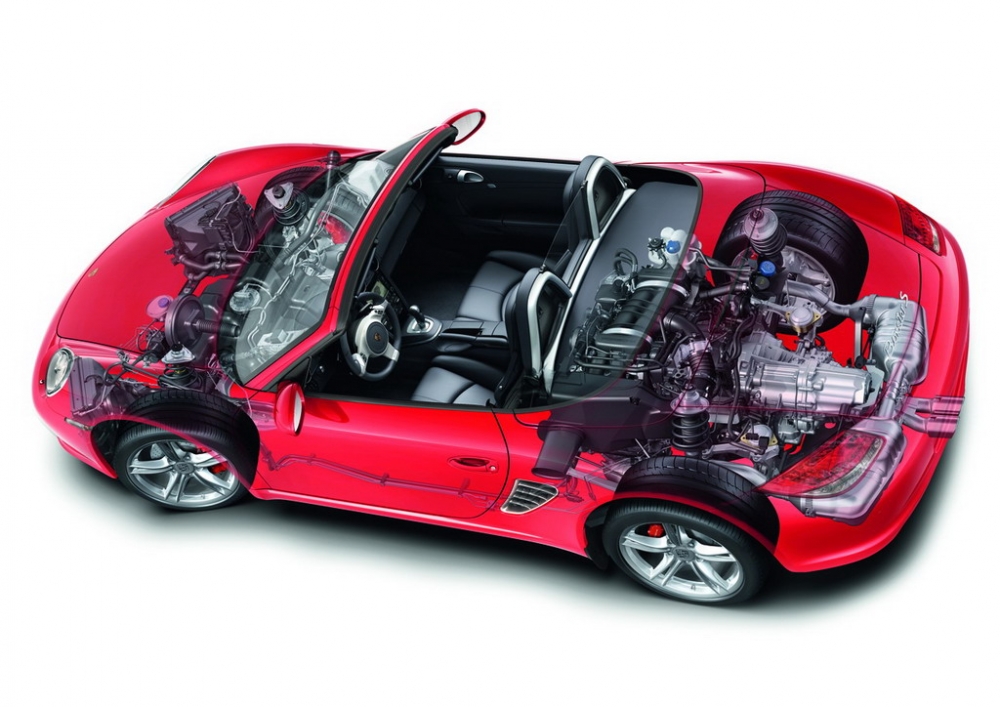 BODY BODYThe new Boxster is based on the same body structure as the original model from 1996. All changes affect materials – sections of aluminum and high-strength steel have appeared. Torsional rigidity – 12,500 Nm/deg. The roof is only fabric, as it is much lighter and more compact than a hard one. It weighs 27.9 kg and folds in 12 seconds |
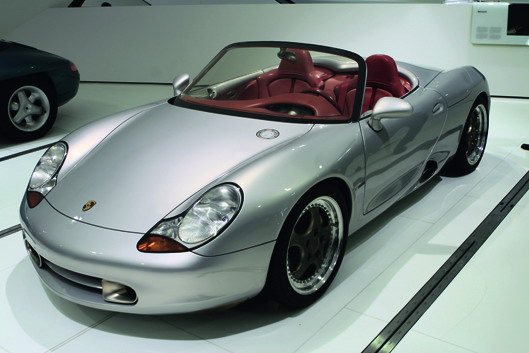 MODEL HISTORY MODEL HISTORYPorsche showed the concept of the first Boxster back in 1993 at the Detroit Auto Show. At that time, the Germans were experiencing a real crisis and were located in a remote corner of the exhibition. The concept was the basis of the exposition and... caused a sensation! Praiseful reviews from the press and potential buyers poured in |
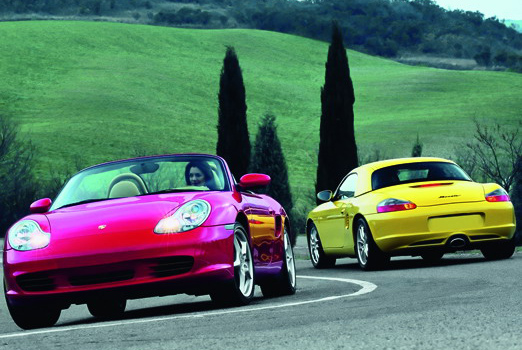 The production Boxster with the index 986 came off the assembly line only three years later. The exterior and interior were slightly simplified, as is usually the case, but this did not harm sales. The Boxster became a bestseller. Additional production even had to be placed on the side, at the plant of the Finnish company Valmet. The initial plan of 15,000 cars was exceeded almost twice. The base Boxster was offered with a 2.5-liter engine developing 204 hp. Three years later, the S version appeared (3.2 liters, 253 hp) The production Boxster with the index 986 came off the assembly line only three years later. The exterior and interior were slightly simplified, as is usually the case, but this did not harm sales. The Boxster became a bestseller. Additional production even had to be placed on the side, at the plant of the Finnish company Valmet. The initial plan of 15,000 cars was exceeded almost twice. The base Boxster was offered with a 2.5-liter engine developing 204 hp. Three years later, the S version appeared (3.2 liters, 253 hp) |
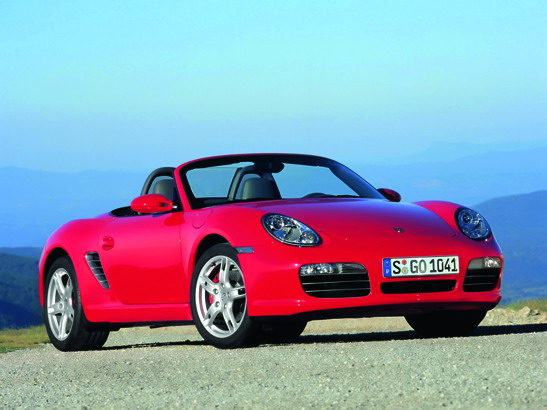 The second generation (987) saw the light in 2004 at the Paris Motor Show. The regular version could boast 240 hp, and the S – 280. In 2006, after a small revision, these figures changed to 245 and 295 The second generation (987) saw the light in 2004 at the Paris Motor Show. The regular version could boast 240 hp, and the S – 280. In 2006, after a small revision, these figures changed to 245 and 295 |
Racing romantic
At the end of the last century, things at Porsche were creaking ominously. The budget front-engine family – 924/944, created in collaboration with VW, did not live up to expectations. The cars sold terribly, and also somewhat cast a shadow on the company's reputation. It was impossible to get by with just the 911. A little more, a little longer, and perhaps now I would be writing a test about a different car of a different brand.
Test drive photos
Comments
No comments yet. Say the first word.