Porsche 911 Carrera. Price: from €69,600. On sale in Europe: from July 2008
Invitation to the presentation and test drive of the “new Porsche 911 Carrera”… How about that? What fundamentally new could have appeared in this symbol of perfection? And aren't the engineers at the development center in Weissach afraid to “rewrite” the legend?
Stanislav Shustitsky Photos by the author and Porsche
2009 Porsche 911 Carrera
© Photo: Porsche
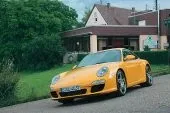
2009 Porsche 911 Carrera
© Photo: Porsche
Once in Milan, I noticed a Lamborghini Murcielago of an unusual emerald shade with Arabic script on the license plate in the parking lot of a five-star hotel. The doorman, seeing my interest, told me that it was the car of an Arab sheikh who has his own apartments in the hotel. His Milan garage also houses a Mercedes-Benz, a Bentley, and a
Porsche 911 Carrera. This choice is not accidental: the owner of factories and steamships understands both luxury and driving...
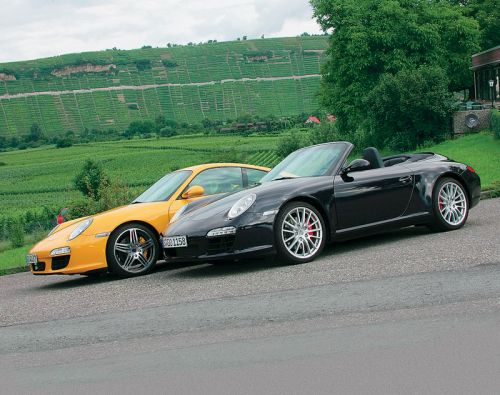
The first 911 appeared on the assembly line in 1963, and on the day of the company's 60th anniversary, founded by Ferdinand Porsche, journalists were shown the new versions of the Porsche 911 Carrera and Carrera S in
coupe and
cabriolet bodies.
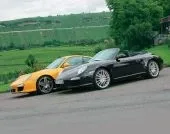
2009 Porsche 911 Carrera
© Photo: Porsche
2009 Porsche 911 Carrera
© Photo: Porsche
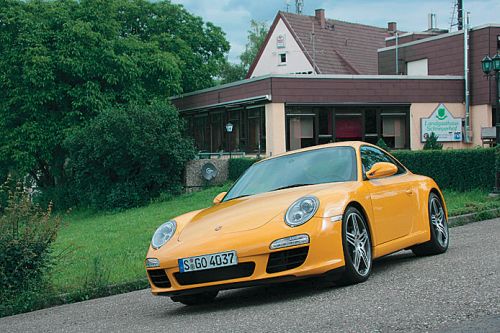
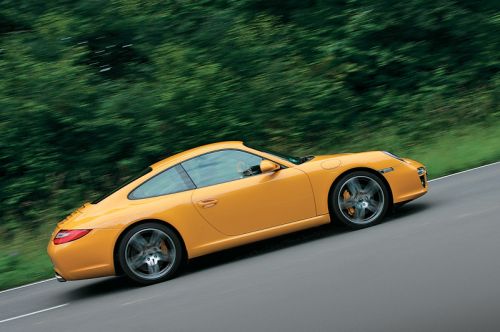
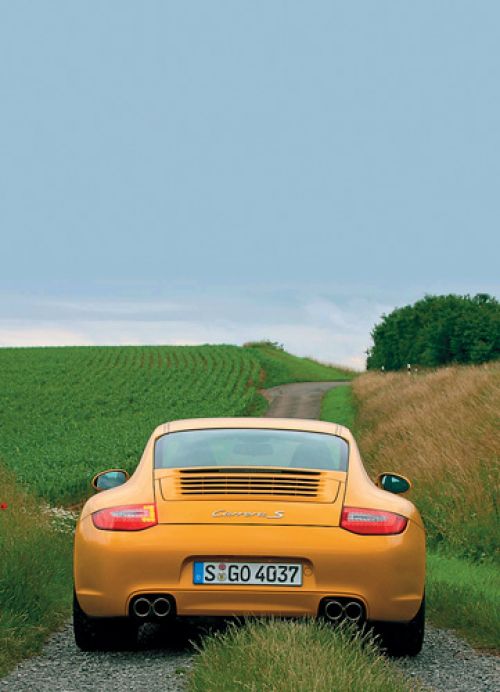
The exterior was refined, but these light touches successfully complemented the canvas long recognized as a masterpiece of engineering and design thought. Enlarged air intakes at the front added expressiveness, and the design of the rear body section with exhaust pipes integrated into the trim was elegantly solved. Despite the increase in the areas of the air intakes and rear-view mirrors, aerodynamicists managed to achieve excellent drag coefficients — 0.29 for the coupe and 0.30 for the cabriolet. Bi-xenon headlights included in the base package, LED daytime running lights, elegant design of the rear lights...
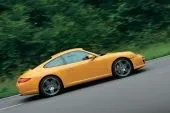
But the main “highlight” was the sports car's new engine and dual-clutch transmission — Porsche Doppelkupplungsgetriebe (PDK). And here I almost missed out on the “sweet stuff.” For the test, I chose the most photogenic car — a bright yellow coupe. I open the door and see... the lever of a manual 6-speed gearbox. But what about the PDK, whose wonders I had already heard so much about? But the choice was made, and all attention remains on the updated, no, simply new engine.
2009 Porsche 911 Carrera
© Photo: Porsche
2009 Porsche 911 Carrera
© Photo: Porsche
In the flat engines of the new Carrera, a direct fuel injection system is used for the first time in sports cars. The combustible mixture is formed in the combustion chamber, which contributes to better cooling of the pistons and valves and, accordingly, allows increasing the compression ratio without detonation. At each cycle, a corresponding volume of fuel is supplied to a certain amount of air. The mechanical part also underwent serious modifications. If in the old engine the crankshaft was located in a separate block, now it is integrated into the main engine block. The same applies to the camshafts. The dry-sump lubrication system has also been improved: electronically controlled scavenge pumps (now four instead of two) have been moved from the cylinder block to a separate oil pan. Applause to the engine engineers! The power of the 3.6-liter engine was increased by 20 hp to 345 hp, with torque increased to 390 Nm. The power figures of the Carrera S model reached 385 hp, and torque — 420 Nm. And at the same time, fuel consumption and harmful emissions into the atmosphere were reduced!
2009 Porsche 911 Carrera
© Photo: Porsche
2009 Porsche 911 Carrera
© Photo: Porsche
One could describe the engines for a long time, but it's better to enjoy their performance on the autobahn. Alas, I was unlucky here too: the highway along which the test route ran had a speed limit of 120 km/h. The desire to use the chance to drive this fantastic car (with a top speed of 289 km/h) prevailed over discipline for some time, but when the speedometer needle reached 220 km/h, I came to my senses. The expected fine is clearly beyond my means, and the alternative of community service would force me to build those very autobahns for a very long time. And yet, applause again! At the base, I was met with questions from colleagues about my impressions of the PDK. Upon learning that I had driven a car with a “manual,” they lost interest in me: “Consider that you weren't at the test.” But, seeing my disappointment, they hastened to reassure me: the test time had not expired, and there was a free car...
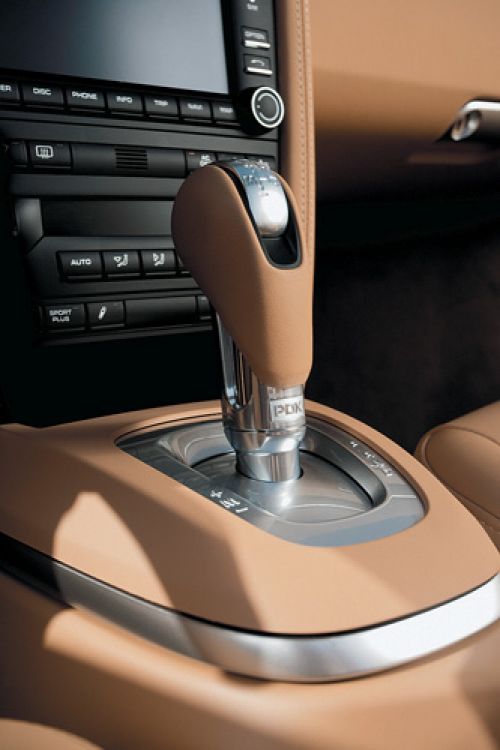
So, the modification with the 7-speed robotic Porsche Doppelkupplungsgetriebe, which replaced the previously existing Tiptronic S. With this automatic transmission, the Porsche 911 Carrera is good even in the rhythm of unhurried city driving, when the selector is in the “civilian” Drive mode. Without losing the habits of a far-from-domestic beast, the car demonstrates a soft and docile character. And here is a narrow asphalt road in the suburbs with an abundance of turns — here you can try the operation of the active suspension Porsche Active Suspension, which has PASM Normal and PASM Sport settings, where the stiffness of the shock absorbers changes by pressing a button. But it's better to pay more attention to the highlight of the specialists from the Porsche development center — the PDK clutch.
2009 Porsche 911 Carrera
© Photo: Porsche
Comfort and sporty, no, truly racing character. These two mutually exclusive principles coexist perfectly in the new Porsche 911 Carrera. And the balance can easily be shifted towards speed. It is enough to select the Sport button on the dashboard, and the response speed of the PDK will be higher, and the shift point will be optimal for your driving style. If that's not enough, it makes sense to switch to Sport Plus mode, where a flawless start is ensured by activating the Launch Control system. Brake pedal pressed, engine revs around 6500... And then the brake pedal is released, and the car takes off with fantastic acceleration: the system ensures minimal wheelspin of the drive wheels. And gear changes in this mode occur twice as fast as on a car equipped with Tiptronic S! Unfortunately, the time allotted for the test quickly came to an end, but I managed to draw the main conclusion: “Applause turning into a standing ovation.”
What is PDK?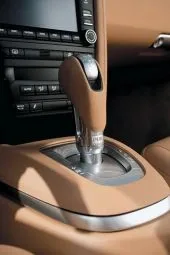
2009 Porsche 911 Carrera
© Photo: Porsche
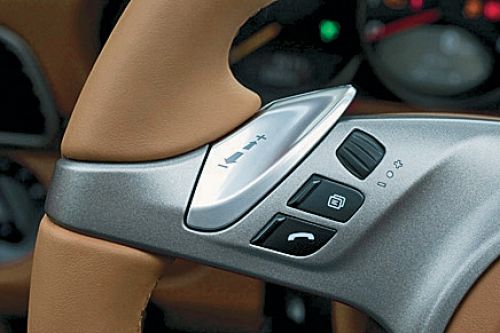
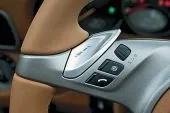
In the base configuration, the new Carrera 911 models are equipped with a manual 6-speed gearbox. For the first time in a Porsche sports car, for both engine variants, a 7-speed robotic gearbox with dual clutch — PDK — is offered as an option. As the name itself implies, the main components of the Porsche Doppelkupplungetriebe are two hydraulically controlled multi-disc clutch modules operating in an oil bath. One clutch is responsible for the odd gears and reverse gear, the second for the even ones. The gear shifting algorithm has fundamentally changed: the change of gear ratios is carried out by the activation of one or the other module: as soon as the clutch of one module disengages, the clutch of the second engages. Thus, the transfer of torque from one clutch to the other occurs without interruption of traction. And the response speed of the PDK is only a few milliseconds. Compared to a manual gearbox and an automatic transmission with a torque converter, the increase in response speed in the PDK is achieved due to the fact that at the moment of shifting, the gears of the desired gear are already in working condition. It is also worth noting that the PDK is almost ten kilograms lighter than its predecessor Tiptronic S. If you want to personally control the shifting process, you can do it either with the selector located on the center console, in sequential gearbox mode, or with the buttons on the steering wheel spokes.
DrivingYou get true pleasure from it both in the city, on a country road, and on a race track.
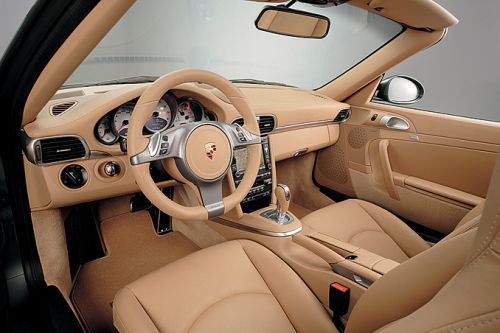
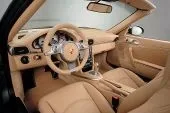
InteriorIt is worth noting the functionality of every detail, meeting the highest requirements.
ComfortThe ability to adjust the suspension depending on goals and objectives.
SafetyThe restraint system is supplemented by six airbags (two frontal).
For a car of this class, it is considered quite moderate.
+ An excellent compromise between daily routine and the opportunity to fully unleash the sporty potential.
- It is pointless to look for flaws in this car. If you find them, then this model is simply not for you.