
About the Peugeot brand
France founded in 1889 Model range
General Information
AUTOMOBILES PEUGEOT is a French manufacturer whose history spans two centuries. The company is among the few automakers trusted by millions of people worldwide, regardless of their nationality, religion, or cultural background. It is this customer loyalty, not advertising, that serves as the best proof of the quality of the brand's cars.
Peugeot is the largest private French automobile company. It produces passenger cars, sports and racing cars, special-purpose vehicles, motorcycles, bicycles, and engines.
The company's head office is located in Paris.
History of the Corporation
The Peugeot family, industrialists and engineers whose lineage dates back to the 15th century, still retains control of the company. In the second half of the 19th century, the family enterprise "Peugeot Brothers and Sons" produced not only traditional hardware but also bicycles and carriage parts.
In 1889, Leon Serpollet created the first steam-powered car for the company, which successfully participated in a steam car rally along the Paris-Lyon route. However, Armand Peugeot, head of bicycle production, after meeting G. Daimler, built his own car with a Daimler gasoline engine in 1891. The model was not original, but its success inspired Armand to produce a series of 10 different types of cars the following year.
At the beginning of the 20th century, Peugeot, following the trends of the time, undertook the creation of an inexpensive, simple, and reliable car for the city. For this work, the company invited the outstanding engineer and designer E. Bugatti. The result was the Bebe Peugeot model — the prototype of the "people's car."
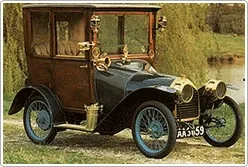
In parallel, the company developed its racing direction. The 1913 Peugeot Goux model reached a speed of 187 km/h — an absolute record at that time. During these years, Peugeot was the first in France to introduce assembly line production, having purchased the rights to this method from engineer E. Taylor.
After Armand Peugeot's death in 1915, other family members continued the business. In the early post-war years, the firm maintained its focus on inexpensive mass models, releasing the economical Peugeot Quadrilette. For wealthier buyers, powerful sedans were offered.
During World War II, Peugeot came under the control of Volkswagen but quickly recovered after it.
After the war, the focus on small-displacement cars proved successful and aligned with pan-European trends. In the 60s, responding to market demands, Peugeot, in collaboration with designer Pininfarina, created new models for discerning and affluent clients.
In 1966, Peugeot signed an agreement with Renault to combine technical resources, which was later joined by Swedish Volvo.
In 1974, Peugeot and Citroën merged into a single concern. Together with Citroën, the Panhard&Levassor division also became part of Peugeot, now a world leader in armored vehicle production. In 1978, Chrysler Europe joined the concern, becoming the basis for the Talbot division, which produced passenger and commercial vehicles. The company also maintained leadership in the European bicycle and motorcycle market.
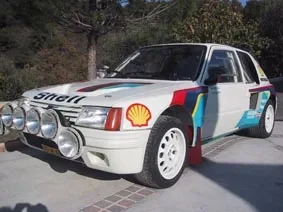
Despite its modest size, the Peugeot 205 was a great success. This model was produced from 1983 to 1995, and its drivers repeatedly won the World Rally Championship.
The Peugeot 605 was first shown to the public in Frankfurt in 1989, after which the model was modernized several times.
In August 1991, the Peugeot 106 was introduced — a compact front-wheel-drive car with a transverse engine.
In 1993, the Peugeot 405 was updated — a typical representative of the middle class. In January of that year, the compact middle-class Peugeot 306 debuted, and in autumn its convertible version appeared.
In March 1994, at the Geneva Motor Show, the Peugeot 806 was presented — a minivan created jointly with Citroen, Fiat, and Lancia. It also had front-wheel drive and a transverse engine.
In the summer of 1995, the Peugeot 406 was first shown — the successor to the 405 model. This D-class sedan proved successful for the company, and it attracted particular buyer interest after the restyling in spring 1999.
In 1996, the Peugeot Partner was released — a station wagon with a transverse engine. Its design is identical to the Citroen Berlingo.
The Peugeot 206 was introduced in the summer of 1998. This model became the brand's greatest success since the legendary 205 and the fastest-selling car in the company's history.
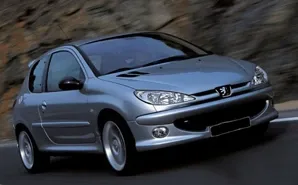
Today, Peugeot produces reliable and well-handling cars and has also excelled in the Paris-Dakar rally. The company focuses primarily on light vehicles with small engine displacement.
Peugeot in Ukraine
The official importer of Peugeot in Ukraine is LLC "Ilta." Its dealer network includes 22 car sales and service centers across the country.