
I definitely like the RCZ's exterior. The cabin pushed forward, graceful body lines, sculpted wheel arches, expressive flanks, and that whimsical wave-shaped roof — as if it were crafted by a master glassblower. Beautiful, albeit a bit saccharine. And the wide air intake mouth typical of Peugeot looks very organic here. But, admittedly, when I looked inside, I was ready to argue that the RCZ wouldn't surprise me with anything.
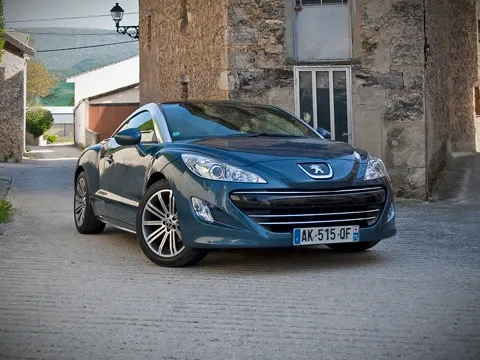
The exterior is contradictory: attractive, but too sweet for a serious track fighter.
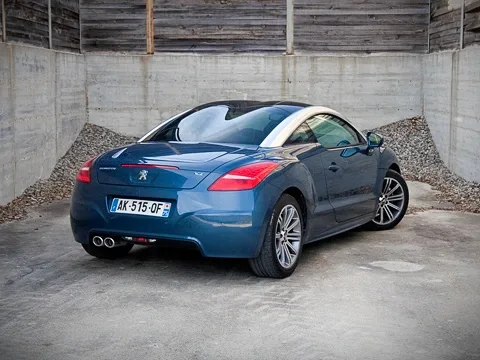
The complex roof shape cost the manufacturer dearly, but without it, the RCZ's image would lose a significant share of its charm.
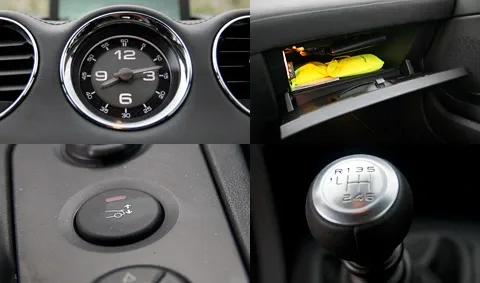
Under the unusual body lies the familiar filling from the "308." Yes, the French added leather trim to the dashboard, placed a clock instead of one of the vents, added some shine, but the base remained the same. What looks impressive in pictures is not so impressive up close. The gaps between plastic parts are not flawless, the buttons familiar from previous models don't press with the same precision and pleasant resistance as those of German competitors, and the steering column stalks seem stuck in the past decade.
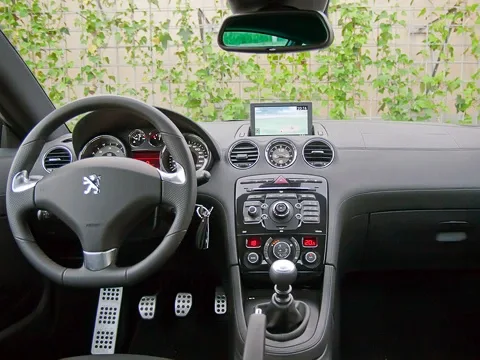
Don't be alarmed by the abundance of black — seven interior trim options are available. The flat-bottomed steering wheel comes from the 308 CC coupe-cabriolet.
And here's what's interesting: the French, it turns out, thought not only about what to make the radiator grille or how to unify the interior while maintaining sound insulation and decent audio system sound. They seriously worked on how the RCZ should drive, and they made me forget what car I'm behind the wheel of. That is, I realize it's a Peugeot. But this Peugeot is so good that it's hard to believe. They surpassed themselves.
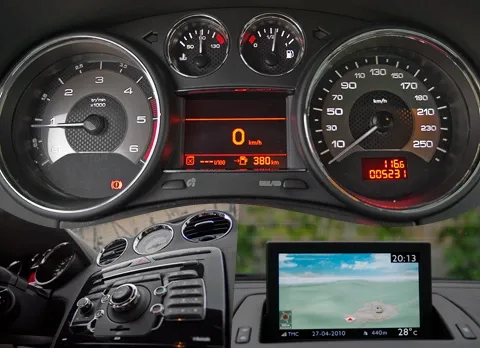
The interior in the spirit of the 308 hatchback is almost flawless in terms of ergonomics. True, some of my colleagues complained about the complex steering column stalks.
Throughout all 250 kilometers of the test route, I kept asking myself: who taught the RCZ to drive like no other car on the Peugeot 308 platform? I don't argue that both the Citroen C4 and the "308" itself on the corporate platform II handle well, but the RCZ is a clear leader against their background.
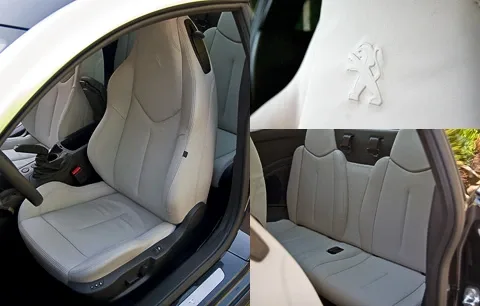
The seats are borrowed from the Peugeot 308 CC, but without ventilation in the headrests. For dynamic driving, the lateral support could be more pronounced.
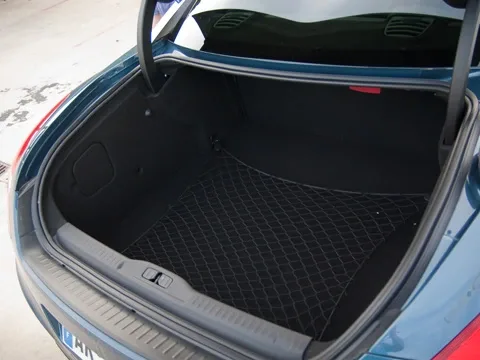
The trunk is small — 384 liters. With the rear seat folded, it becomes 663 liters, and when filled up to the roof — 760 liters.
The RCZ's character was largely determined by the new body: it's only 6% stiffer than the hatchback's, but the center of mass was lowered by 40 mm. So it's hard to say who exactly deserves thanks. Who even came up with the coupe concept in the spirit of the Audi TT? Unlikely designer Boris Reinmöller. Rather, some marketer... And then the engineers stepped in. The coupe is 74 kg lighter than the 175-horsepower three-door Peugeot 308 hatchback (curb weight — 1297 kg), 30 mm wider, with the same wheelbase (2610 mm), the front track is 44 mm wider (1580 mm), the rear — 63 mm wider (1593 mm). A wide track plus a low center of gravity give excellent lateral stability — another component of confident handling. The steering is precise, the reactive action is calibrated, the wheel is filled with sporty heaviness, and the effort builds smoothly. The coupe steadfastly follows the set trajectory, 18-inch tires cling to the asphalt to the last.
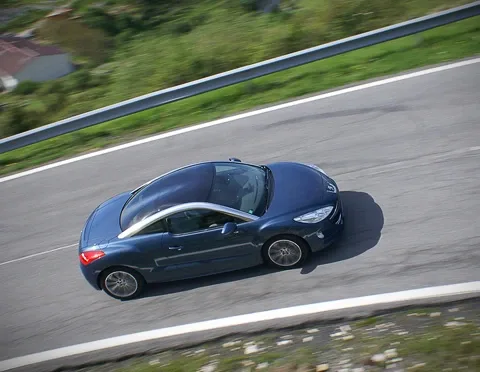
In long corners, the RCZ obediently traces an arc, only barely noticeably shifting outward, rolls are minimal, and there's no pitching at all. The control is absolutely transparent. The connection with the driver is like a live broadcast, not a recording, as in my 207 RC hatch. Moreover, the signal doesn't get lost at speed. On the contrary, the retractable spoiler with a variable angle of attack adds downforce. The low-slung coupe pierces the air like a bullet. You want to lap the serpentine endlessly. Bravo, Peugeot! Absolute delight! The car turned out great for track days.

At 85 km/h, the spoiler changes its angle of attack to 19 degrees, and after 150 km/h it becomes a full-fledged rear wing with an angle of 34 degrees. With a button on the center tunnel, the structure can be raised just for show.
While I was pondering which of the French to shake hands with for bringing back the GTI spirit, I nearly cut across a steep slope. Having missed a blind turn after a climb, I miraculously brought the car back onto the road. Indeed: a foolish head won't be helped by ESP. Although the stability system did help — it was the only time it intervened. It worked softly, clearly, and, most importantly, in time. In normal modes, it's completely imperturbable. I managed to make the ESP light blink only on the lot of an abandoned warehouse, where my colleague and I tried to spin the car into a spectacular drift.
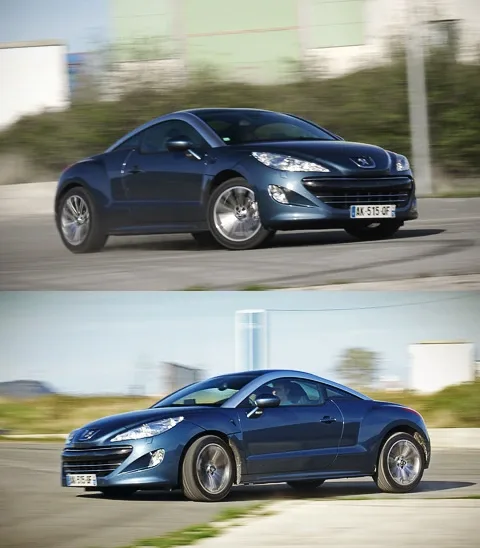
The stability system turns off completely, and without it, the coupe remains obedient and predictable. And even with ESP, you can have some fun: the settings are quite "liberal."
In general, the RCZ is good. But there's one "but." All these praises are worthy only of the 200-horsepower version (275 N•m) with the front suspension from the Peugeot 407. With separate steering knuckles, like on the Mégane RS and Focus RS, stiffer springs, dampers, and a rear torsion beam, as well as 340-millimeter front brake discs. None of this is offered even for an extra charge for the other two modifications — with the 156-horsepower 1.6 and the two-liter turbodiesel with 163 horsepower. From that pair, I only got to drive the diesel, and it drives quite ordinarily.
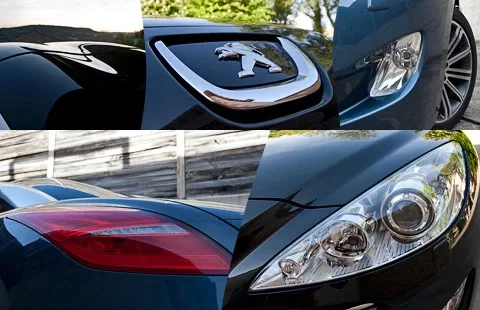
In terms of the number of interesting details per square meter of body, the RCZ can compete with Italian supercars.
The engine itself is quite pleasant on the move. Quiet, with good torque (340 N•m) and modest appetite (5.3 l/100 km). But there's no excitement in it; you don't want to push it. In such a car, it's pleasant to simply parade, obediently shifting gears according to the prompts on the dashboard and staying within the claimed fuel consumption. The suspension of the diesel is noticeably softer, rolls are greater, there's vertical pitching, and the step is not as confident. The desire to drive aggressively doesn't arise. I suppose the junior gasoline version is from the same opera, and only it will be available with the six-speed Aisin "automatic." Unfortunately, there were no such cars among the test vehicles.
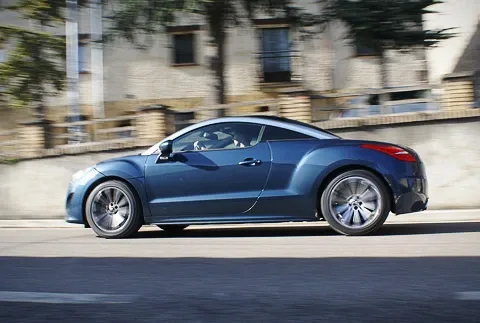
The gasoline 200-horsepower version reaches 100 km/h in 7.5 seconds, the 156-horsepower version is half a second slower. The diesel takes 8.2 seconds. Not the fastest car in its class.
So if you're considering the RCZ, it's only the top version with the 200-horsepower turbo engine. The turbocharged "four" from BMW, familiar from many Peugeot and Mini models, features instant throttle response, excellent elasticity, and a brisk pickup from 1700 rpm. A wonderful engine! I just want to ask why it has 200 horsepower here, not 211, like the Mini JCW with the same engine? The dynamics are generally sufficient. But the car isn't exactly light (1297 kg), so the less powerful 175-horsepower Peugeot 207 RC accelerates to 100 km/h half a second faster than the RCZ and retains the title of the most spirited production "lion."
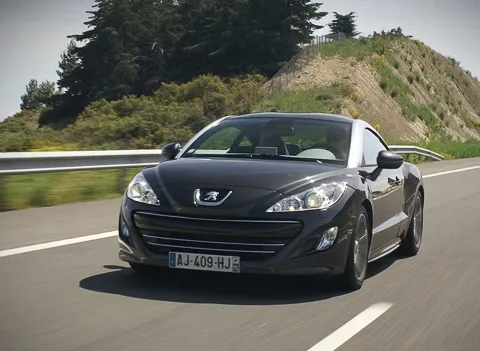
The top speed is highest for the 200-horsepower version — 237 km/h. Then the diesel (220 km/h) and the junior gasoline: 217 km/h with the "manual" and 213 km/h with the "automatic." The drag coefficient is 0.32. An average figure.
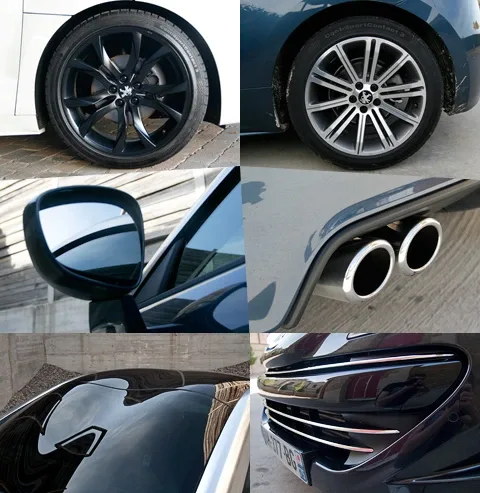
- The roof and mirrors can be trimmed with carbon fiber or painted black for an extra charge. If necessary, the faux radiator grille and even brake calipers can also be blackened.
- Wheels are offered in two sizes — 235/45 R18 and 235/40 R19. Additionally, for the coupe, you can choose one of three wheel designs and, depending on the finish, one of six colors (five shades of gray and black).
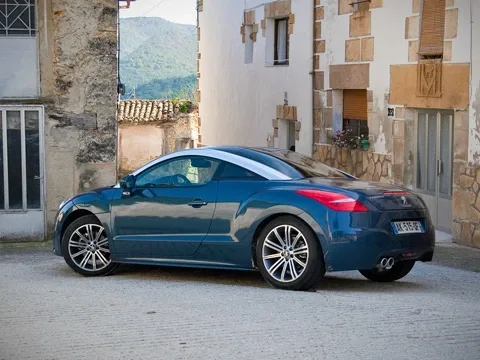
The RCZ's appearance begs for a coupe-cabriolet version. But the French assured me that an open RCZ is not to be expected, as it would confuse the coupe-cabriolets 207 CC and 308 CC.
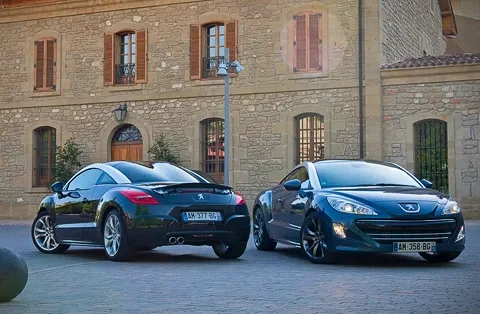
- There are seven body colors, from red to pearl. However, the latter will only be available after the entire limited batch (200 units) of special RCZ modifications is sold out.
- Assembly is set up at the Austrian Magna plant in Graz. The first coupes will reach European and Russian dealers as early as May. It is planned to assemble 17,000 RCZ coupes annually. The main sales markets are France, England, and Germany. In Russia, they plan to sell 100 cars per month initially, but this figure seems too optimistic to us.
| Peugeot RCZ | 1.6 "156" | 1.6 "200" | 2.0 HDi |
|---|---|---|---|
| Body | |||
| Body type | coupe | coupe | coupe |
| Number of doors/seats | 2/2+2 | 2/2+2 | 2/2+2 |
| Length, mm | 4287 | 4287 | 4287 |
| Width, mm | 1845 | 1845 | 1845 |
| Height, mm | 1359 | 1359 | 1359 |
| Wheelbase, mm | 2612 | 2612 | 2612 |
| Track front/rear, mm | 1580/1593 | 1580/1593 | 1580/1593 |
| Curb weight, kg | 1275 (1297)* | 1297 | 1370 |
| Trunk volume, l | 321 | 321 | 321 |
| Engine | |||
| Type | petrol with direct fuel injection and turbocharging | petrol with direct fuel injection and turbocharging | turbodiesel |
| Location | front, transverse | front, transverse | front, transverse |
| Number and arrangement of cylinders | 4, in-line | 4, in-line | 4, in-line |
| Number of valves | 16 | 16 | 16 |
| Displacement, cm3 | 1598 | 1598 | 1997 |
| Max power, hp/rpm | 156/6000 | 200/5500–6800 | 163/3750 |
| Max torque, N•m/rpm | 240/1400–4500 | 275/1700–4500 | 340/2000–3000 |
| Transmission | |||
| Gearbox | manual six-speed, automatic six-speed | manual six-speed | manual six-speed |
| Drive | front | front | front |
| Chassis | |||
| Front suspension | independent, spring, McPherson | independent, spring, McPherson | independent, spring, McPherson |
| Rear suspension | semi-independent, spring | semi-independent, spring | semi-independent, spring |
| Front brakes | ventilated disc | ventilated disc | ventilated disc |
| Rear brakes | disc | disc | disc |
| Tires | 235/45 R18–235/40 R19 | 235/45 R18–235/40 R19 | 235/45 R18–235/40 R19 |
| Performance characteristics | |||
| Maximum speed, km/h | 217 (213) | 237 | 220 |
| Acceleration time from 0 to 100 km/h, s | 8.0 (8.4) | 7.5 | 8.2 |
| Fuel consumption, l/100 km | |||
| — urban cycle | 9.3 (10.3) | 9.1 | 6.8 |
| — extra-urban cycle | 5.2 (5.5) | 5.6 | 4.5 |
| — combined cycle | 6.7 (7.3) | 6.9 | 5.3 |
| Emission standard | Euro-5 | Euro-5 | Euro-5 |
| Fuel tank capacity, l | 55 | 55 | 55 |
| Fuel | AI-95 | AI-95-98 | diesel |
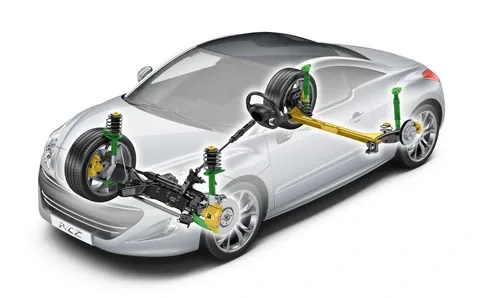
The front suspension of the 200-horsepower RCZ, borrowed from the Peugeot 407, is called a pseudo-"McPherson" by the French. Unlike the standard front suspension of the "308," the steering knuckles are "cut into" the strut here. An unusual profiled anti-roll bar is mounted on long struts installed almost at the spring supports.
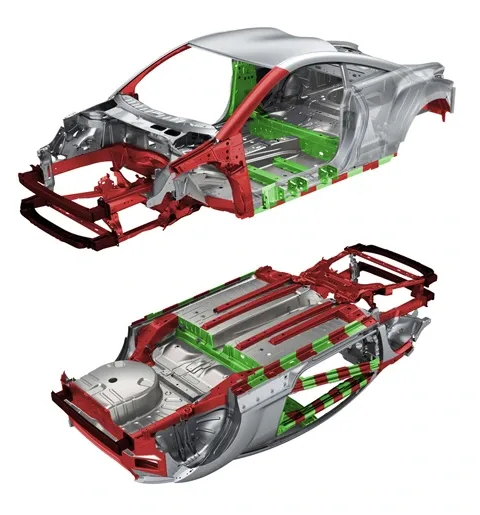
The body is steel, except for the hood and front pillars, which are made of aluminum. The structural framework is essentially the same as the 308 CC coupe-cabriolet: the pillars also have a "filling" of tubular profile, powerful beams in the sills... However, the RCZ coupe lacks X-shaped reinforcements under the floor and has central pillars. Easily deformable removable beams at the front and rear are designed to absorb collision energy at low speeds. In the event of a serious impact, longitudinal members with programmed deformation and elements that distribute the load throughout the entire safety cell come into play.
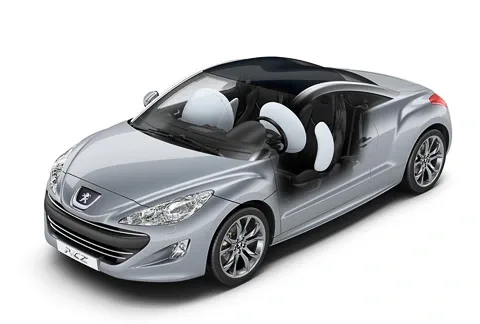
The Peugeot RCZ is equipped with two front and two side airbags. The car also has a pedestrian-safe aluminum hood that, in the event of a collision with a pedestrian, is raised by 55 mm in 0.1 seconds using pyrotechnics.
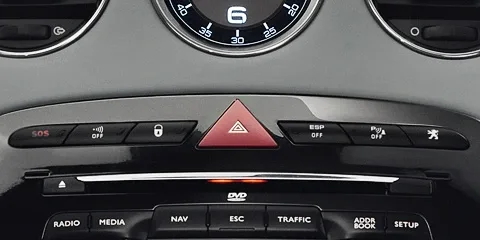
The button with the Peugeot emblem is designed to call a service center in case of a car malfunction. The second SOS button connects the driver to the Peugeot rescue service: operators instantly receive the car's coordinates, find out the details of the incident, and send the necessary services to the scene. This system operates in ten European countries, but it is unlikely to reach Russia.
Design
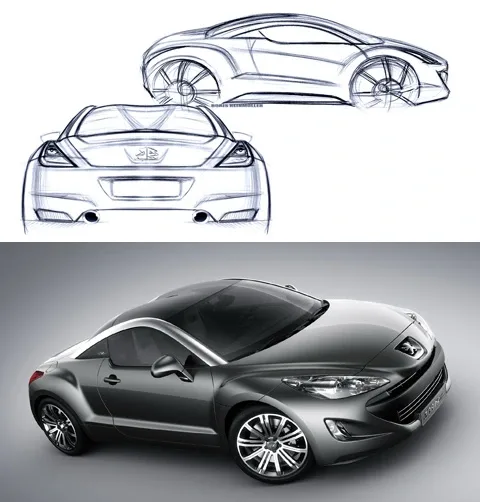
The Peugeot RCZ made its way into production from the concept shown in Frankfurt in 2007. The coupe's exterior was crafted by German stylist Boris Reinmöller. But while the show car was made of aluminum and carbon fiber, the production version uses more traditional materials. Despite its fairly neutral, versatile appearance, French marketers expect that 90% of buyers of this model will be men.
Behind the Scenes
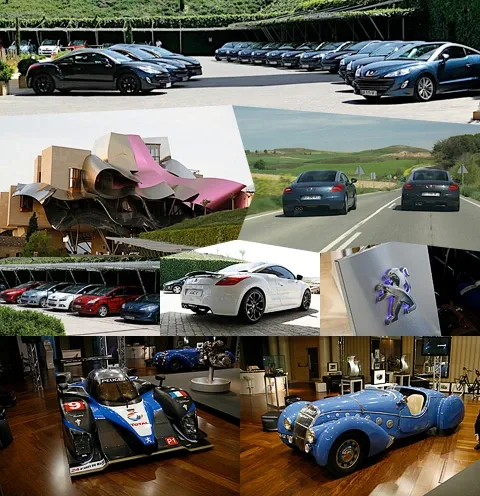
The tests took place in northern Spain, near the town of Logroño, located 150 km from Bilbao. The road network pleased with its variety: there were high-speed highways and winding mountain serpentines. To create historical context, the French brought to the event one of the six produced Peugeot Darl'Mat 402 Pourtour roadsters from 1938 (only three examples have survived to this day), which in its time won at Le Mans. Next to it was also the modern Peugeot 908 prototype, a participant in the same races. But the traditional Spanish pepper mills and windmills were not seen at the test, instead there were scooters and bicycles. You were allowed to ride all this stuff, except for the racing prototype. The most curious was the bicycle with an electric assistant: it allowed acceleration to almost 30 km/h with one turn of the pedals.