
A couple of pencil strokes — and the 308 station wagon turns into something completely different. Before us is an impressive and even aggressive, yet charming car — meet the Peugeot 3008...
It seems that Peugeot is not particularly concerned about the collapse of the American market and the European crisis, betting on a niche model. Perhaps there is some logic in this — in current conditions, such cars may prove strategically more promising. So, after the tiny 1007 and the 4007 crossover, born in collaboration with Mitsubishi, it's the turn of a model that balances between a minivan and a crossover.
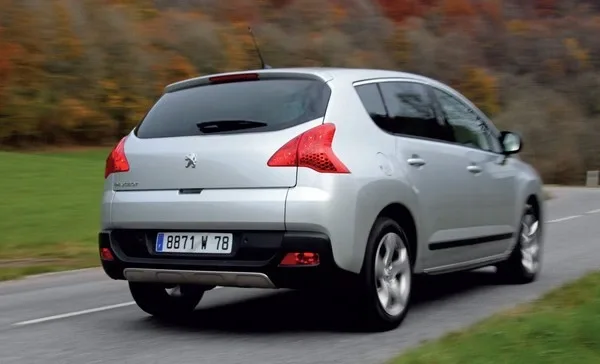
CHARACTER AND COMFORT
Although these are pre-production cars, we still managed to drive them. A couple of hours behind the wheel of the 3008 was enough to form a complete picture of the French newcomer.
The engineers' idea was ambitious: to combine the advantages of one-box vehicles and crossovers in a single model. And we must admit, they succeeded — the car turned out to be exceptionally practical. The interior of the Peugeot 3008 easily transforms, allowing the interior space to be used with maximum efficiency.
This car is equally good for daily commutes to work, trips to the supermarket or furniture store, and long journeys — alone or with a large family. The space inside is organized so that passengers do not interfere with each other, meaning everyone feels more comfortable, which is especially important on long trips.
Judging the beauty of the 3008 is not easy. Its appearance is at least intriguing. After a close acquaintance, it becomes clear: the design of this crossover is subordinated more to functionality and practicality than to the pursuit of ostentatious elegance.
The short sloping hood, wedge-shaped body profile, wide track, and tapering pillars all form the image of a car that confidently holds the road.
At the front, of course, there is a huge radiator grille — the calling card of all modern Peugeots and the most striking touch of the brand's current styling. The rear, rounded and neat, looks interesting but not as imposing as the front — here they did without excesses.
It's hard to confuse the 3008 with other models of the brand, but not confusing the versions within the family itself is a more difficult task. There are indeed many variants, and they will begin to be gradually introduced to the market starting in May. Externally they are all the same, but the character of each version is determined by the engine.
We were lucky to try four variants. We started with the petrol 1.6 — naturally aspirated with 120 hp and turbocharged with 150 hp. The first is an excellent choice for measured city driving, the second allows you to move a bit more briskly. But a completely different matter is the HDi turbodiesels. Units of 1.6 and 2.0 liters produce 110 and 150 hp respectively. The younger one has a truly fiery temperament, while the older one can boast an impressive reserve of torque. Both work surprisingly smoothly: the turbo kicks in so gently that you might not notice the moment of activation. Acceleration is available at any moment, whenever needed.
To become friends with the Peugeot 3008, you don't need much time: the light steering wheel transparently hints at what is happening under the front wheels. Small body rolls and a composed suspension, tuned for a compromise between handling and comfort, inspire confidence in corners and do not require extra effort from the driver during maneuvers. The manual gearbox works perfectly with the engine — you notice this both on a winding road and on a high-speed highway.
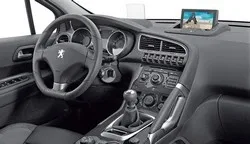 | All controls are arranged in the best traditions of strict German orderliness |
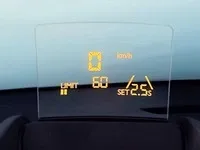 | KEEP YOUR DISTANCE Warnings from the Distance Alert system about dangerous proximity to the vehicle ahead are displayed on a transparent screen mounted in front of the windshield |
But still, maximum attention in this car is paid to passengers. All conditions are created for them: plenty of space and light (especially if you order a panoramic roof with an area of 1.60 m2). But the main thing is the highest comfort provided by a wide range of options, effective climate control, excellent sound insulation, and... a suspension capable of imperceptibly swallowing most road irregularities. The powerful versions, which are standardly equipped with the Dynamic Rolling Control system that monitors body rolls, seem slightly less comfortable.
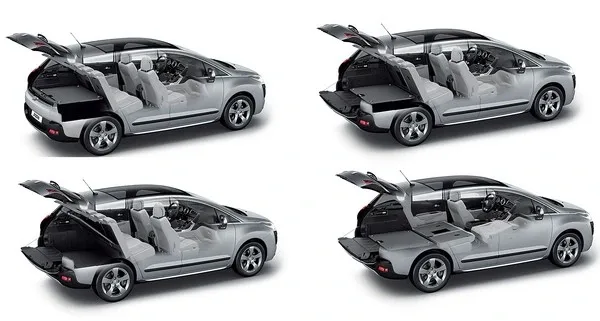
CARGO CONFIGURATIONS
The interior is scattered with numerous boxes with a total volume of 50 liters. The trunk holds from 432 to 1241 liters. And the process of loading and unloading that very tub with a ficus is facilitated by a two-section tailgate and a loading platform with adjustable height.
As a result, we have at least four configurations for trips to the countryside:
- 5 seats, loading platform in the upper position. The lower part of the door is closed;
- 5 seats, loading platform in the middle position;
- 5 seats, loading platform in the lower position, the tailgate is folded down;
- the front passenger seat backrest is folded, the rear seat backrest is folded: the length of the loading platform is 2.62 m.
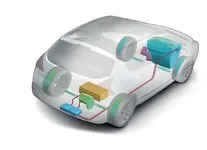 | HYBRID WITH ALL-WHEEL DRIVE To the main version, where the driving wheels are driven by a turbodiesel, the rear by an electric motor |
LAYOUT DETAILS The chassis is borrowed from the 308 model: system on the rear axle that monitors body rolls | 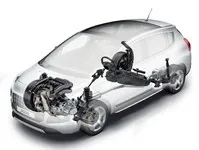 |
Manufacturer's data
ENGINES
Two petrol engines with a volume of 1.6 liters,
two turbodiesels with a volume of 1.6 and 2.0 liters
TRANSMISSIONS
Manual, 5 speeds,
Manual, 6 speeds,
or "robot", 6 speeds
DIMENSIONS (mm)
length – 4370
width – 1840
height – 1640
ON SALE
in Europe – from May
PRICE
in Europe – from €21,000