
I, Robot
It's no secret that a manual gearbox is not to every driver's liking. Beginners and the fairer sex often dislike it especially. An extra pedal, the need to constantly think about gear selection, and fatigue in endless city traffic jams — all this often pushes people to buy a car with an automatic transmission. But for this pleasure, as a rule, you have to shell out a tidy sum. What if you don't torment yourself with choosing between two types of gearboxes, but take a closer look at something in between? A "robot".
To put it simply, a robotic gearbox is the same "manual" that has been taught to work in automatic mode. It has absorbed the best of both worlds: the technical filling from a manual gearbox and the ease of control from an "automatic". The driver no longer needs to operate the clutch pedal, yank the lever, or even think about shifting.
 |
 |
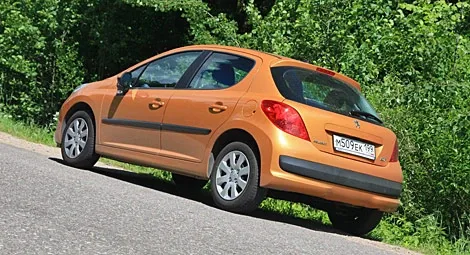
Just recently, a robotic transmission called 2-Tronic became available for the Peugeot 207 hatchback. To understand how organically it combines with the model we already know well, we set off on a trip along the Moscow-Suzdal-Moscow route.
What kind of beast is this?
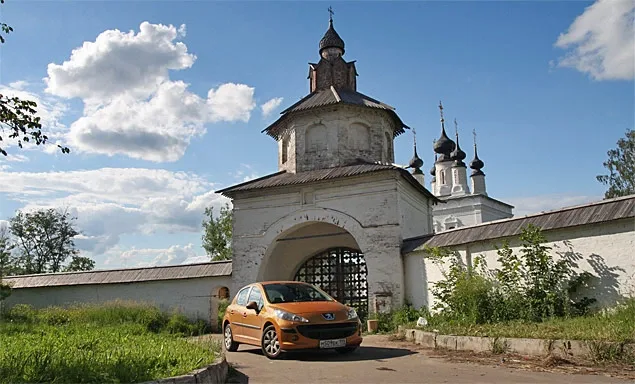
Our journey to Suzdal — an ancient city with almost a thousand-year history, part of the Golden Ring of Russia — began at the Moscow Peugeot training center. Here they prepare staff for the brand's official dealerships, and without passing certification at this place, no dealer or service station has the right to work.
After quickly inspecting the training center, my colleagues and I get the keys to an orange "207" with the 2-Tronic gearbox and hit the road. I spend the first part of the journey in the back seat — a great opportunity to relax and also figure out what this very "robot" is.
 |
The adaptive robotic gearbox 2-Tronic is a joint creation of the French group PSA Peugeot Citroen and the companies Siemens and Bosch. The basis was the most ordinary five-speed "manual" with the factory index MA5, which has been produced for about twenty years. A couple of electromechanical drives were added to it: one is responsible for gear shifting, the other for the clutch. All this is controlled by an electronic unit that selects the desired gear based on many parameters, including vehicle speed and throttle position.
As a result, the buyer gets a gearbox that is cheaper than a traditional "automatic", has virtually no effect on fuel consumption, and is not inferior to a regular manual in terms of repair complexity. The main advantages: only two pedals, like an "automatic", and no stress from constantly pressing the clutch in traffic jams.
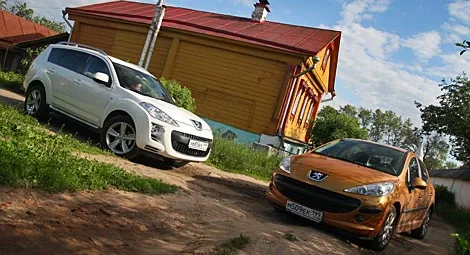
Similar names are given to the "robots" installed on other Peugeot models, for example, the 107 and 1007. But these gearboxes have their differences. For instance, the robotic "manual" for the smallest model 107 is developed and produced by the Japanese company Toyota, and the gearbox for the 1007 differs from ours in its control system and gear ratios.
 |
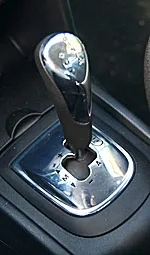 |
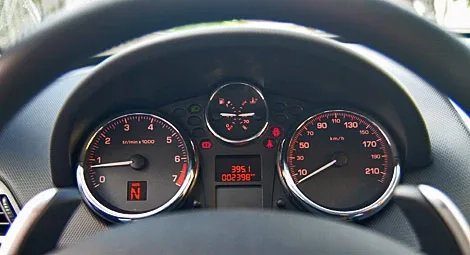
The 2-Tronic gearbox has three operating modes. The first is fully automatic: the driver can not think about shifting at all and drive like a regular "automatic". The second is semi-manual, which is activated if the driver intervenes in the gearbox's operation using paddle shifters while in automatic mode. This is convenient, for example, when overtaking, when you need to sharply downshift. If no sharp acceleration follows or the driver returns to a calm driving style, the gearbox itself returns to automatic mode after a while. The third mode is fully manual, where gear selection is entirely up to the driver. But even here there is a limitation: when maximum revs are reached, the electronics will still forcibly upshift.
 |
 |
In motion
I get behind the wheel in Pereslavl-Zalessky, which is 130 kilometers from Moscow. The car starts off quite smoothly. Gear shifts, although with a noticeable delay, are quite soft. The nose dives characteristic of most cars with robotic gearboxes are somewhat smoothed out here, although they haven't been completely eliminated. To avoid unpleasant jerks, you just need to release the gas pedal before shifting.
The "robot" has its own features. For example, it doesn't have a "Parking" mode like an "automatic", so when parking with the 2-Tronic, you must use the parking brake. Additionally, when starting on an incline, the car rolls back slightly.
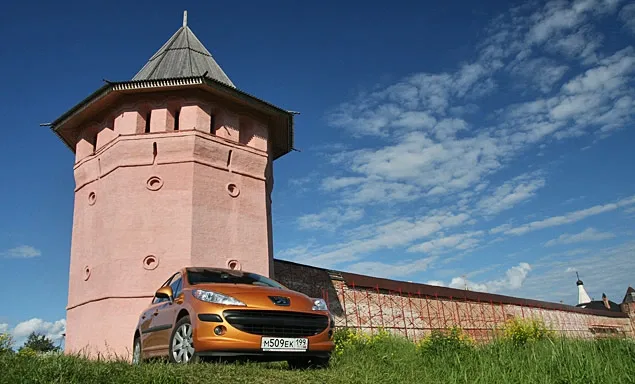 |
The 2-Tronic gearbox is only available with the 90-horsepower 1.4-liter engine. The dynamics of such a tandem, of course, don't take your breath away. On the highway, for overtaking, you have to choose a moment when there are no cars on the oncoming lane, otherwise you might not have time to complete the maneuver.
But in the city, where you constantly have to stand in traffic jams, the gearbox's shortcomings are almost unnoticeable. At permitted speeds, the lack of power is not so noticeable, and over time you stop paying attention to the small jerks during shifts.
The manual mode of the 2-Tronic has virtually no effect on the car's dynamics. You can, of course, force the gearbox to downshift a couple of gears before sharp acceleration, but it does this unhurriedly, and the gain in acceleration will be minimal.
 |
 |
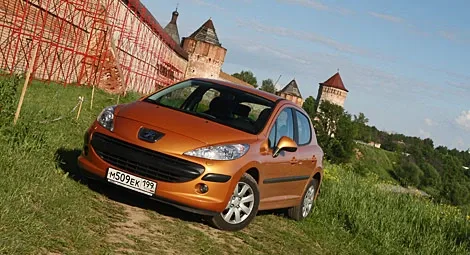
It also happens that the gearbox starts shifting at the most inopportune moments. A couple of times, the 2-Tronic unexpectedly engaged a higher gear in fast corners, causing the drive wheels to lose traction. For a novice driver, especially in a car without a stability control system, which is offered for the "207" only as an option, such transmission behavior can be quite dangerous.
In all other respects, the Peugeot 207 remains a beautiful car with perfectly tuned chassis and spirited handling — exactly the same as the more powerful 120-horsepower version that has already been tested by Auto.Lenta.Ru.
 |
The 2-Tronic gearbox is offered only with one engine and in a single trim level — Trendy. Prices for the three-door Peugeot 207 with robotic mechanics start at 456 thousand rubles, and for the five-door version you'll have to pay from 467 thousand rubles. The surcharge for the "robot" compared to the regular "manual" is only 14 thousand rubles, while for an automatic gearbox you'll have to shell out almost 40 thousand rubles.