
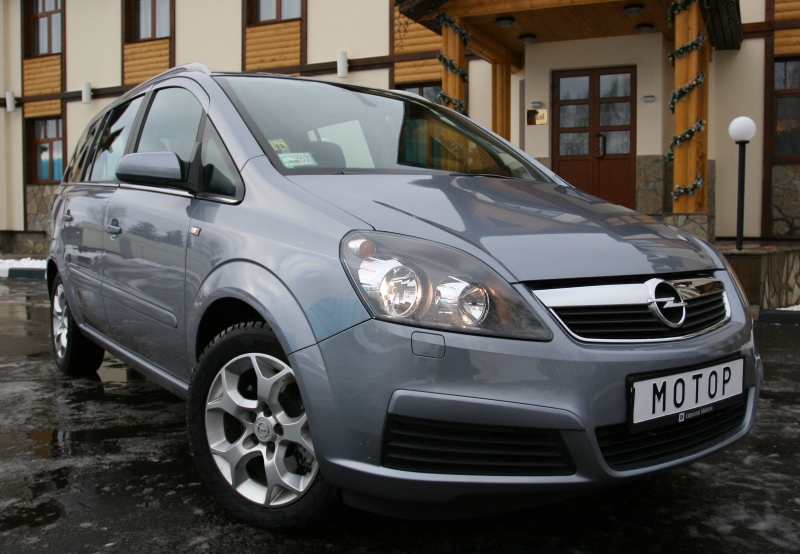
 To be honest, I also felt some bewilderment when getting acquainted with the new Opel Zafira. The previous Zafira was considered one of the most driver-oriented representatives of its class. Its successor, to put it mildly, has not spoiled its established reputation. This should please those who, when choosing a car, are forced to prefer practicality to romance. But 200 turbo horses – is that too much for a peaceful minivan? Won't such a combination scare off cautious and pragmatic family men? |
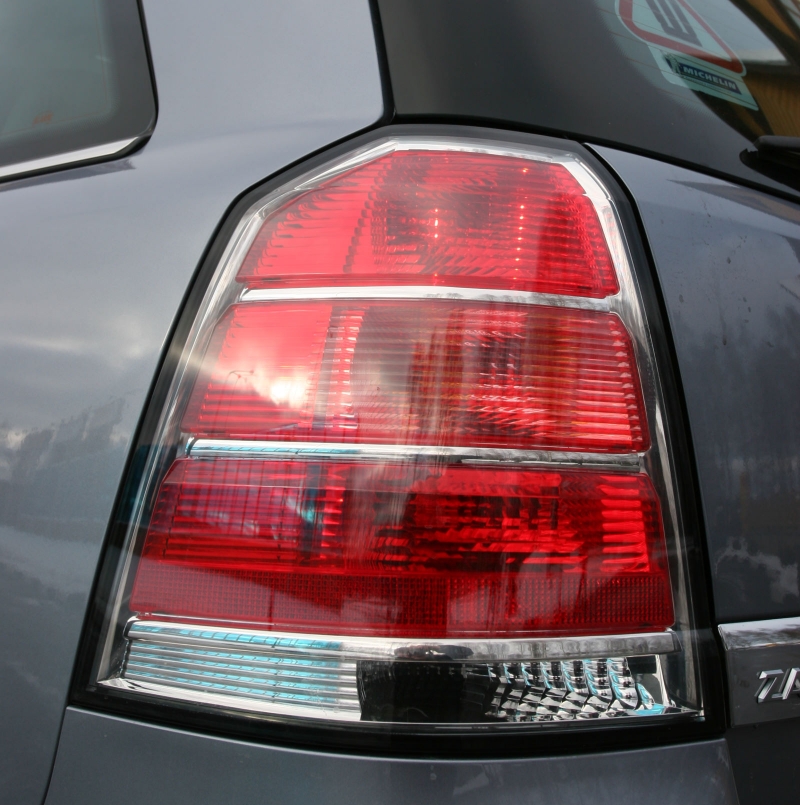
 There are many questions – but one answer. I am holding in my hands the thick and comfortable 3-spoke steering wheel of the new Zafira. The wheel, like the entire interior, is borrowed from the popular Astra model. The simple but attractive and clear instruments are also from there. Only the layout of the center console has changed slightly – the climate control and CD receiver units have moved higher, and the central air vents are now located around the information display. This is in favor of a more upright seating position. The most significant difference is the “beard” of the center console, on which the gear shift lever is located. Thanks to the “beard,” it is positioned almost like in a passenger car, but when engaging the “even” gears, it still tilts unusually flat. The handbrake lever may also seem unusual at first. There are many questions – but one answer. I am holding in my hands the thick and comfortable 3-spoke steering wheel of the new Zafira. The wheel, like the entire interior, is borrowed from the popular Astra model. The simple but attractive and clear instruments are also from there. Only the layout of the center console has changed slightly – the climate control and CD receiver units have moved higher, and the central air vents are now located around the information display. This is in favor of a more upright seating position. The most significant difference is the “beard” of the center console, on which the gear shift lever is located. Thanks to the “beard,” it is positioned almost like in a passenger car, but when engaging the “even” gears, it still tilts unusually flat. The handbrake lever may also seem unusual at first.Along with individual elements, the Zafira has also inherited the overall atmosphere of the interior from the Astra. Everything here is emphatically minimalist, functional, and technological. No hints of petty-bourgeois decor or bourgeois luxury. Perhaps some will find this style too cold (after all, it is a family vehicle!), but personally, I like it. Although there were some ergonomic difficulties – this concerns the control of the audio system and the non-latching steering column switches. It is also a pity that the creators of the Zafira left the driver without an engine temperature gauge. All he needs to know, in their opinion, is the amount of fuel in the tank. The compact van has increased in length by 150 mm and in width by 59. The height has hardly changed (163 cm), and you still need to get in and out of the car by slightly bending down. The Zafira's body has both refreshed and retained familiar proportions. The profile has hardly changed (except for new door handles – designed for a natural grip), and the “face” is much nicer – the new corporate style. One could scold the designers for uniformity, but the almond-shaped eyes and bumper curves are very attractive. At the rear, everything is strict, although livelier than before. |
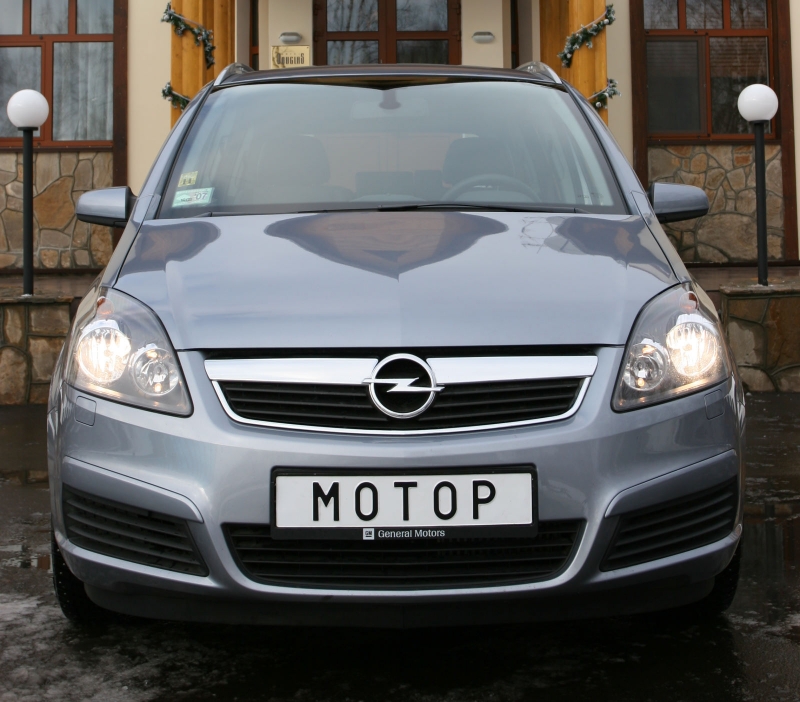 The Zafira starts off very briskly. 200 horses is, of course, good, but 1360 kg (200 more than the Astra and 40 more than the previous model) is also not bad. Therefore, up to 3000 rpm nothing extraordinary happens, but then… Then the faces of those who happen to be nearby in traffic stretch in surprise. The Zafira accelerates in a way that many “sports cars” would envy. You just have time to work the gear lever, otherwise the turbo engine will instantly slam the speedometer needle into the rev limiter. If only there weren't snow on the asphalt and “studs,” because of which the yellow triangle of the non-switchable ESP keeps flashing on the instrument panel… The Zafira starts off very briskly. 200 horses is, of course, good, but 1360 kg (200 more than the Astra and 40 more than the previous model) is also not bad. Therefore, up to 3000 rpm nothing extraordinary happens, but then… Then the faces of those who happen to be nearby in traffic stretch in surprise. The Zafira accelerates in a way that many “sports cars” would envy. You just have time to work the gear lever, otherwise the turbo engine will instantly slam the speedometer needle into the rev limiter. If only there weren't snow on the asphalt and “studs,” because of which the yellow triangle of the non-switchable ESP keeps flashing on the instrument panel…The assertive dynamics do not go well with the almost “bus-like” seating position. Instinctively, you want to lower the seat lower and take a more horizontal position, like in a passenger car, but the laws of the minivan genre, of course, do not provide for such possibilities. Also, the brake pedal will require getting used to – the drive is so sensitive that a mere touch of the pedal is enough for “working” braking. You need to be careful. In general, the turbocharged Zafira can seriously surprise and even frighten an ordinary “family” driver. With less intense acceleration and at constant speed, the character of the compact van is reliable – the Zafira holds a straight line equally well and stays on an arc. It is pleasing that the body rolls turn out to be not at all what you expect from a tall car. Only during sharp maneuvers does some ambiguity of reactions arise – you can feel that the car's dimensions are still considerable and it is difficult for it to take corners like a hatchback. The electro-hydraulic power steering works well – the effort on the wheel increases adequately, and there is no void in the zero zone. |
 By the way, the power steering, shock absorbers, and accelerator drive are interconnected by the IDS Plus (Interactive Driving System) system and work in coordination with ESP. An important link in this chain is the active CDC (Continuous Damping Control) shock absorbers, thanks to which the tall Zafira successfully resists body rolls and demonstrates enviable driving qualities. On the front panel, next to the seat heating button, there is a Sport key. Pressing it switches the IDS Plus components to “sport” mode. The steering wheel becomes denser, the car begins to react more sharply to the “gas,” and the suspension “tightens up.” As a result, the Zafira drives even more composedly. And this hardly affects comfort. By the way, the power steering, shock absorbers, and accelerator drive are interconnected by the IDS Plus (Interactive Driving System) system and work in coordination with ESP. An important link in this chain is the active CDC (Continuous Damping Control) shock absorbers, thanks to which the tall Zafira successfully resists body rolls and demonstrates enviable driving qualities. On the front panel, next to the seat heating button, there is a Sport key. Pressing it switches the IDS Plus components to “sport” mode. The steering wheel becomes denser, the car begins to react more sharply to the “gas,” and the suspension “tightens up.” As a result, the Zafira drives even more composedly. And this hardly affects comfort.The Zafira, as before, can provide seats for seven. They decided in Opel not to look for good from good – the Flex7 interior transformation system has not undergone changes. The additional seats, when folded, are located under the rear bench, flush with the floor. To activate them, you need to slide the entire bench forward and pull the handle – the “fold-outs” fall into place in one motion. The bench itself has an unusual folding scheme – the cushion rises up and presses against the backrest, after which the entire structure moves close to the front seats. The downside of the scheme is that only the backrest can be folded in parts, while the cushion remains non-detachable. Consequently, to pass to the third row, you will have to disturb all the occupants of the second row at once. Overall, Flex7 has confirmed its reputation as one of the simplest and most understandable systems. And what did the designers “spend” the added centimeters of dimensions on? Firstly, on passenger space – the increase in width at shoulder level was 25 mm, and the space above the heads of occupants in all three rows increased. Secondly, the trunk volume in the 5-seat configuration increased by 45 liters (to 645 liters), and the maximum possible volume reached 1820 liters (120 liters more than before). |
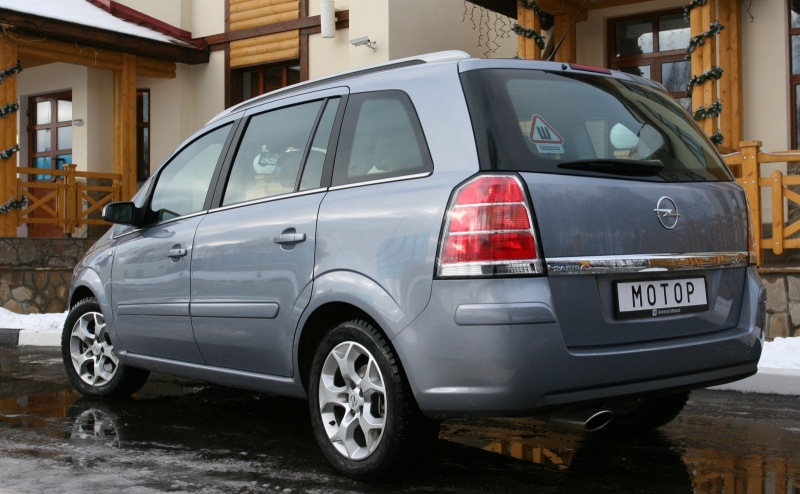 By the way, the trunk itself has a lot of hooks and brackets for securing cargo, and you can also order an incredible number of accessories from the proprietary FlexOrganizer kit. Everything for the rational organization of space – that's so German. But even the Germans have something to learn, for example, from the Americans – a separately opening glass in the heavy tailgate would be useful. By the way, the trunk itself has a lot of hooks and brackets for securing cargo, and you can also order an incredible number of accessories from the proprietary FlexOrganizer kit. Everything for the rational organization of space – that's so German. But even the Germans have something to learn, for example, from the Americans – a separately opening glass in the heavy tailgate would be useful.The increased trunk volume also means that the gallery has become a bit more spacious – it is quite comfortable for a person of average height to sit there, especially if the bench backrest is fixed in an intermediate position. But, of course, it cannot be compared with the comfort of the other seats. As befits a minivan, the Zafira provides passengers in the main rows with plenty of space. The moderately firm seats with combined upholstery are comfortable. And so that even a long journey does not seem tiring, the Zafira is ready to please everyone with optional glass inserts in the roof. |
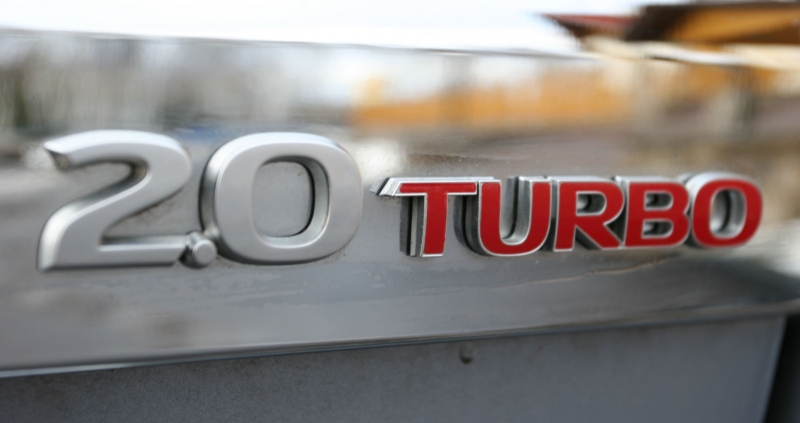 However, this will raise the already not low cost of the car by another $2000. The most modest Russian price tag for the Opel Zafira 2.0 Turbo reads “$31,900.” A serious amount for a family car. Surely, the bulk of sales will be Zafiras with the 1.8-liter engine, and the 200-horsepower turbo vans may find one or two buyers among those for whom the need for seasonal dacha moves with family and belongings is not a reason to give up driving ambitions. However, this will raise the already not low cost of the car by another $2000. The most modest Russian price tag for the Opel Zafira 2.0 Turbo reads “$31,900.” A serious amount for a family car. Surely, the bulk of sales will be Zafiras with the 1.8-liter engine, and the 200-horsepower turbo vans may find one or two buyers among those for whom the need for seasonal dacha moves with family and belongings is not a reason to give up driving ambitions.The car was provided by the General Motors representative office. Tel. (095) 777-68-86 Opel Zafira 2.0 Turbo The cheapest Opel Zafira 2.0 Turbo can be purchased for $31,900 – that's how much a car in the Cosmo trim will cost. This is almost $5000 more expensive than a car with the 1.8-liter engine (136 hp) in the same trim. The basic equipment of Cosmo looks like this – ABS, Sport Chassis option package (ESP, reduced steering column travel, sport mode of suspension operation, reduced ground clearance), 2 front and 2 side airbags, climate control, leather steering wheel, “Sport” seats, audio system, on-board computer with graphic display, alloy wheels R16 Dynamic, roof rails, electric mirrors. Among what can be purchased as options, it is worth noting the color display ($700), leather interior ($2095), cruise control ($300), Flex Organizer ($110), Trail option package (automatic ground clearance adjustment system, hill start assist system, tire pressure sensor, removable tow bar; $1200), parktronic ($550), inflatable “curtain” airbags ($800), Recaro seats ($1400), adaptive headlights ($1500), panoramic roof ($2000), and much more. MODEL/MODIFICATION Opel Zafira 2.0 Turbo Manufacturer Opel AG Model year 2005 BODY Type minivan Construction/material unibody/steel Number of doors/seats 5/5(7) ENGINE Type petrol turbocharged Displacement (cc) 1998 Number/arrangement of cylinders 4, in-line Compression ratio 8.8 Power (hp) 200 (5400 rpm) Torque (Nm) 262 (4200 rpm) TRANSMISSION Drive front Gearbox manual 6-speed DIMENSIONS/VOLUMES/WEIGHT Wheelbase (mm) 2705 Length/width/height (mm) 4465/1775/1635 Track front/rear (mm) 1470/1485 Ground clearance (mm) 150 Curb weight (kg) 1480 Fuel tank capacity (l) 58 SUSPENSION Front independent, McPherson type, with stabilizer Rear semi-independent with trailing arms, with stabilizer STEERING Type rack and pinion Turning diameter (m) 11.2 BRAKES Front ventilated disc Rear disc DYNAMIC CHARACTERISTICS Maximum speed (km/h) 225 Acceleration to 100 km/h (sec) 9 ECONOMY Fuel consumption (l/100 km): combined cycle: 9.5 |
Sports family
To be honest, I also felt some bewilderment when getting acquainted with the new Opel Zafira. The previous Zafira was considered one of the most driver-oriented representatives of its class.
Test drive photos
Comments
No comments yet. Say the first word.