
We are told from childhood: universal things do not exist! An open-end wrench won't replace a box-end one, a phone camera can't compare to a real camera, and a convertible in principle can't drive like a coupe.
Stop.
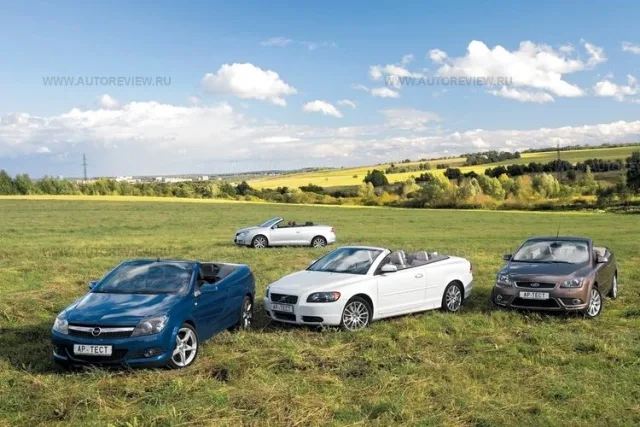
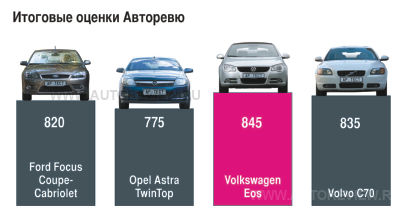
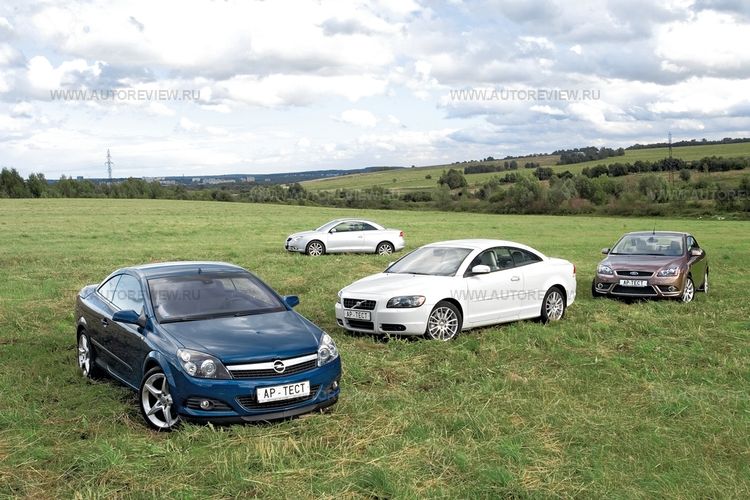
What if the convertible has a hard top? Press a button — and you're under the open sky, catching the wind and the sun. Next to you — a companion, above your head — stars and the Milky Way... And by morning you put the roof back — and like a quiet mouse to the office, into the urban bustle. "Rush, breathe, hold, love, hear, see, hate..." Maybe coupe-cabriolets are a compromise if not for everyone, then for most life situations? Which one to choose? The pragmatic Ford Focus Coupe-Cabriolet or the more fashionable Opel Astra TwinTop? The noble Volvo C70 or the Volkswagen Eos claiming "premium"?
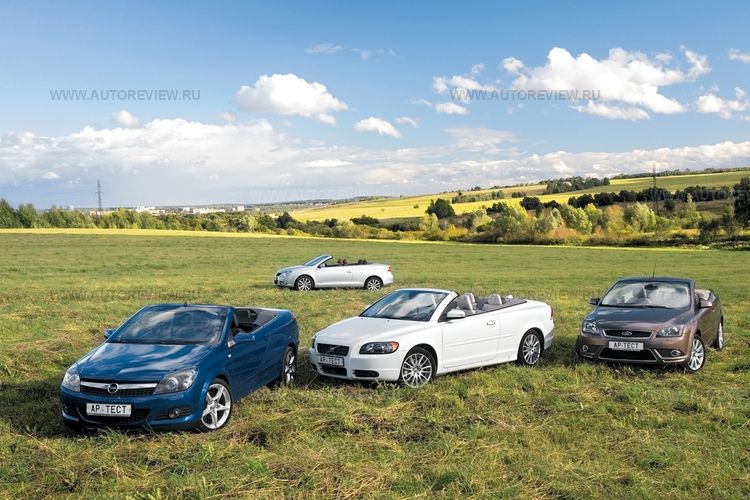
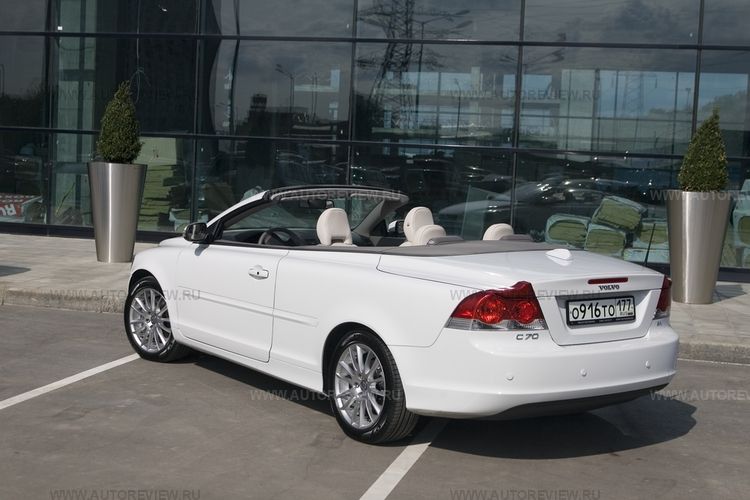
Among the three cars, whose base versions cost $36,000–41,000, the Volvo looks like a white crow. Or rather, a seagull among crows. It's not just about the dazzling "arctic" paint, but also the price: for the Volvo C70 2.4i with the 170-horsepower engine you'll have to shell out at least $56,660. And our example with options is worth as much as $70,027! For that money you could actually buy two "self-opening" Focuses with two-liter engines. You can. But is it necessary?
The Ford Focus Coupe-Cabriolet with the two-liter 145 hp engine is the most modest in power in this test, and this engine is its maximum. The Volkswagen and Opel also have two-liter units, but with turbocharging, producing 200 hp each. That's even more than the Volvo, but...
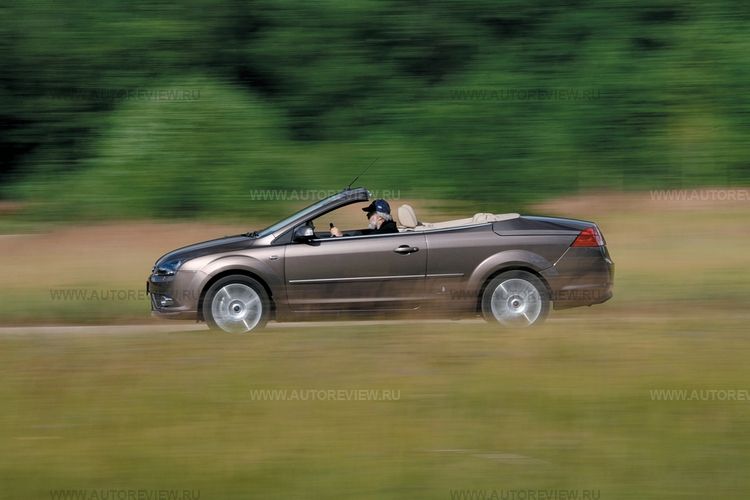
The Ford Focus Coupe-Cabriolet even with the two-liter engine doesn't provoke you to "get wild." Although the handling allows it. And it's the only car behind the wheel of which Uncle Vanya wasn't afraid of losing his baseball cap
The Volvo is an incredibly beautiful, elegant car! And even with the roof up it doesn't lose its grace: perhaps only the Volvo C70 really looks like a true coupe.
The Ford is spoiled by the "tail" of the rear overhang. With the roof down it's almost unnoticeable, but with the roof up it's an eyesore. And the Pininfarina badge doesn't save it — rather, it surprises.
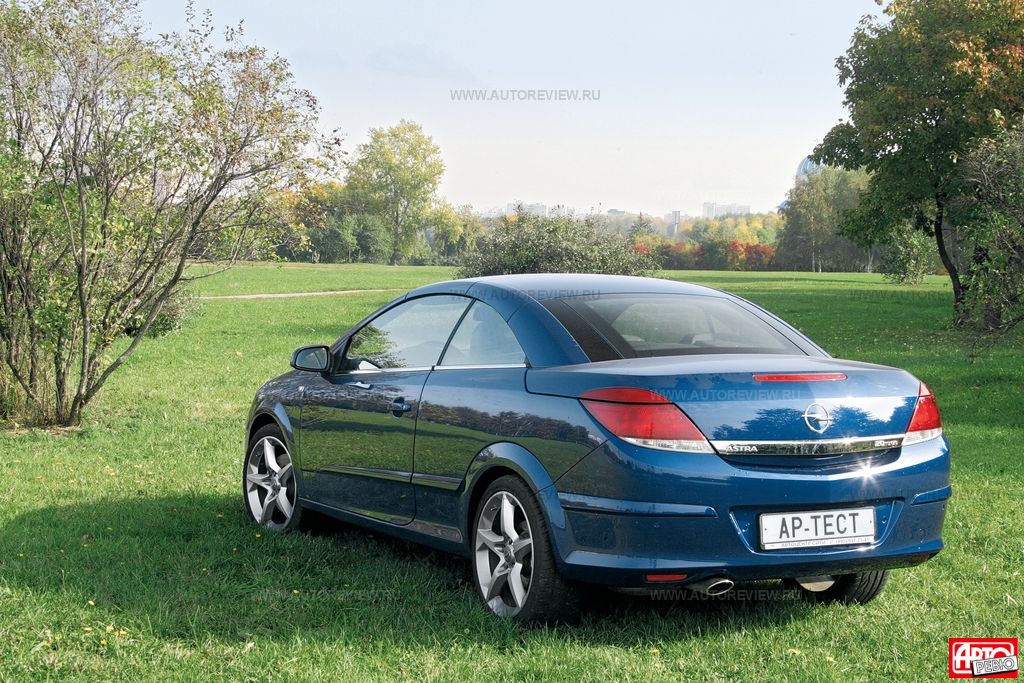
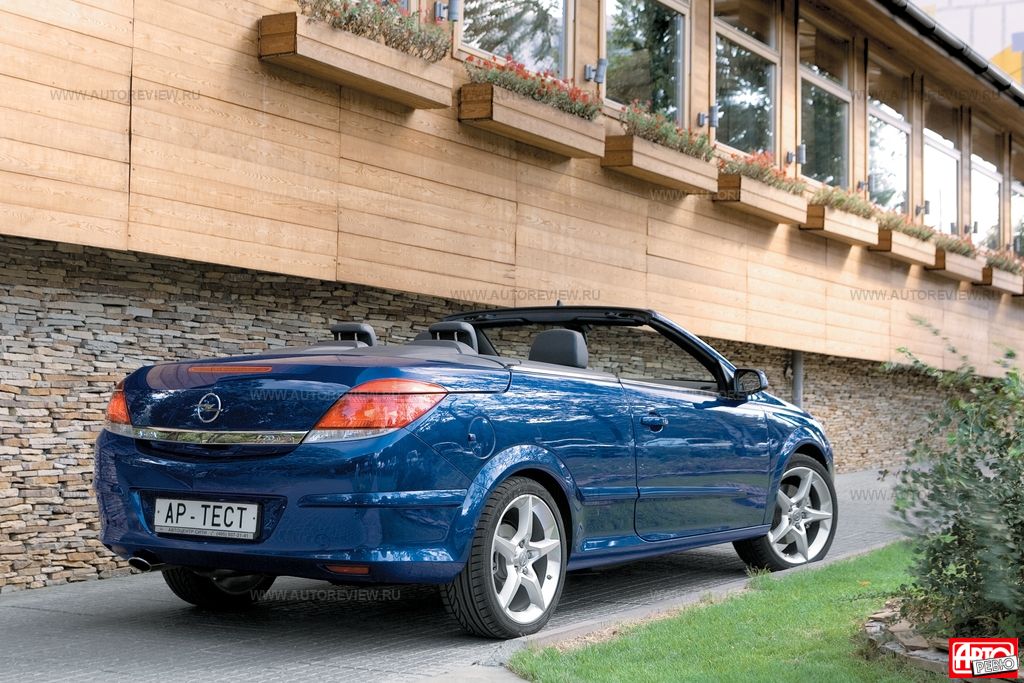
If the Volvo is the most elegant, then the Opel is the most lively and dynamic. But it too has a rear end "with a bit of fat."
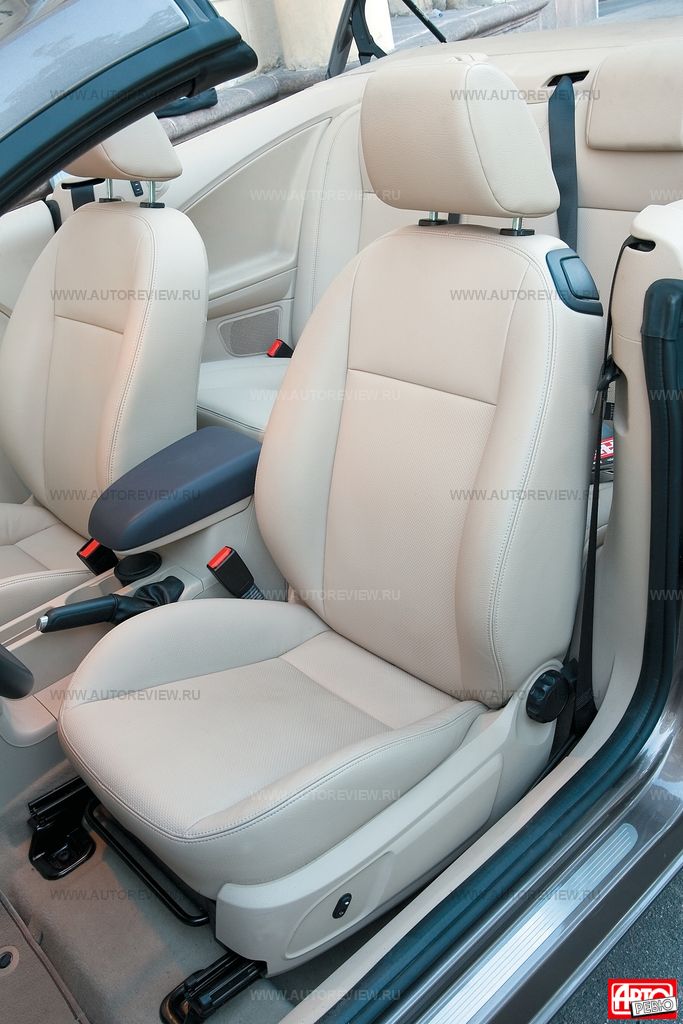 | 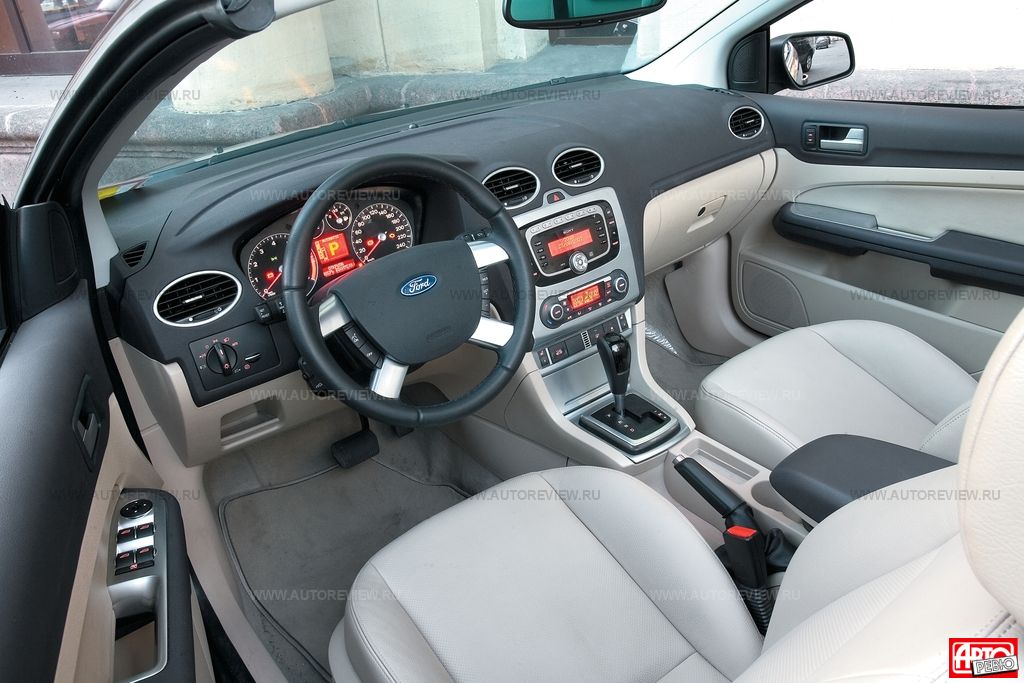 |
| The moderately soft Ford seats embrace front occupants both gently and firmly | The Focus has good ergonomics, a comfortable steering wheel and instruments. But build quality suffers — the gear selector knob creaks under hand, gaps around the instrument panel are uneven |
And the Volkswagen Eos is like an experienced intelligence officer: there's nothing for the eye to catch on! And so you start looking at the details — and thereby asking unnecessary questions. Why, for example, are the gaps between the body and the trunk lid almost a centimeter? On the Volvo, the joints are fine, although the lid there is bigger...
The Volvo's interior is the best. Light, airy design, excellent material quality, impeccable assembly and fit. In addition, the Volvo is the only car in the test whose folding roof is lined inside no worse than the ceiling of a regular coupe. The driver's seating position is the highest, and also — relaxed: the cozy seat is almost devoid of lateral support.
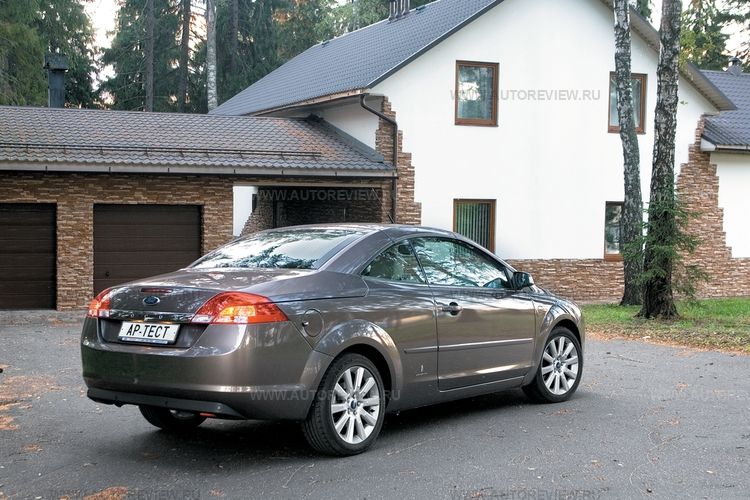
And the best seat is offered, perhaps, by the Ford. Not too hard, it distributes load well and firmly holds the body in corners. True, the cushion isn't adjustable for tilt angle, so it presses under the knees of the tallest and shortest drivers. The Focus's interior itself is as familiar as Internet Explorer: a simple front panel, informative instruments, and a voiceless Sony stereo with small buttons.
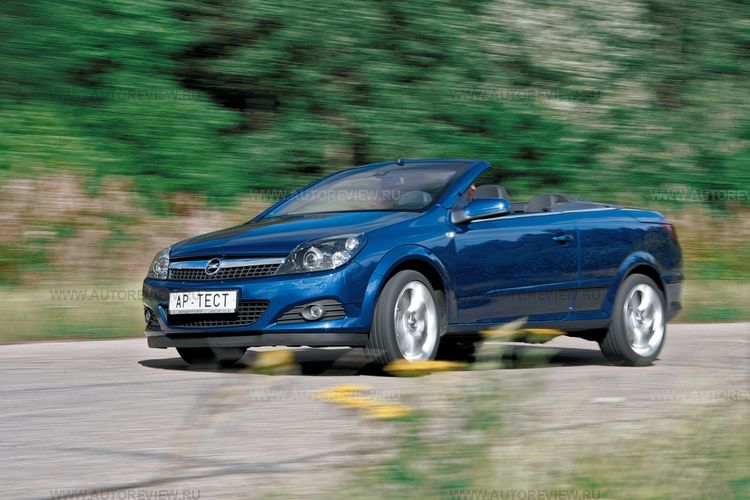
The Opel Astra initially delights with sharp reactions. But as soon as you enter a corner faster, the car rolls and unpleasantly tucks into the arc
The Opel inside is as good as outside. And what lateral support bolsters! Sporty? Yes! But the bolsters turned out to be so hard and tight that even the most slender of us suspected excess fat on our hips. The backrest profile is also uncomfortable: tall people complained about the lack of shoulder and lumbar support. The youthful-dynamic style also harmed the steering wheel: its ornate profile at the grip points was uncomfortable.
Where everything is unconditionally comfortable is in the Volkswagen. The posture is optimal, and among the seat adjustments there's even a change in lumbar support height.
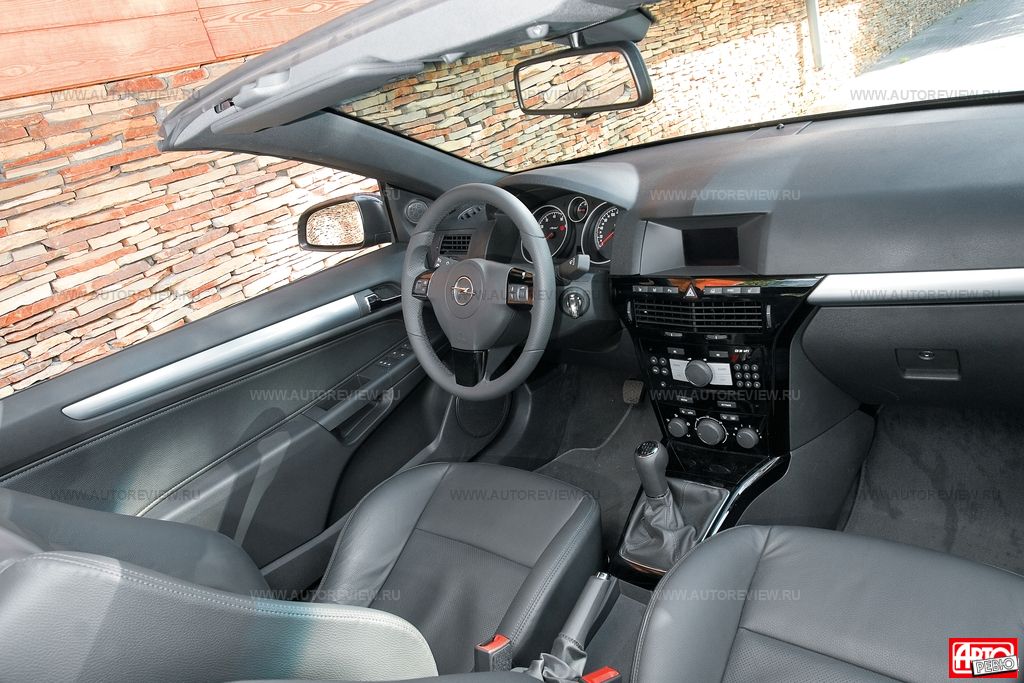 |  |  |
| In the Astra's cabin, design triumphs over convenience. For example, it's not easy to figure out the onboard computer controls. But the buttons are pretty! | The Opel's rear window is the narrowest: when folding the roof, the pillars retract separately |
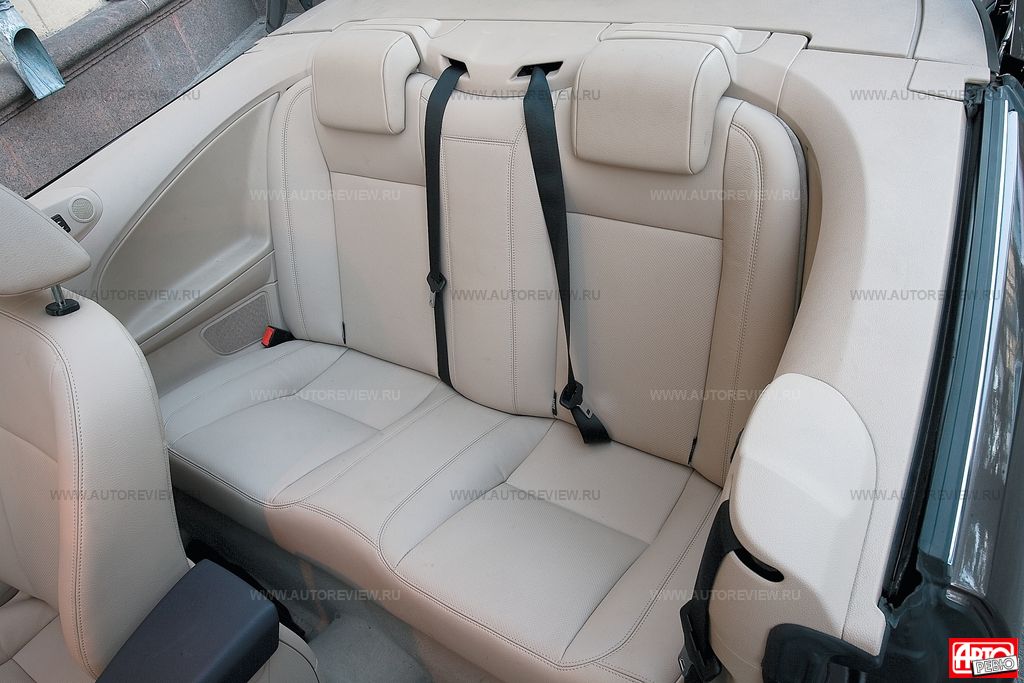
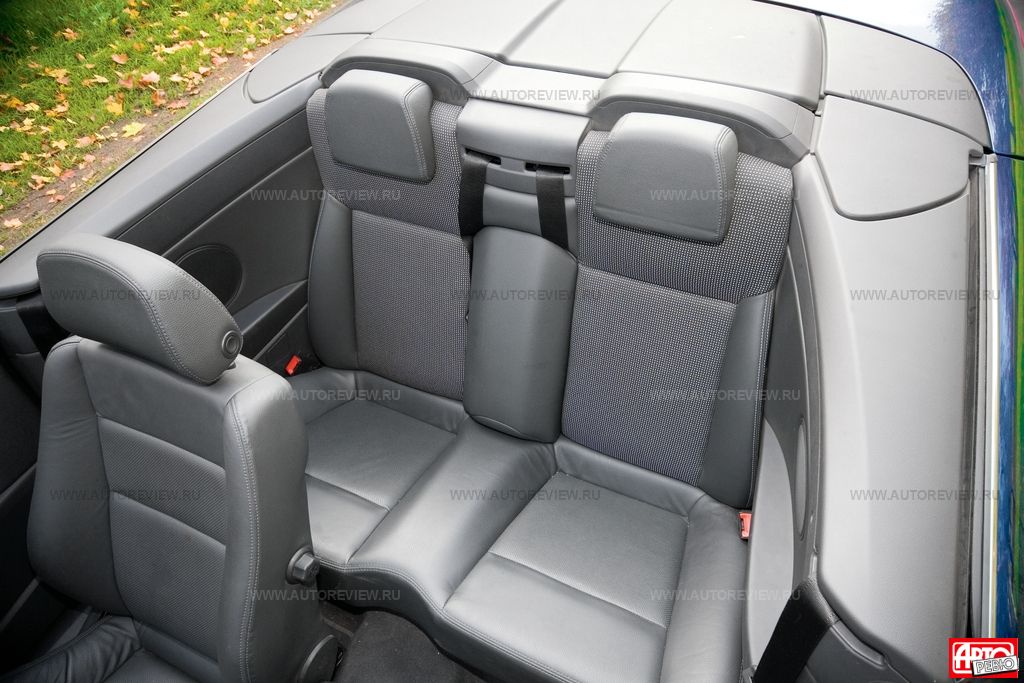
And how is it for rear passengers in the coupe-cabriolets? Best for those in the Ford: here there's both a spacious rear seat and a wide passage to it. The Volvo pleases with the most comfortable rear bench, but disappoints with a narrow opening that forms after the electric drive moves the front seat away. In the Opel and Volkswagen, it's tighter in the back, and the rear seatbacks are set too vertically.
The roofs of all cars open and close at roughly the same speed — according to our measurements, it takes from 28 to 30 seconds (including raising the windows). So, from an efficiency standpoint, it doesn't matter how many sections the roof has — two, like the Ford, or five, like the Volkswagen. What matters more, perhaps, is that only the Opel's three-section top can perform its dance at speeds up to 30 km/h — all other cars require a full stop. True, the Opel was prevented from getting maximum points "for the roof" by its ugly lining: the metal frame elements brazenly intrude into the cabin — unsightly and injury-prone! And the Volkswagen, although it can't boast of fully "tidied" mechanics, pleased with the presence of a sunroof and an additional wind deflector above the windshield frame.
| Ford Focus | Opel Astra |
 |  |
| Volkswagen Eos | Volvo C70 |
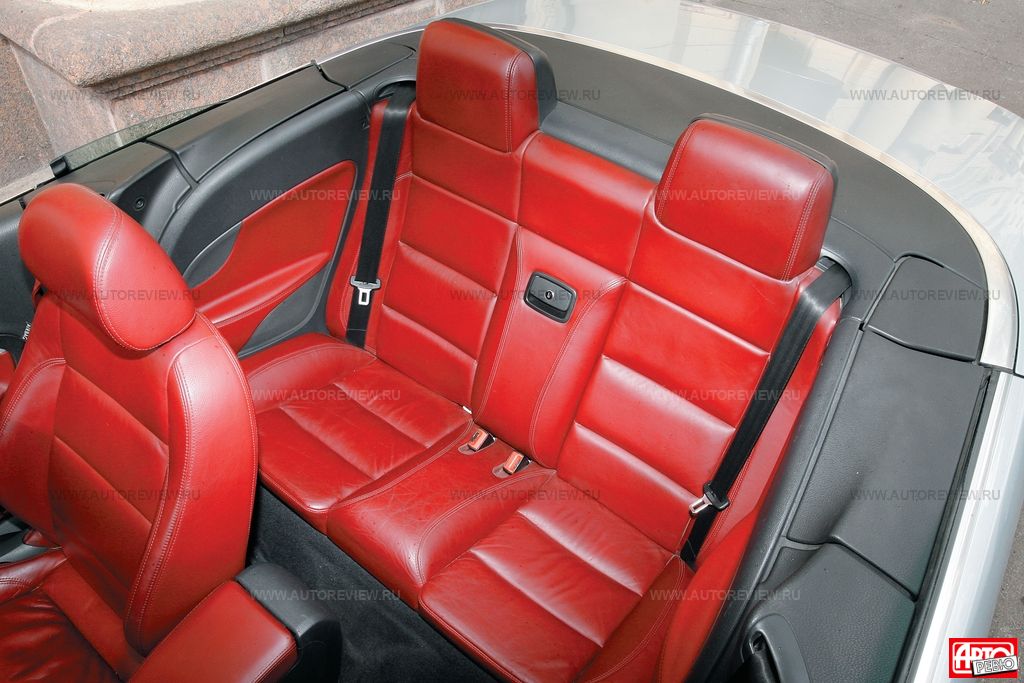 | 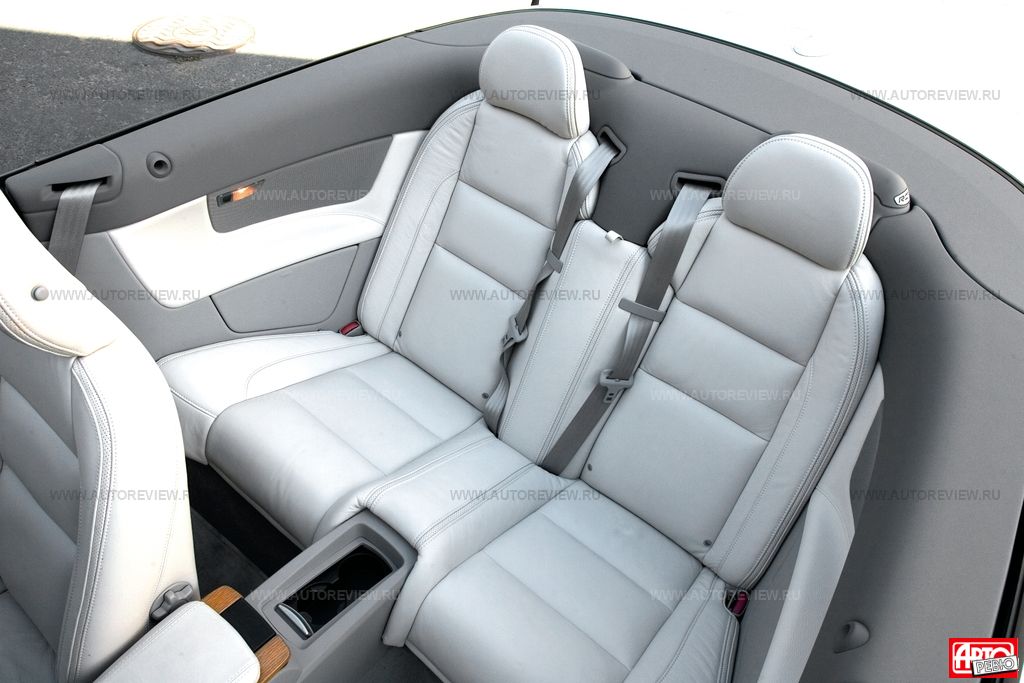 |
| The most spacious and comfortable rear seat is in the Ford, although it lacks an armrest. The outsiders include the Opel with its cramped rear "bench." The Volkswagen also doesn't please with space, but unlike the Astra, passengers' heads don't touch the ceiling in it. And reaching the comfortable Volvo bench is the hardest — the electric drive doesn't move the front seat far enough | |
"Passing by the station, my hat flew off..." And at what speed would the wind have blown off the hat of Chekhov's tongue-tied hero if he had participated in our test?
In the open Ford, you don't have to worry about your hat: above the top edge of the windshield there remains a large piece of roof about 15 centimeters long, hanging like a visor over the front occupants. Thanks to it, with the side windows up, there's no wind up front up to 80 km/h. And only after 110–120 km/h does the wind start to thoroughly tousle your hair. And rear passengers in the Ford are also more comfortable than in other cars.
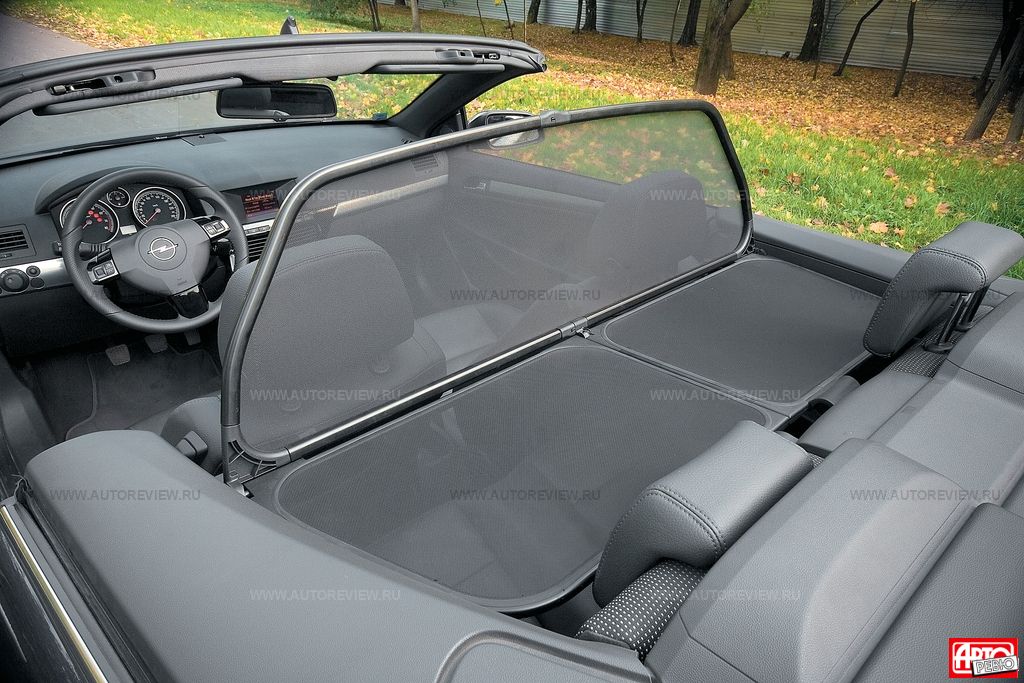 | 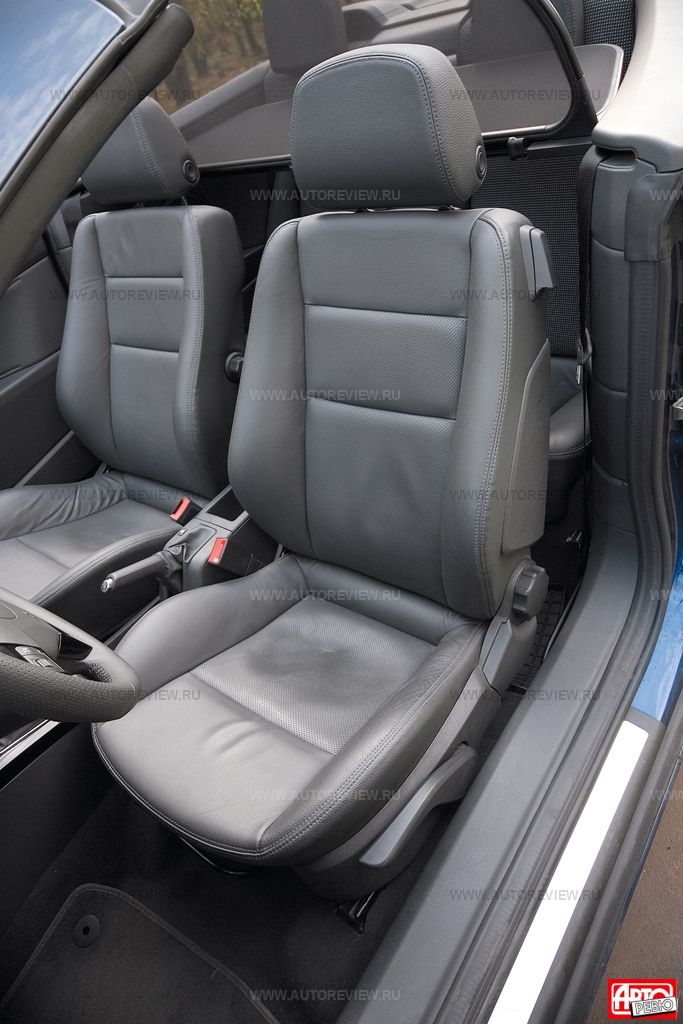 |
| In each of the four cars, a wind deflector can be installed in place of the rear passengers | The Astra's front "buckets" will only suit skinny people of no more than average height |
The open Volvo C70 is almost as good as the Ford in terms of wind protection — passengers are saved by the longest and tallest rear side windows in this quartet.
It's interesting how the aerodynamics of the Astra work in convertible mode. With the windows up, at just 60 km/h the wind starts blowing into the faces of the front occupants. The faster you go, the stronger the flow, but after 120 km/h it suddenly disappears — apparently, at speed, the airflow is deflected upward by the windshield. The real salvation is the optional wind deflector, which is installed behind the front seat backs. It's the Astra that needs it more than any other convertible here.
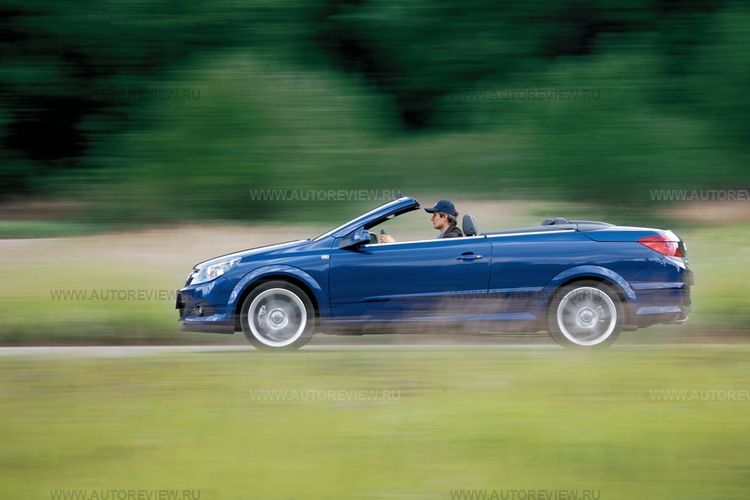
In the Volkswagen, the air around the head behaves decently: up to 140 km/h, even a baseball cap, not to mention a hat, will stay in place. But at chest level of the driver, such turbulence rages that a piece of paper from a shirt pocket could easily fly away. And if it had the phone number of that girl you were watching the stars with at night? That's unacceptable.
The calmest in terms of wind is the Ford Focus. But it's also the slowest. You don't expect miracles from the 145-horsepower engine, but 12.7 seconds to 100 km/h... With such dynamics and an ancient four-speed automatic, it's only good for cruising along boulevards.
The Volvo can't be called a sprinter either, although when you floor the pedal, acceleration feels more vivid. But during measured driving, the damped responses to throttle input are annoying.
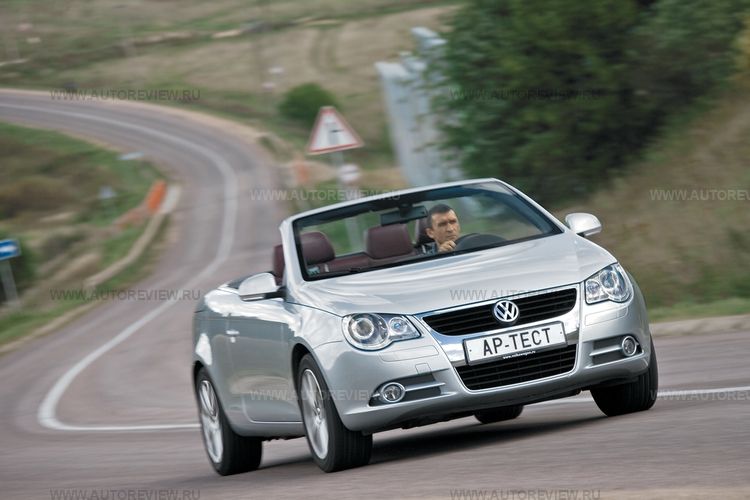
Volkswagen Eos — the most balanced car in the quartet, almost not "relaxing" when the roof is lowered
Opel and Volkswagen gain speed quite differently. It's not just about the numbers: the Astra accelerates to 100 km/h in 9.7 seconds, and the Eos is another 1.2 seconds faster. The main thing is that here acceleration is easier to control! Especially in the Volkswagen: it doesn't matter where the tachometer needle is or which of the six gears is engaged — the car instantly reacts to the accelerator pedal and lunges forward. The Opel's turbo engine works differently: it only picks up from 2500 rpm and runs out of breath earlier — at 6500 rpm versus 7000 for the Volkswagen. True, if you press the Sport button, the Astra seems livelier — throttle responses become sharper. But as we know from school, seeming and being are not the same thing.
The same button changes the character of the suspension, making the shock absorbers stiffer. But does a convertible need this? After all, even with the roof up, the Opel is a lively car: stiff, with sharp steering responses. But as you approach the limit speeds...
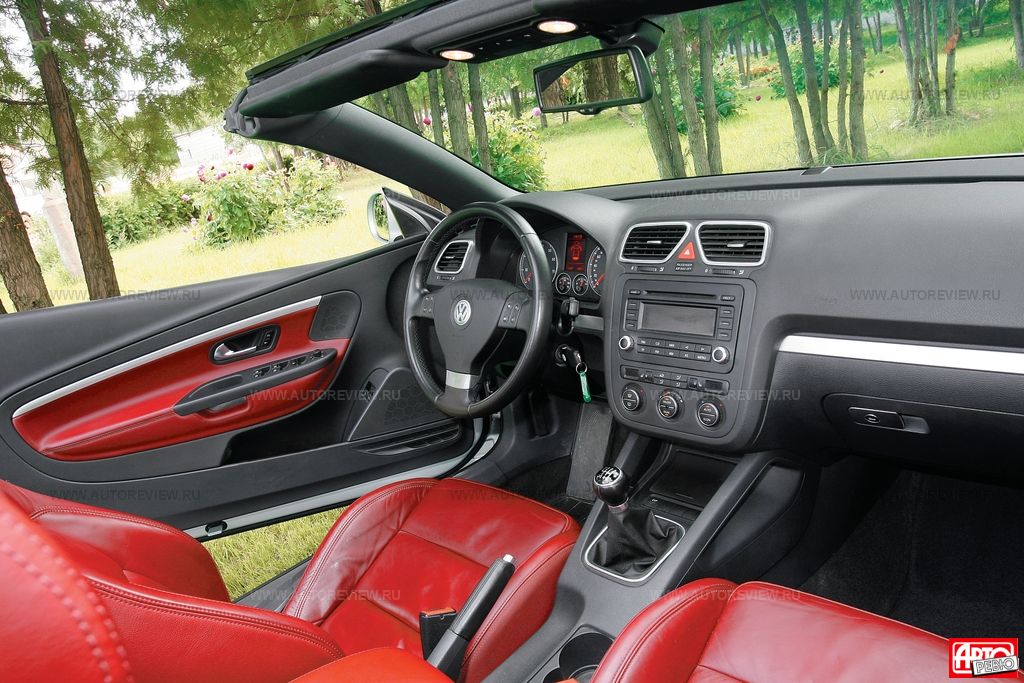 | 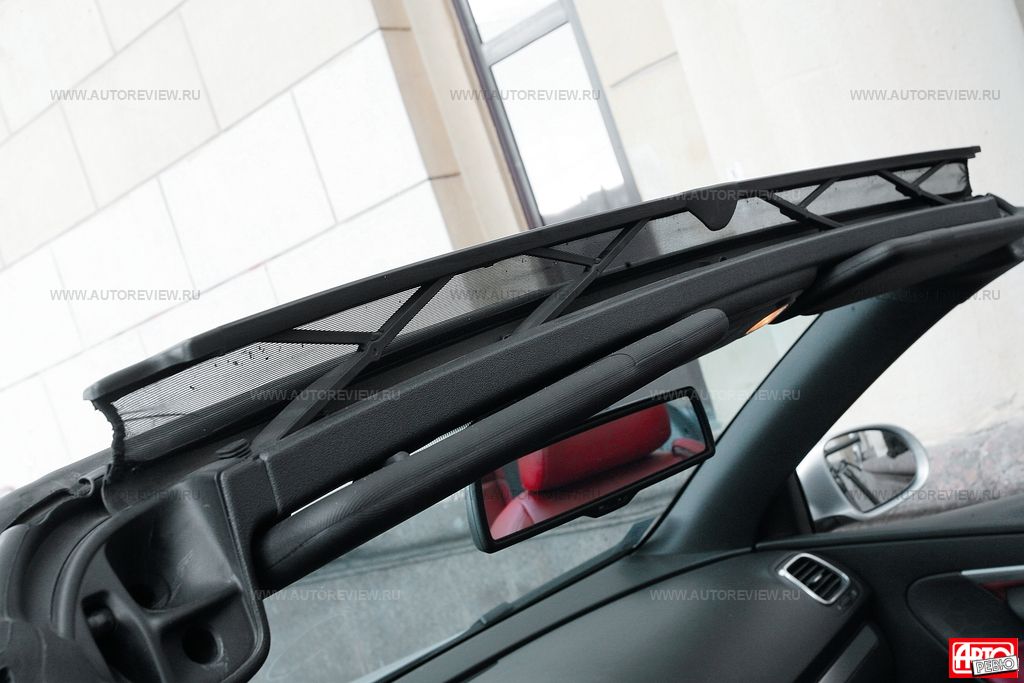 |
| The somewhat boring dashboard design from the Golf is livened up by different vents. But what stylish door panels! | The pop-up screen is almost as effective as the deflector behind the seats. It's just a bit noisy |
In tight corners, a split personality emerges: first the Opel shows understeer, then it leans and, like a jet ski, enters a tighter arc. In sport mode, the body roll decreases, the car tightens up, but ride comfort completely disappears — it feels like riding a skateboard!
The Ford Focus Coupe-Cabriolet also has a sport mode, but it only changes the power steering settings and the shift algorithm in manual mode. In standard mode, it's the golden mean: steering is moderately sensitive and informative. In comfort mode (which is also available), responses are dulled, and bumps are less transmitted to the steering wheel. But in any of the three modes, the Ford is extremely obedient and precisely executes the driver's commands.
You can't say that about the Volvo C70: the Swede resembles a yacht. In a straight line — sure, you can fly. But in corners... At first, it seems the car isn't going to change its trajectory at all. However, just turn the steering wheel a bit more, and the car obediently follows, and it does so well. It's understandable, safe, but absolutely not thrilling.
The Volkswagen Eos is a completely different story! It confidently holds the high-speed straight and happily maneuvers at any speed. Reactions are precise, with almost no delays. And at the limit, the Volkswagen behaves predictably: when you lift off the throttle, it tucks in; when you add power, it straightens the trajectory.
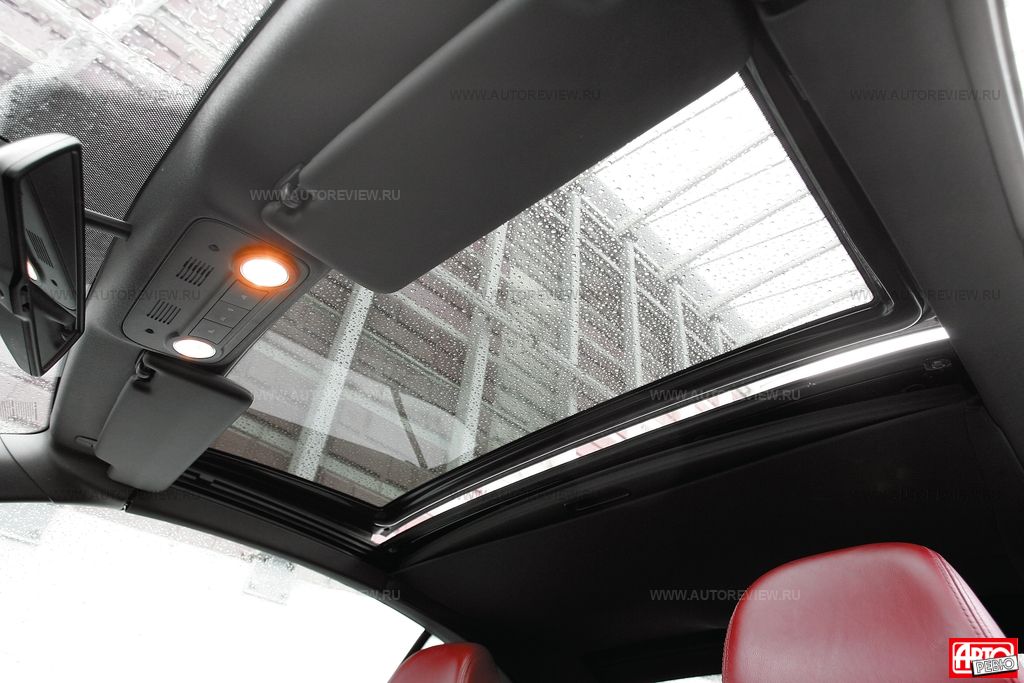 | 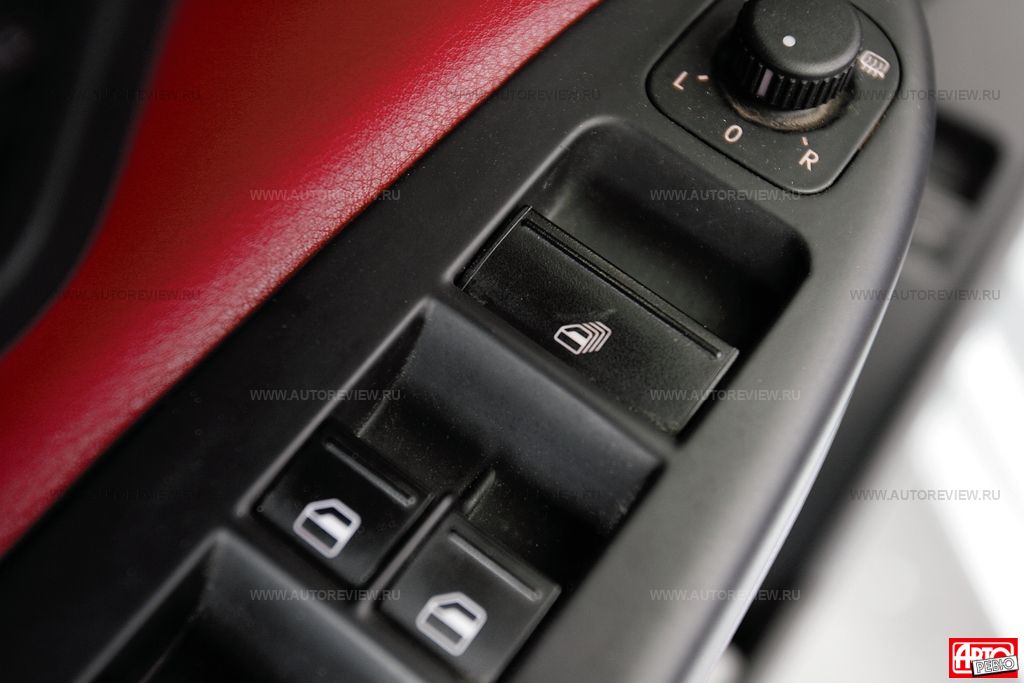 |
| The sunroof in the Eos can be raised and slid back | All cars except the Ford have a button to lower all windows simultaneously |
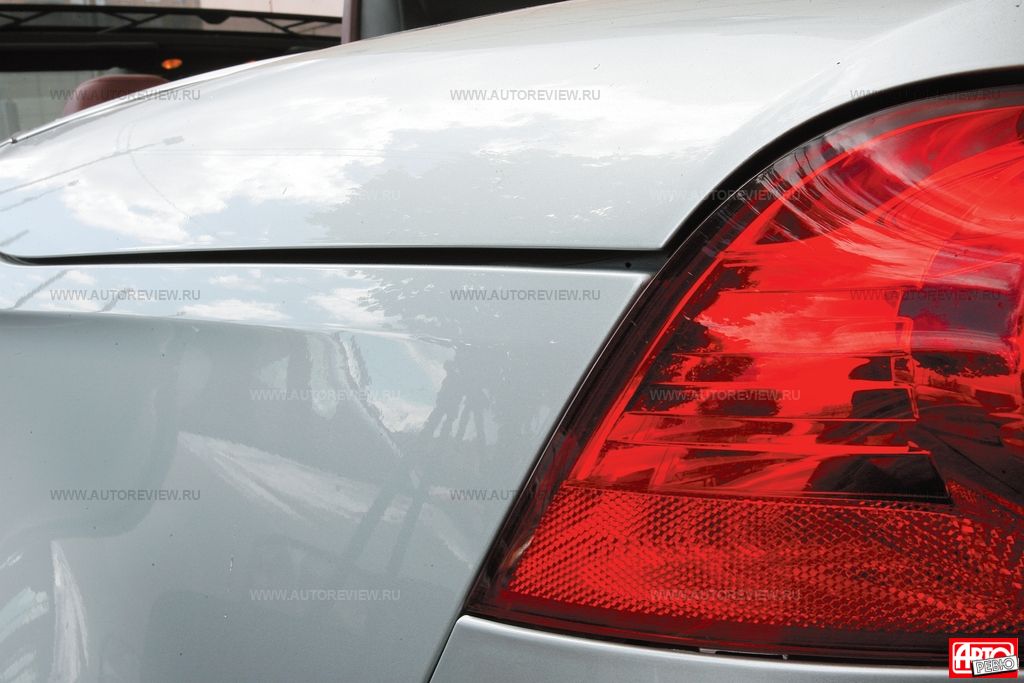 | 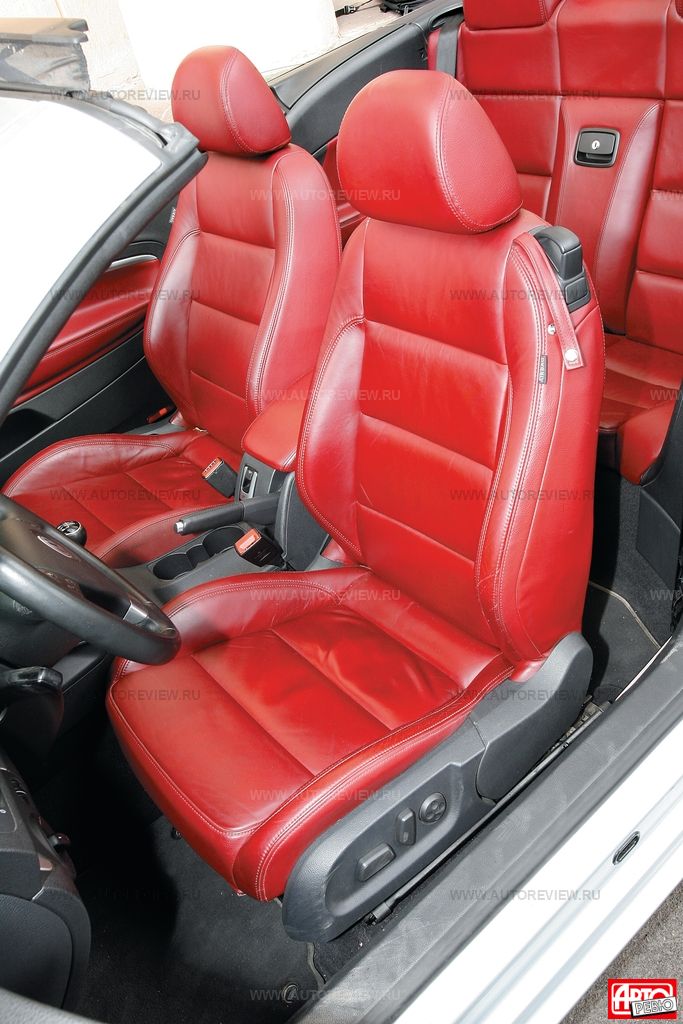 |
| Volkswagen and Opel "distinguished themselves" with glaring gaps in the trunk lids | Volkswagen seats are a good compromise between firmness and comfort. The leather loop on the backrest can secure the seat belt within reach |
The Volkswagen's brakes are also excellent: controlling deceleration is a pleasure, and when ABS activates, the car follows the steering wheel precisely. The Volvo pleased with the shortest braking distance from 100 km/h but disappointed with delays in pedal response. The Ford behaved unstably on mixed surfaces, and the pedal free play was too large: the brakes "wake up" only at mid-travel. But the worst deceleration control is in the Opel. Light braking is no problem, but press the pedal harder, and it sinks, making the driver doubt the reliability of the brakes.
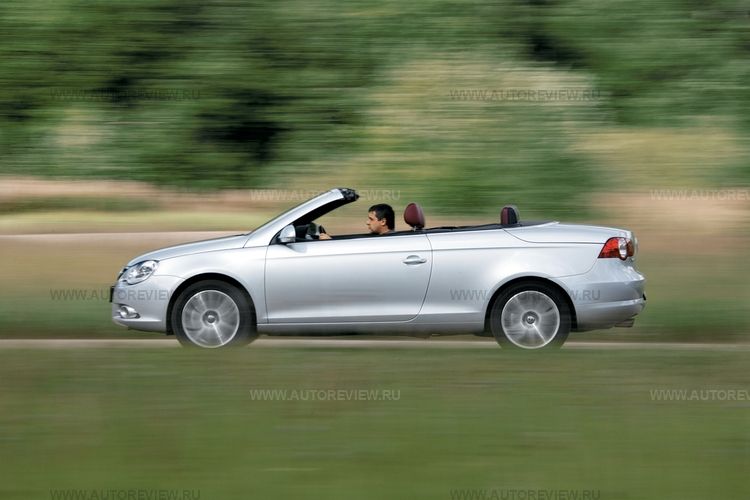
In terms of ride comfort, the Volvo leads: it best "rounds off" medium and large potholes. True, sometimes it does so with a crash. But there are almost no other noises in the cabin: somewhere far away, the engine purrs velvetly, and aerodynamic noises only make themselves known after 120 km/h.
Unlike the Volvo, the Volkswagen's suspension can't be called soft, but it almost doesn't notice road "small stuff" and successfully absorbs harsh bumps. However, tire and wind noise is louder than in the Volvo.
The Ford is only slightly inferior to the Volkswagen in ride smoothness: it's a bit sharper and transmits bumps into the cabin without refinement. The Focus engine is loud, and its nervous cries are especially annoying when the automatic downshifts. At least wind noise only appears after 100 km/h.
But in the upper part of the Astra's door opening, the air starts howling already at 60 km/h. The engine is quiet, but squeaks and knocks are annoying — and this is with a mileage of only 4000 kilometers! However, the explanation is simple: in ride smoothness, the Opel is a clear outsider in the test. Even on smooth surfaces, the car constantly bounces up and down, noting short waves.
With the roof folded, the Astra becomes a bit softer, but squeaks and knocks in the cabin only intensify. And on large bumps, the steering column shakes so much that you want to slow down. A similar picture is in the open Ford: the suspension handles potholes a bit smoother, but on rough joints, the windshield frame, steering wheel, and dashboard sway a couple of centimeters from side to side. A very lively car!
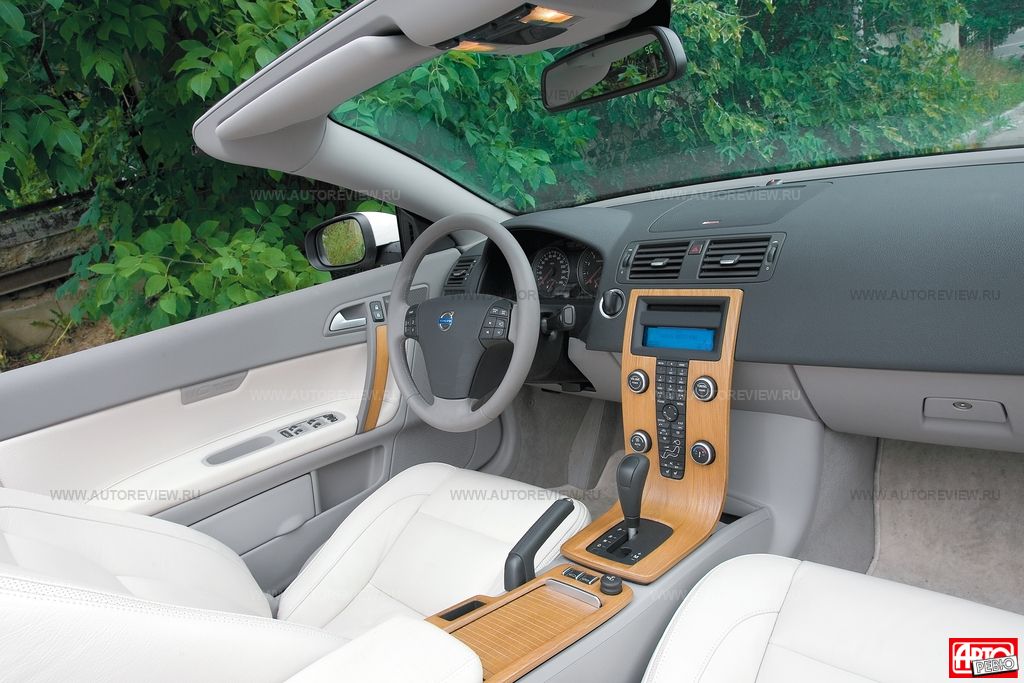 | 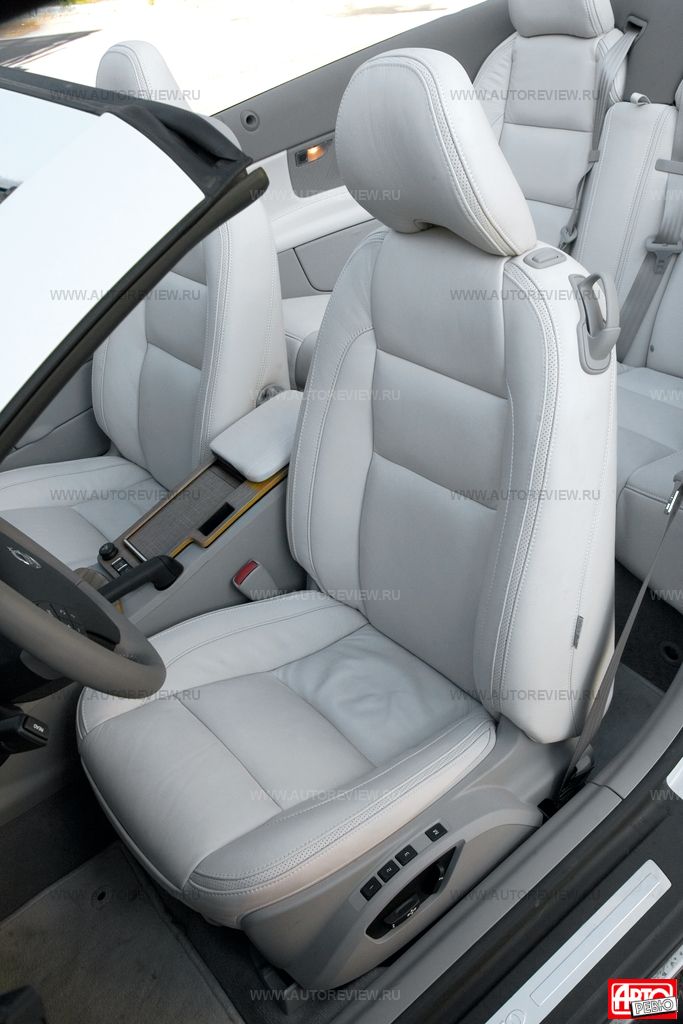 |
| The Volvo C70 inherited from the Volvo S40/V50 not only a beautiful and high-quality interior but also the clustered small buttons of the stereo and climate control | The Volvo C70 seats look more sporty than they actually are |
The open Volkswagen also becomes more loose, but only slightly: peaks of vertical accelerations are dulled, and the steering wheel doesn't tear from your hands.
But the Volvo's ride comfort worsens: without the roof, the car notices more harsh bumps.
However, the lowered top almost doesn't affect the handling of the Swedish car. The Ford, in response to the "dissolution" of body rigidity, becomes more prone to oversteer. The "beheaded" Volkswagen still steers precisely, only becoming a bit more thoughtful in tight corners. And the Opel became even less understandable: the "lean-in" turn increased, and at the limit, a tendency to oversteer appeared.
It can't be said that the Opel Astra TwinTop disappointed us. It is a lively, spirited, and very attractive car. It's just that, like any daredevil, it lacks balance and restraint. The brisk dynamics stumble over inconvenient throttle and brake control. Despite the seemingly sharp steering, the driver lacks clarity of feedback, and the reactions themselves depend heavily on whether the roof is up or down. However, the base version with the 115-horsepower 1.6-liter engine costs only $30,710.
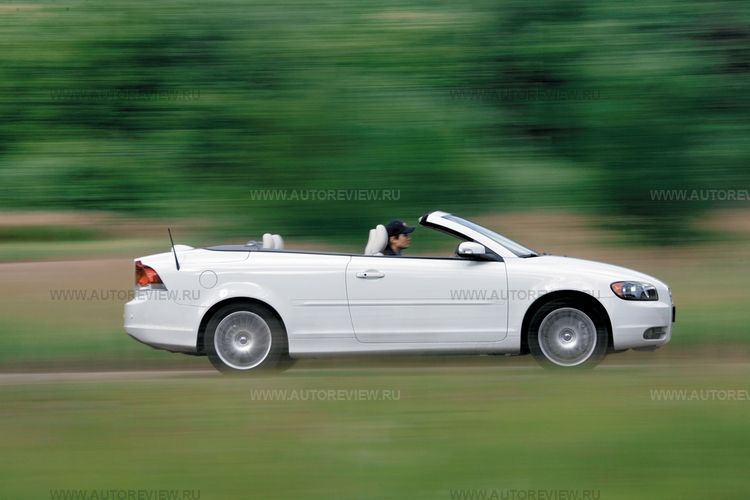
The Volvo C70 seemed to us the most stylish car. But not at all peppy
The Ford in base trim is only slightly more expensive, and in our test it turned out to be the most affordable. However, this savings is felt in everything: from the compromise design to the weak and noisy engine. Handling is certainly not bad, but the Focus Coupe-Cabriolet doesn't provoke active driving at all. But with the top down, it is the Focus that best shields passengers from strong wind gusts.
The Volvo C70 coupe-cabriolet both looks and drives as if it costs more than its competitors. It is the only one of the four cars where, with the roof closed, you feel like you're in a real coupe — no mechanisms protrude from the ceiling, and the roof section joints don't creak over bumps.
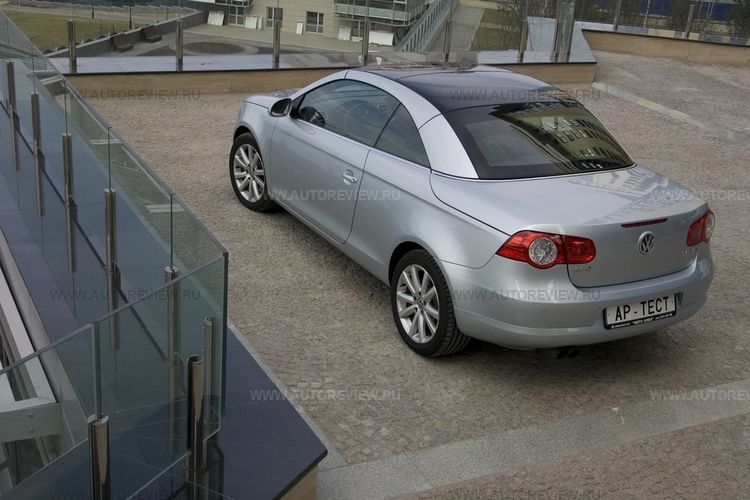
The Volkswagen Eos is hard to call a design masterpiece, and its roof also creaks a bit. But it is the Eos that has the most correct seating position and the most convenient throttle control. And it is the most pleasant to drive, with the car's character hardly changing whether the roof is folded or raised. Therefore, in the case of the Volkswagen, the hyphen in the word "coupe-cabriolet" becomes almost unnoticeable — it turns out to be a true coupe-cabriolet.
| Specifications | ||||
| Parameters | Cars | |||
| Ford Focus Coupe-Cabriolet | Opel Astra TwinTop | Volkswagen Eos | Volvo C70 | |
| Body type | 2-door coupe-cabriolet | 2-door coupe-cabriolet | 2-door coupe-cabriolet | 2-door coupe-cabriolet |
| Number of seats | 4 | 4 | 4 | 4 |
| Trunk volume, l | 534/248* | 440/205* | 380/205* | 404/200* |
| Curb weight, kg | 1555 | 1530 | 1535 | 1684 |
| Gross weight, kg | 1950 | 1955 | 2000 | 2090 |
| Engine | gasoline, with distributed injection | gasoline, with distributed injection and turbocharging | gasoline, with direct injection and turbocharging | gasoline, with distributed injection |
| Location | front, transverse | front, transverse | front, transverse | front, transverse |
| Number and arrangement of cylinders | 4, in-line | 4, in-line | 4, in-line | 5, in-line |
| Displacement, cc | 1999 | 1998 | 1984 | 2435 |
| Cylinder bore/piston stroke, mm | 87.5/83.1 | 86.0/86.0 | 82.5/92.8 | 83.0/90.0 |
| Compression ratio | 10.8:1 | 8.8:1 | 10.3:1 | 10.3:1 |
| Number of valves | 16 | 16 | 16 | 20 |
| Max power, hp/kW/rpm | 145/107/6000 | 200/147/5400 | 200/147/5100 | 170/125/6000 |
| Max torque, Nm/rpm | 185/4500 | 262/4200 | 280/1800—5000 | 230/4400 |
| Gearbox | automatic, 4-speed | manual, 6-speed | manual, 6-speed | automatic, 5-speed |
| Gear ratios | ||||
| I | 2.81 | 3.82 | 3.36 | 4.66 |
| II | 1.49 | 2.16 | 2.09 | 3.03 |
| III | 1.00 | 1.48 | 1.47 | 1.98 |
| IV | 0.72 | 1.07 | 1.10 | 1.34 |
| V | — | 0.88 | 0.87 | 1.02 |
| VI | — | 0.74 | 0.73 | — |
| reverse | 2.64 | 3.55 | 3.12 | 5.11 |
| final drive | 4.20 | 3.94 | 3.94 | 2.44 |
| Drive | front | front | front | front |
| Front suspension | independent, coil spring, McPherson | independent, coil spring, McPherson | independent, coil spring, McPherson | independent, coil spring, McPherson |
| Rear suspension | independent, coil spring, multi-link | semi-independent, coil spring | independent, coil spring, multi-link | independent, coil spring, multi-link |
| Front brakes | disc, ventilated | disc, ventilated | disc, ventilated | disc, ventilated |
| Rear brakes | disc | disc | disc | disc |
| Tires | 205/50 R17 | 215/45 R17 | 215/55 R16 | 215/55 R16 |
| Maximum speed, km/h | 198 | 237 | 232 | 215 |
| Acceleration time 0—100 km/h, s | 11.9 | 8.9 | 7.8 | 10.0 |
| Fuel consumption, l/100 km | ||||
| urban cycle | 11.8 | 13.3 | 11.2 | 12.9 |
| extra-urban cycle | 6.3 | 7.3 | 6.5 | 6.7 |
| combined cycle | 8.3 | 9.5 | 8.2 | 9.6 |
| Fuel tank capacity, l | 55 | 52 | 55 | 60 |
| Fuel | gasoline AI-91—95 | gasoline AI-95 | gasoline AI-95—98 | gasoline AI-95—98 |
| * With roof folded | ||||
Light Output
The comparison of headlights this time turned out not as complete as we would have liked. When it got dark, it turned out that the Opel Astra TwinTop's right headlight adjuster was broken, and the car shone more into oncoming drivers' faces than onto the road. So the Opel had to be excluded from the tests.
Among the remaining three cars, all of which had bi-xenon, the Ford has the best lighting. But even its low beam doesn't reach a person in light clothing standing on the roadside 80 meters away. The Volkswagen Eos's low-beam xenon is noticeably weak, and the Volvo C70, despite even light distribution and a clear cut-off line, is no better. The high beam on the C70 and Eos is also aimed so that it shines right in front of the nose.
In the photos, only the driver was in the cars. Headlight adjusters are automatic.
| Ford Focus | |
| Volkswagen Eos | |
| Volvo C70 | |
| Low beam. Pedestrian stands on the roadside 80 m from the car | High beam. Pedestrian stands on the roadside 160 m from the car |
| Ford Focus | Volkswagen Eos | Opel Astra | Volvo C70 |
 |
 |
 |
 |
| Roof raised, cover stowed | |||
 |
 |
 |
 |
| Roof raised, cover extended | |||
 |
 |
 |
 |
| Roof folded | |||
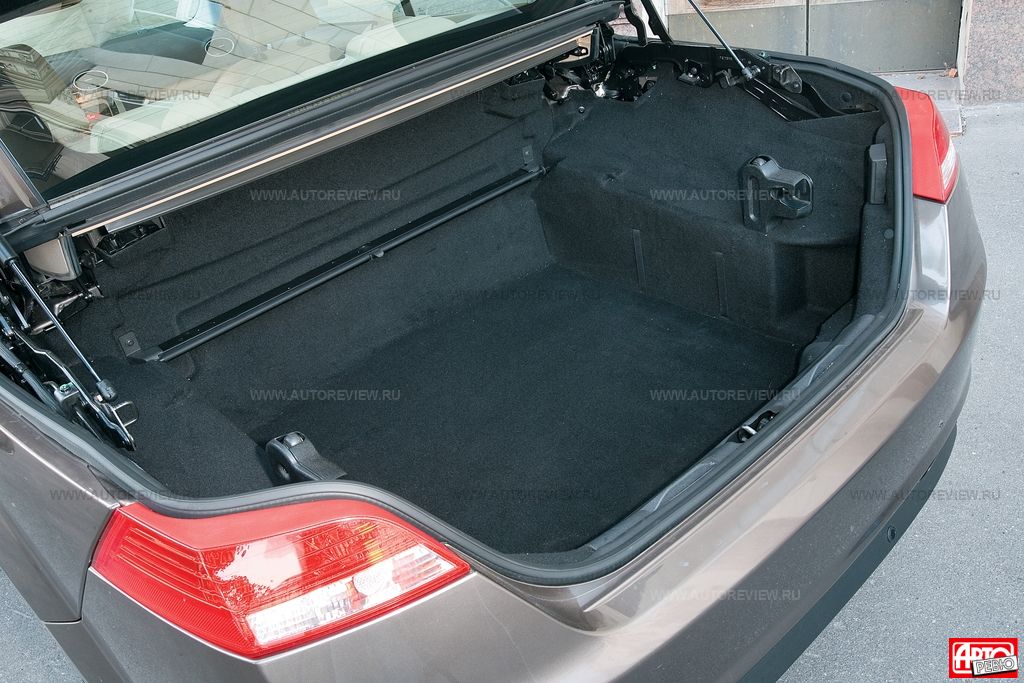
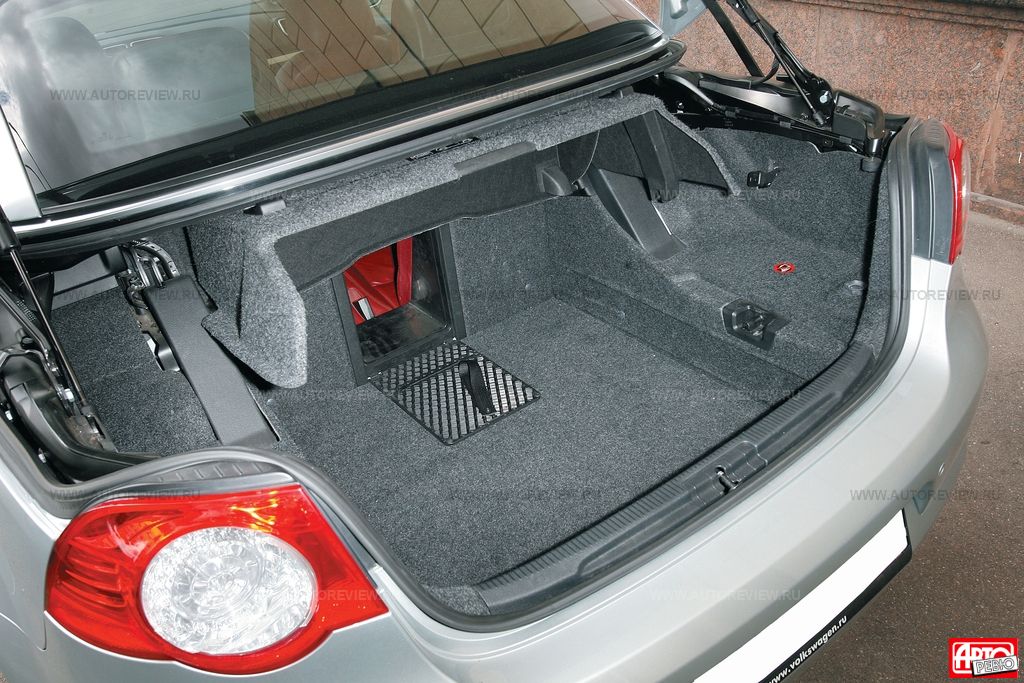
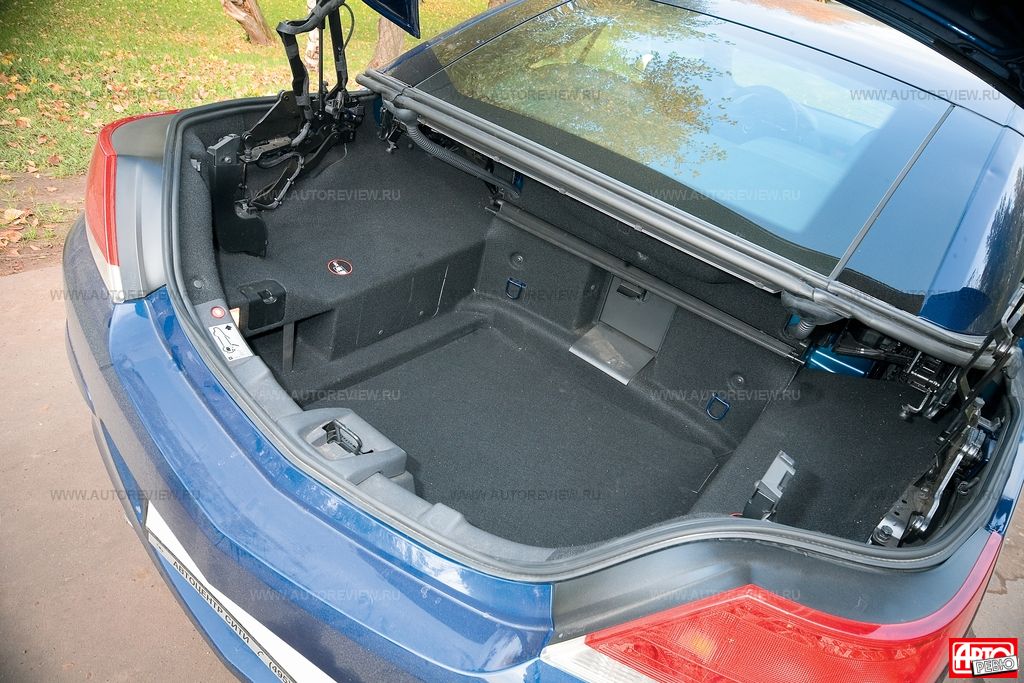
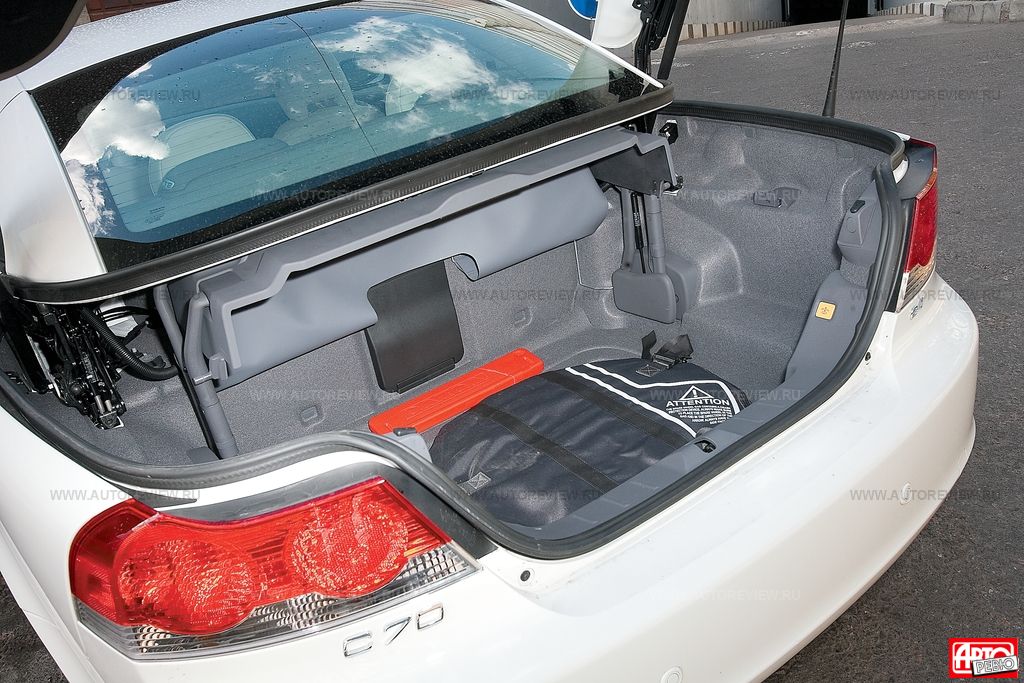
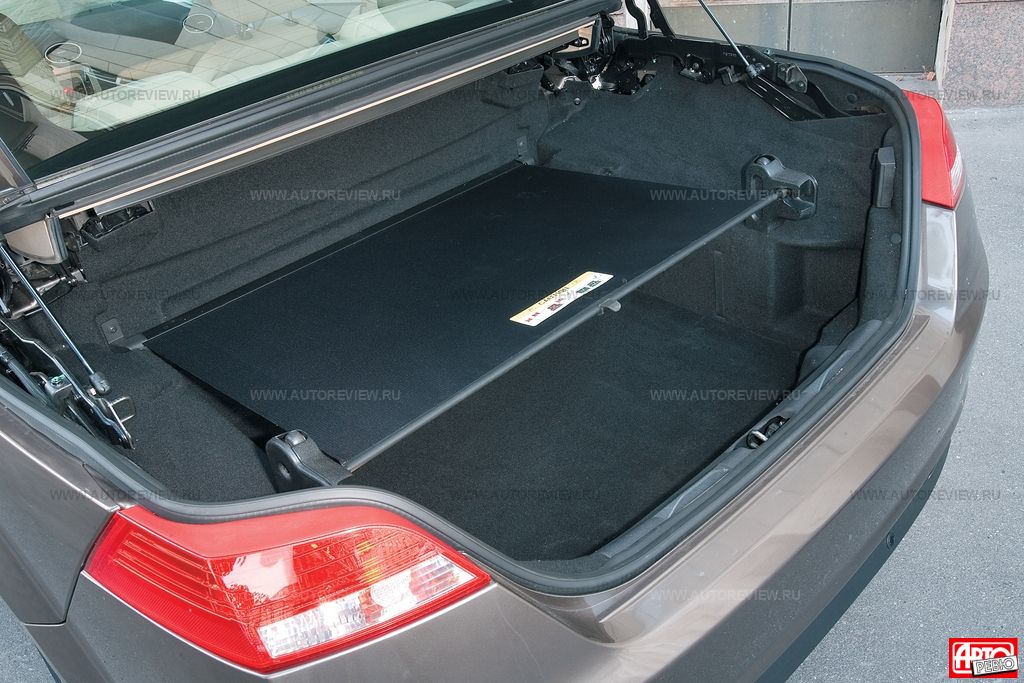
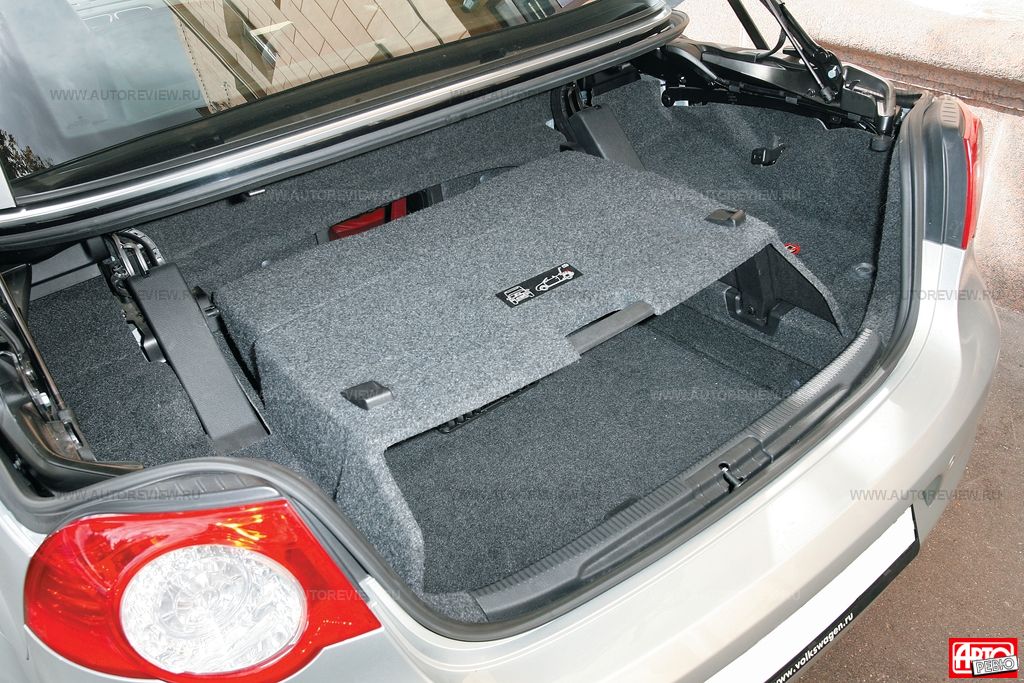
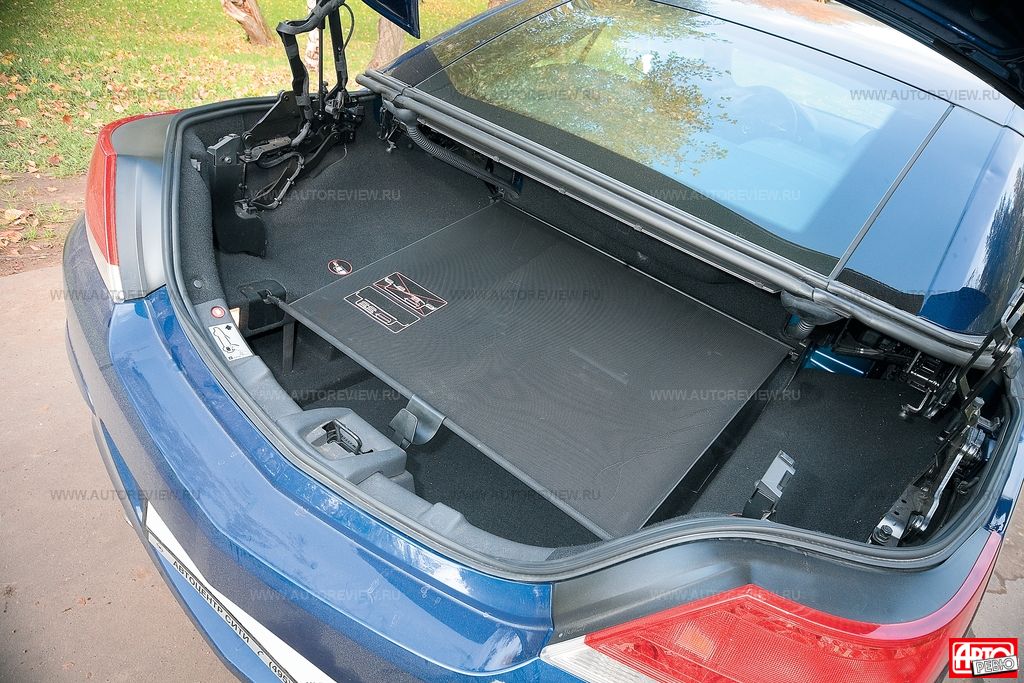
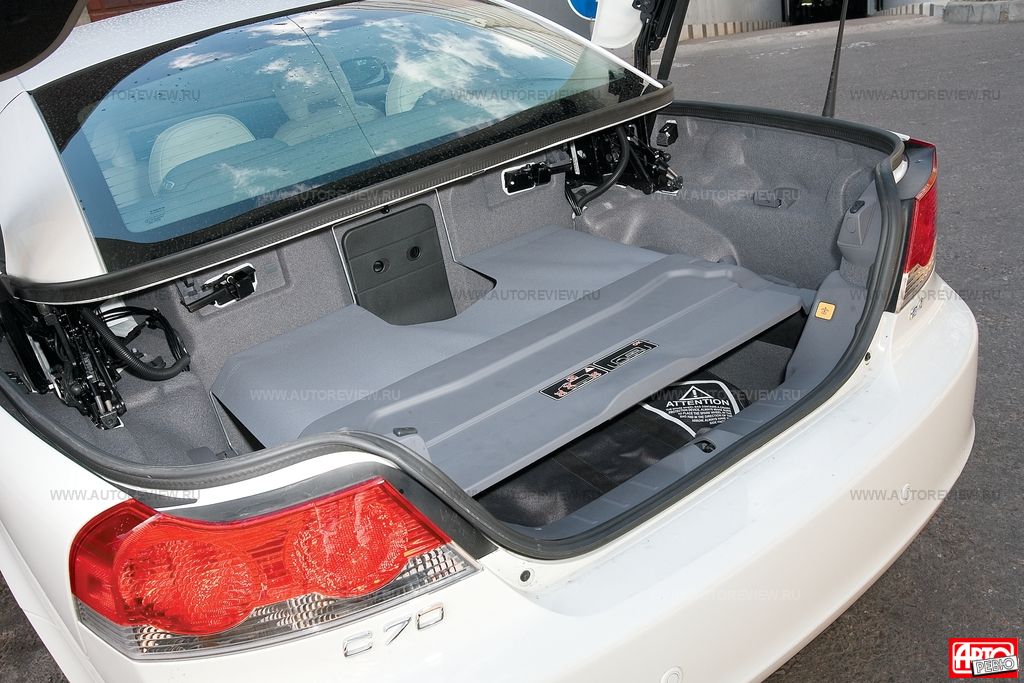
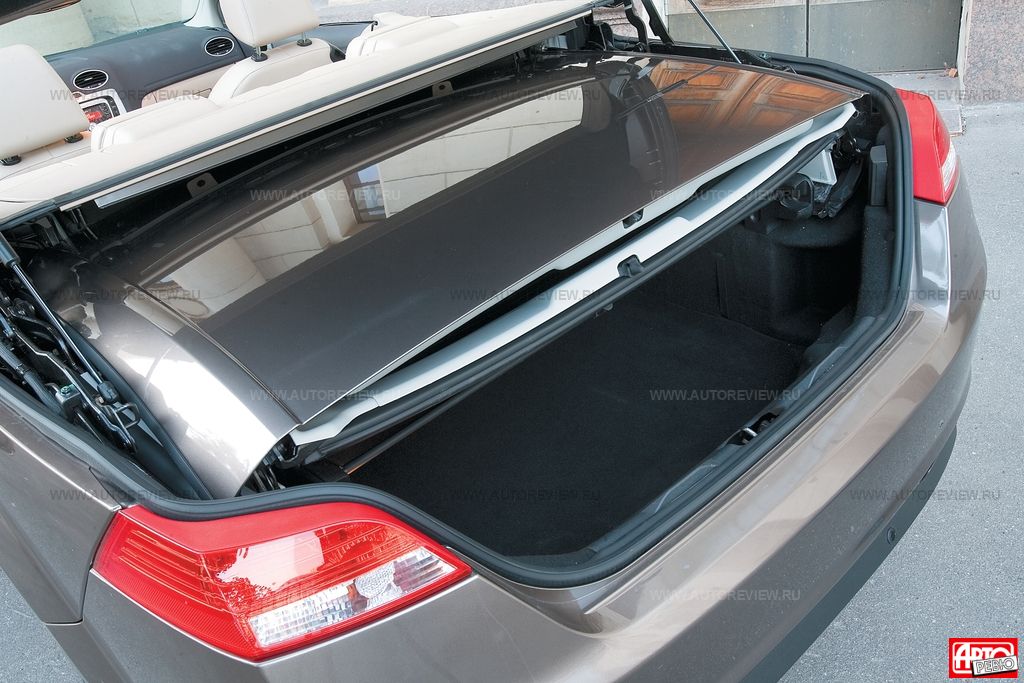
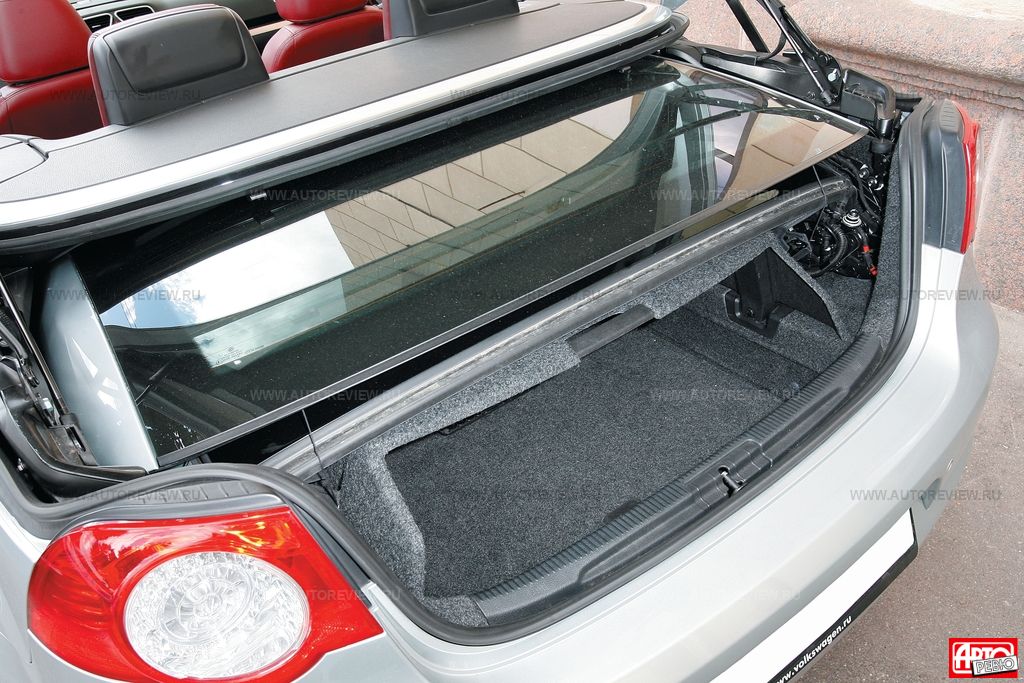
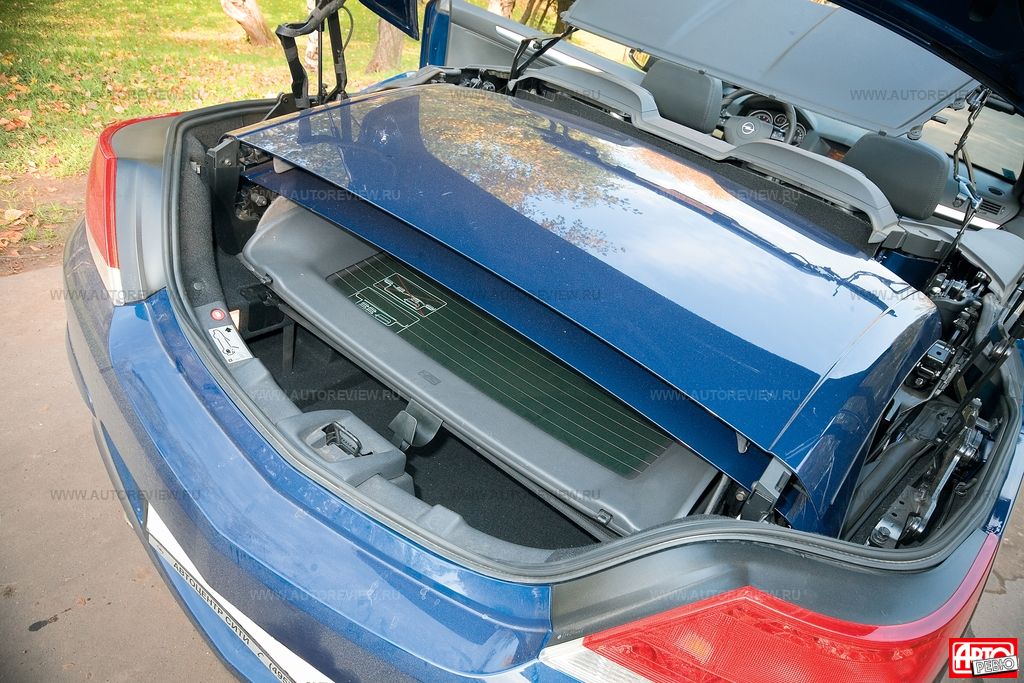
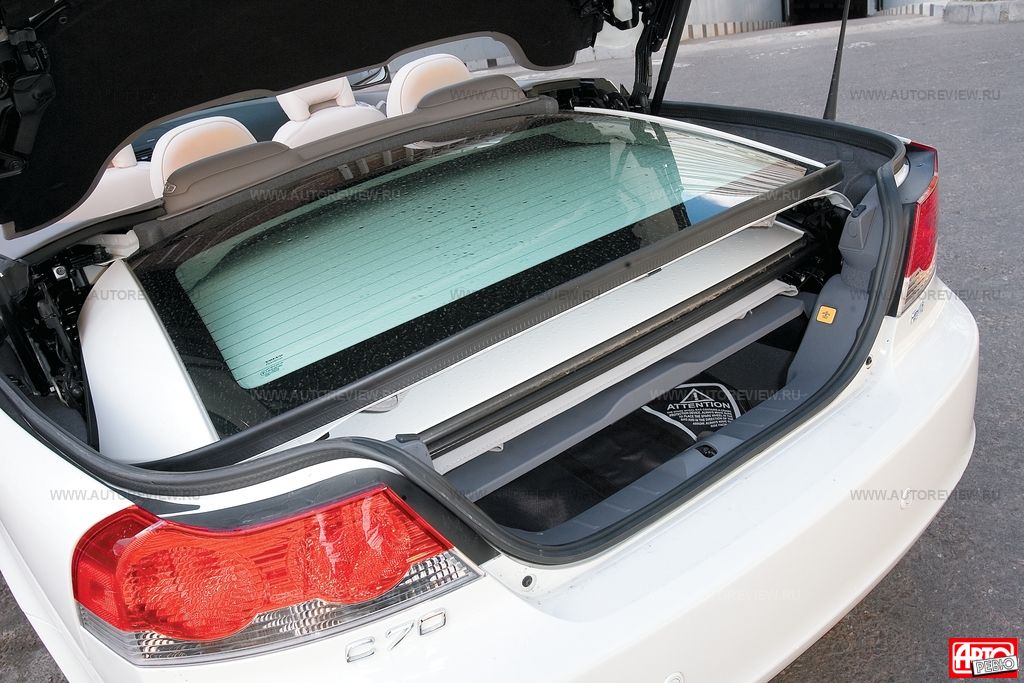
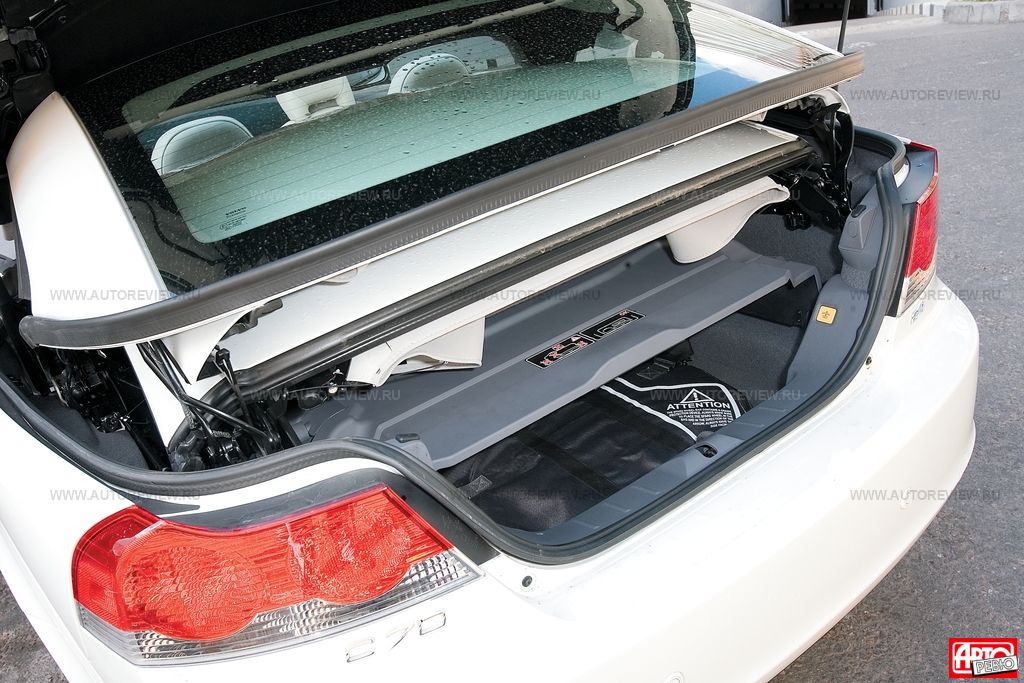
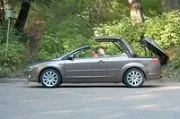
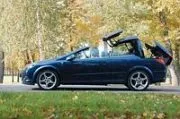
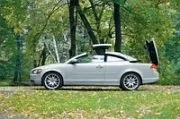
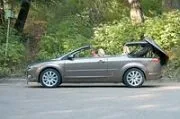
| All four convertibles have full-fledged trunks. They are comparable in volume, but we recognized the Ford Focus as the best cargo convertible. It's not just about capacity — the Ford has the most convenient access to the cargo area, especially when most of it is occupied by the folded roof. The Volvo and Opel in such a situation are in no hurry to give up the trunk — first you have to lift the folded roof package by pressing a button on the trunk sill. The opening that appears is still narrow | 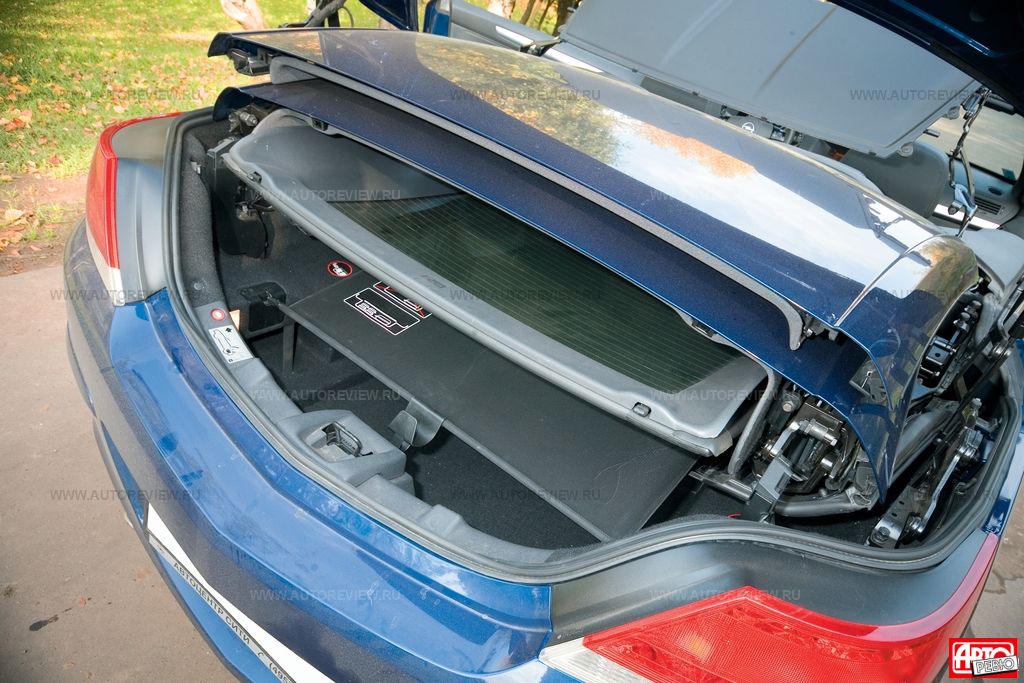 |
 |
|
| Folded roof raised for easier access | |||
All four cars with a hard folding top can automatically stow and raise the roof. On each car, you have to hold the button until the end of the cycle — this is not very convenient, and on the Opel you also have to reach up to the ceiling. Before starting to fold the roof, there is no need to unfasten any latches; the main thing is to ensure enough space around and make sure the cover in the trunk is closed.
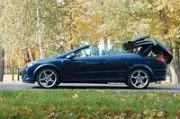
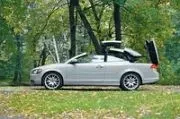
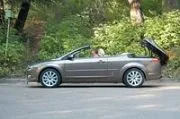
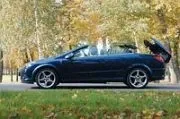
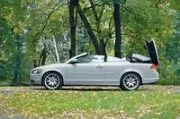
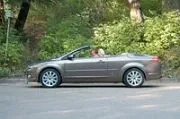
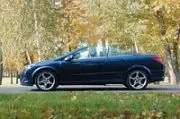
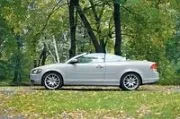
"Open" Safety
Cars with a folding roof are inherently more vulnerable than their closed counterparts, because in a crash the roof barely absorbs energy. Especially when it comes to an open body. That's why convertible engineers have to resort to tricks, reinforcing the body with additional elements, including high-strength steel.
Modern open cars typically also have roll bars hidden behind the rear seats: in a rollover, they deploy in a fraction of a second. All four test participants are equipped with such roll bars.
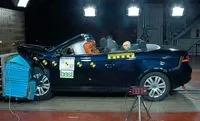
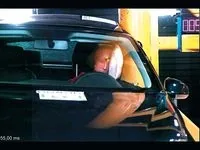
Ford Focus, Opel Astra and Volkswagen Eos each got four airbags — two in front and two on the sides, with the side airbags enlarged to cover the heads of front passengers. Volvo C70 went further: in addition to front and regular side airbags, it has curtain airbags in the doors that deploy upward. Their bending rigidity is ensured by overlapping sections.
All four cars have Isofix anchors for child seats on the rear benches.
So far, only the Volkswagen Eos has undergone independent crash tests according to the EuroNCAP methodology. Side impacts were carried out with the roof raised, while the frontal impact was done with the roof open. The Eos showed a decent result — four stars out of five. The rating was reduced for a potentially hazardous front panel and for the driver's door opening during a side pole impact. In the same side test, the roof panel separated from the windshield frame, but this element is not part of the EuroNCAP methodology. Child passengers are well protected — four stars out of five, but pedestrian safety was below average: only two stars out of four.
| Volkswagen Eos* | ★★★★ |
| Overall rating | 31 points |
| Frontal crash test | 12 (75%) |
| Side crash tests | 17 (94%) |
| SBR** | 2 |
| Child occupant protection | 40 (82%) |
| Pedestrian protection | 13 (36%) |
| Curb weight | 1472 kg |
| * Tests conducted according to EuroNCAP methodology | |
| ** SBR — seatbelt reminder system | |
Two-faced
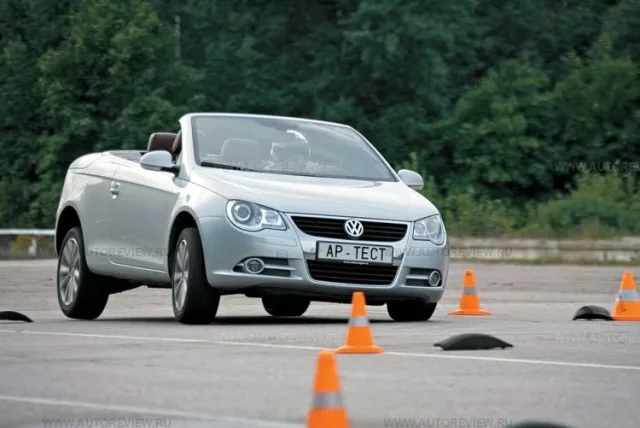
We simulated avoiding a sudden obstacle in two stages. First, five drivers, already familiar with the cars in normal modes, tried to dodge the "moose" with a single attempt at 65 km/h. Recall: this test has an element of surprise — traffic lights at the last moment indicate which side to pass the obstacle. After that, an expert in a series of runs determined the maximum speed at which the maneuver is possible at all.
For drivers without much experience, the Opel Astra TwinTop turned out to be the most predictable — four out of five successfully completed the task. The only one who made a mistake complained about unexpectedly sharp reactions of the car. The expert, gradually finding common ground with the Astra, showed the best result of the test — 80.1 km/h. Sharp reactions did not forgive mistakes and required very precise steering. At the limit, the car began to slide, and excessive sliding was cut off by the stability control system. This is a plus, because the step in steering effort would hardly have allowed the driver to correct the situation on his own.
The second result went to the Volvo C70 — 77.8 km/h. The main problem is extremely sluggish response to steering: you had to turn the wheel at huge angles and with a large lead. True, the steering effort remained within comfortable limits. This also helped when correcting deep slides. In single attempts, three drivers did not understand the Volvo — the same weak reactions, lack of sensitivity, and lack of feedback on the steering wheel.
The Ford Focus coupe-cabriolet passed the "moose test" at 75.9 km/h. The car was noted for deep slides in the second and third corridors, which were difficult to control. Stability control kicked in too late, when the rear axle was already sliding. And manually damping the slides was hindered by a large step in steering effort. Two of the regular drivers also could not fit the Focus into the corridor, complaining about sudden breakaways and the inability to quickly damp them.
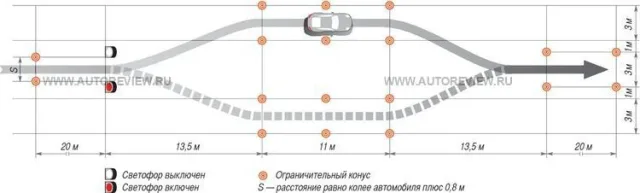
The Volkswagen Eos turned out to be an outsider in the "moose test." Its maximum speed is the most modest — 75.7 km/h. Sharp slides and a step in steering effort interfered. Stability control reduced speed well, but worked too roughly, not allowing the driver to control the trajectory himself. Three out of five drivers found the car difficult: they were confused by sharp reactions and sudden intervention of electronics.
We again performed the lane change with the hardtops raised — this is how coupe-cabriolets are most often driven. But we became interested in how each car would behave if the roof were folded. Therefore, we repeated the exercise with the roof open.
In general, the character of all cars became calmer, and the maneuver stretched out in time. The three sharpest cars — Opel, Ford, and Volkswagen — became more forgiving of driver errors, and their maximum speeds in the "moose test" even increased slightly. The Astra gained the most — about 1 km/h. But the Volvo, which was already not known for quick reactions, was let down by the folded roof: responses became completely sluggish, and the maximum speed dropped by almost 3 km/h.
| Maximum speed in the "moose test," km/h | |
| Cars | Speed |
| Ford Focus | 75.9 |
| Opel Astra | 80.1 |
| Volkswagen Eos | 75.7 |
| Volvo C70 | 77.8 |
| "Moose test" on the first attempt at 65 km/h | |
| Cars | Maneuver completed |
| Ford Focus | 3 out of 5 drivers |
| Opel Astra | 4 out of 5 drivers |
| Volkswagen Eos | 2 out of 5 drivers |
| Volvo C70 | 2 out of 5 drivers |
Visibility
| Ford Focus | Opel Astra |
 |  |
| Volkswagen Eos | Volvo C70 |
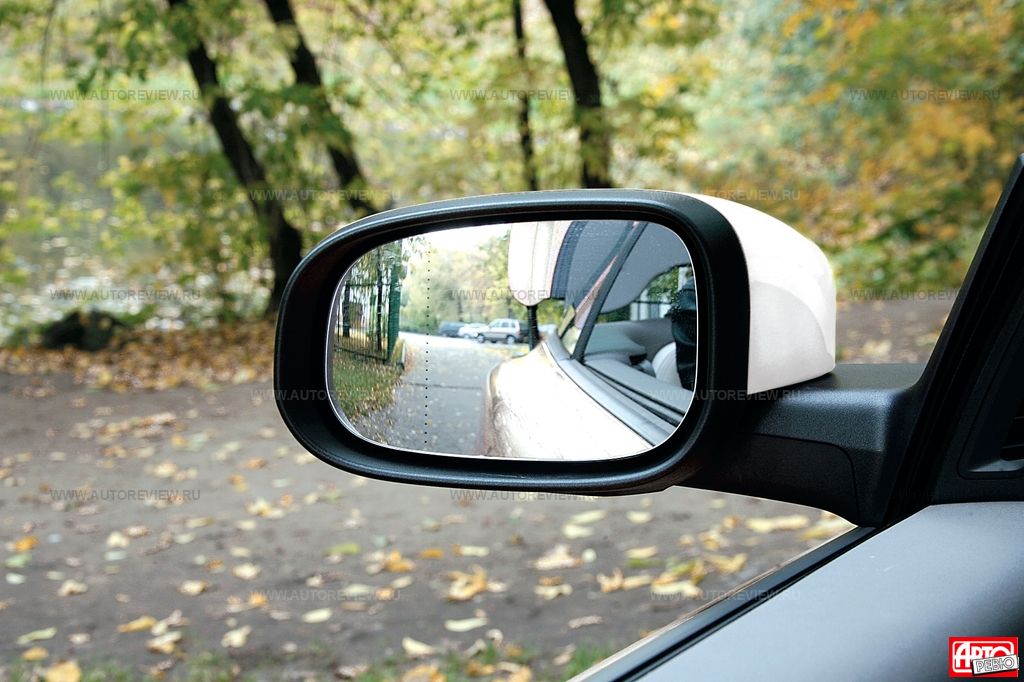 |
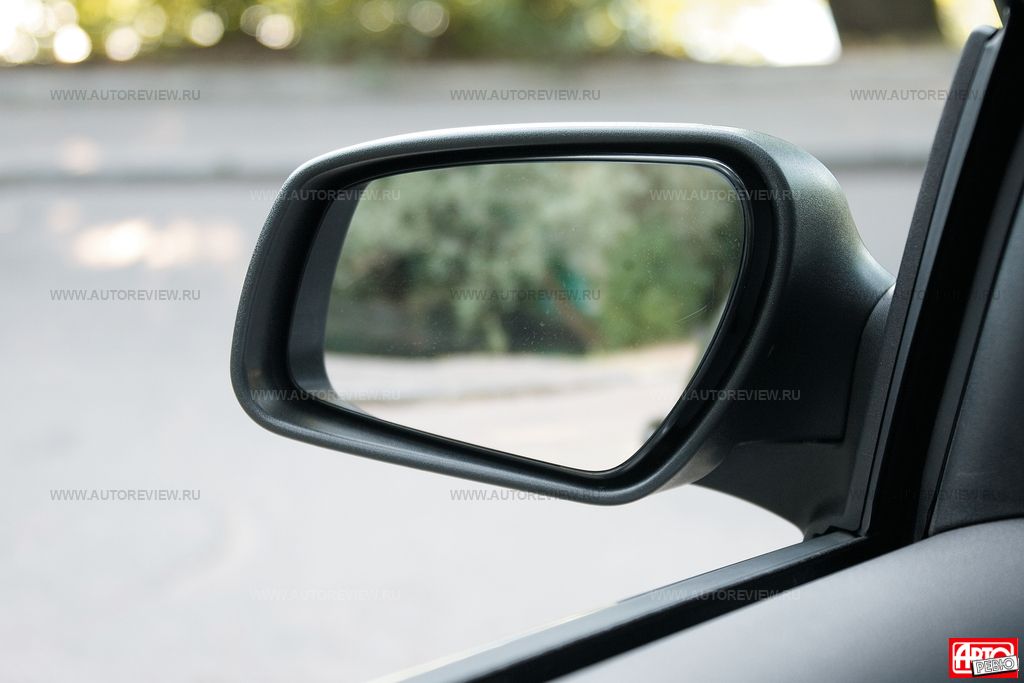
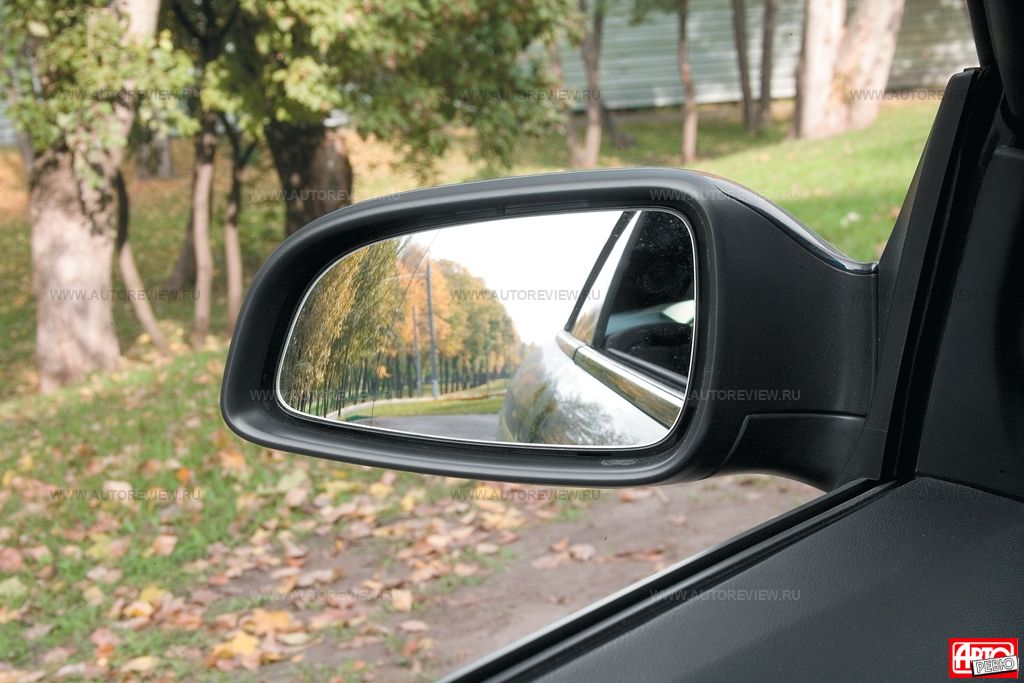
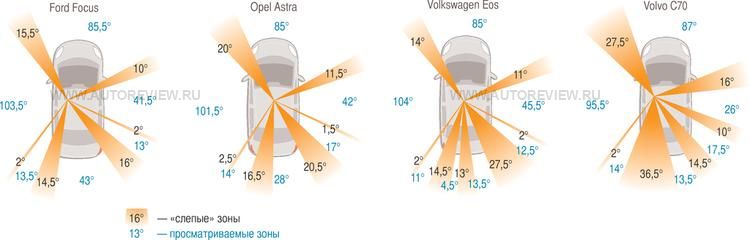
Behind the wheel of the Focus it is easiest: the viewing angle here is the widest, and the almost fully folding headrests do not block the rear window. The exterior mirrors are decent, but not as wide as those of the Opel. However, in the interior mirror of the Astra, little is visible: the rear window opening is narrow, and the trunk lid cuts off the picture from below. Moreover, the mirror itself blocks a significant part of the windshield. The Volkswagen has slightly better visibility — the front pillars do not eat up as much space, but the exterior mirrors here are the most uncomfortable and small. And the Volvo driver has to put up with massive front pillars. In addition, only the C70 has both exterior mirrors that distort at the edges.
| Car | Total viewing angle, deg. | Total blind spot angle, deg. |
| Ford Focus CC | 300.0 | 60.0 |
| Opel Astra TwinTop | 287.5 | 72.5 |
| Volkswagen Eos | 276.0 | 84.0 |
| Volvo C70 | 253.5 | 106.5 |
What's the price?
Ford Focus Coupe-Cabriolet in the base Trend version with a 1.6 engine (100 hp) and a five-speed manual costs 825 thousand rubles ($32350*). The equipment list includes four airbags, air conditioning, electric mirrors with heating, CD player, heated front seats, and alloy wheels. Coupe-cabriolets with a two-liter engine (145 hp) are sold only in the Titanium trim — there you get leather interior, dual-zone climate control, and light and rain sensors. Such a Focus will cost 925 thousand rubles ($36270*). The version with a four-speed automatic is 32 thousand rubles more expensive ($1255*). True, deliveries of open Focuses have been stopped, having barely begun — all due to the family's facelift. Pre-orders can already be placed for the updated car: it will appear at dealers in March. Exact prices have not yet been announced.
Warranty — 2 years or 100,000 km. Ford's network in Russia includes 134 dealers in 85 cities.
Prices for the Opel Astra TwinTop start at 783 thousand rubles ($30710*) for the version with a 1.6 engine (115 hp) and a five-speed manual. The modification with a 1.8 engine (140 hp) costs 829 thousand rubles ($32510*), and the surcharge for a four-speed automatic is 39 thousand rubles ($1530*). The base Enjoy trim is more modestly equipped than the base Focus: four airbags, air conditioning, CD/mp3 player, electric mirrors with heating. The Cosmo version with single-zone climate control, leather-fabric upholstery, and alloy wheels adds 21 thousand rubles ($823*) to the price. The Astra TwinTop 1.6 Turbo (180 hp) with a six-speed manual — from 935 thousand rubles ($36670*), and the version with a two-liter turbo engine (200 hp) is available only in Cosmo for 1 million 10 thousand rubles ($39610*). Opel coupe-cabriolets are supplied only to order — you will have to wait five to six months.
Warranty — 2 years without mileage limit. Opel has 86 dealers in 52 cities in Russia.
Volkswagen Eos in the base version with a 1.6 FSI engine (115 hp) and a six-speed manual transmission is similar in equipment to the Astra: four airbags, air conditioning, heated power mirrors, and alloy wheels. But the price is higher — from 904,740 rubles ($35,480*). The coupe-cabriolet with a 2.0 FSI engine (150 hp) and sport front seats costs 939,420 rubles ($36,840*), and the 2.0 TFSI modification (turbo, 200 hp) starts at 1,054,430 rubles ($41,350*). For this engine, a preselective DSG gearbox is available — an extra charge of 48,450 rubles ($1,900*). The most powerful Eos — with a V6 (3.2 L, 250 hp), DSG, and dual-zone climate control — will cost from 1,323,710 rubles ($51,910*). Cars are supplied only on order, with a waiting period of up to four months.
Warranty — 2 years without mileage limit. Volkswagen has 57 dealers in 37 cities in Russia.
Volvo C70 is noticeably more expensive than the other test participants: prices start from 1,393,100 rubles ($54,630*) for the version with a 2.4 engine (140 hp) and a five-speed manual transmission. The base includes six airbags, dual-zone climate control, heated power mirrors, a CD player, and alloy wheels. The 2.4i version (170 hp) costs 1,444,800 rubles ($56,660*), and at the top of the range is the C70 T5 with a 2.5 L turbo engine (230 hp) and a six-speed gearbox for 1,537,900 rubles ($60,310*). Any modification can be fitted with a five-speed automatic — an extra charge of 51,700 rubles ($2,030*). An ordered car is promised to be delivered within three months.
Warranty — 2 years or 100,000 km. Volvo has 61 dealers in 46 cities in Russia.
* At the exchange rate of $1 = 25.5 rubles.
| Cost of scheduled maintenance with consumables and parts, rubles. | |||||
| Scheduled maintenance | Cars | ||||
| Ford Focus | Opel Astra | Volkswagen Eos | Volvo C70 | ||
| Cost per standard hour | 1400 | 1250 | 1450 | 1900 | |
| Mileage, km | 15000 | — | 4380 | 6000 | — |
| 20000 | 2500* | — | — | 13600 | |
| 30000 | — | 6310 | 11000 | — | |
| 40000 | 2500** | — | — | 13600 | |
| 45000 | — | 4380 | 6000 | — | |
| 60000 | 2500* | 9570 | 11000 | 18400 | |
| 75000 | — | 4380 | 6000 | — | |
| 80000 | 2500* | — | — | 13600 | |
| 90000 | — | 6310 | 11000 | — | |
| Total | 10000* | 35330 | 51000 | 59200 | |
| * Base cost | |||||
What else?
On the Russian market, the cheapest coupe-cabriolet is the compact Peugeot 207 CC. Its starting price is 722 thousand rubles ($28,310*), and for this money you get a car with a 120-hp 1.6 engine and a five-speed manual gearbox. If you want an automatic transmission, you will have to pay an extra 28 thousand rubles ($1,100*). The turbocharged 1.6 THP version with 150 hp costs from 847 thousand rubles ($33,220*). There are actually only two seats here — an adult passenger in the back simply won't fit. The hard roof, consisting of two sections, folds away in 25 seconds. Read more about this model in AR No. 6, 2007.
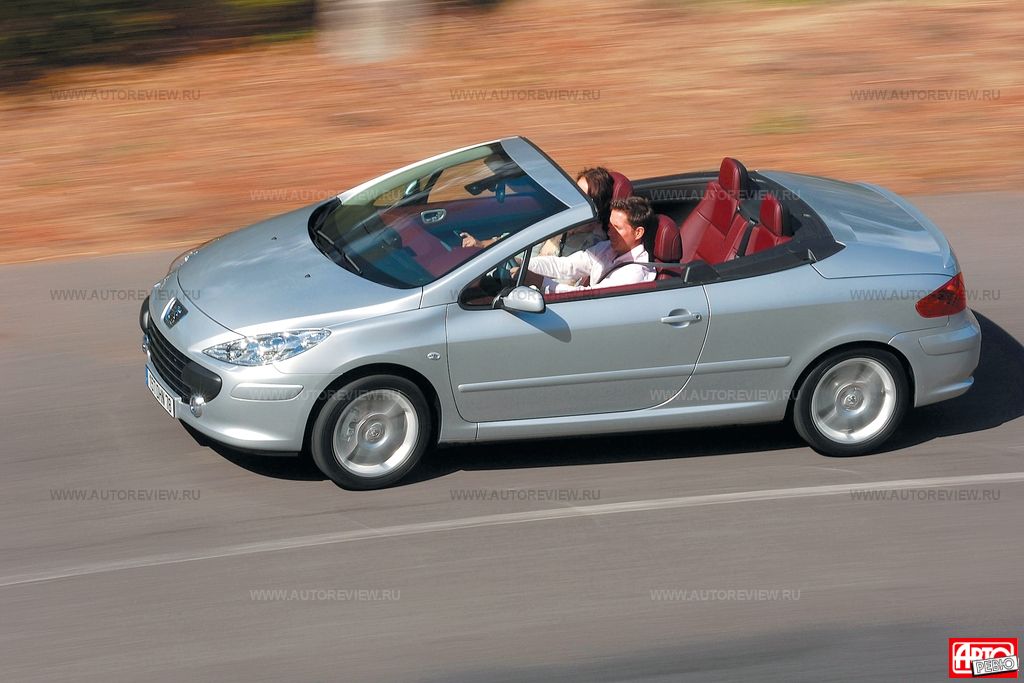
Slightly larger and noticeably more expensive is the Peugeot 307 CC, which is offered from 955,500 rubles ($37,470*). Under the hood of the base version is a two-liter engine with 143 hp, paired with a five-speed manual or a four-speed automatic (for which you need to pay an extra 37 thousand rubles, or $1,450*). For the top Feline modification with a 177-hp engine, dealers ask from 1,125,500 rubles ($44,140*). The two-section roof here folds just as quickly — in 25 seconds. Details — in AR No. 12, 2005.
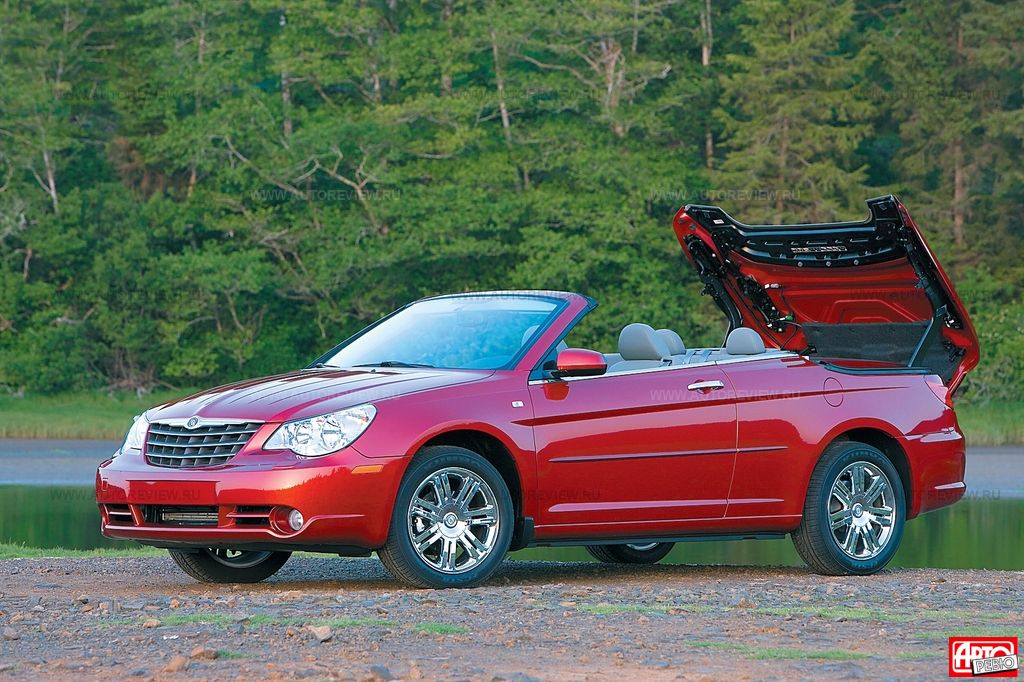
In the spring of next year, sales of the Chrysler Sebring Convertible will start in Russia — a coupe-cabriolet with a 2.7 gasoline engine producing 188 hp and a six-speed automatic. The American model's roof consists of three sections and folds in 30 seconds. Prices have not yet been announced, and full information will appear in AR No. 15, 2007.
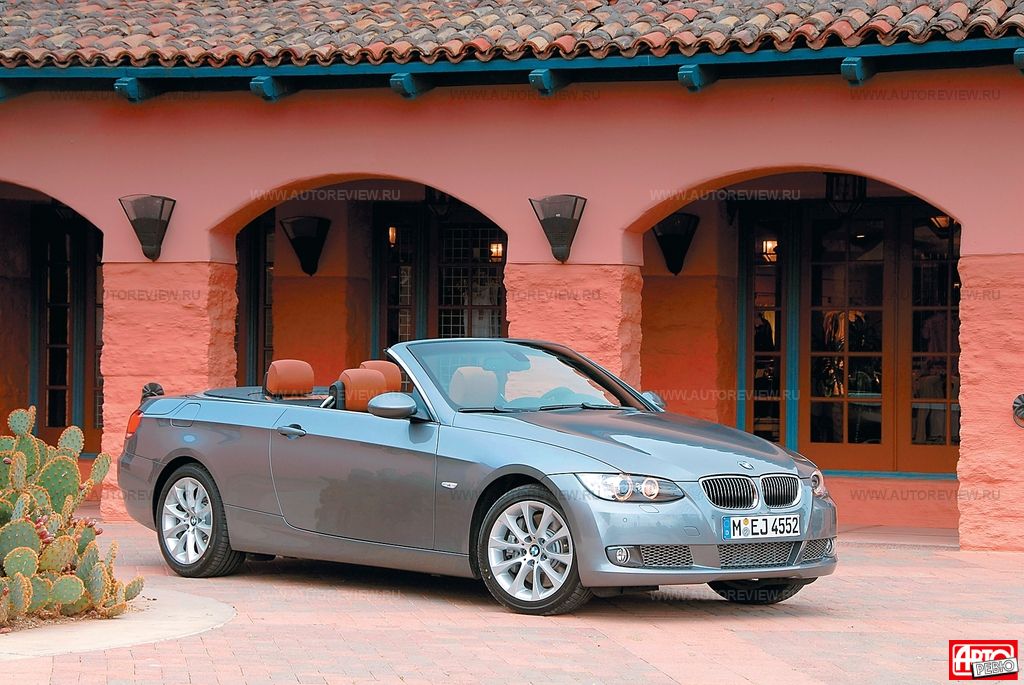
If we talk about the premium segment, the BMW 3 Series coupe-cabriolet is noticeably more expensive than all other "transformers." Prices start at 1,445,500 rubles ($56,690*) for the 320i version with a 170-hp engine and go up to 2 million 79 thousand rubles ($81,530*) for the BMW 335i, equipped with a 306-hp unit. A six-speed automatic increases the cost by 70 thousand rubles ($2,750*). The three-section hard roof retracts in 22 seconds. More information — in AR No. 3, 2007.
| Peugeot 207 CC | Peugeot 307 CC |
 | |
| BMW 3 Series | Mazda MX-5 |
 |  |
| Chrysler Sebring Convertible | Mercedes-Benz SLK |
 |  |
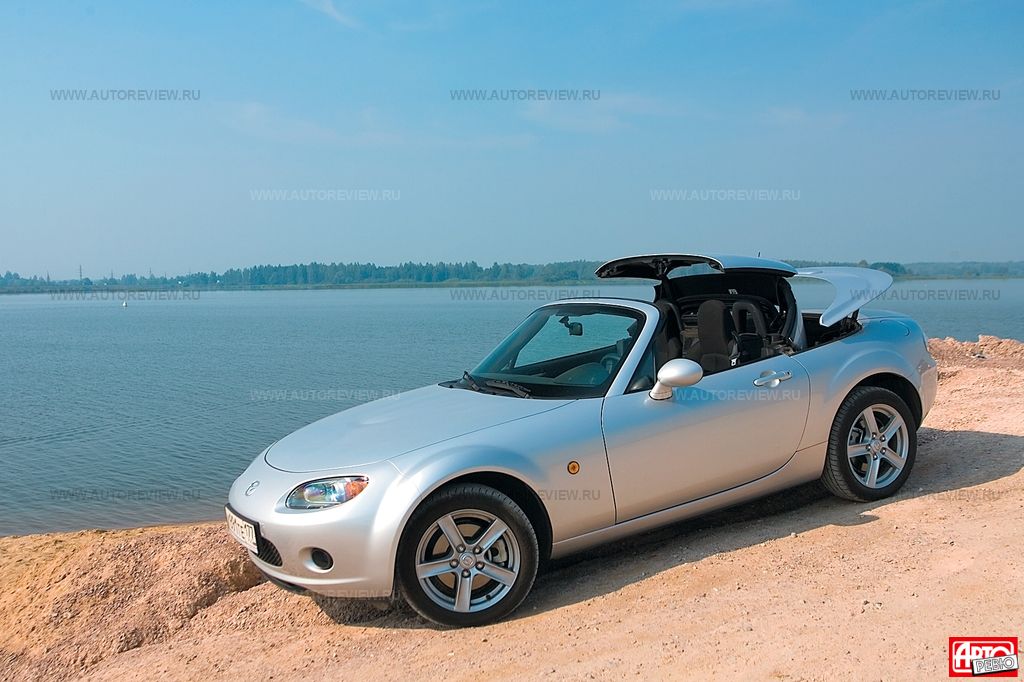
There are also two two-seater coupe-roadsters on our market. The first is the Mazda MX-5 Roadster Coupe. The base modification with a 1.8 engine producing 126 hp and a five-speed manual is priced at 907 thousand rubles ($35,570*). The Sport version received a two-liter unit (160 hp) and a six-speed gearbox, and the price increased to 1 million 37 thousand rubles ($40,670*). The compact car boasts a two-section hard roof that folds in just 12 seconds. Read about this in AR No. 17, 2007.
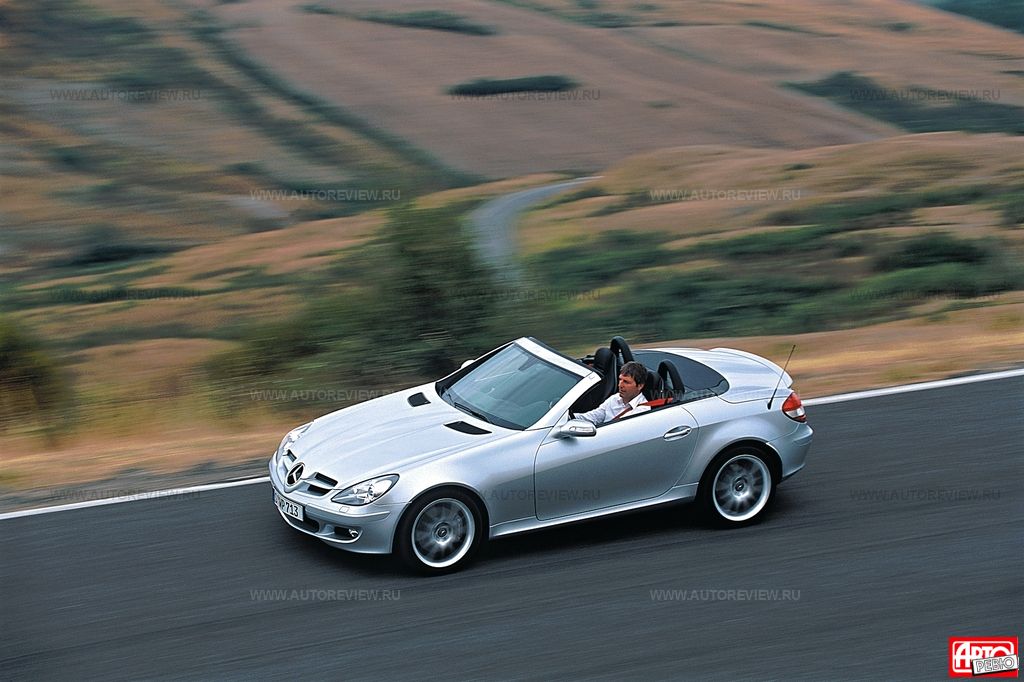
The Mercedes-Benz SLK costs much more than the Mazda — the initial SLK 200 Kompressor configuration (1.8 L, 163 hp) is sold for 1,578,500 rubles ($61,900*). The roadster's two-section hard roof retracts in 22 seconds. Details — in AR No. 7, 2004.
Finally, it is worth mentioning the Lexus SC 430 coupe-cabriolet and the Mercedes-Benz SL coupe-roadster — they are also sold in Russia, but their base prices exceed the $100,000 mark.
* At the exchange rate of $1 = 25.5 rubles.