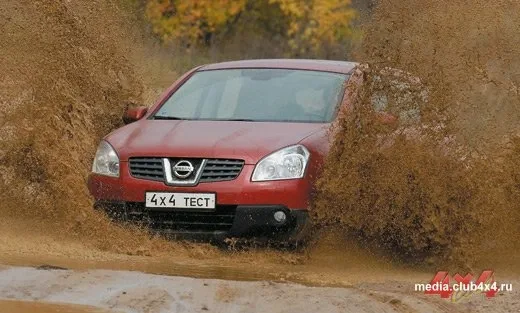
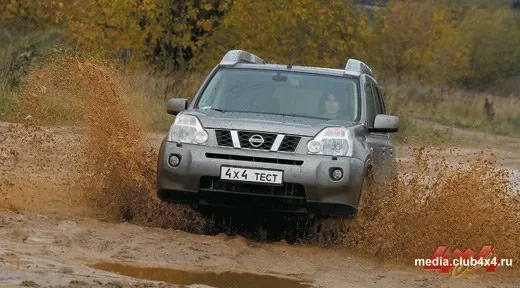
Color is different, taste is almost the same — we took two "M&M’s", red and silver, for a test. To thoroughly find out how two Nissans on the same platform differ. And why the X-Trail in the trim we got costs $33,885 (271,076 UAH), while the Qashqai costs 852,810 rubles, that is, $6,000 cheaper?
$6000 FOR 57 KG OR FOR 300 MM?
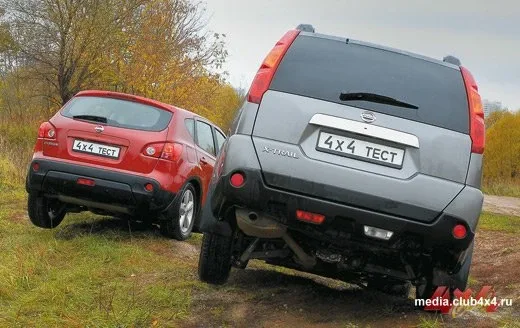
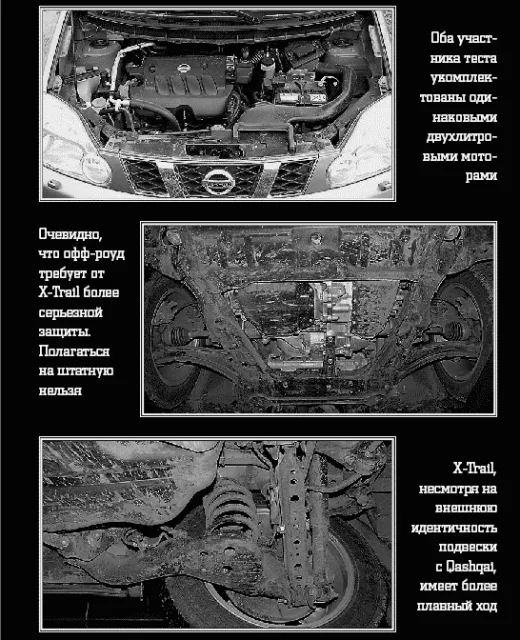
Qashqai is positioned as a purely urban car. On Nissan's website dedicated to SUVs, it is not even there — no photos, no description. X-Trail is a completely different story: it is presented almost as an SUV, although in reality it is a crossover. So, we have on test a "almost car" and an "almost jeep". But here's the thing: they are indeed relatives. This is visible if you look from underneath.
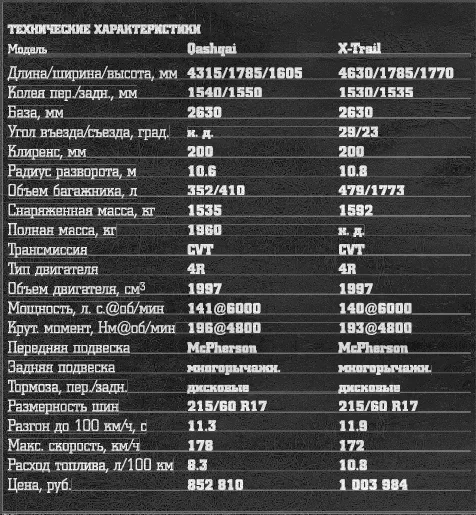
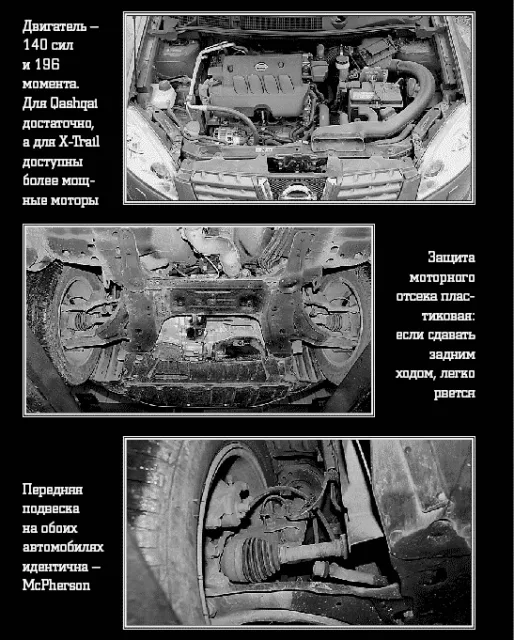
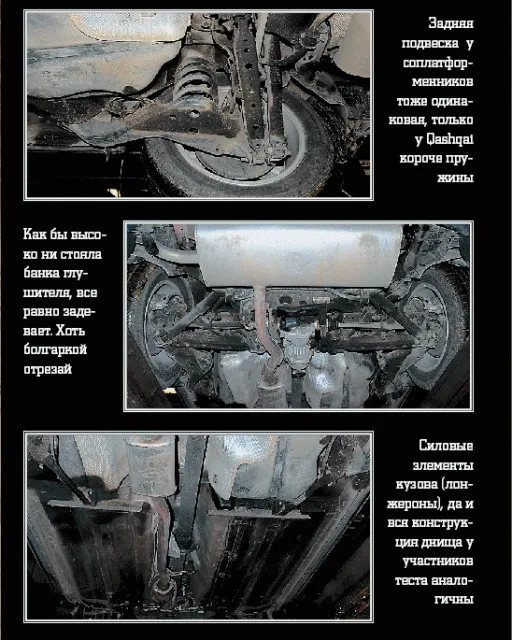
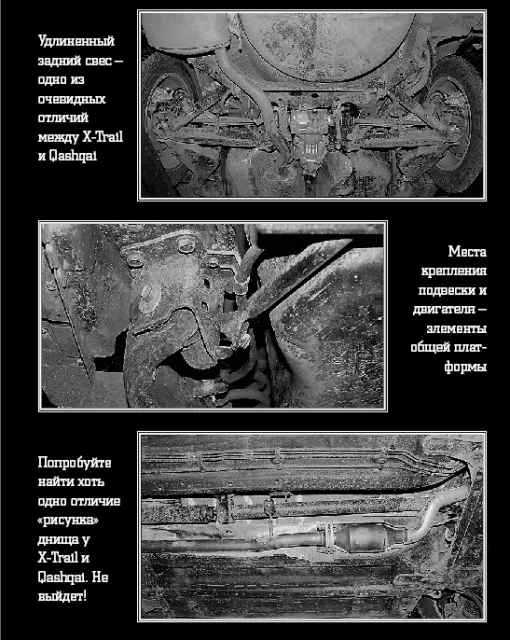
The front and rear suspensions are absolutely identical. The only difference is an extra coil of spring on the X-Trail. The floor structure is completely the same: from side rails to engine mounting points. The engines are also the same — petrol, 2.0 liters, and the transmission is a CVT.
The price difference is $6,000. That is exactly the surcharge for 300 mm of body added to the X-Trail in the trunk area. Or maybe it's the price for the extra 57 kg of weight?
YOU DON'T KNOW WHAT THE BUTTON IS FOR?
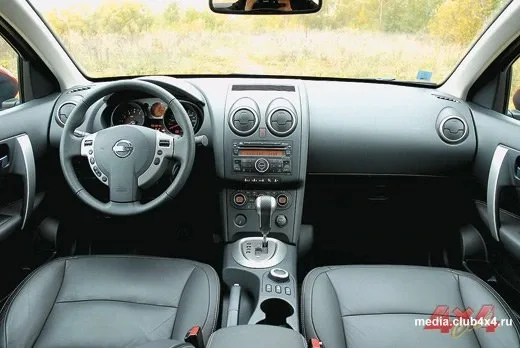
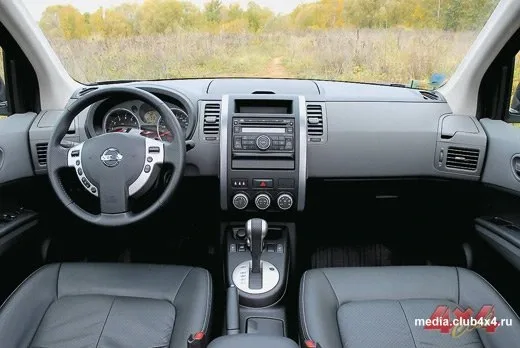
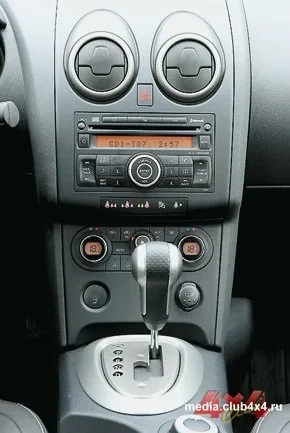
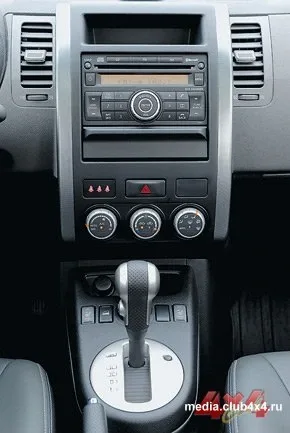
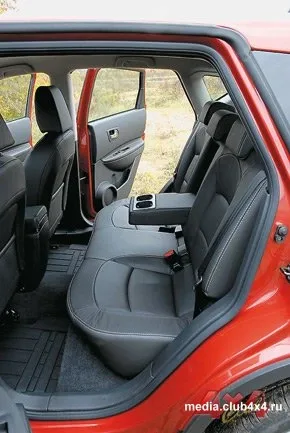
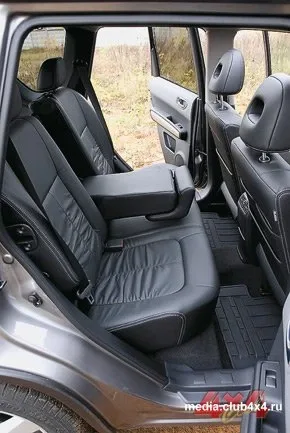
The main difference between the brothers is in the upper part of the body, because the floor is the same. You get into the Qashqai — and you feel it immediately. It's not cramped, but after the X-Trail's "apartment" you feel like you're in a little cave. Upon closer inspection, it's clear that the "cave" is not only smaller than the "apartment", but also finished less neatly. The plastic door sill trims have already come apart at the seams, and the trim around the CVT lever base looks sloppy. This subtly emphasizes the model's budget nature (after all, in its homeland, Nissan is traditionally an inexpensive manufacturer).
However, this does not spoil the overall impression of the Qashqai's interior. The instrument panel sets the tone — it is made clearly, briskly, fresh, and tasteful. But the X-Trail cannot boast of its "instrument cluster". It is rather faceless, gray, and nondescript. As if it were pressed into the plastic of the dashboard and trimmed for decency. And now it is not in the center, as in the first generation, but above the steering column — like everyone else's.
The X-Trail's fighting off-road spirit is revealed by the CVT lever, which tends to go into L mode first. Oh yes, the love of driving in low gear is a blood trait of off-road warriors. But the flimsy-looking Qashqai is also equipped with two removable tow hooks, and standard at that! And what is that on the panel to the left of the steering wheel? An ESP off button. So, a city car? Or does the manufacturer doubt it themselves?
SPECS: NISSAN QASHQAI
SPECS: NISSAN X-TRAIL
PLAYING ON EQUAL TERMS WITH A RESERVE OF TORQUE
First, we decided to check how the platform mates behave in the mud: as technical twins or as two completely different cars?
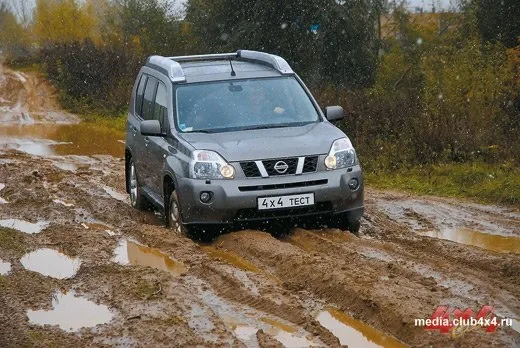
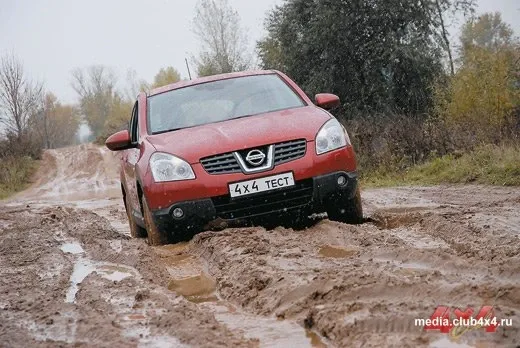
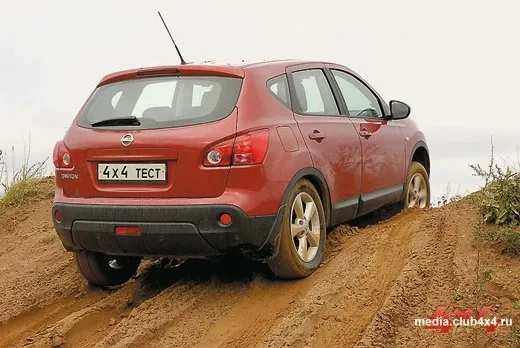
The first off-road run showed how the "red nut" easily tears the silver rival in the "climb a slippery hill" exercise. Simply put, the Qashqai made it, and the X-Trail did not. The extra kilograms got in the way. The Qashqai started from any point of the climb and with cheerful wheelspin climbed over the crest. It dug holes with its wheels, slipped a little, but felt in its element. The X-Trail, as a heavier fellow, required a good run-up, but even with a reserve of torque at the very end, when it needed to get over the berm with the rear wheels, it gave up and did not complete the maneuver.
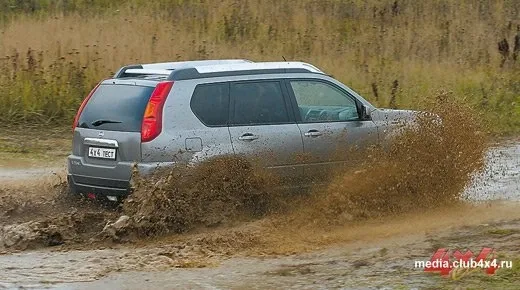
Having left the hill torn up by tires, we went in search of new adventures. Every new puddle or muddy mess with ruts confirmed, if not an advantage, then an equal game of the "almost car" with the "almost jeep". The X-Trail's off-road comfort was provided by the hill descent control system and a softer, more energy-intensive suspension setup that swallowed up uneven ground. The Qashqai, due to its lower weight and stiffer suspension, on the contrary, floated over bumps, which gave minimal comfort to the driver and passengers. True, the suspension rattled a bit, and its energy intensity was not always enough.
THE NEEDLE WAVERS AND LIES DOWN
The X-Trail with its 200 mm ground clearance has a very good approach angle of 29 degrees, but a rather average departure angle of 23 degrees due to the long trunk. The Qashqai's ground clearance is also 200 mm. The manufacturer does not specify approach/departure angles for it, but visually the rear bumper, unlike its brother, does not interfere at all. The wheels on both are the same size, but the Qashqai looks more harmonious than the X-Trail, which begs for more massive rollers.
The 2.0-liter engine finds it much easier to handle the light Qashqai than the heavier X-Trail. The same could be said about the CVT, but for the X-Trail it was seriously recalibrated. If in the Qashqai the tachometer needle immediately lies on the second half of the dial and does not leave it until you release the gas pedal, then in the X-Trail it imitates the operation of an automatic transmission and moves in steps, although it is clear that these steps are virtual.
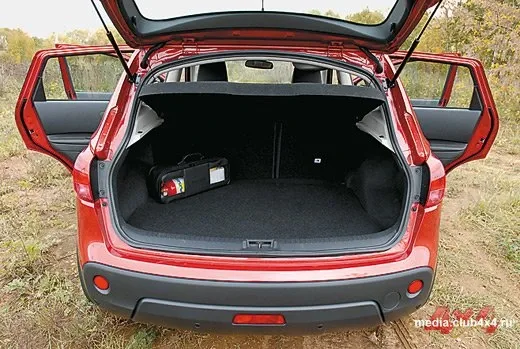
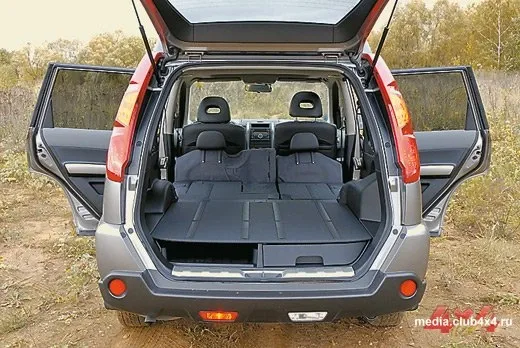
I think we found the answer to the main question of the test. These two cars have much more in common than is said in advertising. Both are suitable for reasonable off-roading, and the Qashqai is no less so than the X-Trail, and in some cases even more. In terms of handling and maneuverability, the Qashqai is ahead. Where the "big brother" is better is in ride smoothness, finish, and sound insulation. Well, and in capacity, of course. The rest, honestly, is from the evil one.