
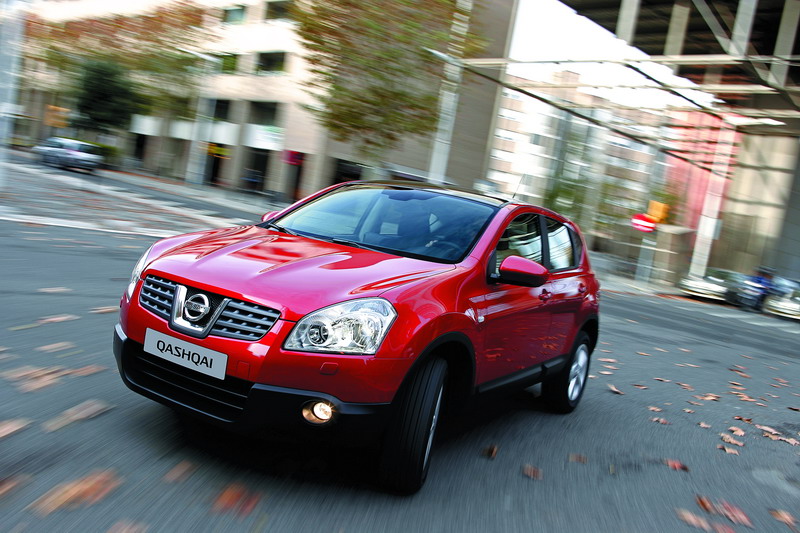
 Specialists from Nissan Design Europe and Nissan Technical Centre Europe worked on the appearance and technical component of the Qashqai. The model was tested on the roads of Spain and Scandinavia. Assembly will be set up at Nissan's largest enterprise, located in British Sunderland. So, we have a car created specifically for the European market, although it will also be sold in South Africa, Russia, and Japan. Specialists from Nissan Design Europe and Nissan Technical Centre Europe worked on the appearance and technical component of the Qashqai. The model was tested on the roads of Spain and Scandinavia. Assembly will be set up at Nissan's largest enterprise, located in British Sunderland. So, we have a car created specifically for the European market, although it will also be sold in South Africa, Russia, and Japan. | ||||
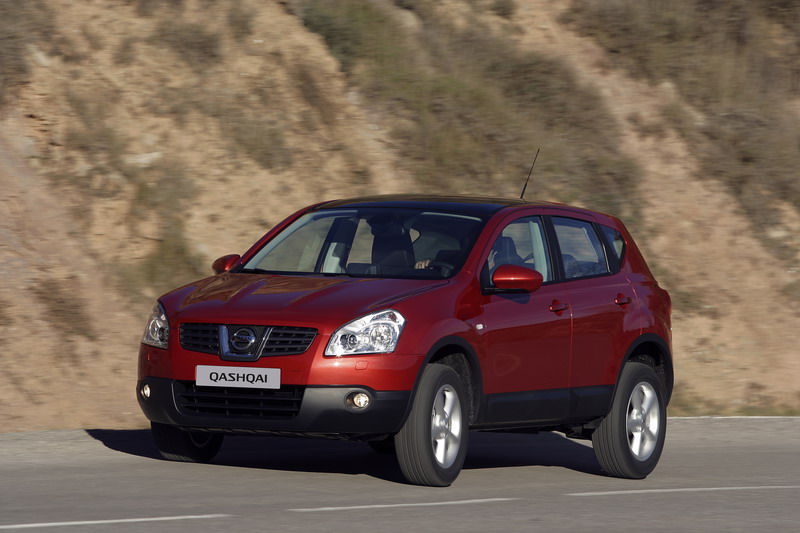 As I already noted, in terms of dimensions, the Qashqai gravitates toward the C segment. But at the same time, it is about 100 mm longer than typical representatives of the golf class, and surpasses them in height by 130–150 mm. The layout is classic for an SUV: ground clearance of 20 cm, elevated seating position, and a universal-type body. However, the creators assure that despite the crossover appearance, the car has purely passenger-car driving manners. Well, let's check this statement in practice… As I already noted, in terms of dimensions, the Qashqai gravitates toward the C segment. But at the same time, it is about 100 mm longer than typical representatives of the golf class, and surpasses them in height by 130–150 mm. The layout is classic for an SUV: ground clearance of 20 cm, elevated seating position, and a universal-type body. However, the creators assure that despite the crossover appearance, the car has purely passenger-car driving manners. Well, let's check this statement in practice…It turns out that the Qashqai can not only lure buyers from the C, D, and SUV segments like the Toyota RAV4, Honda CR-V, or Hyundai Tucson, but also interest those who are looking at numerous MPVs. After all, today crossovers and SUVs are in favor, not compact or mid-size vans. | ||||
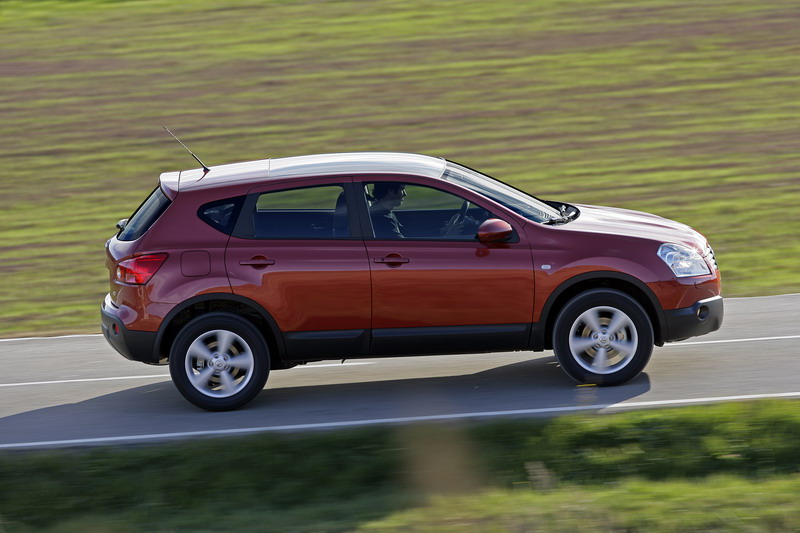
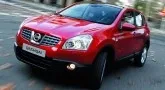
| Speaking of appearance, the "hybrid" approach is visible here too. Look at the lines of the side glazing. A spitting image of a mid-size hatchback. Plus a strong rake of the windshield, the beltline confidently rises toward the rear and only at the very end bends slightly, capturing the taillights. All this is a sign of a passenger car. (Although the design of the rear in the area of the rear pillars echoes the Murano.) But the lower perimeter is emphatically massive. Plastic trim typical of "parketniks" and large wheel arches. | ||||
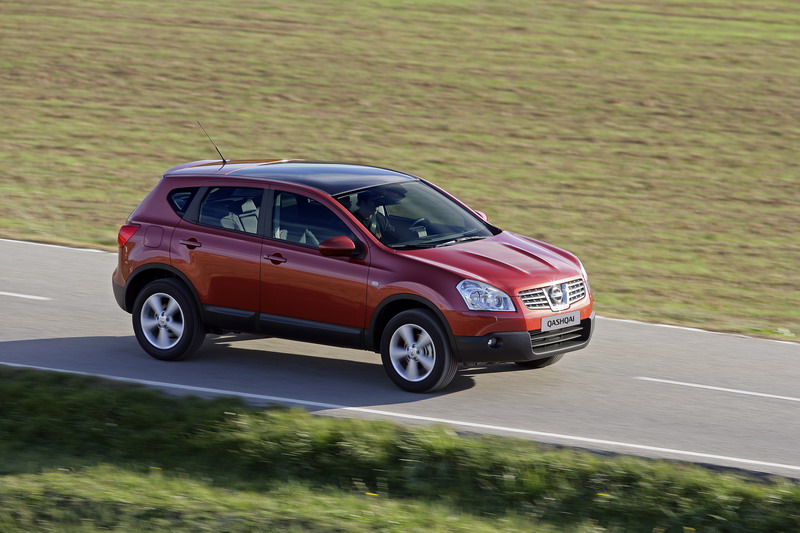 High sides create a feeling of security. Although what feeling is that? Passive safety here, judging by everything, is at a high level. Already in the base — six airbags. Plus active front headrests and belts with pretensioners. And the quality of the modern power structure of the body made of ultra-high-strength steel will soon be appreciated in independent crash tests. I think the results will be worthy. The C platform on which the car is built is shared with Renault, and this is one of the safest manufacturers. High sides create a feeling of security. Although what feeling is that? Passive safety here, judging by everything, is at a high level. Already in the base — six airbags. Plus active front headrests and belts with pretensioners. And the quality of the modern power structure of the body made of ultra-high-strength steel will soon be appreciated in independent crash tests. I think the results will be worthy. The C platform on which the car is built is shared with Renault, and this is one of the safest manufacturers.In terms of technical aspects, the Qashqai is definitely a passenger car. All-wheel drive with a clutch that redistributes torque between the axles can hardly be considered a sign of an off-roader. At the front — the usual McPherson on a subframe. At the rear — a multi-link, also on a subframe. Maximum attention was paid to handling here. For example, the front anti-roll bar is attached directly to the struts, which allows for more effective damping of rolls. The upper arms of the rear suspension are aluminum to reduce unsprung masses. | ||||
 The steering has an electric power steering familiar from Renault. The same as on the Megane and Scenic. And the new six-speed automatic transmission from the Japanese company Japco is used, for example, on the Grand Scenic. Unification in action. The steering has an electric power steering familiar from Renault. The same as on the Megane and Scenic. And the new six-speed automatic transmission from the Japanese company Japco is used, for example, on the Grand Scenic. Unification in action. | ||||
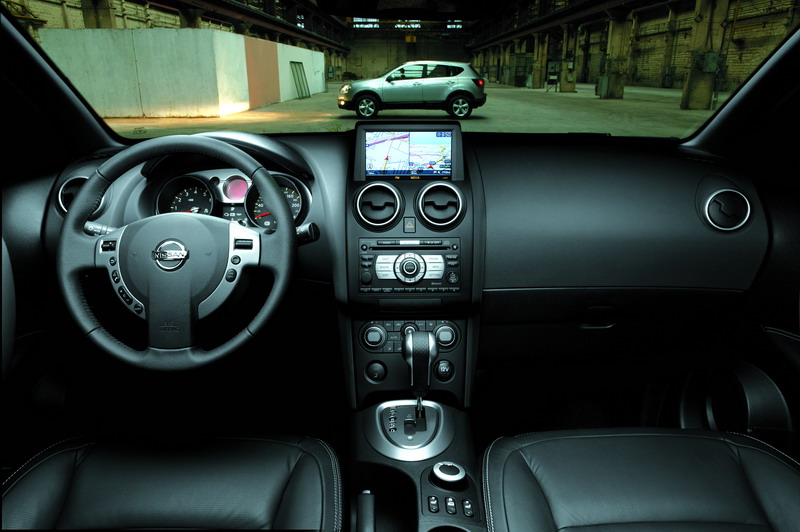
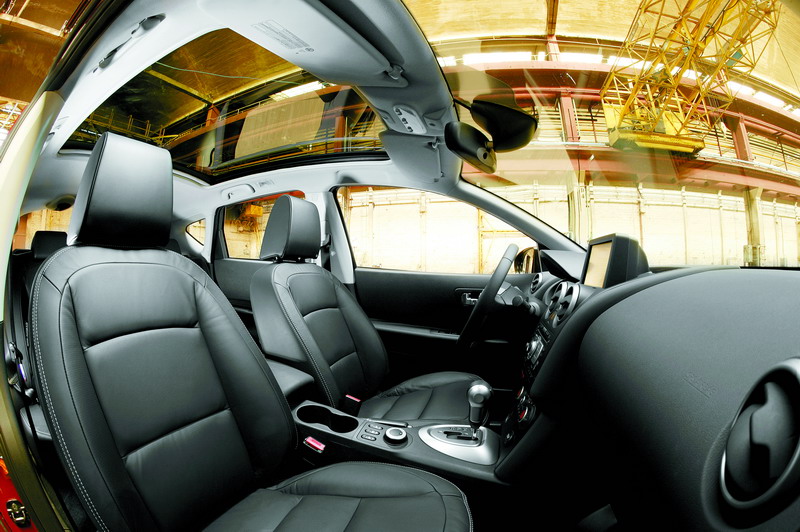
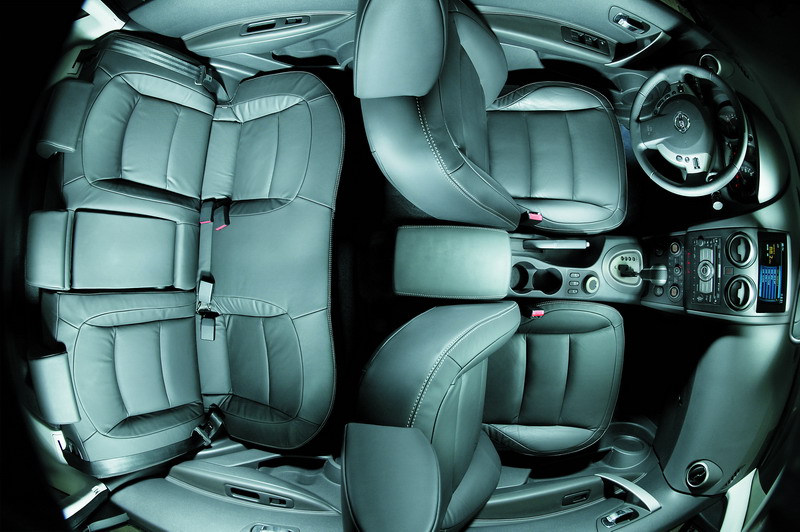
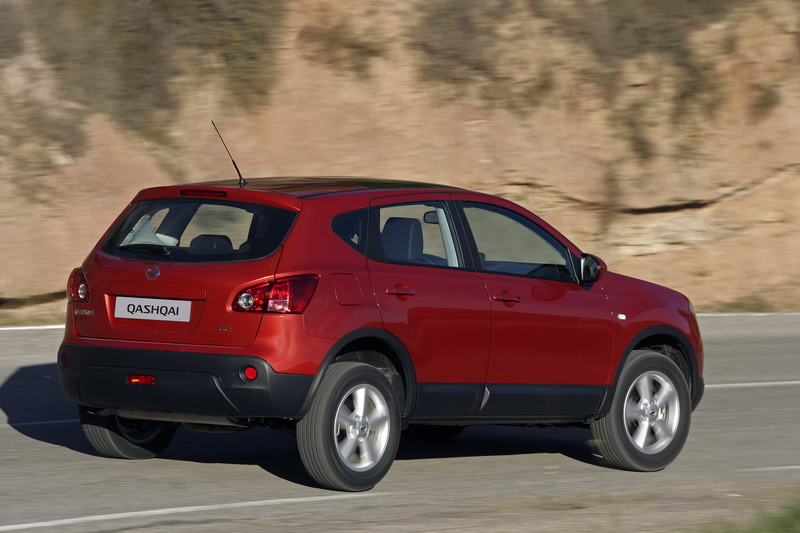 Getting behind the wheel is not difficult. The seat is noticeably higher than in the golf class, but lower than in older SUVs. The golden mean. The Qashqai interior is truly European, although the stylistics of modern Nissan have not gone anywhere. The front panel is made of pleasant elastic material. The plastic on the doors is a bit harder, but still not hard. The assembly is impeccable. Both outside and inside. I specially walked around the car, checked the gaps between the body panels and the fit of the seals — everything is perfect. Getting behind the wheel is not difficult. The seat is noticeably higher than in the golf class, but lower than in older SUVs. The golden mean. The Qashqai interior is truly European, although the stylistics of modern Nissan have not gone anywhere. The front panel is made of pleasant elastic material. The plastic on the doors is a bit harder, but still not hard. The assembly is impeccable. Both outside and inside. I specially walked around the car, checked the gaps between the body panels and the fit of the seals — everything is perfect.In addition to quality, the interior carries the idea of dividing the front part of the cabin into a driver zone and a passenger zone. In top versions, this is done with color: the driver's side of the panel is black, the passenger's side is brown. The idea is that the driver tunes into the drive, and the passenger relaxes. Conceptually, but not catchy. I liked the fully black panel more. | ||||
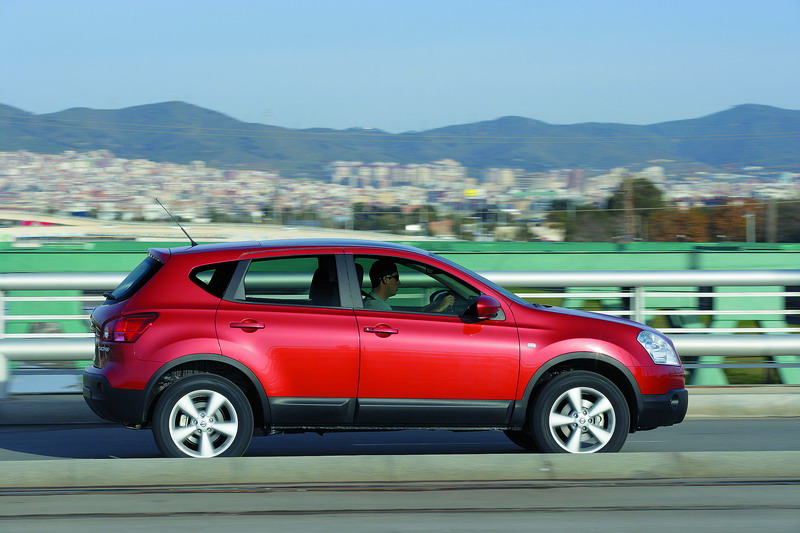 The ergonomics are well thought out, you get used to the car in a couple of minutes. True, the multifunction steering wheel seemed to me slightly overloaded. Moreover, the audio system volume control is not where I am used to. The steering wheel is three-spoke, in Nissan style. I liked the navigation. Let's dream… The seats with developed lateral support are good both in leather and in synthetic. The seating position is passenger-car-like, but you sit higher than in a regular car. Visibility is modern: forward — excellent, backward — not very, wide rear pillars interfere. Large mirrors and a parking camera save the day. The ergonomics are well thought out, you get used to the car in a couple of minutes. True, the multifunction steering wheel seemed to me slightly overloaded. Moreover, the audio system volume control is not where I am used to. The steering wheel is three-spoke, in Nissan style. I liked the navigation. Let's dream… The seats with developed lateral support are good both in leather and in synthetic. The seating position is passenger-car-like, but you sit higher than in a regular car. Visibility is modern: forward — excellent, backward — not very, wide rear pillars interfere. Large mirrors and a parking camera save the day. | ||||
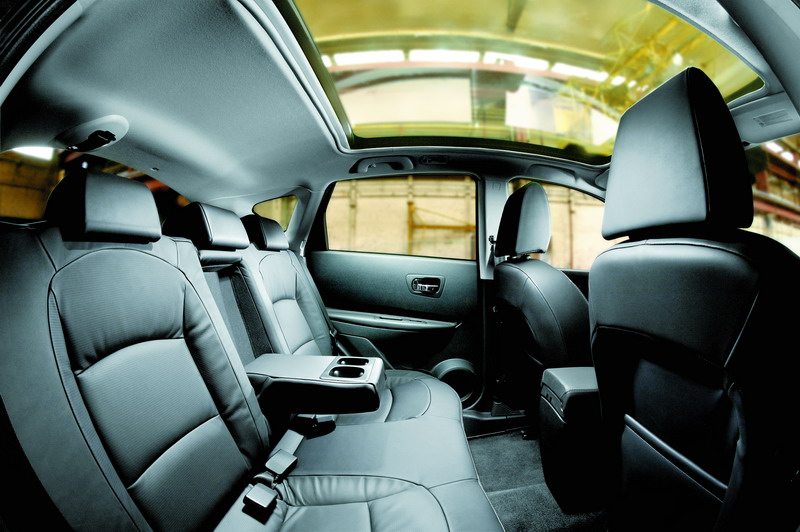
 You raise your eyes — and see a transparent roof, though only above the first row. Admiring the architecture of Barcelona through such a ceiling is a pleasure. But in Russia, we will not see the sun roof. Nissan management decided that the sights of our cities are not good enough for this option. Seriously, the climate and road conditions are to blame — the project's leading engineer John Fettis told me that the company cannot guarantee the preservation of this element over the long life of the car. By the way, for the same reasons, South Africa was also deprived of the transparent roof. You raise your eyes — and see a transparent roof, though only above the first row. Admiring the architecture of Barcelona through such a ceiling is a pleasure. But in Russia, we will not see the sun roof. Nissan management decided that the sights of our cities are not good enough for this option. Seriously, the climate and road conditions are to blame — the project's leading engineer John Fettis told me that the company cannot guarantee the preservation of this element over the long life of the car. By the way, for the same reasons, South Africa was also deprived of the transparent roof.The first discovery in the Qashqai is the magnificent electric power steering. On the Megane and Scenic, it was not like that. The same Fettis explained this by the electronics settings: the Qashqai was created primarily as a car for the driver. Perhaps the electric power steering here is no worse than on the Honda Civic, Audi A3, and VW Golf V. Some colleagues were confused by the selectivity of the system. The difference in the operation of the power steering at parking and at speed is felt more strongly than on any other car. I like this approach. With a heavy steering wheel, the Qashqai holds the straight line like big expensive cars; simple golf-class "hatches" never dreamed of such confidence. True, the surface under the wheels was mostly ideal. I wonder how the car will behave on a rut and broken asphalt? | ||||
 It is clear that I drove into the mountains with a special attitude, expecting that the serpentines would show the weak points of the chassis of this unusual crossover… But no. The tricky bends of mountain roads made me respect the asphalt capabilities of the Qashqai. In terms of handling, I think this car will leave behind more than one hatchback and sedan of classes C and D. Not to mention SUVs and minivans. By the way, despite the higher center of gravity, the Qashqai brakes impeccably. Without nose dives and deviations from the trajectory during intense deceleration. It is clear that I drove into the mountains with a special attitude, expecting that the serpentines would show the weak points of the chassis of this unusual crossover… But no. The tricky bends of mountain roads made me respect the asphalt capabilities of the Qashqai. In terms of handling, I think this car will leave behind more than one hatchback and sedan of classes C and D. Not to mention SUVs and minivans. By the way, despite the higher center of gravity, the Qashqai brakes impeccably. Without nose dives and deviations from the trajectory during intense deceleration. | ||||
| I note that I drove a front-wheel drive with a two-liter gasoline engine. This option was the most interesting — diesel versions will not be brought to Russia due to low demand, which is still characteristic for it. And the quality of Russian diesel fuel is a less important factor. In the mountains, the Qashqai gladly wrote intricate trajectories, the engine, torquey in the low and medium rev range, showed miracles of elasticity, allowing you to exit slow hairpins even on third gear without strain. True, closer to the limiter, the engine's ardor fades. Excellent suspension and steering settings, quick reactions… John Fettis was right, the Qashqai is indeed a driver's car. But the stability control system (optional) is strict, even with slight slipping of the front wheels, ESP promptly strangles the engine, leveling the trajectory. If you want to fool around, turn off the electronic collar. Which I did. And I did not regret it at all. The right car, it is pleasant to drive.
|
Origin of the species
The formula for the birth of the Nissan Qashqai is simple but original. It is a crossover with dimensions that position it close to the C-segment passenger car segment. The test drive of the model took place in Barcelona, which has already become a traditional meeting place for automotive novelties.
Test drive photos
Comments
No comments yet. Say the first word.