Once upon a time, pickups were positioned as an affordable alternative to SUVs. Today, however, the emphasis has shifted towards the cargo component. Are marketing gimmicks like zoom-zoom, SuperSelect systems, or rear coil springs becoming a thing of the past?
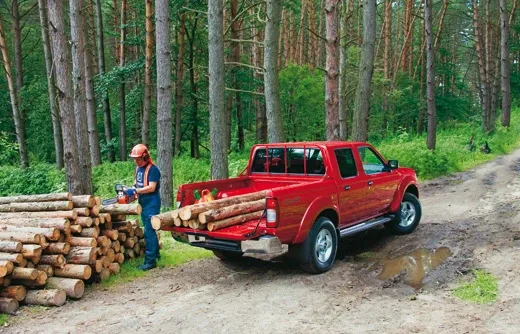
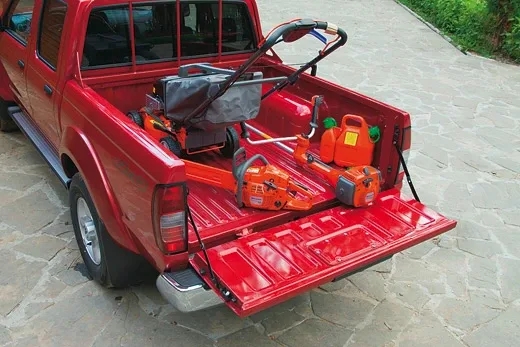
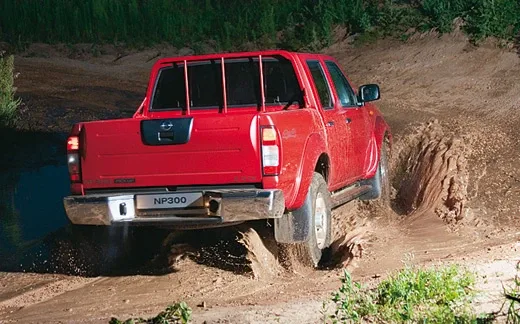
Nissan NP 300 is a purely utilitarian workhorse: load it, unload it, pile it on, dump it out. In the cab — an emergency crew of utility workers or stern women from the vegetable depot. No off-road joyrides with shish kebabs. Trophy raids to the Karelian gnats are over. "Old man, can I drop by today? No, beer later. I need to pick up two cubic meters of slate."
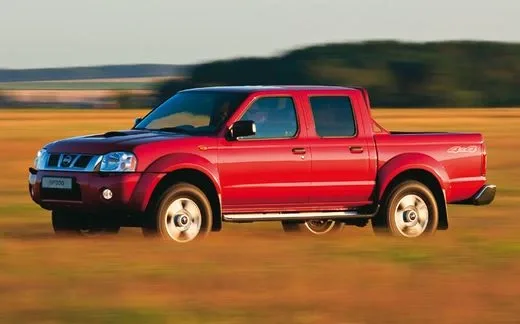
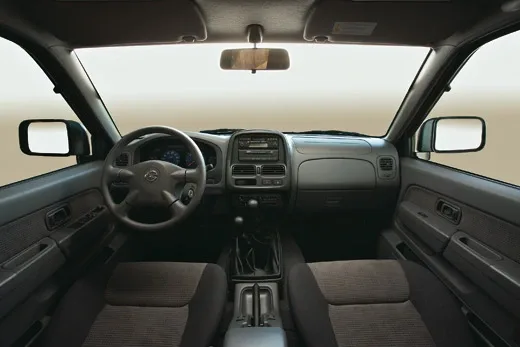
I suspect this is the only successful angle for the Nissan pickup. As commercial transport, it is quite acceptable, but in the role of a civilian vehicle, it looks depressing.
MAZDA IS RIGHT HERE
In terms of design and price, it almost replicates the Mazda BT-50. At the front — independent torsion bar suspension, at the rear — leaf springs. The transfer case has a low range. Under the hood — a 2.5-liter diesel. The rear differential is limited-slip.
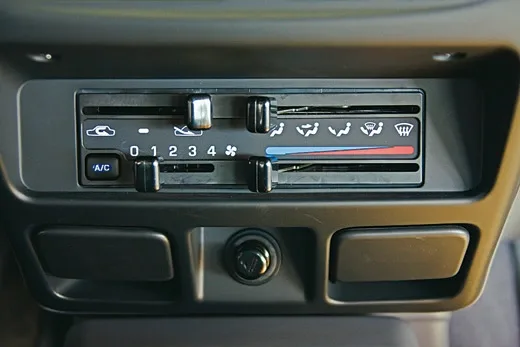
The starting price of the new model is 607 thousand rubles. You won't find a cheaper Japanese truck on our market. Will it catch on with the public? Let's look at the basic figures. Payload is 100 kg less than the Mazda. Cargo box dimensions — again not in Nissan's favor. Someone might criticize the outdated climate control sliders, but that, in my opinion, is nitpicking. However, the competitor has more convenient front hub disengagement: there you just press a button, but here you need to reverse one and a half meters.
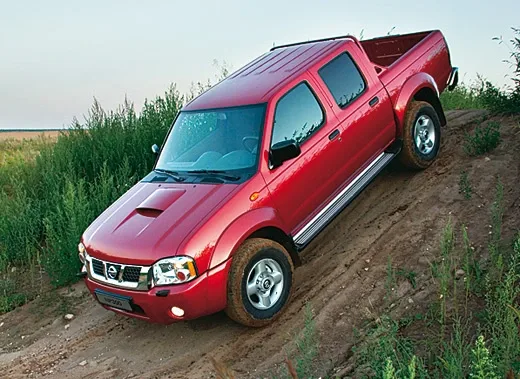
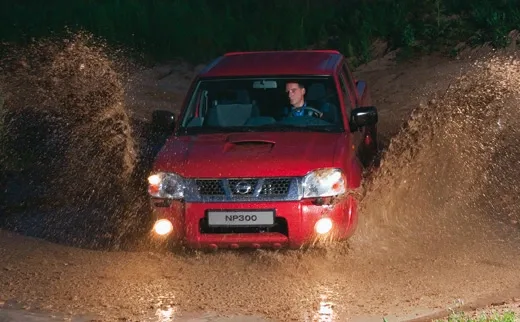
Entrepreneurs whose retail outlets are located in hilly terrain or among swamps will surely notice the not-so-great geometric off-road capability. The approach and departure angles of the NP 300 are 31 degrees, while the BT-50 has 34 and 33 degrees respectively. The wading depth is only 450 mm versus 750 mm for the rival.
For a purely work truck, this is, of course, not critical. But we are used to the BT-50 being bought mainly by fashionistas trying to stuff a quad bike into the bed, knocking down the fold-down sides and spreading the arches with 33-inch wheels. It's hard to accept that the new Nissan pickup is not designed for that. Then maybe it doesn't even need four-wheel drive?
HARD, BUT SOFT
Yes, the advertising doesn't lie — it's awaited by garbage bags and cable reels, but behind the wheel sits a living person, and I simply must tell you about his feelings. We set off from Moscow to the Drakino airfield, where the Japanese organized an improvised off-road course. The distance is just over a hundred kilometers, but that was more than enough.
About fifteen years ago, a taxi driver named Lenya used to visit the bathhouse on Rzhevsky Lane, near Gilyarovsky Street. He loved to splash three ladles of boiling water onto the heater, after which he invited everyone to crawl into the steam room — standing at full height there was impossible. And he would say: "Look how I did it — hard, but soft!" Things are roughly the same with the ride smoothness of our pickup.
The suspension of the test truck so methodically works through joints and potholes that it becomes unclear where this sweet longitudinal rocking comes from. It would be logical to chalk it all up to soft shock absorbers and stiff leaf springs, but that's too simple an explanation. Maybe the engineers professed some philosophy of dualism? Or is it that same Lenya who went to Japan and now works at Nissan, nostalgic for the steam room.
Yes, the advertising doesn't lie — it's awaited by garbage bags and cable reels, but behind the wheel sits a living person, and I simply must tell you about his feelings. We set off from Moscow to the Drakino airfield, where the Japanese organized an improvised off-road course. The distance is just over a hundred kilometers, but that was more than enough.
About fifteen years ago, a taxi driver named Lenya used to visit the bathhouse on Rzhevsky Lane, near Gilyarovsky Street. He loved to splash three ladles of boiling water onto the heater, after which he invited everyone to crawl into the steam room — standing at full height there was impossible. And he would say: "Look how I did it — hard, but soft!" Things are roughly the same with the ride smoothness of our pickup.
The suspension of the test truck so methodically works through joints and potholes that it becomes unclear where this sweet longitudinal rocking comes from. It would be logical to chalk it all up to soft shock absorbers and stiff leaf springs, but that's too simple an explanation. Maybe the engineers professed some philosophy of dualism? Or is it that same Lenya who went to Japan and now works at Nissan, nostalgic for the steam room.
How long can an average family (without extreme rafting experience) endure in such a vehicle? Children might be delighted by the impacts on the body and the sea rocking, but an adult after 150–200 kilometers of travel will be exhausted. I myself happened to ride a bit on the rear bench along that very road to Drakino — simple off-road. A couple of hits to the head — and I spent the rest of the trip half-reclining. On bumps, it shakes like in a concrete mixer. And there's not much room in the back row either… But the family won't be riding here! I forgot again!
ENOUGH TORQUE, BUT…
On the highway, it's a bit easier. Although body roll and sluggish steering response are such that I wouldn't risk swerving to avoid a moose — it's easier to close my eyes. The truck reacts to sharp maneuvers like a boat. Give more feedback! Retune the steering! Sorry, I forgot again — this is commercial transport.
In our test trip, there were two bags of cement and three logs in the bed. I kept wondering: how would it behave with a full load? Based on our testing experience, the rated payload of many pickups is overstated, sometimes by half. But I have no doubt that the NP 300 will pull the stated ton. Perhaps even more — the diesel has enough torque. However, the chassis characteristics are such that driving safely with such weight will be difficult, even observing speed limits. But we'll check soon: a test with a ton on board is ahead.
On the highway, it's a bit easier. Although body roll and sluggish steering response are such that I wouldn't risk swerving to avoid a moose — it's easier to close my eyes. The truck reacts to sharp maneuvers like a boat. Give more feedback! Retune the steering! Sorry, I forgot again — this is commercial transport.
In our test trip, there were two bags of cement and three logs in the bed. I kept wondering: how would it behave with a full load? Based on our testing experience, the rated payload of many pickups is overstated, sometimes by half. But I have no doubt that the NP 300 will pull the stated ton. Perhaps even more — the diesel has enough torque. However, the chassis characteristics are such that driving safely with such weight will be difficult, even observing speed limits. But we'll check soon: a test with a ton on board is ahead.