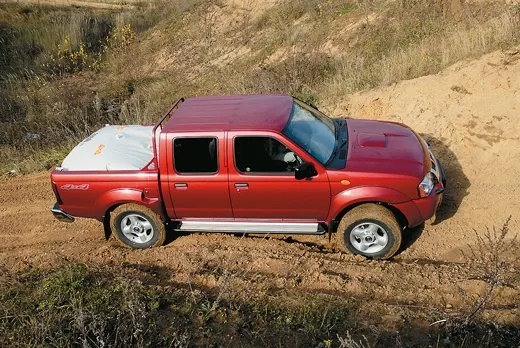
Our previous experiment with loading the main rival Mazda BT-50 ended with a deformed roof — during hard braking, barrels of water pierced the rear wall of the cab. Then Mazda, although it managed the maximum weight, was frankly scary to drive. The ballast raised the center of gravity and unloaded the front axle, so I limited myself to moving strictly in a straight line. Now that it's NP300's turn for testing, we approached the matter with more preparation.
CRAWL CONTROL
The first acquaintance with the Nissan NP300 Pick-up took place three months ago, and the impressions were rather restrained. Handling did not impress. The ride settings and steering were disappointing. The truck had one last trump card — to show itself with a load in the bed. Given our previous experience, we abandoned the dangerous plastic barrels and purchased a soft 1000-liter container, which additionally lowered the center of gravity of the test vehicle. And we headed to the test site.
The first acquaintance with the Nissan NP300 Pick-up took place three months ago, and the impressions were rather restrained. Handling did not impress. The ride settings and steering were disappointing. The truck had one last trump card — to show itself with a load in the bed. Given our previous experience, we abandoned the dangerous plastic barrels and purchased a soft 1000-liter container, which additionally lowered the center of gravity of the test vehicle. And we headed to the test site.
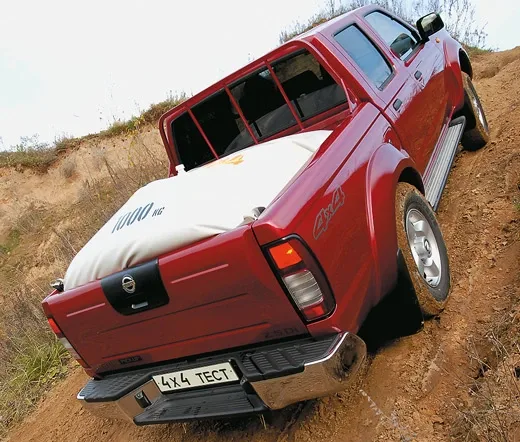
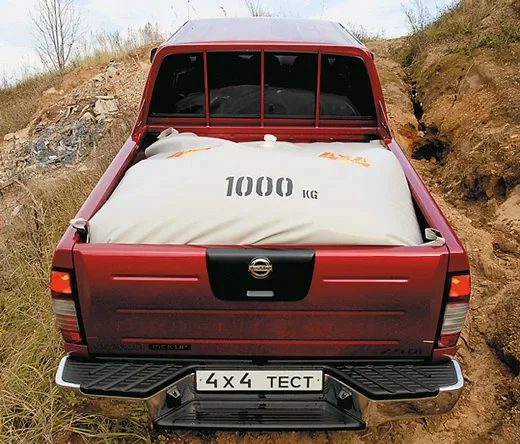
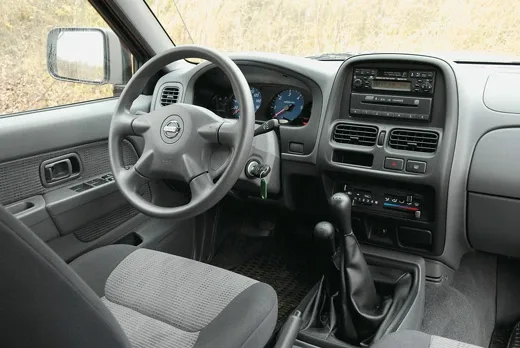
And here it revealed itself! None of the competitors could compete with it! I drove onto the uneven terrain, engaged first high gear, then second and third. The car went perfectly, without the slightest effort. I switched to low range and took my foot off the accelerator — pressing the gas made no sense, the pickup moved on its own. I remembered that the last time this happened was on a Toyota LC200 with its "crawl control" system, which allows you to drive off-road at a set speed without touching the gas pedal.
First low gear is available on all pickups, but on the NP300 I shifted to second, third, and fourth. On any of these gears, without throttle, the vehicle conquered rough terrain as if on asphalt. And it climbed fairly steep inclines on first and second by itself. There would be nothing special about this if not for the ton of cargo in the bed.
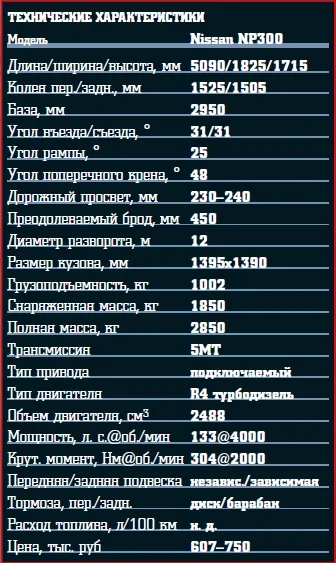
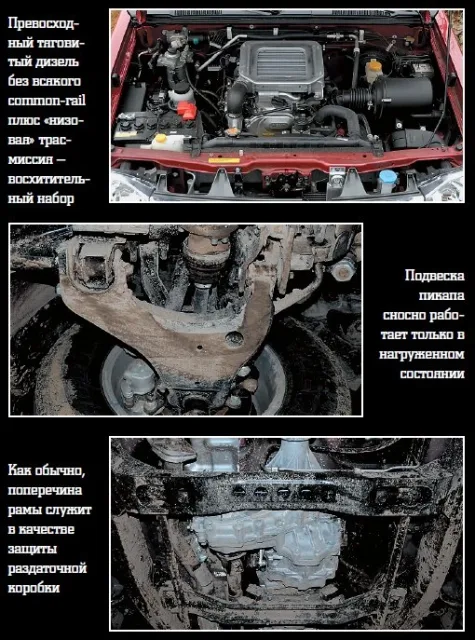
I return again to the comparison with the Mazda BT-50. Why wasn't it as torquey? After all, its diesel is of similar displacement, and the torque is even 30 Nm more. I had to look into the technical details. We requested data on competitors. It turned out that the Nissan transmission is designed for higher loads. The final drive ratio is 1:4.4 (Mazda has 1:3.7). Moreover, the BT-50 meets Euro-4 standards, while the NP300 meets Euro-3, and the more environmentally friendly the diesel, the weaker it is at low revs. Ecology is wonderful, but it would be better to ban disposable tableware and plastic bags.
SPECS: NISSAN NP300
NISSAN IS ALSO MORE PROFITABLE
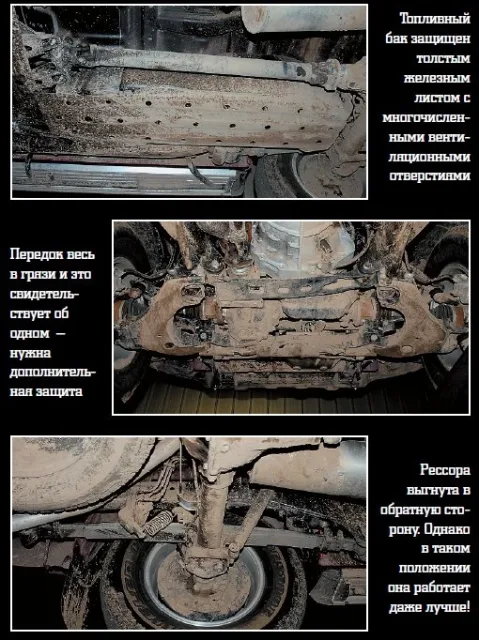
Maybe it's worth using the Nissan as a base for off-road tuning? We know a Russian master who repaired Nissan pickups in New Guinea. He spoke of them like this: "These machines are indestructible." And lifting the body is not a problem. The main thing to remember is that the factory fuel tank protection, although metal, is attached with only two bolts and easily bends. The steering pitman arm and transfer case also need additional protection.
Maybe it's worth using the Nissan as a base for off-road tuning? We know a Russian master who repaired Nissan pickups in New Guinea. He spoke of them like this: "These machines are indestructible." And lifting the body is not a problem. The main thing to remember is that the factory fuel tank protection, although metal, is attached with only two bolts and easily bends. The steering pitman arm and transfer case also need additional protection.

However, the manufacturer focuses on the commercial use of its vehicle. Therefore, if you need to transport heavy loads, especially in difficult conditions, we unconditionally choose the Nissan. And when comfort and handling are the priority — the Mazda. And don't forget that the oil in the zoom-zoom needs to be changed every 5000 km, while the NP300 needs it half as often.