
 How does the fate of a car usually unfold? First, it goes into production, then it undergoes a facelift, then it is discontinued and replaced by a new model. The first generation Nissan Murano reached Russia only in 2005 — a couple of years after the start of US sales, but it skipped the stage of exterior updates. Perhaps that is why the new model so closely resembles its predecessor? Sounds like nonsense? Then here is a more plausible explanation: in Nissan, most likely, they reasoned that a radically new look is not a reason to abandon what has already proven its worth. And the fact that the previous Murano was good is beyond dispute. In 2003–2005, when it was impossible to officially buy this crossover in Russia, “gray” dealers showed unprecedented interest in it — and is that not confirmation? And after 2005, sales only grew, and even the rather respectable age of the car did not hinder them. How does the fate of a car usually unfold? First, it goes into production, then it undergoes a facelift, then it is discontinued and replaced by a new model. The first generation Nissan Murano reached Russia only in 2005 — a couple of years after the start of US sales, but it skipped the stage of exterior updates. Perhaps that is why the new model so closely resembles its predecessor? Sounds like nonsense? Then here is a more plausible explanation: in Nissan, most likely, they reasoned that a radically new look is not a reason to abandon what has already proven its worth. And the fact that the previous Murano was good is beyond dispute. In 2003–2005, when it was impossible to officially buy this crossover in Russia, “gray” dealers showed unprecedented interest in it — and is that not confirmation? And after 2005, sales only grew, and even the rather respectable age of the car did not hinder them. |
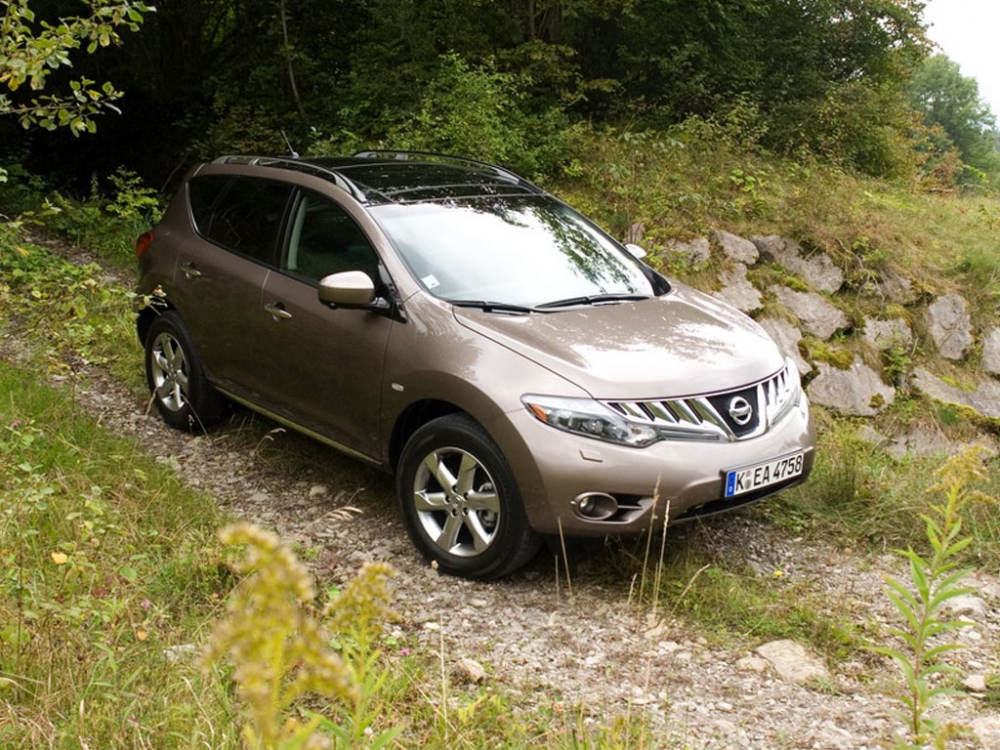 The first Murano is still loved by many today. Its recognizable silhouette — with a strongly inclined radiator grille and windshield, with a characteristic break in the beltline at the rear — sets it apart from the countless mass of various soft-roaders and crossovers on city streets. Precisely city streets, because no one seriously intended to storm off-road in the Murano, even despite the serious 3.5-liter engine and all-wheel drive (in the States there were also front-wheel-drive versions). This is a typical city car for countries where space on the roads is not yet valued — primarily for the USA and Russia. The first Murano is still loved by many today. Its recognizable silhouette — with a strongly inclined radiator grille and windshield, with a characteristic break in the beltline at the rear — sets it apart from the countless mass of various soft-roaders and crossovers on city streets. Precisely city streets, because no one seriously intended to storm off-road in the Murano, even despite the serious 3.5-liter engine and all-wheel drive (in the States there were also front-wheel-drive versions). This is a typical city car for countries where space on the roads is not yet valued — primarily for the USA and Russia. |
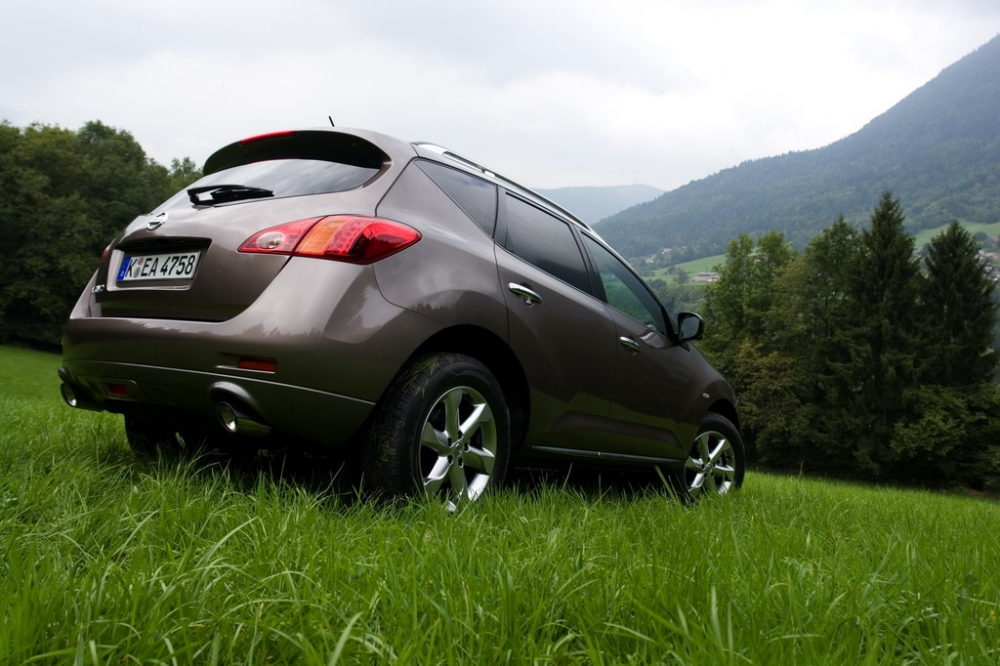
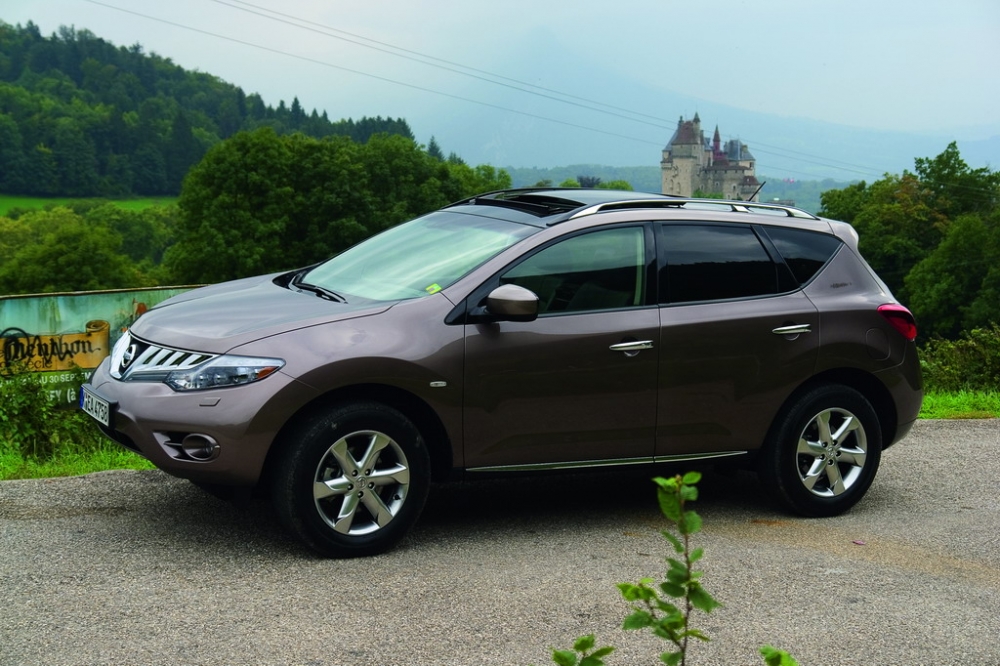 The new Murano has gained solidity and matured — like a middle manager who got a promotion, started a family, and, as befits his status, acquired a small belly. This is especially noticeable on the massive, inflated wheel arches. But at the same time, our “boss” has acquired a more expensive suit: all body panels are new, with more gloss and style. On the “nose” now sport glasses-shaped headlights of a very strange shape, framed in an expensive chrome radiator grille. The backpack behind the back — the luggage compartment lid with vertical taillights — has been replaced by a strict briefcase: the fifth door is made in the spirit of the Qashqai, and the triangular lights have moved to their usual horizontal place. The new Murano has gained solidity and matured — like a middle manager who got a promotion, started a family, and, as befits his status, acquired a small belly. This is especially noticeable on the massive, inflated wheel arches. But at the same time, our “boss” has acquired a more expensive suit: all body panels are new, with more gloss and style. On the “nose” now sport glasses-shaped headlights of a very strange shape, framed in an expensive chrome radiator grille. The backpack behind the back — the luggage compartment lid with vertical taillights — has been replaced by a strict briefcase: the fifth door is made in the spirit of the Qashqai, and the triangular lights have moved to their usual horizontal place. |
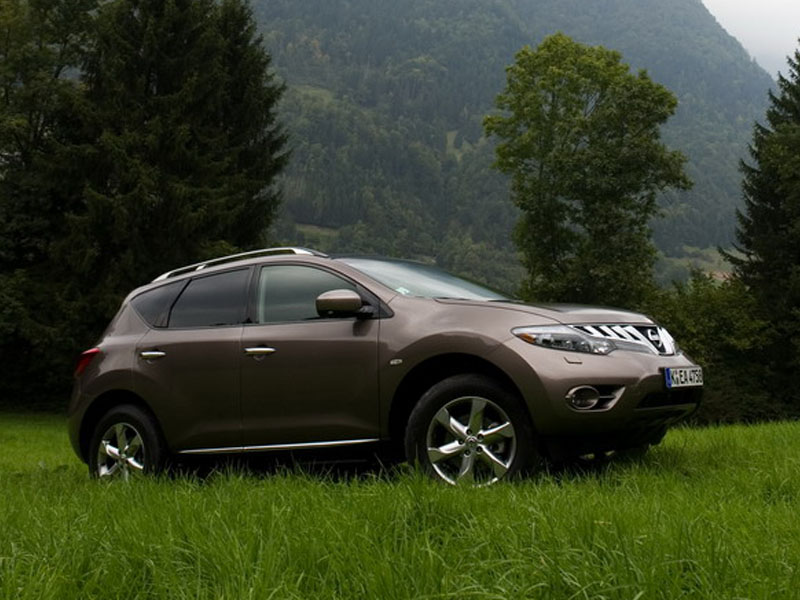
 And yet, from almost any angle, the features of that young manager, unburdened by family and career, who could easily show up to work after a night at the club, show through. This is not surprising: the proportions and many dimensions have remained the same. The width, height, and wheelbase have not changed at all. Only the length has grown — by 64 mm, mainly due to new bumpers. What kind of disco is that, what stormy evening with friends! If it is a club, then only a VIP-lounge — in the cozy seat of the completely updated interior. Instead of a bottle of beer — a glass of single malt whiskey, instead of a Kent cigarette in the teeth — a Cuban Cohiba. And yet, from almost any angle, the features of that young manager, unburdened by family and career, who could easily show up to work after a night at the club, show through. This is not surprising: the proportions and many dimensions have remained the same. The width, height, and wheelbase have not changed at all. Only the length has grown — by 64 mm, mainly due to new bumpers. What kind of disco is that, what stormy evening with friends! If it is a club, then only a VIP-lounge — in the cozy seat of the completely updated interior. Instead of a bottle of beer — a glass of single malt whiskey, instead of a Kent cigarette in the teeth — a Cuban Cohiba. |
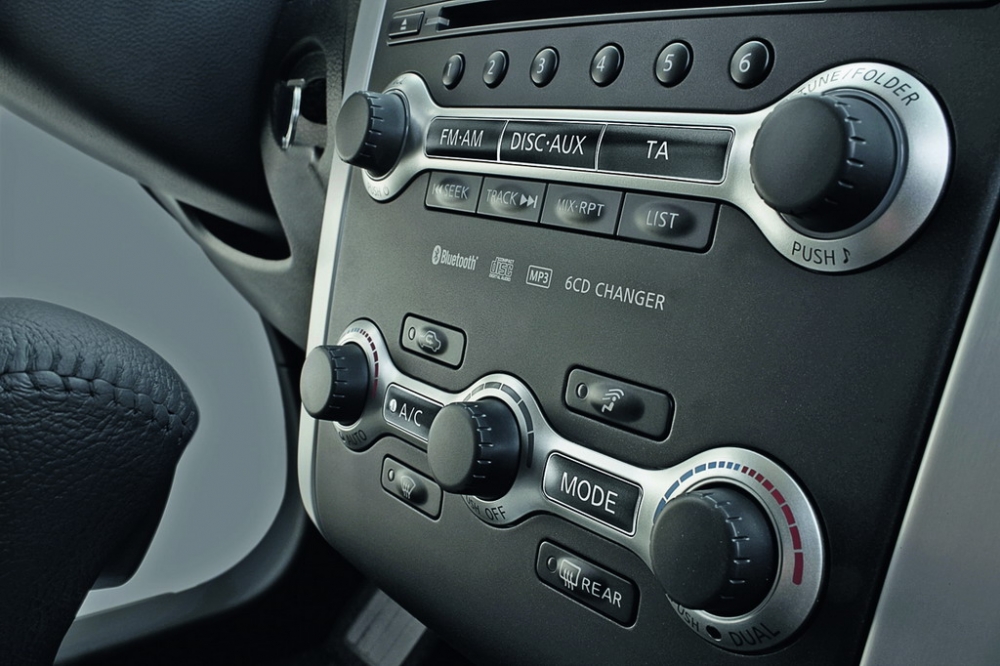
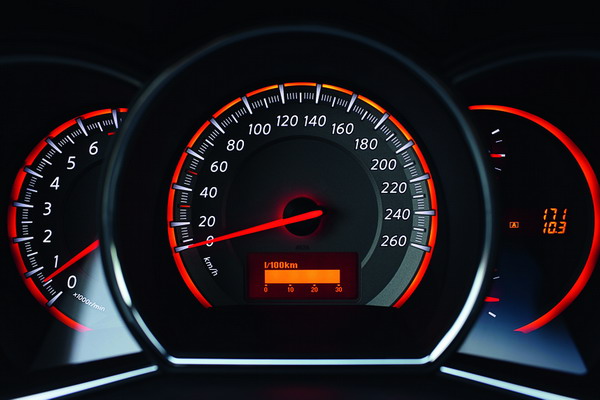
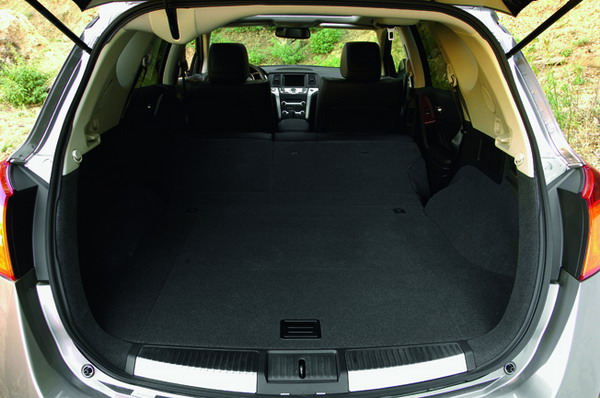
 The playful motorcycle instruments of the previous Murano have given way to a calm and perfectly readable instrument panel — like on the Teana. The steering wheel is from there too. And overall, the crossover’s interior strongly resembles the interior of the related sedan (recall that both are built on the D platform of the Renault-Nissan alliance). The same feeling of excellent quality, comfort, and decent sound insulation, without which a serious person cannot do. By the way, if after a hard day he wants to be alone with himself and watch a DVD, he will have two screens at his disposal: one on the center console, the other in the ceiling in front of the second row. The first is additionally equipped with navigation that works perfectly in Europe with very clear graphics. And if that gets boring, you can simply gaze at the stars through the huge panoramic roof. The playful motorcycle instruments of the previous Murano have given way to a calm and perfectly readable instrument panel — like on the Teana. The steering wheel is from there too. And overall, the crossover’s interior strongly resembles the interior of the related sedan (recall that both are built on the D platform of the Renault-Nissan alliance). The same feeling of excellent quality, comfort, and decent sound insulation, without which a serious person cannot do. By the way, if after a hard day he wants to be alone with himself and watch a DVD, he will have two screens at his disposal: one on the center console, the other in the ceiling in front of the second row. The first is additionally equipped with navigation that works perfectly in Europe with very clear graphics. And if that gets boring, you can simply gaze at the stars through the huge panoramic roof. |
 Despite the career growth, the Murano is not going to age either in soul or body. The engine and transmission are essentially the same — a 3.5-liter V6, a continuously variable transmission CVT Xtronic, and all-wheel drive ALL MODE 4x4-I — but they have been noticeably modernized. Power and torque have increased, the CVT works even smoother. Manual mode is an unnecessary whim for a serious person; the transmission itself constantly maintains optimal traction. But the imitation of “steps” is not always appropriate. Especially annoying are the hang-ups at 6000 rpm during intense acceleration — the engine screams like a madman. Perhaps this makes the dynamics better, but it clearly stands out from the overall atmosphere of comfort and measuredness. All-wheel drive, which now at speeds up to 80 km/h can preemptively engage the rear axle, will only help on “parquet,” and in slightly more serious conditions it will be powerless. Despite the career growth, the Murano is not going to age either in soul or body. The engine and transmission are essentially the same — a 3.5-liter V6, a continuously variable transmission CVT Xtronic, and all-wheel drive ALL MODE 4x4-I — but they have been noticeably modernized. Power and torque have increased, the CVT works even smoother. Manual mode is an unnecessary whim for a serious person; the transmission itself constantly maintains optimal traction. But the imitation of “steps” is not always appropriate. Especially annoying are the hang-ups at 6000 rpm during intense acceleration — the engine screams like a madman. Perhaps this makes the dynamics better, but it clearly stands out from the overall atmosphere of comfort and measuredness. All-wheel drive, which now at speeds up to 80 km/h can preemptively engage the rear axle, will only help on “parquet,” and in slightly more serious conditions it will be powerless. |
 It seems that, noticing that same grown belly, the “boss” decided to go to the gym and “pump up” the suspension. The Murano now has more aluminum parts — this reduces unsprung masses. At the front — an updated MacPherson, at the rear — a completely new multi-link. But Nissan’s workout program in the “gym” is gentle: the suspension settings are clearly shifted towards comfort. There is no sharp handling here at all. The steering has very conditional feedback, and body rolls in corners are large. But on a straight line, the Murano, like a cruiser, sails forward assertively, barely rocking on the waves of asphalt and literally lulling passengers to sleep. It seems that, noticing that same grown belly, the “boss” decided to go to the gym and “pump up” the suspension. The Murano now has more aluminum parts — this reduces unsprung masses. At the front — an updated MacPherson, at the rear — a completely new multi-link. But Nissan’s workout program in the “gym” is gentle: the suspension settings are clearly shifted towards comfort. There is no sharp handling here at all. The steering has very conditional feedback, and body rolls in corners are large. But on a straight line, the Murano, like a cruiser, sails forward assertively, barely rocking on the waves of asphalt and literally lulling passengers to sleep. |
 And what is the bottom line? Undoubtedly, the Murano deserved this promotion. It deserved it with a good reputation and big sales of the first generation. Those who previously wanted such a car but hesitated due to the model’s aging are unlikely to turn away from the new Murano: it has retained many features of its predecessor and acquired a lot of new things, albeit not always noticeable at first glance. The new model will appear in Russian dealerships early next year, and we are already curious what position the next-generation crossover will take? And what is the bottom line? Undoubtedly, the Murano deserved this promotion. It deserved it with a good reputation and big sales of the first generation. Those who previously wanted such a car but hesitated due to the model’s aging are unlikely to turn away from the new Murano: it has retained many features of its predecessor and acquired a lot of new things, albeit not always noticeable at first glance. The new model will appear in Russian dealerships early next year, and we are already curious what position the next-generation crossover will take? |
 |
 |
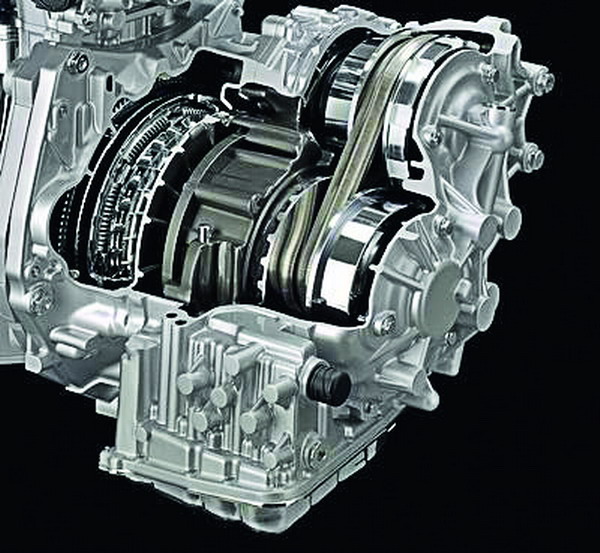 FOR YOUR INFORMATION FOR YOUR INFORMATIONCVT Xtronic transmission In the new generation of the CVT (Continuously Variable Transmission), bearings with a low friction coefficient were used, seals were changed, and the pressure regulation system was revised — this made it possible to reduce friction in the mechanism by 20%. The updated Xtronic also received a different “brain.” The result is smoother and faster operation of the unit, as well as fuel savings. |
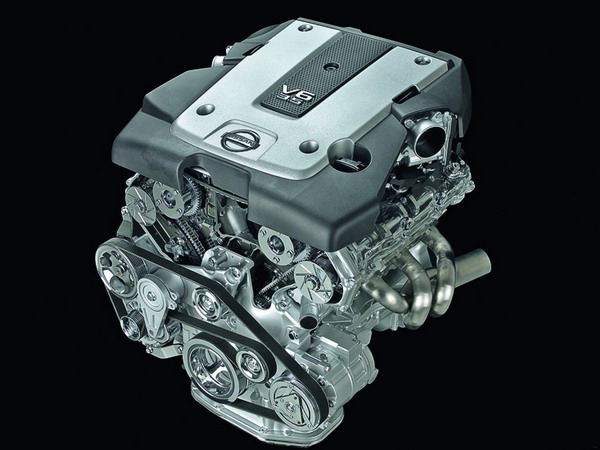 V6 VQ35DE engine V6 VQ35DE engineThe power unit of the new Murano is an evolution of the previous 24-valve V6 with two camshafts. The 3.5-liter VQ series engine has been included in the “Ten Best Engines of the World” list by the American magazine Ward’s Auto World Magazine every year since 1995. The engine has an aluminum block and head, and is equipped with variable intake (NICS) and variable valve timing (C-VTC) systems. In the new generation, the mass was further reduced (lightened pistons and connecting rods, hollow camshafts), and friction properties were improved. The result: power increased by 22 hp to 256 hp (in European specification) at 6000 rpm, torque added 16 Nm and reached 334 Nm at 4400 rpm. In Russia, power is limited to 249 hp — this is already familiar from the Teana and looks quite logical given our tax realities. |
Increase
Everyone wants to make a good career. Naturally, for this you need to work productively, build a reputation, and gain experience. But then how pleasant it is to get a new, more significant and higher-paying position, isn't it? The Nissan Murano has grown to its first promotion.
Test drive photos
Comments
No comments yet. Say the first word.