
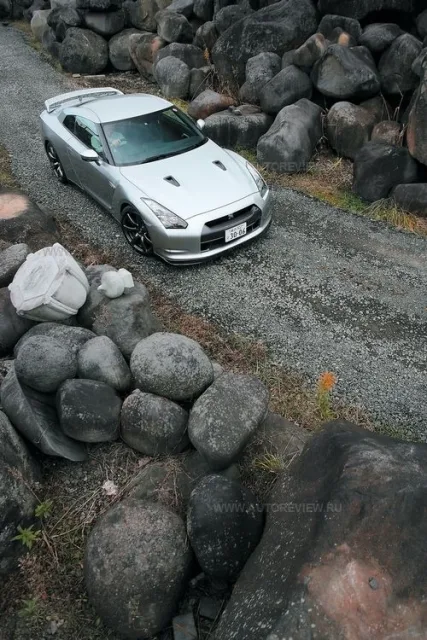
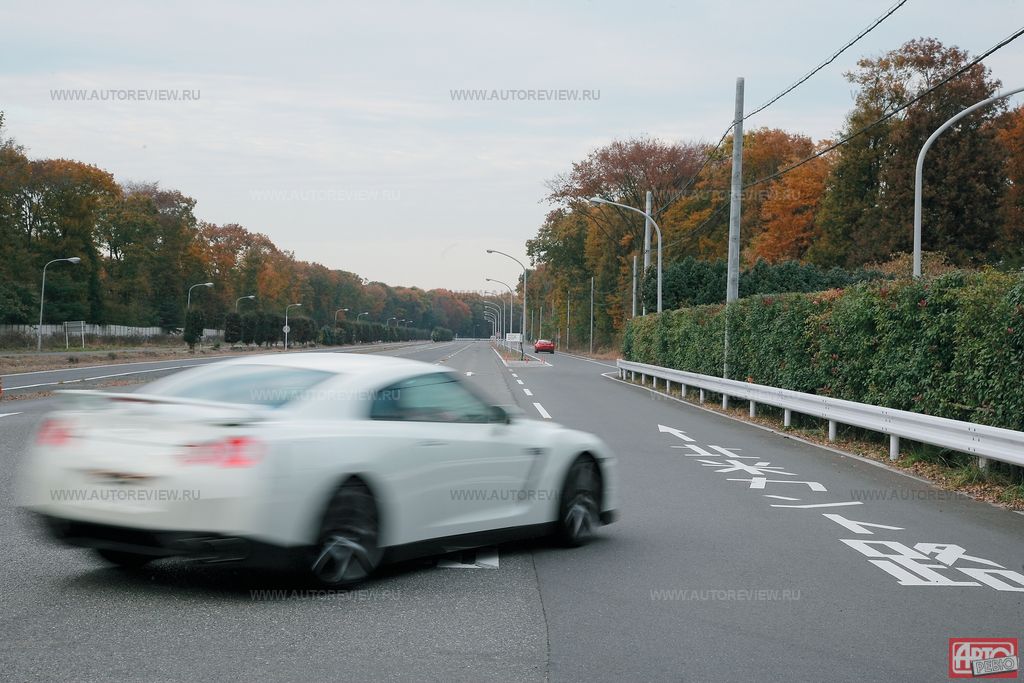
With the right paddle shifter, I engage first gear. The throttle needs to be handled with utmost delicacy: I well remember how the "robots" on the Lamborghini Gallardo and Audi R8 jerked—first emptiness, then a sharp shove. But here—it's real magic. As soon as I took my foot off the brake, the car moved off incredibly smoothly, almost imperceptibly. As if under the hood there's a regular automatic with a torque converter! And everything continues like clockwork: smoothly, without a single jerk.
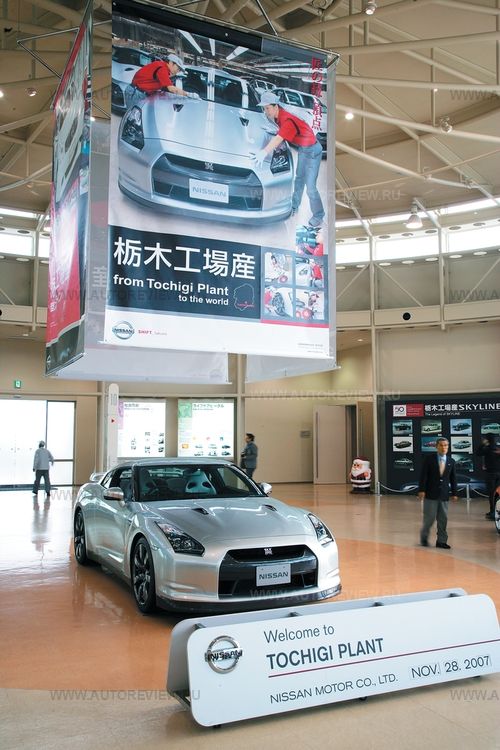
The Nissan GT-R is assembled at the plant in Tochigi, which was built 40 years ago. The same assembly line produces the Nissan Skyline coupe and sedan (known in Russia and America as the Infiniti G35), the larger Nissan Cima sedan (Infiniti Q45), and the flagship Nissan President. There's also a second line where the Nissan Fuga sedan (Infiniti M45/M35) and Nissan Maxima are assembled, as well as the Fairlady Z coupe and roadster, known to us as the Nissan 350Z.
In total, the plant produces 23,000 cars a month (276,000 a year). Nearby are the stamping facility, the final drive and suspension components shop, and a research and development center with its own test track, including an oval with banked turns—where you can reach speeds up to 250 km/h
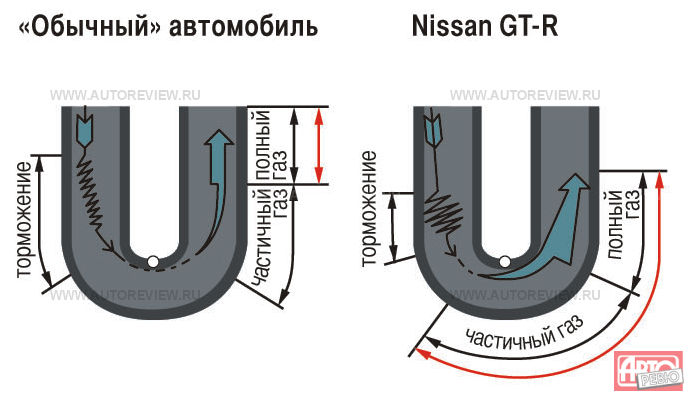
Mitsuno-san claimed that in corners, the Nissan GT-R brings much more pleasure than a regular car: supposedly, after braking, you can get on the throttle earlier, without waiting for the apex. And that's indeed true. I'll add from myself: it's better to plan braking so that the first steering input comes in the final phase of deceleration—the car willingly dives into the turn, and that's when you can confidently press the gas. A slight drift, the front axle kicks in—and with powerful acceleration, gradually reducing understeer, the Nissan gains speed along the arc. Bravo, Mitsuno-san!
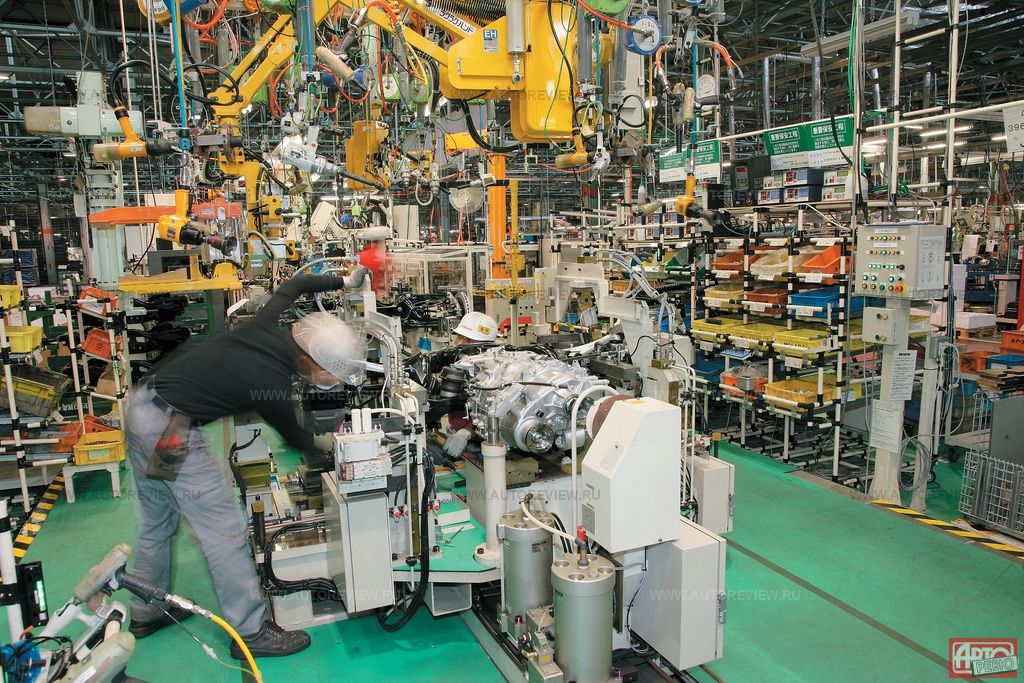 | 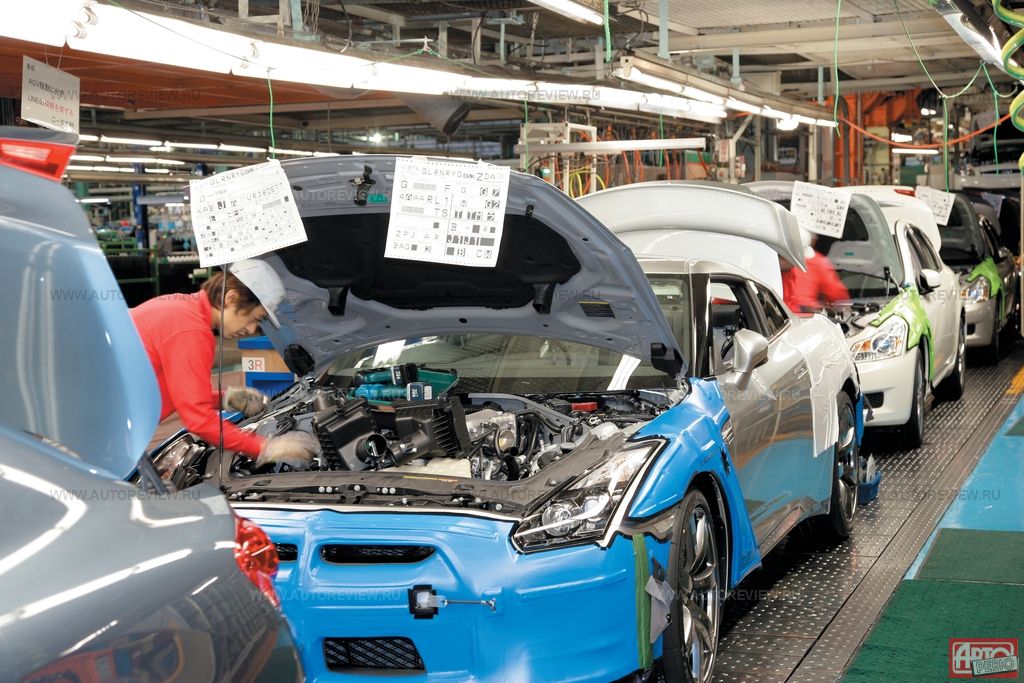 |  |
| One of the preparatory operations for the GT-R is the "pre-assembly" of the gearbox (supplied by the Japanese firm Aichi) together with the rear suspension. The arrow marks the attachment point for the second driveshaft, which will transmit torque to the front wheels | As on most Japanese car plants, there's an andon here—a cord you can pull to stop the conveyor if a problem arises, for example, when a defect is found (see the article "Toyodaism" in AR No. 23, 2007) | This is not a test track (they didn't let us in there, so we had to make do with just the intriguing sounds from the high-speed oval). This is a set of roads with different surface types, where every assembled Nissan GT-R undergoes break-in testing |
But a couple of times on corner exit, things went wrong. To avoid flying onto the outer curb, I add more steering, and in response—a treacherous, sharp, jerky understeer pushing the front axle outward. I return the wheel to neutral, ease off the throttle slightly, move away from the curb... And as a result, I seem to lose everything I gained in the corner. Maybe I made a mistake? Most likely. However, everything has its limits—and even such a virtuoso of the spoken word as Mitsuno-san cannot bypass Newton's laws.
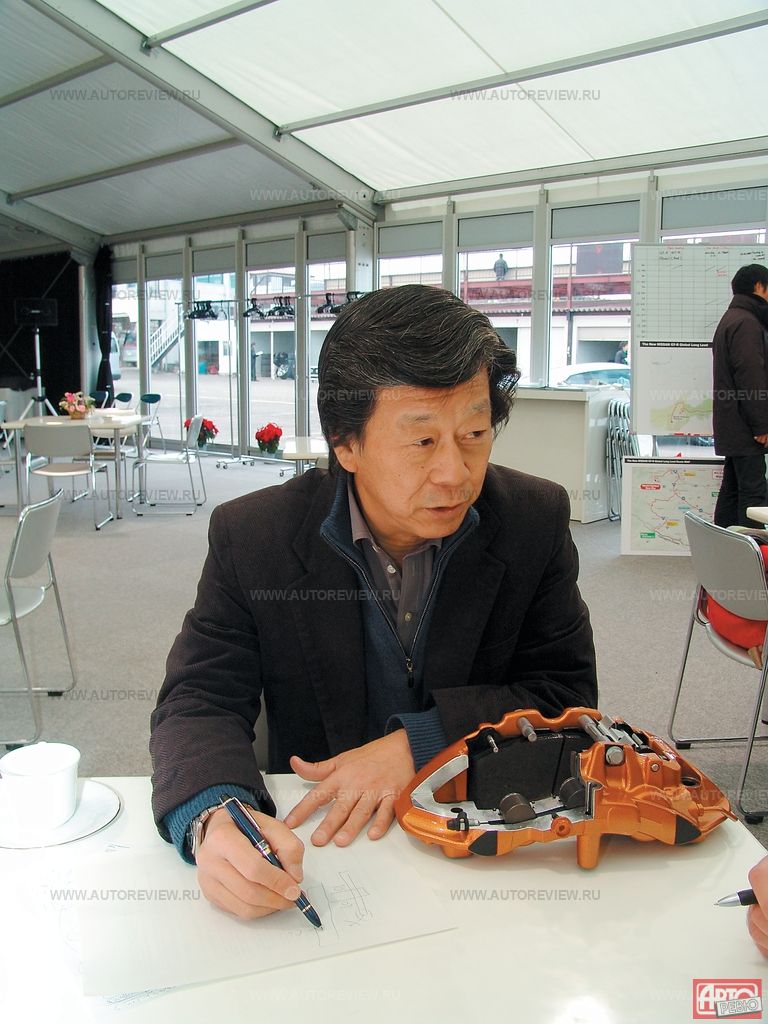 | 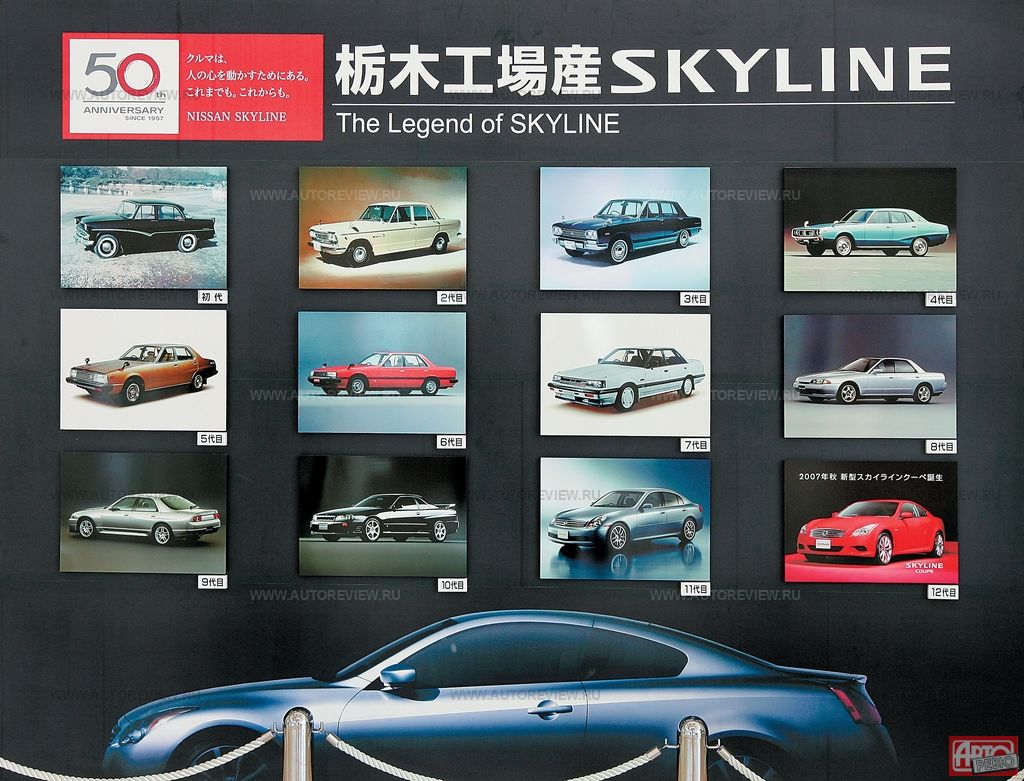 |
| Katsutoshi Mitsuno—chief engineer and project leader for the Nissan GT-R—is ready with inexhaustible enthusiasm to talk about any design detail. Speaking of the Brembo brakes, Mitsuno-san points to the third mounting point of the caliper to the steering knuckle: according to him, in some modes this helps avoid unwanted vibrations. In his time, Mr. Mizuno headed Nissan's sports team, which participated, among other things, in the 24-hour races at Daytona and Le Mans. So he has enormous experience | The Skyline model has long become a Nissan legend, and this legend is actively supported. This huge poster adorns the guest lobby before the entrance to the factory. At the bottom is the current-generation Nissan Skyline (also known as the Infiniti G35) |
On the third lap, entering the right turn after the start straight, I flew off the track. The reason was arrogance: I started braking too late, and I didn't have enough strength to press the pedal to trigger the ABS. The brakes here are ordinary, not ceramic, and the heat had already taken its toll. Fortunately, it turned out to be a cut-through — and a second later, spitting out pebbles, the Nissan was back on the asphalt.
And what is it like to sit on the left, next to the driver? Yes, he drove faster and more precisely. But he also didn't avoid a "jumping" front-end breakaway, and in the very same sequence. And he did exactly the same: steering wheel back, lift off the gas…
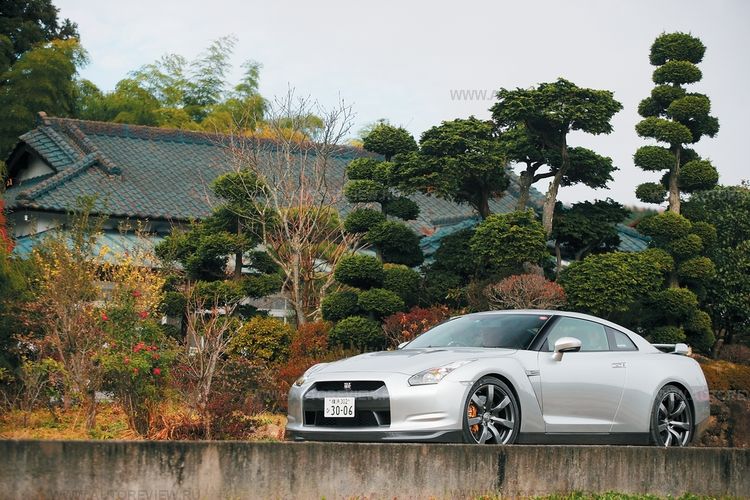
Now — public roads.
I can't recall a better transmission! Not among ordinary "automatics," nor among "robots," including the structurally similar DSG. And if on the race track the hesitation during downshifts sometimes annoyed me, on ordinary roads I'm ready to forgive it everything. And in fully automatic mode, I didn't notice the shifts at all! Interestingly, in city traffic, even at speeds of 50–60 km/h, sixth gear often engages, and the engine runs almost at idle. That's more economical. But you just have to press... Just not here, not in Japan with its left-hand traffic!
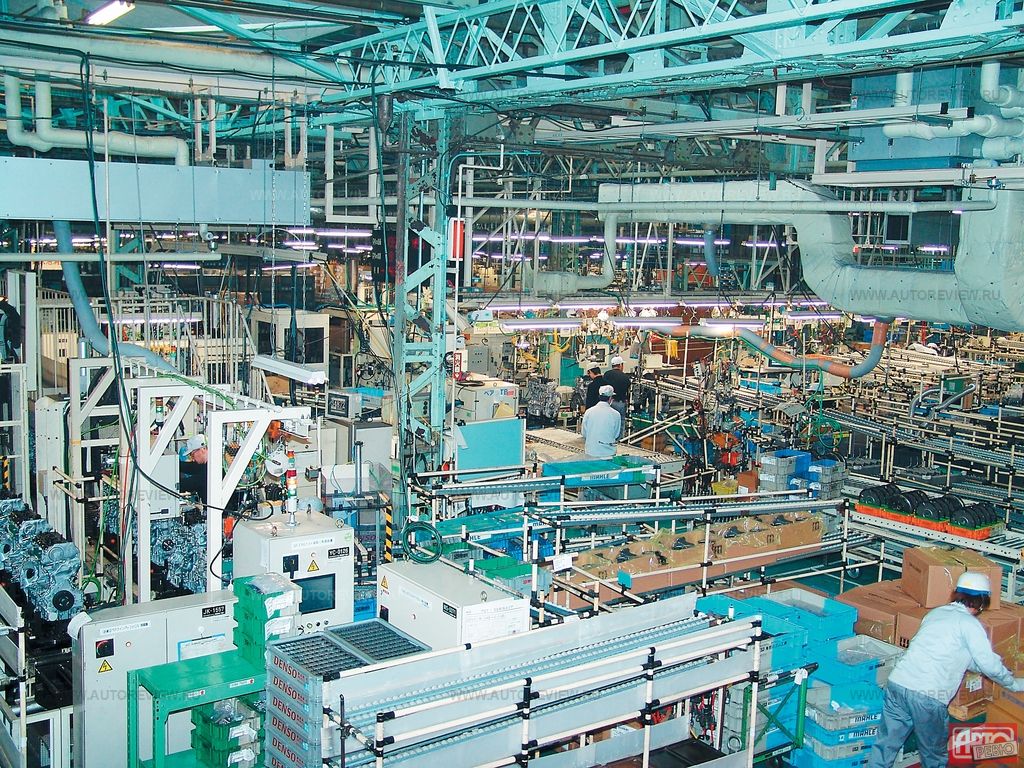 | 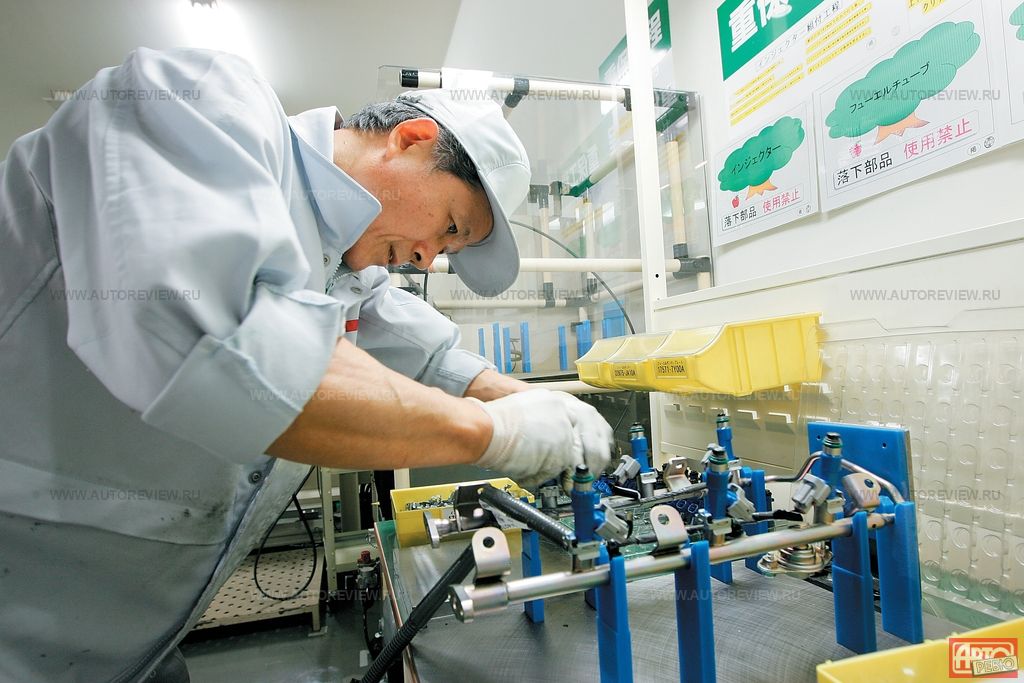 | 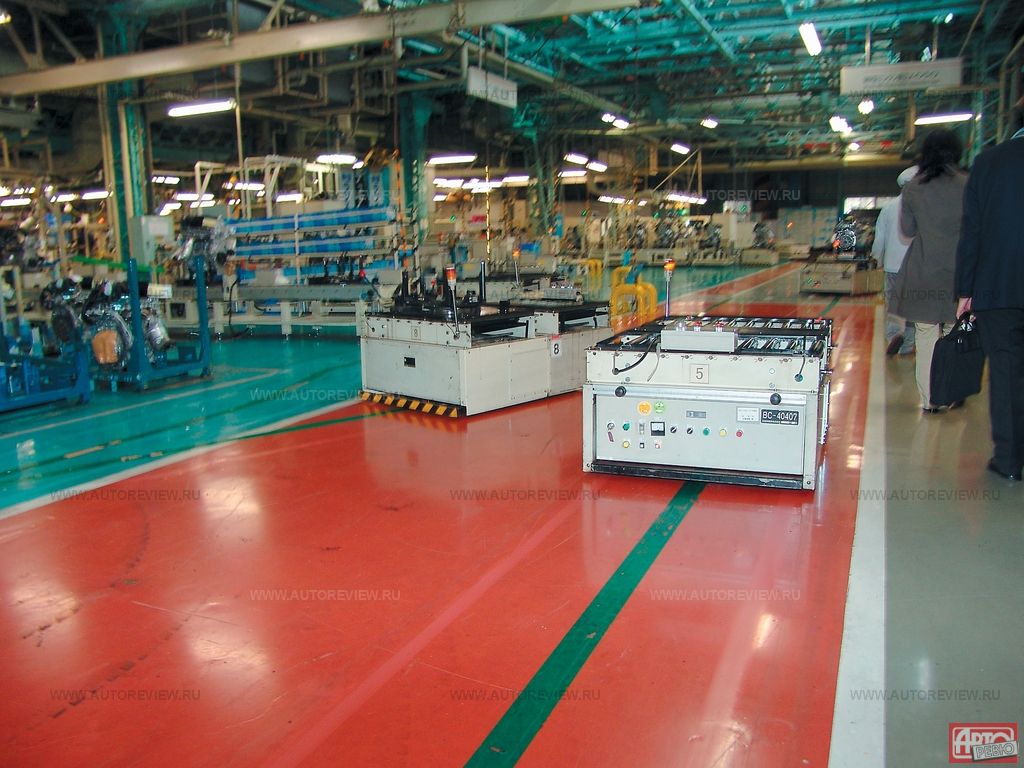 |
| Engines for the GT-R are assembled at the plant in Yokohama — the company's oldest enterprise (in 1936, the first-born, the Datsun Roadster Type 14, was assembled here). But while engines for other models are made under a common roof (these are gasoline V8s for the Infiniti Q45 sedan, V6s for the 350 Z coupe and roadsters, and numerous four-cylinder engines for the Qashqai, Tiida, Micra, including diesels for the X-Trail crossovers), the turbocharged V6 engines for the Nissan GT-R are assembled separately, "behind glass" | We weren't allowed into the "aquarium" where engines for the GT-R are created: they say that air purity, pressure, and humidity are monitored there as in pharmaceutical production. But we could watch the takumi (masters) at work through the glass. Each takumi assembles "his" engine from start to finish, but due to the Japanese spirit of corporate collectivism, a takumi does not put a personal mark on the assembled engine. But in England, where engines for Aston Martin are made, a personal mark is placed. True, the masters there are by no means in white coats, and they don't work "behind glass." I saw it myself. Currently, twelve takumi assemble about 800 engines per month, but if demand for the Nissan GT-R reaches the planned 12 thousand cars per year, new takumi will be called in for help | How much more takumi earn than ordinary workers was not disclosed to us. But there's no doubt that the nervous system of ordinary laborers is subjected to serious overload. Because "smart" carts drive around the huge workshop, delivering components to stations and transporting engines to the finished goods warehouse. Wonderful. But each such "scooter" annoyingly squeaks some well-known melody — from the Christmas "Jingle Bells" to Beethoven's sonata "Für Elise." A terrible cacophony! By the way, similar sounds are plentiful outside the factory too. Do the Japanese really like this? |
I pressed the gas in Germany, on the autobahns around the Nürburgring. And I pressed thoroughly: the "independent" GPS speedometer often showed more than 300 km/h. But if earlier every crossing of this threshold was an event, then behind the wheel of the Nissan it's a commonplace: the car just goes! For example, in a Lamborghini Gallardo, I wouldn't even have thought of any maneuvers — just to keep the frenzied steering wheel in my hands! But here... If you want — into the left lane, if you want — into the right. I really didn't expect this angular body to cut through the air so easily, and even press itself to the ground! Well done, Mr. Mizuno! And the specialists of the engineering company Lotus, who spent a year and a half on the aerodynamic refinement of the Nissan, are also great.
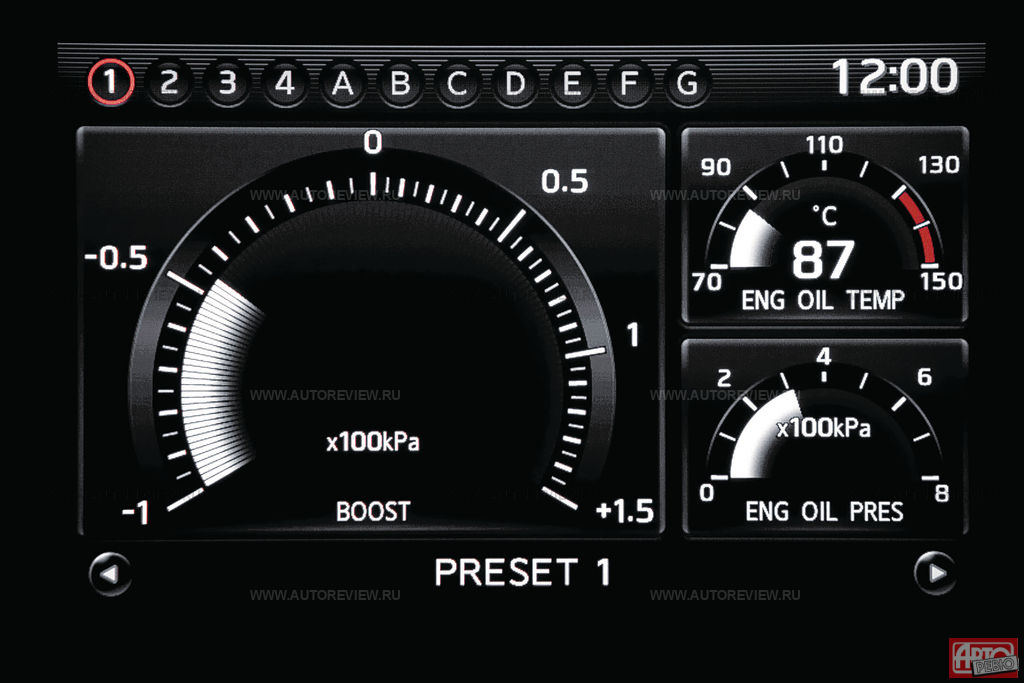
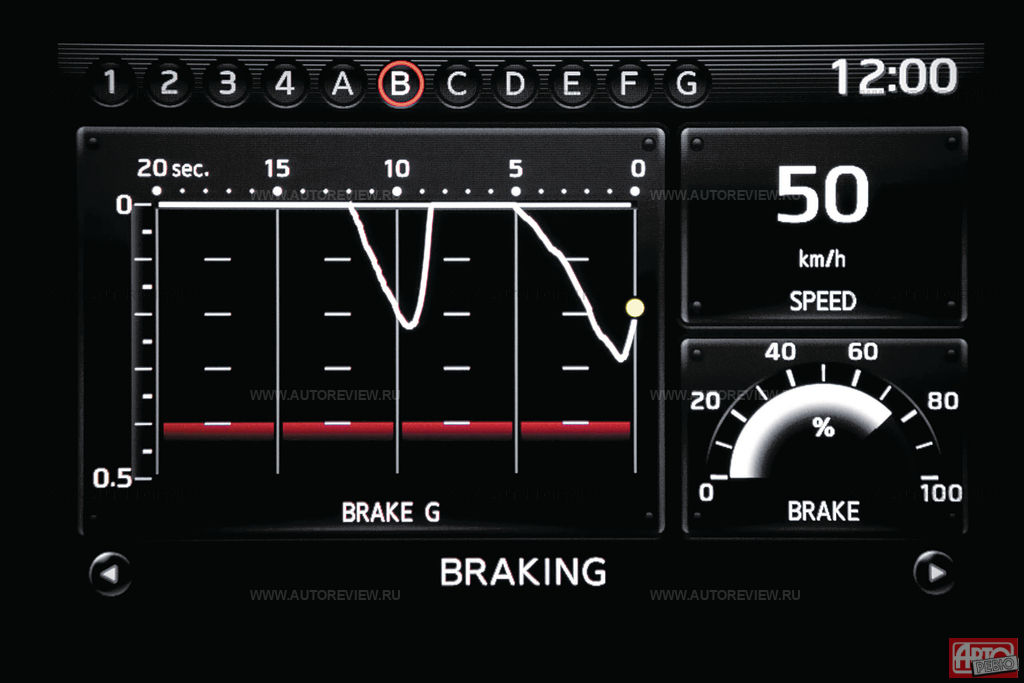
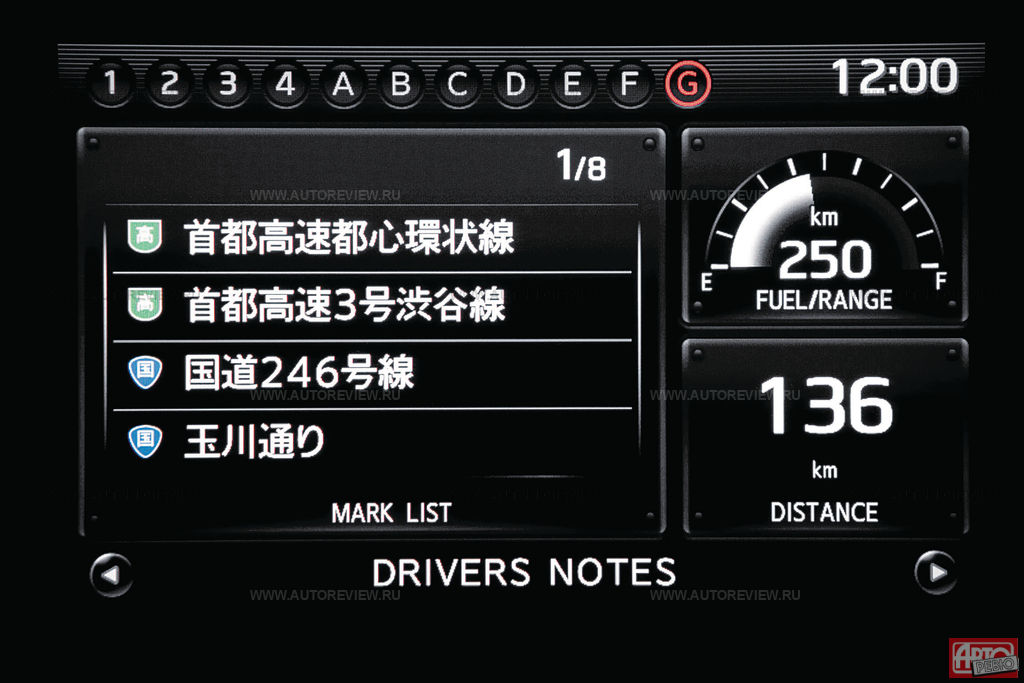
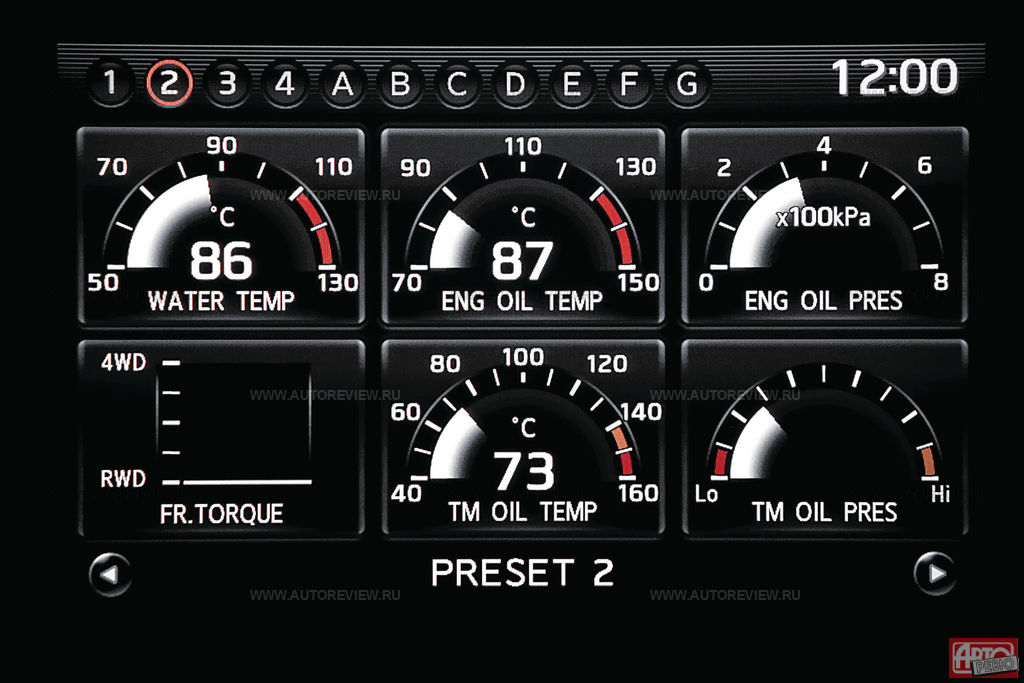
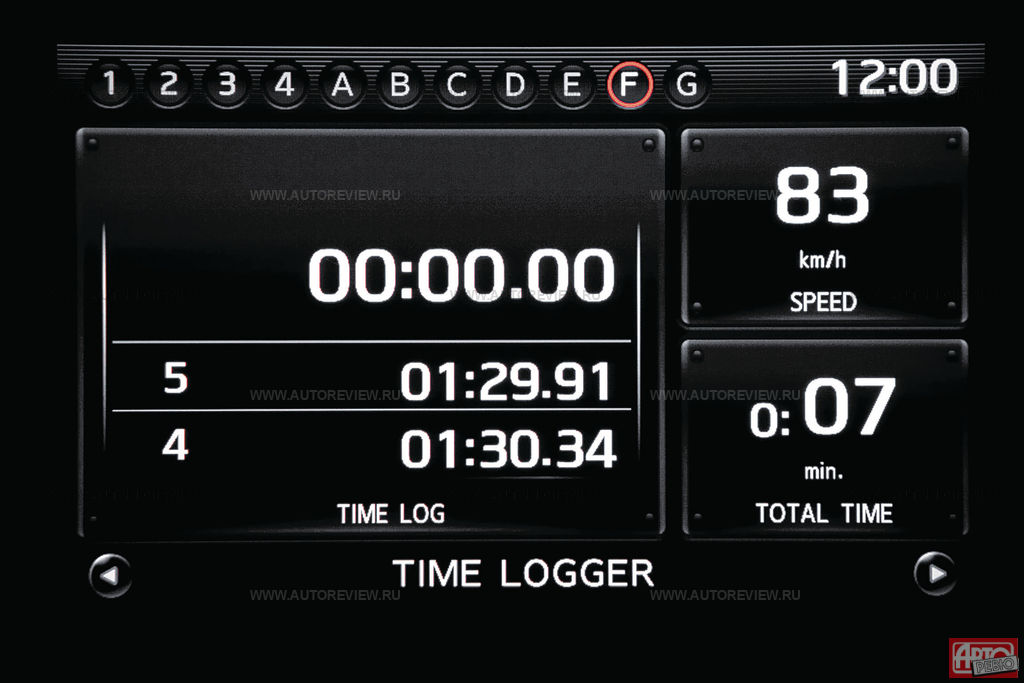
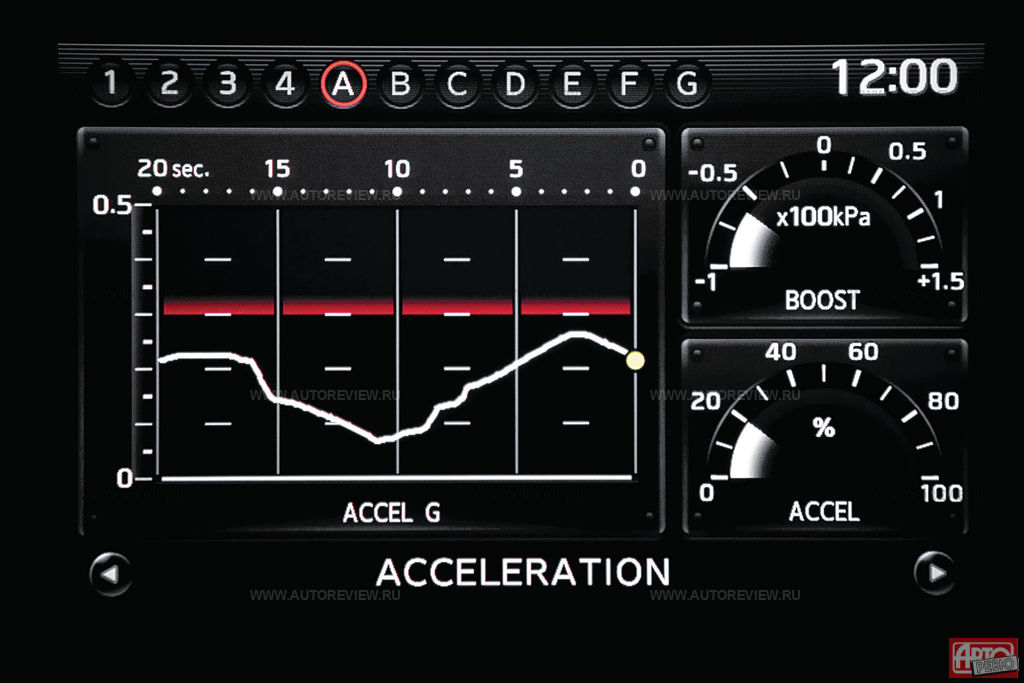
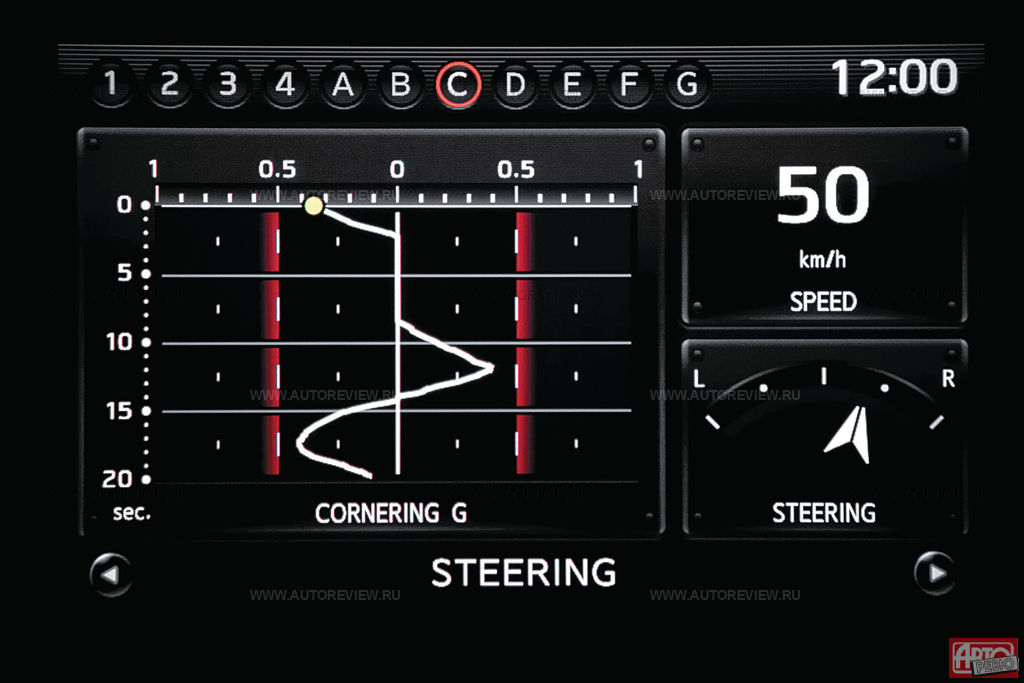
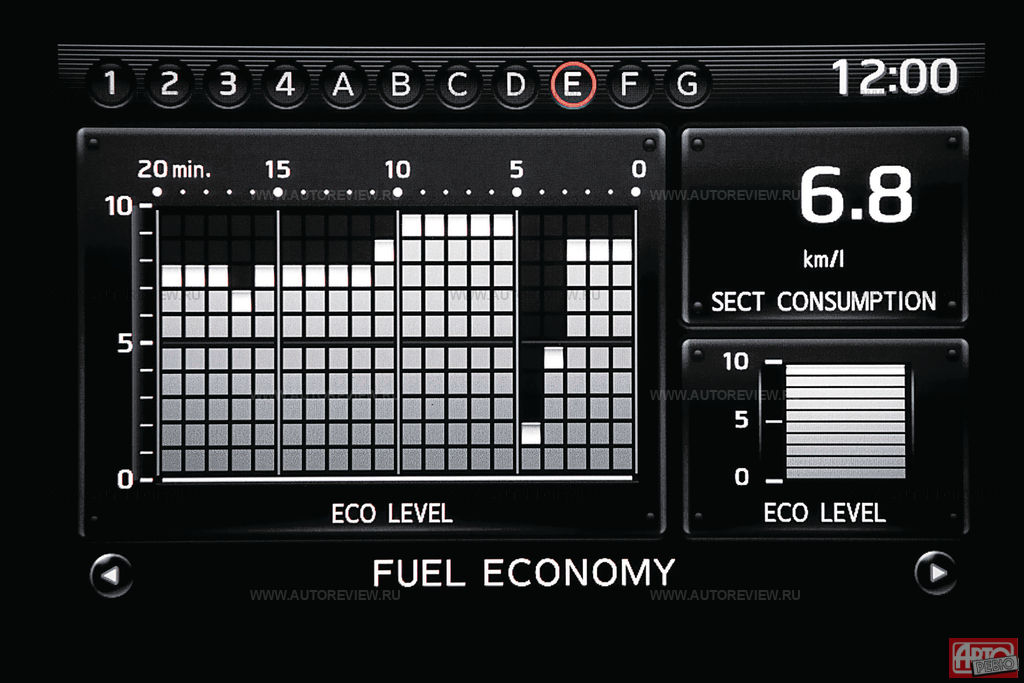
And on Japanese roads, having already gotten used to not pulling out into the oncoming lane after turning at an intersection, I took up the central miracle display. There are things funnier than navigation with luxurious three-dimensional pictures! On the interactive HD screen, you can display tachometer readings, speedometer, monitor the pressure in the engine lubrication system and the temperature in the transmission, fuel consumption — instantaneous, average, broken down by route segments... And also — watch the "live" graph of longitudinal and lateral accelerations, braking intensity, including as a percentage of the maximum possible... Just out of this world!
I felt something similar about a quarter of a century ago, when I first encountered a Nakamichi cassette deck. And then, in the spirit of that time, I again thought: no one can match the Japanese — neither we, nor the rest of the world, including Germany and the USA. But then I learned to understand sound and realized the difference between "European," "American," and even "English" sound. Moreover, English amplifiers sometimes looked as if they had been assembled in a school radio club. However, since then I stopped buying Japanese audio equipment. Audio is sound. And drive is...
In reality, it's almost impossible to watch the visualization of acceleration. Either you press the gas and look at the track, or you stop and study this miracle screen. And it turns out that all these impeccable military-style pictures are nothing more than a "gimmick." Moreover, an unsafe one. Mr. Mizuno, hasn't your sense of proportion failed you? Was it worth installing this toy on a car that claims to be a supercar?
 |
 |
 |
 |
 |
 |
 |
 |
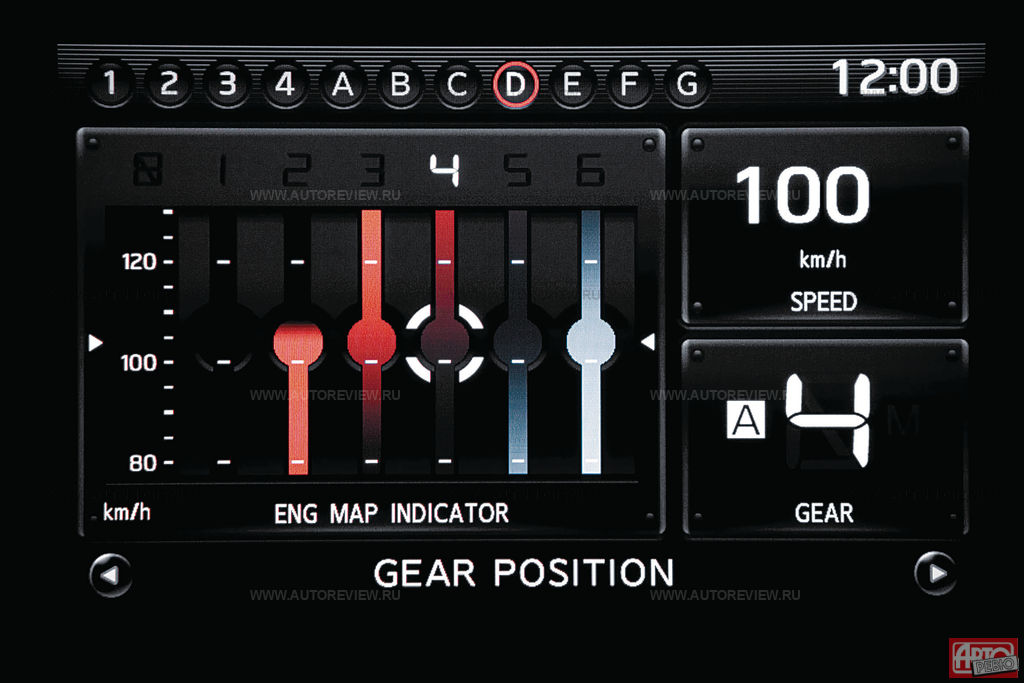 |
| It's pleasant that specialists from Polyphony Digital Inc, known for the Gran Turismo series for PlayStation, worked on the graphics of these images (by the way, in the fifth version of this game, the Nissan GT-R is already listed among the cars). But it's unpleasant that you have to choose: either drive a real car of Gran Turismo level, or play the game of the same name. Combining this is dangerous | ||
Later, a German colleague mentioned that statements that the Nissan GT-R is faster than the Porsche 911 Turbo on the Nordschleife and stops sooner from 100 km/h only drew smirks from Porsche employees. It seems they don't yet consider the Nissan GT-R a serious challenge. Most likely, they don't think about it at all. But the market thinks and waits.
True, a couple of months ago, the head of Nissan's Moscow office, Toru Saito, admitted to me that a decision on Russia hasn't been made yet. Like, we need to weigh things: our roads are bad, gasoline is sometimes of poor quality... But most likely, it's not about the roads or the fuel at all. They already got burned on the Nissan 350Z coupe: in two years in Russia, only 59 cars found buyers — that's a failure. And who can guarantee that the GT-R won't suffer the same fate?
 |
 |
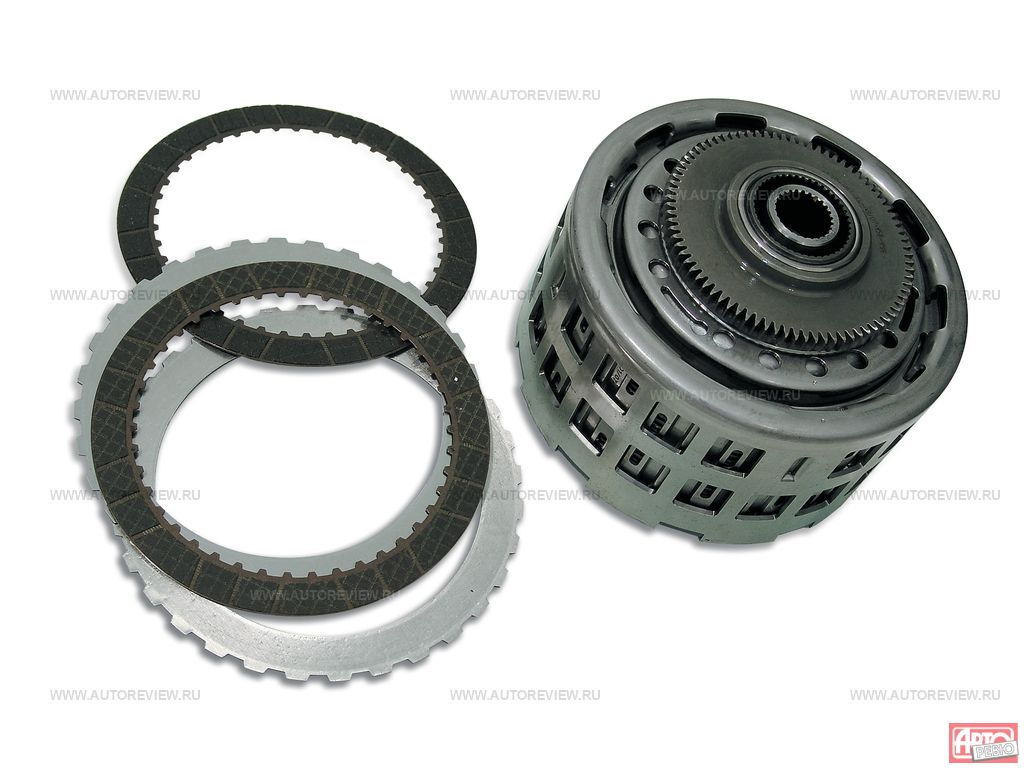 |
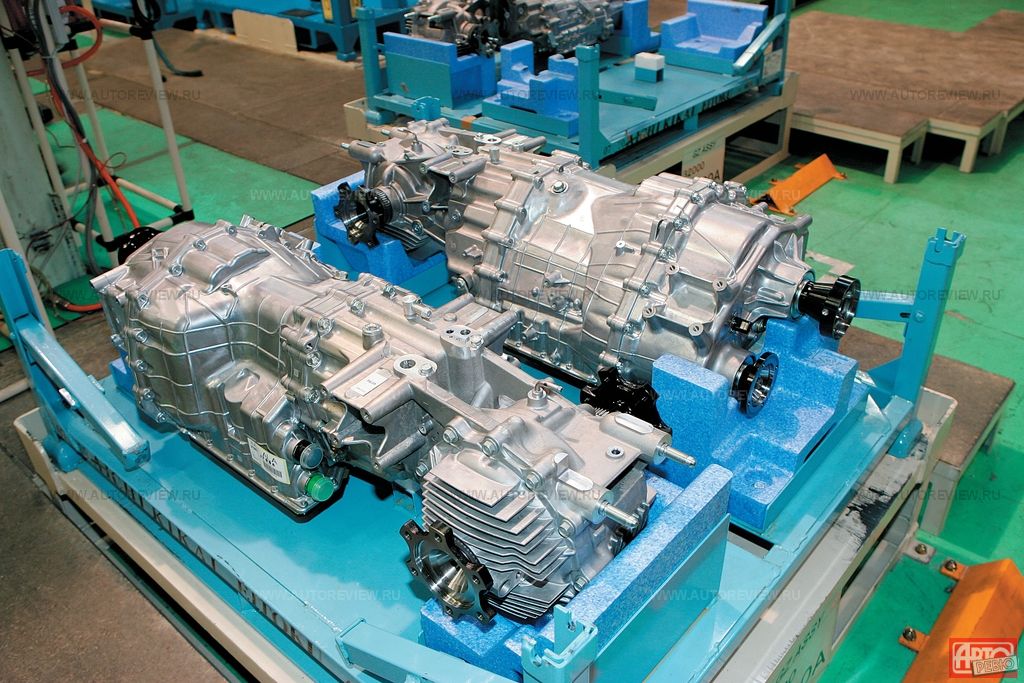
| This is how Mitsuno-san explains the difference in GT-R's cornering behavior compared to a "regular" car (by "regular," presumably, he again means the all-wheel-drive Porsche 911 Turbo). The point is that on the GT-R, you can open the throttle much earlier, even before the apex, so the "fun zone" (highlighted in red) is noticeably wider. Based on first impressions, everything adds up. True, on exit, you need to work the steering wheel very carefully to avoid an unpleasant understeer of the front axle | The transmission is perhaps the strongest aspect of the GT-R. It left a much more pleasant impression than the "robots" on the Audi R8 and Lamborghini Gallardo. The top photo shows the gearboxes assembled, and the bottom shows the Borg&Warner multi-plate clutch | |
The fact that Porsche, Ferrari, and even Lamborghini sell well in Russia, and the quota for the Audi R8 was sold out in advance, is not an argument. These are different brands. And here it is appropriate to recall the market failure of the Volkswagen Phaeton sedan. People don't buy it not because it's worse than the Mercedes S-Class or BMW 7 Series. It's not worse — it's even noticeably cheaper! They don't take it because it's a Volkswagen. After all, everyone knows: a real Volkswagen is not a Phaeton, but a Golf, Polo, or Passat. And a real Nissan is a Micra or Note, until recently also an Almera or Primera. And a real Porsche is a Porsche 911, a real Ferrari is at least an F430, a Lamborghini is at least a Gallardo... Do you feel the difference?
In Russia, the Nissan GT-R could become a victim of its own name. If they had called it Infiniti GT-R, then... Then the car would have failed in Europe: the Infiniti brand is so far known only in America and Russia, and it will be introduced to the European market later.
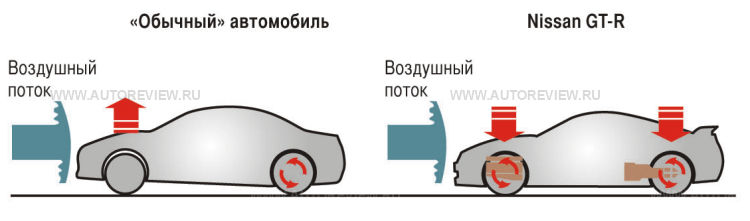
The drag coefficient of 0.27 is a record for cars of this class. And Mitsuno-san is especially proud of how the airflow is organized in the wheel arch area, which made it possible to completely neutralize the lift forces generated by the wheels. And again — a comparison with a "regular" car, which supposedly develops lift at high speeds, unloading the front end. Interestingly, while in the "official" drawing the contours of the GT-R and the "regular" car almost coincide, at the press conference they showed a diagram leaving no doubt that the "regular" car is a Porsche 911! True, when we studied this "regular" car in the wind tunnel of the Dmitrov test site, we found no serious problems related to lift forces...
But maybe I'm exaggerating about the brand? Especially since this is not so much about the Nissan brand as about the famous GT-R abbreviation. And there are plenty of obsessed fans of the Skyline GT-R models in the central region of Russia, not to mention the "right-hand drive" Siberia and the Far East! Or do you think these street racers only have enough money for another bottle of nitrous oxide? I searched the internet. Do you know how much they ask in Moscow for a five-year-old Nissan Skyline GT-R? 99 thousand dollars! Yes, even if this Skyline GT-R is tuned (promised 400 hp instead of 280 hp), even if "negotiation is possible," but... A new Nissan GT-R in Russia would cost not much more (in Japan — about 80 thousand dollars). And it produces 480 horsepower without any tuning and accelerates to 100 km/h in 3.6 seconds!
However, I would not risk recommending Saito-san to sell the Nissan GT-R in Russia. Especially since bringing this model to market would require significant investment — in particular, in creating specialized showrooms. But how I wish, even for a few days, to get my hands on the Nissan GT-R! Blow it in the wind tunnel, then put it next to the Porsche 911 Turbo — and measure acceleration dynamics. Then take both cars to the race track in Myachkovo. And if the Nissan GT-R, despite its greater mass, defeats the Porsche in all disciplines, then... It means Mitsuno-san has indeed worked a miracle. But for now, I can't shake the feeling that this is mysticism. Or a mystery.
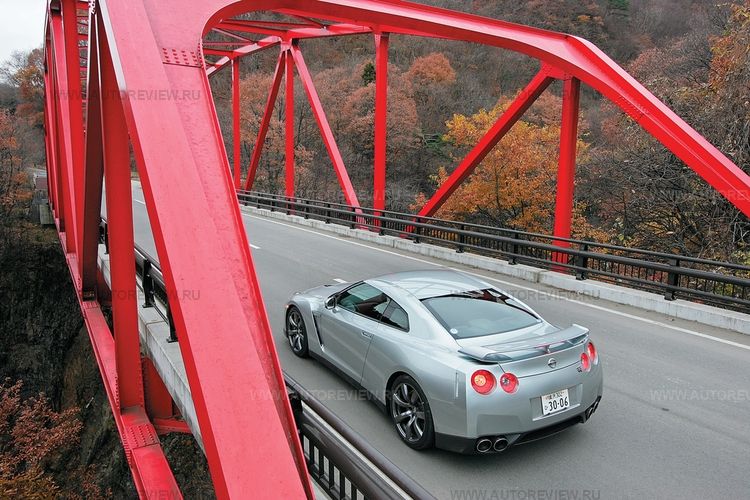
| Specifications | |
| Parameters | Vehicle |
| Nissan GT-R | |
| Body type | coupe |
| Number of seats | 2+2 |
| Dimensions, mm | |
| length | 4655 |
| width | 1895 |
| height | 1370 |
| wheelbase | 2780 |
| track front/rear | 1590/1600 |
| Trunk volume, l | 315 |
| Curb weight, kg | 1750 |
| Gross weight, kg | 1970 |
| Engine | petrol, with distributed injection |
| Location | front, longitudinal |
| Number and arrangement of cylinders | 6, V-shaped |
| Displacement, cm³ | 3799 |
| Cylinder bore/piston stroke, mm | 95.5/88.4 |
| Compression ratio | 9.0:1 |
| Number of valves | 24 |
| Max. power, hp/kW/rpm | 480/353/6400 |
| Max. torque, Nm/rpm | 588/3200—5200 |
| Gearbox | manual, preselective, 6-speed |
| Drive | all-wheel, with multi-plate clutch in front wheel drive |
| Front suspension | independent, spring, double wishbone |
| Rear suspension | independent, spring, multi-link |
| Front brakes | disc, ventilated |
| Rear brakes | disc, ventilated |
| Front tires | 255/40 ZRF20 |
| Rear tires | 285/35 ZRF20 |
| Maximum speed, km/h | 309* |
| Acceleration time 0—100 km/h, s | 3.6 |
| Fuel consumption, l/100 km | |
| combined cycle | 12.2** |
| Fuel tank capacity, l | 71 |
| * Preliminary data | |
| ** Fuel consumption is indicated according to the official Japanese certification cycle "10—15", which involves measurements during a six-kilometer run with an average speed of 25.6 km/h (maximum speed — 70 km/h) | |
Nissan GT-R, NISMO and the Speed Festival
Igor VLADIMIRSKY and Mikhail PODOROZHANSKY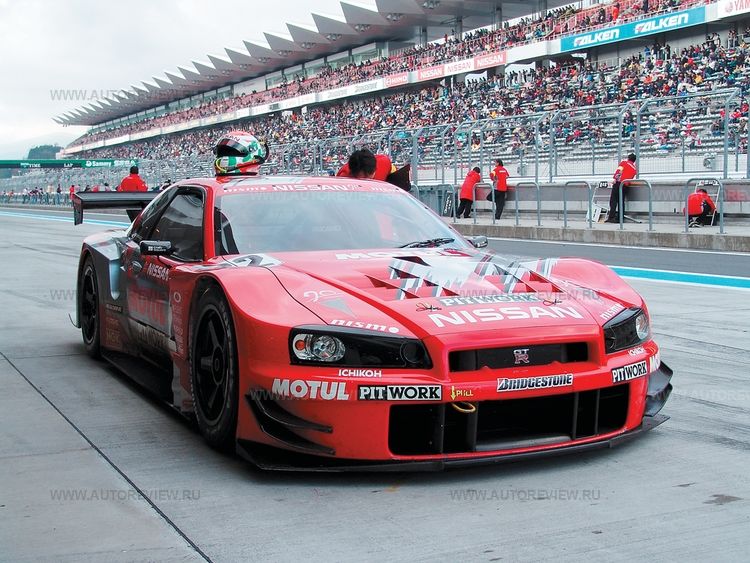
The history of the Nissan GT-R began long before the appearance of a standalone model. Previously, these three letters meant only the most powerful and advanced version of the regular Nissan Skyline. The debut Skyline GT-R dates back to 1969 — based on the third-generation sedan of the C10 series, with a two-liter inline "six" with two camshafts under the hood, producing 160 hp. The same engine, boosted to 220 hp, was installed in the mid-engined sports car R380, which back in October 1967 set seven world speed records at distances from 50 km to 200 miles.
The Skyline GT-R quickly became one of the fastest and most powerful production cars in Japan and is considered the originator of the drift fashion — controlled sliding. Over four years, from 1969 to 1972, the sports "Skyline" won 50 circuit races, with 17 victories achieved by the coupe version, which appeared in 1970 and significantly boosted the family's popularity.
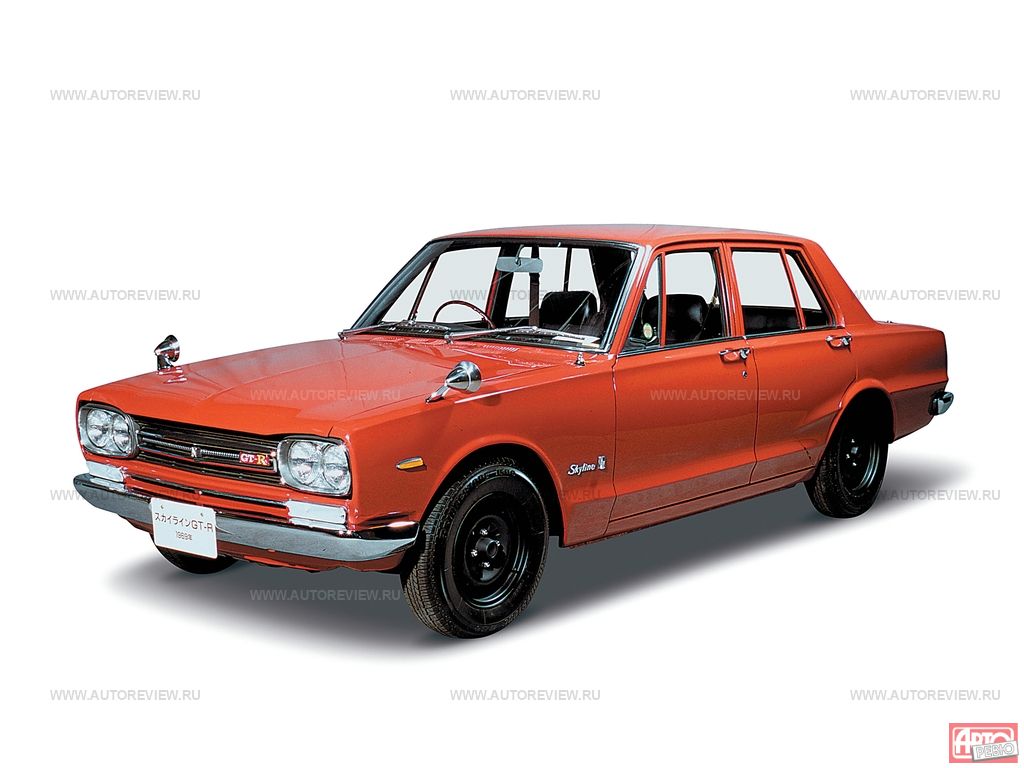 | ||
| The first Nissan Skyline GT-R (C10 series, 1969) differed from the "civilian" sedan only in enlarged wheel arches and sporty wheels | The second-generation Nissan Skyline GT-R (C110 series, 1973) was produced in 197 examples, each of which is now a collector's item | The "third" Nissan Skyline GT-R (R32 series) appeared 16 years later, in 1989, and became one of the most technically sophisticated cars in Japan |
| The Nissan Skyline GT-R of the R33 series debuted in 1993, but its mass production began only two years later | The Nissan Skyline GT-R of the R34 series (1999) was the last: from now on, the Skyline model is separate, and the GT-R model is separate |
At the end of 1972, the fourth-generation Skyline (C110 series) debuted, and in January of the following year, its GT-R version saw the light. The exterior began to resemble American muscle cars, and disc brakes appeared on all wheels for the first time in Japan. However, the powertrain remained the same. The life of this modification turned out to be short: just four months later, production was halted due to stricter Japanese exhaust emission standards.
The fuel crisis finished off the idea of a powerful sports car, and it was forgotten. Only in 1980, together with the fifth generation Skyline (C211 series), the GT Turbo modification was released — a two-liter turbocharged four-cylinder with 145 hp. But in terms of both dynamics and status, it clearly did not reach the GT-R.
A year later, the lightweight Skyline RS coupe of the sixth generation (R30 series) received a 16-valve four-cylinder engine with 150 hp. In 1983, the RS-X Turbo version with an intercooler and 190 hp came out. And the direct precursor to the GT-R revival was the 1987 Skyline GTS-R coupe (R31 series), which again featured an inline six-cylinder 2.0-liter engine boosted by turbocharging to 210 hp.
The full return of the GT-R took place only in August 1989 — after a 16-year pause. The eighth generation coupe (R32 series) was used as the base. The inline six-cylinder 2.6-liter engine with two turbos developed 280 hp — Japanese legislation forced it to hit this ceiling, although racing versions for Group A produced up to 500 hp. The gearbox was a five-speed manual. It was on this Skyline that the all-wheel drive transmission with electronic torque distribution between axles, ATTESA, debuted. Moreover, the car received all-wheel steering: the Super HICAS system used electric actuators to steer the rear wheels at small angles (a hydraulic version of this system appeared on the Skyline GTS back in 1986). The new model turned out to be exceptionally successful: countless victories in circuit races and marathons, and for street racers and drifters it became a true legend.
The further evolution of the Skyline GT-R followed a well-trodden path. The engine was constantly improved, but the stated power remained unchanged. Torque grew from 368 Nm in 1989 to 375 Nm on the ninth generation model (R33 series, 1995) and to 392 Nm on the tenth generation coupe (R34 series, 1999). Starting in 1999, the GT-R was equipped with a six-speed Getrag gearbox.
The triumphant march of the GT-R continued until 2002, when production of the tenth generation Skyline ceased. Over 13 years, many limited series were produced, and the final batch was 250 cars of the M-Spec Nur special version, named after the Nürburgring Nordschleife, where Skylines had participated and won in the 24-hour marathon since 1991.
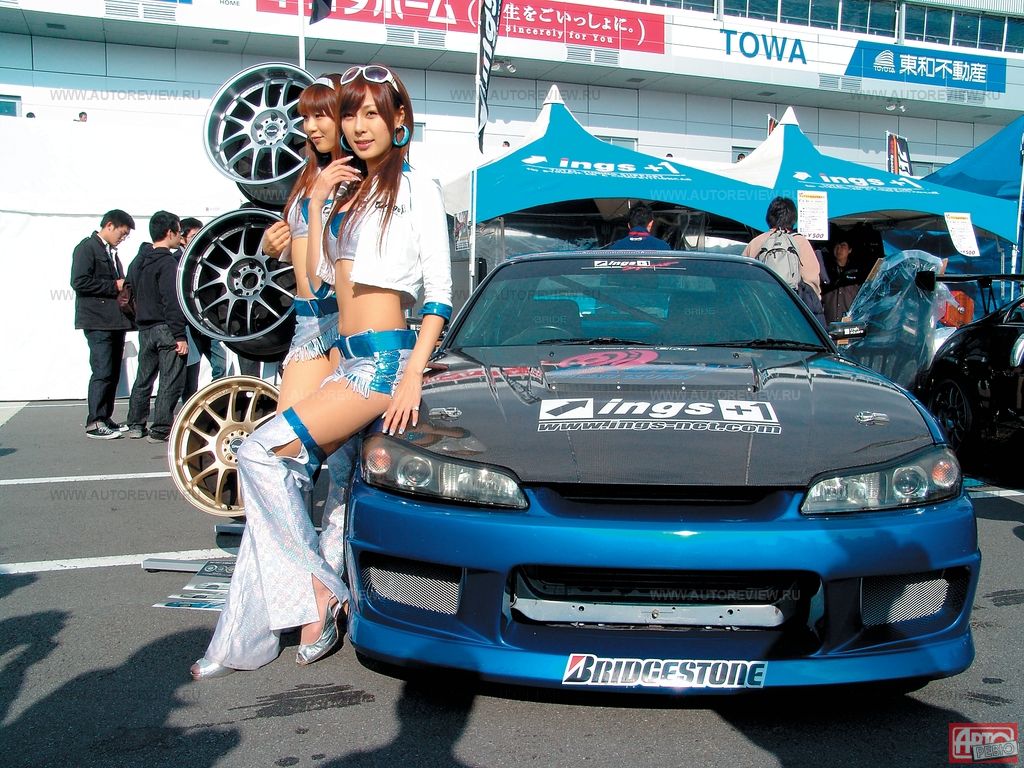 | 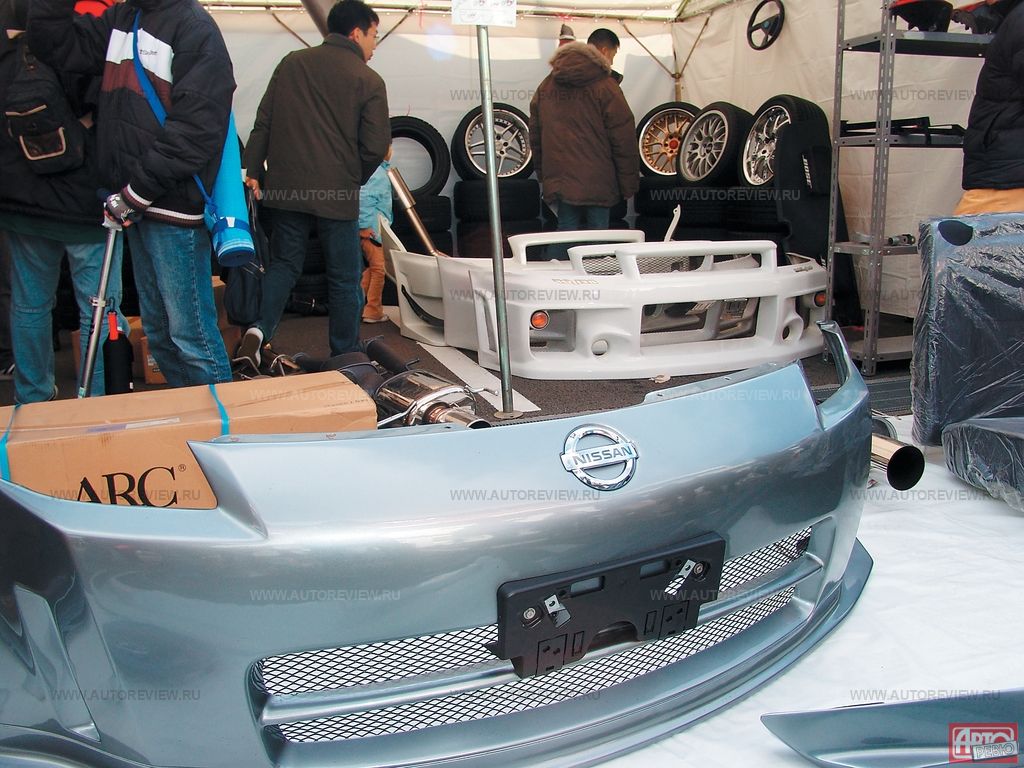 | 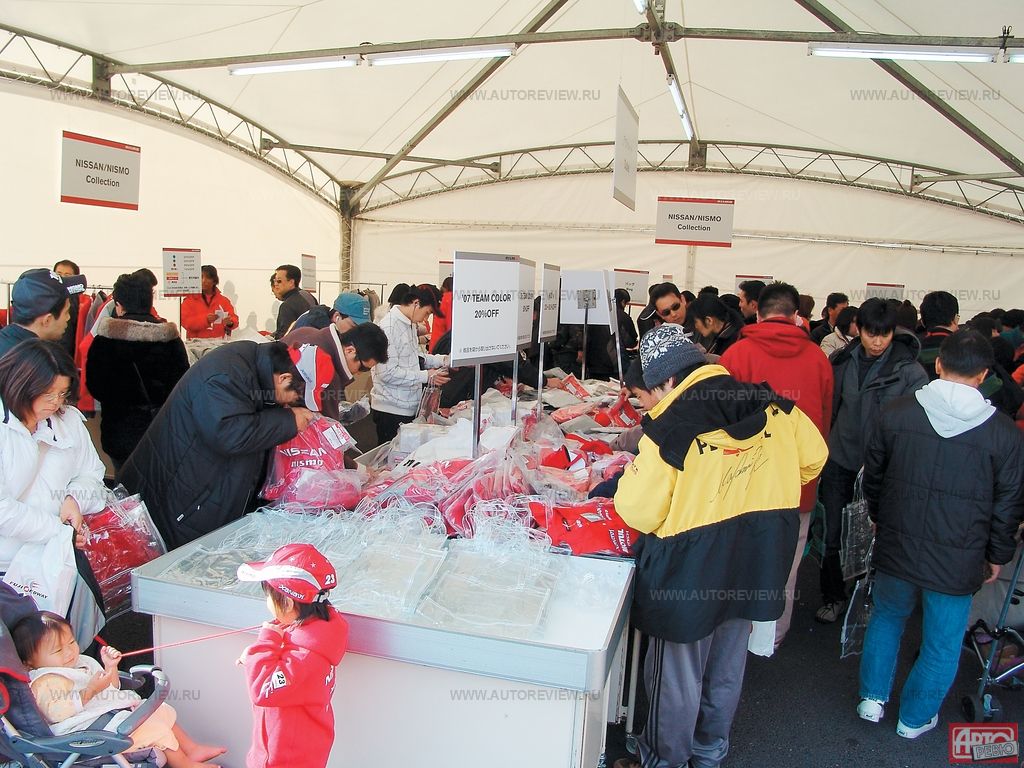 |
| The NISMO festival, like any serious forum for car fans, is not complete without traders selling tuning parts and, of course, long-legged beauties — they do exist in Japan, as it turns out! | ||
The eleventh generation Skyline became a completely different car (known in America and Russia as the Infiniti G35), but Nissan made it clear that the story with the GT-R badge was not over. In 2001, at the Tokyo Motor Show, a standalone concept, the Nissan GT-R, was shown, and four years later the GT-R Proto appeared — a direct precursor to the new production coupe.
It was this GT-R Proto that ended up on the Fuji Speedway track on the first Sunday of December, where the NISMO speed festival was held for the eleventh time — a cult event for fans of sporty Nissans.
NISMO is Nissan's official motorsport division, with an annual turnover of nearly 10 billion yen (about 100 million dollars). The company builds race cars, manages factory racing teams, produces manufacturer-approved components for DIY tuning, and organizes the festival of the same name. Previously, brand enthusiasts would gather at this event in all sorts of tuned Nissans to show off their cars and compete, say, in drifting. But now NISMO management decided to shift the focus toward promoting fresh Nissan models — after all, factory motorsport exists primarily for marketing. That is why the central event of the Nismo 2007 festival was the debut of the new Nissan GT-R coupe. By that time, tens of thousands of spectators had already been warmed up by spectacular races of sporty Nissans from the last three decades, including cars from the Japanese GT500 series. These are Nissan Fairlady Z coupes (known as the 350Z in Europe), but for racing they are equipped with V8 engines whose power can exceed 500 hp.
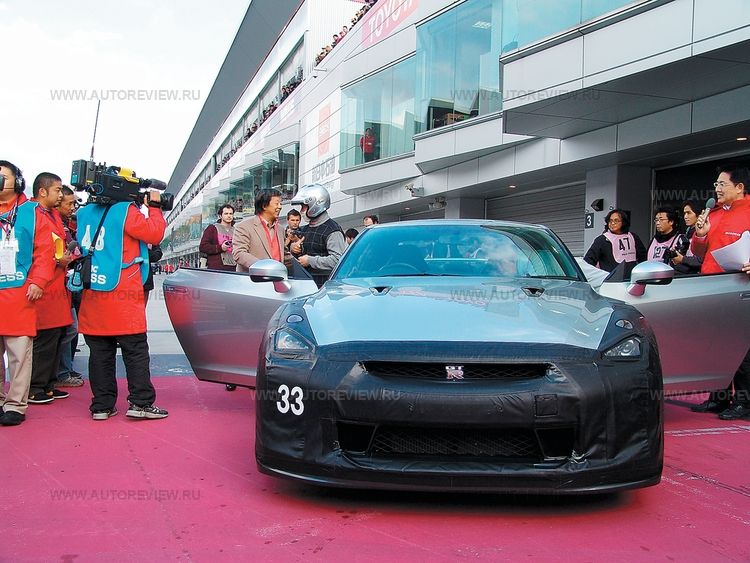
Chief engineer Katsutoshi Mitsuno was here too: giving instructions to the factory driver before demonstration runs. It is unclear why the Nissan GT-R is hiding under camouflage, even though its design was officially shown a couple of months ago? Apparently, they are hinting at work on a racing version for Super GT
And then, amid the roar of the stands and the words of chief engineer Katsutoshi Mitsuno, the Nissan GT-R drives onto the track… True, the car was in the same camouflage we saw it in six months ago at the Nürburgring. It seems this is done for intrigue. The car drives out, weaves at high speed down the start straight, and then, paired with a GT500 series car, demonstrates superiority in standing starts and braking… It looks a bit naive, but the crowd is delighted. In the finale, it is announced that the Nissan GT-R will compete in the 2008 Super GT series. And it does not matter that technically it will be the same race-bred Nissan Fairlady Z with a V8 engine and rear-wheel drive only: the main thing is that it is the Nissan GT-R, Japan's new automotive icon.