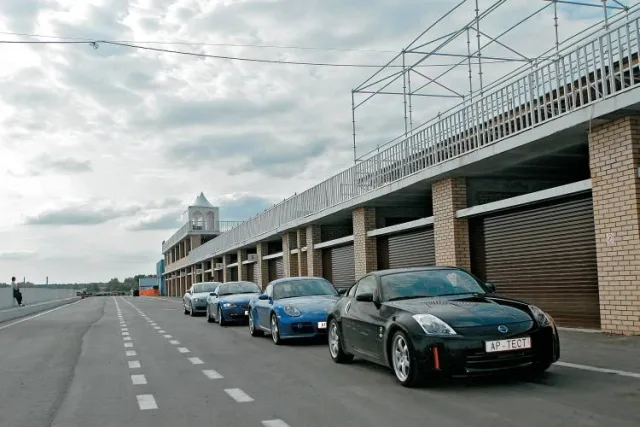
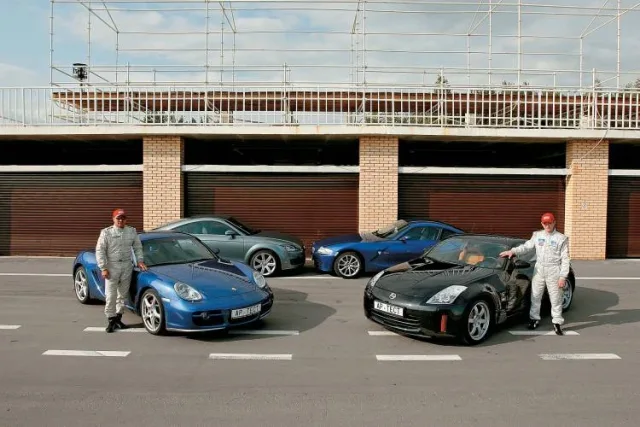
The start of this comparative test was flawless: four fresh coupes at our disposal, dry weather allowed us to calmly complete all measurements at the test site, we were given an hour and a half on the busy track in Myachkovo, and racers from Tolyatti Vitaly Dudin and Kirill Ladygin specially stayed in the capital after the NGSA stage to show the best lap time. It seemed that failure would pass us by. But after the final run, when Dudin turned off the Porsche engine, only a formality remained: to take a few shots of the racers and cars near the pits. The editor-in-chief of Autoreview, who came to the track, offered to help with rearranging the cars. He started the Porsche, engaged reverse gear, turned around...
And the pit lane was already drowning in thick bluish smoke pouring from the exhaust pipe. When the engine stalled, the boss asked about the car's price. The Porsche Cayman S turned out to be the most expensive participant — 136 thousand dollars. The mechanics of the racing teams, who were watching the runs, surrounded the Cayman and held an impromptu consultation... And it all started so smoothly.
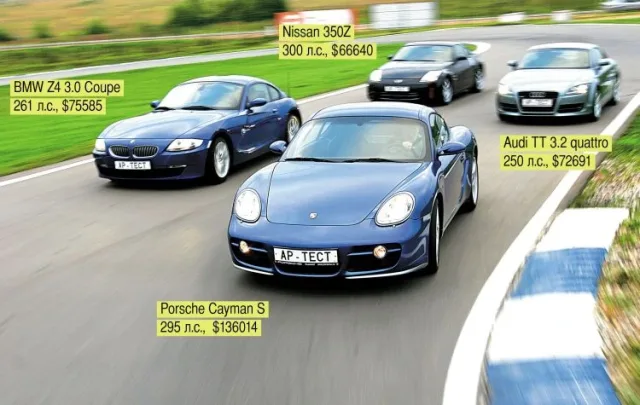
All four cars are incredibly attractive. They are not just beautiful — they have that very appeal that the British call sex appeal. You want to get each of them, and immediately. But you can't have all at once, so let's start alphabetically.
The new Audi TT no longer impresses with that cosmic design that its predecessor still shines with, but the current look is also good. And although the TT is the only coupe with a 2+2 layout (the others are strictly two-seaters), only here is all-wheel drive installed (competitors are rear-wheel drive), and the engine produces a modest by test standards 250 hp, we didn't even think of excluding it from the competition.
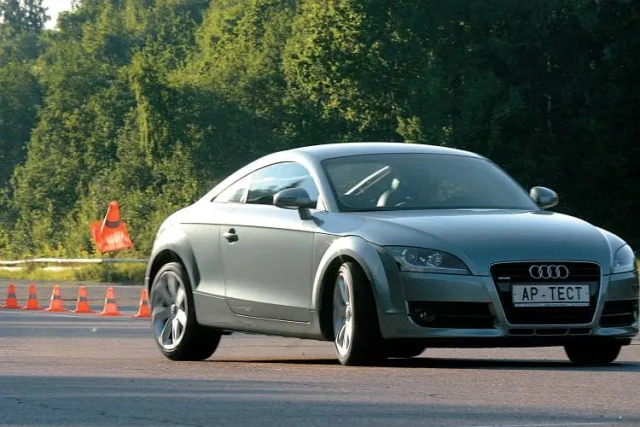
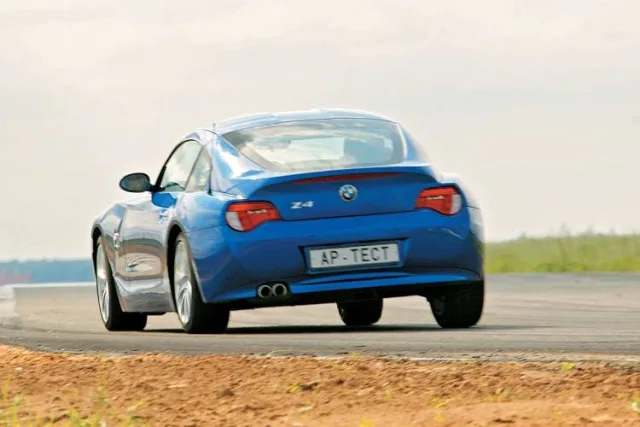
The all-wheel-drive Audi TT was sent into a drift for an impressive shot only with counter-steering and ESP disabled
The interior greets with signature solidity and quality. The sporty character is set by excellent pedals with perforated pads, a spacious footrest for the left foot, and the main detail — a "formula" steering wheel with paddle shifters and a flat bottom section. However, if such a wheel is convenient in corners, then when parking you constantly hit these "cuts," also noticing a strange eccentricity: the axis of rotation does not coincide with the geometric center of the rim. The seats seem a bit soft for a sports coupe, but they distribute the load well. The only drawback is that for slim drivers there isn't enough adjustment of the side bolsters: the seat is too loose for them.
 |  |  |
| Excellent Audi seat — for people of solid build | The seat is childlike, and there is no height adjustment for the belt | The trunk is practicality itself: there's even a net! |
BMW Z4 — here's the main show-stopper! A huge humped hood, a low-slung cabin, a sharply cut-off rear... A shriveled Dodge Viper?
To get into the "Z" interior, you need to twist around a lot: when sitting down, you have to lean over heavily to avoid hitting your head on the low roof. But inside you instantly feel like a Formula pilot: a rigid low seat, a reclined posture, almost stretched legs, a small grippy steering wheel... But the lateral support is a bit weak, the small numbers on the speedometer are hard to read, and the tiny light switch seems made for ladies' fingers. What surprises most is the "crooked" steering wheel — just like on old Volgas! It is shifted to the right and stands at an angle to the transverse axis: the left arm is extended further than the right. Fortunately, this doesn't interfere at all while driving.
 |  |  |
| The Audi TT cockpit is luxurious. And what's wrong with that? | In the parking lot, you can't reach the stylish climate control knobs... | ...the S-Tronic gear selector lever gets in the way |
 |  | |
| Here it is, the "civilian" essence of the Audi — in other coupes the tachometer is more prominent! | The left paddle shifter "downshifts" | In terms of visibility, the Audi TT is the best |
 |  | |
| The spoiler is almost like on a Porsche — automatically extends at 120 km/h and hides at 80 km/h. Only it does this with a roar | The Audi TT has the most massive calipers and the largest brake discs (340 mm), but the brakes didn't impress with stability |
Nissan 350Z — the car is a bit rough. But a survey of the same racing mechanics showed that most of them liked the Nissan — it is, in their words, the most honest. The interior is a model of functionality. The readings of simple instruments are read instantly, and the entire instrument cluster moves with the steering column, so the scales never hide behind the rim. The suspended gas pedal is no less convenient than the "floor" ones of competitors, and the weighty knob of the short-throw manual gearbox lever is exactly under your hand. In the center of the panel are "racing" dials for oil pressure and on-board voltage, and in the same round window is the on-board computer display with a lap timer among other functions. Everything for the pilot! A bit annoying are the too-loose seat and the lack of steering wheel reach adjustment.
Well, as for the Porsche... Here we can only repeat the words of Vitaly Dudin, said right after the combat lap in response to the question "well, how?": "Porsche is Porsche." Words are superfluous here. Although, perhaps, Dudin simply spent all his eloquence on other cars.
The Porsche interior is expensive, stylish, and comfortable. The seats with countless adjustments are the best in the test. The steering wheel seems a bit large and thin, the gas and clutch pedals — too long-travel, and the gearbox lever — stiff. But Porsche has a peculiarity: they seem to dictate their will — "since Porsche did it this way, it must be so." Yes, yes, of course... But the lever is still a bit stiff, and with a "civilian" start with such a clutch pedal, it's easy to stall the engine. Which happened a couple of times.
 |
 |
 |
| A head-up display would not hurt the BMW pilot: the numbers on the dials are small and densely packed | The selector levers for shifting are the most ergonomic | The BMW automatic is no worse than the Audi preselective manual |
 |
 |
 |
| The DSC off button is small and hidden under the dashboard — so the driver has time to think before pressing it | "In 400 meters keep right"... The navigation is "Russian"! | The interior is restrained and stylish — like all modern BMWs |
If we consider these coupes as everyday city cars, Audi wins outright. The seating position here is the highest, visibility is excellent, including large mirrors. In the back row it is quite possible to take children to kindergarten or school. The other cars have purely "coupe" visibility — designed for those who look only forward. And the worst situation is with BMW: through the low rear window opening you can see little.
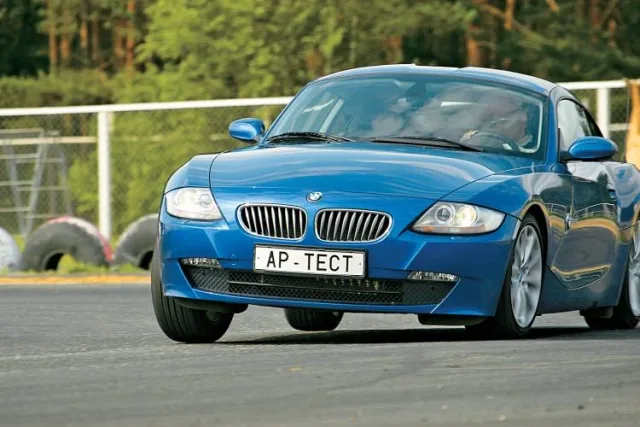
For such rolls you don't need a race track: one sharp steering movement is enough
|
 |
 |
| Lateral support could be tighter | The box between the seats is convenient, but the lid creaks on bumps | The trunk is unexpectedly spacious for a "short-tailed" car |
Porsche also has its own practical plus: there are two trunks! Moreover, the front one is larger and deeper than you expect from such a car. Audi and BMW have roughly similar compartments, but the Nissan trunk is spoiled by a powerful crossbar between the rear strut towers and the "audio" hidden behind the seats: even a golf club bag — traditional for sports coupes — is already hard to fit.
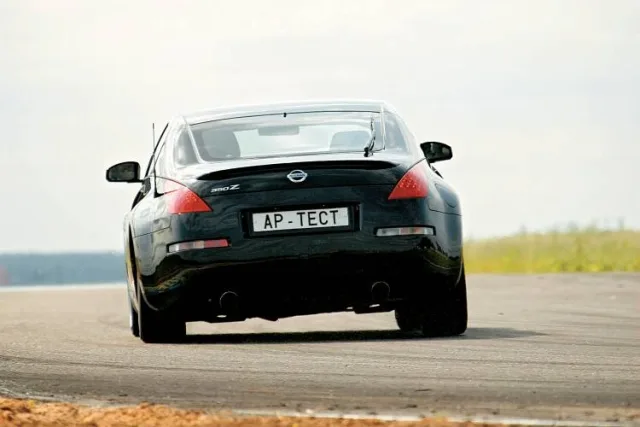
The rear left wheel under load is slightly turned into the corner — this is bump steering in action!
 |
 |
 |
| Nissan is ascetic, like a racing car: no chrome, no shiny lights. But everything is convenient and at hand! | The adjustment range of the wide and soft seat is a bit small for tall drivers | The gearshift mechanism works flawlessly |
 |
 |
|
| The onboard computer display (left) is switched to lap timer mode | The most honorable place is at the tachometer |
To hell with these bags and clubs! What is the main thing for high-speed cars? You didn't guess! The main thing, as experience suggests, is to stop in time. Apparently, the engineers of all four cars share this opinion. Even the "weakest" result of our braking distance measurements from 100 km/h (that was Nissan) is unattainable for most production cars: 38.4 meters! The best braking dynamics were shown by Porsche: from 100 km/h it stopped two meters earlier than Nissan, from 150 km/h — eight and a half meters earlier, and from 200 km/h — already twelve meters earlier! But here's what's interesting. On the ring track in Myachkovo, it was Nissan, not Porsche with its perforated discs, that pleased the racers with brake stability: from lap to lap the deceleration efficiency almost did not drop. Cayman also held up decently, but by the end of the second "combat" lap the brakes began to fade. The BMW brakes "floated" even earlier, and the Audi pilot had to go an extra "cooling" lap: such smoke poured from under the front fenders that it was time to grab a fire extinguisher. Although the smoke was without fire, an unpleasant aftertaste remained — including in the form of a bluish coating on the front discs.
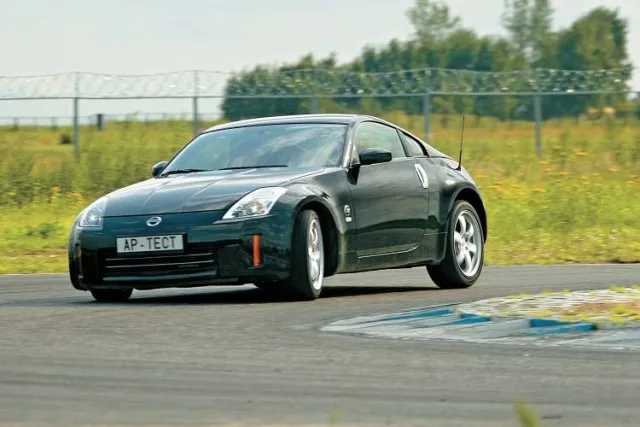
Nissan willingly dives into sharp corners of the race track — here it is in its element
 |
 |
| Powerful "audio", a huge "glove box" and compartments for documents — all this eats up the trunk volume | Brembo brakes pleased with stability |
What else is important? Now you guessed it. On the dynamometer road of the test site, the Porsche Cayman S pulls away, although its "boxer" is five "horses" weaker than the Nissan V6 engine. The thing is that Porsche is 110 kg lighter! And what a sound... Why is this luxurious Bose audio system here? The crescendo of the engine at 6500 rpm under full throttle — and all other sounds of the world become bland. You won't even hear them in the Porsche...
Despite desperate wheelspin even in second gear, Nissan lags behind. But no one will dare call the acceleration sluggish. Especially since after the recent facelift the engine power has grown from 280 to 300 hp, and it is achieved in a higher rev range. But the main virtue of the VQ35 "six" — excellent tractability — has been preserved. If you drive at 90 km/h in sixth gear and sharply floor the pedal, the surge will be such that your hand will reach for the lever: is fourth gear accidentally engaged instead of sixth? But it's hard to make a mistake: the gear selection mechanism works perfectly.
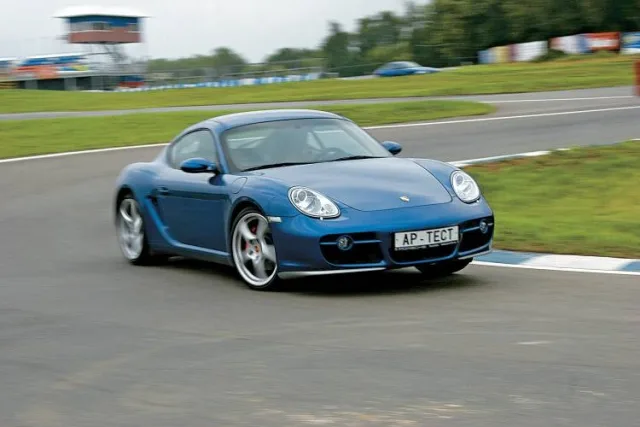
In the "race against time" Cayman was beyond competition: the best lap time!
 |
 |
 |
| Perforated visor, white dials: stylish and functional | Buttons for controlling shock absorbers and rear spoiler | Expensive, comfortable, with dignity |
 |
 |
 |
| Anyone will feel like a racer in such a seat | There is also navigation here, plus a speed limit warning | Two sports bags will easily fit in the "front trunk" |
However, the rumble of the Japanese engine is nothing compared to the melody of BMW's inline six. The only disappointment: even though the song is beautiful, the Bavarian loses to the Nissan in dynamics. And don't immediately blame the gearbox: if the Nissan has 195.3 hp per ton of mass, the BMW has only 185.1 hp. The transmission itself works perfectly, and if after the main run we hadn't additionally tried the Cayman with an "automatic" (the Cayman S with a "manual" counted), we would have called the BMW gearbox the best in class. But what BMW truly excels at is the manual shift paddles: they are much more logical and convenient than the rocker switches on the automatic Porsche and the paddles under the steering wheel of the Audi.
 |
 |
 |
| Two gearboxes, two characters: "automatic" for enthusiasts, "manual" for connoisseurs | Deploying spoiler — or rather, rear wing | |
 |
 |
 |
| Rear wiper — a useful option for Russia | The flashy tip is just a prop: there is only one pipe | Everything to reduce the car's moment of inertia relative to the vertical: the battery is at the windshield, and its center of gravity is on the longitudinal axis |
Audi's "automated manual" S-Tronic (the new name for DSG) is also not bad, but it doesn't help the brand win either. The engine simply lacks torque! Moreover, the character of the unit is too smooth for a sporty one, and the sound is artificial.
 Audi's behavior is also hard to call sporty, but... It was this car that showed a record speed in the "moose test" — 82.6 km/h, an achievement that no car previously tested by Autoreview had conquered! True, the record lasted only an hour — until the Cayman came out for testing. But still, one must admit: the ultimate capabilities are impressive! When entering a sharp turn, the TT slightly pushes its nose, but then smoothly, maintaining clear responses to throttle and steering, begins to slide with all four wheels. Even with deliberate rocking, the drift develops softly, and the careful stability system activates only when the driver himself starts to counter-steer to stop the slide.
On straight high-speed sections, the Audi is unrivaled — it flies like an arrow, changes lanes instantly, and obeys perfectly. But only if the asphalt is perfectly smooth. Because with ride comfort, the Audi is in a sad state. The shock absorbers seem to have forgotten their purpose — to smooth out, not multiply vibrations. A passenger, deprived of the support of the steering wheel, bounces so much that a helmet would not be out of place: head impacts on the roof could end in a concussion. And the driver should wear a corset — the terrible jolts have to be absorbed by the stomach and all its organs. You can't endure that for long. You wanted sportiness? Here you go! No, friends, this is no longer sport, but some kind of masochism.
Later, we drove the same roads in the same mode in the other cars: each of them felt like a Mercedes S-class compared to the Audi! Interestingly, the Audi's suspension handles large potholes quite tolerably, but hit a "short wave" — and it feels like the wheels have momentarily become square.
BMW responds to the steering wheel more sharply than the Audi, but even here there is too little sportiness: at small steering angles, the electrically assisted wheel is almost weightless. And driving the Z4 on a typical Russian "autobahn" with ruts and other defects is downright unpleasant — the "shoe" throws from side to side, and because of the "empty" steering wheel, the driver cannot react in time: hands shake, the car wanders... The only way out is to slow down and glide leisurely, enjoying the admiring glances of passersby. But in a sharp turn, you can earn applause: the BMW easily goes into a drift, and you can leave a spectacular black mark on the asphalt even with the stability system on — it wakes up only when the driver himself starts correcting the trajectory. And if you take corners in a circuit style, carefully working the throttle? Quite good. At the limit, the BMW smoothly slides with all four wheels. It's just a pity that the suspension allows noticeable body roll, which makes reactions sometimes sluggish in tense corners. Moreover, the BMW collects all the road "debris": small pits, joints, seams — nothing gets missed! Larger irregularities respond with sensitive impacts.
If Porsche weren't in our test, we would have called the Nissan's handling the best. The "Japanese" holds the straight confidently and changes lanes with lightning speed. But with stability off, you need to be extremely careful with the throttle: better to leave it on! The suspension is not bone-crushing, and most importantly, it perfectly dampens waves in high-speed corners, keeping the car on the intended trajectory.
What the Nissan lacks is polish. It could use slightly fewer jerks on the steering wheel, slightly "rounder" impacts on bumps, slightly softer stability control... But then the price would be different. After all, the Nissan is the most affordable car in our test, and that is deserved.
And it is equally deserved that the most expensive is the Porsche Cayman S. Even the fact that the stiff suspension makes the car float slightly at high speed is not a problem: thanks to the well-calibrated steering feedback, the driver never loses a sense of complete control. Minimal body roll and delays, insane lateral acceleration... Lift off the throttle in a fast corner — and the Cayman goes into a smooth drift; add throttle — and, maintaining the same angle, the "reptile" accelerates, increasing the radius. Delight!
It's unlikely that anyone would want to switch the Porsche to Sport mode outside a race track: the car has enough sportiness as it is, and the vibrations on small bumps would become unbearable. Even in standard mode, passengers get shaken more than in the Nissan. But at the same time, you're not afraid to hit even a "sleeping policeman": thump-thump — and on you go.
 |
 |
| Audi TT: 3.2 liters and only 250 hp of the venerable VR6 engine | Power backed by sound — that's the creed of BMW engine builders |
 |
 |
| Nissan's 300-horsepower engine is fierce but docile | Porsche Cayman S: where's the engine? Down below, behind the seats... |
From the standpoint of classic notions of interior comfort, all four cars are, of course, far from ideal. But if you separate the tire hum and aerodynamic whistle, which are the most annoying, from the engine sound — which we enthusiasts consider music — then you can set priorities. The quietest will be the Audi, the Porsche slightly louder, but in the Nissan and BMW the tire noise already becomes tiring. At the same time, none of us expected to hear plastic rattling in cars of this level. However, in the BMW the lid of the box between the seats persistently squeaked, and from the Audi's trunk came a plastic creak.
Ranking the cars when even impracticality suddenly becomes almost a virtue is a rather agonizing task. Still, we will name the winner without hesitation: it's the Porsche Cayman S. But we warn you: to truly understand and feel the Porsche, you need to go a difficult path, accumulating driving experience in many other good cars. Only then comes the confidence that only a Porsche can be better than a Porsche. After all, it's not even about the amount you're willing to pay for a car. You could buy a concert grand Yamaha — and play "Chizhik-Pyzhik" with one finger. And the sound, of course, will be magnificent, incomparable to a cheap piano. And you can't argue with that.
If the Porsche is a car turned inward, the BMW Z4 Coupe is a true extrovert, from the signature kidney grilles to the chopped tail. A dandy, a handsome man, an artist. If it's not the center of attention, it immediately falls into gloom. Yet it drives quite well! And those who are put off by the "driver-oriented" drawbacks we noted will surely be interested in the BMW M Coupe with its 342-horsepower engine and differently tuned suspension. True, such a car already costs $100,900.
The Nissan 350Z is an ultimatum. Speed, speed, and more speed. It's honest, straightforward, and simple, like Rambo: no reflection, depression, or other tediousness. And the price is right — $65,140. Any questions? No questions.
The new Audi TT 3.2 quattro is the most versatile of all. All-wheel drive, albeit tiny but still rear seats, excellent visibility, reliable, safe behavior... And the price is quite adequate — $72,700. And as for the car shaking your soul on bumps, rest assured: in a couple of months this childhood disease will be cured in Ingolstadt — we already have experience with this, specifically with the Audi TT, albeit the previous generation. And it will be an excellent car for excellent drivers. You couldn't wish for a better candidate for a marriage of convenience. It's a pity you can't call it temptation... But you want it. Maybe then the Nissan?
And what happened to the Porsche engine, did they botch it? The council of mechanics issued a verdict: apparently, the absorber in the crankcase ventilation system failed — and a dose of oil got into the intake manifold. Start it, they say, we'll look, listen, smell.
To be safe, we gave the honorable right to perform a restart to the chief. He started the engine — and within a minute the last hint that the Porsche's exhaust didn't meet Euro 4 standards dissipated over the track in Myachkovo. We were lucky again. Vitaly Dudin breathed a sigh of relief, packed his racing suit into a bag, and headed to the airport to fly to Tolyatti. "If anything," he says, "call me, I liked it."
We did too.
Lap Time
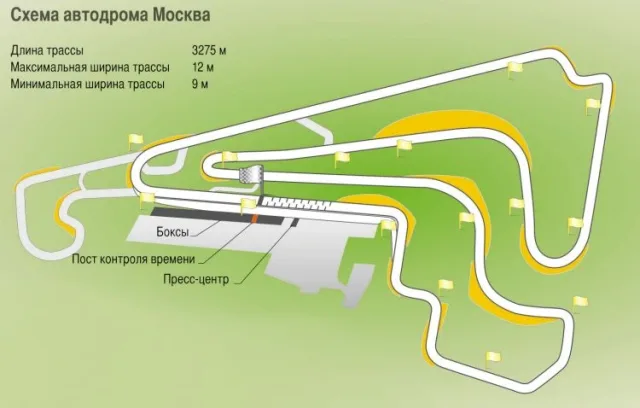
Although the official opening of the Moscow race track in Myachkovo near Moscow took place quite recently, the country's strongest drivers have already managed to try it out. According to many athletes, the track is narrow and "congested" — there are no truly high-speed ("flowing") corners here. The surface is smooth, but in braking zones slight waves are noticeable.
To avoid severe tire wear, it was decided that each of the two drivers would complete four laps in each of the four cars: the first lap — familiarization (of course, getting to know the car, not the track), then two "combat" laps with lap time recording, and the fourth lap — "calm," to cool the brakes and engine.
The stability systems of all cars were disabled, and on cars with automatic transmissions, the "manual" gear selection mode was used.
Vitaly Dudin
Technical Director of the Lada Revolution class
Russian Autocross Champion (1995, 1997)
Russian Winter Track Racing Champion (1999)
Winner of the Russian Cup in Circuit Racing (1998, 1999)
Winner of the 24-hour race ADAC 24-h Rennen Nurburgring in class V4 (2002)
Best lap time:
- Porsche Cayman S 2.01,13
- Nissan 350Z 2.01,54
- Audi TT 3.2 quattro 2.02,06
- BMW Z4 3.0 Coupe 2.02,76
The Porsche Cayman S turned out to be the fastest thanks to better acceleration dynamics and a well-tuned suspension that prevents body roll and pitching. Achieving a higher result was hindered by considerable effort on the gearshift lever and an overly heavy steering wheel. The car develops very high lateral forces, but the balance seemed suboptimal to me: the car tends to understeer. And the brakes started to fade slightly on the second lap. The seat is the most sporty: it hugs the body tightly and holds well in corners. A worthy car for worthy people. But not for racing.
The Nissan 350Z impressed with its brakes — only on it they didn't overheat. The powerful engine with perfectly matched gears also pleased: the Nissan is only slightly behind the Porsche. And the cornering character is even better! Thanks to optimal load on the front wheels, the Nissan enters tight corners clearly, holds the line steadily, and is balanced on exit. Steering feedback is top-notch. It might seem that the tires don't grip well enough, but in my opinion, for the Myachkovo track, the suspension is a bit soft: the shock absorbers can't keep the wheels in reliable contact with the road. Overall, a very worthy sports car for everyday use, which, if the suspension is refined, won't shy away from a race track either.
The Audi TT will please an owner who goes to the "ring" only with high cornering forces and a perfectly tuned all-wheel drive: no antics from unexpected engagement of the rear wheels! The car responds evenly to both lifting off and adding throttle, and is well controlled by a light, informative steering wheel. But there are more drawbacks: weak suspension, gearbox delays, a feeble engine... And the brakes overheated instantly and took a long time to cool down. All this might go unnoticed on a regular road, so I won't categorically claim the TT lacks a sporty character as a road car.
The BMW Z4 Coupe disappointed, although the engine is peppy. Gears in manual mode engage with delays, brakes overheat. The suspension is too soft. Even the seat doesn't hold you in corners. But what upset me most was the handling. Due to the too-heavy front end, the car acquired uncharacteristic BMW habits. On corner entry, the inertia of the heavy engine drags the car past the apex, and on exit there's not enough rear wheel grip — and the car goes into a slide. This car's place is not here, but near a nightclub.
Kirill Ladygin
Nine-time Russian Karting Champion
Russian Champion in the Lada Revolution class (2004)
Best lap time:
- Porsche Cayman S 1.59,15
- Audi TT 3.2 quattro 2.00,99
- BMW Z4 3.0 Coupe 2.02,17
- Nissan 350Z 2.02,92
The Porsche Cayman S pleased me: stiff suspension, minimal body roll, powerful brakes, and the engine in the range from 4500 to 7000 rpm is just a beast! The stiff gearshift mechanism and stretched gear ratios spoil the impression: in slow hairpins there were drops in revs. The tires grip the road excellently, and the balance of handling is optimal for a dry track — slight understeer on entry gives way to "neutrality" at the apex and on exit. Despite the somewhat heavy steering, I felt the front wheel drift perfectly. Connection with the car is also ensured by the excellent "saddle" with very good lateral support. A great car for club racing!
The Audi TT lacks power. But thanks to all-wheel drive, you can open the throttle very early: in corners the Audi doesn't lag behind the Porsche. The steering is light and "clean" — just right for me. But on the track this car feels uncomfortable: if there are bumps in a flowing corner, it jumps off the line — the shock absorbers work poorly in rebound. The brakes started emitting a characteristic smell after the second lap. But what bothered me most was the gearbox: delays, unsolicited shifts, stretched gears. Although it's unlikely any of this will annoy on a regular road.
The BMW Z4 Coupe is hardly suitable for the track. Due to the narrow side bolsters in the driver's seat, the driver constantly fidgets. The braking system gave up quickly — signs of overheating appeared after just the first lap. The steering wheel is light, but it lacks feedback. The suspension is tuned for comfort, not sport. And the main problem is that the car readily goes into a slide: you can only add throttle when the wheels are straight. The robotic gearbox was even less appealing than the Audi's: the gears are longer, and the pauses during shifts are more noticeable. On the plus side — an excellent engine and grippy tires, which allowed us to achieve a decent time.
The Nissan 350Z, however, became my favorite, and I attribute the lap deficit to mediocre tires. The engine feels no worse than the Porsche's, and it even picks up earlier — from three thousand rpm. The gears here are shorter than in the Cayman and engage noticeably easier. The brakes work consistently without overheating. The suspension prevents the car from nose-diving and smoothly absorbs curbs. The chassis balance perfectly matches my style: neutral on entry, slight oversteer on exit. For a race, I would choose this car. Moreover, the seat fits me like a glove — as if it were made to my measurements.
If I were to rank the cars by sportiness, it would be: Nissan, then Porsche, then Audi, with BMW last.
Moose Test
We perform the sudden obstacle avoidance test in two stages. First, five drivers who have already familiarized themselves with the cars in normal mode attempt to "avoid the moose" with one try at a speed of 65 km/h. After that, a professional driver determines the maximum speed at which the maneuver is still possible through a series of runs.

Behind the wheel of these compact coupes, the test driver achieved the best results in the history of Autoreview's moose tests. But this does not mean that an average driver can easily handle an unexpected obstacle. Even in the Porsche, where the expert reached a record 83.2 km/h, two out of five volunteers failed the test! The huge reserve of capabilities remained unused due to the overly heavy steering. For the professional, the car went like on rails almost to the limit, but then oversteer of the rear axle began to manifest, which prevented a faster maneuver.
The Audi TT and Nissan 350Z performed very well. Clear reactions, informative steering, a large stability reserve, and careful stability control operation allowed the expert to achieve 82.6 and 82.0 km/h. But here too, only two out of five managed to dodge the imaginary moose. The others misjudged the understeer and simply did not turn the wheel enough.
The BMW's maximum speed was the lowest in the test — 79.2 km/h. Further acceleration was hindered by a tendency to oversteer and the overly intrusive DSC system. Nevertheless, only one driver out of five failed the exercise at 65 km/h. Good rapport with the car allowed the others to avoid mistakes, and the BMW's quick response helped correct minor errors.
| Maximum speed during the moose test, km/h | |
| Car | Speed |
| Audi TT 3.2 quattro | 82.6 |
| BMW Z4 3.0 Coupe | 79.2 |
| Nissan 350Z | 82 |
| Porsche Cayman S | 83.2 |
| Moose test on the first attempt at 65 km/h* | |
| Car | Maneuver completed |
| Audi TT 3.2 quattro | 2 out of 5 drivers |
| BMW Z4 3.0 Coupe | 4 out of 5 drivers |
| Nissan 350Z | 2 out of 5 drivers |
| Porsche Cayman S | 3 out of 5 drivers |
| * Five drivers participated in the tests | |
| Audi TT 3.2 quattro, BMW Z4 3.0 Coupe, Nissan 350Z, Porsche Cayman S (manufacturer data) | ||||||||||||||||||||||||||||||||||||||||||||||||||||||||||||||||||||||||||||||||||||||||||||||||||||||||||||||||||||||||||||||||||||||||||||||||||||||||||||||||||||||||||||||||||||||||||||||||||||||||||||||||||||||||||||||||||||||||||||||||||||||||||||||||||||||||||||||||||||||||||||||||||||||||||||||||||||||||||||||||||||||||||||||||||||||||||||||||||||||||||||||||||||||||||||||||||||||||||||||||||||||||||||||||||||||||||||||||||||||||||||||||||||||||||||||||||||||||||||||||||||||||||||||||||||||||||||||||||||||||||||||||||||||||||||||||||||||||||||||||||||||||||||||||||||||||||||||||||||||||||||||||||||||||||||||||||||||||||||||||||||||||||||||||||||||||||||||||||||||||||||||||||||||||||||||||||||||||||||||||||||||||||||||||||||||||||||||||||||||||||||||||||||||||||||||||||||||||||||||||||||||||||||||||||||||||||||||||||||||
| Car | Audi TT 3.2 quattro | BMW Z4 3.0 Coupe | Nissan 350Z | Porsche Cayman S* | ||||||||||||||||||||||||||||||||||||||||||||||||||||||||||||||||||||||||||||||||||||||||||||||||||||||||||||||||||||||||||||||||||||||||||||||||||||||||||||||||||||||||||||||||||||||||||||||||||||||||||||||||||||||||||||||||||||||||||||||||||||||||||||||||||||||||||||||||||||||||||||||||||||||||||||||||||||||||||||||||||||||||||||||||||||||||||||||||||||||||||||||||||||||||||||||||||||||||||||||||||||||||||||||||||||||||||||||||||||||||||||||||||||||||||||||||||||||||||||||||||||||||||||||||||||||||||||||||||||||||||||||||||||||||||||||||||||||||||||||||||||||||||||||||||||||||||||||||||||||||||||||||||||||||||||||||||||||||||||||||||||||||||||||||||||||||||||||||||||||||||||||||||||||||||||||||||||||||||||||||||||||||||||||||||||||||||||||||||||||||||||||||||||||||||||||||||||||||||||||||||||||||||||||||||||||||||||||||||
| Body type | coupe | coupe | coupe | coupe | ||||||||||||||||||||||||||||||||||||||||||||||||||||||||||||||||||||||||||||||||||||||||||||||||||||||||||||||||||||||||||||||||||||||||||||||||||||||||||||||||||||||||||||||||||||||||||||||||||||||||||||||||||||||||||||||||||||||||||||||||||||||||||||||||||||||||||||||||||||||||||||||||||||||||||||||||||||||||||||||||||||||||||||||||||||||||||||||||||||||||||||||||||||||||||||||||||||||||||||||||||||||||||||||||||||||||||||||||||||||||||||||||||||||||||||||||||||||||||||||||||||||||||||||||||||||||||||||||||||||||||||||||||||||||||||||||||||||||||||||||||||||||||||||||||||||||||||||||||||||||||||||||||||||||||||||||||||||||||||||||||||||||||||||||||||||||||||||||||||||||||||||||||||||||||||||||||||||||||||||||||||||||||||||||||||||||||||||||||||||||||||||||||||||||||||||||||||||||||||||||||||||||||||||||||||||||||||||||||
| Number of seats | 2+2 | 2 | 2 | 2 | ||||||||||||||||||||||||||||||||||||||||||||||||||||||||||||||||||||||||||||||||||||||||||||||||||||||||||||||||||||||||||||||||||||||||||||||||||||||||||||||||||||||||||||||||||||||||||||||||||||||||||||||||||||||||||||||||||||||||||||||||||||||||||||||||||||||||||||||||||||||||||||||||||||||||||||||||||||||||||||||||||||||||||||||||||||||||||||||||||||||||||||||||||||||||||||||||||||||||||||||||||||||||||||||||||||||||||||||||||||||||||||||||||||||||||||||||||||||||||||||||||||||||||||||||||||||||||||||||||||||||||||||||||||||||||||||||||||||||||||||||||||||||||||||||||||||||||||||||||||||||||||||||||||||||||||||||||||||||||||||||||||||||||||||||||||||||||||||||||||||||||||||||||||||||||||||||||||||||||||||||||||||||||||||||||||||||||||||||||||||||||||||||||||||||||||||||||||||||||||||||||||||||||||||||||||||||||||||||||
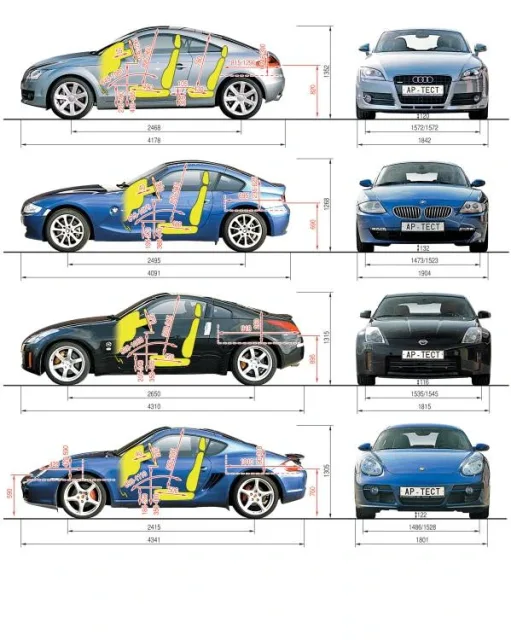
| Length, mm | 4178 | 4091 | 4310 | 4341 | ||||||||||||||||||||||||||||||||||||||||||||||||||||||||||||||||||||||||||||||||||||||||||||||||||||||||||||||||||||||||||||||||||||||||||||||||||||||||||||||||||||||||||||||||||||||||||||||||||||||||||||||||||||||||||||||||||||||||||||||||||||||||||||||||||||||||||||||||||||||||||||||||||||||||||||||||||||||||||||||||||||||||||||||||||||||||||||||||||||||||||||||||||||||||||||||||||||||||||||||||||||||||||||||||||||||||||||||||||||||||||||||||||||||||||||||||||||||||||||||||||||||||||||||||||||||||||||||||||||||||||||||||||||||||||||||||||||||||||||||||||||||||||||||||||||||||||||||||||||||||||||||||||||||||||||||||||||||||||||||||||||||||||||||||||||||||||||||||||||||||||||||||||||||||||||||||||||||||||||||||||||||||||||||||||||||||||||||||||||||||||||||||||||||||||||||||||||||||||||||||||||||||||||||||||||||||||||||||||
| Width, mm | 1842 | 1904 | 1815 | 1801 | ||||||||||||||||||||||||||||||||||||||||||||||||||||||||||||||||||||||||||||||||||||||||||||||||||||||||||||||||||||||||||||||||||||||||||||||||||||||||||||||||||||||||||||||||||||||||||||||||||||||||||||||||||||||||||||||||||||||||||||||||||||||||||||||||||||||||||||||||||||||||||||||||||||||||||||||||||||||||||||||||||||||||||||||||||||||||||||||||||||||||||||||||||||||||||||||||||||||||||||||||||||||||||||||||||||||||||||||||||||||||||||||||||||||||||||||||||||||||||||||||||||||||||||||||||||||||||||||||||||||||||||||||||||||||||||||||||||||||||||||||||||||||||||||||||||||||||||||||||||||||||||||||||||||||||||||||||||||||||||||||||||||||||||||||||||||||||||||||||||||||||||||||||||||||||||||||||||||||||||||||||||||||||||||||||||||||||||||||||||||||||||||||||||||||||||||||||||||||||||||||||||||||||||||||||||||||||||||||||
| Height, mm | 1352 | 1268 | 1315 | 1305 | ||||||||||||||||||||||||||||||||||||||||||||||||||||||||||||||||||||||||||||||||||||||||||||||||||||||||||||||||||||||||||||||||||||||||||||||||||||||||||||||||||||||||||||||||||||||||||||||||||||||||||||||||||||||||||||||||||||||||||||||||||||||||||||||||||||||||||||||||||||||||||||||||||||||||||||||||||||||||||||||||||||||||||||||||||||||||||||||||||||||||||||||||||||||||||||||||||||||||||||||||||||||||||||||||||||||||||||||||||||||||||||||||||||||||||||||||||||||||||||||||||||||||||||||||||||||||||||||||||||||||||||||||||||||||||||||||||||||||||||||||||||||||||||||||||||||||||||||||||||||||||||||||||||||||||||||||||||||||||||||||||||||||||||||||||||||||||||||||||||||||||||||||||||||||||||||||||||||||||||||||||||||||||||||||||||||||||||||||||||||||||||||||||||||||||||||||||||||||||||||||||||||||||||||||||||||||||||||||||
| Wheelbase, mm | 2468 | 2495 | 2650 | 2415 | ||||||||||||||||||||||||||||||||||||||||||||||||||||||||||||||||||||||||||||||||||||||||||||||||||||||||||||||||||||||||||||||||||||||||||||||||||||||||||||||||||||||||||||||||||||||||||||||||||||||||||||||||||||||||||||||||||||||||||||||||||||||||||||||||||||||||||||||||||||||||||||||||||||||||||||||||||||||||||||||||||||||||||||||||||||||||||||||||||||||||||||||||||||||||||||||||||||||||||||||||||||||||||||||||||||||||||||||||||||||||||||||||||||||||||||||||||||||||||||||||||||||||||||||||||||||||||||||||||||||||||||||||||||||||||||||||||||||||||||||||||||||||||||||||||||||||||||||||||||||||||||||||||||||||||||||||||||||||||||||||||||||||||||||||||||||||||||||||||||||||||||||||||||||||||||||||||||||||||||||||||||||||||||||||||||||||||||||||||||||||||||||||||||||||||||||||||||||||||||||||||||||||||||||||||||||||||||||||||
| Track front/rear, mm | 1572/1572 | 1473/1523 | 1535/1545 | 1486/1528 | ||||||||||||||||||||||||||||||||||||||||||||||||||||||||||||||||||||||||||||||||||||||||||||||||||||||||||||||||||||||||||||||||||||||||||||||||||||||||||||||||||||||||||||||||||||||||||||||||||||||||||||||||||||||||||||||||||||||||||||||||||||||||||||||||||||||||||||||||||||||||||||||||||||||||||||||||||||||||||||||||||||||||||||||||||||||||||||||||||||||||||||||||||||||||||||||||||||||||||||||||||||||||||||||||||||||||||||||||||||||||||||||||||||||||||||||||||||||||||||||||||||||||||||||||||||||||||||||||||||||||||||||||||||||||||||||||||||||||||||||||||||||||||||||||||||||||||||||||||||||||||||||||||||||||||||||||||||||||||||||||||||||||||||||||||||||||||||||||||||||||||||||||||||||||||||||||||||||||||||||||||||||||||||||||||||||||||||||||||||||||||||||||||||||||||||||||||||||||||||||||||||||||||||||||||||||||||||||||||
| Trunk volume, l | 290 | 285 | 235 | 150+260 | ||||||||||||||||||||||||||||||||||||||||||||||||||||||||||||||||||||||||||||||||||||||||||||||||||||||||||||||||||||||||||||||||||||||||||||||||||||||||||||||||||||||||||||||||||||||||||||||||||||||||||||||||||||||||||||||||||||||||||||||||||||||||||||||||||||||||||||||||||||||||||||||||||||||||||||||||||||||||||||||||||||||||||||||||||||||||||||||||||||||||||||||||||||||||||||||||||||||||||||||||||||||||||||||||||||||||||||||||||||||||||||||||||||||||||||||||||||||||||||||||||||||||||||||||||||||||||||||||||||||||||||||||||||||||||||||||||||||||||||||||||||||||||||||||||||||||||||||||||||||||||||||||||||||||||||||||||||||||||||||||||||||||||||||||||||||||||||||||||||||||||||||||||||||||||||||||||||||||||||||||||||||||||||||||||||||||||||||||||||||||||||||||||||||||||||||||||||||||||||||||||||||||||||||||||||||||||||||||||
| Curb weight, kg | 1430 | 1350 | 1525 | 1340 | ||||||||||||||||||||||||||||||||||||||||||||||||||||||||||||||||||||||||||||||||||||||||||||||||||||||||||||||||||||||||||||||||||||||||||||||||||||||||||||||||||||||||||||||||||||||||||||||||||||||||||||||||||||||||||||||||||||||||||||||||||||||||||||||||||||||||||||||||||||||||||||||||||||||||||||||||||||||||||||||||||||||||||||||||||||||||||||||||||||||||||||||||||||||||||||||||||||||||||||||||||||||||||||||||||||||||||||||||||||||||||||||||||||||||||||||||||||||||||||||||||||||||||||||||||||||||||||||||||||||||||||||||||||||||||||||||||||||||||||||||||||||||||||||||||||||||||||||||||||||||||||||||||||||||||||||||||||||||||||||||||||||||||||||||||||||||||||||||||||||||||||||||||||||||||||||||||||||||||||||||||||||||||||||||||||||||||||||||||||||||||||||||||||||||||||||||||||||||||||||||||||||||||||||||||||||||||||||||||
| Gross weight, kg | 1830 | 1610 | 1820 | 1630 | ||||||||||||||||||||||||||||||||||||||||||||||||||||||||||||||||||||||||||||||||||||||||||||||||||||||||||||||||||||||||||||||||||||||||||||||||||||||||||||||||||||||||||||||||||||||||||||||||||||||||||||||||||||||||||||||||||||||||||||||||||||||||||||||||||||||||||||||||||||||||||||||||||||||||||||||||||||||||||||||||||||||||||||||||||||||||||||||||||||||||||||||||||||||||||||||||||||||||||||||||||||||||||||||||||||||||||||||||||||||||||||||||||||||||||||||||||||||||||||||||||||||||||||||||||||||||||||||||||||||||||||||||||||||||||||||||||||||||||||||||||||||||||||||||||||||||||||||||||||||||||||||||||||||||||||||||||||||||||||||||||||||||||||||||||||||||||||||||||||||||||||||||||||||||||||||||||||||||||||||||||||||||||||||||||||||||||||||||||||||||||||||||||||||||||||||||||||||||||||||||||||||||||||||||||||||||||||||||||
| Engine | gasoline, with distributed injection | |||||||||||||||||||||||||||||||||||||||||||||||||||||||||||||||||||||||||||||||||||||||||||||||||||||||||||||||||||||||||||||||||||||||||||||||||||||||||||||||||||||||||||||||||||||||||||||||||||||||||||||||||||||||||||||||||||||||||||||||||||||||||||||||||||||||||||||||||||||||||||||||||||||||||||||||||||||||||||||||||||||||||||||||||||||||||||||||||||||||||||||||||||||||||||||||||||||||||||||||||||||||||||||||||||||||||||||||||||||||||||||||||||||||||||||||||||||||||||||||||||||||||||||||||||||||||||||||||||||||||||||||||||||||||||||||||||||||||||||||||||||||||||||||||||||||||||||||||||||||||||||||||||||||||||||||||||||||||||||||||||||||||||||||||||||||||||||||||||||||||||||||||||||||||||||||||||||||||||||||||||||||||||||||||||||||||||||||||||||||||||||||||||||||||||||||||||||||||||||||||||||||||||||||||||||||||||||||||||||
| Location | front, transverse | front, longitudinal | in front of the rear axle, longitudinal | |||||||||||||||||||||||||||||||||||||||||||||||||||||||||||||||||||||||||||||||||||||||||||||||||||||||||||||||||||||||||||||||||||||||||||||||||||||||||||||||||||||||||||||||||||||||||||||||||||||||||||||||||||||||||||||||||||||||||||||||||||||||||||||||||||||||||||||||||||||||||||||||||||||||||||||||||||||||||||||||||||||||||||||||||||||||||||||||||||||||||||||||||||||||||||||||||||||||||||||||||||||||||||||||||||||||||||||||||||||||||||||||||||||||||||||||||||||||||||||||||||||||||||||||||||||||||||||||||||||||||||||||||||||||||||||||||||||||||||||||||||||||||||||||||||||||||||||||||||||||||||||||||||||||||||||||||||||||||||||||||||||||||||||||||||||||||||||||||||||||||||||||||||||||||||||||||||||||||||||||||||||||||||||||||||||||||||||||||||||||||||||||||||||||||||||||||||||||||||||||||||||||||||||||||||||||||||||||||||
| Number and arrangement of cylinders | 6, V-shaped | 6, in-line | 6, V-shaped | 6, opposed | ||||||||||||||||||||||||||||||||||||||||||||||||||||||||||||||||||||||||||||||||||||||||||||||||||||||||||||||||||||||||||||||||||||||||||||||||||||||||||||||||||||||||||||||||||||||||||||||||||||||||||||||||||||||||||||||||||||||||||||||||||||||||||||||||||||||||||||||||||||||||||||||||||||||||||||||||||||||||||||||||||||||||||||||||||||||||||||||||||||||||||||||||||||||||||||||||||||||||||||||||||||||||||||||||||||||||||||||||||||||||||||||||||||||||||||||||||||||||||||||||||||||||||||||||||||||||||||||||||||||||||||||||||||||||||||||||||||||||||||||||||||||||||||||||||||||||||||||||||||||||||||||||||||||||||||||||||||||||||||||||||||||||||||||||||||||||||||||||||||||||||||||||||||||||||||||||||||||||||||||||||||||||||||||||||||||||||||||||||||||||||||||||||||||||||||||||||||||||||||||||||||||||||||||||||||||||||||||||||
| Displacement, cm³ | 3189 | 2996 | 3498 | 3386 | ||||||||||||||||||||||||||||||||||||||||||||||||||||||||||||||||||||||||||||||||||||||||||||||||||||||||||||||||||||||||||||||||||||||||||||||||||||||||||||||||||||||||||||||||||||||||||||||||||||||||||||||||||||||||||||||||||||||||||||||||||||||||||||||||||||||||||||||||||||||||||||||||||||||||||||||||||||||||||||||||||||||||||||||||||||||||||||||||||||||||||||||||||||||||||||||||||||||||||||||||||||||||||||||||||||||||||||||||||||||||||||||||||||||||||||||||||||||||||||||||||||||||||||||||||||||||||||||||||||||||||||||||||||||||||||||||||||||||||||||||||||||||||||||||||||||||||||||||||||||||||||||||||||||||||||||||||||||||||||||||||||||||||||||||||||||||||||||||||||||||||||||||||||||||||||||||||||||||||||||||||||||||||||||||||||||||||||||||||||||||||||||||||||||||||||||||||||||||||||||||||||||||||||||||||||||||||||||||||
| Cylinder bore/piston stroke, mm | 84.0/95.9 | 85.0/88.0 | 95.5/81.4 | 96.0/78.0 | ||||||||||||||||||||||||||||||||||||||||||||||||||||||||||||||||||||||||||||||||||||||||||||||||||||||||||||||||||||||||||||||||||||||||||||||||||||||||||||||||||||||||||||||||||||||||||||||||||||||||||||||||||||||||||||||||||||||||||||||||||||||||||||||||||||||||||||||||||||||||||||||||||||||||||||||||||||||||||||||||||||||||||||||||||||||||||||||||||||||||||||||||||||||||||||||||||||||||||||||||||||||||||||||||||||||||||||||||||||||||||||||||||||||||||||||||||||||||||||||||||||||||||||||||||||||||||||||||||||||||||||||||||||||||||||||||||||||||||||||||||||||||||||||||||||||||||||||||||||||||||||||||||||||||||||||||||||||||||||||||||||||||||||||||||||||||||||||||||||||||||||||||||||||||||||||||||||||||||||||||||||||||||||||||||||||||||||||||||||||||||||||||||||||||||||||||||||||||||||||||||||||||||||||||||||||||||||||||||
| Compression ratio | 11.3:1 | 10.7:1 | 10.3:1 | 11.1:1 | ||||||||||||||||||||||||||||||||||||||||||||||||||||||||||||||||||||||||||||||||||||||||||||||||||||||||||||||||||||||||||||||||||||||||||||||||||||||||||||||||||||||||||||||||||||||||||||||||||||||||||||||||||||||||||||||||||||||||||||||||||||||||||||||||||||||||||||||||||||||||||||||||||||||||||||||||||||||||||||||||||||||||||||||||||||||||||||||||||||||||||||||||||||||||||||||||||||||||||||||||||||||||||||||||||||||||||||||||||||||||||||||||||||||||||||||||||||||||||||||||||||||||||||||||||||||||||||||||||||||||||||||||||||||||||||||||||||||||||||||||||||||||||||||||||||||||||||||||||||||||||||||||||||||||||||||||||||||||||||||||||||||||||||||||||||||||||||||||||||||||||||||||||||||||||||||||||||||||||||||||||||||||||||||||||||||||||||||||||||||||||||||||||||||||||||||||||||||||||||||||||||||||||||||||||||||||||||||||||
| Number of valves | 24 | 24 | 24 | 24 | ||||||||||||||||||||||||||||||||||||||||||||||||||||||||||||||||||||||||||||||||||||||||||||||||||||||||||||||||||||||||||||||||||||||||||||||||||||||||||||||||||||||||||||||||||||||||||||||||||||||||||||||||||||||||||||||||||||||||||||||||||||||||||||||||||||||||||||||||||||||||||||||||||||||||||||||||||||||||||||||||||||||||||||||||||||||||||||||||||||||||||||||||||||||||||||||||||||||||||||||||||||||||||||||||||||||||||||||||||||||||||||||||||||||||||||||||||||||||||||||||||||||||||||||||||||||||||||||||||||||||||||||||||||||||||||||||||||||||||||||||||||||||||||||||||||||||||||||||||||||||||||||||||||||||||||||||||||||||||||||||||||||||||||||||||||||||||||||||||||||||||||||||||||||||||||||||||||||||||||||||||||||||||||||||||||||||||||||||||||||||||||||||||||||||||||||||||||||||||||||||||||||||||||||||||||||||||||||||||
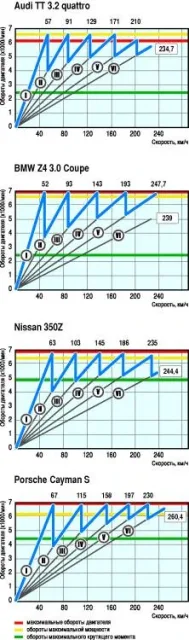
| Max power, hp/kW/rpm | 250/184/6300 | 261/195/6600 | 300/221/6400 | 295/217/6250 | ||||||||||||||||||||||||||||||||||||||||||||||||||||||||||||||||||||||||||||||||||||||||||||||||||||||||||||||||||||||||||||||||||||||||||||||||||||||||||||||||||||||||||||||||||||||||||||||||||||||||||||||||||||||||||||||||||||||||||||||||||||||||||||||||||||||||||||||||||||||||||||||||||||||||||||||||||||||||||||||||||||||||||||||||||||||||||||||||||||||||||||||||||||||||||||||||||||||||||||||||||||||||||||||||||||||||||||||||||||||||||||||||||||||||||||||||||||||||||||||||||||||||||||||||||||||||||||||||||||||||||||||||||||||||||||||||||||||||||||||||||||||||||||||||||||||||||||||||||||||||||||||||||||||||||||||||||||||||||||||||||||||||||||||||||||||||||||||||||||||||||||||||||||||||||||||||||||||||||||||||||||||||||||||||||||||||||||||||||||||||||||||||||||||||||||||||||||||||||||||||||||||||||||||||||||||||||||||||||
| Max torque, Nm/rpm | 320/2500—3000 | 315/2500 | 353/4800 | 340/4400 | ||||||||||||||||||||||||||||||||||||||||||||||||||||||||||||||||||||||||||||||||||||||||||||||||||||||||||||||||||||||||||||||||||||||||||||||||||||||||||||||||||||||||||||||||||||||||||||||||||||||||||||||||||||||||||||||||||||||||||||||||||||||||||||||||||||||||||||||||||||||||||||||||||||||||||||||||||||||||||||||||||||||||||||||||||||||||||||||||||||||||||||||||||||||||||||||||||||||||||||||||||||||||||||||||||||||||||||||||||||||||||||||||||||||||||||||||||||||||||||||||||||||||||||||||||||||||||||||||||||||||||||||||||||||||||||||||||||||||||||||||||||||||||||||||||||||||||||||||||||||||||||||||||||||||||||||||||||||||||||||||||||||||||||||||||||||||||||||||||||||||||||||||||||||||||||||||||||||||||||||||||||||||||||||||||||||||||||||||||||||||||||||||||||||||||||||||||||||||||||||||||||||||||||||||||||||||||||||||||
| Gearbox | manual, automated, 6-speed | automatic, 6-speed | manual, 6-speed | manual, 6-speed (automatic, 5-speed) | ||||||||||||||||||||||||||||||||||||||||||||||||||||||||||||||||||||||||||||||||||||||||||||||||||||||||||||||||||||||||||||||||||||||||||||||||||||||||||||||||||||||||||||||||||||||||||||||||||||||||||||||||||||||||||||||||||||||||||||||||||||||||||||||||||||||||||||||||||||||||||||||||||||||||||||||||||||||||||||||||||||||||||||||||||||||||||||||||||||||||||||||||||||||||||||||||||||||||||||||||||||||||||||||||||||||||||||||||||||||||||||||||||||||||||||||||||||||||||||||||||||||||||||||||||||||||||||||||||||||||||||||||||||||||||||||||||||||||||||||||||||||||||||||||||||||||||||||||||||||||||||||||||||||||||||||||||||||||||||||||||||||||||||||||||||||||||||||||||||||||||||||||||||||||||||||||||||||||||||||||||||||||||||||||||||||||||||||||||||||||||||||||||||||||||||||||||||||||||||||||||||||||||||||||||||||||||||||||||
| Gear ratios | ||||||||||||||||||||||||||||||||||||||||||||||||||||||||||||||||||||||||||||||||||||||||||||||||||||||||||||||||||||||||||||||||||||||||||||||||||||||||||||||||||||||||||||||||||||||||||||||||||||||||||||||||||||||||||||||||||||||||||||||||||||||||||||||||||||||||||||||||||||||||||||||||||||||||||||||||||||||||||||||||||||||||||||||||||||||||||||||||||||||||||||||||||||||||||||||||||||||||||||||||||||||||||||||||||||||||||||||||||||||||||||||||||||||||||||||||||||||||||||||||||||||||||||||||||||||||||||||||||||||||||||||||||||||||||||||||||||||||||||||||||||||||||||||||||||||||||||||||||||||||||||||||||||||||||||||||||||||||||||||||||||||||||||||||||||||||||||||||||||||||||||||||||||||||||||||||||||||||||||||||||||||||||||||||||||||||||||||||||||||||||||||||||||||||||||||||||||||||||||||||||||||||||||||||||||||||||||||||||||||
| I | 2.93 | 4.17 | 3.79 | 3.31 (3.66) | ||||||||||||||||||||||||||||||||||||||||||||||||||||||||||||||||||||||||||||||||||||||||||||||||||||||||||||||||||||||||||||||||||||||||||||||||||||||||||||||||||||||||||||||||||||||||||||||||||||||||||||||||||||||||||||||||||||||||||||||||||||||||||||||||||||||||||||||||||||||||||||||||||||||||||||||||||||||||||||||||||||||||||||||||||||||||||||||||||||||||||||||||||||||||||||||||||||||||||||||||||||||||||||||||||||||||||||||||||||||||||||||||||||||||||||||||||||||||||||||||||||||||||||||||||||||||||||||||||||||||||||||||||||||||||||||||||||||||||||||||||||||||||||||||||||||||||||||||||||||||||||||||||||||||||||||||||||||||||||||||||||||||||||||||||||||||||||||||||||||||||||||||||||||||||||||||||||||||||||||||||||||||||||||||||||||||||||||||||||||||||||||||||||||||||||||||||||||||||||||||||||||||||||||||||||||||||||||||||
| II | 1.83 | 2.34 | 2.32 | 1.95 (2.00) | ||||||||||||||||||||||||||||||||||||||||||||||||||||||||||||||||||||||||||||||||||||||||||||||||||||||||||||||||||||||||||||||||||||||||||||||||||||||||||||||||||||||||||||||||||||||||||||||||||||||||||||||||||||||||||||||||||||||||||||||||||||||||||||||||||||||||||||||||||||||||||||||||||||||||||||||||||||||||||||||||||||||||||||||||||||||||||||||||||||||||||||||||||||||||||||||||||||||||||||||||||||||||||||||||||||||||||||||||||||||||||||||||||||||||||||||||||||||||||||||||||||||||||||||||||||||||||||||||||||||||||||||||||||||||||||||||||||||||||||||||||||||||||||||||||||||||||||||||||||||||||||||||||||||||||||||||||||||||||||||||||||||||||||||||||||||||||||||||||||||||||||||||||||||||||||||||||||||||||||||||||||||||||||||||||||||||||||||||||||||||||||||||||||||||||||||||||||||||||||||||||||||||||||||||||||||||||||||||||
| III | 1.3 | 1.52 | 1.62 | 1.41 (1.41) | ||||||||||||||||||||||||||||||||||||||||||||||||||||||||||||||||||||||||||||||||||||||||||||||||||||||||||||||||||||||||||||||||||||||||||||||||||||||||||||||||||||||||||||||||||||||||||||||||||||||||||||||||||||||||||||||||||||||||||||||||||||||||||||||||||||||||||||||||||||||||||||||||||||||||||||||||||||||||||||||||||||||||||||||||||||||||||||||||||||||||||||||||||||||||||||||||||||||||||||||||||||||||||||||||||||||||||||||||||||||||||||||||||||||||||||||||||||||||||||||||||||||||||||||||||||||||||||||||||||||||||||||||||||||||||||||||||||||||||||||||||||||||||||||||||||||||||||||||||||||||||||||||||||||||||||||||||||||||||||||||||||||||||||||||||||||||||||||||||||||||||||||||||||||||||||||||||||||||||||||||||||||||||||||||||||||||||||||||||||||||||||||||||||||||||||||||||||||||||||||||||||||||||||||||||||||||||||||||||
| IV | 0.98 | 1.14 | 1.27 | 1.13 (1.00) | ||||||||||||||||||||||||||||||||||||||||||||||||||||||||||||||||||||||||||||||||||||||||||||||||||||||||||||||||||||||||||||||||||||||||||||||||||||||||||||||||||||||||||||||||||||||||||||||||||||||||||||||||||||||||||||||||||||||||||||||||||||||||||||||||||||||||||||||||||||||||||||||||||||||||||||||||||||||||||||||||||||||||||||||||||||||||||||||||||||||||||||||||||||||||||||||||||||||||||||||||||||||||||||||||||||||||||||||||||||||||||||||||||||||||||||||||||||||||||||||||||||||||||||||||||||||||||||||||||||||||||||||||||||||||||||||||||||||||||||||||||||||||||||||||||||||||||||||||||||||||||||||||||||||||||||||||||||||||||||||||||||||||||||||||||||||||||||||||||||||||||||||||||||||||||||||||||||||||||||||||||||||||||||||||||||||||||||||||||||||||||||||||||||||||||||||||||||||||||||||||||||||||||||||||||||||||||||||||||
| V | 1.03 | 0.87 | 1 | 0.97 (0.74) | ||||||||||||||||||||||||||||||||||||||||||||||||||||||||||||||||||||||||||||||||||||||||||||||||||||||||||||||||||||||||||||||||||||||||||||||||||||||||||||||||||||||||||||||||||||||||||||||||||||||||||||||||||||||||||||||||||||||||||||||||||||||||||||||||||||||||||||||||||||||||||||||||||||||||||||||||||||||||||||||||||||||||||||||||||||||||||||||||||||||||||||||||||||||||||||||||||||||||||||||||||||||||||||||||||||||||||||||||||||||||||||||||||||||||||||||||||||||||||||||||||||||||||||||||||||||||||||||||||||||||||||||||||||||||||||||||||||||||||||||||||||||||||||||||||||||||||||||||||||||||||||||||||||||||||||||||||||||||||||||||||||||||||||||||||||||||||||||||||||||||||||||||||||||||||||||||||||||||||||||||||||||||||||||||||||||||||||||||||||||||||||||||||||||||||||||||||||||||||||||||||||||||||||||||||||||||||||||||||
| VI | 0.83 | 0.69 | 0.79 | 0.82 (—) | ||||||||||||||||||||||||||||||||||||||||||||||||||||||||||||||||||||||||||||||||||||||||||||||||||||||||||||||||||||||||||||||||||||||||||||||||||||||||||||||||||||||||||||||||||||||||||||||||||||||||||||||||||||||||||||||||||||||||||||||||||||||||||||||||||||||||||||||||||||||||||||||||||||||||||||||||||||||||||||||||||||||||||||||||||||||||||||||||||||||||||||||||||||||||||||||||||||||||||||||||||||||||||||||||||||||||||||||||||||||||||||||||||||||||||||||||||||||||||||||||||||||||||||||||||||||||||||||||||||||||||||||||||||||||||||||||||||||||||||||||||||||||||||||||||||||||||||||||||||||||||||||||||||||||||||||||||||||||||||||||||||||||||||||||||||||||||||||||||||||||||||||||||||||||||||||||||||||||||||||||||||||||||||||||||||||||||||||||||||||||||||||||||||||||||||||||||||||||||||||||||||||||||||||||||||||||||||||||||
| Reverse | 3.35 | 3.4 | 3.45 | 3.00 (4.10) | ||||||||||||||||||||||||||||||||||||||||||||||||||||||||||||||||||||||||||||||||||||||||||||||||||||||||||||||||||||||||||||||||||||||||||||||||||||||||||||||||||||||||||||||||||||||||||||||||||||||||||||||||||||||||||||||||||||||||||||||||||||||||||||||||||||||||||||||||||||||||||||||||||||||||||||||||||||||||||||||||||||||||||||||||||||||||||||||||||||||||||||||||||||||||||||||||||||||||||||||||||||||||||||||||||||||||||||||||||||||||||||||||||||||||||||||||||||||||||||||||||||||||||||||||||||||||||||||||||||||||||||||||||||||||||||||||||||||||||||||||||||||||||||||||||||||||||||||||||||||||||||||||||||||||||||||||||||||||||||||||||||||||||||||||||||||||||||||||||||||||||||||||||||||||||||||||||||||||||||||||||||||||||||||||||||||||||||||||||||||||||||||||||||||||||||||||||||||||||||||||||||||||||||||||||||||||||||||||||
| Final drive | 4.80/3.60** | 3.64 | 3.54 | 3.88 (4.16) | ||||||||||||||||||||||||||||||||||||||||||||||||||||||||||||||||||||||||||||||||||||||||||||||||||||||||||||||||||||||||||||||||||||||||||||||||||||||||||||||||||||||||||||||||||||||||||||||||||||||||||||||||||||||||||||||||||||||||||||||||||||||||||||||||||||||||||||||||||||||||||||||||||||||||||||||||||||||||||||||||||||||||||||||||||||||||||||||||||||||||||||||||||||||||||||||||||||||||||||||||||||||||||||||||||||||||||||||||||||||||||||||||||||||||||||||||||||||||||||||||||||||||||||||||||||||||||||||||||||||||||||||||||||||||||||||||||||||||||||||||||||||||||||||||||||||||||||||||||||||||||||||||||||||||||||||||||||||||||||||||||||||||||||||||||||||||||||||||||||||||||||||||||||||||||||||||||||||||||||||||||||||||||||||||||||||||||||||||||||||||||||||||||||||||||||||||||||||||||||||||||||||||||||||||||||||||||||||||||
| Drive | all-wheel | rear | rear | rear | ||||||||||||||||||||||||||||||||||||||||||||||||||||||||||||||||||||||||||||||||||||||||||||||||||||||||||||||||||||||||||||||||||||||||||||||||||||||||||||||||||||||||||||||||||||||||||||||||||||||||||||||||||||||||||||||||||||||||||||||||||||||||||||||||||||||||||||||||||||||||||||||||||||||||||||||||||||||||||||||||||||||||||||||||||||||||||||||||||||||||||||||||||||||||||||||||||||||||||||||||||||||||||||||||||||||||||||||||||||||||||||||||||||||||||||||||||||||||||||||||||||||||||||||||||||||||||||||||||||||||||||||||||||||||||||||||||||||||||||||||||||||||||||||||||||||||||||||||||||||||||||||||||||||||||||||||||||||||||||||||||||||||||||||||||||||||||||||||||||||||||||||||||||||||||||||||||||||||||||||||||||||||||||||||||||||||||||||||||||||||||||||||||||||||||||||||||||||||||||||||||||||||||||||||||||||||||||||||||
| Front suspension | independent, coil spring, McPherson | independent, coil spring, double wishbone | independent, coil spring, McPherson | |||||||||||||||||||||||||||||||||||||||||||||||||||||||||||||||||||||||||||||||||||||||||||||||||||||||||||||||||||||||||||||||||||||||||||||||||||||||||||||||||||||||||||||||||||||||||||||||||||||||||||||||||||||||||||||||||||||||||||||||||||||||||||||||||||||||||||||||||||||||||||||||||||||||||||||||||||||||||||||||||||||||||||||||||||||||||||||||||||||||||||||||||||||||||||||||||||||||||||||||||||||||||||||||||||||||||||||||||||||||||||||||||||||||||||||||||||||||||||||||||||||||||||||||||||||||||||||||||||||||||||||||||||||||||||||||||||||||||||||||||||||||||||||||||||||||||||||||||||||||||||||||||||||||||||||||||||||||||||||||||||||||||||||||||||||||||||||||||||||||||||||||||||||||||||||||||||||||||||||||||||||||||||||||||||||||||||||||||||||||||||||||||||||||||||||||||||||||||||||||||||||||||||||||||||||||||||||||||||
| Rear suspension | independent, coil spring, multi-link | independent, coil spring,What's the price?
Nissan 350Z — the cheapest of the four: it costs $65,140. The equipment is strictly fixed — six airbags, xenon, audio system with six speakers, heated seats, and climate control. The only available option for $1,500 is the "signature" wheels and interior with orange leather, which is exactly the version we had in the test. You'll have to wait about three months for the car. The Nissan warranty is 3 years or 100,000 km. Audi TT 3.2 quattro with a manual gearbox costs $69,600. The base includes four airbags, climate control, heated leather interior, and bi-xenon headlights. For $2,650 you can order the S-Tronic robot (which is the same as DSG), and for $1,950 — adaptive Magnetic Ride dampers with variable stiffness. The more modest TT 2.0TFSI with 200 hp and front-wheel drive is priced at $57,000. Dealers are already taking orders, but actual cars will reach customers no earlier than October. Warranty — 2 years without mileage limit. BMW Z4 Coupe with a three-liter engine (261 hp) and manual transmission costs $73,027, but the base equipment here is the most generous: TV, navigation, tire pressure monitoring, rain sensor, and rear parking sensors. Our test car with automatic transmission and cruise control came to $75,585. If you want extreme — there's the Z4 M Coupe version with 342 hp for $100,900. Order wait time — from four to five months. Warranty — 2 years without mileage limit. Porsche Cayman S — the most expensive participant in the test. The starting price of the base car with manual transmission and six airbags is $97,328. Our car was equipped with leather seats with 12-way electric adjustment and side support ($3,420), adjustable dampers ($2,800), bi-xenon ($1,435), and built-in phone ($1,060). Including the special Cobalt Blue paint (another $3,200), the final price exceeded $136,000. The order takes three to four months to wait. And in December, a more affordable Cayman with a 2.7-liter engine (245 hp) will appear — from $84,540. Warranty — 2 years without mileage limit.
Autoreview readers' forecastBefore this test, visitors to the website www.autoreview.ru were asked to answer the question: “Which of the cars participating in the next Autoreview test would you prefer?” Here is how the votes were distributed:
2182 people voted | ||||||||||||||||||||||||||||||||||||||||||||||||||||||||||||||||||||||||||||||||||||||||||||||||||||||||||||||||||||||||||||||||||||||||||||||||||||||||||||||||||||||||||||||||||||||||||||||||||||||||||||||||||||||||||||||||||||||||||||||||||||||||||||||||||||||||||||||||||||||||||||||||||||||||||||||||||||||||||||||||||||||||||||||||||||||||||||||||||||||||||||||||||||||||||||||||||||||||||||||||||||||||||||||||||||||||||||||||||||||||||||||||||||||||||||||||||||||||||||||||||||||||||||||||||||||||||||||||||||||||||||||||||||||||||||||||||||||||||||||||||||||||||||||||||||||||||||||||||||||||||||||||||||||||||||||||||||||||||||||||||||||||||||||||||||||||||||||||||||||||||||||||||||||||||||||||||||||||||||||||||||||||||||||||||||||||||||||||||||||||||||||||||||||||||||||||||||||||||||||||||||||||||||||||||||||||||||||||||||