
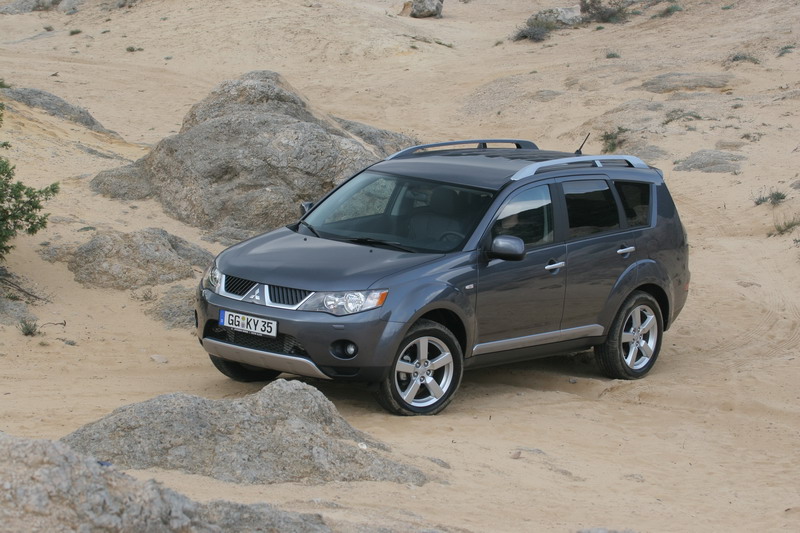
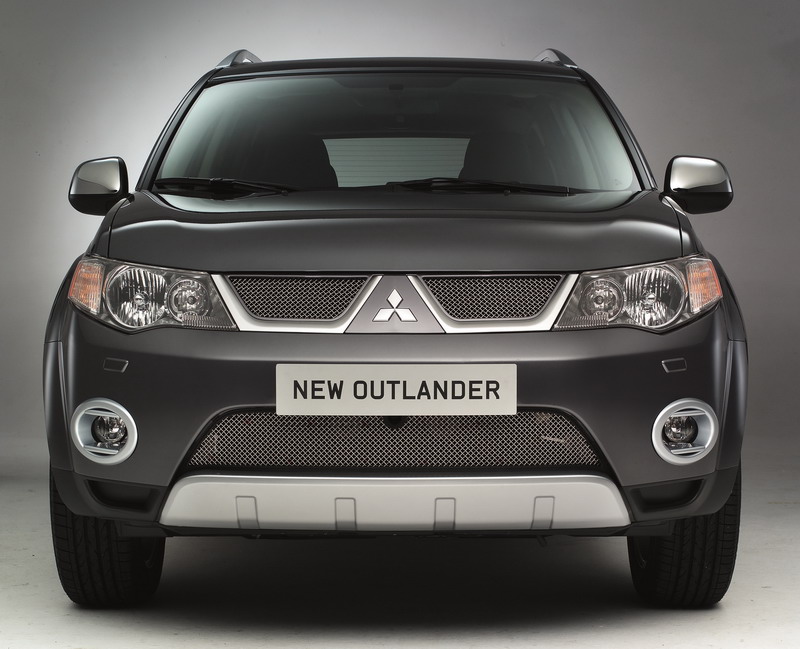
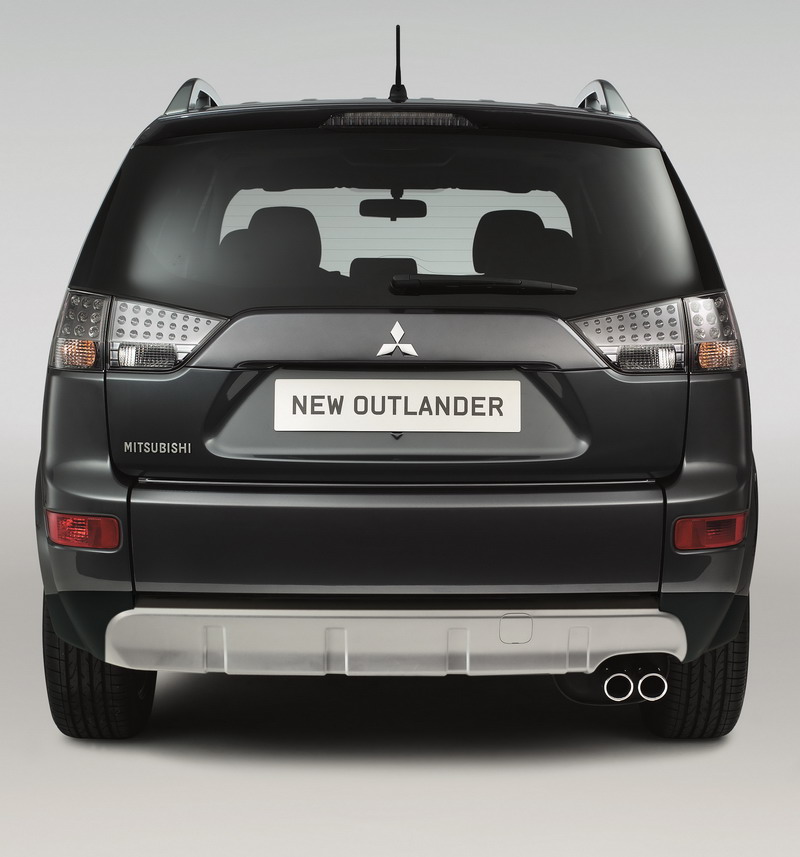
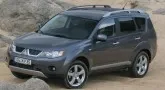
 The increase in size is immediately noticeable: the car has become 10 centimeters longer and taller, while the wheelbase and width have each grown by 5 cm. In addition, the completely new appearance makes the Outlander visually even larger and more substantial. According to the manufacturer, the design is inspired by the "Dakar" Pajero Evo 2+2 from 2002, and the resemblance is indeed evident, especially at the front: a massive bumper with a "displeased" air intake mouth and an aluminum trim at the bottom, wide wheel arches, and a radiator grille called Mount Fuji, developed specifically for Europe. The unusual shape of the headlights adds a "fierce" look to the front. The beltline rises sharply, the roof slopes smoothly toward the rear, and 18-inch wheels, chrome door handles, and a similar trim along the lower body give the silhouette a dynamic feel. The rear, however, is the most successful part: LED taillights extending onto the sides look magnificent. If you look closely, the bridge between them with the logo echoes the contour of the front air intake. The sporty character is emphasized by the unpainted lower bumper with dual exhausts and a massive spoiler on the tailgate. The increase in size is immediately noticeable: the car has become 10 centimeters longer and taller, while the wheelbase and width have each grown by 5 cm. In addition, the completely new appearance makes the Outlander visually even larger and more substantial. According to the manufacturer, the design is inspired by the "Dakar" Pajero Evo 2+2 from 2002, and the resemblance is indeed evident, especially at the front: a massive bumper with a "displeased" air intake mouth and an aluminum trim at the bottom, wide wheel arches, and a radiator grille called Mount Fuji, developed specifically for Europe. The unusual shape of the headlights adds a "fierce" look to the front. The beltline rises sharply, the roof slopes smoothly toward the rear, and 18-inch wheels, chrome door handles, and a similar trim along the lower body give the silhouette a dynamic feel. The rear, however, is the most successful part: LED taillights extending onto the sides look magnificent. If you look closely, the bridge between them with the logo echoes the contour of the front air intake. The sporty character is emphasized by the unpainted lower bumper with dual exhausts and a massive spoiler on the tailgate. |
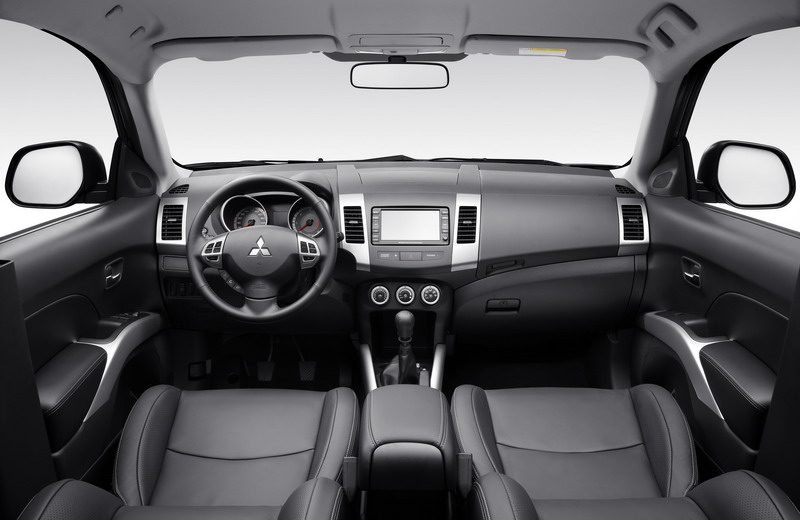
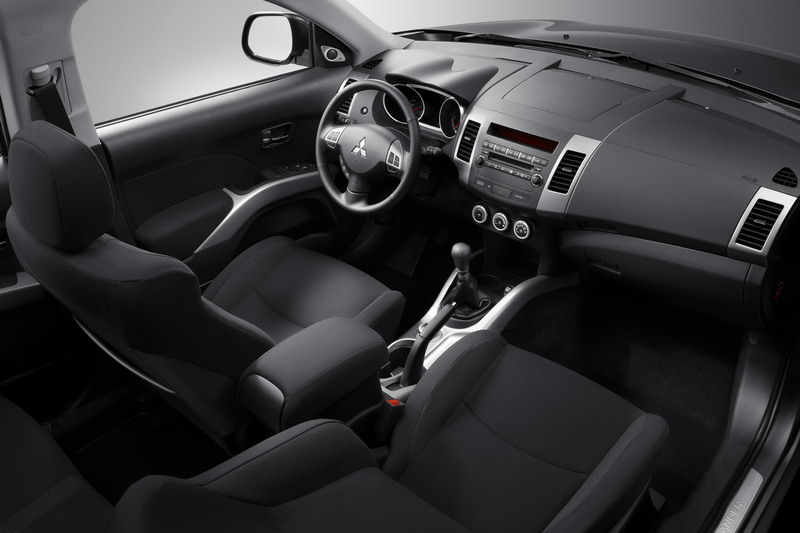
 The XL interior looks more restrained but does not contradict the exterior. The two "wells" of the instrument panel, with an information display between them, attract the most attention. Ventilation deflectors with metallic trim, three rotating rings for climate control, steering column stalks for turn signals and wipers, and the gearshift lever—everything is simple and in its place. The absence of rain and light sensors for a car of this class and equipment level was a slight surprise, but not a disappointment. The XL interior looks more restrained but does not contradict the exterior. The two "wells" of the instrument panel, with an information display between them, attract the most attention. Ventilation deflectors with metallic trim, three rotating rings for climate control, steering column stalks for turn signals and wipers, and the gearshift lever—everything is simple and in its place. The absence of rain and light sensors for a car of this class and equipment level was a slight surprise, but not a disappointment. |
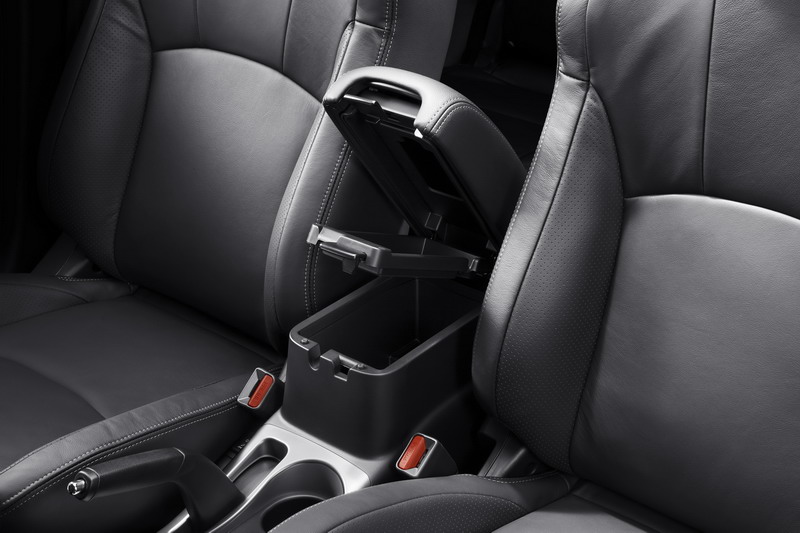
 The three-spoke steering wheel is leather-wrapped, with controls for the optional Rockford Fosgate audio system (which, frankly, sounds average) and the onboard computer. There is no reach adjustment for the steering wheel. I prefer to sit lower with my legs extended, so I really missed this feature. Otherwise, the Outlander's leather seat is quite comfortable. The seating position is far from sporty, as is the seat itself—on the contrary, it encourages a relaxed posture. A 12-volt outlet is hidden in the center armrest, and the upper part of the spacious two-section glove box is cooled. Smokers will have a hard time: there is no ashtray or cigarette lighter here. Mitsubishi is clearly promoting a healthy lifestyle! Build quality has improved compared to the predecessor, and the materials are better chosen. However, the plastic is still hard. The three-spoke steering wheel is leather-wrapped, with controls for the optional Rockford Fosgate audio system (which, frankly, sounds average) and the onboard computer. There is no reach adjustment for the steering wheel. I prefer to sit lower with my legs extended, so I really missed this feature. Otherwise, the Outlander's leather seat is quite comfortable. The seating position is far from sporty, as is the seat itself—on the contrary, it encourages a relaxed posture. A 12-volt outlet is hidden in the center armrest, and the upper part of the spacious two-section glove box is cooled. Smokers will have a hard time: there is no ashtray or cigarette lighter here. Mitsubishi is clearly promoting a healthy lifestyle! Build quality has improved compared to the predecessor, and the materials are better chosen. However, the plastic is still hard. |
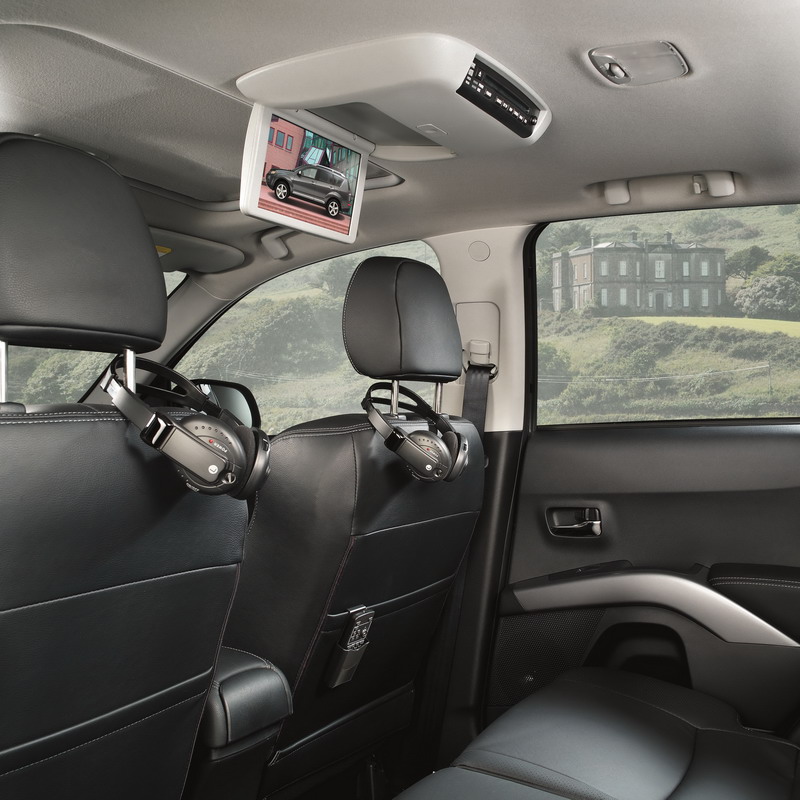
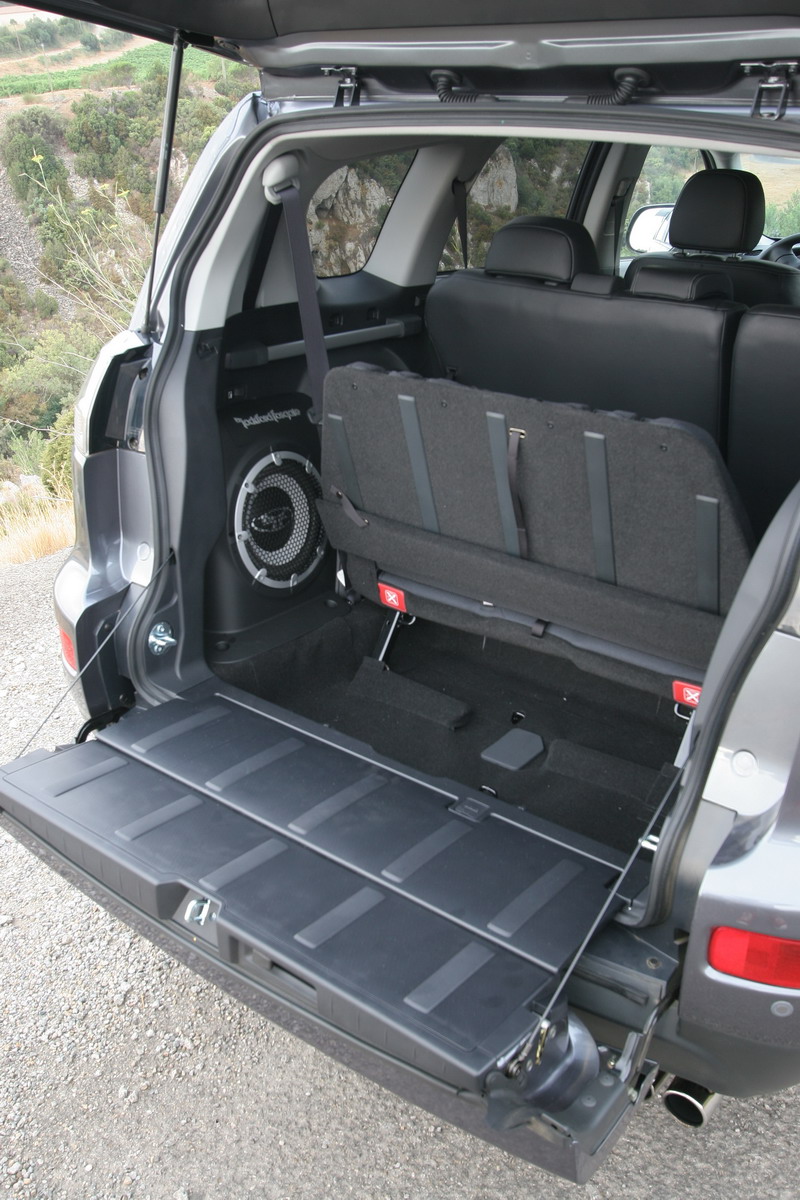
 There is noticeably more free space inside than in the regular Outlander—three people can easily sit in the back. The second-row seats have an adjustable backrest angle, and they can also be slid forward by 80 mm, slightly reducing the trunk (from 882 to 774 liters). The backrests fold in a 60/40 split at the touch of a button, increasing the cargo volume to 1691 liters (the previous Outlander had only 1049 liters with the rear row folded). The trunk is, frankly, excellent: I easily loaded a mountain bike into it without even removing the wheels. I think a second one would also fit! Loading the bike is very easy—the rear door consists of two parts, and the lower part, when opened, lowers the loading height to 600 mm and can withstand up to 200 kg of load. There is noticeably more free space inside than in the regular Outlander—three people can easily sit in the back. The second-row seats have an adjustable backrest angle, and they can also be slid forward by 80 mm, slightly reducing the trunk (from 882 to 774 liters). The backrests fold in a 60/40 split at the touch of a button, increasing the cargo volume to 1691 liters (the previous Outlander had only 1049 liters with the rear row folded). The trunk is, frankly, excellent: I easily loaded a mountain bike into it without even removing the wheels. I think a second one would also fit! Loading the bike is very easy—the rear door consists of two parts, and the lower part, when opened, lowers the loading height to 600 mm and can withstand up to 200 kg of load. |
 The Outlander XL is positioned as a car for active recreation and is supplied to Russia with a 3-liter V6 engine producing 220 hp, equipped with an electronic system for controlling valve timing and lift, MIVEC. The engine is solid and pulls well in any rpm range. It works in conjunction with a 6-speed automatic transmission and the electronic all-wheel drive system AWC (All Wheel Control). The gearbox is not particularly quick, but the 220 horsepower and decent torque help. The "long" sixth gear allows cruising at 170 km/h at 3500 rpm. However, this is only during steady driving. A slight press on the "gas" immediately results in a downshift, then back up. The automatic is quite nervous: it changes gears often and not always appropriately, although smoothly. In the end, one cannot shake the feeling that five gears would have sufficed. The Outlander XL is positioned as a car for active recreation and is supplied to Russia with a 3-liter V6 engine producing 220 hp, equipped with an electronic system for controlling valve timing and lift, MIVEC. The engine is solid and pulls well in any rpm range. It works in conjunction with a 6-speed automatic transmission and the electronic all-wheel drive system AWC (All Wheel Control). The gearbox is not particularly quick, but the 220 horsepower and decent torque help. The "long" sixth gear allows cruising at 170 km/h at 3500 rpm. However, this is only during steady driving. A slight press on the "gas" immediately results in a downshift, then back up. The automatic is quite nervous: it changes gears often and not always appropriately, although smoothly. In the end, one cannot shake the feeling that five gears would have sufficed. |
| The center differential is an electronically controlled clutch. Torque between the axles is distributed depending on the selected transmission mode (a rotating disc near the gearshift lever is used for selection) and the type of surface. There are three modes: 2WD—only the front axle works; 4WD Auto—part of the torque goes to the rear when the front wheels slip; 4WD Lock—torque to the rear axle is about one and a half times greater than in 4WD Auto. Switching between modes can be done at any speed. |
| It is clear that the Outlander XL will not replace a full-fledged SUV. For example, the slightest diagonal wheel hang will immediately stop it, as will serious mud. However, all-wheel drive and a ground clearance of 215 mm allow you to go where a regular car cannot. On bad roads, the suspension (McPherson at the front and a multi-link at the rear) also helped—it is energy-intensive, with increased travel of 15 mm at the front and 20 mm at the rear. But as soon as there is smooth asphalt under the wheels and you want to go faster, the picture changes. Mitsubishi claims that the body has become noticeably stiffer, the track is wider, and a strut brace has been added between the front struts—all of which should improve handling. In my opinion, the previous Outlander was more lively. It shook more, but its suspension did not have the lack of composure that the XL has. The new model's responses to steering input are slow and not as precise; feedback appears only during active maneuvering. At small steering angles, sensitivity is low. Overall, the handling is reliable—it will not scare an unprepared driver, but it will not surprise an experienced one either. In difficult situations, the dynamic stability control DSC and electronic brake-force distribution EBD come to the rescue. |
 It is safe to say: the XL drives as solidly and confidently as it looks. On the highway, it easily cruises at 160–170 km/h, ignoring potholes. Passengers do not complain about noise, and the driver does not get tense. You can also turn off the asphalt for a "barbecue." Or race along a lake shore. Or take a couple of bicycles out of the trunk to get to places where the Outlander cannot go. It is safe to say: the XL drives as solidly and confidently as it looks. On the highway, it easily cruises at 160–170 km/h, ignoring potholes. Passengers do not complain about noise, and the driver does not get tense. You can also turn off the asphalt for a "barbecue." Or race along a lake shore. Or take a couple of bicycles out of the trunk to get to places where the Outlander cannot go. |
 PRICES AND TRIM LEVELS PRICES AND TRIM LEVELSThe Mitsubishi Outlander XL is available only with a gasoline 6-cylinder 3.0-liter engine (220 hp) and a 6-speed automatic transmission. There are three trim levels, in ascending order: Intense, Instyle, Inspire. Instyle starts at $38,490, Inspire at $44,990. The Intense includes 18-inch alloy wheels, fog lights, a light sensor, an onboard computer, a Hands Free system, and climate control. Instyle adds tinted windows, a leather interior, and power-adjustable driver's seat. The Inspire version features a power sunroof, xenon headlights, and a Rockford Fosgate Acoustic Design stereo system. In autumn 2007, a new version of the Outlander XL with a 2.4-liter engine and a 6-range CVT with manual mode or a 5-speed manual transmission will appear on the Russian market. |
 |
One size larger
Mitsubishi Outlander has outgrown its teenage suit and tried on a quite solid size. Hence the extra letters in the name.
Test drive photos
Comments
No comments yet. Say the first word.