
An unremarkable design can be blamed on a good half of cars from Japan. However, after the stylish and aggressive Outlander XL, looking at its successor is frankly boring. The signature brown color even evokes an unflattering comparison to a brick, whose edges a designer's hand sympathetically softened. Mitsubishi succeeded with a "timeless" silhouette: the third generation of the crossover in no way seems like a 2012 debutant. Doubts about the new model's birth date are also raised by the fact that the car lacks the daytime running lights that are common today. This cheap element will appear after the Technical Regulation with the corresponding requirement comes into force.
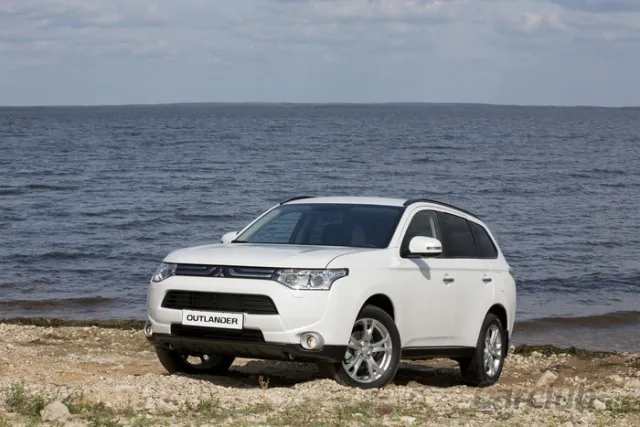 The third generation Mitsubishi Outlander retained the exterior dimensions and wheelbase of its predecessor. The only difference, a length one centimeter shorter, is due to a different rear bumper design. The drag coefficient decreased by 7% and is now 0.33.
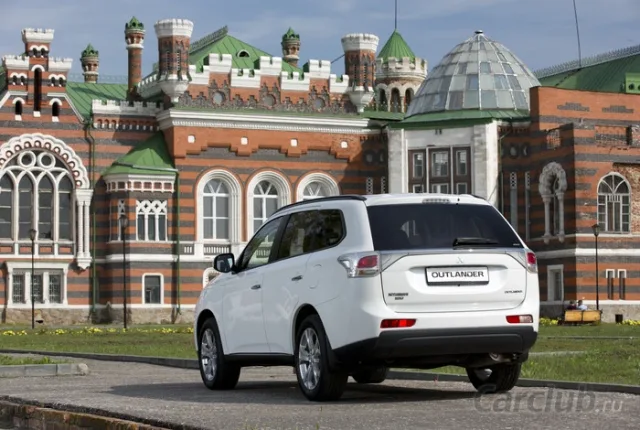 For a fairly large crossover, the rear lights are surprisingly modest in size. The main sections house only the parking lights, brake lights, and turn signals. The fog light and reverse lamp live in the bumper, both in singular. All-wheel-drive versions are revealed not even by a badge – a small sticker in the corner of the glass.
The boring appearance harmonizes with the low gray sky of Nizhny Novgorod, which is about to burst into rain. I hasten to get behind the wheel, especially since the interior artists have made up for their colleagues. Inside, the Outlander has become more solid and expensive. Perhaps the only questionable element is the black gloss trim on the console. This easily soiled surface catches reflections of the seat neighbor and moving objects outside the windows. Much more interesting are the "textured" metal inserts on the doors and dashboard.
 The new model inherited engines from the model with the XL suffix. They have lost a bit of power: 146 hp for the two-liter unit and 167 hp for the 2.4 engine. However, due to reduced weight and better aerodynamics, all-wheel-drive cars reach 5 km/h more and accelerate to 100 km/h 0.3 seconds faster than the Outlander XL with similar powertrains. Additionally, they are 10% more economical.
The comfortable leather-wrapped steering wheel adjusts for reach and tilt and carries the familiar buttons for music and cruise control. Finding common ground with the seat is harder. At a height of 186 centimeters, I would like to sit lower, but the adjustments don't allow it. The passenger has their own problem. The seat cushion is excessively tilted forward. The seatbelt doesn't help here, and when braking, you feel more comfortable by pressing your knee against the glovebox lid. Even in the top Ultimate trim, the navigator has only two basic adjustments: length and backrest angle. The good seat profile is not spoiled by the perforated leather, which holds you well in corners and during deceleration.
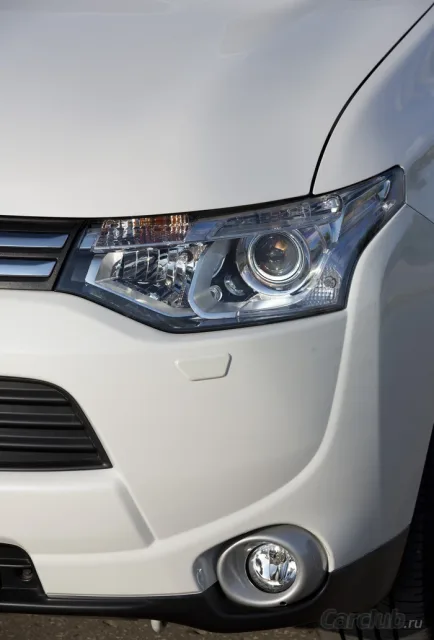 Xenon headlights are a privilege of the maximum Ultimate trim. The lack of mechanisms for moving the lens horizontally and additional sections for cornering lights is compensated by an ultra-wide light beam. The viewing angle reaches 160 degrees, which, according to the manufacturer, is almost twice as much as conventional xenon headlights.
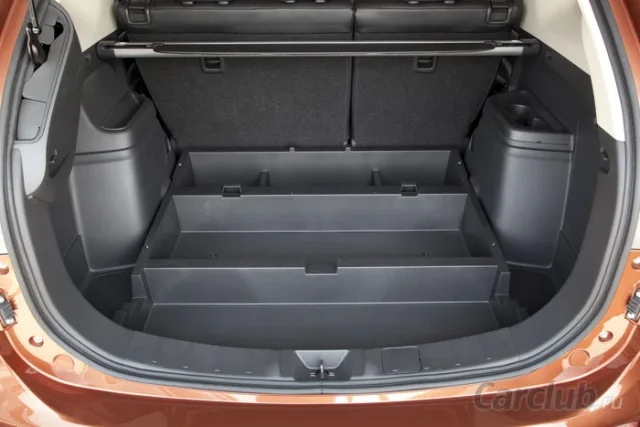 Under the trunk floor there is a convenient organizer with compartments for various road trifles. Alas, it is intended only for owners of Instyle and Ultimate versions. The latter trim also boasts an electric tailgate. But the extra 32 centimeters in loading area length are available to all buyers. They were gained by changing the rear seat folding scheme.
For rear passengers, the only pleasant thing is perhaps the comfort of the spacious sofa. Three people won't be cramped here. By getting rid of the middle passenger, you can fold down a comfortable armrest with a pair of cupholders. On a long journey, I strongly recommend using them for their intended purpose: the gallery has no other "entertainment." The central tunnel lacks air vents, and the semi-darkness from tinted windows hinders finding the unlit window switch buttons.
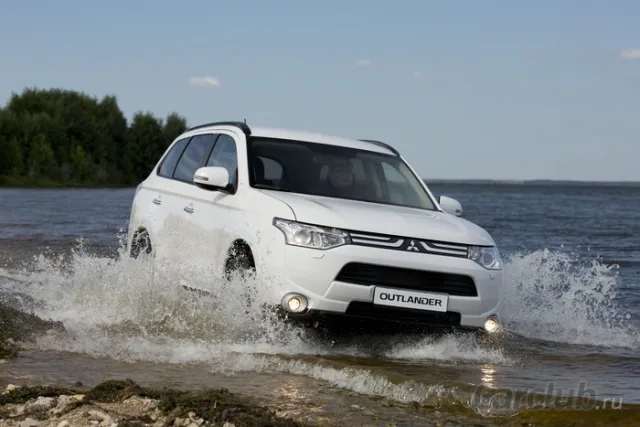
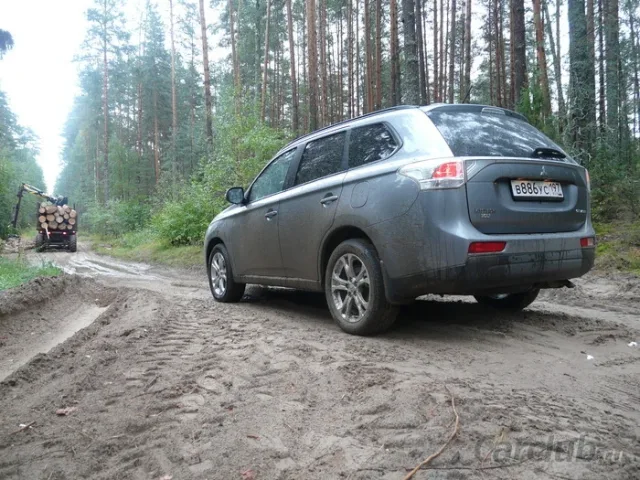 Even on the 18-inch wheels of the top version with 225/55 tires, the car doesn't feel stiff. The 215-millimeter ground clearance combined with energy-intensive suspensions allows you not to disdain any directions of Russian roads. The test route included 30 kilometers of forest road with sizable puddles and ruts. The Outlander passed the test with honor and even provided considerable pleasure, allowing you not to worry too much about choosing your speed.
In the city, it's hard to fault the "Outlander." For a confident start from a traffic light, the dynamics of the base two-liter engine are quite sufficient. The 2.4 engine handles the task of moving the crossover more easily, although there's no talk of excessive power, of course. We'll discuss this next summer when a modification with a 3.0-liter V6 appears on the market. Then, by the way, the Japanese promise to start deliveries of cars with manual transmissions. You won't be able to save money by waiting for such an Outlander, though: in a year, the manufacturer will clearly have time to rewrite price tags once or twice. As a result, a crossover with a manual gearbox is unlikely to be cheaper than the current 969 thousand for the base version with a CVT.
Mitsubishi specialists adjusted the CVT's operating algorithm. Previously, during intense acceleration, the powertrain quickly reached maximum revs. This created the impression of a transmission slipping, when the speed increase clearly lagged behind the tachometer needle. Now the engine revs up more slowly, and the driver gets a feeling of a rigid connection between acceleration and sound accompaniment. True, you still can't escape the monotonous singing at maximum revs in "floor it" mode.
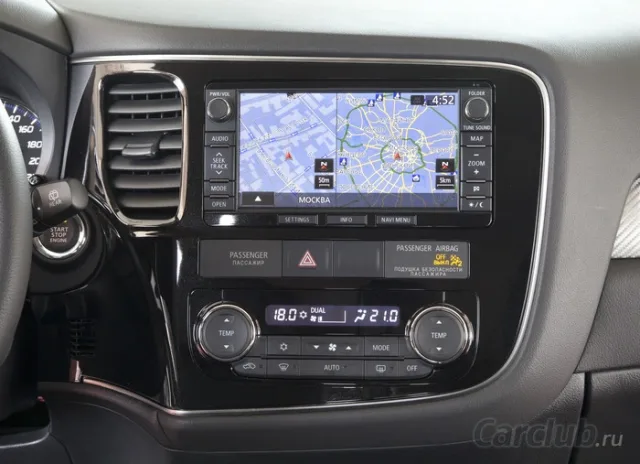 The climate control unit replaced three boring but extremely clear knobs with a scattering of buttons combined with a small display. The informativeness didn't suffer much from this solution. It also helps that the system set to "auto" mode doesn't require intervention on the road: none of the three crew members complained about uncomfortable temperature or air distribution.
For overtaking with a move into oncoming traffic, don't be lazy to use the paddle shifters for six virtual gears. Even on a 2.4-liter engine, shifting down a couple of steps won't be superfluous. Just don't forget to return the transmission to "D" mode with a long press on the "plus" paddle. This won't happen automatically even after some time. As a result, pressing the accelerator at one and a half thousand revs on the tachometer with a forced high gear engaged will cause some visible reaction only when the seconds count goes into the second dozen. It's good if this happens on your own lane, not after entering a tense overtake!
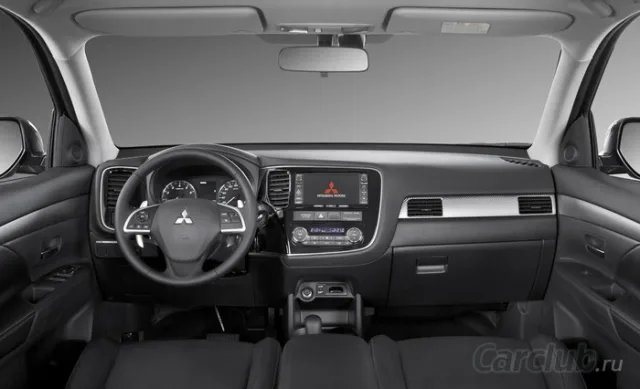 Soft plastic surrounds only the first row of seats: the rear door trims are hard despite visually matching the front ones. You'll find a certain harmony with this solution in the unlit power window switches with automatic mode only for the driver's door, the only hook for outerwear in the entire cabin, and the central tunnel without rear air vents.
The all-wheel-drive transmission received a new "4WD Eco" mode. It replaced the previous "2WD" when the car used only front-wheel drive. Now the rear axle is not asleep but engages only in case of wheelspin of the constantly driven axle. At the same time, as our experiments in sand showed, the slip must be quite serious. The other two positions, "4WD Auto" and "4WD Lock," remain in place.
In the new Mitsubishi Outlander, the all-wheel-drive control unit analyzes more data, which helps to use the transmission's arsenal more quickly and accurately. If the predecessor provided only data on wheel speed, throttle position, and engine revs, now added are torque sensors, CVT gear ratio, steering angle, longitudinal and lateral acceleration, as well as yaw moment. The latter is borrowed from a more than serious "source" - the Mitsubishi Lancer Evolution. A section of asphalt slippery after rain encountered on the route clearly demonstrated the "Outlander's" behavior. After the front axle begins to understeer, the rear wheels engage, and the car continues sliding sideways. Of course, the stability control system immediately intervenes in an emergency situation.
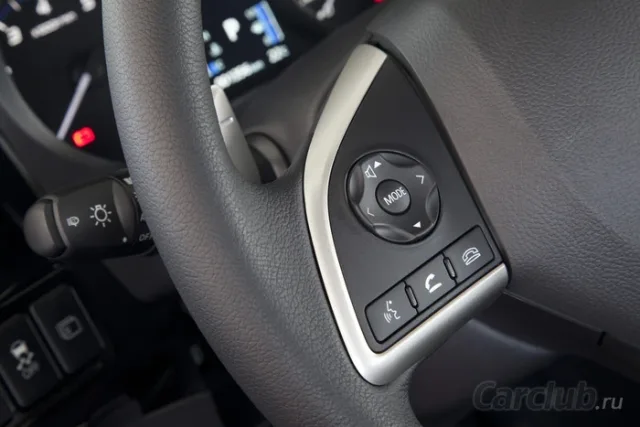 The button for scrolling through the trip computer is located in a blind spot to the left of the steering wheel. Over time, you get used to pressing it without looking, but why not place it traditionally, on the steering column stalk or the wheel itself?
The improved electronic filling is still powerless when the vehicle is diagonally suspended. This was tested by our inquisitive crew by turning off the asphalt into roadside sands. Of course, tires contribute significantly to the outcome of such adventures, and the stock wheels of the Outlander do not belong to the clan of off-road conquerors. However, the 30-kilometer forest road section prepared by the organizers for the second day immediately rehabilitated the car in all respects. 215 millimeters of ground clearance and suspensions, whose omnivorousness we noted even on broken asphalt, allowed not only to overcome the special stage without losses and problems, but also, as one character with a propeller said, to "have a little fun." The chassis is a clear success of the designers. Russian car enthusiasts will rightly forgive a lot for it. The lightness of the gait is also facilitated by the "diet" prescribed for the car. On average, each version of the new model has lost about 5% of its mass (or 85 kilograms) compared to its predecessor. Savings were achieved through modernized suspension components, brake mechanisms, and wider use of high-strength steels. Even the steering wheel—a trifle in the total mass of the car—has become lighter by 300 grams.
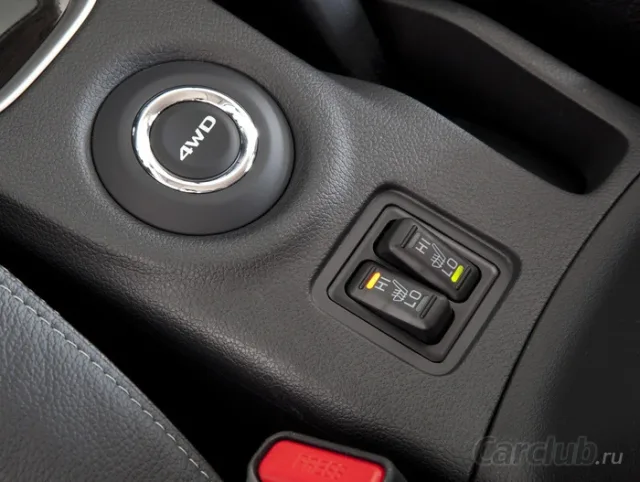 The seat heating buttons have moved to the central tunnel. Now you don't need to reach for them. The operation mode of the all-wheel drive transmission is indicated only by the instrument cluster: the rotating washer has turned into a large-sized button without additional indication.
In terms of acoustic comfort, the third generation has made a significant step forward, but when driving on the highway, you want more. Most of the noise comes through the wheel arches. It is especially hard for those sitting in the back. An additional "speaker" for them is the luggage compartment space. A pulled-out curtain slightly improves the situation. At speeds of about 100 km/h and above, a quiet conversation between front occupants will remain a secret for rear passengers. To prevent the "gallery" from feeling left out, you have to raise your voice or turn around.
The base price of 969,000 rubles looks more than attractive. The fact that a CVT is already provided here is also pleasing. However, the modesty of the rest of the set is unclear. If you can live without a standard audio system and alloy wheels, then without seat heating and a luggage curtain, frankly, it's somehow awkward. Diving into the price list, we learn that all versions cheaper than 1,169,000 rubles are entitled to only two airbags! That, excuse me, is simply indecent. The full set of seven airbags will be received by the buyer only in the Intense trim with all-wheel drive. Judging by the equipment list, it is this one and the next in hierarchy, the Instyle trim, that marketers have assigned the role of the most popular. The cost of cars with a 2.4-liter engine starts from 1,309,000 rubles. There is also another question for the compilers of the trims. They classified the heating of the windshield in the wiper rest zone as excessive luxury. This useful "feature" in Russia is included only in the Ultimate package, available for 1,419,000 rubles. However, the results of the first weeks of sales show a huge buyer interest in the car: at the beginning of last week, the number of orders was approaching 4,000, increasing by 300 new contracts per day. I have no doubt that the third generation of the Mitsubishi Outlander family is capable of surpassing the success of its predecessor.