The difference between transmission modes, in my opinion, has become less obvious. But to effectively blast on dry roads, it's better to stay in "tarmac." The other two algorithms — "gravel" and "snow" — use AYC less actively and tighten the center differential more, making the car less responsive.
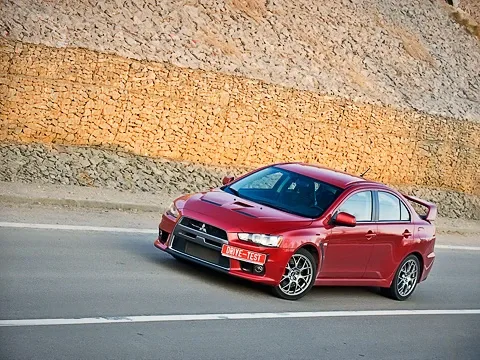
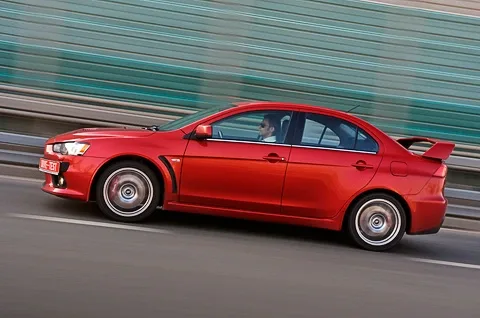
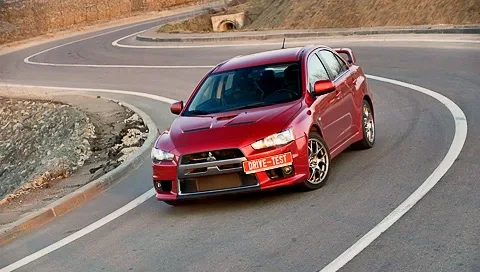
The Evolution is first and foremost a beautiful Lancer. How harmonious the widened wheel arches are, how expressive the mouth of the front air intake is. The appearance is so complete that it seems this is exactly how the sedan first appeared in Akınori Nakanishi's sketches. And then the original design idea was adapted for the 1.5-liter Invite. However, the camera embellishes a bit: in person, the car doesn't seem either large or expensive.
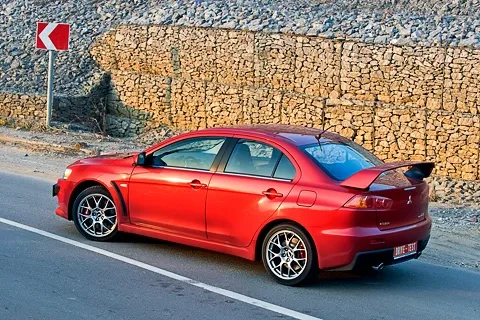
The rear wing balances the silhouette and creates downforce, but significantly hinders visibility.
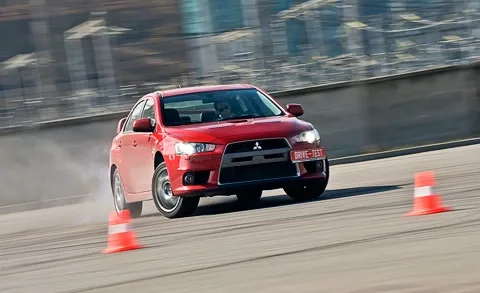
Breaking the Evolution into a drift on asphalt is still difficult. The car holds the road to the last, and the front wheels lose grip first. But if you manage to get the Evo sideways, controlling the sedan in a slide is fantastically easy.
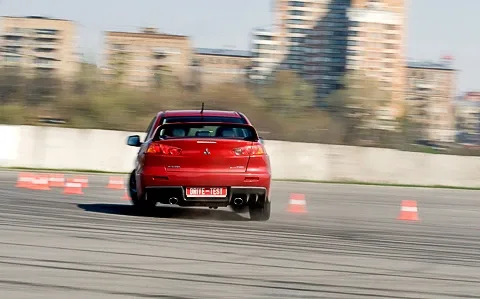
All problems with trajectory correction are solved in one way — by increasing throttle! The Evolution is the car that in a critical situation requires opening the throttle.
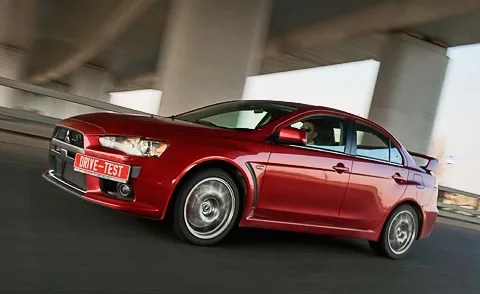
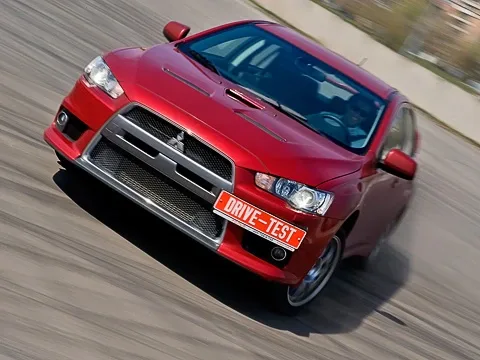
The Lancer Evolution X can't be called a lighter. In a lighter, the flame appears instantly, but the "Evik" needs time to flare up. Not a car — a blast furnace. And it doesn't go out immediately: after stopping, the built-in turbo timer won't let the engine turn off to prevent the turbocharger from suffering thermal shock.
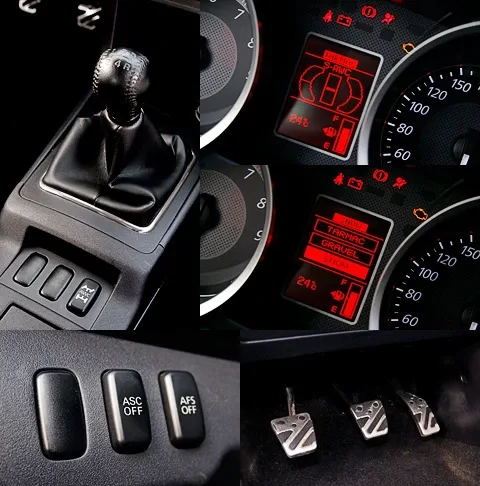
The S-AWC mode selection button has moved from the front panel, where it belonged, to the center tunnel. Instead, to the left of the steering wheel is the ASC stability control off button. Off, as it turned out, is partial. The instrument cluster display can show a diagram visualizing torque distribution across axles and between individual wheels. One problem — there's no time to look.
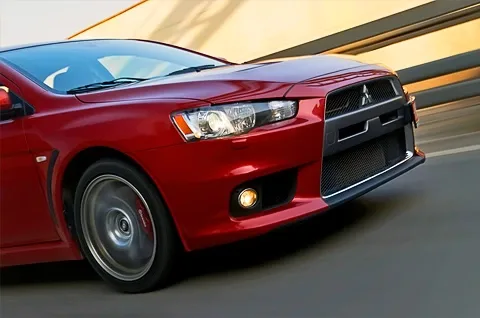
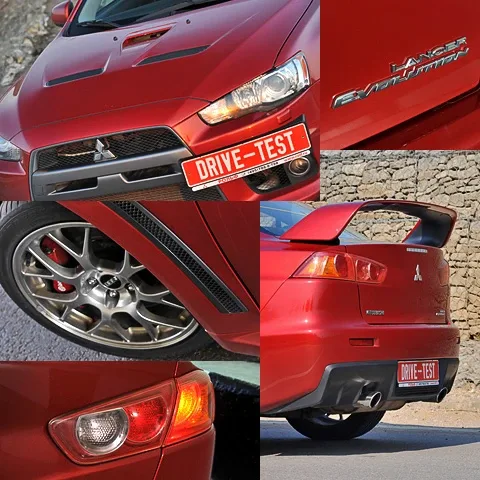
As before, all external decorations are functional. Even the gills on the front fenders are cut to organize air flows in the engine bay.
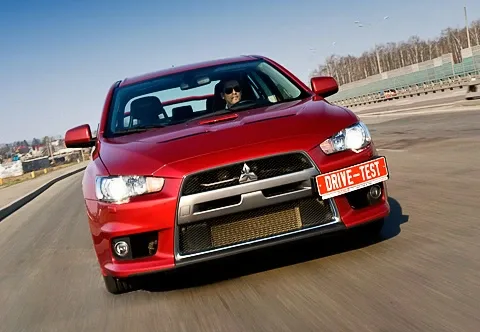
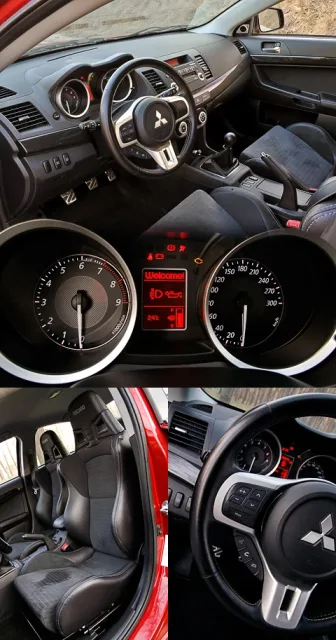
The interior is a complete failure. Everywhere is hard and ringing plastic. However, those who adore the Evolution won't be surprised by this. But before, there were no questions about seating comfort, and now I just couldn't get comfortable. The gap from the steering wheel at its lowest point to the clutch pedal is such that my knee constantly catches the rim. I'd like to move back, but then I can't fully press the clutch. And if I move further, the highly raised seat cushion becomes an obstacle for pressing the pedal. Plus, there's simply no seat height adjustment.
From the outside, the 'Evik' looks lively. It bounces on the ring road in the left lane, sending pleasant sporty vibrations to your palms. But for some reason, I feel melancholic. I realize that the new car is faster than the 'nine', the engine is angrier, and maneuvering in traffic is more convenient—but I stay in my lane. The Evo X with its controversial ergonomics and unclear dimensions just doesn't make me focus. I'm dozing off. I only come alive outside the city. And even then, when the radio says "Go!" and the ASC off indicator lights up on the panel. What a fairy tale!
The previous Evolution made me concentrate like before a precise spear thrust. It's hard to land the one right strike, but I've seen masters do it. Now it's a chopping blow. A sword of treasure. Shoulder, get ready! It seems like a logical continuation. And what's next? Napalm and carpet bombing? I see no romance in this.
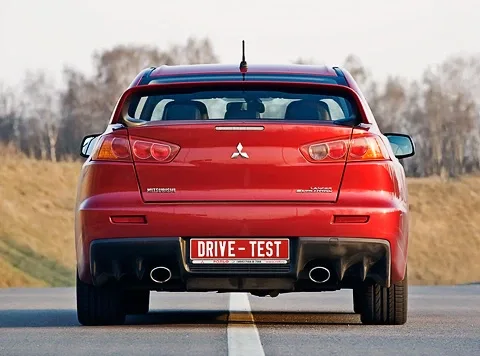
Next to a regular Lancer, the Evo looks lower and visually more stable. The diffuser with tightly spaced exhaust pipes is the most controversial design feature.
There's a seemingly nice little detail. On the steering column stalk, there's a separate button for the headlight washer. Practical: better than pulling fuses to avoid wasting washer fluid. But this little button caught my attention as if it embodies the essence of the new car. Once, the Evo had a button for forced intercooler spray. A generally unnecessary thing, but it was part of the sporty spirit. Now—a useful headlight washer switch. There are the priorities. The 'ninth' Evolution was a rally prototype, the 'tenth'—for upholstery re-trimming.
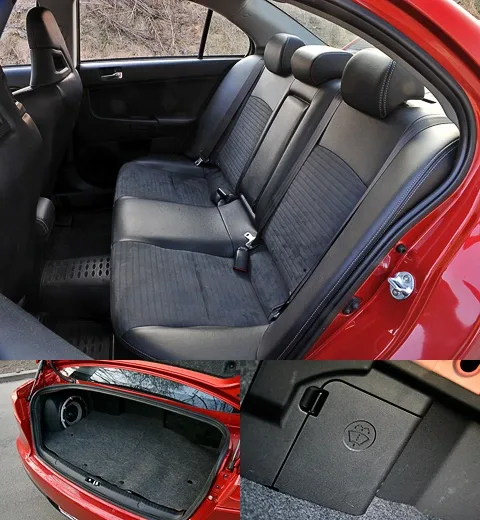
Practicality has always been a strong point of the Evolution. True, the rear seat backs don't fold, passengers get motion sickness, and part of the trunk is taken up by the subwoofer. And there's also the washer fluid reservoir (how to use it?) and the battery. They were moved to the rear for better weight distribution.
I could stop here. Say that the idea has degenerated and we won't see an eleventh generation. Recall that before, I couldn't sleep if an Evo was waiting in the yard, but now I calmly hand the keys to someone in the editorial office. Admit that I don't want to drive more than necessary for work. Note the loss of interest, appetite, and mood. Declare that the Evolution has hit a dead end.
Too early! There's also the Evo with the Twin Clutch SST preselective 'robot'. So, that's what the Evolution needs for harmony. An urban car needs an ideologically suitable transmission. I thought only 'manual' was the enthusiast's choice. Remember: the 'stick' is now just an option for the poor. The right 'Evik' has two pedals.
No need to think about the torque curve: the electronics will choose the perfect shift point itself. Here, the acceleration dynamics already take your breath away. Literally. You instinctively wait for the shift from first to second, but the gears change without a pause, even with slight shoves in the back. Instead of a pause—a surge of acceleration. The body needs time to get used to this.
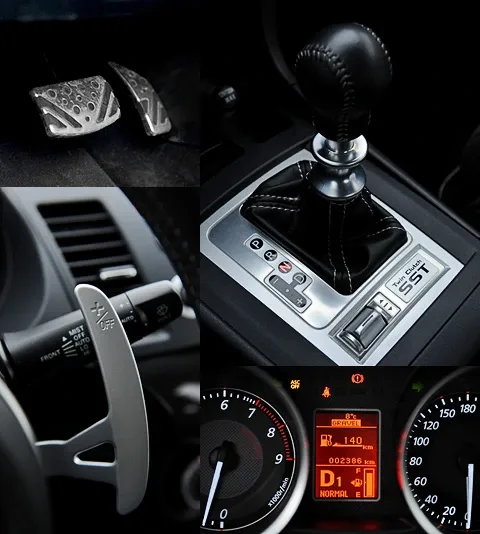
- The rocking key at the base of the 'automatic' selector controls the shift algorithm. Even Normal is good: timely gear changes on acceleration and braking, quick adaptation, and the ability to switch to a true manual mode via the aluminum paddle shifters. Sport is ideal, though a bit noisy. The 'robot' is always ready to keep revs in the red zone. Super Sport is mind-blowing, but indispensable for the track or traffic light races.
- The gearbox mode is displayed on the screen in the instrument cluster. When you take control, a large digit with the gear number appears instead of the letter D.
- The paddle shifters are only convenient in the city or during ring road driving. But generally, the 'robot' will figure everything out on its own.
The 'robot' is noisy but wonderful. The irritation has vanished. There's a smile on my face again. The Evolution with the 'robot' makes you want to drive. I want to drive around. Without a goal, without a reason. Cruise around the city. And, damn it, show off! Here it is, the right combination, here are the tangible 366 N•m of thrust. The new gearbox fits the soft manners, the missing link in the Evo X's character.
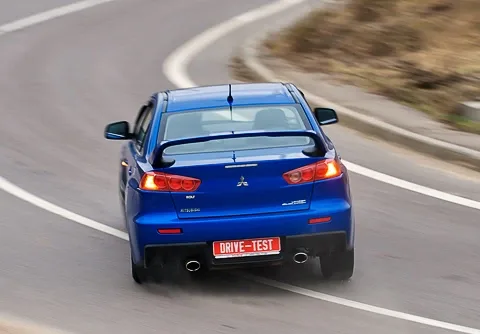
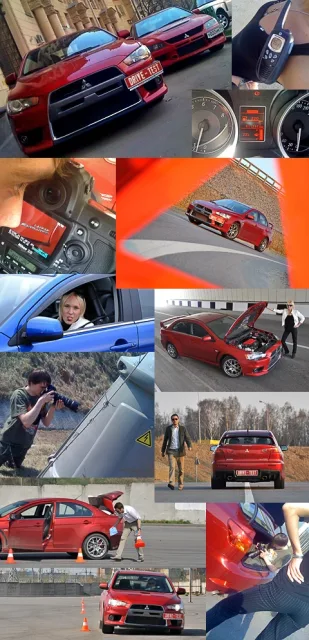
Without the need to fiddle with the clutch, even a blonde can handle the robotic Evolution. Tested! Our intern Nastya, who calls the rear wing nothing but a sock hanger, beat me in a drag race without much effort. I was absorbed in working the third pedal, while Nastya just needed to switch the transmission to Super Sport mode and hold the car with the brakes before the start, with the accelerator floored.
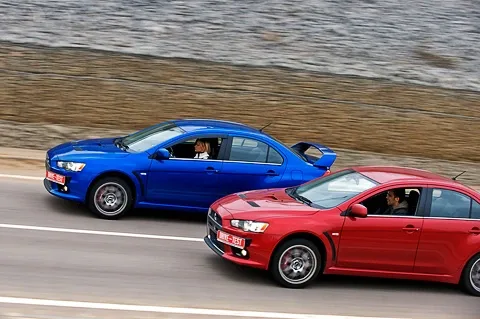
According to the specs, the Evo with the 'robot' is almost a second slower—6.3 seconds versus 5.4 seconds with the 'manual'. I refuse to believe it: in reality, the feeling of avalanche-like, unending acceleration is fundamentally different.
This is launch control. The tachometer needle hovers at 4000 rpm. The signal—start. The girl's task is to release the brake pedal in time. Then find it again at the end of the short straight. And press the slightly soft pedal until the ABS kicks in. But even if she gets confused with her feet and approaches the corner too fast, no disaster will happen—it's an Evo X, remember? The electronics will look after Nastya. At the wave of a magic wand...
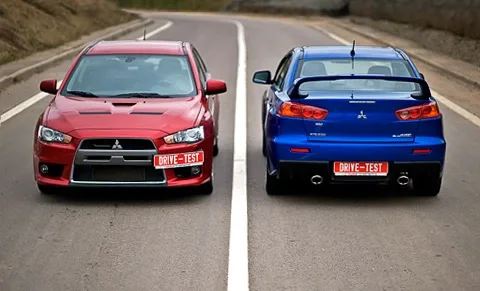
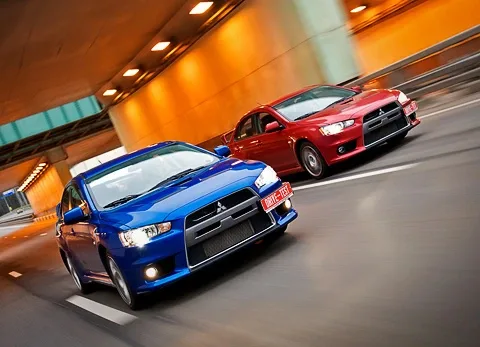
I see the brake lights of the blue car lighting up at the end of the straight. Well done, Nastya! Honestly, she's more suited behind the wheel of the Evo X than I am. Yes, the Evolution finally opened up to me, but I feel pointless here. It's not a problem to pay 2,247,000 rubles (the price of the version with the 'robot') for a very fast car with a cheap interior and a good pedigree. The problem is understanding what it will convey to others on my behalf.
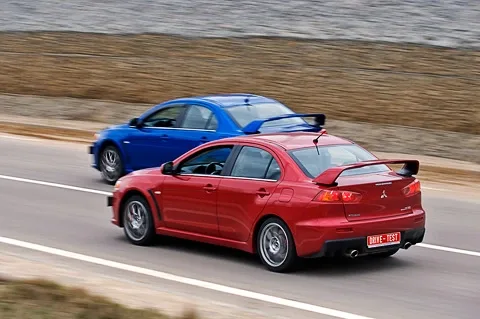
The 'robot' has shorter gears: the blue Evolution hits the 100 km/h mark in third. A couple of lightning-fast shifts—and the red car eats dust.
This car no longer has anything to do with the rally subculture. It's not on par with cheap street 'lighters', yet it doesn't exude the subtle aroma of added value. A legend? A legend is a word. And a word doesn't need refueling every hour or maintenance every two. I'm not charmed by the status of Mitsubishi's top model, and even having the best all-wheel-drive transmission in the world isn't a reason to run to the bank. But last year, almost twice as many 'tens' were sold as Evo IX sedans in 2007? Let's ask the Evo X owners from the DRIVE2.RU community what they wanted to say with their choice?
Technical specifications
Tech
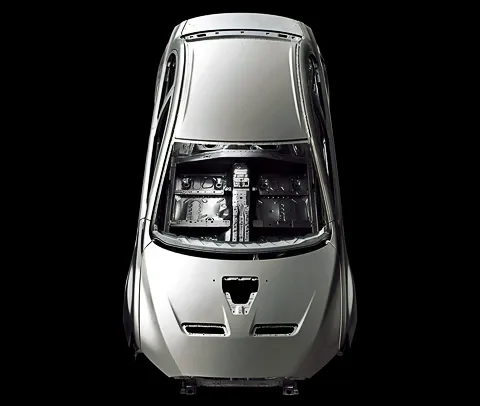
Compared to a regular Lancer, the Evo has a different construction: the roof, front fenders, hood, and deformable crossmembers under the bumpers are made of aluminum. The number of weld points is increased, and the structural frame has added struts and a welded crossmember behind the second row of seats.
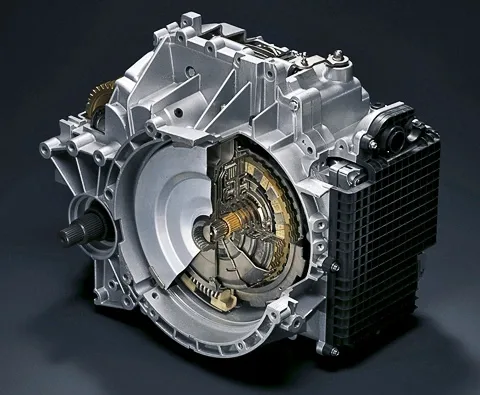
The only six-speed gearbox for the Evolution is the Getrag 'robot' with dual clutches. This transmission is about 30 kg heavier than a regular 'manual'. Even in Super Sport mode, shifting takes 0.2 seconds. However, the numbers matter less than how it's tuned in practice.
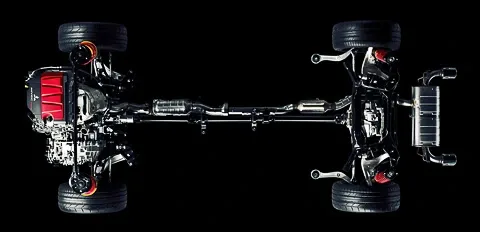
The fundamental layout of the Evolution has not changed for many years: MacPherson struts at the front and a multi-link setup at the rear. The central ACD differential with electronic locking control is combined into a single housing with the front limited-slip differential and distributes torque equally between the axles. At the rear, there is a complex Super AYC (Active Yaw Control) reduction gear, which can redistribute traction between the wheels using additional overdrive gears activated by separate clutches.
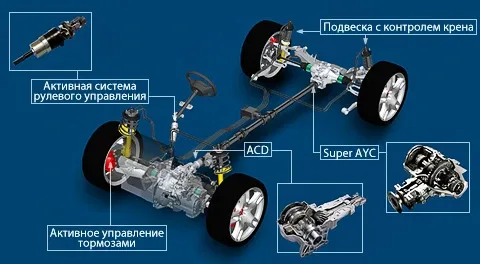
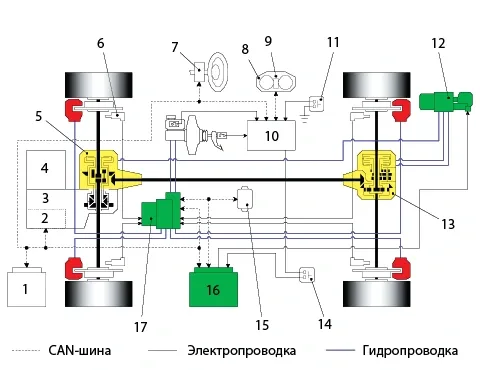
1 — engine control unit, 2 — transmission control unit, 3 — transmission, 4 — engine, 5 — center (ACD) and front differentials, 6 — ABS sensor, 7 — steering angle sensor, 8 — parking brake sensor, 9 — indicator, 10 — service electronics control unit, 11 — ASC switch, 12 — ACD/AYC hydraulic pump, 13 — rear Super AYC differential, 14 — S-AWC mode selector ("tarmac", "gravel", "snow"), 15 — acceleration and torque sensors, 16 — S-AWC control unit, 17 — ASC/ABS unit.
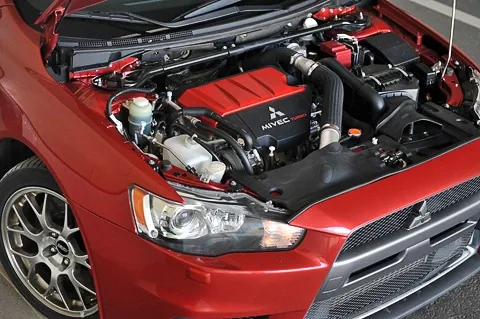
Variable valve timing on intake and exhaust allowed the new more powerful turbo engine 4B11 with an aluminum block to meet Euro-4 standards. The Evo X engine has no balance shafts. Instead of a cable throttle, there is an electric motor. The torque of the European version of the engine is limited by the performance of the turbocharger with a more heat-resistant but more inertial turbine rotor. Japanese versions have a lighter impeller made of magnesium alloy, and the output is 422 N•m.
Evolutionary tree (Robert Yesenov)
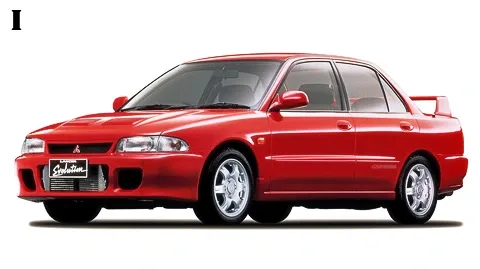
The first round of Evolution dates back to 1992, when the Japanese brought the Lancer sedan to rally tracks instead of the Galant. The homologation version Lancer Evolution with a wheelbase increased by 10 mm inherited from the Galant VR-4 the two-liter turbo engine 4G63 (244 hp, 310 N•m), used on Evolutions until 2007, a five-speed manual and all-wheel drive with a viscous coupling lock. The weight was 1170–1240 kg — depending on the modification (the civilian one was called GSR, the rally semi-finished product — RS). The fast and practical car appealed to people — by December 1993, 5000 cars had been produced. And this despite the fact that the first generation Lancer Evo was officially sold only in Japan.
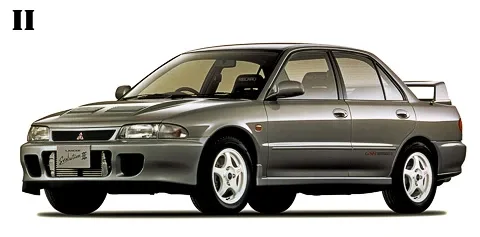
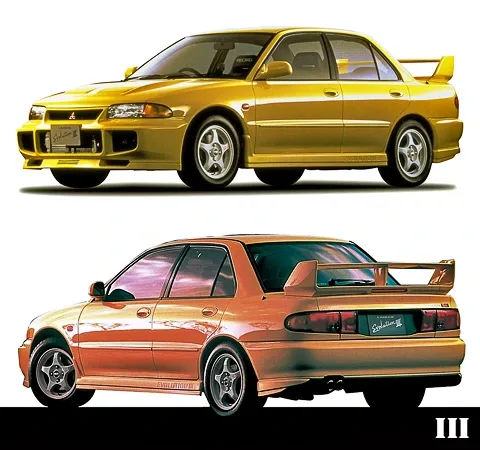
Cars of the second (1994–1995) and third (1995–1996) generations differed little from each other. For example, the length (4310 mm) and wheelbase (2510 mm) did not change, but an interesting appearance appeared, with a re-tuned suspension with a track widened by 10 mm. Engineers boosted the engine first to 256 "horses", and later to 270. The five-speed manual was left untouched.
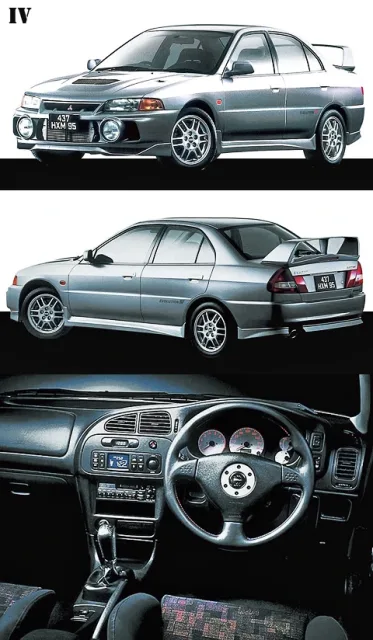
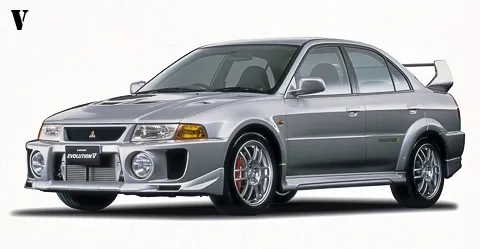
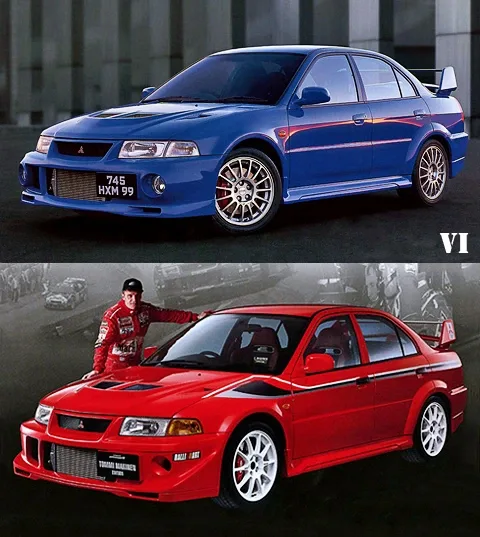
Evolutions of the fourth, fifth and sixth generations were produced from 1996 to 2001. These cars debuted a turbocharger with a new twin-scroll "snail", raising engine output to 280 hp and 353 N•m (later 373 N•m). But more importantly, the Evo began to be equipped (from the fourth generation) with a rear AYC differential that distributes torque between the rear wheels. Especially noteworthy is the special version Evo VI Tommy Makinen Edition, released in honor of Tommy Mäkinen's four victories in the World Rally Championship. That was the last version with a viscous coupling center lock. Many rally drivers still miss it. Starting from the fifth generation, "Eviki" began to be officially sold in the UK. In total, from August 1996 to March 2001, more than 25 thousand Evolutions were sold.
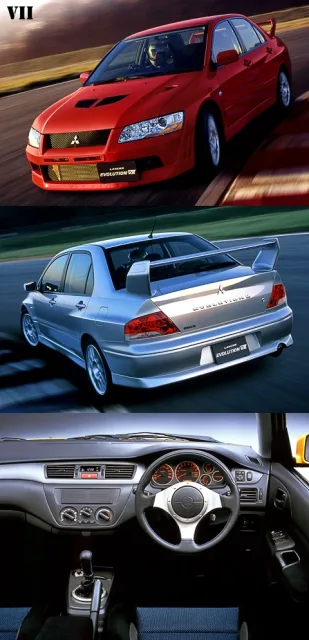
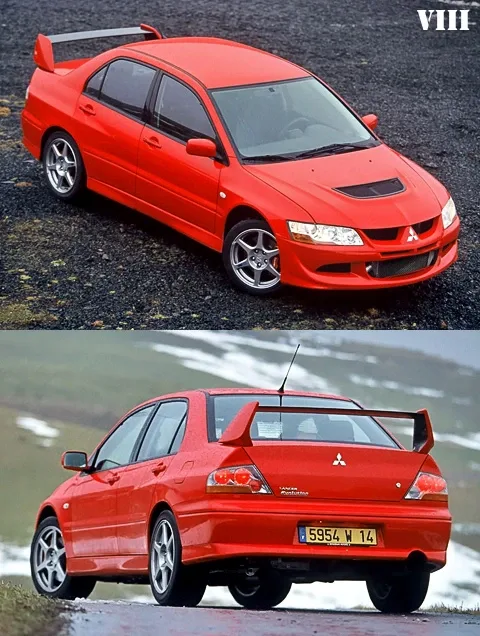
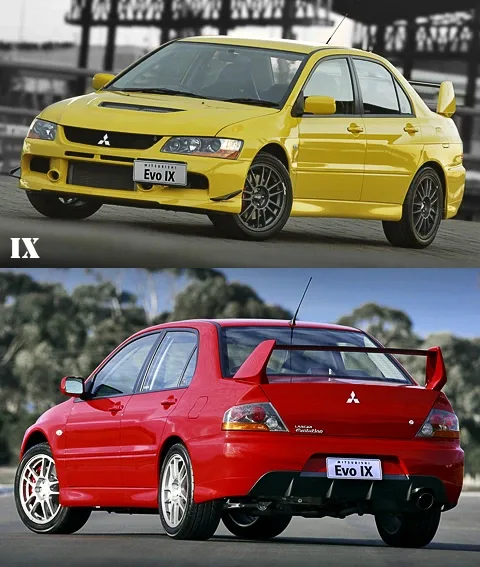
The next significant stage is the relocation of the spirit of Evolution into a larger and heavier body of the Mitsubishi Cedia sedan — a model intended for the Japanese and North American markets. As a result, the cars of the seventh generation that appeared in 2001 increased in length by 105 mm (to 4455 mm) and added 115 mm to the wheelbase (it became 2625 mm), and the weight reached 1490 kg. The "turbo-four" 4G63 produced 280 hp and 392 N•m. Torque between the axles was now divided by the electronically controlled center differential ACD with a locking mechanism using a clutch pack. A little later, GSR versions with a six-speed manual and GT-A with a five-speed automatic and an engine detuned to 272 "horses" appeared. In 2003, official sales began in the USA. True, cars with a mechanical limited-slip differential instead of the rear AYC differential were supplied to the States. The English branch of Mitsubishi began producing its own charged special versions FQ. The range of Evo IX modifications even included a station wagon.
Behind the scenes