
 There has always been a connection between real sports cars and production models, which is natural. "Win today, sell tomorrow" is an advertising concept whose logic is hard to question as long as motorsport exists. However, what is usually sold under the guise of a winner is a car that has little in common with the original, and often only the name. There has always been a connection between real sports cars and production models, which is natural. "Win today, sell tomorrow" is an advertising concept whose logic is hard to question as long as motorsport exists. However, what is usually sold under the guise of a winner is a car that has little in common with the original, and often only the name. |
 Moreover, there is a quite understandable trend here – the more expensive the competition, the more deception, the more differences between the factory version and the racing one. Take, for example, the "queen of motorsport." Although the Enzo somewhat resembles the Ferraris participating in Formula 1 and uses a number of high technologies from there, in reality it differs from the championship cars as much as it has little in common with them. All sorts of "GTRs," "Evolutions," and "STIs" are also terribly far from their rally prototypes. But cars from one-make series often find their way into the production lineup of a manufacturer almost unchanged. Suffice it to recall the Porsche Carrera Cup or the Renault Clio Cup. Of course, such track toys are a niche product, but that only makes getting acquainted with them more interesting. Moreover, there is a quite understandable trend here – the more expensive the competition, the more deception, the more differences between the factory version and the racing one. Take, for example, the "queen of motorsport." Although the Enzo somewhat resembles the Ferraris participating in Formula 1 and uses a number of high technologies from there, in reality it differs from the championship cars as much as it has little in common with them. All sorts of "GTRs," "Evolutions," and "STIs" are also terribly far from their rally prototypes. But cars from one-make series often find their way into the production lineup of a manufacturer almost unchanged. Suffice it to recall the Porsche Carrera Cup or the Renault Clio Cup. Of course, such track toys are a niche product, but that only makes getting acquainted with them more interesting. |
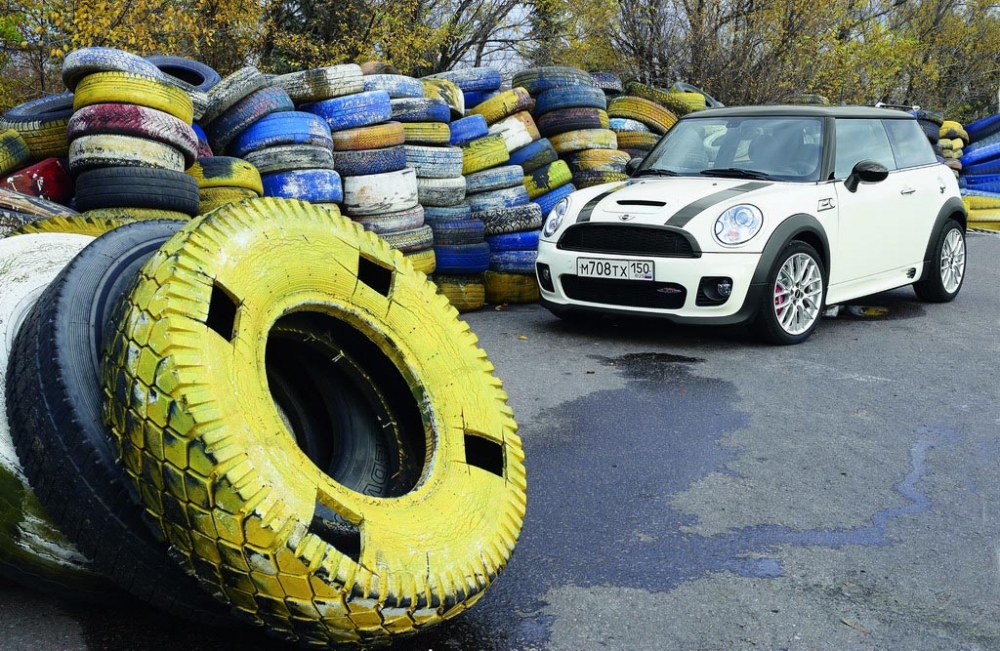
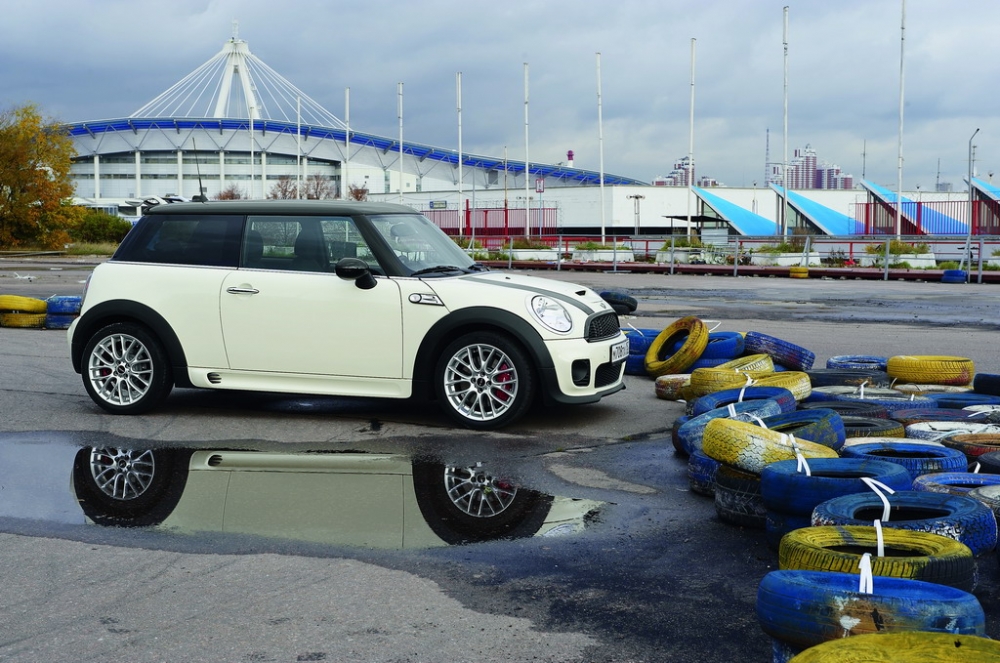
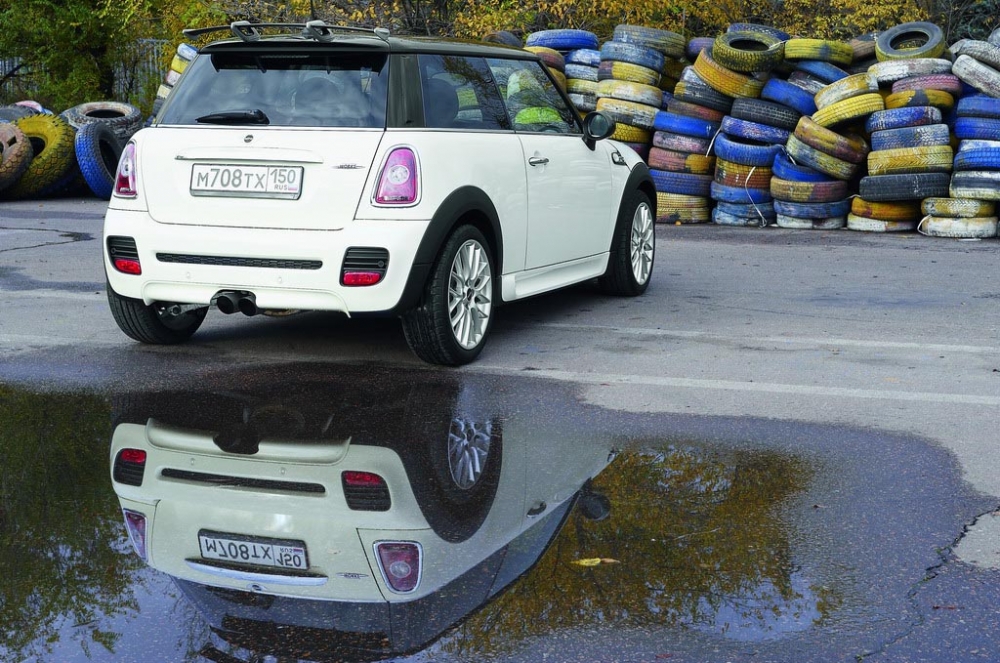
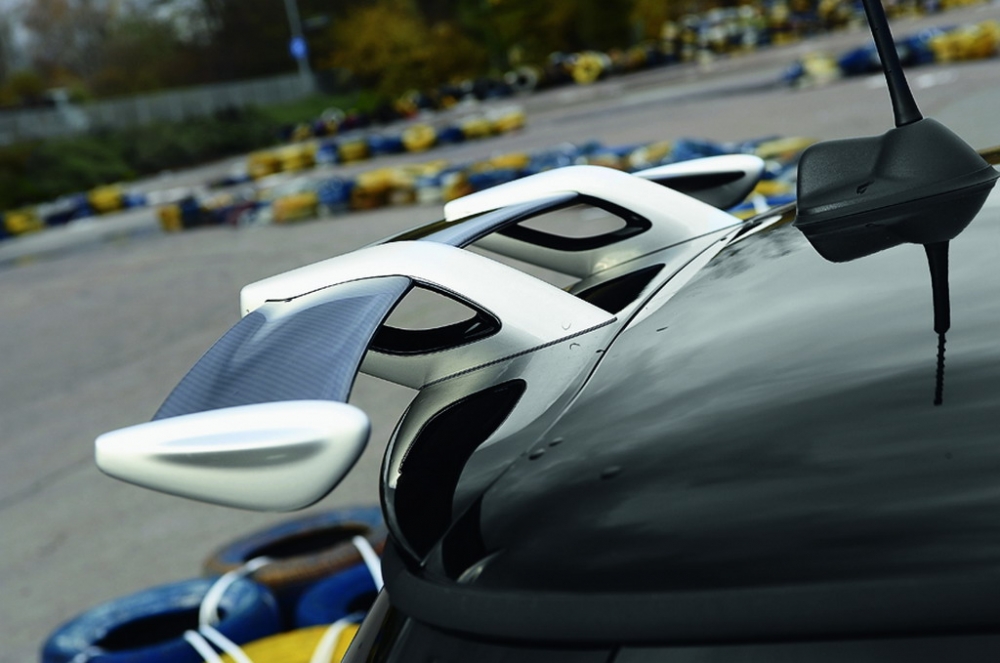
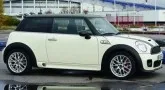
 Imagine for a moment that you are walking near some school and see such a picture – a teenage student with a backpack knocked askew and a shirt sticking out of his trousers, but... with a rifle on his back. Childlike spontaneity with a hint of non-childish power. This is very much like the MINI JCW. The counterbalance to the "cutesy" appearance of the MINI in this modification is provided by 18-inch wheels, through which impressive brake mechanisms are visible, a rear wing, and an almost real rifle – a double-barreled exhaust of quite impressive caliber. But nevertheless, there is still much more MINI in the appearance than John Cooper Works. All these minor changes, as well as the name badges, will be noticed only by a connoisseur. Of course, the Cooper S cannot be called a "sheep" either, but the JCW is already a real predator. One of the most formidable and aggressive in the entire front-wheel-drive pack. Imagine for a moment that you are walking near some school and see such a picture – a teenage student with a backpack knocked askew and a shirt sticking out of his trousers, but... with a rifle on his back. Childlike spontaneity with a hint of non-childish power. This is very much like the MINI JCW. The counterbalance to the "cutesy" appearance of the MINI in this modification is provided by 18-inch wheels, through which impressive brake mechanisms are visible, a rear wing, and an almost real rifle – a double-barreled exhaust of quite impressive caliber. But nevertheless, there is still much more MINI in the appearance than John Cooper Works. All these minor changes, as well as the name badges, will be noticed only by a connoisseur. Of course, the Cooper S cannot be called a "sheep" either, but the JCW is already a real predator. One of the most formidable and aggressive in the entire front-wheel-drive pack. |
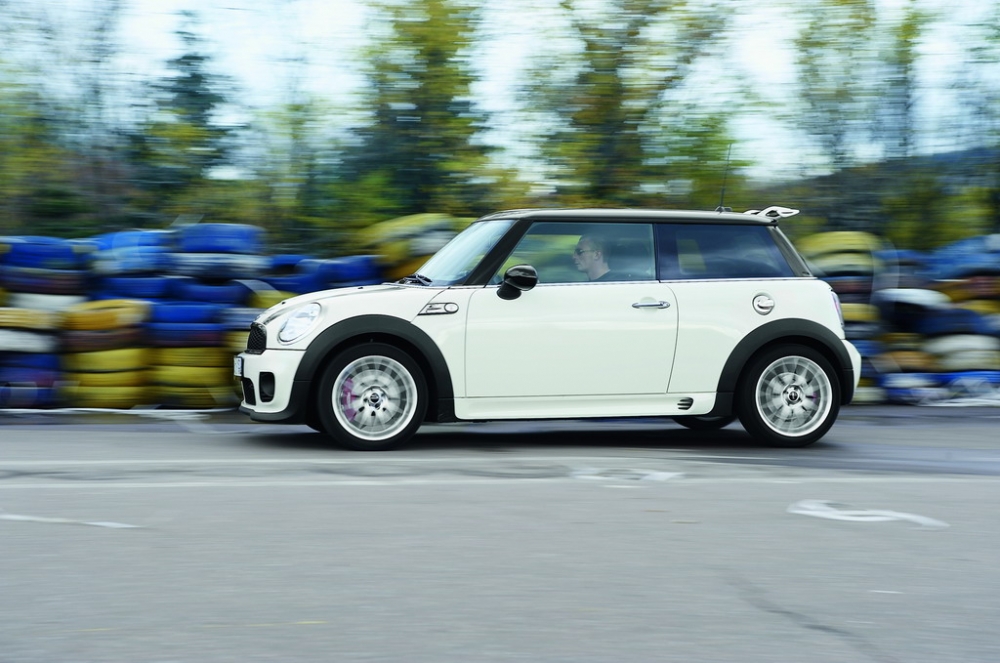
 Just by learning the technical characteristics of the JCW, you can immediately understand that this is a fast car – here there are more than two hundred horsepower on a little over a ton of weight! But neither these figures nor the claimed 6.5 seconds to 100 km/h convey the feeling of starting from a standstill and gaining speed in the MINI. It captivates with its lively character, it is generous with emotions. One thing is to reach 100 km/h in the same time on the rear seat of a business sedan, and quite another to race on this 3.7-meter stool under the hiss of the turbine and the sonorous pops from the exhaust. You are in a race; only a helmet and five-point harnesses are missing. You want to press the gas even harder, slam the gears even more fiercely, and with each deceleration, marvel again and again at the amazing grippy brakes that come directly from the MINI CHALLENGE. Just by learning the technical characteristics of the JCW, you can immediately understand that this is a fast car – here there are more than two hundred horsepower on a little over a ton of weight! But neither these figures nor the claimed 6.5 seconds to 100 km/h convey the feeling of starting from a standstill and gaining speed in the MINI. It captivates with its lively character, it is generous with emotions. One thing is to reach 100 km/h in the same time on the rear seat of a business sedan, and quite another to race on this 3.7-meter stool under the hiss of the turbine and the sonorous pops from the exhaust. You are in a race; only a helmet and five-point harnesses are missing. You want to press the gas even harder, slam the gears even more fiercely, and with each deceleration, marvel again and again at the amazing grippy brakes that come directly from the MINI CHALLENGE. |
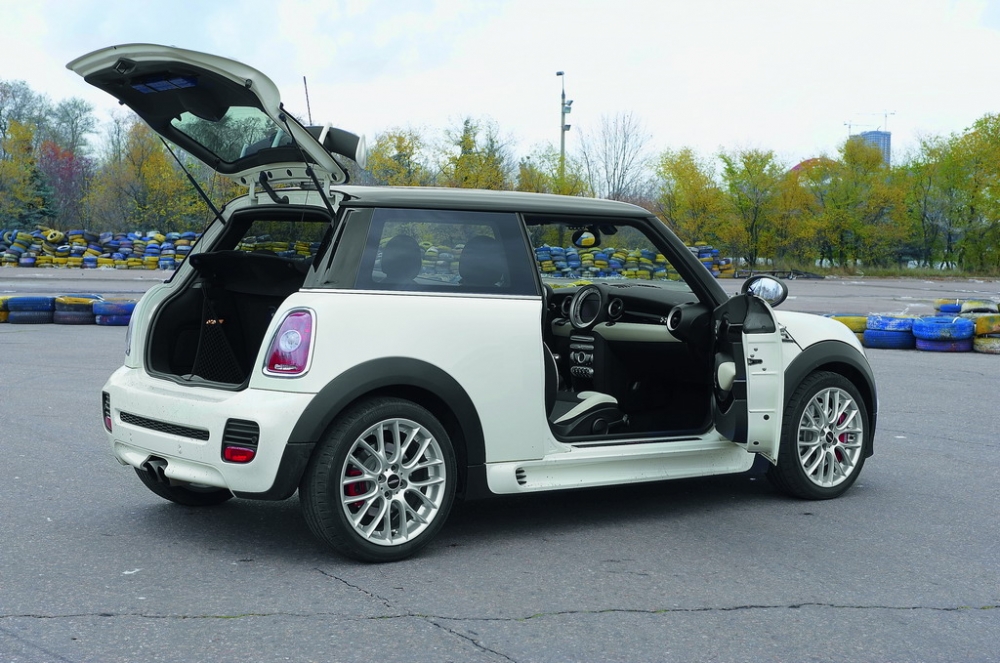 There is an amateur opinion that they were invented by cowards. There is the opinion of the great Senna, who said that races are won by those who brake later. The validity of the latter statement is confirmed by the MINI JCW. Late braking is its forte. The MINIs participating in the racing series need only 31 meters or, in time terms, 3.1 seconds to stop from 100 km/h. Even taking into account the slightly larger mass of the JCW compared to the cup cars and adding a couple of extra meters and a couple of tenths to this result, we still get outstanding figures. This is exactly the case when braking dynamics surpass acceleration dynamics. There is an amateur opinion that they were invented by cowards. There is the opinion of the great Senna, who said that races are won by those who brake later. The validity of the latter statement is confirmed by the MINI JCW. Late braking is its forte. The MINIs participating in the racing series need only 31 meters or, in time terms, 3.1 seconds to stop from 100 km/h. Even taking into account the slightly larger mass of the JCW compared to the cup cars and adding a couple of extra meters and a couple of tenths to this result, we still get outstanding figures. This is exactly the case when braking dynamics surpass acceleration dynamics. |
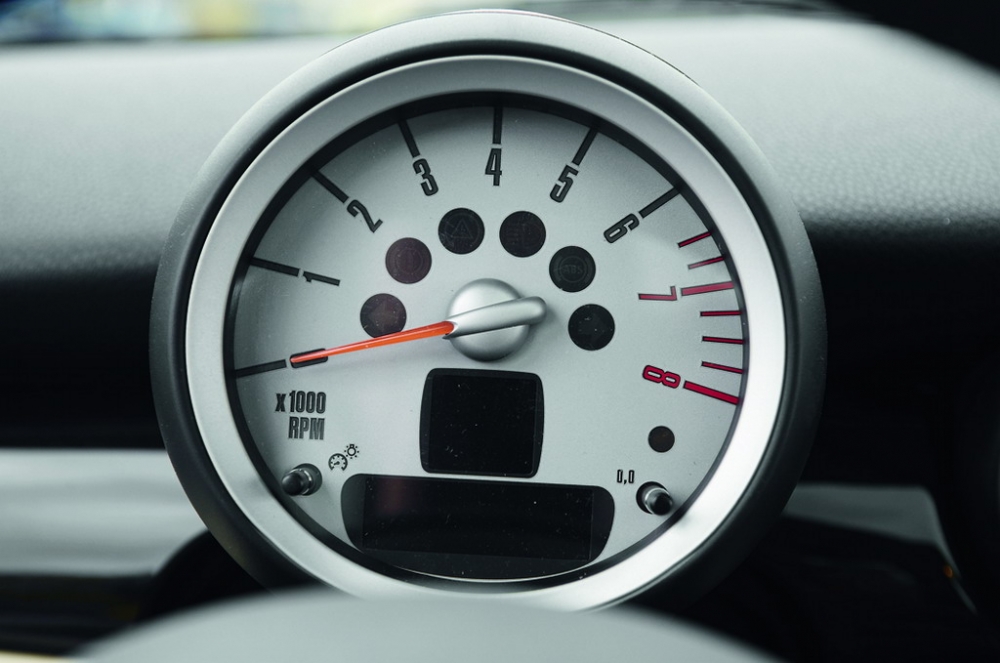
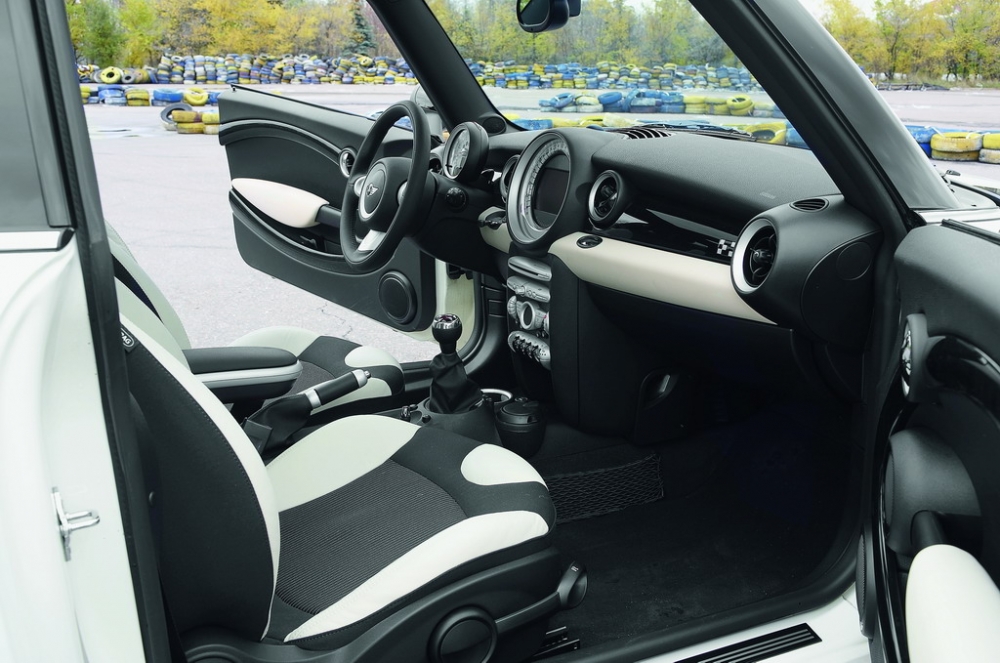 But do not think that the JCW, despite only 1.6 liters under the hood, should be classified as one of those "front-wheel-drive buzzers" that are "more noise than action." The 211 horsepower of the turbo engine can seriously fray the nerves of owners of sports cars with much larger engines. The turbo wakes up already after 2000 rpm and blows evenly almost until the redline. The gear ratio selection on the MINI is perfectly calibrated. Click – second, click – third, click – fourth. The gears blend perfectly, like vinyl records, one into another. And in fifth, the speed exceeds two hundred! Of course, the MINI is not a "long-haul trucker." At high speed, the short body bounces on bumps, and the noise is such that it seems there is no roof at all. The sharp steering wheel, which even before required a firm hand, is now a fine instrument. The slightest deviation causes a jump to the side. Sharp, even nervous. Pressing the brake pedal to the floor at such speed, you will clearly feel how the rear begins its St. Vitus's dance, completely, however, well controlled by barely noticeable half-steering corrections. But do not think that the JCW, despite only 1.6 liters under the hood, should be classified as one of those "front-wheel-drive buzzers" that are "more noise than action." The 211 horsepower of the turbo engine can seriously fray the nerves of owners of sports cars with much larger engines. The turbo wakes up already after 2000 rpm and blows evenly almost until the redline. The gear ratio selection on the MINI is perfectly calibrated. Click – second, click – third, click – fourth. The gears blend perfectly, like vinyl records, one into another. And in fifth, the speed exceeds two hundred! Of course, the MINI is not a "long-haul trucker." At high speed, the short body bounces on bumps, and the noise is such that it seems there is no roof at all. The sharp steering wheel, which even before required a firm hand, is now a fine instrument. The slightest deviation causes a jump to the side. Sharp, even nervous. Pressing the brake pedal to the floor at such speed, you will clearly feel how the rear begins its St. Vitus's dance, completely, however, well controlled by barely noticeable half-steering corrections. |
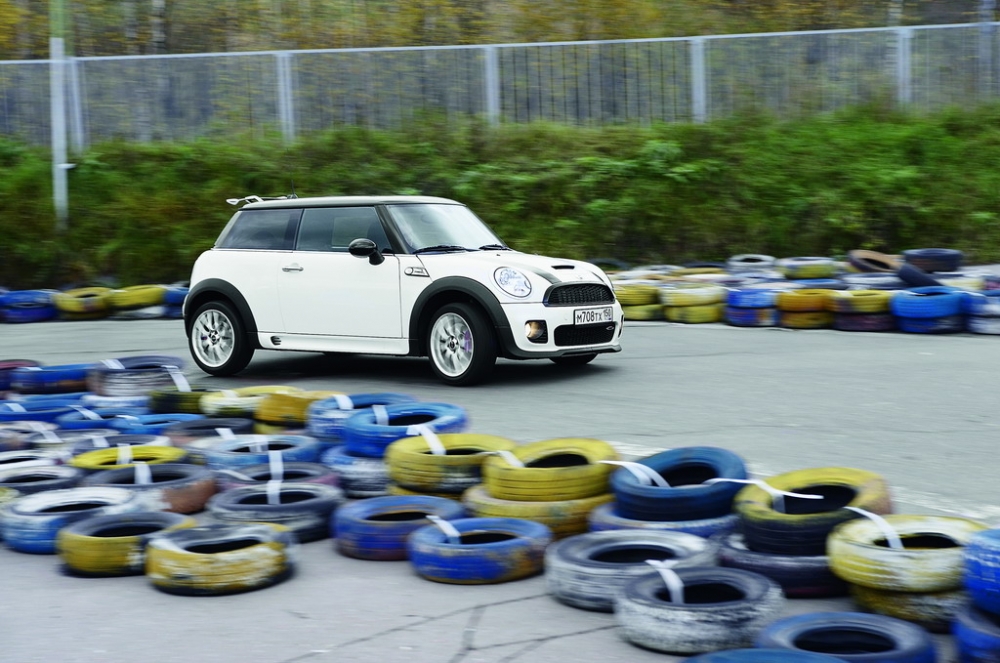
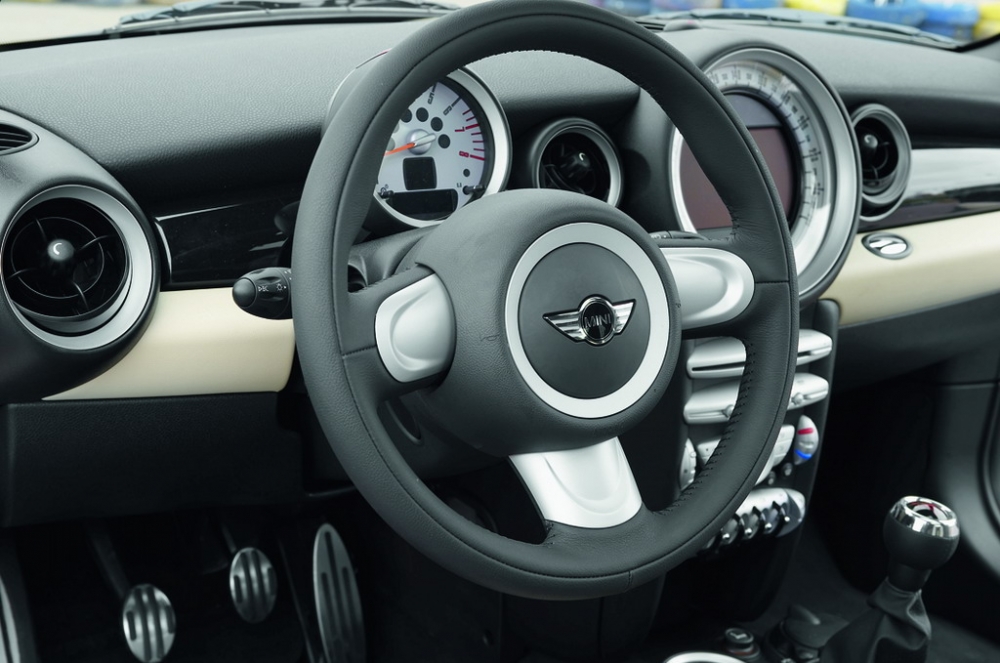 The JCW is generally controlled excellently, if not to say absolutely. I remembered how in distant childhood I played with "toy cars": the brain gives orders to the hand, which applies certain forces to the toy model, which in turn instantly, without delay, obeys. Everything happens in fractions of a second. With the MINI it is almost the same. The response to the gas (especially in Sport mode) is instantaneous and precise. The gearbox works like a Swiss watch – help with a rev-match, and the lower gear will seem to be sucked into its slot. Well, the stiffer suspension, wheels spread to the corners, and the high sensitivity of the steering allow you to tuck the car into seemingly impossible corners without sliding. The giant torque of 260 Nm on the front axle is fought by the DSC system, which imitates a "self-locking" differential, and very successfully. The unloaded wheel in a turn does not spin; the torque redistribution happens almost imperceptibly. "Almost" means that the operation of the electronic differential can still be noticed, for example, by rhythmically shifting the car left and right under steady throttle. The JCW is generally controlled excellently, if not to say absolutely. I remembered how in distant childhood I played with "toy cars": the brain gives orders to the hand, which applies certain forces to the toy model, which in turn instantly, without delay, obeys. Everything happens in fractions of a second. With the MINI it is almost the same. The response to the gas (especially in Sport mode) is instantaneous and precise. The gearbox works like a Swiss watch – help with a rev-match, and the lower gear will seem to be sucked into its slot. Well, the stiffer suspension, wheels spread to the corners, and the high sensitivity of the steering allow you to tuck the car into seemingly impossible corners without sliding. The giant torque of 260 Nm on the front axle is fought by the DSC system, which imitates a "self-locking" differential, and very successfully. The unloaded wheel in a turn does not spin; the torque redistribution happens almost imperceptibly. "Almost" means that the operation of the electronic differential can still be noticed, for example, by rhythmically shifting the car left and right under steady throttle. |
 Despite its racing history, the MINI JCW is completely at home in the city. Here it has its own cup. Each stage is a city race! You just need to consider that people most often do not have time to track the swift movements of this little speedster, and some particularly sensitive ones are quite frightened by the menacing roar of the exhaust. But still, buying such a car and not occasionally taking it to a race track is wrong. The "ring" is the native home for the JCW, its true element. It is here, on the ideal surface of the circuit, that the MINI can unleash its potential to the fullest, demonstrate everything it is capable of. And the suspension will not seem stiff, nor the steering overly nervous, nor the noise matter, and the "late" brakes will help fend off another rival. Despite its racing history, the MINI JCW is completely at home in the city. Here it has its own cup. Each stage is a city race! You just need to consider that people most often do not have time to track the swift movements of this little speedster, and some particularly sensitive ones are quite frightened by the menacing roar of the exhaust. But still, buying such a car and not occasionally taking it to a race track is wrong. The "ring" is the native home for the JCW, its true element. It is here, on the ideal surface of the circuit, that the MINI can unleash its potential to the fullest, demonstrate everything it is capable of. And the suspension will not seem stiff, nor the steering overly nervous, nor the noise matter, and the "late" brakes will help fend off another rival.That is how it should be. These are genes, this is MINI CHALLENGE, this is a niche product. Time to take the trophies! |
 |
 |
 |
 MODEL HISTORY MODEL HISTORYThe history of the most powerful Mini modifications is directly linked to the name of John Cooper, who in 1946, together with his father Charles, founded the Cooper Car Company. This company initially produced Formula 3 racing cars and later became the pioneer of the mid-engine layout for Formula 1. |
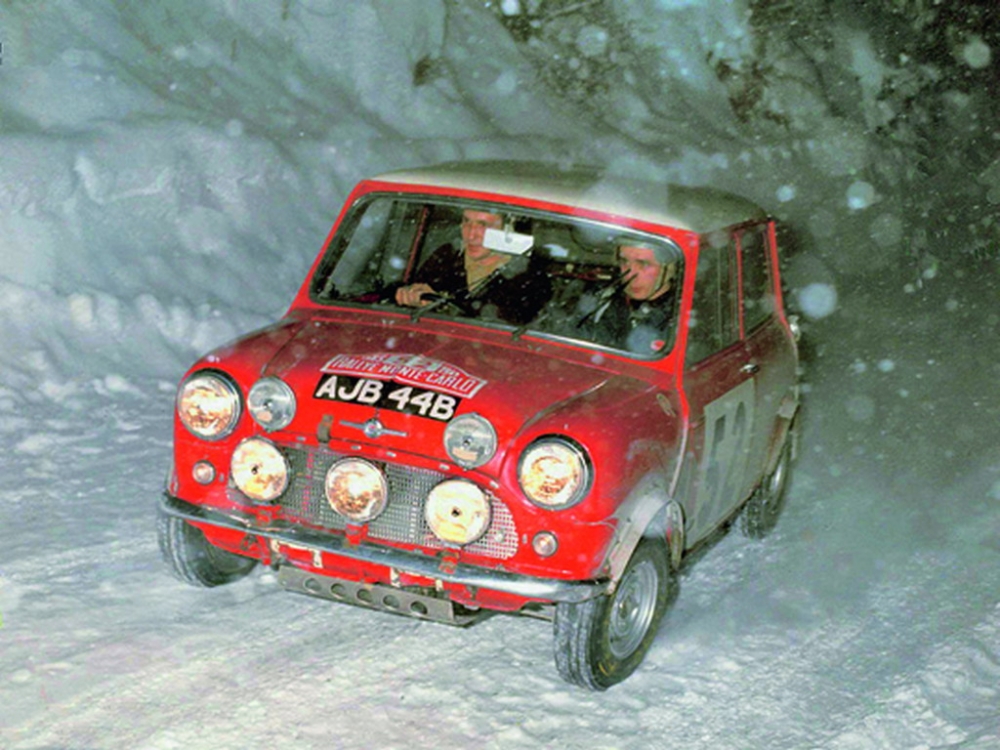
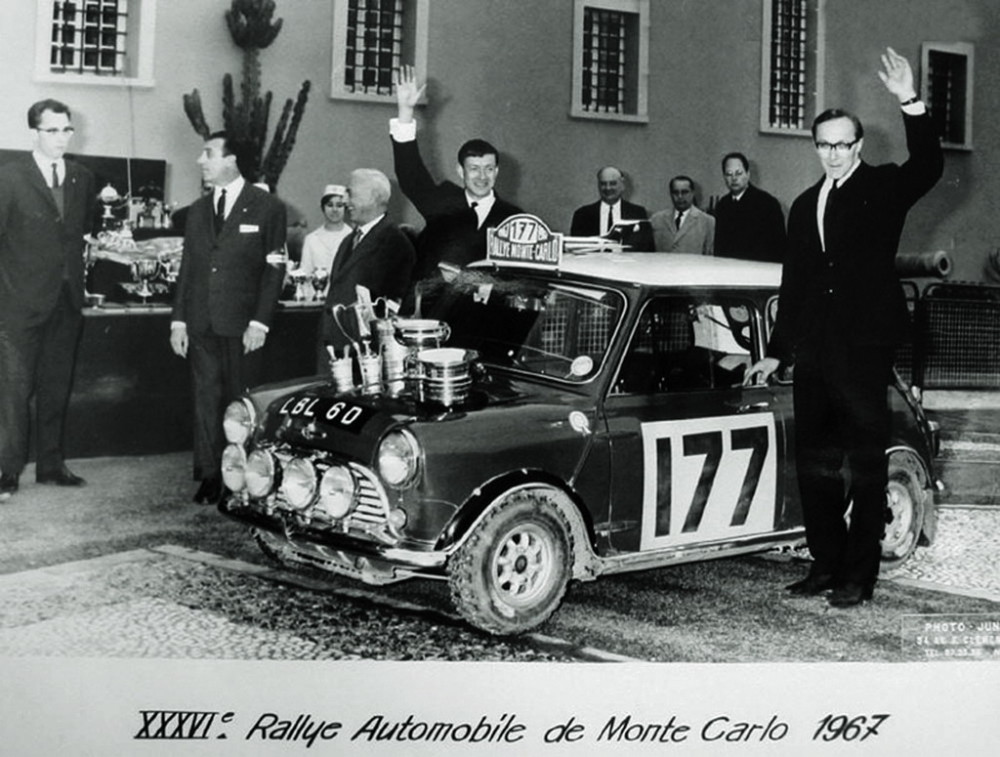
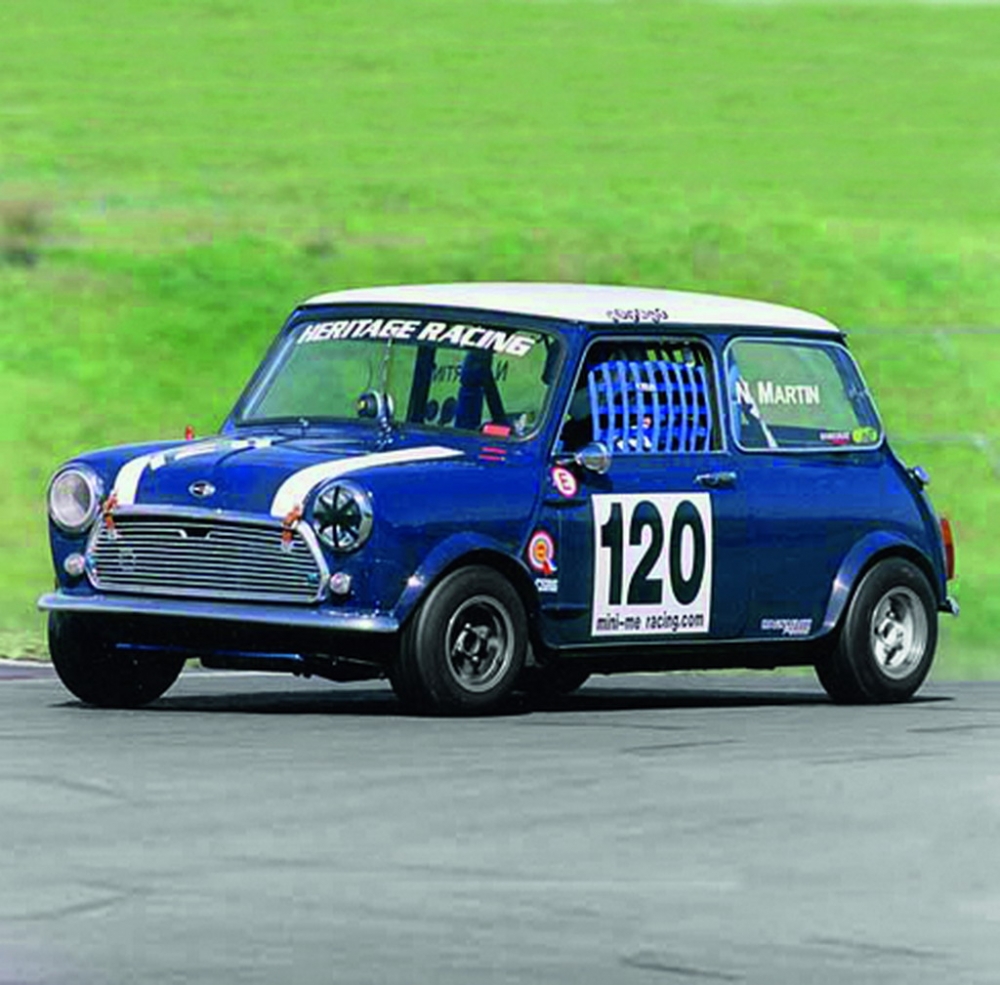 In 1959-60, the "Coopers" took first places in the Constructors' Cup and in the individual standings. Legend has it that once, after driving a regular Mini in the late 50s, Cooper was surprised by the handling of the "little one" and suggested to the creator of this car, his friend Alec Issigonis, to make a more powerful, sporty modification. Thus, in 1961, the first Mini Cooper appeared with a 997 cm³ engine and 55 hp. Later, in 1964, the Cooper S (1071 cm³, 70 hp) was released, whose rally versions won victories at the most prestigious stage of the world rally in Monte Carlo in 1964 (crew of Paddy Hopkirk and Henry Liddon), 1965 (Timo Mäkinen and Paul Easter) and 1967 (Rauno Aaltonen and Henry Liddon). In addition, the Cooper S had a large number of victories in various circuit races. In 1959-60, the "Coopers" took first places in the Constructors' Cup and in the individual standings. Legend has it that once, after driving a regular Mini in the late 50s, Cooper was surprised by the handling of the "little one" and suggested to the creator of this car, his friend Alec Issigonis, to make a more powerful, sporty modification. Thus, in 1961, the first Mini Cooper appeared with a 997 cm³ engine and 55 hp. Later, in 1964, the Cooper S (1071 cm³, 70 hp) was released, whose rally versions won victories at the most prestigious stage of the world rally in Monte Carlo in 1964 (crew of Paddy Hopkirk and Henry Liddon), 1965 (Timo Mäkinen and Paul Easter) and 1967 (Rauno Aaltonen and Henry Liddon). In addition, the Cooper S had a large number of victories in various circuit races. |
 |
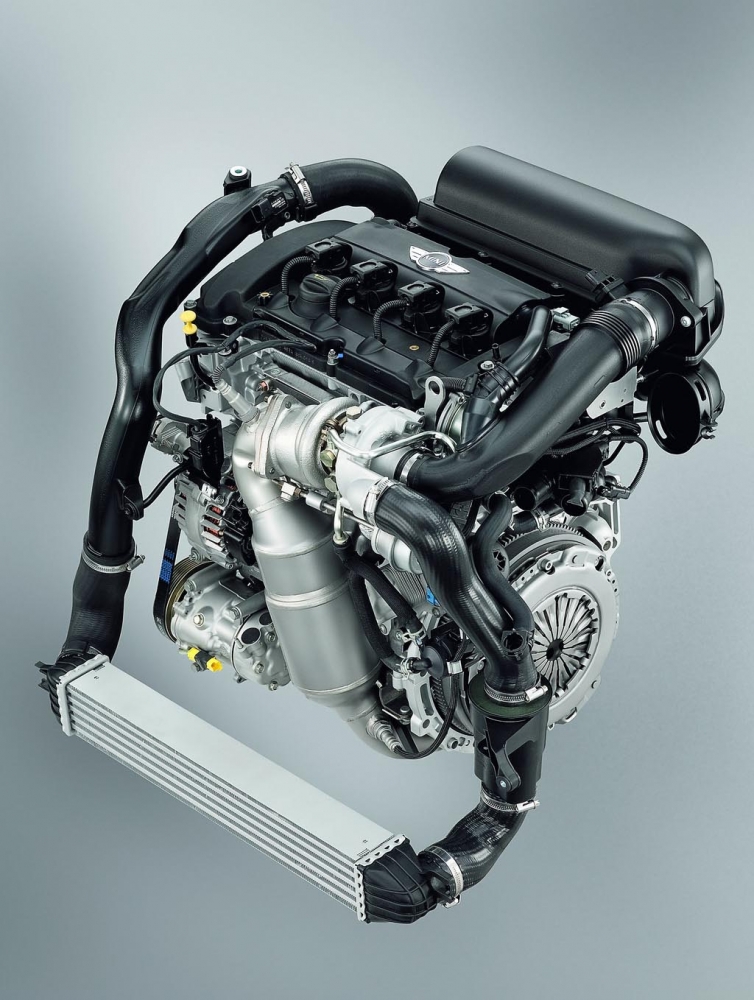 FOR YOUR INFORMATION FOR YOUR INFORMATION Engine The MINI John Cooper Works engine is the most powerful 1.6-liter power unit among all officially supplied to the Russian market. The engines on the JCW are the same as those installed on the racing cars of the MINI CHALLENGE monoseries. They are produced at the same BMW Group plant in Hams Hall, UK, where engines for all other MINI models are made, now with an aluminum cylinder block. Also, the 1.6-liter 16-valve 211-horsepower "four" of the JCW is equipped with reinforced pistons of special grinding, a different cylinder head with a modified gasket, and assembled camshafts (intake – with continuously variable valve timing). Intake valves (with sodium "filling") and valve seat rings are made of especially durable material. Also, the power increase was achieved thanks to the optimization of intake and exhaust. The compression ratio is reduced from 10.5:1 in the MINI Cooper S engine to 10.0:1. An excellent specific power indicator of 132 hp per liter of displacement successfully coexists with the declared "small-displacement" fuel efficiency of 7.1 liters per 100 km in the combined cycle. |
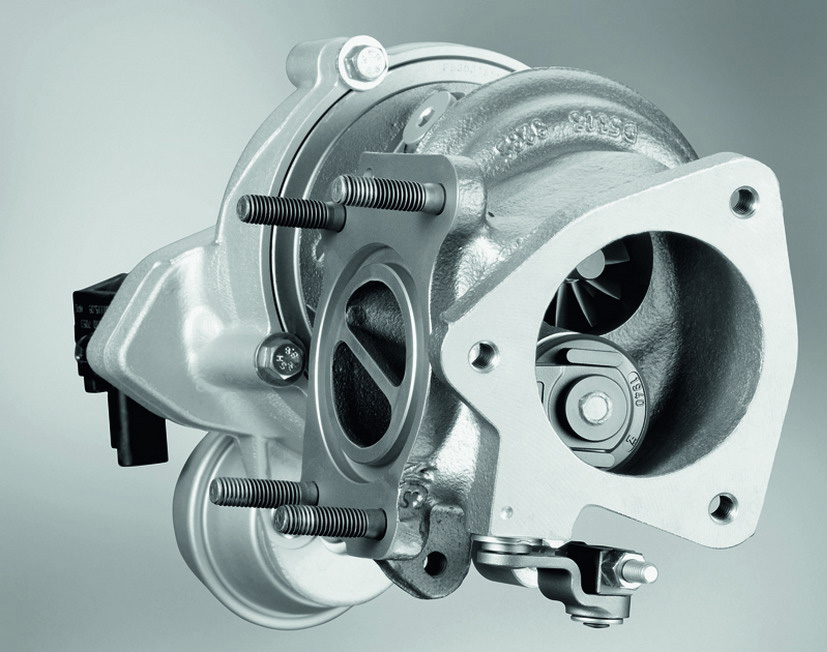 Turbocharging Turbocharging The TwinScroll turbine was specially developed for this engine. The maximum boost pressure is increased from 0.9 to 1.3 bar. In the exhaust manifold and turbocharger, the channels of each pair of cylinders are separated from each other. The compressor blades are driven already at fairly low engine speeds. The maximum torque of 280 Nm is available in the range from 1950 to 550 rpm. |
Cup
Sports for the masses! It is under this slogan that the MINI John Cooper Works should be sold. And there would be no deceit here – this car differs little from its racing counterparts participating in the MINI CHALLENGE single-make series.
Test drive photos
Comments
No comments yet. Say the first word.