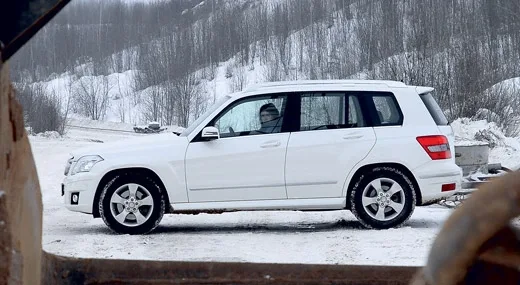
The angular design of the GLK is a direct continuation of the styling of the larger Mercedes-Benz GL. The car was released after discovering modest buyer interest in "cubism" — they say the Gelandewagen is no longer respectable for a civilized European, and sleek political correctness has become tiresome. The same idea, by the way, was picked up by Daimler's former partner, Chrysler, which, riding the wave of "angular marketing," released the Commander, Cherokee, and Liberty. According to Chrysler managers, these models sell solely due to the public's love for Jeep-like squareness.
BLIND SPOT
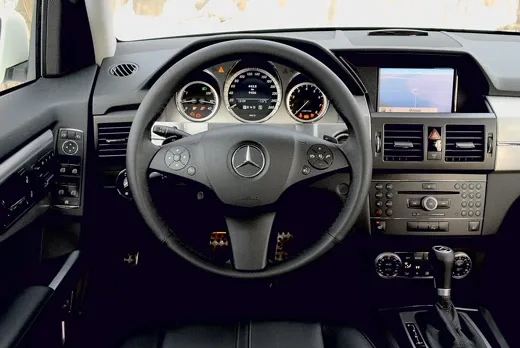
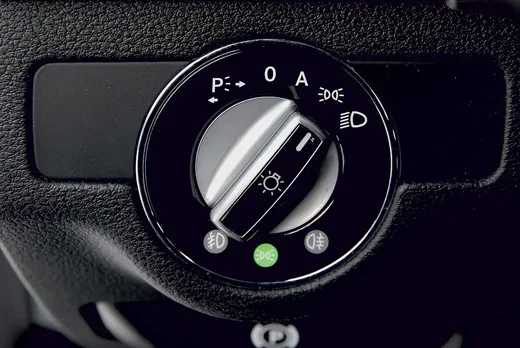
Admittedly, at first I didn't accept the new Mercedes look, but by the end of the test I got used to it and even began to consider the GLK almost the ideal mid-size crossover. So I'll start with the drawbacks to avoid overdoing the praise. I get behind the wheel, adjust it to myself, and start counting how many functions remain out of sight. In the blind spot fall all light control modes, including fog lights, radio, navigation, and phone buttons, the mute key, the driver's seat heating, and the ignition lock. I've personally spoken with the person responsible for the GLK's interior design, and he replied: "Old customers are used to it." Perhaps the driver of an Arab sheikh is a patient person and will endure anything. Maybe they even put him on dry peas at night, and he still smiles.
During one trip, I usually change the climate control temperature about three times. Mercedes believes that for this, you can be distracted from the road every time, so the climate control unit is placed at the very bottom of the "beard" — you have to tilt your head to see anything. It turns out Mercedes is only convenient for those already accustomed to it. And a newcomer, studying the GLK's interior, will find much interesting.
...AND ELECTRIC WIND IN THE FACE
In the driver's 100% visibility zone, at chest level, sits the electric seat adjustment block (in expensive versions). Among regular customers, there are those who like to fiddle with the backrest tilt on the go, and Mercedes cannot refuse them... Also, in the most visible place are the front air vents. They occupy exactly the space where all those "blind" buttons should have been. They say Americans are used to driving with the air conditioner blowing in their face. Is it really because of them that the Germans keep this layout? It's inconvenient not only for the eyes but also for the hands. To turn on the wipers, you have to take your hand off the steering wheel! When will EuroNCAP take control of the safety of control algorithms?
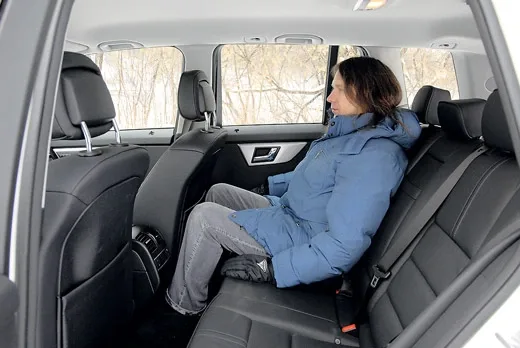
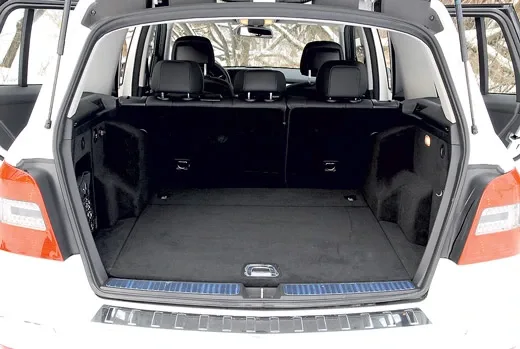
There are a couple more complaints. The main one is the cramped rear row. Behind a driver slightly over 180 cm tall, you can't sit anymore. Also, the trunk isn't that spacious. The second remark concerns the GLK's behavior on speed bumps. You expect more comfort. For example, the VW Tiguan handles such bumps softer. At the same time, many crossovers handle large bumps much worse. Now I'll tell you about the advantages.
SIMPLER MEANS MORE RELIABLE
I haven't met a single "crossover" with such a balanced chassis. It gives everything I've ever wanted from a car. The engineers threw energy capacity, comfort, and handling into the pot of soup called GLK. Each ingredient is exactly as much as needed for good taste. In the city, on winding roads, and long high-speed straights, it behaves equally calmly, decently, without nerves, without provocations, and without breakdowns. You can let go of the steering wheel and press the gas to the floor — the car will go straight.
Sometimes the chassis of some car teases you, squeezes all your strength, and then punishes you. There are comfortable chassis, but they lean in corners, or sporty ones, but at the cost of destroying ride smoothness. While the authors of these experiments spent decades polishing their advertising and practicing marketing, Mercedes worked on the breed, and its efforts were not in vain.
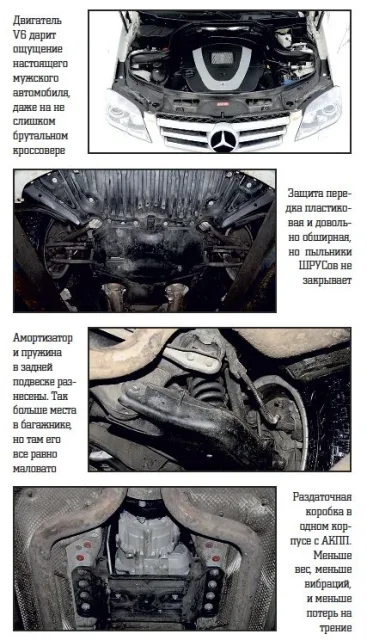
And this is despite the fact that at first glance, all the technical solutions of the GLK look outdated. For example, the basis of everything is the classic layout. The engine is mounted longitudinally, behind it in one row is the gearbox. This design is bulky and takes up too much space. Or the 4Matic all-wheel drive. An ordinary piece of iron, the simplest center differential even without a full lock! This is when outside the window is already the age of electronically controlled clutches. True, there is a small lock, but it withstands a torque of no more than 50 newton-meters and then automatically disconnects, in other words, it only acts as a start-off aid. However, healthy conservatism lives and thrives. Little space due to the engine layout? And who do we carry in the back seats? Children. They don't need much. Primitive all-wheel drive? Fewer problems with it. It's not prone to overheating like modern clutches, and most importantly, it's more predictable and transparent in its behavior.
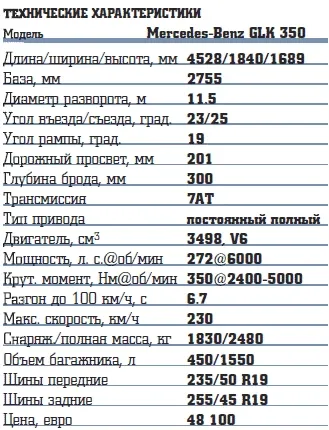
SPECS: MERCEDES-BENZ GLK 350
ESPECIALLY GOOD IN SNOW
The GLK did without the popular adjustable shock absorbers. All these "sport," "comfort," "individual" modes quickly get boring, spoil the impression of the chassis, and create a mess in the driver's head. Thus, some manufacturers try to embrace the immense, and, by the way, Mercedes is also guilty of this, for example, in the ML. Much more adequate is an honest suspension that doesn't need electronic crutches. For instance, the GLK's shock absorbers adapt to the road profile mechanically, using a special valve.
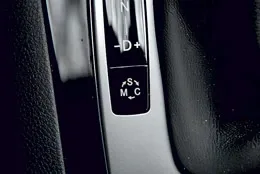
There's no electronics in the GLK's suspension, but fashion is fashion, and so that competitors don't say "weak," something was shoved into the automatic transmission. Now you have to endure three algorithms of the "automatic" gearbox, plus it's also adaptive: isn't that too much for the overloaded brain of a modern person? When will we rest our heads? In the "comfort" mode of the automatic transmission, the crossover drives very "Mercedes-like," as models of the 70s did. The "automatic" seems to lose four of the seven gears. Good for a leisurely province, fuel is saved... The "sport" mode is excellent in everything and serves as the base in Moscow traffic jams. "Manual" I used only off-road to avoid overheating the gearbox.
WHITE ON WHITE
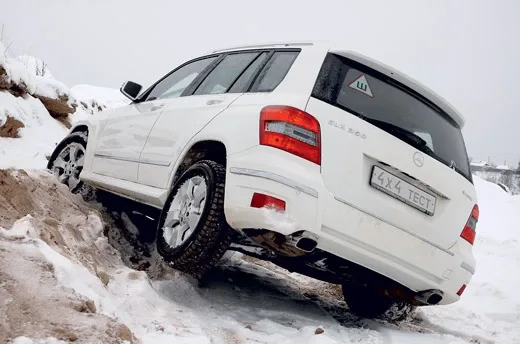
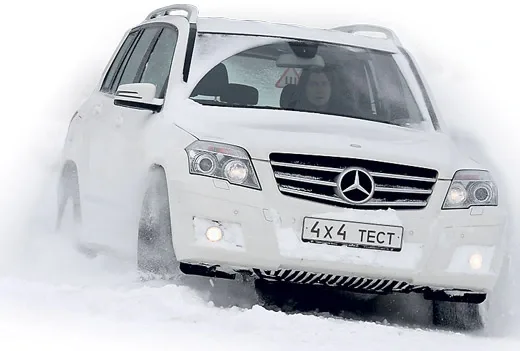
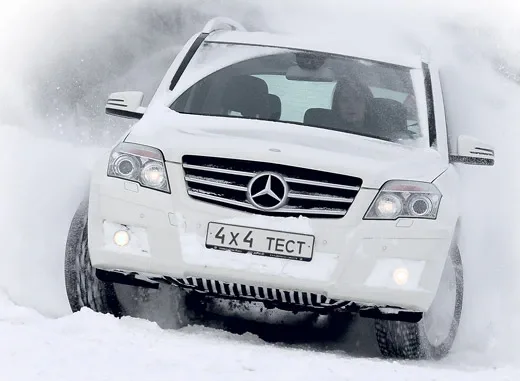
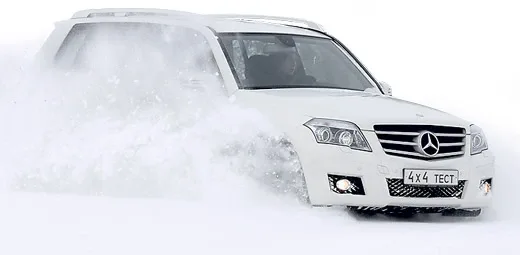
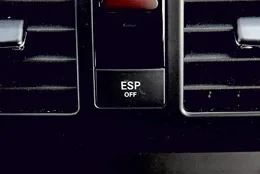
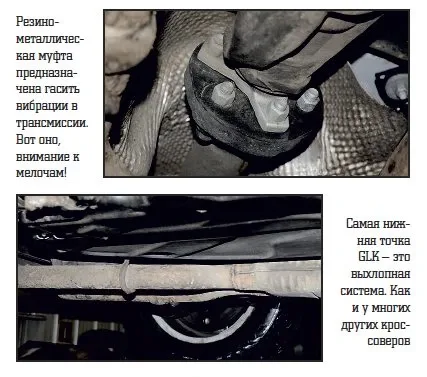
Off-road, the GLK is helped by the powerful 3.5-liter engine, 4Matic, and the ESP deactivation function. The traction of the powerful V6 is especially good on snowy climbs. "Firmatic" relies only on brake mechanisms that replace inter-wheel locks. Therefore, when ESP is deactivated, the electronics stop strangling the engine but leave the traction control system active. Very smart. Unobtrusive. Ideal in snowdrifts. Only the long wheelbase (longer than all Japanese crossovers) hinders on uneven terrain. The underbody is flat. The units are covered with thin plastic. Want more robust protection? You need the off-road package, but our test car has the "passenger car" trim. In any case, off-road is not fatal for the Mercedes; on the contrary, it's hard to resist an exciting walk off the asphalt. The GLK's geometric off-road capability isn't entirely "crossover-like." So forward, into the snowdrifts, let's crush a snowman!