
Passing the "4MATIC" test
It so happened that "Auto.Lenta" got to the Mercedes-Benz GLK almost last. In the summer, before the September sales start in Russia, most automotive journalists had already managed to take a ride in the first compact SUV from Stuttgart. We, however, got the opportunity to test the car in real winter.
feels in its element.
The main thing is to switch to "studs" and don't forget
to stop at a gas station
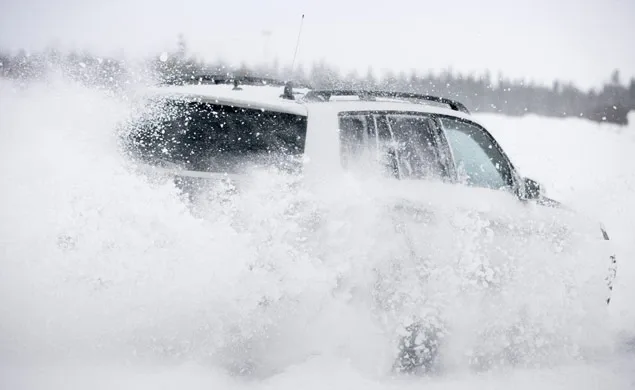
In my opinion, this is a key test for such a car. After all, these cars are bought not for off-road driving, but for confident movement on slippery surfaces; for fast driving on dry asphalt, it is more logical to take something with a lower center of gravity. But snowfalls, ice, and slush under the wheels are a weighty argument for buying an all-road vehicle, at least for me.
Unification
The Mercedes-Benz GLK crossover is based on the same platform as the latest generation "C-Class" (index W204), which debuted in 2007. From it, the all-road vehicle inherited a similar wheelbase (C-Class — 2760 millimeters, GLK — 2755), suspensions, and a couple of petrol engines with 231 and 272 horsepower. |
In such weather, the crossover's large and "soft" wheels are very useful — they add comfort on broken roads. The 200-millimeter ground clearance allows you not to hit the bottom on a snow-covered forest road or on the way to the dacha, and the intelligent all-wheel drive can pull the car out of a snowdrift and help stay on icy asphalt.
True, leaving Moscow in December, where the thermometer showed plus seven, I hardly believed that in Austria, which is located further south, we would be able to give the GLK a full winter test.
But the weather did not disappoint: the ski resort Hochgurgl, located at an altitude of two thousand meters, was covered with half a meter of snow. On the way to it, along a steep serpentine, there were abandoned cars on summer tires with Italian plates — their drivers were not ready for the snowfall that had begun the day before. For them, the trips ended before the arrival of snow removal equipment.
Well made, firmly sewn
And for the GLK, such weather is, on the contrary, just the beginning. The crossover with an angular body, waiting for the driver in the snow pellets, seems like a reliable shelter in any blizzard. The main thing is to run to it from the hotel faster.
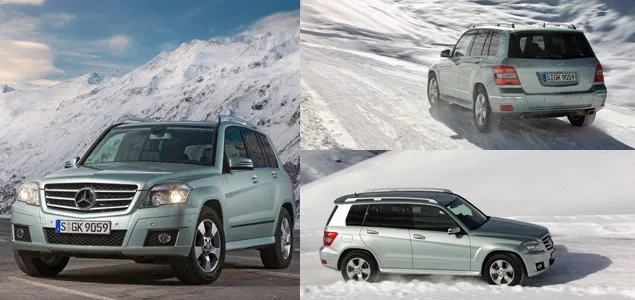
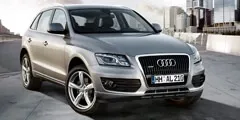
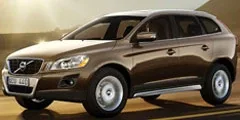
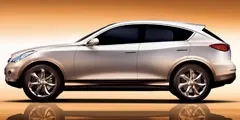
Of course, the rough shapes and heavily raked windshield in the spirit of the Geländewagen are the idea of marketers: designers could well have made a reduced copy of the streamlined MLK based on the "C-Class". But this does not diminish the merits of the "Mercedes" people: the "egg-shaped" clones of classmates like the Audi Q5, Volvo XC60, or Infiniti EX35 have already become quite boring.
Inside, the positive impression of the exterior only intensifies. Firstly, there is no biting snow flying into your face :). Secondly, the trim materials of the crossover look more expensive than in the "C-Class", and this also lifts the mood. Moreover, the base versions of the sedan (C 280 4matic) and the all-road vehicle (GLK 280 4matic) differ little in price — 1 million 665 thousand 300 rubles versus 1 million 696 thousand 500 rubles.
At first, the interior wants to be called "simple": it seems it can be drawn with one ruler, without patterns. But the rejection of smooth lines is a deliberate step: the "brick" plastic of the panels echoes the car's exterior and emphasizes kinship with the "G-Class".
Interior
|
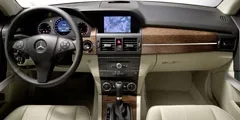
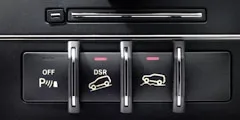
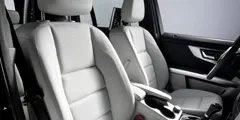
And when you start the engine, it becomes even warmer in your soul. Even if the V-shaped "six" is still cold, with a spark and a working fuel pump, warmth will come: the powerful 3.5-liter engine will quickly warm the cabin to a comfortable temperature.
However, Mercedes brought us to the Austrian Alps not so that we could warm up in the parking lot. A couple of kilometers of a closed, snow-covered road at an altitude of 2.5 thousand meters is an excellent platform for demonstrating the capabilities of the proprietary "4MATIC" all-wheel drive in winter.
Simple solutions
In Stuttgart, they decided to equip the GLK with a fairly simple all-wheel drive transmission without "reduction gears" and differential locks — the same as on the new "C-Class". True, the crossover with the "off-road package" has a "G-button" that activates the off-road mode, in which cross-country ability improves due to different algorithms of the 4ETS traction distribution system and ABS.
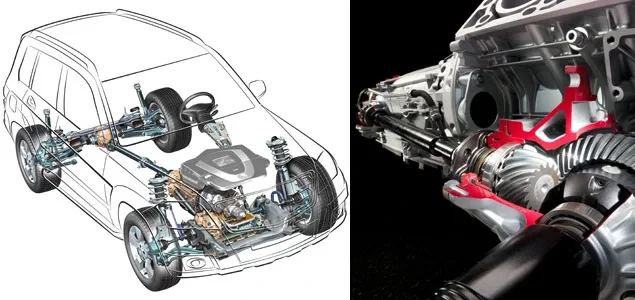
The 4matic design is simple: a transfer case combined with the seven-speed "automatic" 7G-Tronic constantly distributes torque between the axles in a 45:55 ratio. The chief developer of all off-road "Mercedes" Thomas Merker believes that simplicity is the main trump card of "4MATIC". Permanent all-wheel drive is more predictable for an unprepared driver than the "electronic" transmissions of competitors.
Take, for example, BMW's xDrive drive: it constantly redistributes torque between the axles depending on the situation using an active center differential. This is done, among other things, to help the car "enter" a corner during active driving, directing more torque to the rear wheels for "rotation". Or vice versa — throw traction forward to extinguish a skid.
For an experienced driver, such assistance is useful, but for a person who graduated from an ordinary driving school and is not familiar with sports techniques, such intervention of electronics can be a surprise and provoke an incorrect reaction.
Another example is cars where only one axle is driven most of the time, and the second is connected by electronics in real time when necessary. A potential drawback of this algorithm is the nonlinear behavior of the car in a corner. For example, a front-wheel-drive car enters an arc and, due to exceeding speed, begins to slide "nose out". At some point, the electronics, noticing the slipping of the front wheels, connects the rear axle, and the car unexpectedly for the driver becomes all-wheel drive, starting to slide outward with all four wheels or generally "sweeping its tail". Not everyone can react correctly in such a situation.
But, despite the drawbacks, "torque on demand" systems are in demand among crossover manufacturers, as they allow saving fuel — after all, most of the time the car drives with drive only on one axle. Mercedes engineers save on something else.
As Merker said, the engineers who worked on "4MATIC" set themselves the task of lightening the transfer case and reducing friction losses in mechanical units. The bottom line: the mass of the "razdatka" in the GLK barely exceeds fifty kilograms, and the surcharge for all-wheel drive in the form of extra fuel is only half a liter per hundred kilometers.
Haste makes waste
After listening to the technical briefing from the creators of the 4matic transmission, we set off for a practical test. The road is a narrow strip of snow: on one side a cliff, on the other a rock massif. You absolutely don't want to press the pedal to the floor, but you have to. We decide not to touch the ESP system, let the electronics fight to keep us from going into the abyss.
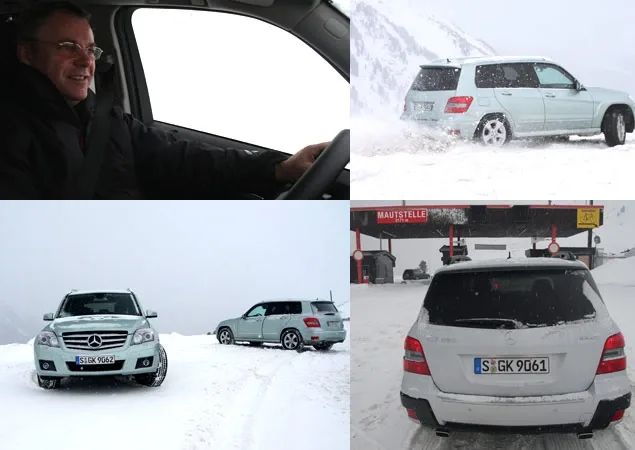
To get started, you need to at least get moving. On an icy surface, especially on a slope, this often turns into a serious test. The GLK handles it with no effort at all. The electronic 4ETS system can brake spinning wheels, simulating inter-wheel locks, and the transfer case has a small multi-plate pack that takes on the functions of a center differential lock for the first few seconds of launch. True, as soon as the torque difference between the axles exceeds 50 Newton-meters, the clutch starts to slip, and the rigid connection between the axles disappears.
From a standstill, the GLK 350 takes off very briskly, but the first corner cools the ardor of the 272-horsepower engine. The electronic brain of ESP, having analyzed data from sensors, decides that the corner entry speed is too high, and the ASR system forcibly cuts fuel supply.
However, stabilization does not always resort to such crude methods. According to Merker, at low speeds, selective braking of individual wheels is often enough to correct the trajectory, without interfering with the engine's operation. Mercedes-Benz is convinced that cutting power should only be done as a last resort, because a sharp throttle lift can, on the contrary, provoke the rear axle to break away and cause an unexpected skid.
If desired, ESP can be turned off with a button on the center console, and sometimes this really helps. For example, when the crossover is stuck in snow and the only way out is to rock it and spin the wheels.
But even with the stability control system turned off, you won't be able to enjoy a full controlled drift. The electronics in the GLK are not completely disabled. You can do a "police turnaround" on an empty lot as much as you like. You can also take a corner with a slight slide. But as soon as lateral g-forces reach a critical level (angle or speed increases), the traction control system again chokes the engine and activates ESP. After all, the primary task is to prevent lateral sliding, which could lead to a rollover.
The Price of Freedom
It's hard to say definitively whether the GLK's transmission is better or worse than the more sophisticated systems of its competitors based on a short test. Theoretically, an electronically controlled differential gives more freedom in corners with skillful steering and throttle work. But many other factors affect handling, so a head-to-head test of different all-wheel-drive systems is needed for an objective comparison.
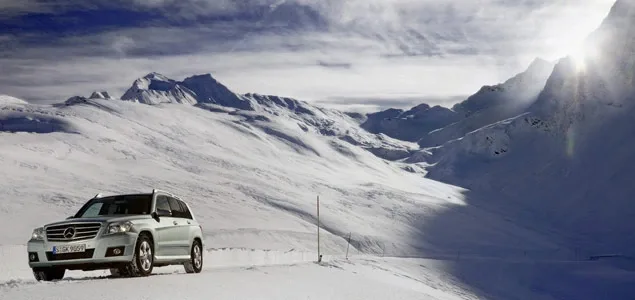
I liked the behavior of the compact Stuttgart crossover on winter roads. A careful driver on slippery asphalt will most likely not even notice how ESP works. The "Formatic" confidently holds the set trajectory, and I personally lift off the throttle in difficult conditions much earlier than the algorithms of the Mercedes anti-slip system provide.
In addition, the GLK 350 leaves a good impression thanks to its composed suspension, responsive automatic transmission, and excellent engine torque — 350 Newton-meters are available from 2400 rpm. And don't think that small body rolls in corners mean a harsh ride over bumps. The GLK's adaptive dampers adjust their stiffness in real time to the road surface quality and speed.
True, the GLK is not suitable for rally exploits — ESP won't allow it. But, in my opinion, this exchange of freedom for safety is absolutely justified. Especially for a car that is destined to take you shopping rather than conquer special stages.
Alternatives
|
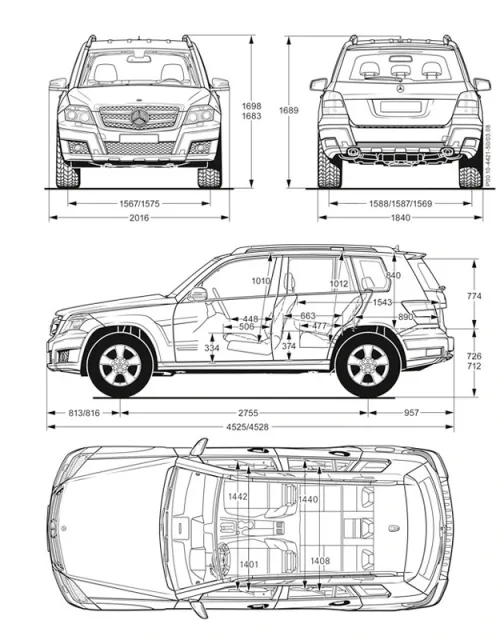 |
Technical Specifications of Mercedes-Benz GLK 350
| Length, mm | 4525 |
| Width, mm | 1840 |
| Height, mm | 1698 |
| Wheelbase, mm | 2755 |
| Curb weight, kg | 1830 |
| Engine displacement, cm3 | 3498 |
| Power, hp/rpm | 272/6000 |
| Torque, Nm/rpm | 350/2400-5000 |
| Acceleration 0-100 km/h, s | 6.7 |
| Top speed, km/h | 230 |
| Fuel consumption (combined), l/100 km | 10.6–10.8 |